Growing an Artist: The Story of a Landscaper and His Son/Cultivando a un artista: la historia de un jardinero paisajista y su hijo by John Parra

Published by Simon and Schuster/Paula Wiseman Books

Summary:  The narrator spends the day helping his father with his landscaping business.  It’s hard work, and one of his classmates snubs the boy when he sees him working in his yard.  But visiting the dump and choosing plants from the nursery is fun, and his dad’s enthusiasm about his business is contagious. Everywhere they go, the boy pulls out his sketchbook and draws what he sees.  Their last visit is to a couple who want to transform their overgrown yard.  When the boy gets home, he begins to create a design for the new yard.  His dad agrees to use his plans.  “You have a gift,” says his mother, as he looks at all the sketches he’s made of his day.  Includes an author’s note about his father’s landscape business and how he helped his dad as a child.  Available in English and Spanish. 40 pages; ages 4-8.

Pros:  This would make a great mentor text for memoir/narrative writing. Belpré honoree John Parra brings to life a story which is clearly close to his heart.

Cons:  I would have enjoyed seeing a side-by-side illustration of the boy’s blueprint and the finished yard he helped design.

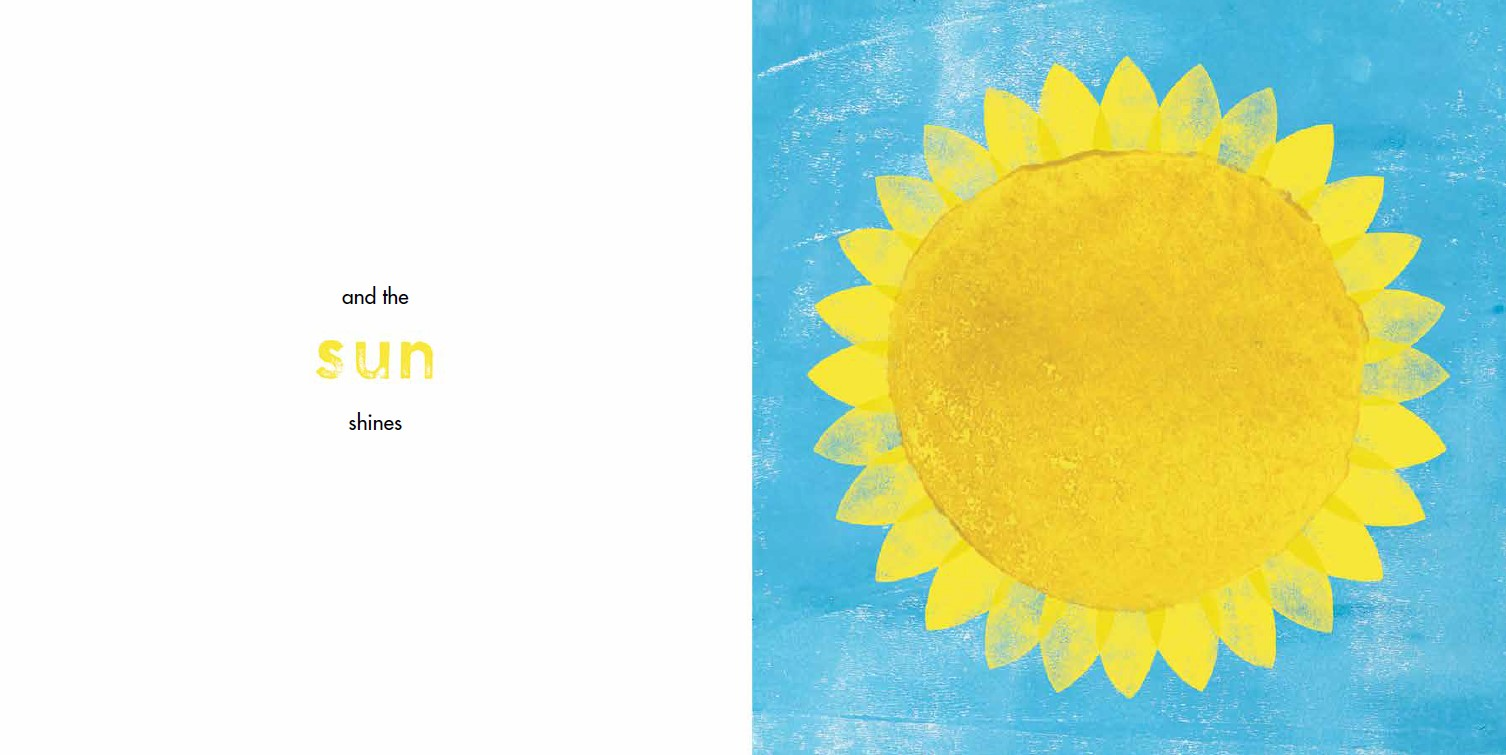
A Seed Grows by Antoinette Portis

Published by Neal Porter Books

Summary:  A bird with a seed in its beak is on the title page, apparently the source for the seed that falls on page 1.  That seed settles into the soil, and sun and rain help it turn into a sprout, growing to at last become a sunflower (big enough to need a foldout page).  The flower is filled with seeds, which birds feed on when the plant droops to the ground.  When one bird drops the seed from the top of a tree, the cycle begins again.  Includes two pages of additional information and a list of resources.  40 pages; ages 3-7.

Pros:  I am already excited to read this book to preschoolers when they start learning about seeds next spring.  I like how key words like seed, sprout, and bud are written in a large colorful font to emphasize them, and kids always enjoy a foldout page.  Another great early science resource from Antoinette Portis to go with her award-winning Hey, Water!

Cons:  Those foldout pages get torn a lot in library books.

Building by Henry Cole

Published by Katherine Tegen Books

Summary:  “Building, building.  That is what beavers do best.”  This is the repeated refrain in a story that follows a pair of beavers through a year beginning in late winter.  They pick a spot to live by a stream and build a dam and a lodge.  The dam creates a pond, and the lodge provides a safe place for babies.  As the seasons progress, the beavers face a coyote and a heavy rainstorm, but their defenses protect them from these dangers.  They gather enough twigs and branches to survive the winter, then settle down in the lodge as the snow begins to fall.  Includes an author’s note with additional information about beavers.  40 pages; ages 4-8.

Pros:  As he did with robins in Nesting, Henry Cole tells a gentle story about beavers as they journey through the seasons.  The detailed illustrations are mostly in black and white with highlights of seasonal colors (green grass, red leaves).  The author’s note invites wonder by contemplating the beavers’ amazing engineering feats.

Cons:  The interaction with the coyote wasn’t quite as dramatic and exciting as the snake attack in Nesting.

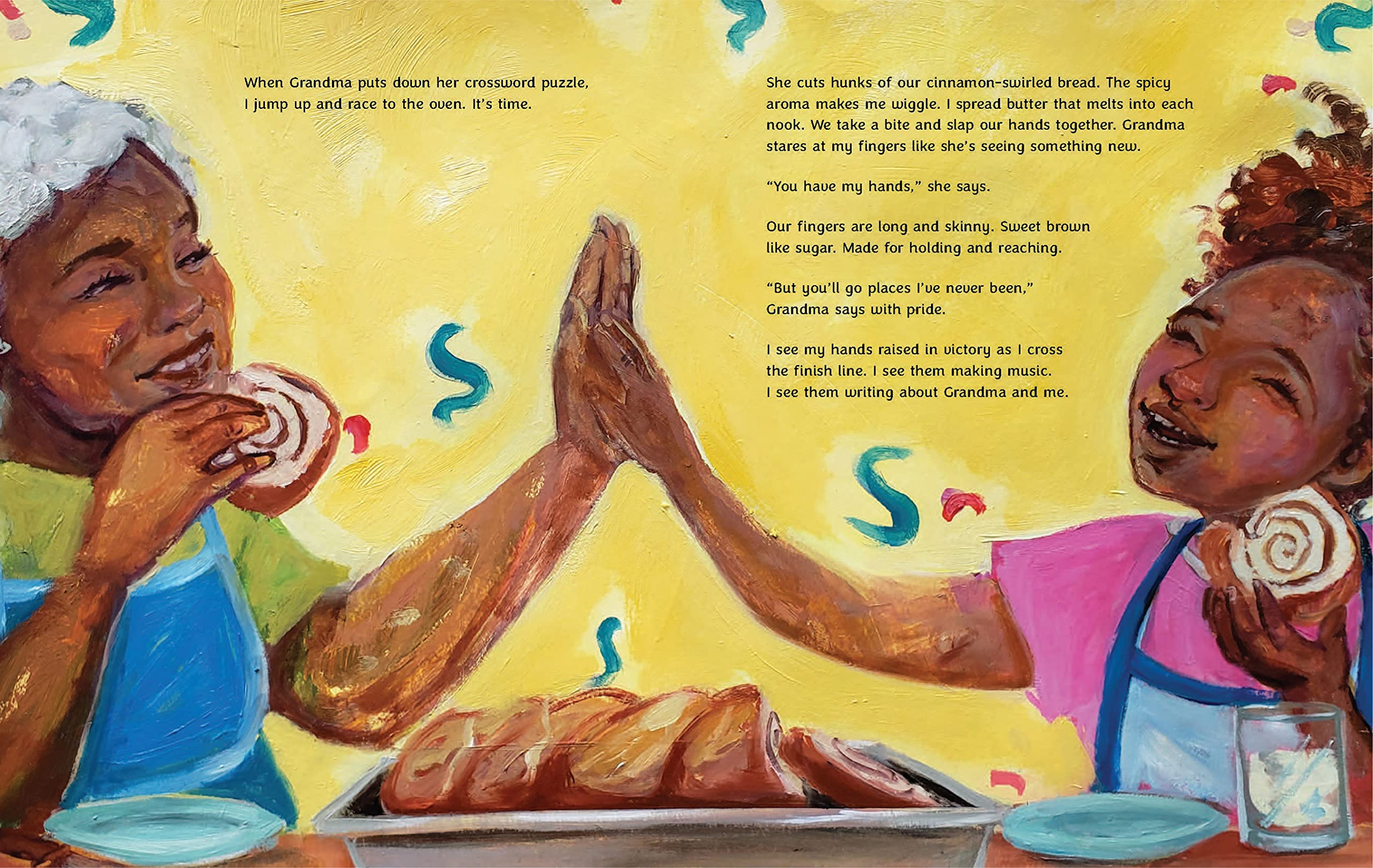
My Hands Tell a Story by Kelly Starling Lyons, illustrated by Tonya Engel

Published by Reycraft

Summary:  As Zoe and her grandmother make bread together, the girl marvels at her grandmother’s hands and thinks of the stories they tell.  Grandma tells of her young adulthood working in an office and dancing on stage, later on getting married and creating a home and garden.  When Zoe looks at Grandma’s hands, she sees words on them like “mother”, “planter”, and “nurturer.”  She wonders what stories her own hands will tell someday, then realizes that she can already see some there: building, baking, playing clapping games with friends.  Back home, she uses her hands to tap out some of her stories on her computer.  Includes a recipe for Zoe and Grandma’s Cinnamon Bread.  32 pages; ages 4-8.

Pros:  This quiet intergenerational story invites contemplation and could lead to discussions or writings about the stories told by a child’s or an adult’s hands.  The vibrant illustrations perfectly capture the characters, their hands, and their stories.

Cons:  Be careful not to drool on the recipe page.

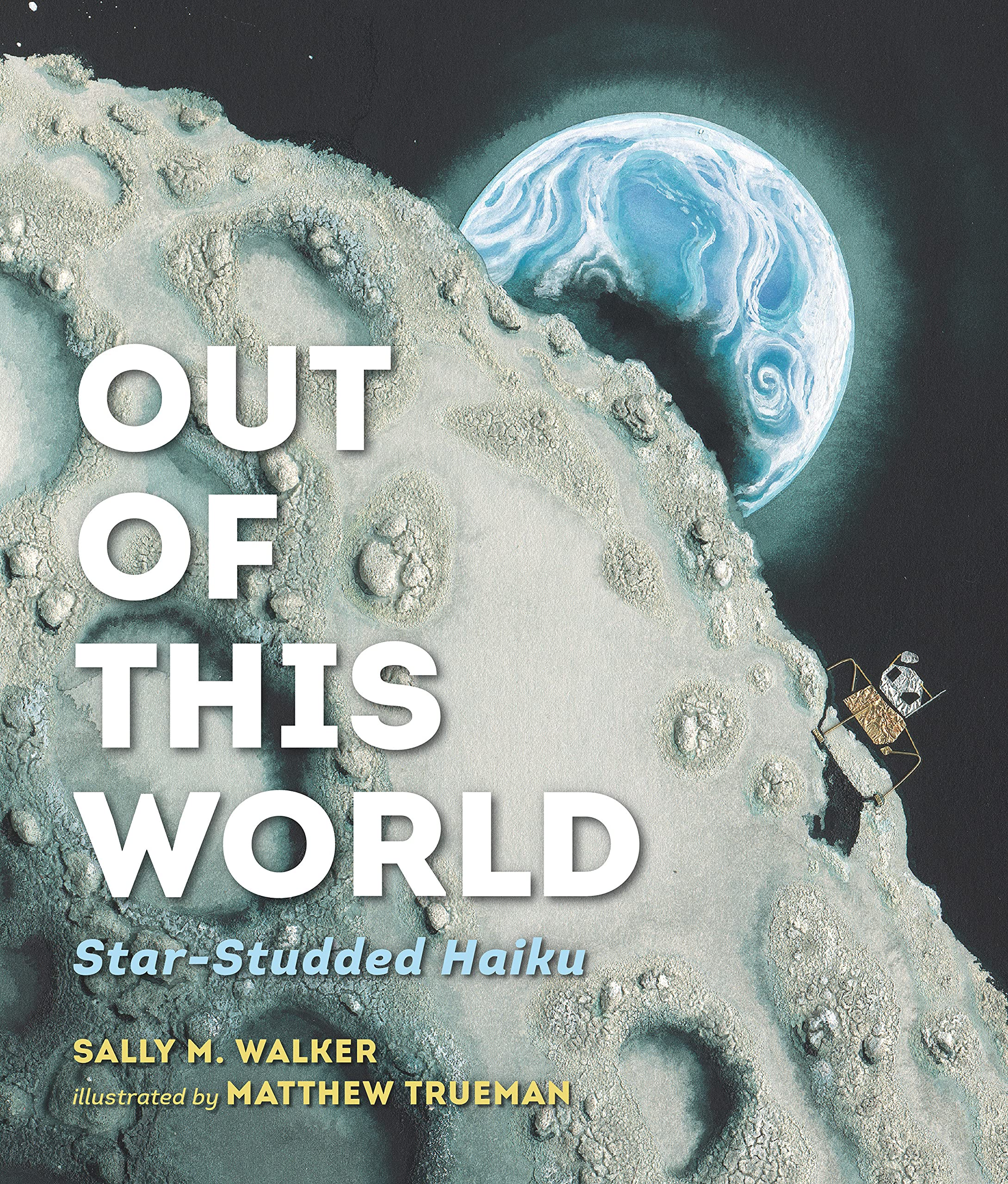
Out of this World: Star-Studded Haiku by Sally M. Walker, illustrated by Matthew Trueman

Published by Candlewick

Summary:  This collection of haiku looks at different aspects of the universe including constellations, astronomers, stars, the sun, all the planets (even Pluto!), moons, comets, and asteroids.  Each poem is supported with mixed media art to show various spacescapes.  Includes additional information for each section, a glossary, a reading list, and a list of online resources.  48 pages; grades 2-6.  

Pros:  This book will appeal to many different types of readers: poets (a great intro to haiku), scientists, and artists.  The illustrations are awe-inspiring and will fire up kids’ imaginations about the wonders of space.

Cons:  I wish someone had come up with a slightly more imaginative title than the hackneyed “Out of This World”.

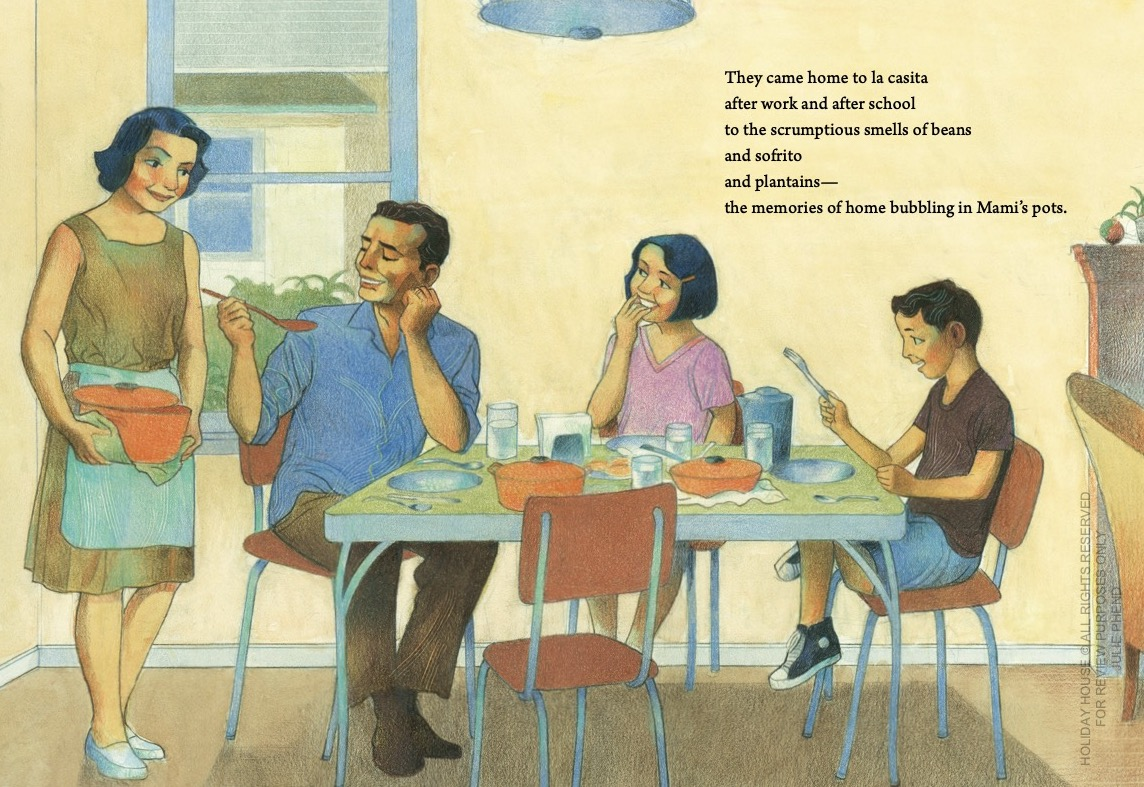
The Little House of Hope by Terry Catasús Jennings, illustrated by Raúl Colón

Published by Neal Porter Books

Summary:  Esperanza, Manolo, Mami, and Papi look hard to find a new home when they arrive in the U.S. from Cuba.  The house they find is small and needs some work, but everyone pitches in to fix it up.  It’s not easy to find the time because all four members of the family are working hard to earn money and learn English.  Eventually things get easier, and they’re able to share their home with two other families who have recently immigrated from Cuba and Mexico.  Over the years, more families come and go, and Esperanza always creates special artwork for them to take for their new homes.  48 pages; ages 4-8.

Pros:  A positive look at the experience of immigrating to the United States, showing families who are able to get ahead through hard work and sharing.  Raúl Colón’s beautifully colored illustrations add just the right touch.  Thanks to Terry Catasús Jennings, who sent me a signed copy of this book (which unfortunately got a bit mangled by the U.S. postal service).

Cons:  Immigrant kids today may find their experiences are not as rosy as the ones pictured here. The back flap mentions that this story is based on the author’s experiences moving to the U.S. in 1961.  I wish she had included a note with more information about that and how times have changed since then.

The Depth of the Lake and the Height of the Sky by Kim Jihyun

Published by Floris Books

Summary:  A young boy and his parents leave their home in the city to drive to his grandparents’ more rural house.  As soon as they arrive, he and his dog head off into the woods to explore.  They’re delighted to find a lake with a dock, and the boy dives in.  Down, down he goes into the water, where he comes face to face with a fish.  The last page shows him and his dog stretched out on the dock in the sun.  48 pages; ages 4-8.

Pros:  A magical wordless picture book that emphasizes the importance of slowing down…both to enjoy nature in the story and to take in all the details in each illustration.  The pictures are mostly black and white with touches of blue and gold.  Most of the story feels realistic, but the underwater scenes have hints of fantasy to them.

Cons:  I was thinking that this book should be considered for a Caldecott until I realized that the author-illustrator lives in South Korea.

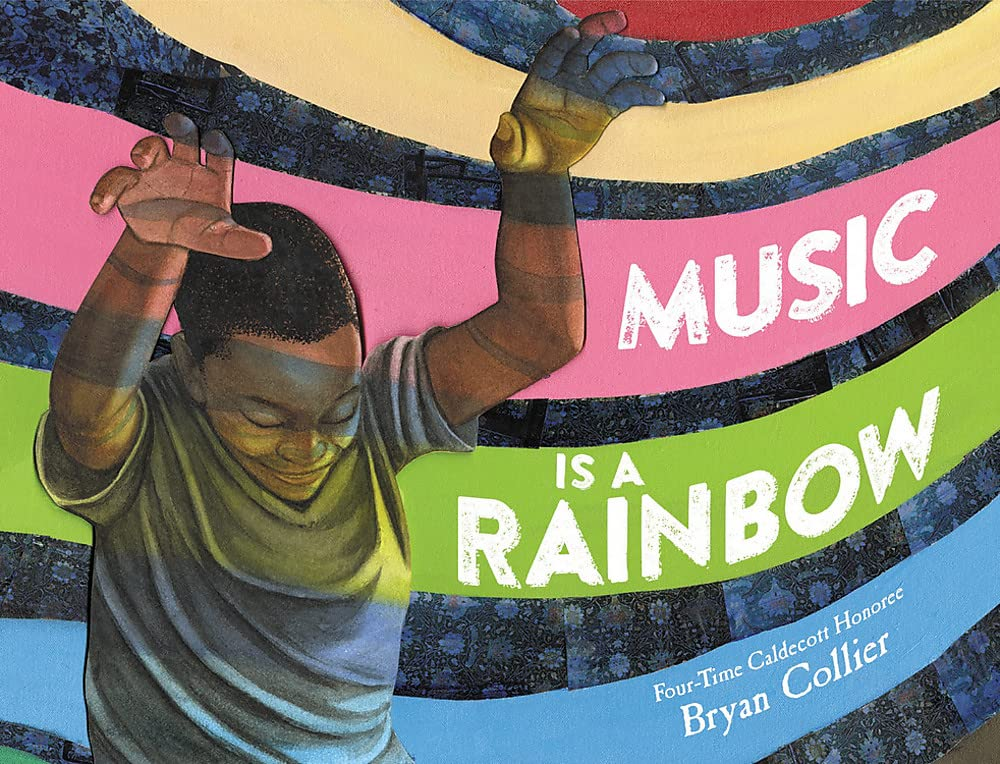
Music Is a Rainbow by Bryan Collier

Published by Little, Brown Books for Young Readers

Summary:  A boy struggles between forces of light and darkness in his life, starting with his feelings when his father leaves each day for work and when his mother gets sick and has to go away on his seventh birthday.  His father tells him to always “leave room for that rainbow to find you.  Broken is beautiful.”  The boy discovers the rainbow through music, but the magical feeling doesn’t last long.  He’s tempted into trouble by a group of friends known as the South Side Bandits, and before long they’re taking joy rides on the ice cream truck.  One day they decide to break into the rec center.  While his friends are trashing the place, the boy discovers a piano and sits down to play.  “The sounds became music, and the music changed into colors.  The rainbow had found him.  And then that feeling lasted forever.”  Includes an author’s note citing the influences of Maya Angelou, Robert Frost, and Quincy Jones on this story.  48 pages; grades K-3.

Pros:  Bryan Collier’s beautiful collage illustrations illuminate this story of a boy trying to find his way through difficult times.  I’m excited that I may actually get to meet Bryan Collier today at the Eric Carle Museum’s Collage Day!

Cons:  I found the story a little confusing, and I think that younger kids would definitely need some guidance to understand what’s going on.

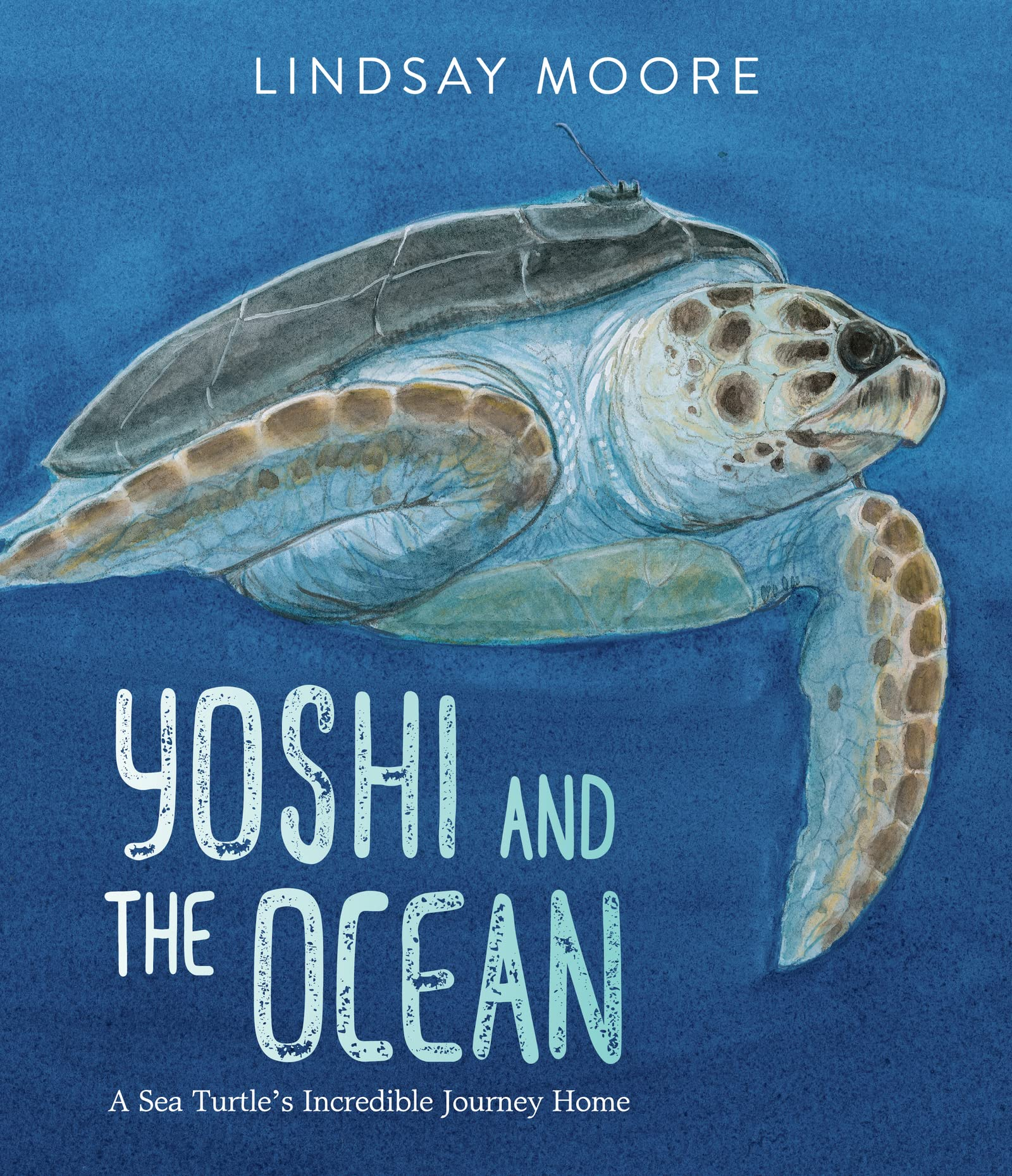
Yoshi and the Ocean: A Sea Turtle’s Incredible Journey Home by Lindsay Moore

Published by Greenwillow Books

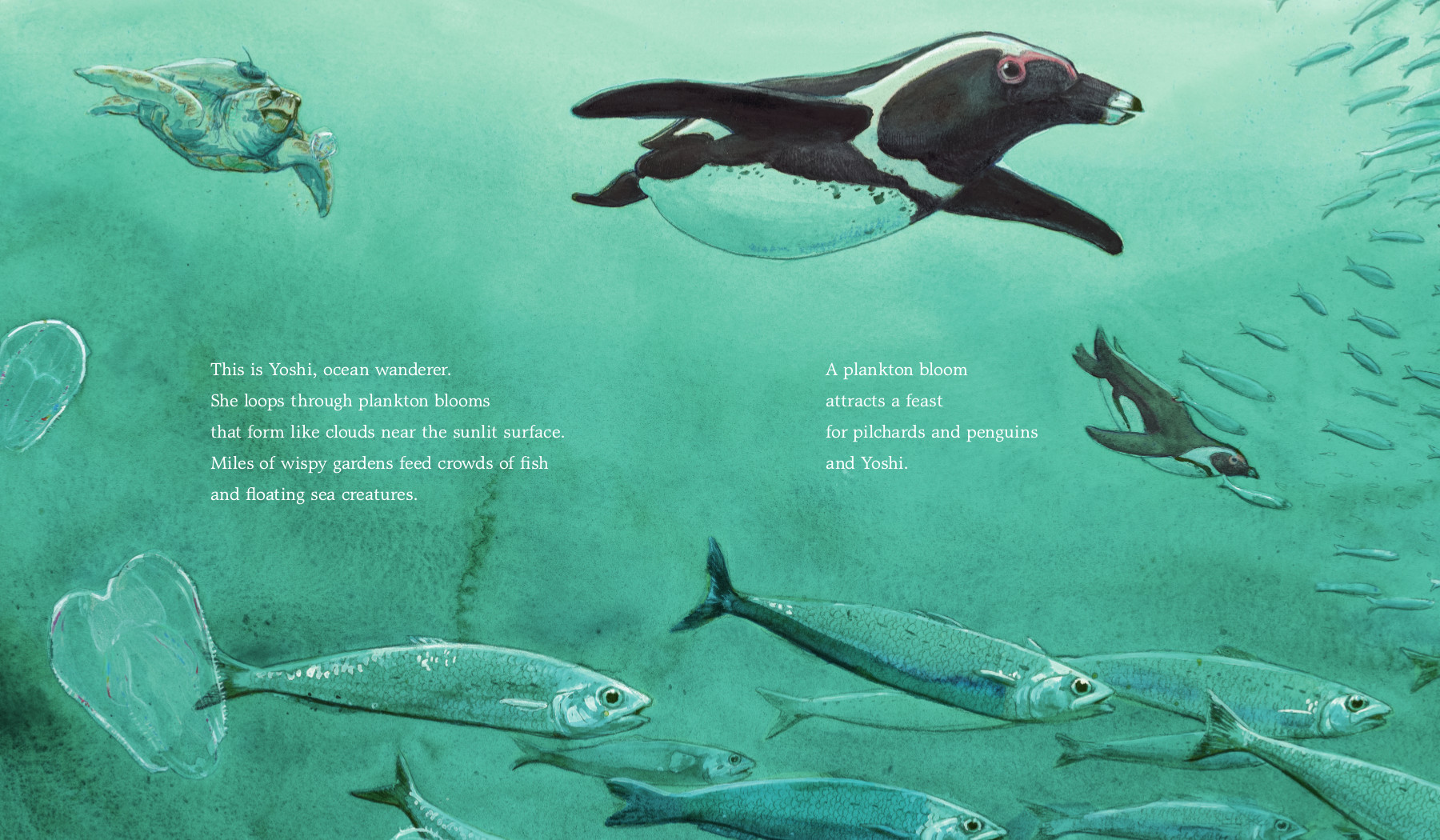
Summary:  Yoshi is a young, injured sea turtle when she is rescued by fishermen and sent to an aquarium in Cape Town, South Africa.  She thrives there, growing and swimming in a giant tank for twenty years, until she starts to display some restlessness.  The scientists want to return her to the wild, but they’re worried that she won’t be able to survive.  They attach a tracking device to her shell before releasing her back into the ocean.  At first her travels seem random, but eventually she starts heading east.  In February 2020, more than two years after her release, Yoshi completed a 25,000-mile journey to reach the Australian waters where she was born.  Includes a labeled map with additional information about Yoshi’s journey, a labeled diagram of a sea turtle, and additional information about turtles, their habitat, and tracking devices.  64 pages; grades 2-5.

Pros:  The beautiful watercolor illustrations do an amazing job of portraying Yoshi and her ocean environment.  I liked how the repeated refrain “Hello from Yoshi.  I am here” showed how the tracking device helped scientists follow her journey.  There’s a ton of excellent back matter which makes this a great research book.

Cons:  I found Yoshi’s lengthy journey a bit monotonous at times.  Maybe she did too.

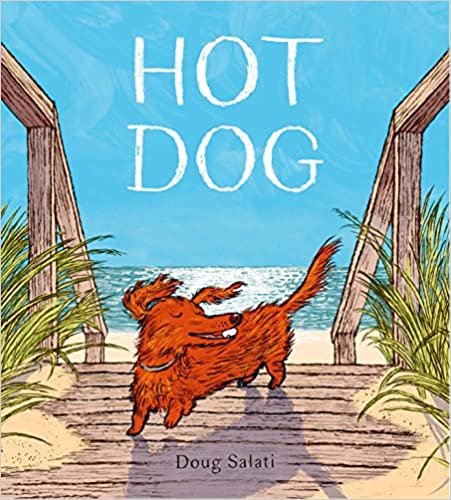
Hot Dog by Doug Salati

Published by Knopf Books for Young Readers

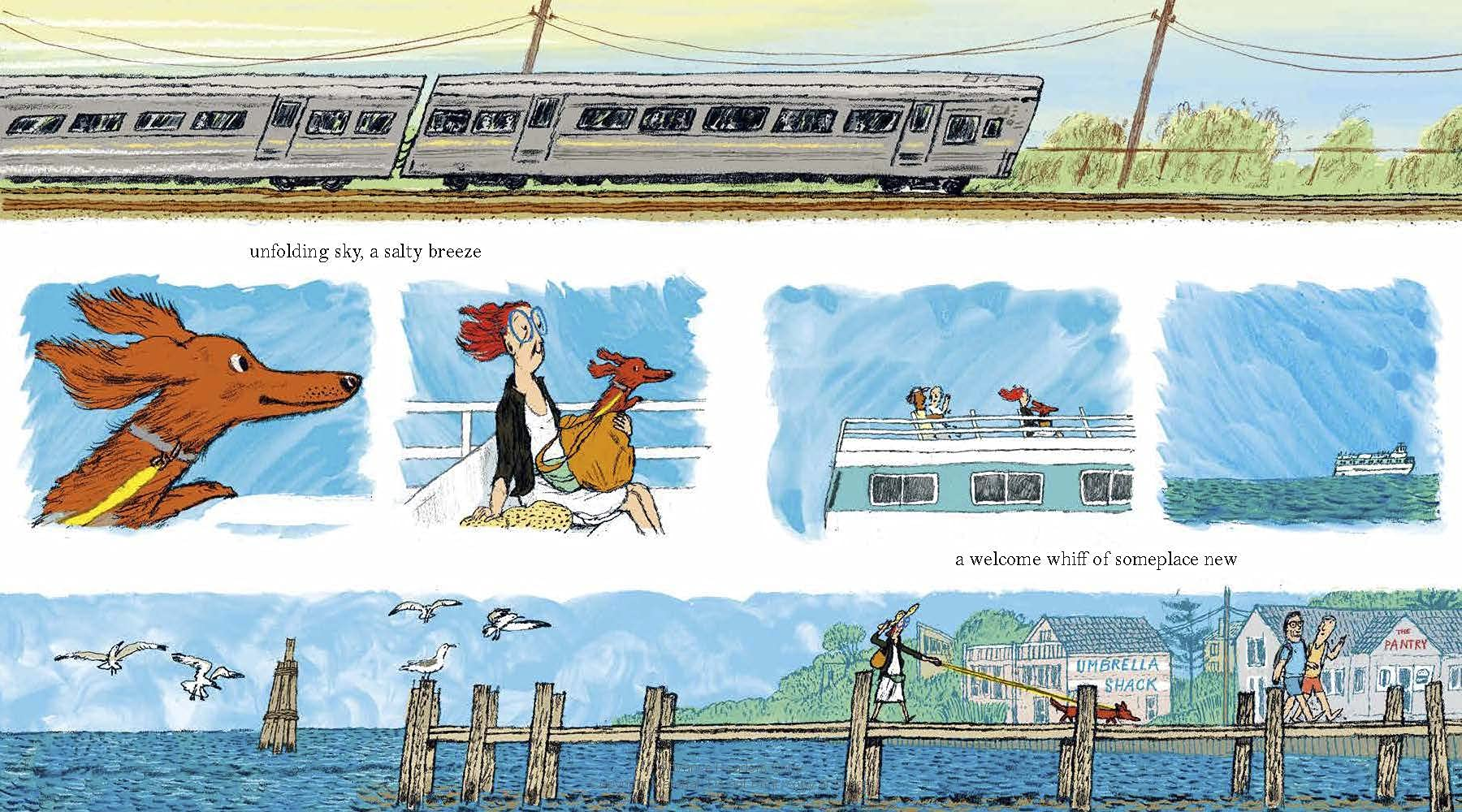
Summary:  “City summer, steamy sidewalks/concrete crumbles, sirens screech.”  Walking through the city with his owner, this dachshund is truly a hot dog!  Finally, he goes on strike, lying down in the middle of a busy street.  His owner scoops him up, hails a taxi, and heads to the train.  Before he knows it, the dog is cooling off on “an island…wild and long and low.”  The two have a refreshing afternoon there before heading back to the city where dusk has brought a welcome coolness.  Time for dinner and then “ready to leap into a deep ocean sleep” where he dreams about the seal he met on the beach.  40 pages; ages 3-8.

Pros:  An idyllic summer book where the illustrations perfectly capture the sweltering heat of the summer and the cool relief of a trip to the beach.  The words and illustrations transition from short phrases and hot colors to longer descriptions and cooler colors.  Not to be ruled out for Caldecott recognition.

Cons:  These two take a day trip from what appears to be New York City on a sweltering summer day to an island that appears to be populated only by seals, so we must definitely classify the story as a fantasy.