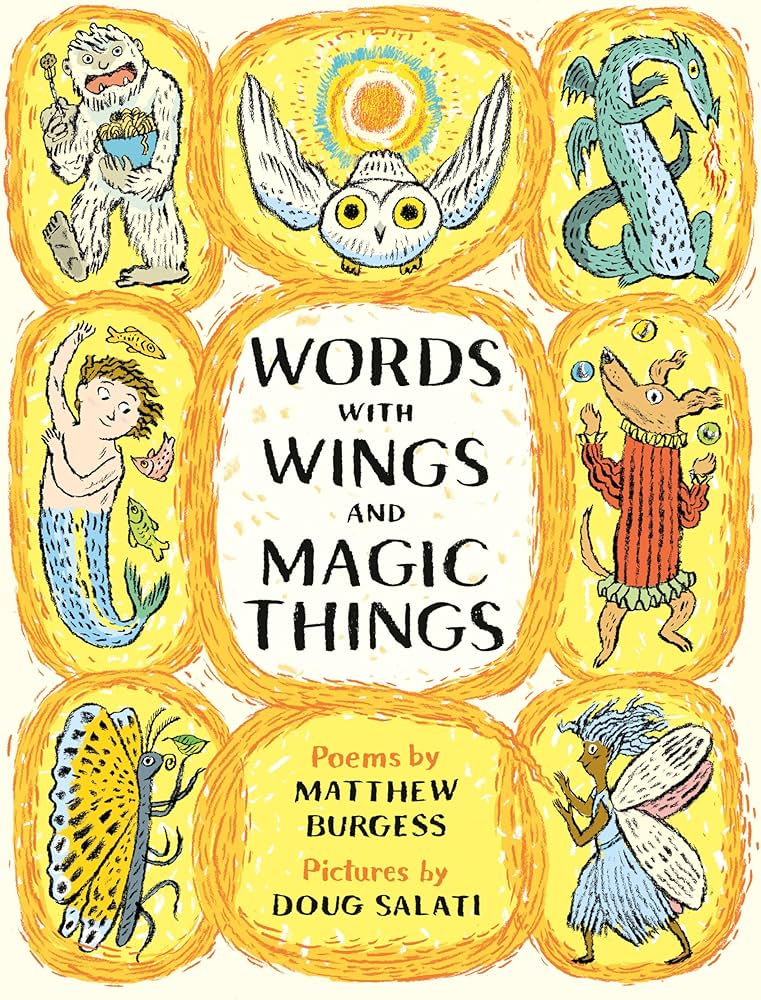
Words with Wings and Magic Things by Matthew Burgess, illustrated by Doug Salati (Tundra Books, 128 pages, grades 1-5). This poetry collection is divided into seven sections: Welcome, Wonders, Wild, Wheee!, Whoops and Whallops, Windows, and Whispers & Well Wishes. The poems range from Jack Prelutsky-laugh-out-loud funny to thought provoking meditations. All are illustrated by Caldecott Medalist Doug Salati with a colorful collection of animals and humans, mostly younger ones, with some fun cut-outs on the pages that start each new section. Includes an index.
This feels like a happy throwback to the days when Prelutsky and Shel Silverstein published lengthy collections of poems, with a nice mix that includes multi-stanza stories mixed in with meditative poems just several lines long. The illustrations add a lot to the fun.
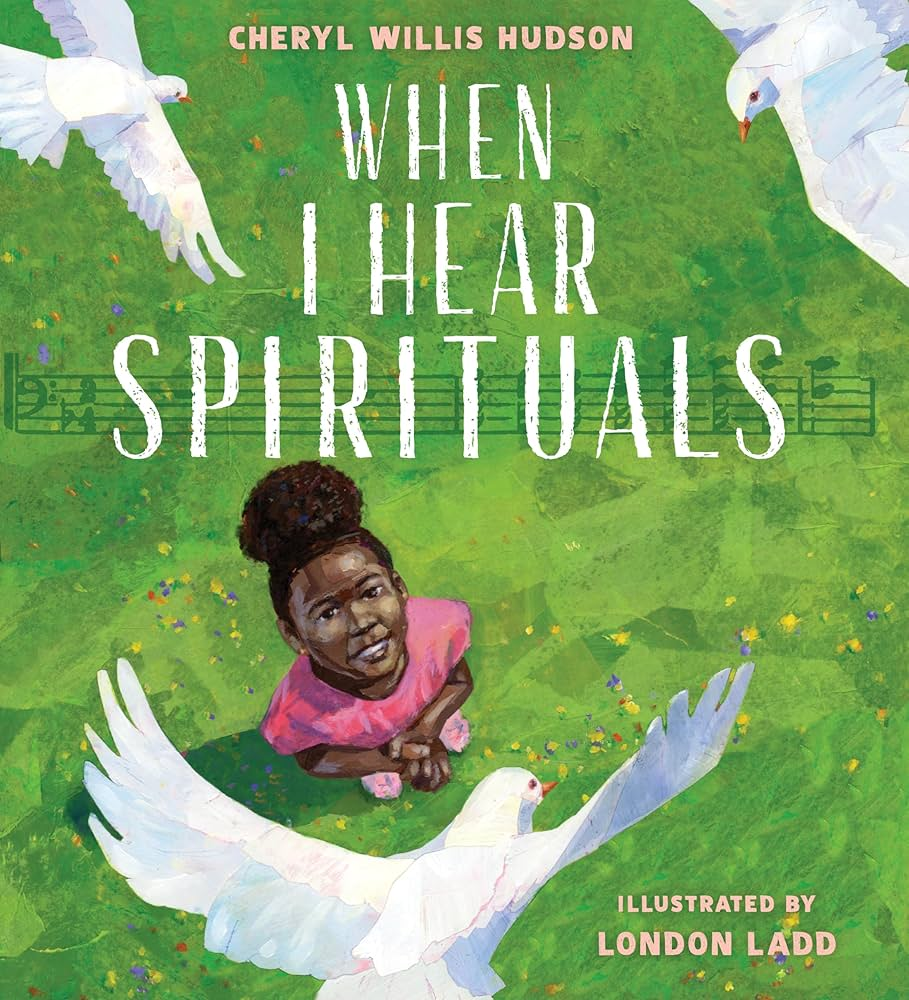
When I Hear Spirituals by Cheryl Willis Hudson, illustrated by London Ladd (Holiday House, 40 pages, grades 1-4). Each two page spread features a young girl describing how spirituals make her feel, with the words to different spirituals written on the facing page. The brilliant illustrations portray her singing, dancing, and praying, as well as showing scenes from Black history, when spirituals gave people courage and hope. A long author’s note describes the history of spirituals and her personal connection to them. There’s also a glossary, a list of the historical figures and events shown in the book, and a long lists of resources for listening to spirituals and learning more about them.
This beautiful book should definitely be considered for a Coretta Scott King award, both for the writing and the illustrations. The text reads like poetry and focuses on emotions evoked by spirituals, but there’s also plenty of information and resources for more research and listening.
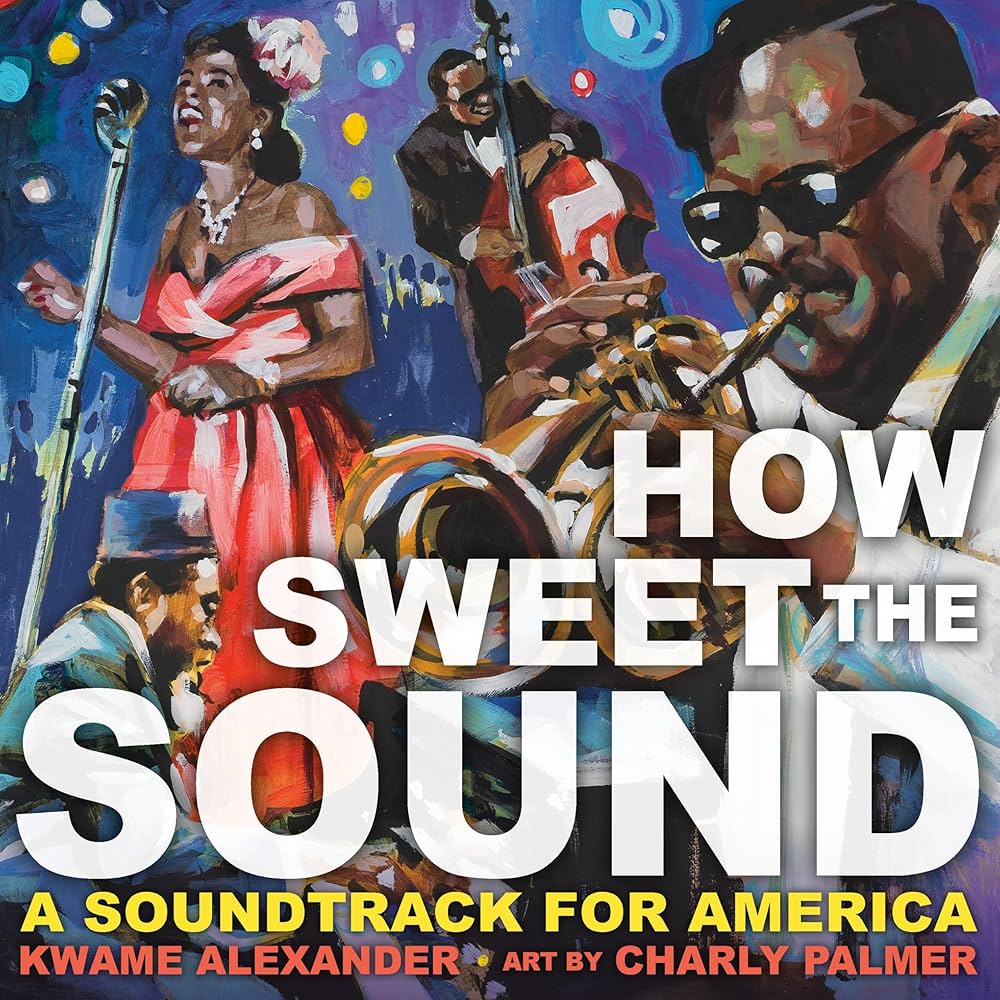
How Sweet the Sound: A Soundtrack for America by Kwame Alexander, illustrated by Charly Palmer (Little, Brown Books for Young Readers, 48 pages, ages 7 and up). Kwame Alexander’s poetry and Charly Palmer’s bright, bold paintings trace the history of Black music, beginning with drumming, dancing, and chanting in Africa, then moving to the gospel music and blues that grew out of slavery in America. Next comes jazz, which, along with the blues, leads to rock and roll, and finally, hip hop and rap. “Listen to the soundtrack of America/a symphony/of refuge and redemption/the sweet sound of a people/surviving and thriving/all the while learning/to love themselves/ by singing it LOUD and PROUD.” Includes six pages of “musical notes” that offer additional information about each musician along with a thumbnail portrait from the illustrations.
Music fans of all ages will appreciate this celebration of Black musicians who have made incredible contributions to American music. Every illustration feels like a party, and readers will have fun figuring out who’s who in them. Put this on the watch list for Caldecott and Coretta Scott King awards.
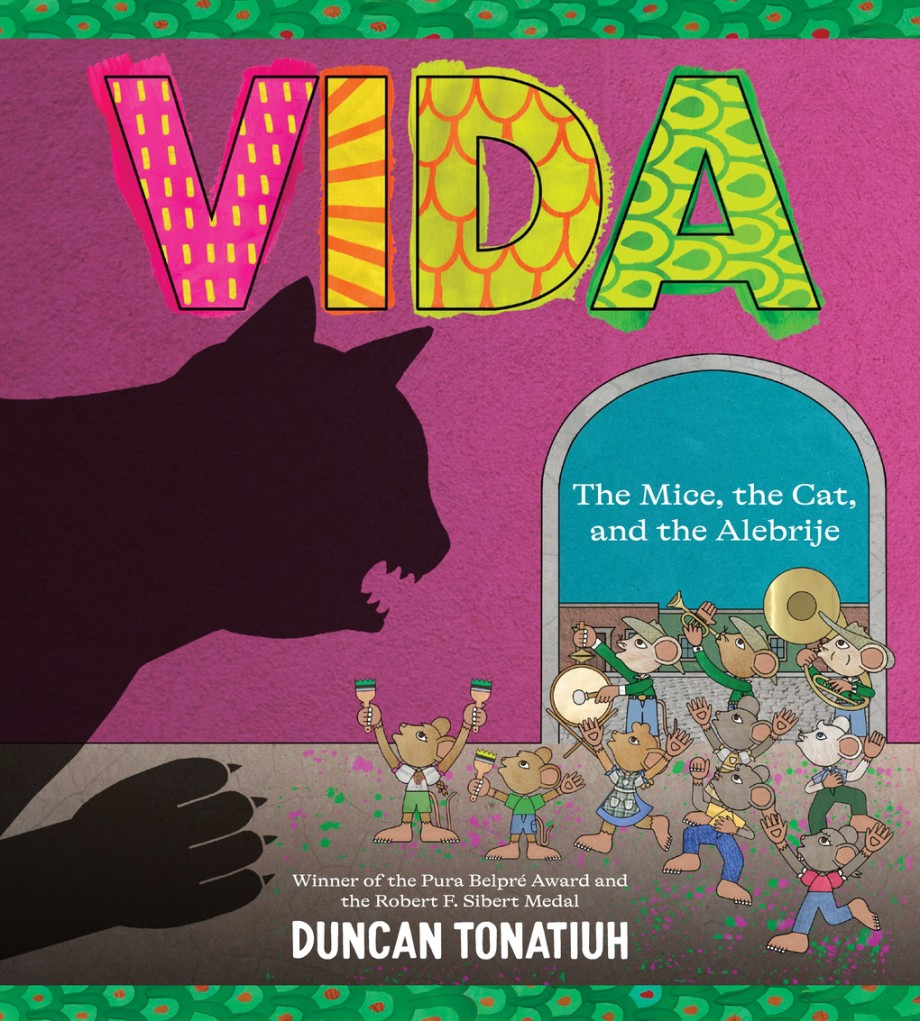
Vida: The Mice, the Cat, and the Alebrije by Duncan Tonatiuh (Harry N. Abrams, 48 pages, ages 5 and up). Mousetepec is a thriving mouse community with a vibrant culture, filled with art, music, good food, and fiestas. But one day a cat appears, and gradually the mice go into hiding, no longer able to engage in their enjoyable pursuits. Vida and her brother miss their old life and try to re-create it by making brightly-colored animals in their house. One night Vida has a dream about a fantastic creature called an alebrije, and when she wakes up, she knows how to scare the cat away. She gathers all the mice to make a huge creature like the one in her dream, covering it with brilliantly painted designs. When it’s completed, the mice lure the cat with a fiesta and loud music. The alebrije and all the noise terrify the cat, and Mousetepec is able to thrive once again. Includes an author’s note with information on alebrijes and Pedro Linares, the artist who created them. There’s also a note on the inspiration for Vida, which is a response to Aesop’s fable about belling the cat, and champions art and solidarity for overcoming evil forces in the world; also a glossary and pronunciation guide and a bibliography.
I read this book just hours after learning about the Fall of Freedom movement taking place this weekend, with artists all over the country creating works to protest what is happening in the U.S (you can read about it on my other blog). It’s a perfect complement to that, with the themes of art, community, and resistance, plus it’s an engaging story with plenty of cute mice and colorful creatures, plus it features Duncan Tonatiuh’s unique illustrations that manage to work in a few lessons about Mexican art. So win-win-win, and maybe a contender for an award or two.
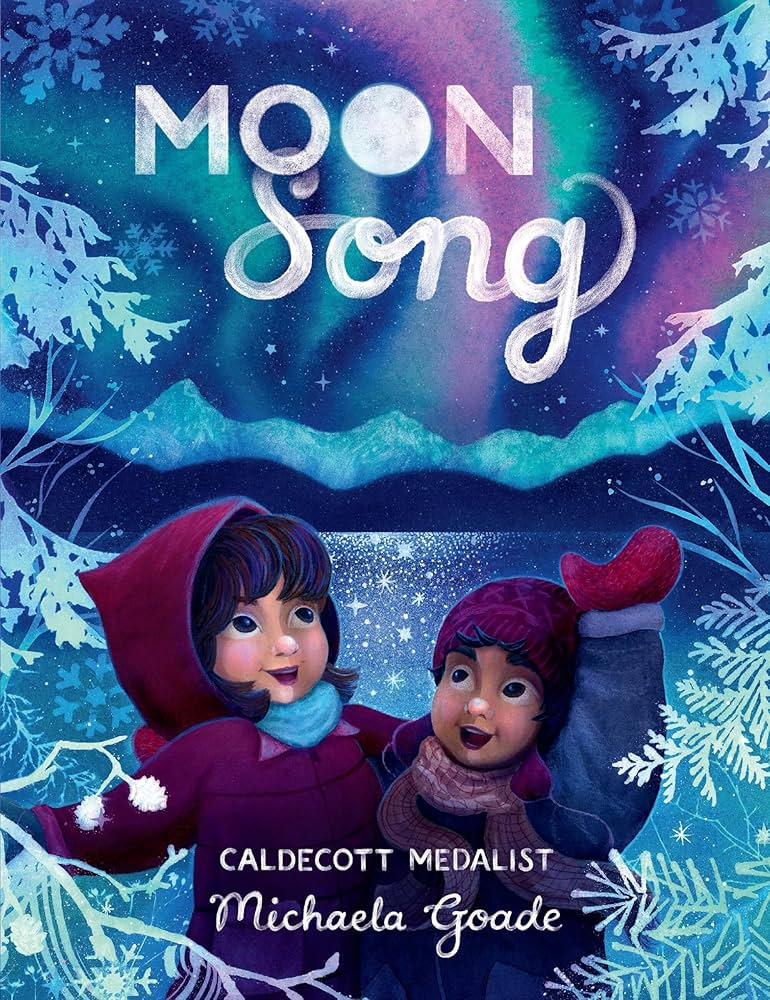
Moon Song by Michaela Goade (Little, Brown Books for Young Readers, 40 pages, ages 4-8). In this companion to Berry Song, the Tlingit family that gathered berries in the summer enjoys winter on their island. After scouting for deer and fishing for salmon in the dusky daytime, they gather for a cozy evening at home. The narrator helps her cousin overcome his fear of the dark by telling him a bedtime story about two children following the light of the moon. They walk through the dark forest, follow the edge of the sea, and finally come to a place where they see the magic of the aurora borealis, shown in a spectacular gatefold illustration. The last page shows the two cousins back home, settling in to go to sleep. Includes a note from the author about winters in her Tlingit community and some of her thoughts about winter, darkness, and light that inspired this book.
As always, Michaela Goade weaves together a lyrical story that includes Tlingit words and beautiful illustrations, just right for celebrating the winter. Definitely worth some Caldecott consideration.
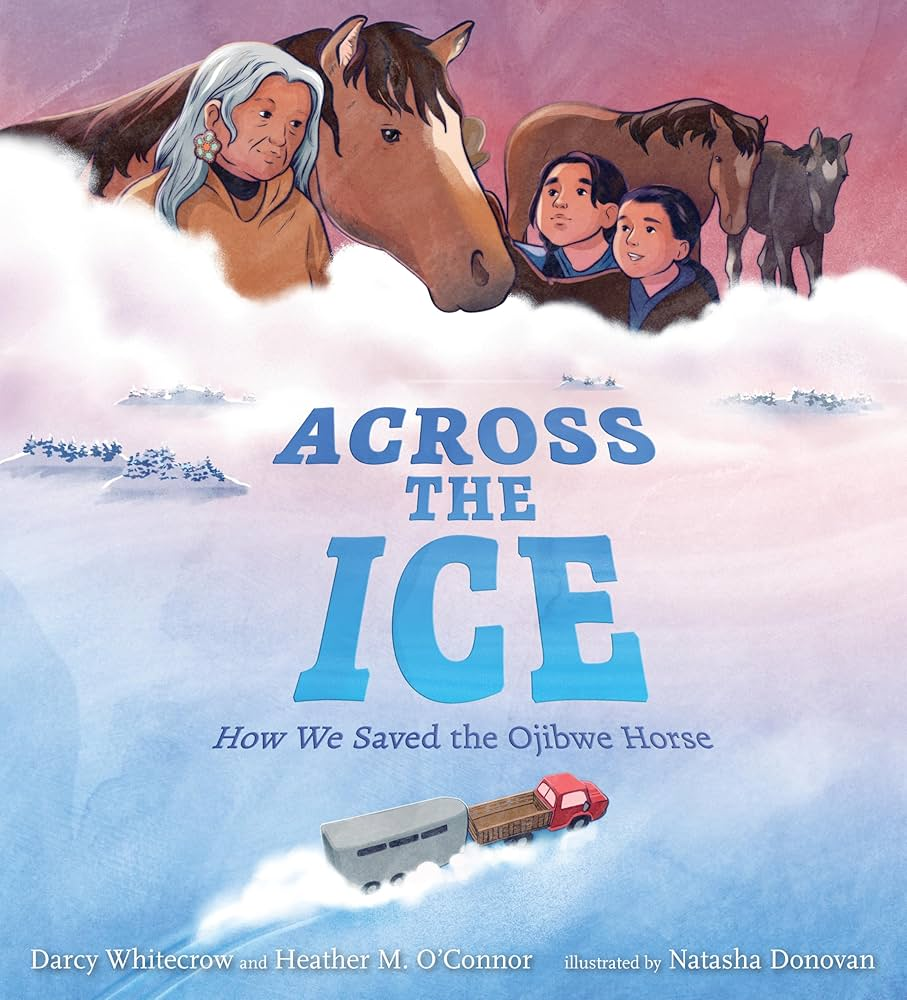
Across the Ice: How We Saved the Ojibwe Horse by Darcy Whitecrow and Heather M. O’Connor, illustrated by Natasha Donovan (Candlewick, 32 pages, ages 4-8). The two children narrating the story are too excited to sleep, so Nookomis (Grandmother) tells the story of the wild ponies tamed by the Ojibwe to help them with their work. In the summer, they set them free again to breed and roam the land. By the time Nookomis was born, though, there were only four ponies left, and all four were mares. A man from Minnesota named Fred Isham offered them a place to stay on his farm, and when Lac La Croix froze, the ponies were transported from Canada to the U.S., where they were bred, and a new herd started. On the night of the story, the whole family is waiting for six horses to be returned so they can start their own herd. Nookomis finishes her tale as the horses arrive, and the family goes out to welcome them. Includes an afterword with additional information about the Ojibwe horses.
A fascinating story told with beautiful illustrations that capture the colors and lights of the different seasons. Anyone interested in horses or Indigenous North American history will want to take a look at this book.
Sunflower Seeds by Ellen Heck (Levine Querido, 48 pages, ages 4-8). A boy tells of his adventures growing sunflowers, starting when his kindergarten teacher reads a book about them near the end of the year. Each student gets three seeds: one for the birds, one for the rain, and one to grow. On the last day of school the kids take their seedlings home in paper cups. The boy puts his cups outside, and sure enough, one gets knocked over in a rainstorm and never recovers. His parents help him plant the remaining two plants in the ground. One gets nibbled on by a deer, but the last one soars to a height over the heads of the tallest humans he knows. Everyone enjoys the big yellow flowers for a few weeks until they start to droop. The family cuts them off and counts the seeds inside–over 1,000! As the boy looks forward to sharing his sunflower stories in first grade, he visits the library, and opens a new book. What will he learn about next?
I’m putting this on my list of books to read to preschoolers and kindergartners in the spring. Not only is there a lot of information, told in a story that kids will connect with, but the oil paintings of sunflowers are amazingly detailed, as you can see from the cover. I also like the message that books are gateways into learning about all sorts of interesting things. I wish there had been a little back matter with some additional information about sunflowers.
Dear Acorn (Love, Oak) by Joyce Sidman, illustrated by Melissa Sweet (Clarion Books, 40 pages, grades 1-4). In eight pairs of poems, two objects address each other, showing their relationship to each other while highlighting each one’s unique perspective. There’s the acorn and oak pairing of the title, as well as bubble/sky, cloud/droplets, pebble/river, brick/school, button/coat, toes/child, and sea turtle/ocean. Each letter poem is pretty short–no more than a few stanzas of brief lines–and each is accompanied by a colorful collage drawing. The final pages includes simple, specific guidelines to help kids write their own letter poems.
Two masters of their crafts–Newbery honor winner Joyce Sidman and Caldecott honor winner Melissa Sweet–team up to create an engaging set of poems written in a format that invites kids to think about writing their own pairs of letters. The poems are simple and brief to read to primary grades yet interesting enough for older kids, and the beautiful collage illustrations could also be used as a starting point to encourage creativity.
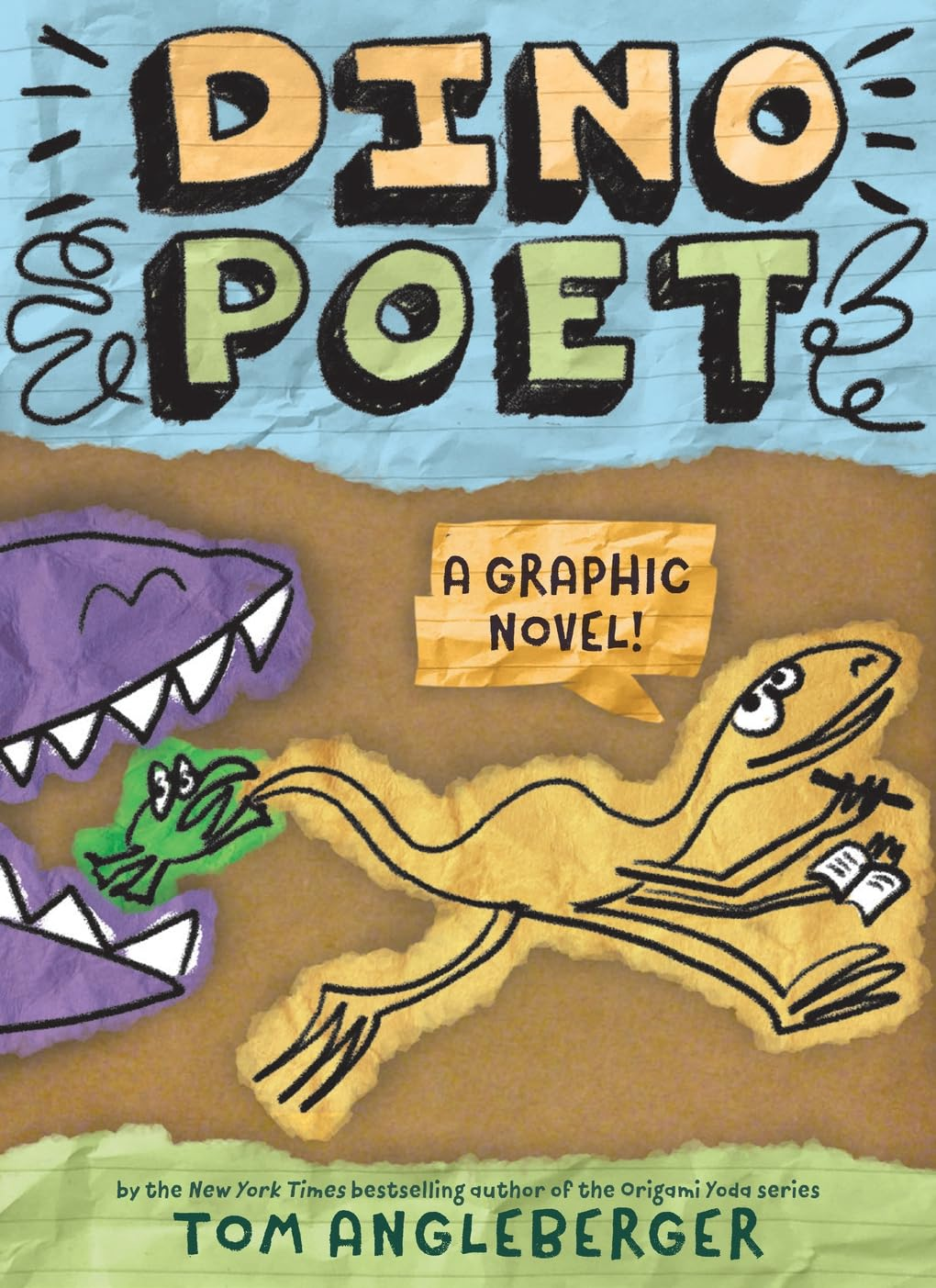
Dino Poet: a graphic novel by Tom Angleberger (Harry N. Abrams, 96 pages, grades 1-4). When a Coelophysis takes a break from writing poetry to have a froggy snack, the frog in question tells him that he hates his poem. The frog then proceeds to give the dinosaur poetry pointers, like how to express his emotions and use his senses to perceive the world. Desperate not to be eaten, the frog introduces different forms of poetry like limericks and speed haiku, while both creatures keep a sharp lookout for larger dinosaurs who may want to consume them both. The frog is so successful that by the end, the Coelophysis calls him a friend, refuses to eat him, and gets him his own notebook and pen so that they can write together.
Always expect the unexpected with Tom Angleberger, as evidenced by this book which is short for a graphic novel, long for a picture book, and has the unlikely premise of two animals from different eras becoming friends and writing poetry together. I love the way it introduces poetry and gently (and humorously) encourages kids to try their own. The simple collage art and the photo of art supplies at the beginning may also inspire readers in their artistic endeavors.
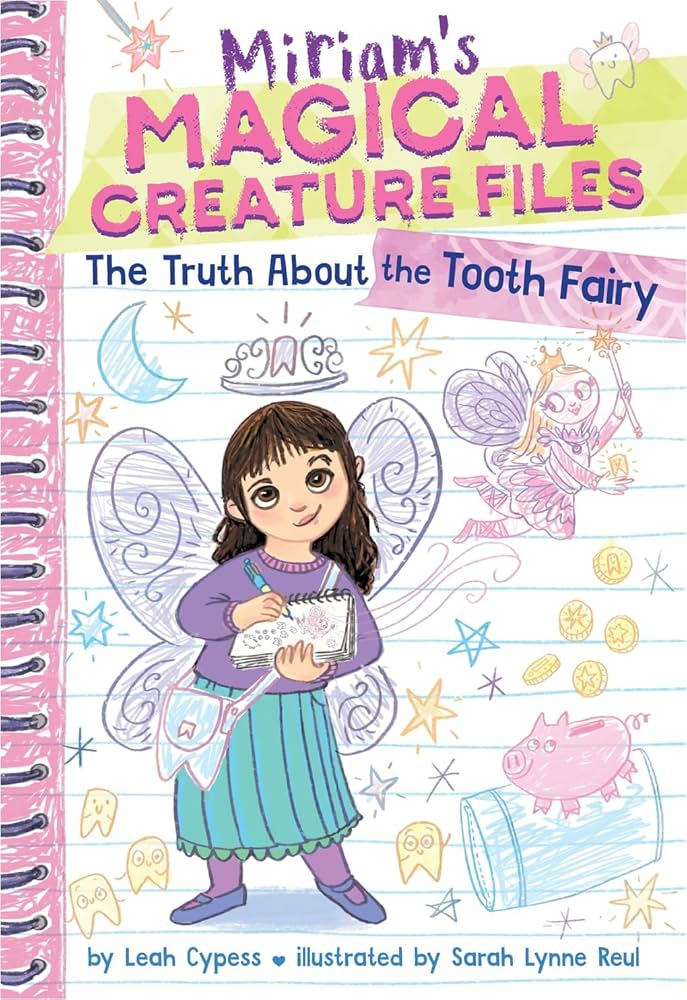
The Truth About the Tooth Fairy (Miriam’s Magical Creature Files book 1) by Leah Cypess, illustrated by Sarah Lynne Reul (Harry N. Abrams, 112 pages, grades 1-3). 6-year-old Miriam is the youngest of three siblings, slightly jaded about things her family tells her, and a firm believer in testing them out to find out if they’re true or not. For instance, after being told, “Sugar makes you hyper,” she eats a lot of it at a birthday party and feels fine. So when she realizes she has her first loose tooth, Miriam is ready to find out if the tooth fairy is real. Her methodology involves staying up and catching her parents in the act. Does she succeed? Readers will have to draw their own conclusions, but whatever they decide, they can look forward to book 2, The Discovery of Dragons, coming in August.
Miriam is a spunky and smart protagonist, part of an Orthodox Jewish family whose traditions are woven into the story and illustrations. The book resembles a scrapbook, with Miriam’s lists, charts, notes, and drawings on what looks like paper torn from a notebook. Fans of Junie B. Jones and other feisty early elementary narrators will enjoy this beginning chapter book.
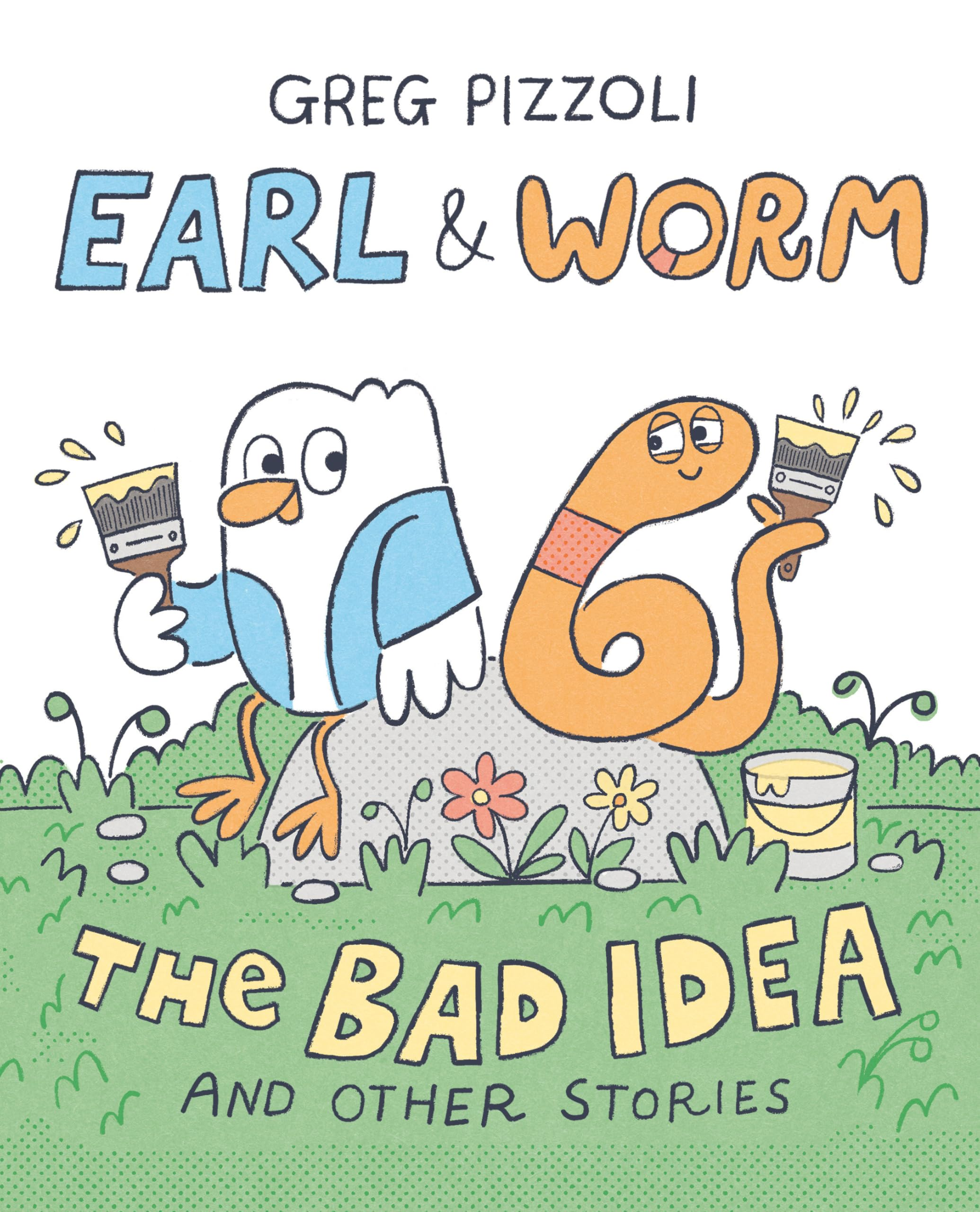
The Bad Idea and Other Stories (Earl and Worm book 1) by Greg Pizzoli (Knopf Books for Young Readers, 72 pages, ages 4-8). In the classic style of such literary friendships as Elephant and Piggie, Frog and Toad, Frank and Bean, Beak and Ally, etc., Worm is a grumpy introvert who initially is annoyed by early bird Earl who gives friendly greetings and plays music for his plants first thing in the morning. The second chapter sees Worm getting increasingly annoyed by what she perceives as Earl’s copying her good ideas about home decor. When she tries to trick Earl by telling him about an outlandish plan to paint the outside of her house, Earl surprises her by painting it for her, leaving her with a house she doesn’t like and the realization that the whole thing was a bad idea. Earl’s persistent cheerfulness slowly wins over Worm, and by the third chapter, Worm is committed enough to their friendship to write a poem that celebrates it.
I’m a pretty big Greg Pizzoli fan, and, while I personally feel this whole introvert/extrovert friendship theme in early readers is a little tired, Pizzoli does an excellent job of creating two fun characters and three funny stories, particularly the one about the bad idea. I love the illustrations, especially the way Worm is portrayed doing all sorts of tasks without any limbs. Try this out on fans of some of the series mentioned above.
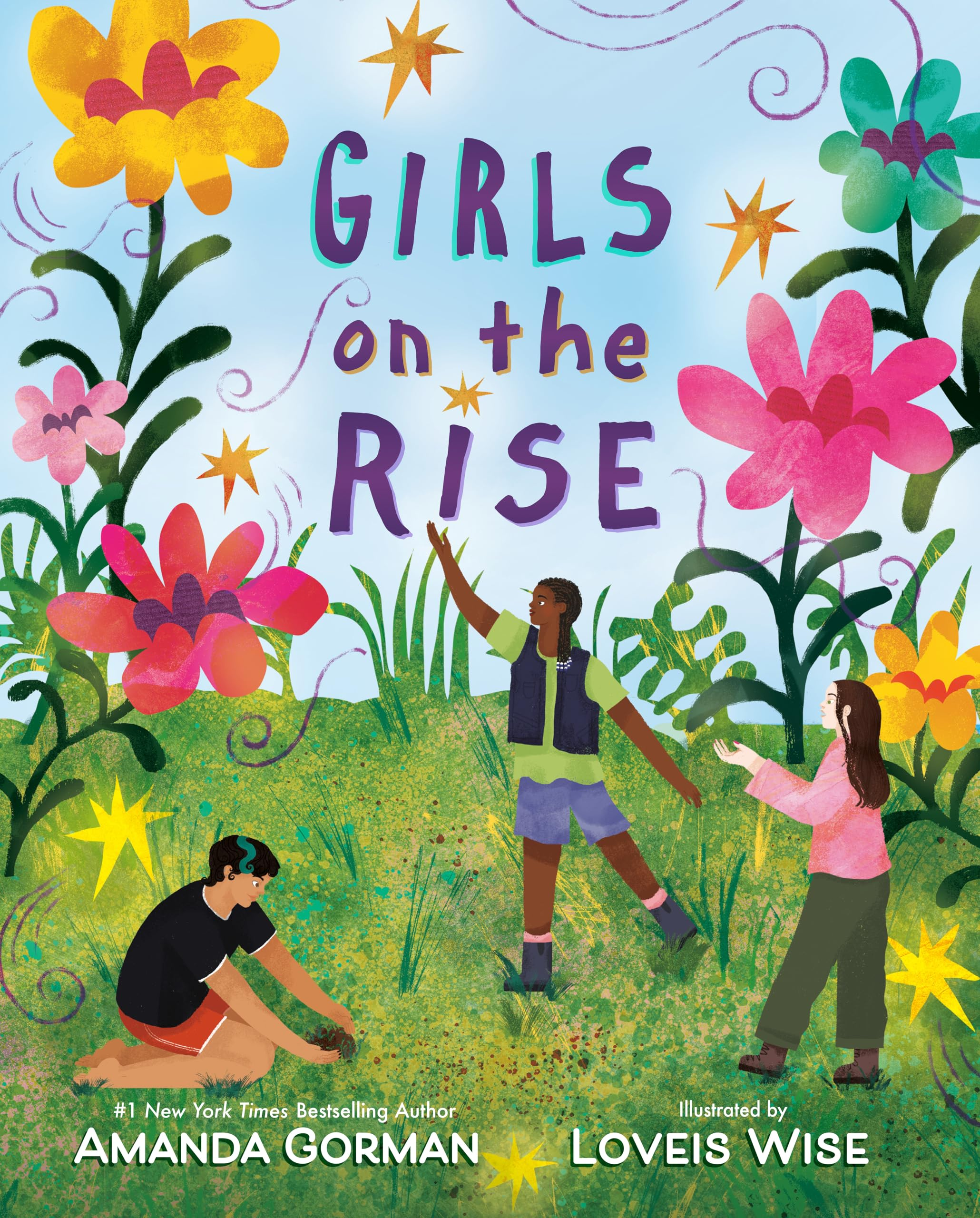
Girls on the Rise by Amanda Gorman, illustrated by Loveis Wise (Viking Books for Young Readers, 32 pages, ages 5-9). “We are girls on the rise./Today, everyone’s eyes/Are on us as we make waves/Pave the way, and save the day. Today, we finally have a say.” With simple rhymes and lush illustrations, this book celebrates girls of all types, encouraging them to support and empower each other through difficult times. Girls are celebrated for being strong and brave enough to right wrongs in the world. “Because when one girl is on the rise,/It means everyone else is, too.”
Dream a Dress, Dream a Poem: Dressmaker and Poet Myra Viola Wilds by Nancy Johnson James, illustrated by Diana Ejaita (Harry N. Abrams, 32 pages, ages 5-8). This book-length poem encourages readers to dream, citing the dreams of Myra Viola Wilds, a Black woman who grew up in Kentucky before moving to the city to get an education. She became an accomplished dressmaker until the close work damaged her eyes. Myra didn’t give up on her creative dreams, though, turning from sewing to poetry and publishing a book of her poems in 1915. The back matter includes additional biographical information and a photo, and the book begins and ends with two of Myra’s poems.
Both of these poetry books celebrate following dreams and lifting each other up. Amanda Gorman’s work speaks to these themes in general terms, while Nancy Johnson James offers a story of a woman who succeeded despite multiple hardships and was supported by the Black community that helped publish her work.
Both of these books would be excellent for celebrating Black History Month; if you’re looking for more resources, I have recently updated my Black History book list.
Go Tell It: How James Baldwin Became a Writer by Quartez Harris, illustrated by Gordon C. James (Little, Brown Books for Young Readers, 40 pages, grades 2-5). Books were a lifeline to young James Baldwin, growing up in Depression-era Harlem with a mother, stepfather, and eight siblings. Reading and writing helped him escape from his strict preacher stepfather and the racism he encountered all around him, particularly from the police. Words led Jimmy to preach his own sermons about love and acceptance, and they gained him admission to a prestigious high school, where he got to explore literature, film, and theater. The story follows Jimmy to Paris and ends with the publication of Go Tell It on the Mountain. Includes additional information about Baldwin, notes from the author and illustrator, and a list of sources.
And She Was Loved: Toni Morrison’s Life In Stories by Andrea Davis Pinkney, illustrated by Daniel Mintner (Little, Brown Books for Young Readers, 48 pages, grades 2-5). The author’s note begins, “This narrative is a love letter to an outspoken sparrow who transformed lives through her storytelling.” Her ode to Toni Morrison weaves biographical information into a celebration of the writer’s life and work. The phrase “And she was loved” appears in many illustrations, as the text describes the love given to her by her parents, her children, and her readers, in a narrative that moves from her childhood in Ohio to her college days at Howard University to her life as an editor, writer, and mother to a celebrated winner of the Pulitzer and Nobel Prizes and the Presidential Medal. In addition to the author’s note, the back matter includes an illustrator’s note, a photo of Morrison, a timeline, a list of selected works (including children’s books), and a list of sources.
Both of these biographies celebrate the lives and contributions of Black authors and offer inspiration to young writers. The illustrations in the books are striking, both by Caldecott honorees, with the potential for more awards consideration. These are books that may need a fair amount of introduction, as kids are unlikely to be familiar with either author.
Narwhal: Unicorn of the Arctic by Candace Fleming, illustrated by Deena So’Oteh (Anne Schwartz Books, 48 pages, grades 1-5). Narrated in second person (“Scientists call you unicorn of the Arctic”), the text tells the story of a narwhal, starting in the Arctic, where he and another male joust with their tusks before slipping under the ice into the sea. When the weather turns warm, the narwhal pod migrates to summer grounds; by September, it’s time to return to the Arctic. Dangers lurk, with orcas and polar bears hunting the narwhals and a sudden blizzard blocking the air hole in the ice. If the narwhal survives, he will make the journey back and forth for fifty years. Includes two pages of additional information and a bibliography.
As she did in Giant Squid, Honeybee, and Polar Bear, Candace Fleming has crafted an exciting nonfiction narrative that teaches kids a lot about a fascinating animal, while keeping the pages turning with plenty of adventure. I was disappointed at first that Eric Rohmann didn’t do the illustrations, but debut illustrator Deena So’Oteh did a magnificent job that deserves both Caldecott and Sibert consideration.
Beware the Dragon and the Nozzlewock: A Graphic Novel Poetry Collection Full of Suprising Characters! by Vikram Madan (Wordsong, 128 pages, grades 2-5). This madcap collection of poems features a wild and crazy cast of characters, such as ghost guppies, squishosaurs, and the salesmoose. Making multiple appearances throughout the book is the fearsome Nozzlewock, about whom a group of children is repeatedly warned, and from whom they have to ultimately save their teacher. There’s a bunch of crazy science going on, too, from laboratory shenanigans to wormholes, which in the end helps the kids rescue the teacher. Many of the characters reappear from time to time, adding to the fun and continuity of this poetry collection.
This would be a great introduction to poetry for those who may not consider themselves fans of the genre. The poems are hilarious, and the graphic novel format will appeal to all kinds of readers.
A Map for Falasteen by Maysa Odeh, illustrated by Aliaa Betawi (Henry Holt and Co., 40 pages, ages 4-8). When Falasteen’s teacher invites students to look at a map and share where their families are from, Falasteen can’t find her family’s homeland, Palestine. At home that afternoon, she tells her grandparents what happened and asks why Palestine isn’t on the map. Her grandfather, Jido, draws her a map and tells her that her teacher needs teaching, while Teta tells Falasteen how soldiers forced her and her children from their home and shows her the key to their old house she has kept all these years. When Falasteen asks her mother about it at bedtime, Mama tells her that “sometimes people live in countries and sometimes countries live in people,” and that Palestine lives in each of their hearts. She promises Falasteen that one day they will be able to visit their homeland. Includes an author’s note telling of her own family’s experiences being displaced from their home in Palestine in 1967, as well as a concise history of Palestine from 1948 to the present.
Maysa Odeh tells a compelling story that shows readers the history of Palestine, both through Falasteen’s story and her author’s note. Each of Falasteen’s family members adds a different element to the narrative, and Odeh’s personal story creates another layer. I felt like Mama’s speech could have been edited a bit for length (more power to her for having that much energy at bedtime), but at the same time it is incredibly moving and stirring.
Although it’s not a children’s book, I want to mention another new Palestinian book coming out this week, If I Must Die: Poetry and Prose by Refaat Alareer (OR Books, 288 pages). Refaat Alareer was a Palestinian poet and professor who was killed in an Israeli airstrike in Gaza in December 2023 at the age of 44. After his death his poem, “If I Must Die” went viral. There is currently a campaign to make his book a best-seller by pre-ordering it before Tuesday.
Mistakes That Made Us: Confessions from Twenty Poets by Irene Latham and Charles Waters, illustrated by Mercè López (Carolrhoda Books, 40 pages, grades 2-5). Twenty children’s poets reveal mistakes they made as kids and the lessons they learned from them. Some are funny, like Darren Sardelli’s glue on the toilet seat prank that ultimately made him a little less impulsive, others are more poignant, like Kim Rogers’ silence when she, a Native girl, was made to participate in the Land Run reenactment at her Oklahoma elementary school. And many of them, like scoring a goal for the other team or cutting your hair due to peer pressure are things that readers will relate to, whether they are children or adults. Each poem is accompanied by a paragraph in which the author tells a little more about the incident and what they learned from it.
These would make great writing prompts for kids to explore their own mistakes and what they learned from them. They’re also just fun to read and realize that we all share similar experiences, and the best thing to do when a mistake is made is to admit it, ask for forgiveness if necessary, and move on.
How to Pee Your Pants*: *The Right Way by Rachel Michelle Wilson (Feiwel and Friends, 32 pages, ages 3-6). It happens: you get caught up in what’s going on in class, you drink too much lemonade at lunch, or maybe you fall asleep, and the tried-and-true methods of crossing legs or holding your breath fail you. So what happens when you pee your pants? The owl protagonist offers some humorous ideas, including hiding the evidence, calling for help, or shooting a rocket into space in the hope that an alien will stop by with some dry clothes. If you find yourself in the embarrassing position of having to sit on bubble wrap while waiting for a change, remember that adults may have forgotten what it’s like to pee your pants (they’ll remember in a few years). The number one (pardon the expression) rule is this: if you come across someone else in a similar situation, remember to be the friend that you wish you had when you peed your pants.
We’ve all been there (and reading this book, you’ll realize you may be there again some day), and this funny and reassuring look will help kids get past what can be a humiliating experience, and remind everyone to be kind if it happens to someone else.