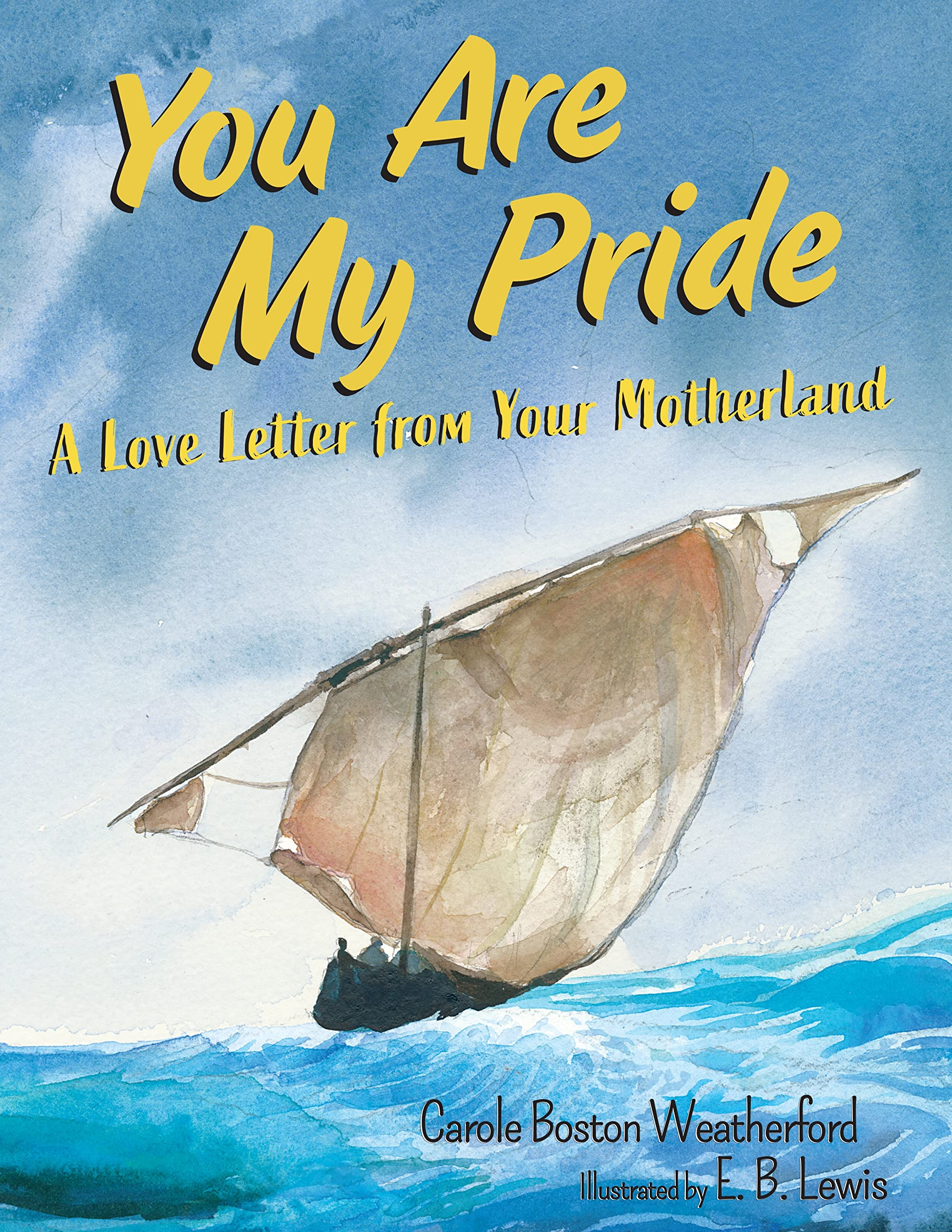
You Are My Pride: A Love Letter from Your Motherland by Carole Boston Weatherford, illustrated by E. B. Lewis

Published by Astra Young Readers

Summary:  “I am the mother of all humanity.  I have a long history and a longer memory,” begins this poem that is addressed to humans from the continent of Africa.  The narrator traces time from the first cells that evolved into the first humans.  “Child, you are mine as much as Mount Kilimanjaro, as much as the Serengiti and the Sahara, as much as the baobab and the bush.”  And although those children are her treasure, she sends them around the globe to let their gifts shine.  Includes additional information about human evolution, specifically in Africa, and a timeline of key species and developments in early human evolution.  40 pages; grades K-5.

Pros:  This loving poem with beautiful illustrations celebrates all of humanity, but especially those with roots in Africa.  The additional information makes it a resource that older kids will find useful as well.

Cons:  No additional resources.

Remember by Joy Harjo, illustrated by Michaela Goade

Published by Random House Studio

Summary:  Former U.S. Poet Laureate Joy Harjo’s poem celebrates life: the cosmos, the Earth, the plants and animals, and people, especially parents.  “Remember you are the universe.  And this universe is you.  Remember.”  Caldecott Medalist Michaela Goade’s illustrations depict a child traveling through the universe, with images inspired by traditions from her Tlingit culture.  Includes an author’s note about poetry that encourages readers to write their own poems and an illustrator’s note with additional information about her inspirations for the pictures.  40 pages; ages 5 and up.

Pros:  This beautiful book created by two Indigenous American artists celebrates the complexity of life and the universe, reminding the reader to stop and pay attention.  A Caldecott contender for sure.

Cons:  Young readers will need some adult guidance to fully appreciate both the text and the illustrations.

Champion Chompers, Super Stinkers and Other Poems by Extraordinary Animals by Linda Ashman, illustrated by Aparna Varma

Published by Harry N. Abrams

Summary:  Using mask poems (poems in which the writer speaks in the voice of someone or something else), Linda Ashman has animals give hints as to what they are and what superlatives (fastest, biggest, stinkiest, etc.) they hold in the animal world.  Each poem has an illustration showing part of the animal to give an additional clue.  Turn the page, and the animal is pictured in full, along with a paragraph of information.  Opening and closing poems introduce the contest.  Includes additional information about protecting endangered animals, measurements, and mask poems, as well as a glossary, and lists of websites and books.  48 pages; grades 1-4.

Pros:  I do love a good guessing book to keep kids engaged, and this one lets readers guess both the animals and the records they hold.  The illustrations are cute and offer hints to go with each poem.  Kids can try their hands at mask poems after reading these.

Cons:  It may be a little long for primary kids to get through all of these in one sitting.

Garvey’s Choice: The Graphic Novel by Nikki Grimes, illustrated by Theodore Taylor III

Published by Wordsong

Summary:  Nikki Grimes’s 2016 novel in verse has been turned into a graphic novel that is quite faithful to the original.  Garvey’s interested in chess and astronomy, while his dad wishes he would play sports, leading to ongoing conflict between the two.  When Garvey joins the school chorus, he discovers a talent for singing that eventually leads to a reconciliation with his dad (you can read a more detailed summary in my original review).  Includes additional information about tanka, the poetic form used by Nikki Grimes to write the book.  144 pages; grades 4-7.

Pros:  Turning this into a graphic novel is a stroke of genius, since it will bring a lot more readers to this excellent book.  The original was short enough that it is mostly preserved intact (I’m taking reviewers’ words for this, as I didn’t do a comparison myself), creating a story that many kids will relate to.

Cons:  Although Garvey lost a little bit of weight (one size), he wisely focused on developing healthier habits; however, the illustrations made him look like almost a different person in the last few pages.

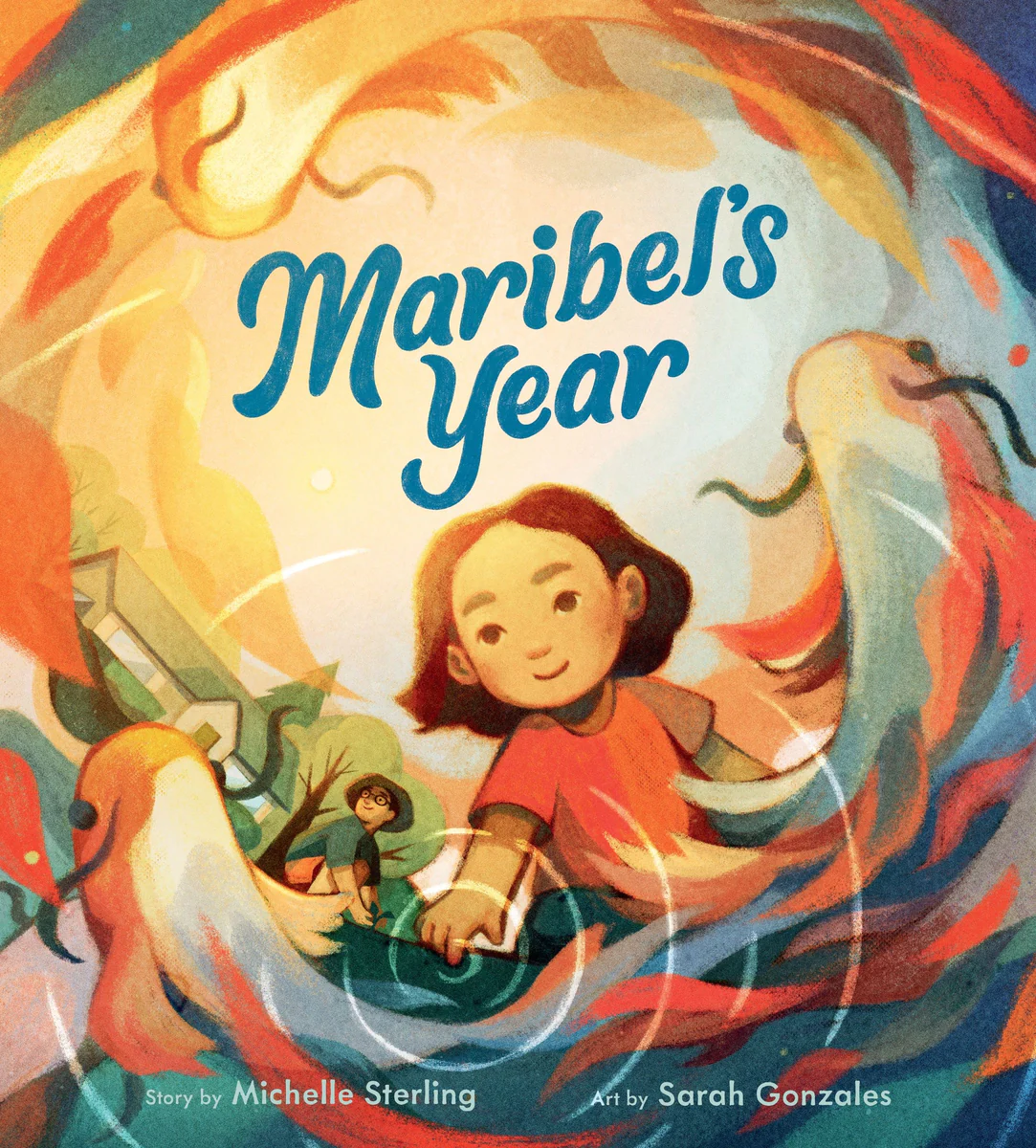
Maribel’s Year by Michelle Sterling, illustrated by Sarah Gonzales

Published by Katherine Tegen Books

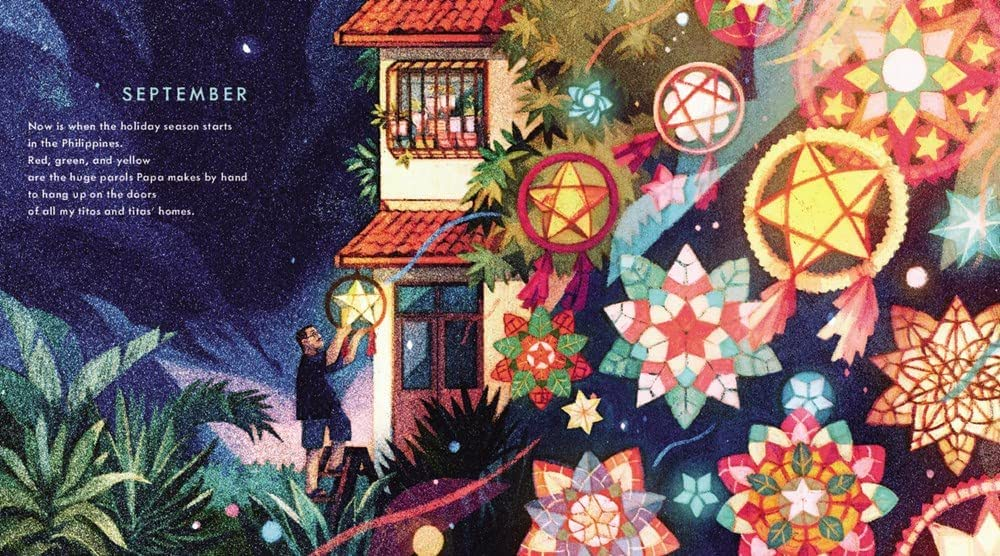
Summary:  Maribel tells about her first year in the U.S. after moving from the Philippines with her mother.  Papa is still back home, and Maribel misses both him and her home.  English is confusing, and the cold, snowy weather feels unfamiliar.  But as the year goes on, there’s the promise of a new friend and exciting new experiences like learning to ride a bike, swimming at the beach, and trick-or-treating.  By the time the snow falls again, it’s time for Papa to join them, and final pages see the family celebrating Christmas together.  40 pages; ages 4-8.

Pros:  Maribel tells her story in verse with slightly muted illustrations showing her experiences.  The ups and downs of the immigrant experiences are well expressed, and readers will enjoy sharing the year with Maribel.

Cons:  I was curious to know if this is based on a real-life family, but there was no author’s note.

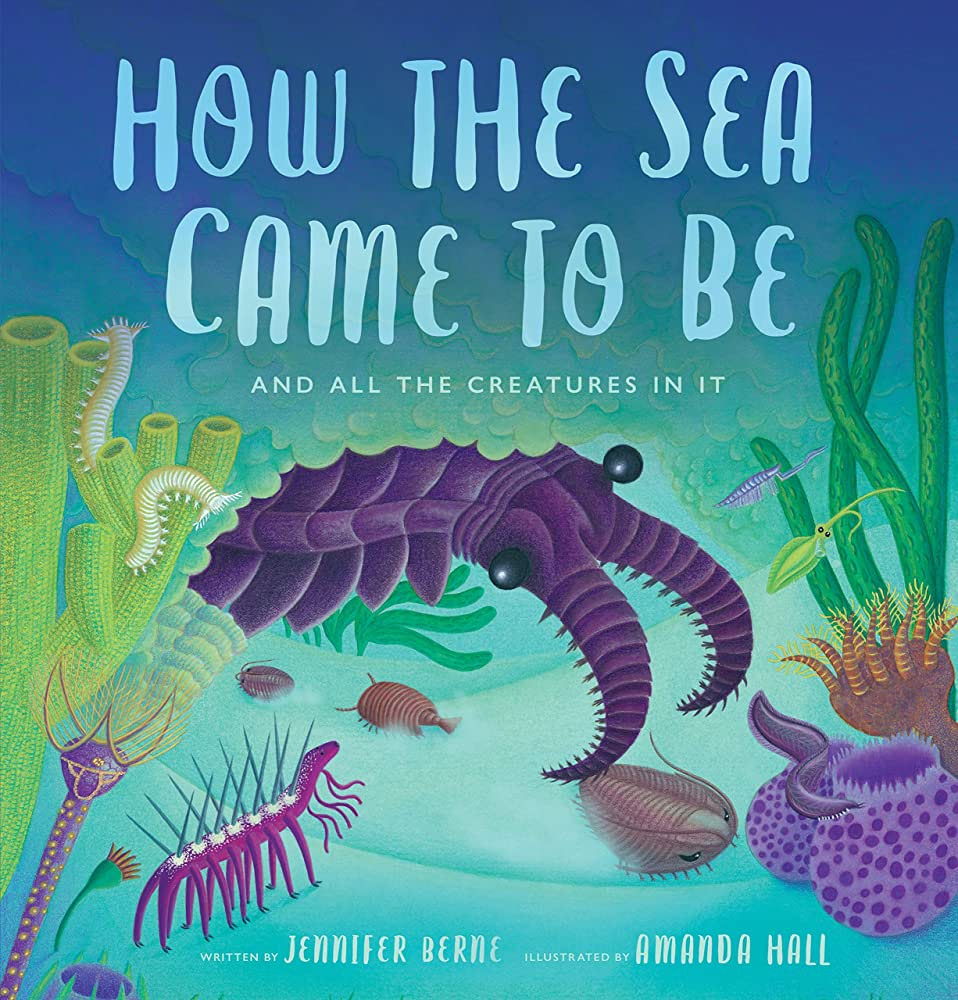
How the Sea Came to Be (And All the Creatures In It) by Jennifer Berne, illustrated by Amanda Hall

Published by Eerdmans Books for Young Readers

Summary:  Rhyming quatrains describe the history of the sea in three parts: the birth of the sea, the birth of life, and the sea from then until now.  All are accompanied by colorful illustrations that sometimes show the sun-dappled waters of the sea and other times take readers down into the black ocean depths.  Includes notes from the author and illustrator; two pages of ocean creatures that include illustrations and a paragraph of information about each; a four-panel gatefold timeline showing seven eras of the Earth’s history; key terms and concepts with definitions; and two pages of additional resources. 56 pages; grades 1-5.

Pros:  A spectacular nonfiction book that should be considered for a Sibert award.  The rhyming text is both catchy and impressive, making this a great choice to read aloud, and the illustrations are truly spectacular, conveying both the powerful forces that created the seas and the incredible diversity of life within them.  The timeline is a masterpiece, and the rest of the back matter makes this an excellent resource for research.

Cons:  I would have liked the timeline to have also been incorporated into the text to show the eras of each of the three parts.

The Red Ear Blows Its Nose by Robert Schechter, illustrated by S. Federico

Published by Word Galaxy Press

Summary:  This little poetry book contains 99 poems, most of them fitting on one page and one (“Question”) only two lines long (“When livestock salesmen cannot sleep, do they lie in bed discounting sheep?”).  Many are accompanied by black and white line illustrations.  There’s a wide range of topics, including how people see colors, the relative size of things in the universe, a horse who wants to moo, and many, many more.  The author has published poems in quite a few magazines, but this is his first collection.  118 pages; grades 1-5.

Pros:  Fans of Jack Prelutsky and Shel Silverstein will love this deceptively simple collection, with poems that can be read by first graders but discussed in depth by middle schoolers, and that contain equal parts humor and humanity.  Perfect for National Poetry Month.

Cons:  I could have enjoyed a few more illustrations.

How to Write a Poem by Kwame Alexander and Deanna Nikaido, illustrated by Melissa Sweet

Published by Quill Tree Books

Summary:  As they did with How to Write a Book, Melissa Sweet and Kwame Alexander (this time with Deanna Nikaido) dive into the world of poetry.  “Begin with a question/like an acorn waiting for spring,” then close your eyes, use your imagination, listen, explore what you are feeling, find a word or two.  “Now, show us what you’ve found.”  The text begins with a quote from Nikki Giovanni, “We are all either wheels or connectors.  Whichever we are, we must find truth and balance, which is a bicycle.”  The illustrations build on this, with circles, spheres, and bicycles throughout.  32 pages; grades K-5.

Pros:  A gorgeous introduction to poetry with spare but evocative language and riotously fun collage illustrations that spark the imagination.

Cons:  Like How to Write a Book, this strikes me as a book that will appeal more to adults than children.

An American Story by Kwame Alexander, illustrated by Dare Coulter

Published by Little, Brown Books for Young Readers

Summary:  “How do you tell a story that starts in Africa and ends in horror?”  Kwame Alexander was moved to write this poem after he realized his daughter’s fourth-grade teacher wasn’t teaching students about slavery, because she was anxious and hadn’t been trained in how to teach that piece of the American story.  With distinctive illustrations that combine sculptures and paintings, the book portrays life in Africa, people being captured, the Middle Passage, and the horrors of slavery once they arrived in America.  The narrative is interspersed with pictures of a class learning from a teacher who is somewhat hesitant to teach the story, but who is encouraged by her students to tell them the truth.  How do you tell the story? “You do it/by being brave enough/to lift your voice,/by holding/history/in one hand/and clenching/hope/in the other.”  56 pages; grades 3-7.

Pros:  I have been sharing Kwame Alexander’s The Undefeated with fourth and fifth graders this week, and I think this book is even more powerful.  I know I can feel uncomfortable talking to elementary students about racism and slavery, but they are ready to hear about it, and this is an important book for making sure that happens.  The illustrations are equally powerful and mark my first Caldecott prediction for 2024.

Cons:  I saw recommendations in several places for ages 4-8, but I think it’s more appropriate for older elementary kids.


Stopping By Woods on a Snowy Evening by Robert Frost, illustrated by P. J. Lynch

Published by Candlewick

Summary:  in this illustrated version of Robert Frost’s poem, a young woman in a long dress is riding her horse through the dark woods on a snowy night.  Each page contains a line or phrase from the poem with a realistic illustration of the girl, who eventually dismounts and pauses to observe the snow.  The endpapers are part of the story, with the front cover showing her riding through a lighted village and the back depicting the sun rising on a snowy landscape.  32 pages; grades K-5.

Pros:  A beautiful introduction to a classic poem.  The female rider makes a nice new twist and spreading the text out one line at a time allows the reader to savor both the words and the gorgeous illustrations.

Cons:  Personally, if I got caught in a nighttime snowstorm in the woods while wearing a long dress, I would get on that horse and ride, not “stop by” for a lengthy meditation.