Digestion: The Musical by Adam Rex, illustrated by Laura Park

Published by Chronicle Books

Summary:  Digestion: The Musical unfolds in three acts, featuring Your Body, L’il Candy, Gum, and the Baby Carrot Singers.  Starting from the moment the brain gets the signal to open the mouth and let in L’il Candy, the story continues down the esophagus and into the stomach, where Candy meets up with Gum (has he really been stuck there for years? “Nah, that’s a myth.”).  She’s consistently dismissed as junk food by the heart, lungs, gallbladder, and even the seemingly useless appendix.  But Candy persists and is eventually shown to have a nutritional core that can be used by the body.  The final number [two], “Let’s Get This Potty Started”, will leave audiences with a smile on their faces.  Includes a glossary and a literal appendix, which it turns out, is actually useful for storing good bacteria. 76 pages; grades 2-6.

Pros:  I laughed, I cried, I gasped aloud at this fascinating and hilarious mix of fiction and nonfiction that’s presented in both horizontal and vertical spreads.  You’ll probably want to supplement this with other material, but the basic facts are here and likely to stick in kids’ heads due to the high entertainment factor of the presentation.

Cons:  It’s tough to let yourself get too attached to a protagonist that you know is about to be pulverized by the digestive system.

A Leopard Diary: My Journey Into the Hidden World of a Mother and Her Cubs by Suzi Eszterhas

Published by Owlkids

Summary:  When Suzi Eszterhas hears about a pregnant female leopard living in Botswana, she decides to travel there to photograph her and her cubs.  The leopard, named Camp Female, is more relaxed around humans than most leopards, making opportunities for photographing more likely.  This book is written like a diary, from Suzi’s arrival on April 19 when the cubs are just a few weeks old, until February two years later, when those two are grown and living on their own, and Camp Female has a new baby.  Suzi makes several trips during that time, capturing the leopards on film as the play, hunt, and rest.  She also records other animals she sees on her trips, like elephants, giraffes, and baboons.  The narrative ends when the newest cub is still a baby, but Suzi promises she’ll be back to continue her work.  Includes an interview with Kambango, her guide and friend, and a glossary.  40 pages; grades 3-5.

Pros:  I’m always thrilled to see a new book by Suzi Eszterhas, because they’re so popular with kids.  And why not?  High quality photos of adorable animals and stories written engagingly for elementary students make a winning combination that is continued in her most recent work.

Cons:  Camp Female seemed like a pretty dreary name for a leopard, with not much improvement when she was renamed “Mom”. 

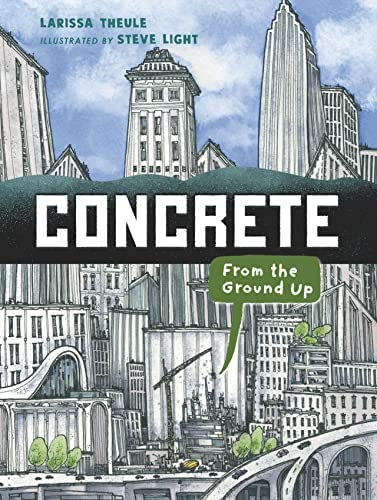
Concrete: From the Ground Up by Larissa Theule, illustrated by Steve Light

Published by Candlewick

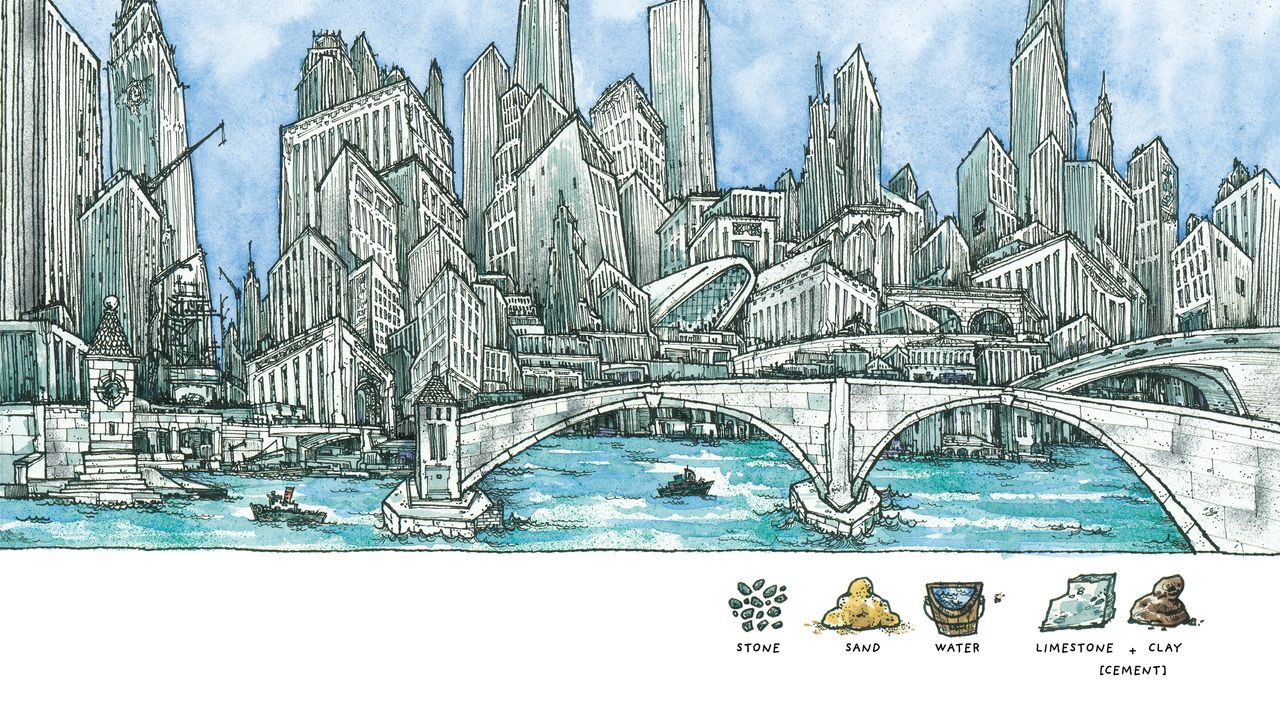
Summary:  We may not think much about concrete (I know I don’t), but it’s an amazing material that has allowed engineers to design some pretty spectacular structures beginning with the Roman Colosseum and Pantheon.  The technology was lost for centuries after the fall of the Roman Empire, but an engineer named John Smeaton rediscovered it to construct a lighthouse in 1757.  Since then, engineers have learned how to reinforce concrete with steel that has allowed them to build bridges, dams, and skyscrapers.  The final page asks the question of what may come next for concrete as the needs of humans and the planet change in the future.  48 pages; grades 2-5.

Pros:  Answers the question “How could concrete possibly be interesting?” with engaging stories of different structures around the world and incredibly detailed drawings that feature various characters making funny comments about their circumstances and inventions.  Fans of David Macaulay books will enjoy poring over the details.  Amazon has this listed as part of a series called Material Marvels, so I am hoping there will be more books to come.

Cons:  Many readers may see the cover and think, “How could concrete possibly be interesting?”

Caves by Nell Cross Beckerman, illustrated by Kalen Chock

Published by Orchard Books

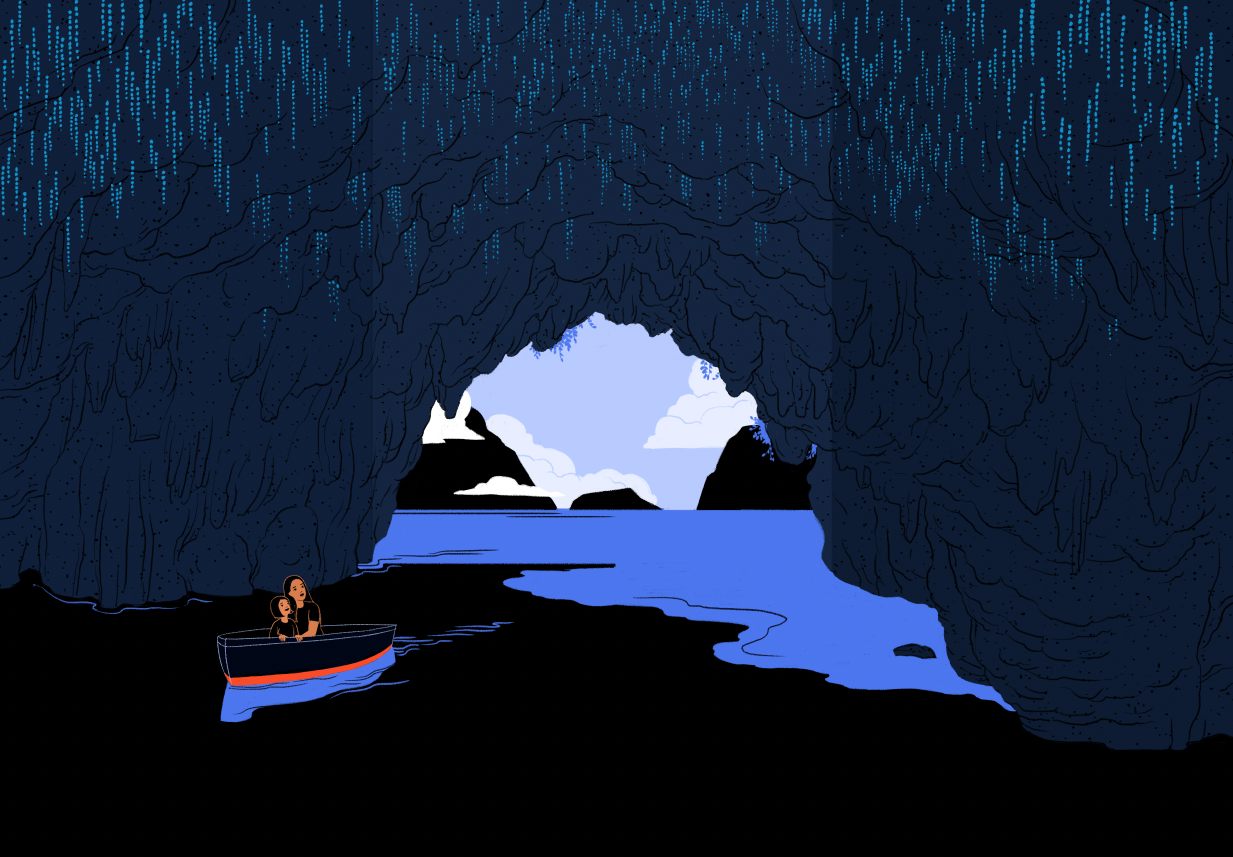
Summary:  Addressing the reader in the second person (“You want to go in…do you dare?”), the book introduces different features of caves, then shows unusual examples of each one in seven caves around the world.  There’s the Cueva de Los Cristales in Mexico, filled with 39-foot crystals that had to be pumped dry for people to explore. And the Bracken Cave in Texas, summer home to twenty million bats.  The realistic illustrations convey the magnitude of the caves, often showing how small the human explorers are in comparison.  Includes notes from the author and illustrator, lists of cave rules and spelunking equipment, and more fun facts about three of the caves.  40 pages; grades 1-4.

Pros:  The poetic text and gorgeous illustrations combine to make a nonfiction book that invites readers on an adventure, in the spirit of Candace Fleming’s Giant Squid or Jason Chin’s Grand Canyon.  I’d love to see this get some Siebert Award recognition.

Cons:  I wish that there were more fun facts about all of the caves mentioned in the book, not just three.

The Animal Toolkit: How Animals Use Tools by Steve Jenkins and Robin Page

Published by Clarion Books

Summary:  The introduction defines a tool as “an object that an animal manipulates and uses to affect its environment, another animal, or itself.”  Many of us probably know that certain kinds of apes and monkeys use tools, but what about the corolla spider that uses stones to build its web, or the bottlenose dolphin that catches fish in a shell?  Or, creepily, the black kite that will carry a burning stick from a wildfire to start a fire in another area to flush out prey (I wish I could unsee the cute quorra fleeing the flames).  Each page has a cut paper illustration with a brief paragraph of information; additional information on each animal is provided at the end, along with a bibliography.  32 pages; grades K-5.

Pros:  By now you know of my deep and abiding love for all things Steve Jenkins (and Robin Page for that matter), and here you have another fascinating book to wow elementary kids.

Cons:  Still experiencing grief and denial over the fact that Steve Jenkins passed away earlier this year.

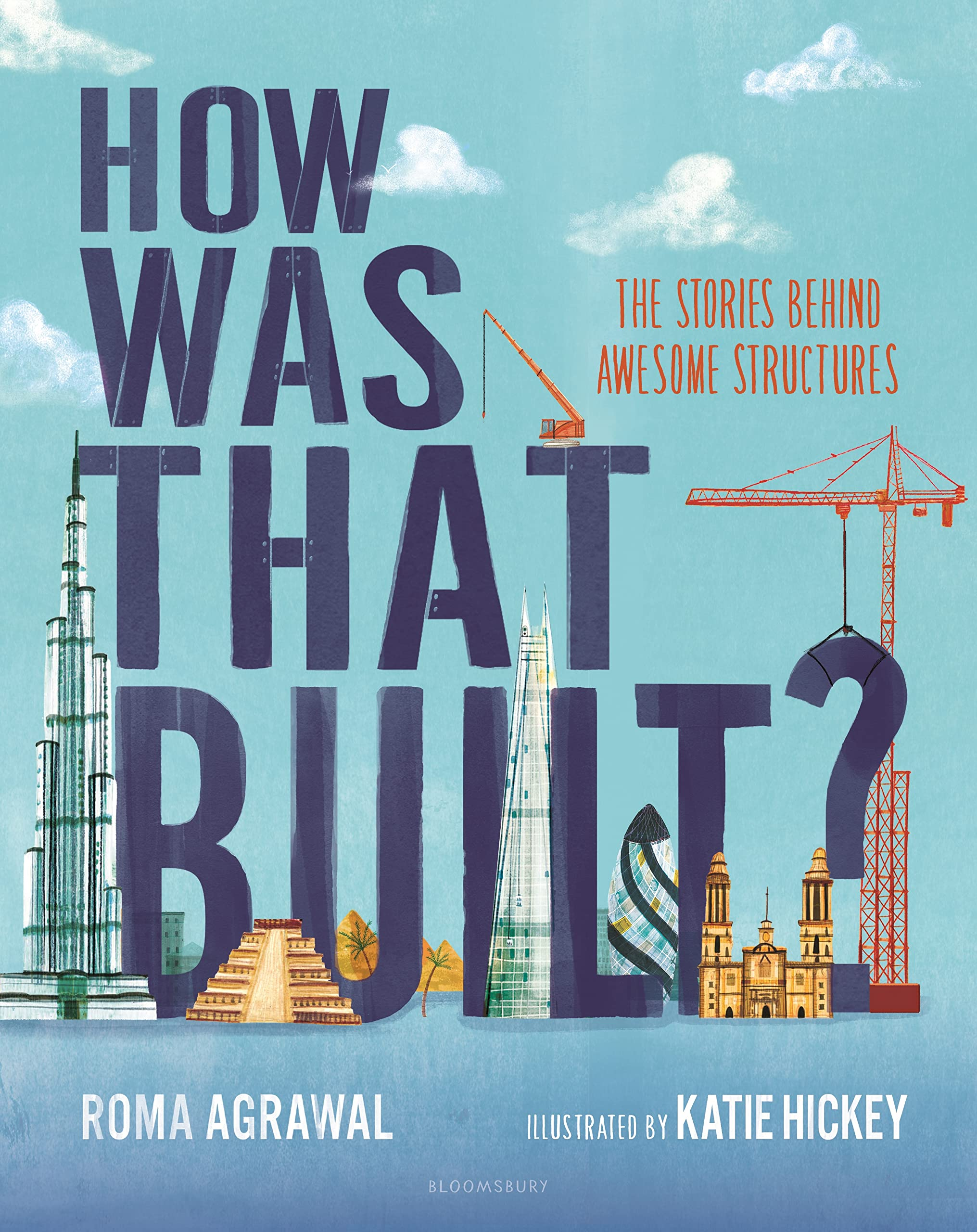
How Was That Built? The Stories Behind Awesome Structures by Roma Agrawal, illustrated by Katie Hickey

Published by Bloomsbury Children’s Books

Summary:  Written by a structural engineer, this book is divided into fifteen sections that delve into how to build in different circumstances, with examples of each.  For instance, the Brooklyn Bridge is featured in “How to Build Long”, London’s sewers in “How to Build Clean”, and the Pantheon in “How to Build a Dome”.  Each section opens with some general information, then dives into the history of the structure with plenty of illustrations to help with the explanations.  There are sections about building on ice in Antarctica and building undersea and in space.  The final two pages include some new technologies that will help engineers create structures of the future.  Includes a glossary and an engineers’ gallery featuring ten engineers.  80 pages; grades 4-8.

Pros:  This is a pretty amazing collection of information with beautiful, detailed illustrations that will fascinate readers with an inclination toward science and engineering.  

Cons: I couldn’t figure out what the criteria were for which engineers made it into the gallery at the end.

Passionate About Penguins by Owen Davey

Published by Flying Eye Books

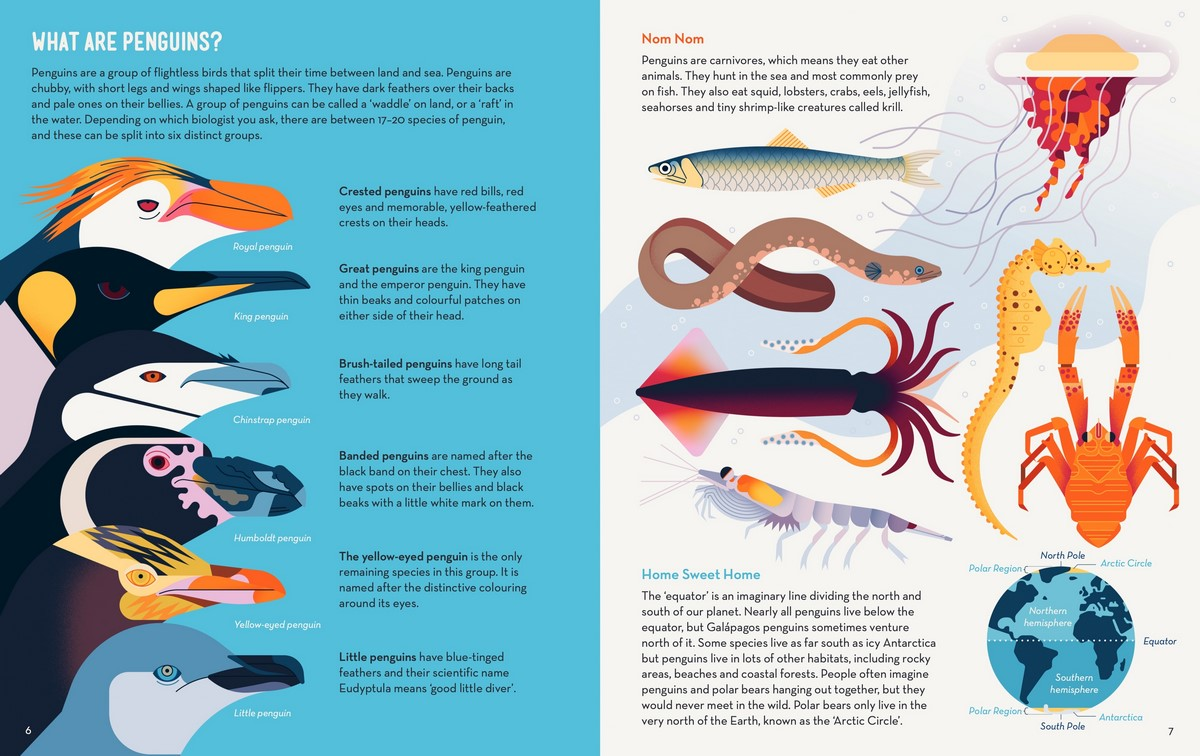
Summary:  Each two-page spread covers an aspect of penguins: different species, how they eat, their feathers, self-defense, temperature control, and more.  The format reminded me of the Eyewitness books of old, with several illustrations and paragraphs of text on each spread.  The page “To Scale” shows a human surrounded by every species of penguin, drawn to size so kids can see how they compare to each other and to a person.  Includes information on penguin conservation and what kids can do to help, as well as index.  There are eight other books in this series. The series title, About Animals, is nowhere near as creative as the book titles which include Obsessive About Octopuses and Bonkers About Beetles.  40 pages; grades 2-5.

Pros:  There’s a ton of information packed into this book in a very appealing presentation, with beautiful illustrations, clever headings (Born This Way; Ice, Ice Baby), and easily digestible bits of information.

Cons:  Some additional resources would have been useful.

To Change a Planet by Christina Soontornvat, illustrated by Rahele Jomepour Bell

Published by Scholastic Press

Summary:  One person, one carbon molecule, one degree of warmth can all seem insignificant, but when they are multiplied, they can wreak havoc on a planet.  Likewise, one person can also feel insignificant when it comes to making positive changes to help our planet, but combined with the efforts of others, they can make a real difference.  Includes back matter with additional information about climate change and what people can do to make a difference.  40 pages; ages 4-8.

Pros:  A perfect introduction to climate change and the need for environmental activism.  The text is spare, just a sentence or two per page, but it really shows the impact, both positive and negative, of small changes.  The colorful illustrations help show this as well.

Cons:  I find every book about climate change anxiety-inducing.

Rewilding: Bringing Wildlife Back Where It Belongs by David A. Steen, illustrated by Chiara Fedele

Published by Neon Squid

Summary:  Humans have done much to damage or eliminate the populations of so many animals; rewilding seeks to reverse some of that damage by introducing animals raised in captivity to the wild or relocating a wild animal population.  This book looks at dozens of animals, giving each a two-page spread with information about a rewilding project (including successes and failures) and plenty of illustrations.  Other pages address wider questions like why animals go extinct and how scientists measure the success of a rewilding project.  Includes information on what kids can do, a glossary, and an index.  80 pages; grades 3-6.

Pros:  It’s refreshing to find a book that offers at least some glimmers of hope and optimism amidst our current global crises.  The writing and the illustrations are engaging, and the last couple pages offer readers some concrete actions to take.

Cons:  Each story was so interesting that two pages didn’t seem enough to cover it.

Happy Sloth Day! by April Pulley Sayre with Jeff Sayre

Published by Beach Lane Books

Summary:  Follow a sloth through its day in the rainforest as it eats, climbs, rests, and hides.  The photos mostly tell the story, along with a few short sentences.  Longer side bars on every other page add additional information.  The story ends with “the changing of the sloths” as the diurnal three-toed sloth falls asleep and the nocturnal two-toed sloth awakens.  Includes additional information about sloths and a list of four resources “for more leisurely chewing.”  48 pages; ages 4-10.

Pros:  April Pulley Sayre’s photos never disappoint, and these capture sloths doing all kinds of interesting things.  The short text and photos make this a good read-aloud for preschoolers, while the sidebars and back matter make it just as good a choice for older kids.

Cons:  A book about sloths is not a thrilling page-turner.