The Red Jacket by Bob Holt

Published by HarperCollins

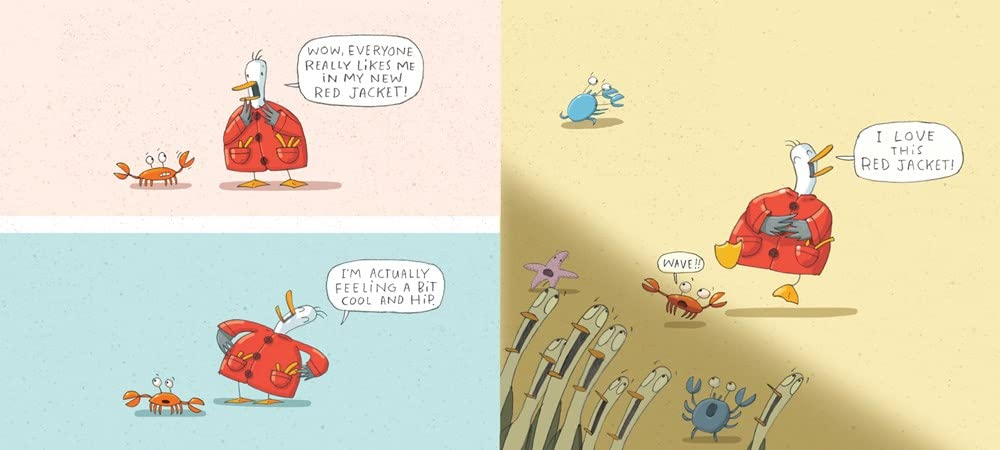
Summary:  The first few wordless pages show Bob the seagull watching other sea creatures having fun together while he feels left out and alone.  Another bird comes along and offers Bob her red jacket (with fries in the pockets!), saying that she no longer needs it.  The jacket gives Bob the confidence to talk to the other animals.  Their responses reveal that they’ve always liked Bob but never had the chance to get to know him (“I didn’t know Bob could talk”).  When a huge wave causes Bob to lose his beloved jacket, his friends pitch in and help him recover it.  Bob spots a lonely turtle and offers the jacket to her, saying that he no longer needs it.  The turtle walks away happily, fries spilling from the pockets of her new red jacket.  40 pages; ages 4-8.

Pros:  A cute story with appealing comic-style illustrations that could open up some interesting conversations about where self-confidence comes from.

Cons:  Those have to be some soggy fries.

Mine! by Candace Fleming, illustrated by Eric Rohmann

Published by Anne Schwartz Books

Summary:  A red apple hangs from a tree, ready to drop to the ground.  One by one, animals plan to grab that apple when it falls, each one imagining how delicious it will be, shown with a cartoon bubble and the word “MINE!”  Finally, the wind blows the apple from the tree, and Mouse, Hare, Fox, Deer, and Bear all pounce, resulting in a free-for-all that pushes the apple away.  It lands at the feet of Possum, who eyes it curiously: “Mine?”  A worm pops out, and the two say in unison, “Ours!”  40 pages; ages 3-6.

Pros:  With illustrations reminiscent of Eric Rohmann’s Caldecott book My Friend Rabbit, this story uses catchy rhymes and adorable (if greedy) animals to impart a fun lesson about sharing.

Cons:  Generally, apple trees produce more than one apple at a time, so it seemed like the animals could have just chilled and waited for more apples to fall.

Like Lava in My Veins by Derrick Barnes, illustrated by Shawn Martinbrough

Published by Nancy Paulsen Books

Summary:  Bobby Beacon has a superhero’s name (“beacons lead people and show them the way”), and now he’s off to a superhero’s school, Academy of Kids With Awesome Abilities, or AKWAA.  His superpower is light and fire, but sometimes if he gets angry, his powers overwhelm him, and he ends up destroying things.  His first teacher, Ms. Flores, doesn’t always treat him respectfully, and Bobby ends up melting his chair.  Having witnessed another student, Pause, get expelled and sent to the Institute of Superpowers for misusing her superpowers, Bobby is afraid he’s headed in that direction.  But a smaller class and a more understanding teacher, Miss Brooklyn, make him feel welcome at school and give him strategies for channeling his powers.  He needs those strategies when the head of the Institute and Pause come looking for him.  He manages to defeat the head and puts in a good word for Pause to get her readmitted to AKWAA.  It’s a happy ending, and the final page hints that a sequel may be in store.  40 pages; grades 1-4.

Pros:  Fun comic book meets Black empowerment in this story of superhero kids learning to channel their powers for goods.  Miss Brooklyn provides a great model for a compassionate teacher, showing the importance of listening and using empathy to reach kids.  The cover and illustrations make this a book that will fly off the library shelves.

Cons:  This felt like it would have worked better as a longer graphic novel with more character and plot development.

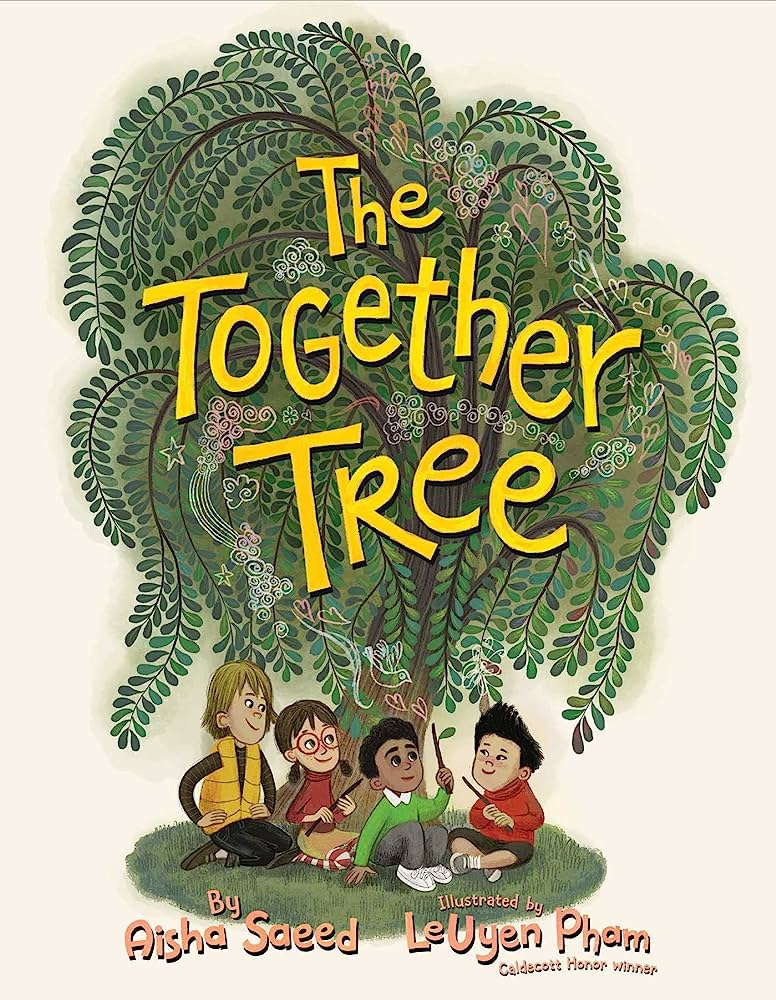
The Together Tree by Aisha Saeed, illustrated by LeUyen Pham

Published by Salaam Reads

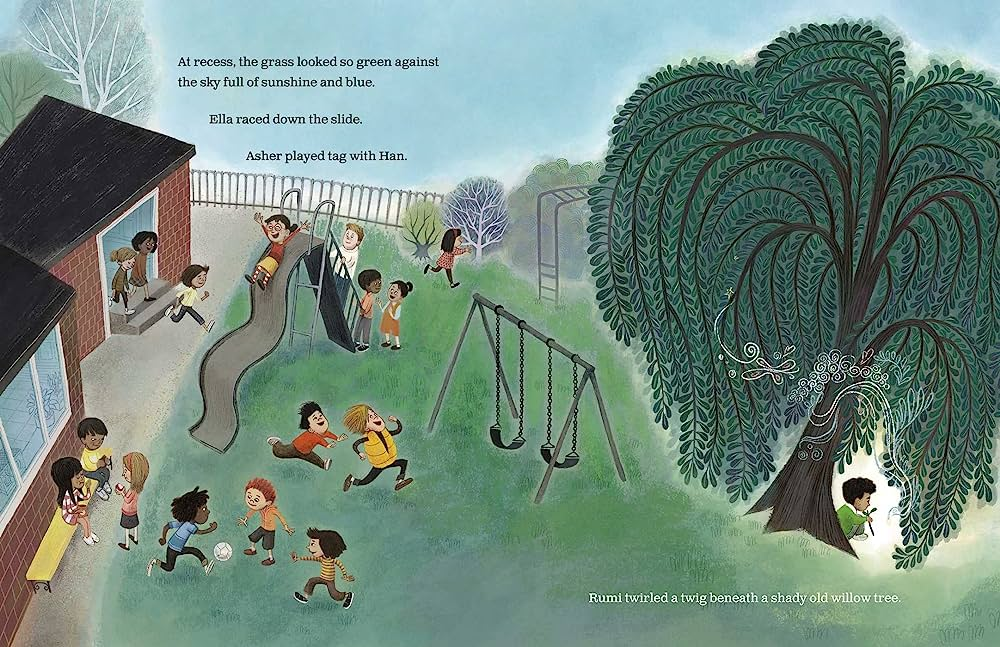
Summary:  When Rumi joins the class in early spring, he’s quiet and keeps to himself.  At recess, a couple of the other kids, Ella and Asher, make fun of Rumi’s shoes, which he decorated with his friends back in California.  Han doesn’t think their teasing is funny, but he doesn’t say anything.  The bullying gets worse, and Rumi withdraws under a tree at recess, drawing with a stick in the dirt.  When Asher throws a pebble at Rumi and cuts his knee, Han finally speaks up, asking Rumi to play, then noticing the beautiful world Rumi has created in the dirt under the tree.  Soon the other kids are joining them, and Rumi finds himself in the middle of a happy group of kids.  When he sees Asher sitting by himself indoors the next day, though, Rumi tells the kids he wants to go inside.  The last page shows all the kids, including Asher, drawing together under the tree.  Includes an author’s note about her son’s experiences with bullying in kindergarten that inspired this book.  40 pages; ages 4-8.

Pros:  A moving story of how both a victim and a bystander use kindness to defuse a bullying situation, illustrated with Caldecott honoree LeUyen Pham’s bright, appealing pictures.

Cons:  There was a disturbing lack of adult supervision on the playground.

Big by Vashti Harrison

Published by Little, Brown Books for Young Readers

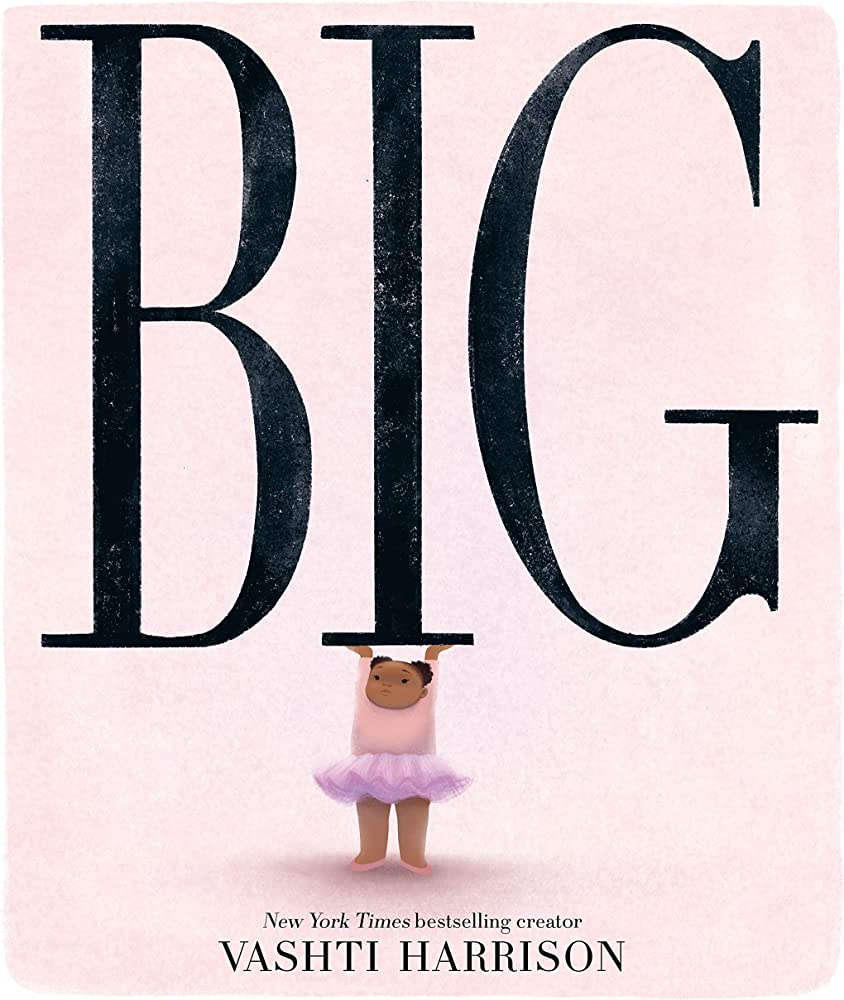
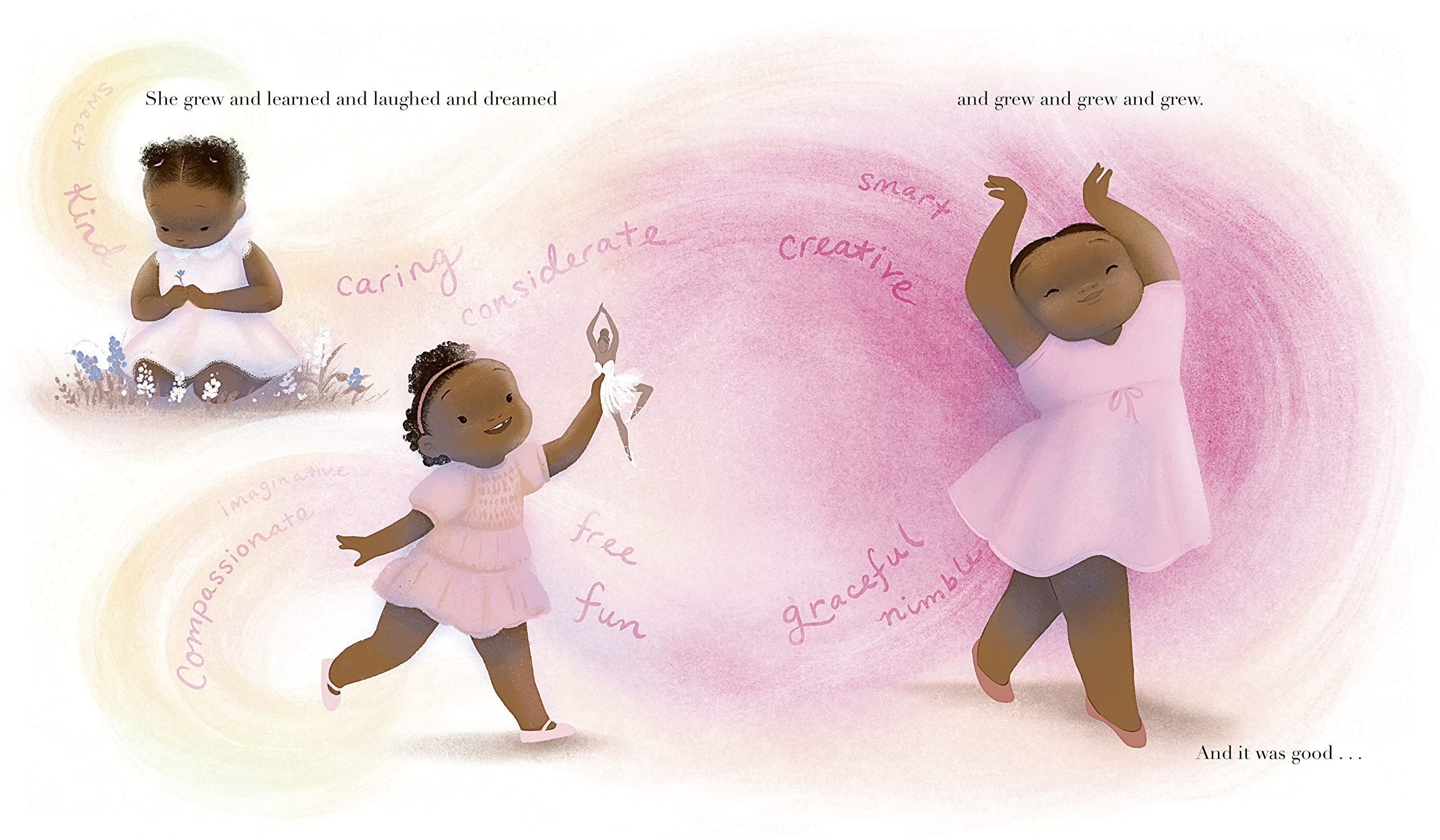
Summary:  At first the little girl with a big heart, big laugh, and big dreams loves being big.  “What a big girl you are!” adults say happily.  But as she gets older, being big is no longer considered a good thing.  “Don’t you think you’re too big for that?” a teacher scolds when she gets stuck in a swing, surrounded by classmates who moo and call out other hurtful comments.  She tries to blend in, trading her pink ballet costume for a gray one and becoming part of the scenery on stage.  She grows bigger and bigger on each page until she is crammed, curled up and crying, on the two-page spread.  Her tears turn into words: gray words like “too big” and “big cow” are mixed with pink words like “beautiful” and “creative.”  Finally, she gathers up the pink words for herself and hands the gray ones back to the people who said them.  Those people don’t always understand, but the girl is good, as she dances in her pink tutu off the final page.  Includes an author’s note sharing her own experiences that inspired this book.  60 pages; ages 4-8.

Pros:  An important book that addresses anti-fat bias and gives girls, especially Black girls, some tools for self-love and acceptance. The beautiful illustrations are a perfect complement to the text.

Cons:  I have mixed feelings about gatefold pages like the one in this book.  They are cool, but just don’t hold up well to repeated library use. The Knuffle Bunnies have been driving me crazy this year.

Good Different by Meg Eden Kuyatt

Published by Scholastic

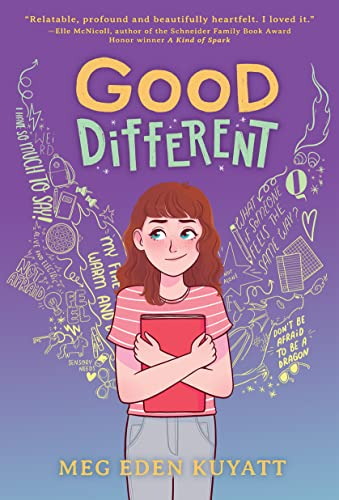
Summary:  Selah works hard at being “normal”, making up rules to help her fit in at school and retreating to her room at the end of the day, exhausted from trying to hide her feelings.  When a friend tries to braid her hair in class one day, Selah explodes and hits the girl.  The incident puts her on probation at school and ostracizes her from most of her classmates.  As Selah tries to figure out what is going on with her, she begins to think that she, her mom, and grandfather may all have autism.  A sympathetic English teacher helps her to express herself through poetry, and Selah begins to share what she’s feeling, first to her family and later on to her school.  As she begins to feel more comfortable with who she is, Selah comes up with a new list of rules to help her be herself and to communicate with those around her.  Includes an author’s note about her own journey to an autism diagnosis and self-discovery as well as a list of resources.  288 pages; grades 4-7.

Pros:  This novel in verse will be helpful to anyone with autism, or who knows someone with autism, or who sometimes feels like they don’t fit in very well.  I was inspired by Selah’s powerful poems, her journey, and the ways she learned to advocate for herself.

Cons:  It made me sad that no one at Selah’s seemingly caring private school had picked up on her autism in her eight years of attendance there.

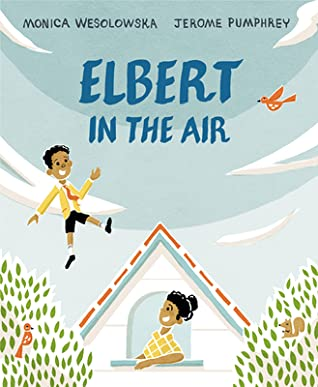
Elbert in the Air by Monica Wesolowska, illustrated by Jerome Pumphrey

Published by Dial Books

Summary:  Shortly after Elbert is born, he floats into the air.  His mother gets all kinds of advice from so-called experts: catch him in a net like a butterfly, reel him in like a kite, or deflate him like a balloon.  But Elbert’s wise mother ignores all the suggestions and lets him be himself.  This pattern is repeated as Elbert gets older and starts school, then grows into a teenager.  When Elbert feels lonely, his mom assures him that he will find his place in the world.  Finally, with his mother’s support–and a full picnic basket she’s supplied–Elbert floats higher and higher until he finds a whole community of floating people just like him.  Happy in the world he’s always wished for, he sends a rope down to his mother who climbs up and joins them.  40 pages; ages 4-8.

Pros:  This is a sort of how-to manual for raising a child who doesn’t always fit in.  Elbert’s mother is steadfast in her support, and consequently, Elbert grows up to find his people without having to compromise who he really is.  As always, Jerome Pumphrey’s unique illustrations are a delight.

Cons:  I hope if one of my children is ever in this position, she sends me an easier way to ascend than climbing a rope.

Beneath by Cori Doerrfeld

Published by Little, Brown Books for Young Readers

Summary:  Finn is in a horrible mood, sitting on his bed completely covered by a patchwork quilt.  Grandpa wants to talk, but Finn tells him that he won’t understand.  Finally, Finn agrees to go for a walk, but only if he can stay underneath his quilt.  “Don’t worry,” says Grandpa, “I’ll remember to think of what’s beneath.”  As they walk, Grandpa points out that beneath the trees, there are roots; beneath the still water, there are fishing swimming around; beneath appearances are experiences, and beneath what’s different is what’s the same.  “And sometimes,” says Grandpa, “Beneath someone who looks like they won’t understand…is someone who knows exactly how you feel.”  The illustrations reveal that both Finn and Grandpa have broken hearts, maybe from the loss of the person who made the patchwork quilt.  As night falls, the quilt is transferred from Finn’s head to Grandpa’s shoulders, and both of them are shown with hearts that are no longer broken.  40 pages; ages 4-8.

Pros:  There are many layers to this little story, and it will take an astute reader of both the words and the illustrations to catch them all.  Grandpa is truly a wise man who sees much more than meets the eye, and Finn is lucky to have him as they both process loss and grief.

Cons:  It would be difficult to get everything from this book with just one reading.

In Every Life by Marla Frazee

Published by Beach Lane Books

Summary:  Based on a call-and-response version of a baby-naming blessing Marla Frazee heard at a church service, this book seeks to honor aspects of life that we all experience.  “In every birth, blessed is the wonder,” the book begins, showing two pages of newborn babies with their families.  The next wordless page depicts a family enjoying the wonder of a sunset, the sky filled with pink clouds.  That format continues with sentences that begin “In every…” and show a blessing, followed by a wordless page depicting the blessing.  Smiles, hope, sadness, comfort, mystery, tears, love, and life are all parts of life and parts of this book.  32 pages; ages 3+

Pros:  This beautiful book should be considered for a Caldecott and would make a lovely gift for a new baby, graduate, or anyone going through a life transition. Despite the serious topics, the illustrations add a light touch with plenty of humor.

Cons:  The author’s note at the beginning is in a gold font so light that I missed it the first time I read the book.

Abuela’s Super Capa by Ana Siqueira, illustrated by Elisa Chavarri

Published by HarperCollins

Summary: Luis loves Saturdays, because Abuela comes to visit and plays sidekick to his superhéroe. When his sister Isabel tries to join in, he pushes her away, telling her that she’s too little. One Saturday, though, Luis’s parents tell him that Abuela is in the hospital. They visit her there, but even after she comes home, Abuela isn’t “superhéroe ready”. Luis tries everything he can think of to help her feel better, but nothing works, and eventually Abuela tells him she has to hang up her capa. One day, Luis is with Abuela when he sees Isabel running around with both capas. At first, he tells her no, but then he notices Abuela’s eyes are shining “like estrellas.” He puts his own capa on Isabel and Abuela’s around his own shoulders, and the two of them become superhéroes who can push Abuela in her wheelchair. Includes a glossary of Spanish words. 40 pages; ages 4-8.

Pros: A touching story about a kid dealing with a grandparent’s illness and figuring out a way to still enjoy his time with her. The illustrations are colorful, joyful, and also manage to convey Abuela’s decline in a way that feels realistic.

Cons: I was worried that Abuela was not going to make it to the last page.