Going Places: Victor Hugo Green and His Glorious Book by Tonya Bolden, illustrated by Eric Velasquez

Published by Quill Tree Books

Summary:  Victor Hugo Green had a successful career as a mail carrier in Leonia, New Jersey, but he also liked to travel.  In the 1930’s, more people were buying cars and using them to visit new places.  Black travelers were less hassled in their cars than on trains, but they also faced Jim Crow laws that prevented them from using certain hotels, restaurants, and other establishments, and sundown laws that prohibited them from being in certain towns after dark.  Green used newspaper ads and articles and the knowledge of friends and co-workers to put together a directory of places that were safe to go.  Known as the Green Book, it started as a pamphlet in 1936, covering the New York City area, but continued to grow to cover the entire U.S. as well as Mexico and Canada.  In 1953, Victor Hugo Green retired from his postal career to spend his time running a travel agency and keeping up with the Green Book.  He died in 1960, a few years before the Civil Rights Act of 1964 made much of the Green Book obsolete.  Includes a timeline, selected sources, and a list of places to learn more about the Green Book.  40 pages; grades 2-5.

Pros:  This fascinating look at the man behind the Green Book weaves in plenty of details about the ways racism affected Black travelers for much of the twentieth century.  The vivid oil paintings bring traveling to life with their colorful postcards, reproductions of black-and-white photos, and maps.  Worthy of a consideration for a Coretta Scott King award or honor.

Cons:  While I was hoping to see a page from the actual Green Book, the illustrations offer only tantalizing glimpses.  Guess I will have to peruse the digital editions listed in the back matter.
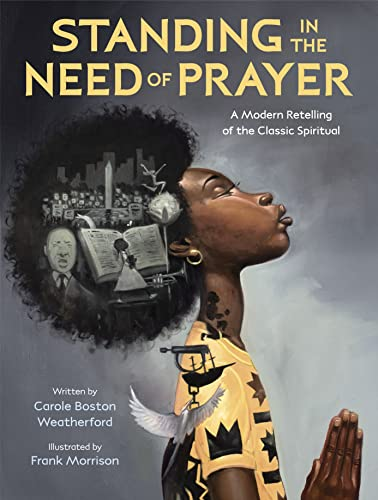
Standing in the Need of Prayer: A Modern Retelling of the Classic Spiritual by Carole Boston Weatherford, illustrated by Frank Morrison

Published by Crown Books for Young Readers

Summary:  Carole Boston Weatherford has created new words based on the traditional spiritual to trace the history of Black people in America.  Beginning with slavery, the verses and illustrations continue through Emancipation, the Great Migration, and the fights for integration.  The last few pages reflect the recent past and present: Florence Griffith Joyner, Colin, Kaepernick, and the Black Lives Matter Movement.  Includes additional information on each of the subjects, a list of online resources, and an author’s note.  32 pages; grades 1-5.

Pros:  Another beautiful resource for teaching Black history, with gorgeous thought-provoking oil illustrations.  The text, including the back matter, could serve as an excellent introduction to a variety of topics; readers can use the excellent list of online resources for further research.

Cons:  I wasn’t familiar with this spiritual and would have liked to have had the traditional words included somewhere.

Giving Thanks: How Thanksgiving Became a National Holiday by Denise Kiernan, illustrated by Jamey Christoph

Published by Philomel Books

Summary:  Starting with a few thoughts about gratitude and how it’s expressed around the world, the book moves to the history of American Thanksgiving, with Sarah Josepha Hale’s campaign to create a national Thanksgiving holiday.  Abraham Lincoln finally agreed, declaring the holiday for November 26, 1863.  It was challenging to find much to be grateful for in the midst of the Civil War, but people celebrated and have continued to up to the present.  Turkey dinners, marching bands, and soup kitchens are all depicted as ways Thanksgiving is observed, and readers are asked to cite their own favorite parts of Thanksgiving.  Includes additional resources.  32 pages; ages 4-8.

Pros:  An excellent resource for those revisiting the history of Thanksgiving, as no mention is made of the Pilgrims or the Wampanoag.  It’s a good update to Thank You Sarah: The Woman Who Saved Thanksgiving by Laurie Halse Anderson (2002).  The excellent illustrations will serve as a good springboard for discussing kids’ heritages and traditions.

Cons:  It felt like the book tried to cover a lot of ground, making it feel a bit disjointed at times.

I Am Ruby Bridges by Ruby Bridges, illustrated by Nikkolas Smith

Published by Orchard Books

Summary:  Ruby Bridges tells her story of integrating William Frantz Elementary School in 1960 at the age of six.  While she has heard of Brown v. Board of Education, she is more interested in making friends and who her teacher will be.  She is surprised to be driven to school by four white men, to have a white principal, and most of all, to discover that she is the only student in her classroom.  Seeing that empty classroom makes her finally realize what is going on: she is the first Black child to attend the school, and that will allow other Black students to go there too.  “And that’s a good thing, for Black kids.  For white kids, too…for all the kids, once they finally get here!”  Includes a glossary and notes from the author and illustrator.  48 pages; ages 4-8.

Pros:  An inspiring autobiography with bold illustrations that capture young Ruby’s humor and courage.  If you’re looking for a Black history read-aloud for primary grades, this is a perfect choice that shows kids the powerful difference one six-year-old made in a way that they will relate to.

Cons:  You will probably want to supplement this with additional material to explain to kids exactly what it was Ruby did.

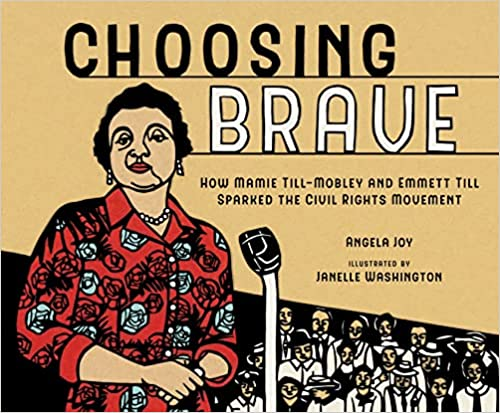
Choosing Brave: How Mamie Till-Mobley and Emmett Till Sparked the Civil Rights Movement by Angela Joy, illustrated by Janelle Washington

Published by Roaring Brook Press

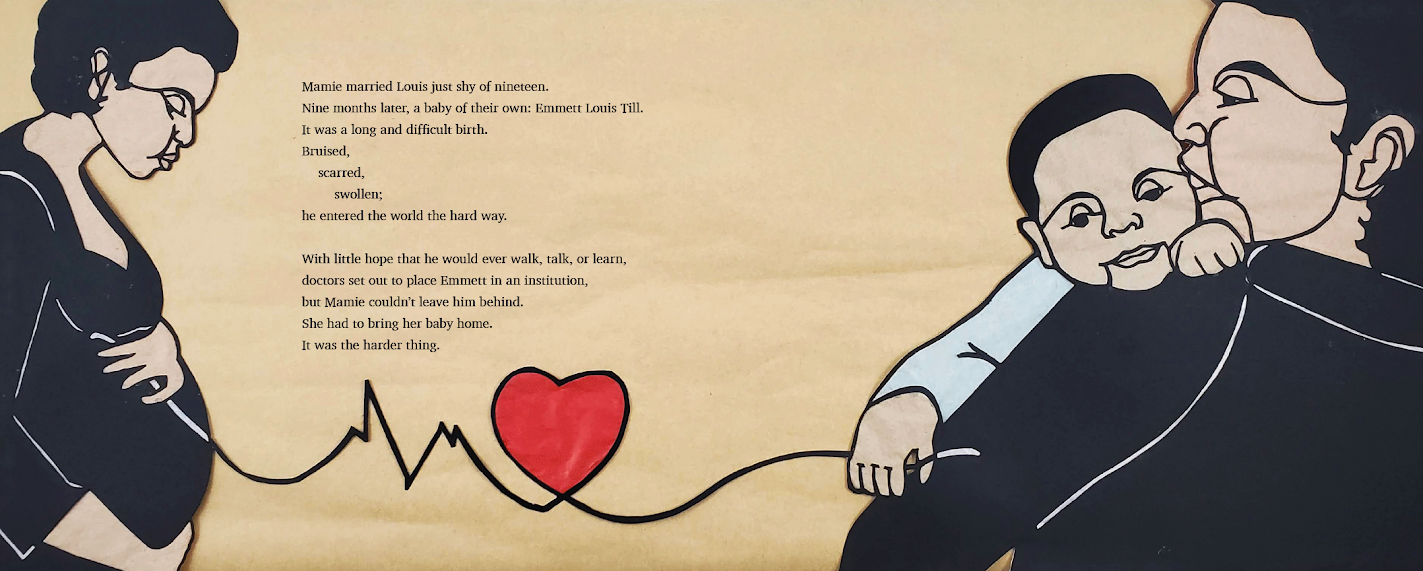
Summary:  Beginning with Mamie Till’s decision to bring her son Emmett’s body home to Illinois after his horrific murder in Mississippi, the story goes back to trace Mamie’s life to that point.  A smart, hardworking girl who graduated at the top of her high school class, Mamie married an abusive man, escaping the marriage with her son.  Emmett was visiting family in Mississippi when he was murdered by white men who believed he had violated Jim Crow laws when interacting with the wife of one of the men at a store.  The sheriff planned to quietly bury Emmett’s body, but Mamie insisted on bringing him home and having an open casket funeral.  Photos were widely published, giving impetus to the civil rights movement.  After Emmett’s death, Mamie remarried, went to college, became a teacher, and continued to work for civil rights until her death in 2003 at the age of 81.  Includes notes from the author and illustrator, a playlist, a glossary, a timeline, and a list of sources.  64 pages; grades 3-7.

Pros:  This is a powerful book, both the free verse text and the cut paper illustrations.  The tone is appropriately somber, but also inspiring, showing Mamie’s love for her son, her grief, and her incredible resilience.  A Coretta Scott King Award contender for sure. 

Cons:  The narrative may be somewhat confusing to readers who aren’t familiar with Emmett Till’s story.  They might want to start with the back matter.

Black Boy, Black Boy: Celebrate the Power of You by Ali Kamanda and Jorge Redmond, illustrated by Ken Daley

Published by Sourcebooks Explore

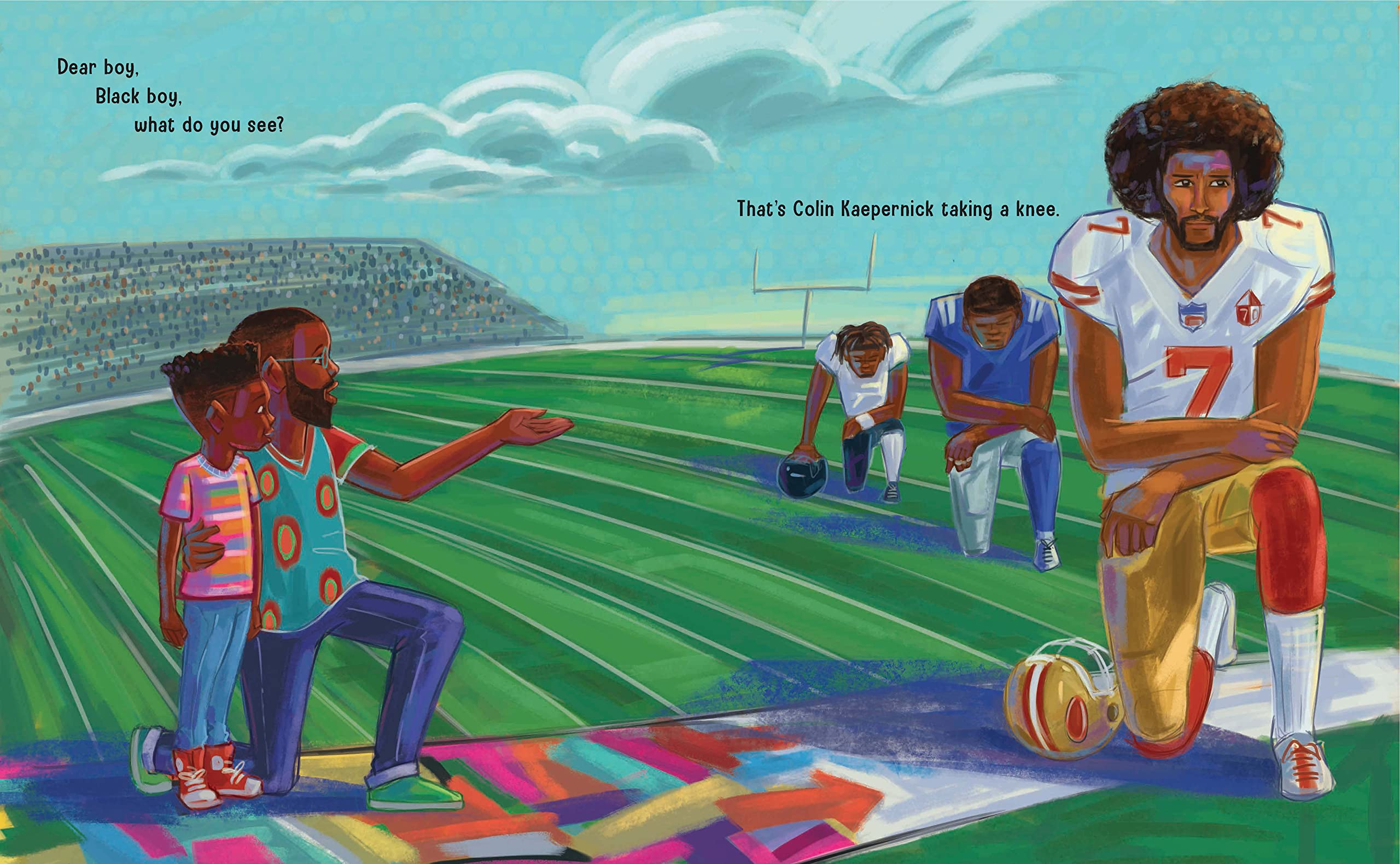
Summary:  A Black man and boy walk together on a colorful path that takes them past Black heroes from the present and past, like Colin Kaepernick (football player), Elijah McCoy (inventor), and William Goines (first Black Navy Seal).  Famous men like Dr. Martin Luther King, Jr. and Barack Obama are also on the path, which ends with the man encouraging the boy to believe in himself and work hard so that he can have his own adventurous journey.  The final page shows the boy off and running down the path on his own, with the men from the book watching him and cheering him on.  Includes brief information of the nine men mentioned in the book.  40 pages; grades K-4.

Pros:  An empowering book for Black boys that would make an excellent choice for a Black History Month read-aloud and belongs in all libraries for any time of year.  Here’s hoping there will be a Black Girl companion book.

Cons:  The rhyming felt a little forced, making me wonder if rhyming text was the best choice for this book.

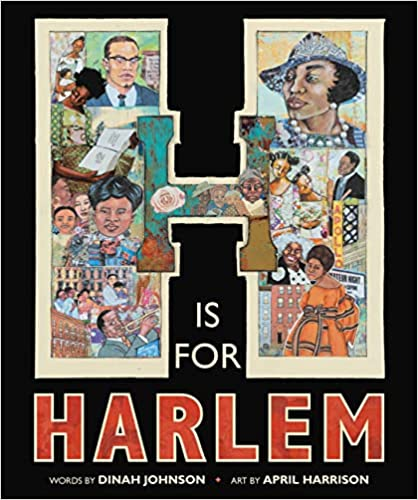
H Is for Harlem by Dinah Johnson, illustrated by April Harrison

Published by Christy Ottaviano Books

Summary:  An author’s note introduces Harlem, giving a little historical context before exploring the neighborhood from A to Z.  Whether historical (W for Madam C. J. Walker, X for Malcolm X) or contemporary (C for Harlem Children’s Zone, I for Impact Farm), the text and illustrations combine to bring Harlem to life as a vibrant neighborhood with a rich history.  Readers will learn of places to visit like the Apollo Theater and the National Jazz Museum and of performances like the Boys (and Girls) Choir of Harlem and the Harlem Globetrotters that they may want to attend someday.  48 pages; grades K-4.

Pros:  I was ready to hop on the train and take a trip to Harlem after reading this colorful book with its lively illustrations of so many fascinating people and places that have shaped this amazing neighborhood over the years. A definite contender for a Coretta Scott King Award.

Cons:  Some additional resources, particularly websites, would have been a great addition.

Because of You, John Lewis: The True Story of a Remarkable Friendship by Andrea Davis Pinkney, illustrated by Keith Henry Brown

Published by Scholastic Press

Summary:  Tybre Faw grew up learning Black history and was particularly inspired by John Lewis.  In 2018, at the age of ten, he convinced his grandmothers to take him to Selma to be part of the commemoration of 1965’s Bloody Sunday.  Tybre met John on the Edmund Pettus Bridge, and the two became friends.  They walked together again in 2019 and in 2020 when John Lewis had been diagnosed with cancer.  Lewis died a few months later, and Tybre was invited to recite one of the congressman’s favorite poems, “Invictus” by William Ernest Henley at the memorial service.  Includes additional information about both John Lewis and Tybre Faw, a timeline of Lewis’s life, a list of sources and resources for further reading, photos from both the 1960’s and the interactions between John and Tybre, and the text of “Invictus”.  40 pages; grades 2-5.

Pros:  I marvel at the way this book is written, using beautiful poetry and watercolor illustrations to weave together the lives of both John Lewis and Tyre Faw, and showing the intersection between the civil rights and Black Lives Matter movements.  The back matter adds a lot and gives resources for further exploration.

Cons:  I found it a little difficult to figure out when and at what age Tybre met John; it would have been helpful to me to have those dates included in the timeline.


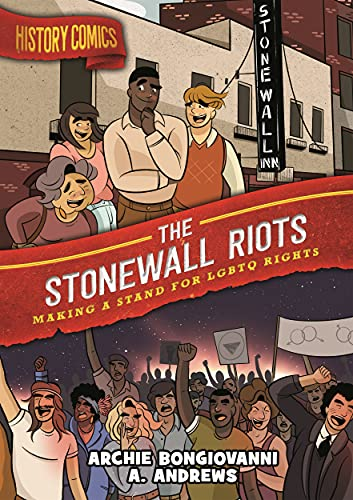
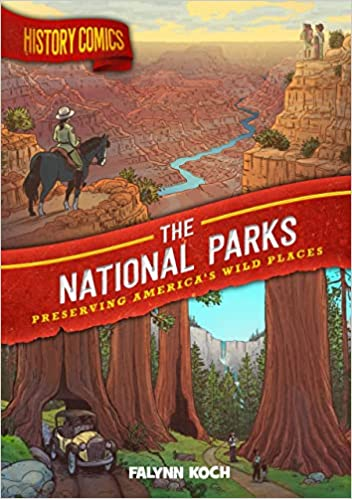
The Stonewall Riots: Making a Stand for LGBTQ Rights by Archie Bongiovanni, illustrated by A. Andrews and The National Parks: Preserving America’s Wild Places by Falynn Koch

Published by First Second

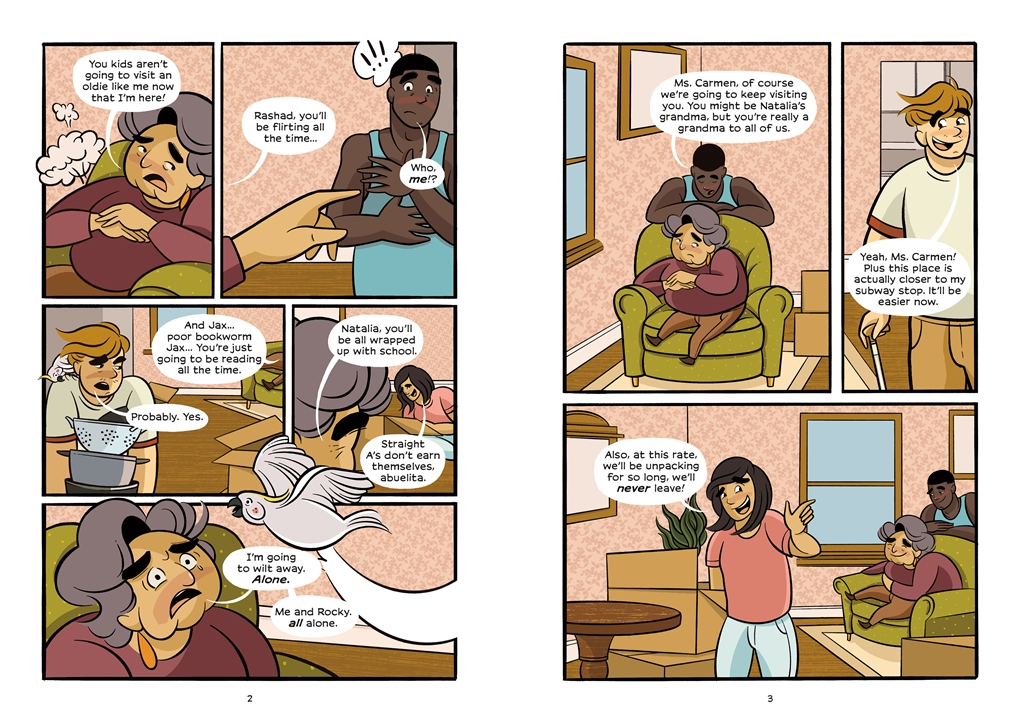
Summary: These two entries into the History Comics series tell the story of the 1969 Stonewall Riots that helped bring gay rights into the national spotlight and the history of the National Parks System that helped preserve natural wonders and historical artifacts in the United States.  In The Stonewall Riots, Natalia’s abuela takes teen Natalia and her friends Jax and Rashad back in time to the night of the first protest.  Abuela had a girlfriend at the time, and the three kids, all part of the LGBTQIA+ community, get some lessons about the people and events of that time.  The National Parks features two narrators, a bigfoot and an eagle, who look at the patchwork history of the National Parks System, going all the way back to the early 19th century.  Each book starts with a foreword and includes an author’s note with additional information and resources at the end.  128 pages; grades 4-8.

Pros:  Both books make history accessible through the graphic format and the fun narrators (abuela and Bigfoot).  The additional resources at the end make these a good introduction that could lead to further research.

Cons:  I thought this format worked better for a specific incident (Stonewall Riots) than a longer period of time (National Parks).  I could see kids losing interest in such a sprawling history that included so many different people and places.

Free At Last: A Juneteenth Poem written by Sojourner Kincaid Rolle, illustrated by Alex Bostic

Published by Union Square Kids

Summary:  This free verse poem begins with the news arriving in Galveston, Texas: the war is over, and “all who live in bondage here shall from now until be free.”  The words and oil paintings depict Black people’s reactions.  Some head for their shacks, which they now declare home; some go to another farm to work “for a pittance and a little plot of space.”  Others pray, dance, or head farther away.  The last few pages depict their descendants celebrating that freedom, right up to the present day.  An author’s note tells how she was introduced to Juneteenth in the 1980’s and wrote this poem, originally published in 2004, and how Juneteenth has gained wider recognition, eventually becoming a national holiday in 2021.  32 pages; grades K-4.

Pros:  The beautiful words and pictures in this book make it an excellent addition to Juneteenth literature, and a perfect way to observe the holiday.

Cons:  It would have been interesting to get more information about the fate of the different people portrayed in the book, and how their decisions to stay close to home or travel affected their futures.