Love In the Library by Maggie Tokuda-Hall, illustrated by Yas Imamura

Published by Candlewick

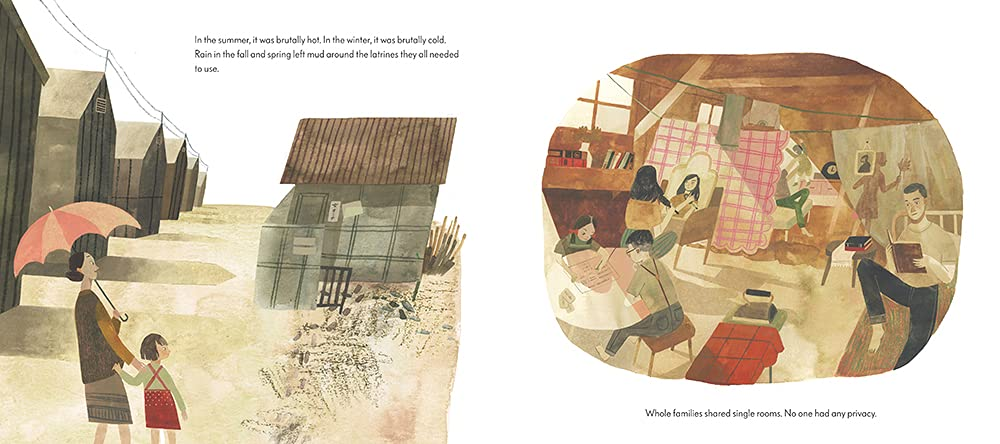
Summary:  Tama and George have been at Minidoka, a prison camp for Japanese Americans, for a year.  Tama works in the library, and George visits every day to check out a stack of books.  The camp is dusty and hot in the summer, brutally cold in the winter, with monotonous days and no privacy for anyone.  Tama tries not to think about her previous life, when she would have graduated from college, instead immersing herself in the world of books at the library.  When she sighs over a book, George asks her what’s wrong.  Tama tries to put into words all that she’s feeling, and George assures her that she’s human to feel that way.  Tama realizes that George isn’t coming to the library just to check out a stack of books.  The two of them get married and have their first child in camp, and Tama sums up her experiences in her journal: “The miracle is in us.  As long as we believe in change, in beauty, in hope.”  Includes an author’s note about her grandparents, George and Tama (with a photo), and with additional information about the 120,000 Japanese Americans who were incarcerated during World War II.  40 pages; grades 2-6.

Pros:  This moving story does not hesitate from looking at the bleak conditions of Minidoka nor the racism that brought George, Tama, and so many others to live there, but also focuses on the hope and beauty of their story.  

Cons:  Early elementary kids may not relate to the romance of this story.

To the Front! Clara Barton Braves the Battle of Antietam by Claudia Friddell, illustrated by Christopher Cyr

Published by Calkins Creek

Summary:  Clara Barton’s role in the battle of Antietam is documented in her own words, poems written by the author, and realistic illustrations of battlefront scenes.  She nurses men (including one who is shot as she is giving him water), helps doctors, and cooks gruel from Indian meal she unexpectedly finds used as packing material.  At the end of the ordeal, she’s put on a makeshift bed in the back of a wagon and driven 80 miles back to Washington, where she collapses from exhaustion and typhoid fever.  Includes several pages of additional biographical information about Clara Barton, a bibliography, and a list of places to visit.  40 pages; grades 2-5.

Pros:  The narrative and illustrations combine to portray the horrors of war, as well as the tirelessness that Clara Barton brought to the battlefield.  The extensive back matter will help researchers understand more about Barton’s life.

Cons:  Kids will need some prior knowledge of the Civil War and Clara Barton’s life to understand what is going on.

Her Name Was Mary Katharine: The Only Woman Whose Name Is on the Declaration of Independence by Ella Schwartz, illustrated by Dow Phumiruk

Published by Christy Ottaviano

Summary:  Mary Katharine Goddard grew up in the Connecticut colony with her parents and younger brother William.  Unlike most girls of the time, she learned to read and write alongside her brother.  When her father died, she and her mother moved to Providence, Rhode Island, while her brother served an apprenticeship as a printer.  He started several newspapers but had the unfortunate habit of abandoning them to move onto other endeavors.  Mary Katharine learned the business and took over the papers, first in Providence, then in Philadelphia, and finally in Baltimore.  When William started a new project, creating a postal service for the colonies, Mary Katharine took on additional responsibilities as postmaster of Baltimore.  She was known as a loyal patriot, so when the Continental Congress decided to print a copy of the Declaration of Independence with the names of the signers, they gave her the job.  Usually, Mary Katharine used the name M. K. Goddard for her printing work, but for the Declaration she used her full name, the only name of a woman to appear on the document.  Includes an author’s note, list of important terms with definitions, and a list of sources.  40 pages; grades 2-5.

Pros:  This is a great resource to add to American Revolutionary War units, featuring a little-known but fascinating woman who seems to have been way ahead of her time.  The author’s note gives lots of additional information, including the fact that Mary Katharine had an enslaved woman who helped her run her business (and to whom she granted freedom and left all her possessions when she died).  

Cons:  I saw this recommended for kids as young as 5, but the text-heavy story, small font, and need for some historical context make it a better choice for older kids.

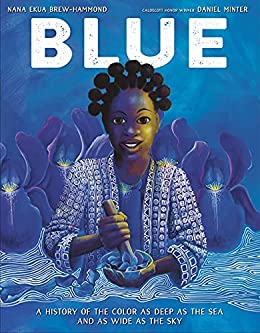
Blue: A History of the Color as Deep as the Sea and as Wide as the Sky by Nana Ekua Brew-Hammond, illustrated by Daniel Minter

Published by Knopf Books for Young Readers

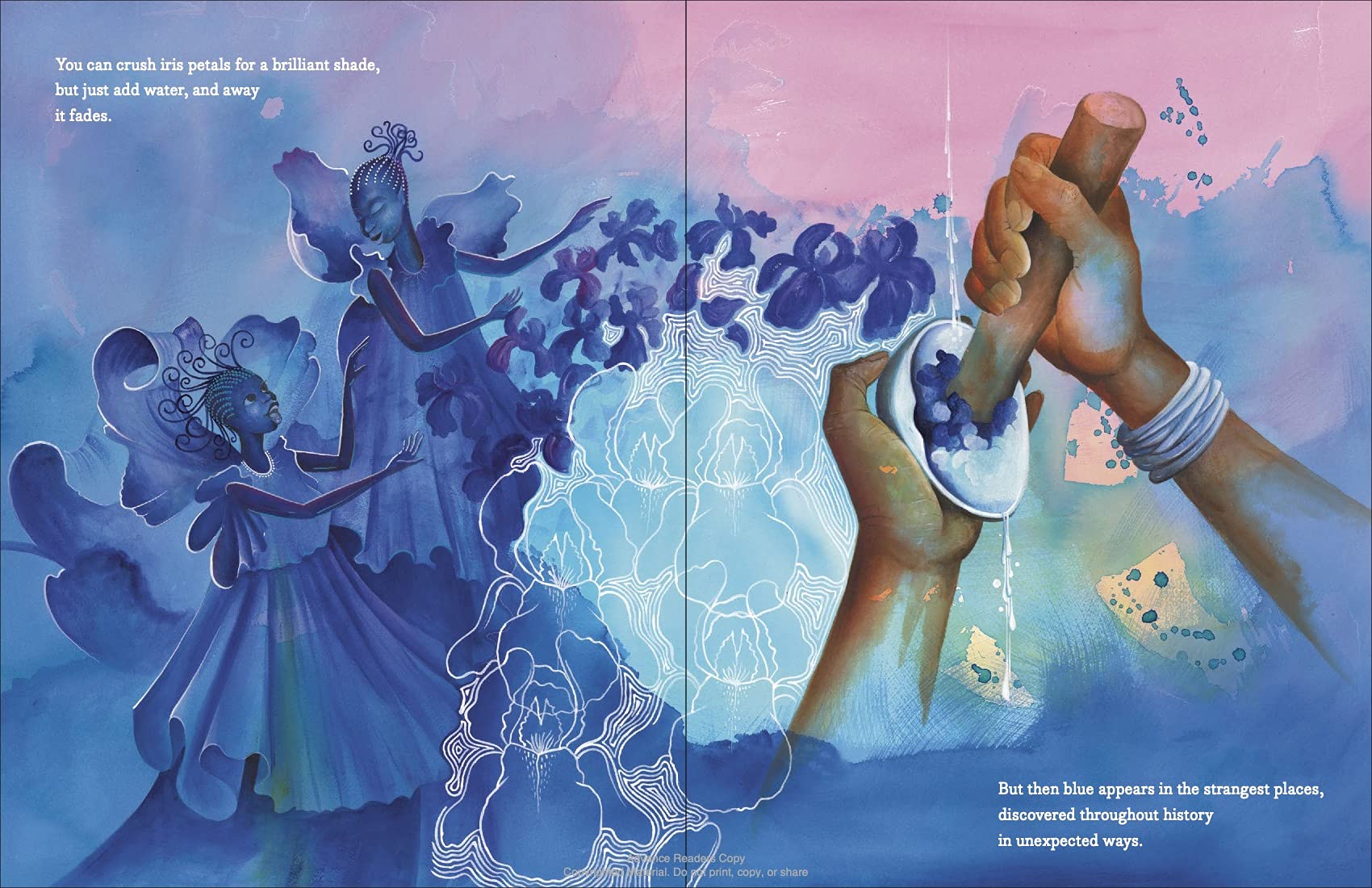
Summary:  Blue may be the color of the sky and the ocean, but for much of human history, it was a difficult color to produce.  Ancient Egyptians crushed the blue stone lapis lazuli to make paint and eye makeup that only the very wealthy could afford.  Later, people discovered shellfish that produced a blue dye, but each organism only produced a drop or two.  Finally, the indigo plant, a native of Asia, Africa, the Caribbean, and the Americas, became more widely known and cultivated.  The value of the plant’s blue dye led to abuses as people were tricked into growing it instead of food and enslaved to help mass produce it.  In 1905, Adolf von Baeyer was awarded a Nobel prize for, among other things, creating a blue chemical dye.  Now everyone can own something that’s blue, but the rarity of blue and the suffering created in its production remind us of expressions like “the blues”, “feeling blue”, and “out of the blue”.  Includes two pages of additional information and a list of selected sources.  40 pages; grades 1-5.

Pros:  Here’s a fascinating history of something I had no idea had a fascinating history: the color blue.  Kids will have a greater appreciation for blue jeans and other commonplace items after reading about the struggles and high value associated with blue.  The gorgeous illustrations feature many different colors but appropriately highlight blue.

Cons:  Some of the claims about the expressions noted above were pretty speculative, and when I looked into them, they don’t appear to have the connections to the color the author writes about.

Loujain Dreams of Sunflowers by Lina AlHathloul and Uma Mishra-Newbery, illustrated by Rebecca Green

Published by mineditionUS

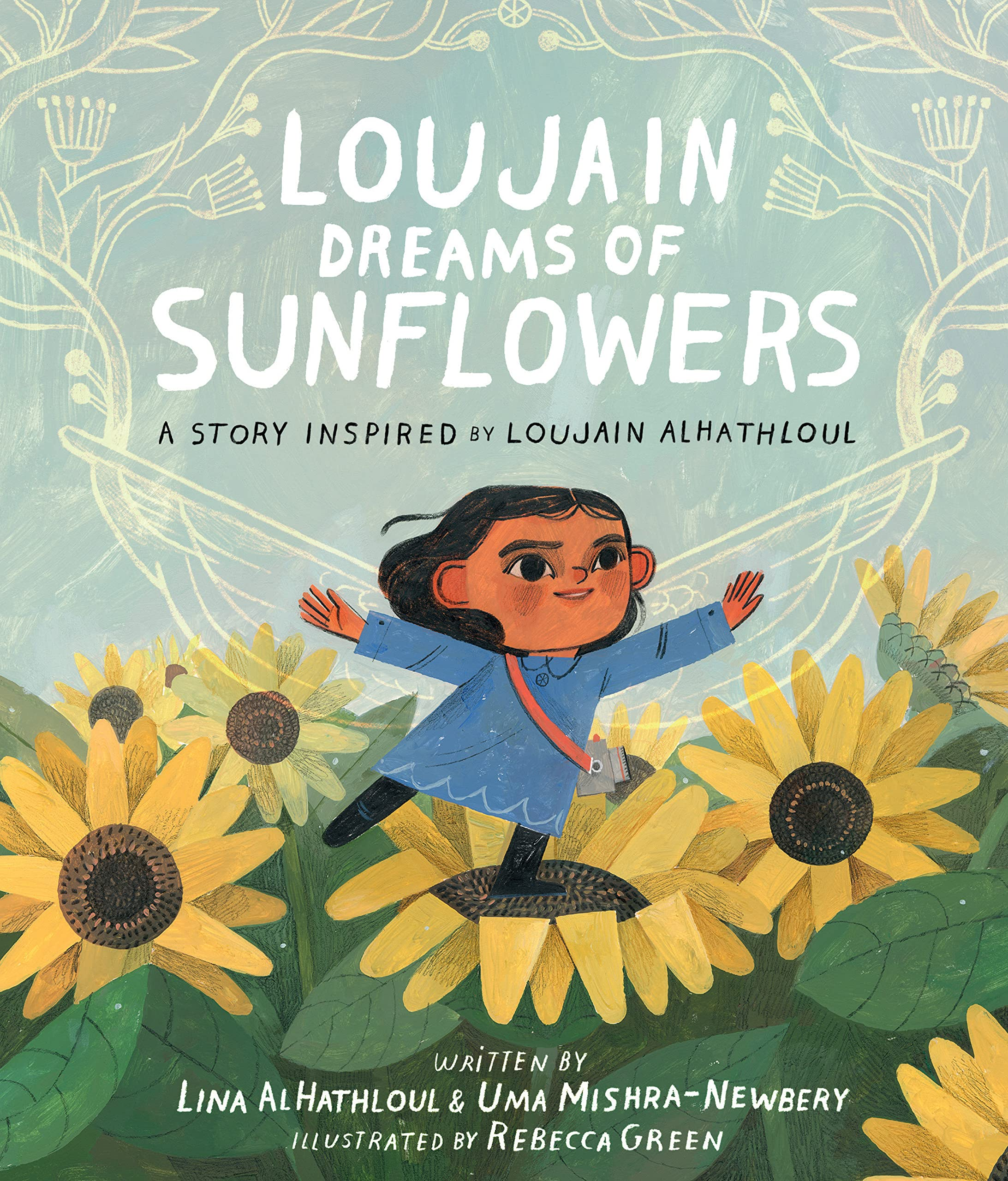
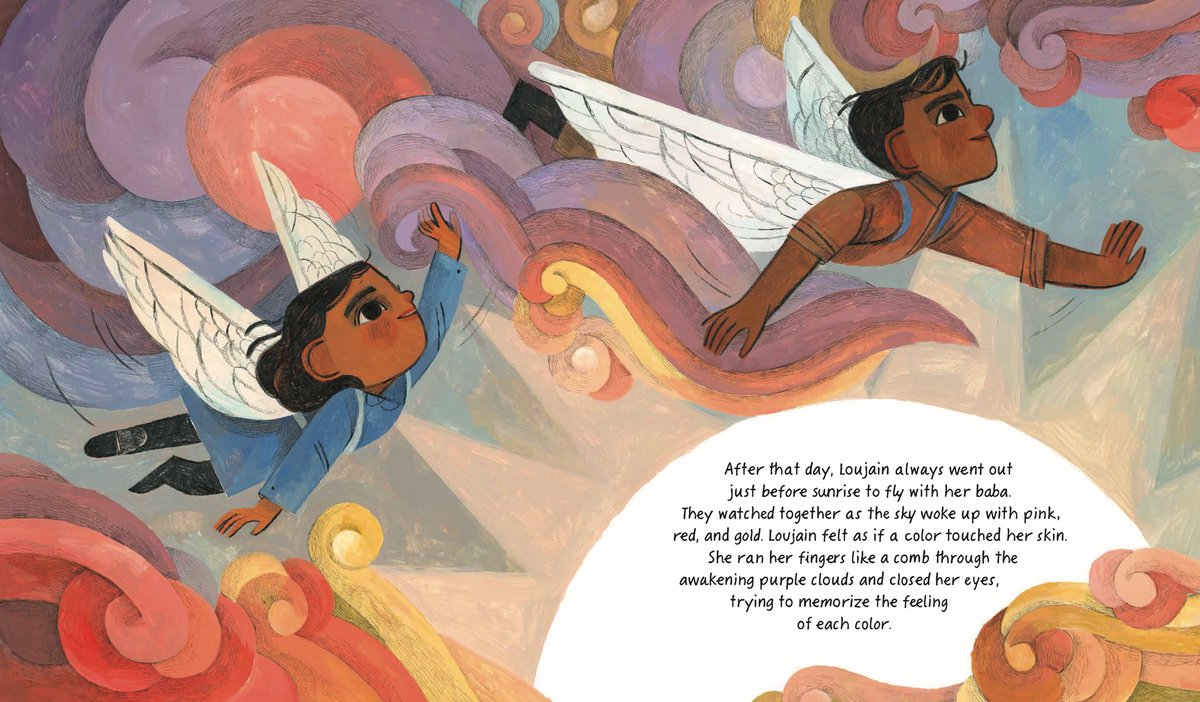
Summary:  Loujain dreams of flying to a beautiful field of sunflowers with her baba.  But in her community, only boys and men are allowed to fly.  All Loujain can do is put on a set of wings and run around the garden, pretending.  Baba tells her that she will fly “someday”.  Finally, Loujain confronts him and tells him that it’s not fair that boys can fly and she can’t.  She wants to learn to fly now.  Her wise mama tells him, “If you don’t support her, who will?  You have to believe things will change.  Otherwise they never will.”  Soon Loujain and Baba are getting up before sunrise for flying lessons.  One day he wakes her up extra early, telling her that they have a long flight to make.  It’s the field of sunflowers!  The next day, Loujain is in the news for defying the flying law.  Her parents are proud of her, and a young girl in the market sees her and immediately asks her baba to teach her to fly.  Includes a note about the real Loujain: Loujain AlHathloul, the author’s sister, who has been jailed for protesting the law prohibiting Saudi women from learning to drive.  40 pages; grades 1-5.

Pros:  This inspiring book would make an excellent discussion starter with older elementary students.  The information about Loujain AlHathloul gives a real-world example about protesting unjust laws.

Cons: The message of the book sometimes seemed to take priority over the story.

Because Claudette by Tracey Baptiste, illustrated by Tonya Engel

Published by Dial Books

Because Claudette: Baptiste, Tracey, Engel, Tonya: 9780593326404: Amazon.com:  Books

Because Claudette – Books of Wonder

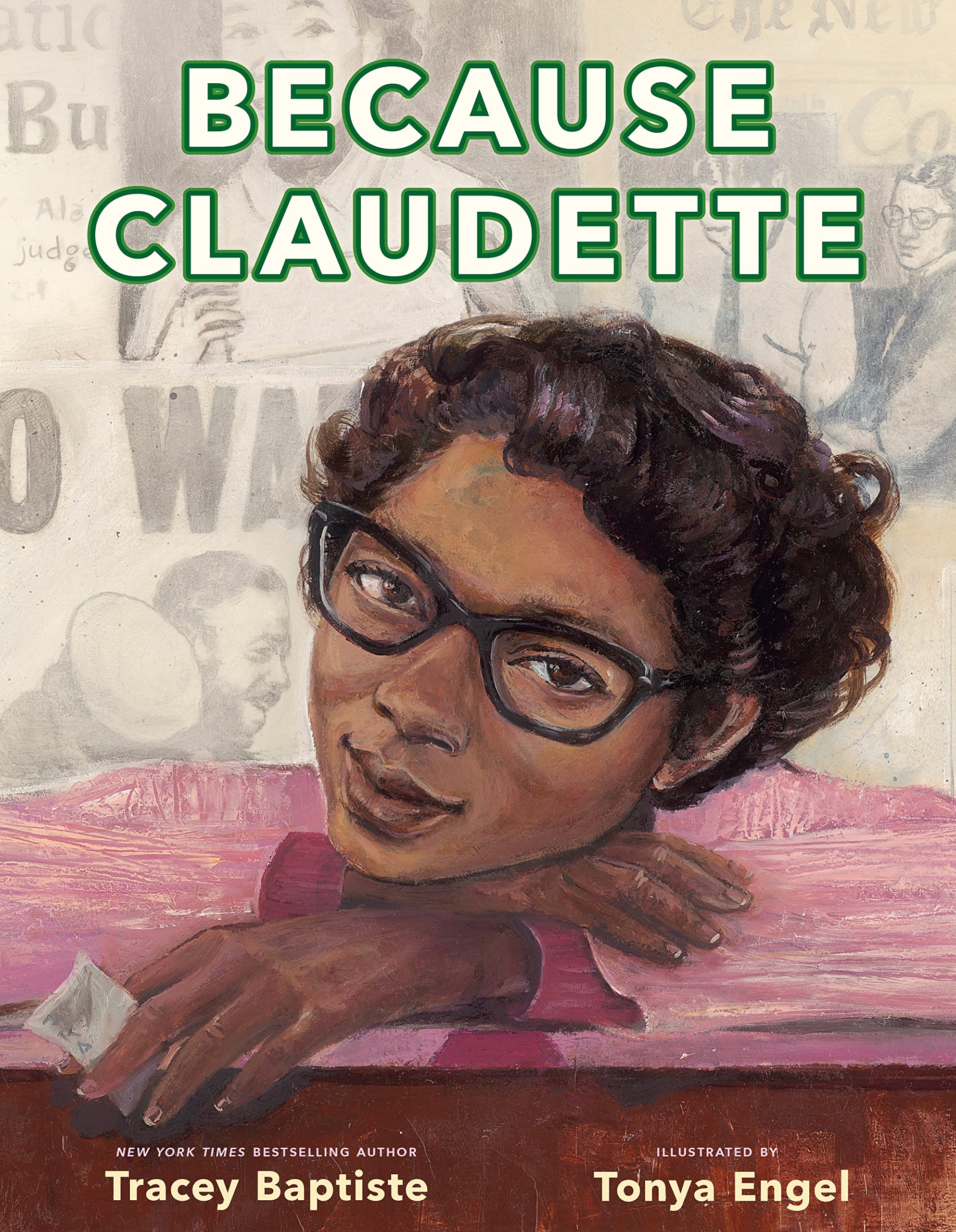
Summary:  “Because fifteen-year-old Claudette Colvin didn’t give up her seat on the bus for a white person on March 2, 1955, she was arrested.”  Thus begins a chain of events that leads Claudette to become friends with Rosa Parks, get involved with the Montgomery bus boycott, and to testify in court when her lawyer challenged the segregation laws.  Claudette was inspired by Black activists from the past as well as her contemporaries like Martin Luther King, Jr., Rosa Parks, and other women who refused to give up their bus seats.  When the Supreme Court ruled that bus segregation was unconstitutional, Claudette read about it in the newspaper.  “On December 21, 1956, anyone could sit wherever they liked on the bus.  And all of it happened because of Claudette.”  Includes a brief author’s note, and a list of two books and three websites for further research.  32 pages; grades K-3.

Pros:  The simple text and beautiful illustrations (I love that cover) show how one young person can make a big difference.  This would be an inspiring book to read to younger kids for Black History Month.

Cons:  The lack of back matter was a real missed opportunity: there could have been photos, a lot more biographical information on Claudette, as well as more about the the others pictured in the text.

Sweet Justice: Georgia Gilmore and the Montgomery Bus Boycott by Mara Rockliff, illustrated by R. Gregory Christie

Published by Random House Studio

Sweet Justice: Georgia Gilmore and the Montgomery Bus Boycott: Rockliff,  Mara, Christie, R. Gregory: 9781524720650: Amazon.com: Books

Sweet Justice: Georgia Gilmore and the Montgomery Bus Boycott: Rockliff,  Mara, Christie, R. Gregory: 9781524720643: Amazon.com: Books

Summary:  “Georgia Gilmore was cooking when she heard the news.”  Rosa Parks had been arrested for refusing to give up her seat on a city bus, news that came as no surprise to Georgia who had had her own run-in with a bus driver and no longer used the buses.  She was delighted when a boycott was announced and enjoyed the company of others when she walked to work.  Georgia started cooking to raise money for the drivers giving rides to those whose commute was too far to walk.  Later, she helped her friend and neighbor Dr. Martin Luther King, Jr. by testifying in court at his trial for organizing the boycott.  King reciprocated by giving Georgia money to start her own restaurant when she was fired from her job.  Soon, the restaurant overflowed with enthusiastic diners, and Georgia was cooking once again when she heard the news that the U.S. Supreme Court had ruled that segregated buses were unconstitutional.  Includes additional information about Georgia Gilmore, a list of sources, and a note about research that should be required reading for all young researchers.  40 pages; grades K-5.

Pros:  Mara Rocklin’s engaging writing style and Caldecott honoree R. Gregory Christie’s vivid illustrations bring to life this unsung heroine of the civil rights movement.  Readers will be inspired to learn how humble actions like cooking and walking to work helped bring about important changes.

Cons:  I could have enjoyed a recipe or two.

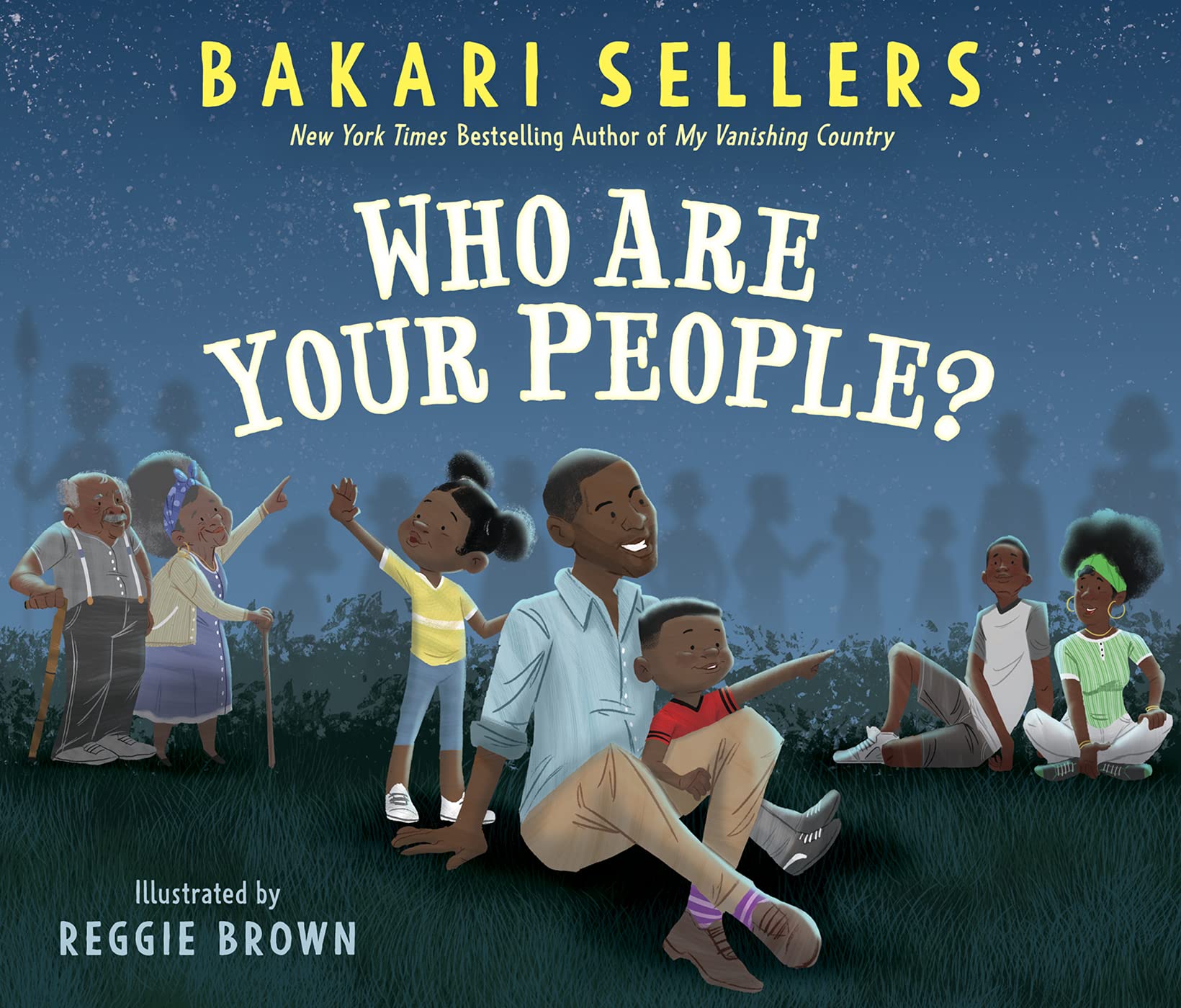
Who Are Your People? by Bakari Sellers, illustrated by Reggie Brown

Published by Quill Tree Books

Who Are Your People?: Sellers, Bakari, Brown, Reggie: 9780063082854: Amazon.com:  Books

Who Are Your People? – HarperCollins

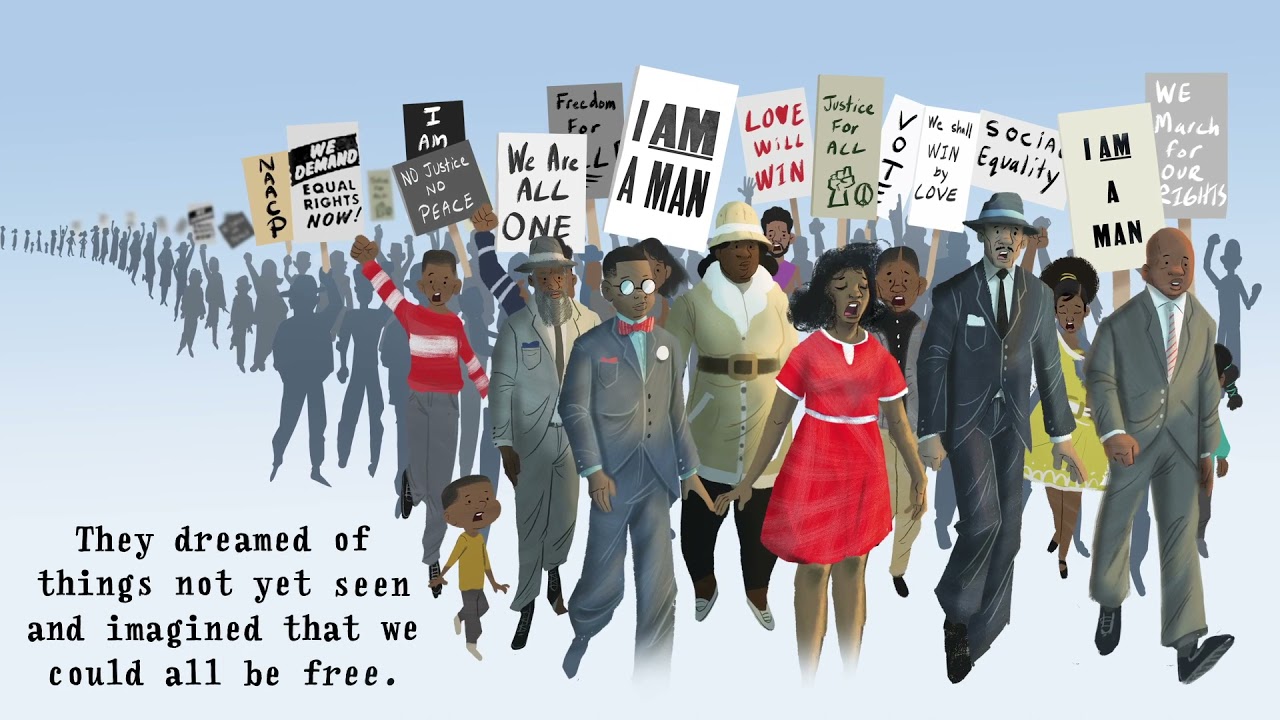
Summary:  “When you meet someone for the first time, they might ask, ‘Who are your people?’ and ‘Where are you from?’”  A father sets out to give his two children some answers to those questions, explaining that their people were strong and smart; fighters and activists.  The illustrations show the faces of well-known Black activists, as well as Black people working in cotton and sugarcane fields and participating in protests at lunch counters and marches.  The last few pages celebrate a supportive community that allows the kids to dream about the ways they will change the world.  32 pages; ages 4-8.

Pros:  My school celebrates Black History Month with guest readers in every classroom, and I’ve been looking for books for the younger kids.  This one is perfect, not shying away from the troubling aspects of Black history, but also emphasizing the strength and resilience of the community.

Cons:  Some back matter with additional information about the people and incidents in the illustrations would have made this a more useful resource for both younger and older kids.

Opal Lee and What It Means to Be Free by Alice Faye Duncan, illustrated by Keturah A. Bobo

Published by Tommy Nelson

Opal Lee and What It Means to Be Free: The True Story of the Grandmother of  Juneteenth: Duncan, Alice Faye, Bobo, Keturah A.: 9781400231256: Amazon.com:  Books

Amazon.com: Opal Lee and What It Means to Be Free: The True Story of the  Grandmother of Juneteenth eBook : Duncan, Alice Faye, Bobo, Keturah A.:  Kindle Store

Summary:  When Opal Lee’s great grandson asks her for a story, she looks around their Juneteenth celebration and tells the kids the history of the holiday. People in Texas didn’t learn about the end of slavery until almost a year and a half after Abraham Lincoln issued the Emancipation Proclamation.  Juneteenth marks the day they found out, and the celebration that happened when they did.  “What was Juneteenth like when you were a kid?” the children then want to know. Opal Lee tells them of her segregated childhood, and how her family’s new house was burned down in 1939. But, she assures them, she has continued and will continue to work for freedom as long as she needs them.  As the children run off to play, she reminds them, “Freedom is for everyone.  Juneteenth is YOU and ME.”  Includes a recipe for Juneteenth Red Punch, a Juneteenth timeline, additional information about Opal Lee and Juneteenth, and a list of sources.  32 pages; ages 4-8.

Pros:  With Juneteenth being a new national holiday, librarians and teachers will be looking for excellent educational resources like this one.  Opal Lee’s easygoing storytelling imparts a lot of information, aided by the bright, colorful illustrations that portray a diverse crowd of kids at the Juneteenth celebration.

Cons:  The author’s note mentions Opal Lee’s walk across the United States from 2016 to 2020 to collect signatures for a petition to make Juneteenth a national holiday.  She was 94 when President Biden signed legislation to make this happen.  I wish there had been more information about that walk, which sounds like a fascinating piece of history.

Evicted! The Struggle for the Right to Vote by Alice Faye Duncan, illustrated by Charly Palmer

Published by Calkins Creek

Evicted!: The Struggle for the Right to Vote: Duncan, Alice Faye, Palmer,  Charly: 9781684379798: Amazon.com: Books

Evicted: An Interview on a Timely Topic with Alice Faye Duncan - A Fuse #8  Production

Summary:  When a Black man was falsely found guilty of murder by an all-white jury in 1959, the Black community of Fayette County, Tennessee began a voter registration movement.  Led by John McFerren and Harpman Jameson, their actions led to swift reprisals and families lost their jobs and homes.  Papa Towles, one of the few Black landowners in the county, pitched army surplus tents on his property and invited families to stay there.  Progress was slow, but publicity about the movement began to grow.  College students came to Fayette County to help out in the summer, and Martin Luther King, Jr. and John F. Kennedy sent food and other supplies.  The Voting Rights Act of 1965 brought about the changes that the original protestors had been seeking, and Black candidates began to win elections in Fayette County.  The story includes many different people who played a role and is seen through the eyes of James Jamerson, a boy who spent his childhood with his Uncle Harpman and helped integrate Fayette County High School.  Includes a five-page timeline, photos, and a resource guide.  64 pages; grades 5-8.

Pros:  There’s a lot packed into these 64 pages.  The story of Fayette County mirrors the larger civil rights movement going on during this time, with an emphasis on the courage and ingenuity of the Black community activists.  The paintings by Coretta Scott King/John Steptoe award winner Palmer (author and illustrator of yesterday’s book, Gravity) beautifully capture the people involved in this struggle.

Cons:  The book has the look of a picture book, but it’s a complicated story with a large cast of characters that includes information about a lynching.  Definitely more of an upper elementary and middle school book.