All kinds of art

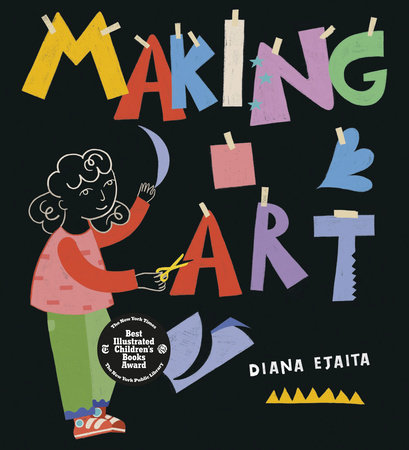
Making Art by Diana Ejaita (Rise x Penguin Workshop, 32 pages, ages 4-8). “Let’s look around and make some art,” begins this introduction to all different aspects of art. You can make new things or create from old things. It’s important to listen to your feelings, and those feelings can be communicated through your art. It can be difficult (and frustrating) to come up with ideas for your art, but then sometimes inspiration will strike like magic! Works of art can be given away or kept as a gift to yourself. No matter what, art adds beauty to the world, so thank you for your art!

This introduction to art could be used for anyone from a preschool class exploring art for the first time to a group of retirees rediscovering their creativity. The message is simple, yet wise and universal, and invites anyone to use art to express themselves. The illustrations portray a wide range of visual arts, as well as music, dance, and writing.

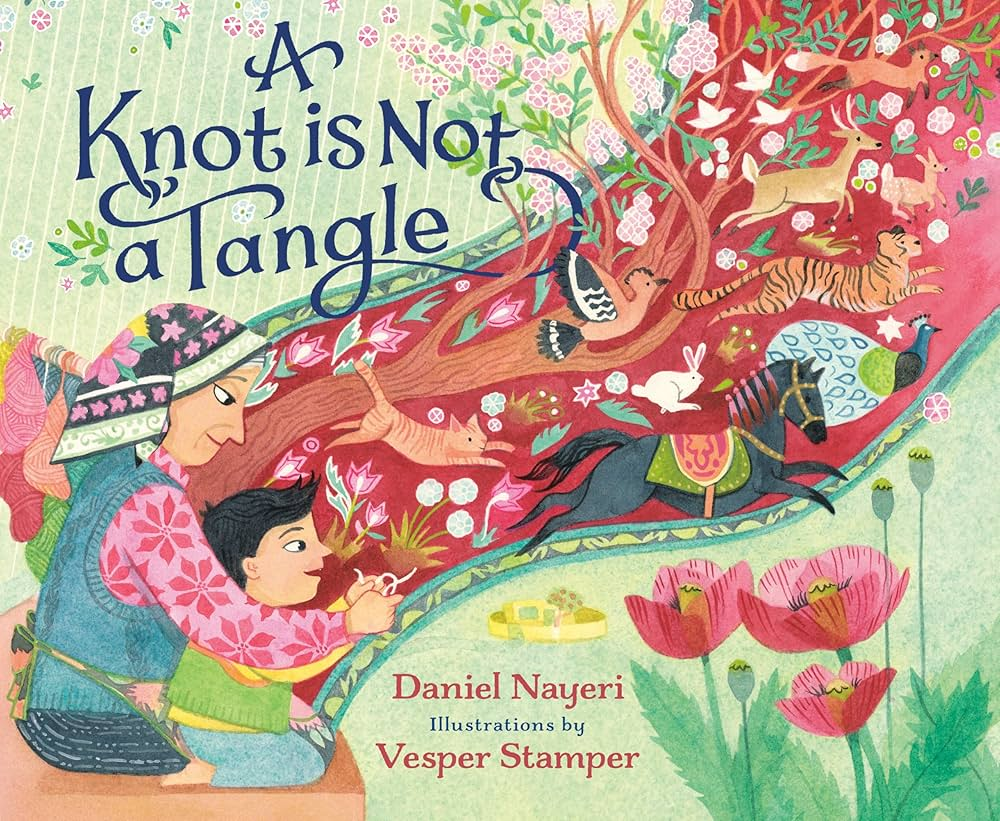
A Knot Is Not a Tangle by Daniel Nayeri, illustrated by Vesper Stamper (Knopf Books for Young Readers, 48 pages, grades 1 and up). A boy narrates the process of creating a Persian rug with his grandmother in Iran. “All of this takes weeks, but in my memory, it’s one long wonderful day.” In that day from his memory, he and his grandmother wash, card, and spin wool that his grandfather has sheared from their sheep. They dye it and plan the pattern and colors for the new rug on graph paper, then finally start knotting on the loom. The boy keeps wanting perfection, but his grandmother reminds him that the most important part of their rug is that it will become a place for the family to gather, just like the old one that they’re replacing has been. She even pulls one knot out, the “Persian flaw,” symbolizing that that there is no such thing as perfection. Finally, the new rug is done, and the old one gets moved underneath the loom, and “It feels just right to have it there.” Includes an author’s note with additional information on Persian rugs.

Award-winning author Daniel Nayeri has crafted a beautiful picture book celebrating an art form that will be new to many readers. The illustrations do a great job of showing the process of knotting–although, I’ll be honest, I still don’t really get it, but this may whet readers’ appetites to dig deeper. The message about tempering perfectionist tendencies is delivered gently by a wise grandmother who clearly values her heritage and enjoys passing it on to her grandson.

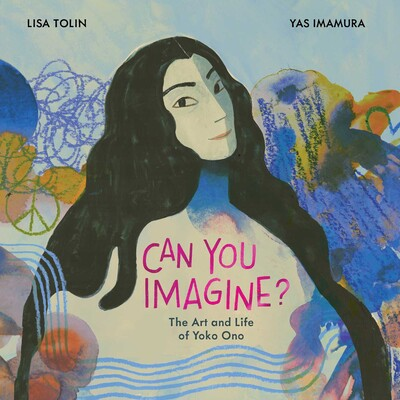
Can You Imagine? The Art and Life of Yoko Ono by Lisa Tolin, illustrated by Yas Imamura (Atheneum Books for Young Readers, 48 pages, grades 2-5). Yoko Ono spent her childhood moving between Japan and the U.S. during a time when she felt unwelcome in both places. After enduring wartime hardships in Japan, she moved permanently to the United States, where she studied art and music. Refusing to embrace norms in either field, she explored her own ways of creating art, which often involved audience participation designed to provoke thoughts and ideas. Her greatest fame came after she met and married John Lennon, when racism, misogyny, and the idea that she broke up the Beatles unleashed waves of public hatred toward her. After Lennon’s murder, Ono has continued to create art while working to preserve her husband’s legacy. Includes quite a bit of additional information about Yoko Ono and her art, as well as a bibliography.

I confess I grew up with a pretty negative impression of Yoko Ono, having absorbed the “she broke up the Beatles” message, but my daughter, an episode of the You’re Wrong About podcast, and now this beautiful book have helped me to see her in a completely different light. She had a pretty horrific childhood but instead of being broken by it, she emerged resilient and with a desire to work for peace through her art. It’s pretty clear that the Beatles broke themselves up, and this book focuses on the positive aspects of the Lennon-Oko collaboration. I’m grateful that this talented author-illustrator team continues the revisionist history, although it may be more appreciated by adults than children.

Poems and spirituals

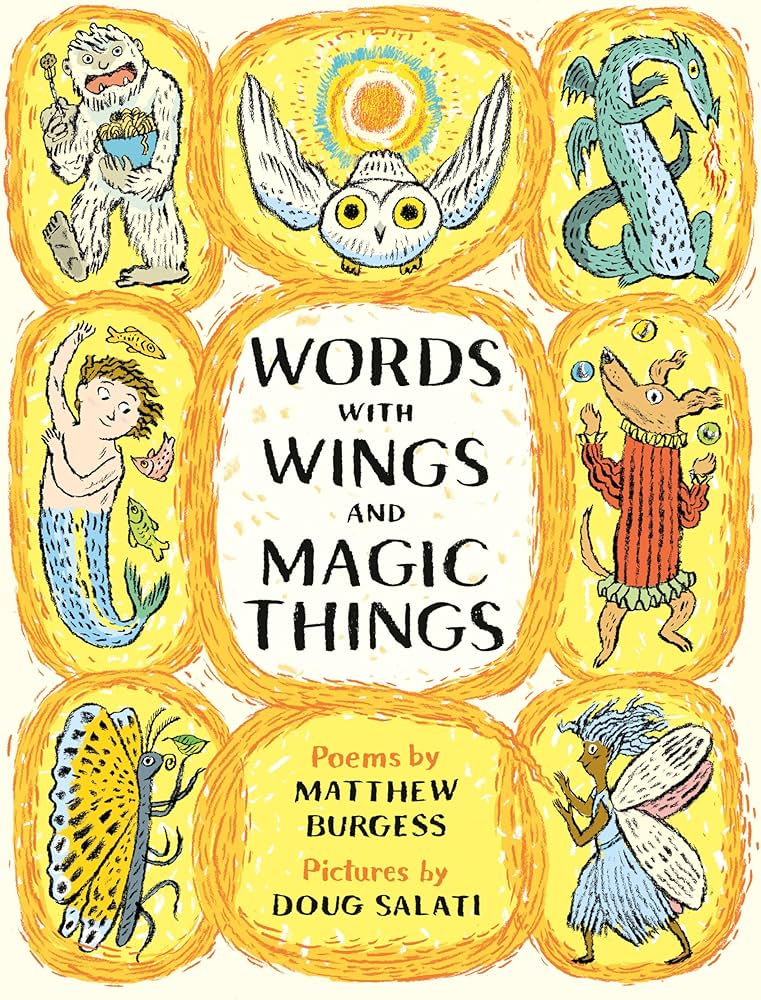
Words with Wings and Magic Things by Matthew Burgess, illustrated by Doug Salati (Tundra Books, 128 pages, grades 1-5). This poetry collection is divided into seven sections: Welcome, Wonders, Wild, Wheee!, Whoops and Whallops, Windows, and Whispers & Well Wishes. The poems range from Jack Prelutsky-laugh-out-loud funny to thought provoking meditations. All are illustrated by Caldecott Medalist Doug Salati with a colorful collection of animals and humans, mostly younger ones, with some fun cut-outs on the pages that start each new section. Includes an index.

This feels like a happy throwback to the days when Prelutsky and Shel Silverstein published lengthy collections of poems, with a nice mix that includes multi-stanza stories mixed in with meditative poems just several lines long. The illustrations add a lot to the fun.

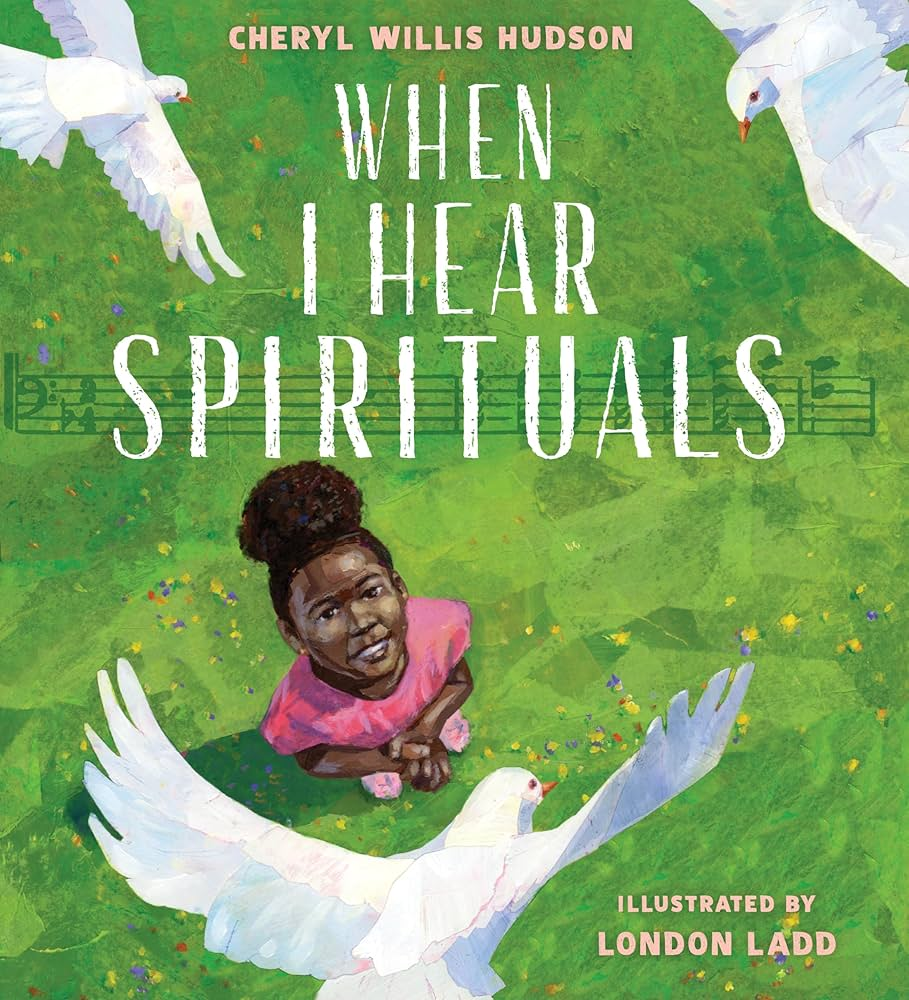
When I Hear Spirituals by Cheryl Willis Hudson, illustrated by London Ladd (Holiday House, 40 pages, grades 1-4). Each two page spread features a young girl describing how spirituals make her feel, with the words to different spirituals written on the facing page. The brilliant illustrations portray her singing, dancing, and praying, as well as showing scenes from Black history, when spirituals gave people courage and hope. A long author’s note describes the history of spirituals and her personal connection to them. There’s also a glossary, a list of the historical figures and events shown in the book, and a long lists of resources for listening to spirituals and learning more about them.

This beautiful book should definitely be considered for a Coretta Scott King award, both for the writing and the illustrations. The text reads like poetry and focuses on emotions evoked by spirituals, but there’s also plenty of information and resources for more research and listening.

Music and art

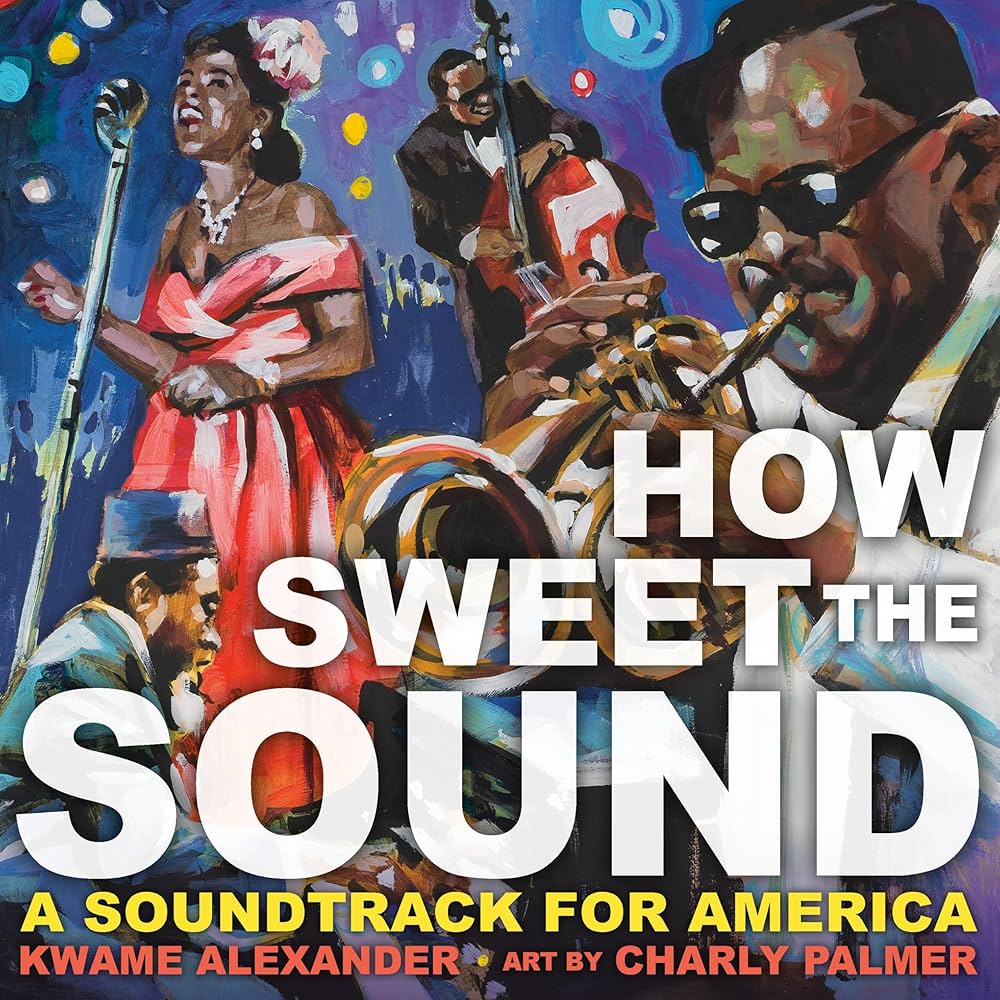
How Sweet the Sound: A Soundtrack for America by Kwame Alexander, illustrated by Charly Palmer (Little, Brown Books for Young Readers, 48 pages, ages 7 and up). Kwame Alexander’s poetry and Charly Palmer’s bright, bold paintings trace the history of Black music, beginning with drumming, dancing, and chanting in Africa, then moving to the gospel music and blues that grew out of slavery in America. Next comes jazz, which, along with the blues, leads to rock and roll, and finally, hip hop and rap. “Listen to the soundtrack of America/a symphony/of refuge and redemption/the sweet sound of a people/surviving and thriving/all the while learning/to love themselves/ by singing it LOUD and PROUD.” Includes six pages of “musical notes” that offer additional information about each musician along with a thumbnail portrait from the illustrations.

Music fans of all ages will appreciate this celebration of Black musicians who have made incredible contributions to American music. Every illustration feels like a party, and readers will have fun figuring out who’s who in them. Put this on the watch list for Caldecott and Coretta Scott King awards.

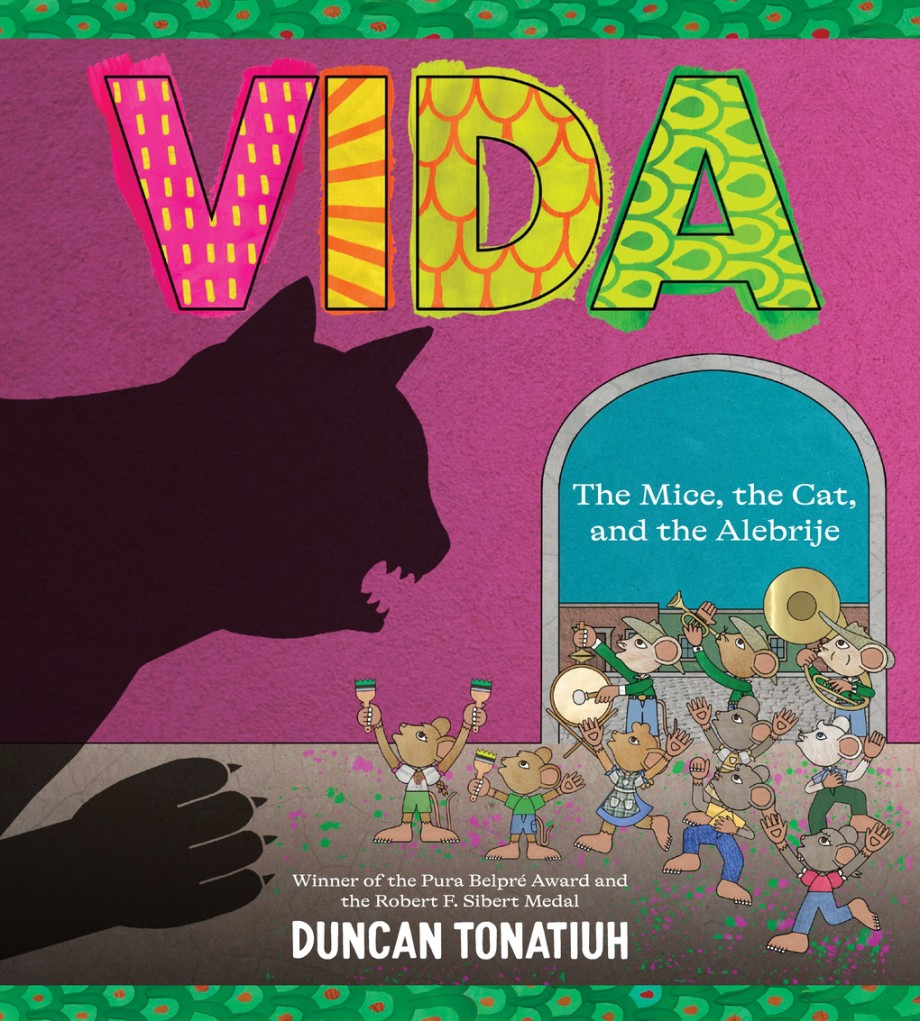
Vida: The Mice, the Cat, and the Alebrije by Duncan Tonatiuh (Harry N. Abrams, 48 pages, ages 5 and up). Mousetepec is a thriving mouse community with a vibrant culture, filled with art, music, good food, and fiestas. But one day a cat appears, and gradually the mice go into hiding, no longer able to engage in their enjoyable pursuits. Vida and her brother miss their old life and try to re-create it by making brightly-colored animals in their house. One night Vida has a dream about a fantastic creature called an alebrije, and when she wakes up, she knows how to scare the cat away. She gathers all the mice to make a huge creature like the one in her dream, covering it with brilliantly painted designs. When it’s completed, the mice lure the cat with a fiesta and loud music. The alebrije and all the noise terrify the cat, and Mousetepec is able to thrive once again. Includes an author’s note with information on alebrijes and Pedro Linares, the artist who created them. There’s also a note on the inspiration for Vida, which is a response to Aesop’s fable about belling the cat, and champions art and solidarity for overcoming evil forces in the world; also a glossary and pronunciation guide and a bibliography.

I read this book just hours after learning about the Fall of Freedom movement taking place this weekend, with artists all over the country creating works to protest what is happening in the U.S (you can read about it on my other blog). It’s a perfect complement to that, with the themes of art, community, and resistance, plus it’s an engaging story with plenty of cute mice and colorful creatures, plus it features Duncan Tonatiuh’s unique illustrations that manage to work in a few lessons about Mexican art. So win-win-win, and maybe a contender for an award or two.

Fireflies and dragonflies

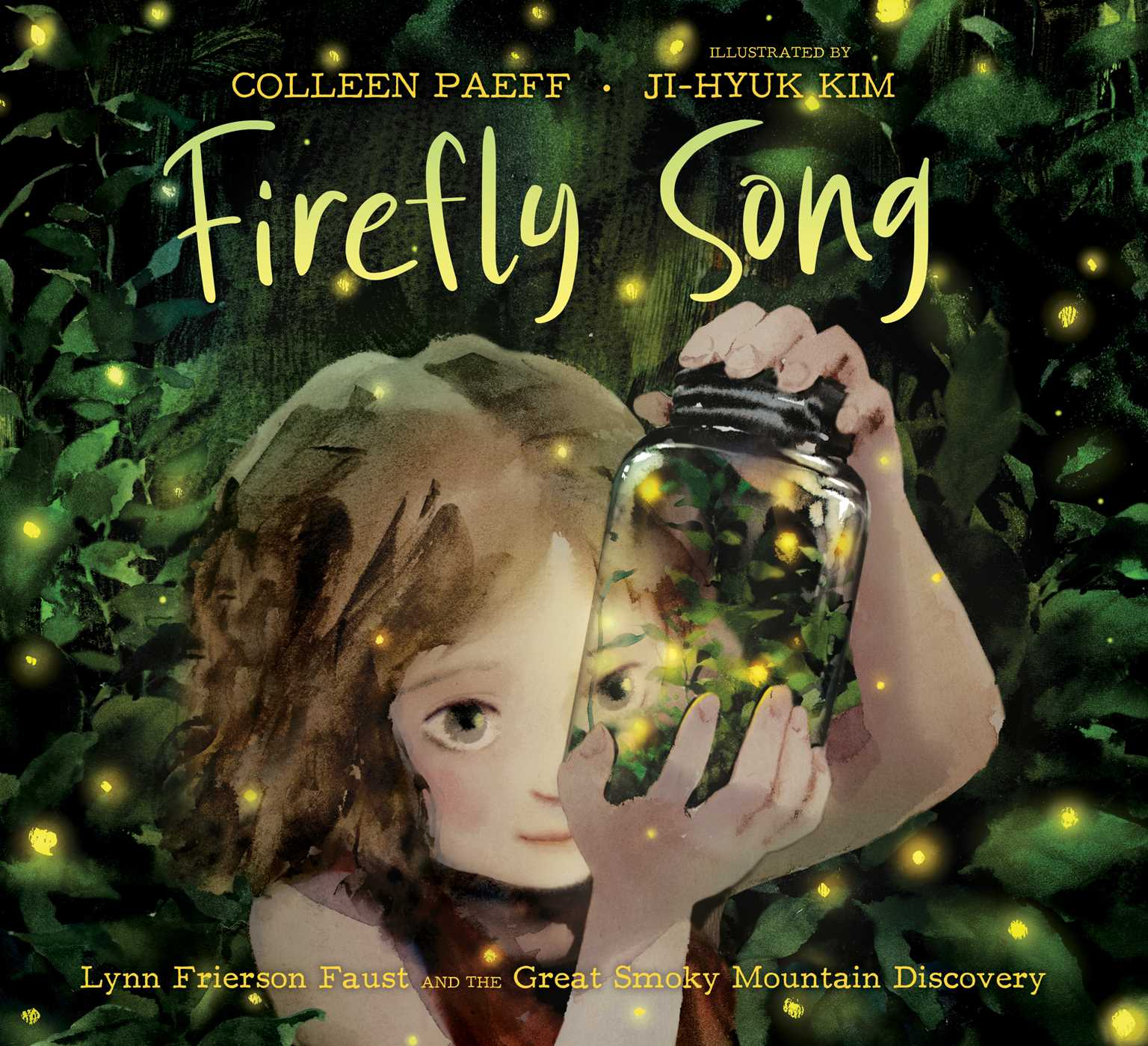
Firefly Song: Lynn Frierson Faust and the Great Smoky Mountain Discovery by Colleen Paeff, illustrated by Ji-Hyuk Kim (Margaret K. McElderry Books, 40 pages, grades 1-5). As a child spending summers in the Great Smoky Mountains, Lynn Frierson Faust was fascinated by fireflies who would flash their lights and go dark in unison. Years later, her family’s summer cabin and the land it was on became part of the national park, but Lynn never forgot those fireflies. When she read that synchronous fireflies didn’t exist in North America, she was determined to prove that they did. Working with other scientists, Lynn’s perseverance over many years finally paid off when she helped a biologist and his team observe the synchronous phenomenon. Although her scientific training is self-taught, Lynn is known globally for her firefly expertise. Includes tips for observing fireflies, firefly facts, a bibliography, and an author’s note.

Lynn’s story is a fascinating one and may inspire readers to become citizen scientists, or at least to be persistent in pursuing their passions. The illustrations are gorgeous, with backgrounds that look like slightly blurry photos, making the fireflies’ lights even more striking. I think the illustrator lives in South Korea, so unfortunately not eligible for a Caldecott, but this would be a good choice for another Sibert award for Colleen Paeff.

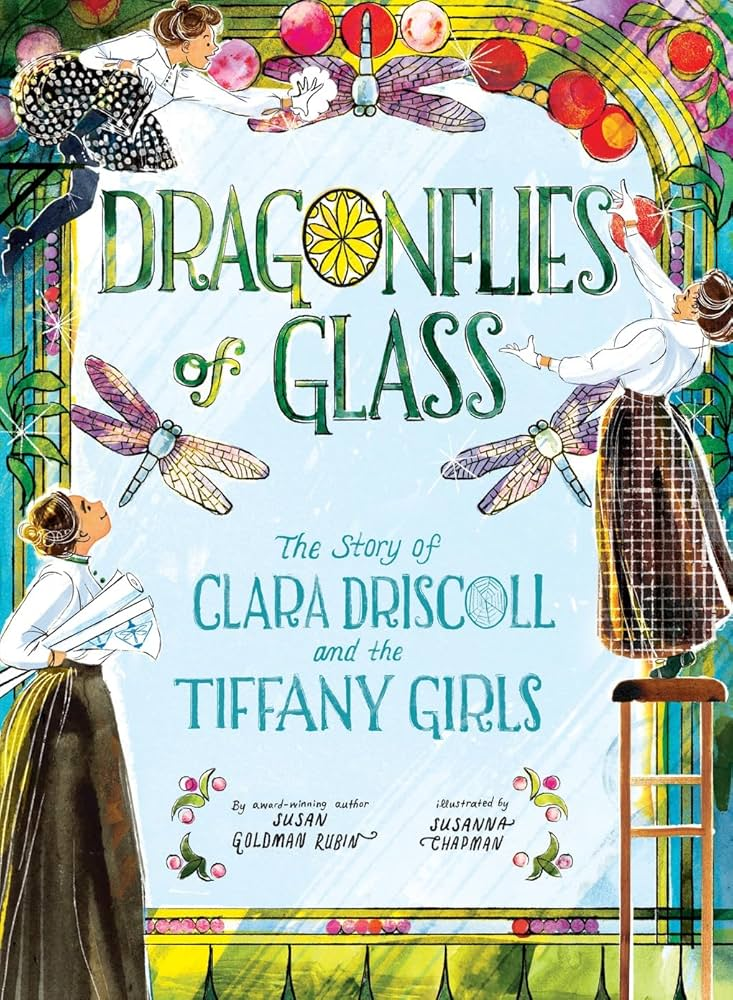
Dragonflies of Glass: the Story of Clara Driscoll and the Tiffany Girls by Susan Goldman Rubin, illustrated by Susanna Chapman (Harry N. Abrams, 40 pages, grades 1-5). Clara Driscoll grew up on a farm in Ohio, where she loved drawing the flowers and animals she observed around her. Her father died when she was 12, but her mother encouraged Clara and her sisters to become self-sufficient. In 1888, Clara and her sister Josephine moved to New York City to study at the Metropolitan Museum of Art School. Clara was hired by Louis Comfort Tiffany, son of the famous jeweler, to work in his studio making stained glass. She was part of the women’s division there, where she learned to cut glass and turn it into designs. Drawing on her memories of the Ohio farm, she was soon creating her own designs incorporating dragonflies, butterflies, and flowers, including the wisteria that was part of Tiffany’s most famous lamp. Includes notes from the author and artist, a list of places to see Clara’s work, and a bibliography.

Another story of an amazing woman who built a full artistic life at a time when sexism was a big obstacle. While Louis Comfort Tiffany sounds pretty progressive (he defended the women’s division when the men threatened to strike if he didn’t get rid of it), the author’s note reveals that Clara was forced to quit working there after she got married. The illustrations are gorgeous, especially the depictions of the Tiffany lamps. Clara’s story came to light thanks to round robin letters that she, her mother, and sisters wrote, and the story of those letters arriving at the farm is shown in small illustrations running along the bottom of each page.

Orange you ready to celebrate art?

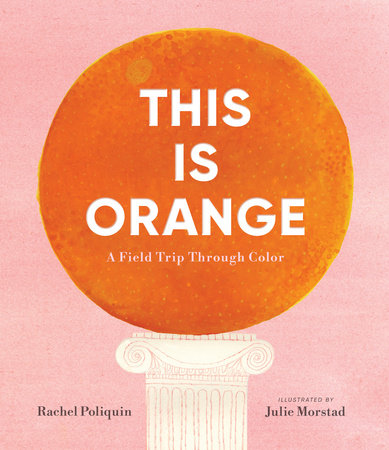
This Is Orange: A Field Trip Through Color by Rachel Poliquin, illustrated by Julie Morstad (Candlewick, 48 pages, grades K-4). Which do you think came first, the color orange or the fruit? If you guessed the color, as I did, you’re in for a surprise to kick off this book that traces the history of the color, then meanders through the worlds of art, science, nature, and history looking for examples of it. Birds’ feet are orange, and so are cantaloupe and mimolette cheese. A color called International Orange that shows up in murky skies or seas is used for astronauts’ suits and the Golden Gate Bridge. You’ll find orange in Halloween jack-o-lanterns, Buddhist monks’ robes (from orange turmeric), and a number of countries’ flags. “Now it is time for you to find orange in your world,” the book concludes. “If you look carefully, you will see orange almost everywhere.”

Although the tone is lighter, this book reminded me of Blue: A History of the Color as Deep as the Sky by Nana Ekua Brew-Hammond, in that both books wake readers up to colors so common that we take them for granted. This would be a great book for an art class, or just to sharpen observational skills. I was disappointed there was no back matter, but the last page does a great job of sending readers off into the world with a new appreciation for the color orange.

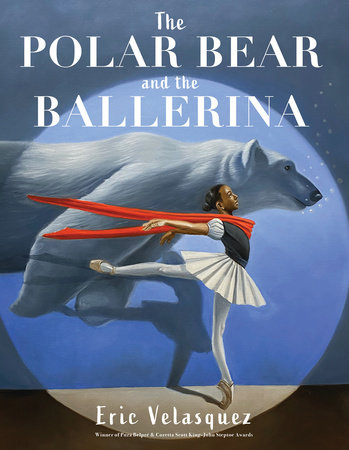
The Polar Bear and the Ballerina by Eric Velasquez (Holiday House, 48 pages, ages 4-8). A young ballerina and a polar bear bond at an aquarium in this wordless book. After the girl leaves with her mom, the bear notices that she’s left her long red scarf behind. Hoisting himself out of his tank, he walks across Manhattan to Lincoln Center, where he’s met with a “No polar bears allowed!” sign at the ticket window. His growl alerts the girl, who leaves the practice room to escort him inside to a seat. Despite disgruntled looks from his neighbors, the bear is enraptured by the show. Afterwards, he returns the scarf, then dances home, where he dreams about performing on stage with the girl. Endpapers give profiles of both the bear and the girl, a soloist at Harlem Children’s Ballet.

Kids will love the adorable polar bear and spunky ballerina in the gorgeous illustrations, and adults can use their story to facilitate conversations about making the arts accessible to everyone. For a moment, I thought ballerina Chloe Maldonado was a real girl, but then I realized the ballets listed on her resume are both books by Eric Velazquez! Those endpapers add some fun and depth to the story, though.

Learning from the past

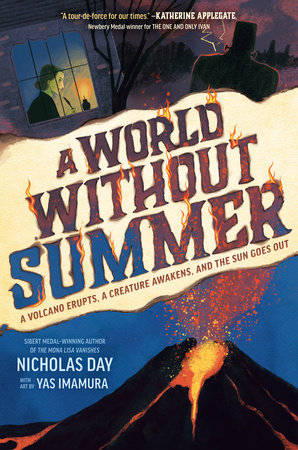
A World Without Summer: A Volcano Erupts, a Creature Awakens, and the Sun Goes Out by Nicholas Day, illustrated by Yas Imamura (Random House, 304 pages, grades 5-8). As he did in The Mona Lisa Vanishes, Nicholas Day connects a work of art with the historical events around it. Here, the story starts in 1815 with the catastrophic eruption of the Indonesian volcano Tambora. The enormous amount of ash and smoke caused changes in the global climate that resulted in droughts, floods, crop failures, and famine in the United States and Europe. The work of art in question is Mary Shelley’s novel Frankenstein, which was published in 1818, and which Day makes a compelling case for having been created from this dark time. Another byproduct of the time was a more scientific study of weather and climate, which is how we know that the climate is changing today. Throughout the narrative, Day pointedly addresses readers, making sure they are paying attention to the parallels of this tragic story with what is going on in our world right now. Includes extensive bibliography, notes, and index.

Since The Mona Lisa Vanishes was one of my favorite nonfiction books ever, I was thrilled to see that Nicholas Day has a new book out, and I was not disappointed.  Okay, I was a little disappointed, not because it wasn’t engaging, well-researched, and fascinating, but because any story that draws my attention to climate change fills me with existential dread in a way that a fun story about the Renaissance, Leonardo da Vinci, and the Louvre could never do. I would love to see this get some Sibert recognition.

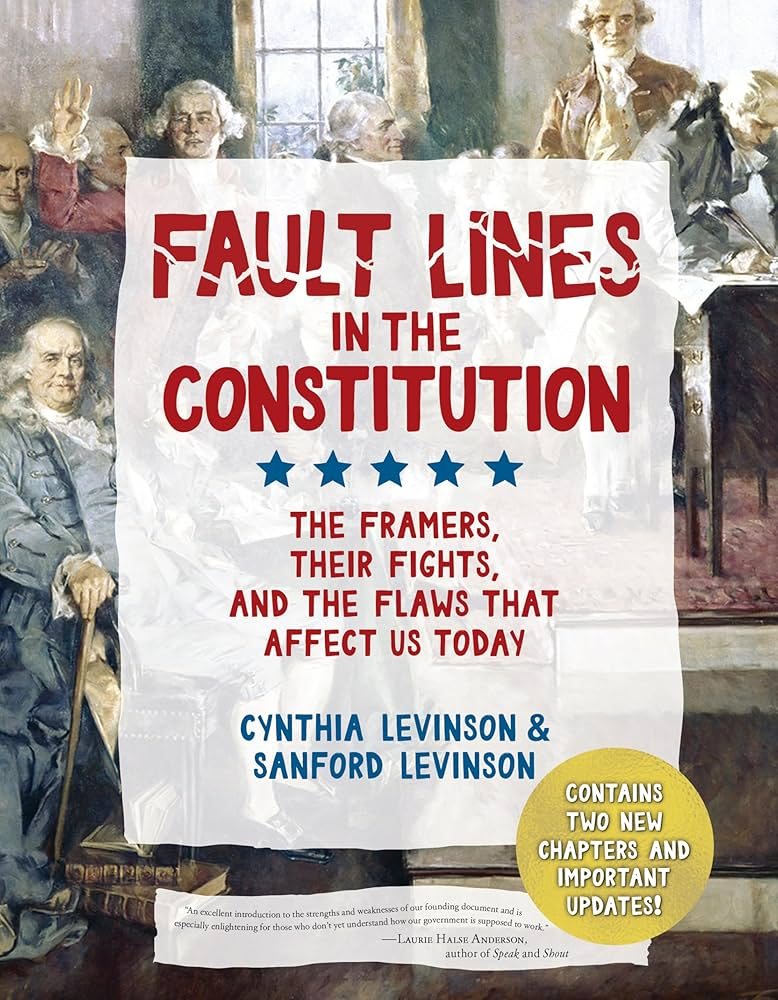
Fault Lines in the Constitution: The Framers, Their Fights, and the Flaws That Affect Us Today by Cynthia Levinson and Sanford Levinson (Peachtree, 2025, grades 6 and up). The Electoral College, lame duck presidents, gerrymandering, unequal representation: despite the best intentions of the Founding Fathers, the U.S. Constitution contains some serious flaws that affect the country today. The authors look at eight different issues, beginning each chapter with an episode from history that reveals the fault line, then going back to the origin of that section of the Constitution, and concluding with a look at how other states and countries deal with those issues differently. In the last part, they grade different parts of the Constitution (spoiler alert: overall, it’s a C-), then debate whether it would be better to call another Constitutional Convention to revisit the entire document or to work on amending it. Includes a timeline, bibliography, notes, and an index.

This is the third edition of the book originally published in 2017, with two new chapters and recent updates (there’s also a graphic novel version). I’m honestly shocked that this didn’t win any awards when it was first published, especially Sibert. The format makes the material engaging and relevant, and it really opened up my eyes to how flaws in the Constitution are causing so many of the problems we see today with voting and Congressional gridlock, among other things. It also made me think about how this makes sense, given how much the country and the world have changed in the last 250 years. This would make a great textbook for middle school and high school civics classes, as well as important reading for any U.S. citizen.

Courageous women of World War II

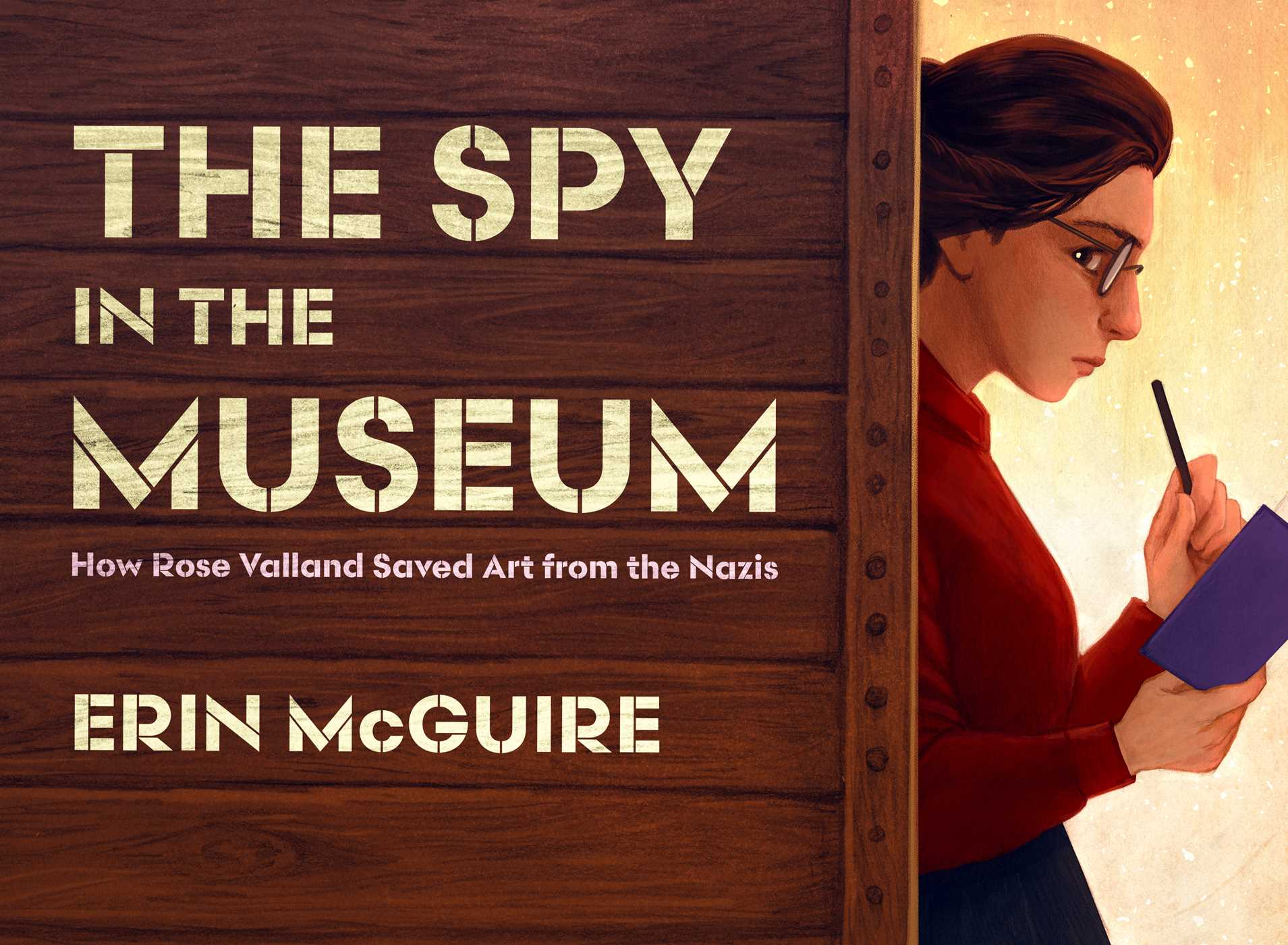
The Spy in the Museum: How Rose Valland Saved Art from the Nazis by Erin McGuire (Beach Lane Books, 40 pages, grades 2-5). Rose Valland loved art. As curator of Paris’s Jeu de Paume Museum, she appreciated all kinds of art: ancient, classical, or modern. Adolf Hitler hated modern art. When Nazis took over Rose’s museum, they fired all the staff except Rose, who was kept on as manager. As they started to steal the art, selling it to fund the war, Rose secretly listened to their conversations and made notes about where the art was going. The soldiers didn’t know she spoke German, but they still became suspicious of her, which put her in grave danger. Towards the end of the war, as the Nazis fled Paris, Rose worked with the French Resistance to stop their final train, loaded with valuable artworks, from leaving the country. For much of the rest of her life, she used her notes to help restore the stolen artworks from around the world. Includes additional information about Rose Valland and the art she worked to save, as well as a list of sources.

This inspiring story is supplemented with interesting and timely questions in the author’s note: why does protecting art matter, and why did the Nazis want to destroy it? The illustrations, many including famous artworks, add to the story and the conversation.

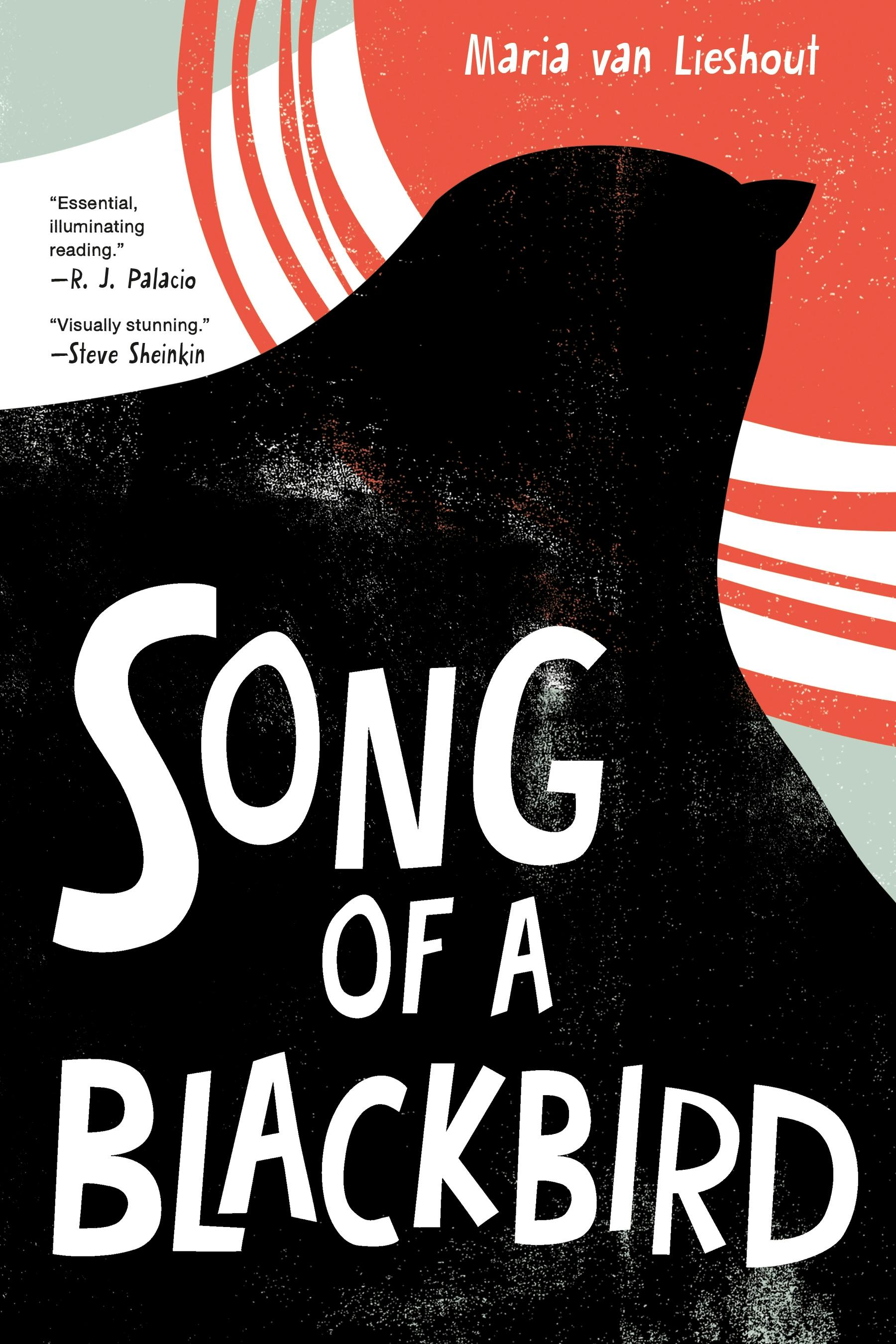
Song of a Blackbird by Maria van Lieshout (First Second, 256 pages, grades 8 and up). The narrative of this graphic novel alternates between 2011 and 1943 Amsterdam. In 2011, Annick is trying to find help for her Oma’s leukemia. When bone marrow tests reveal she was adopted, the two turn to a set of prints from her childhood, each signed by “Emma B.” to try to learn more about her past. Emma is the 1943 protagonist, an artist and student whose education is interrupted by the Nazi invasion of the Netherlands. She uses her talents to aid the Resistance, helping to create false documents and working to rescue children whose parents are being sent to concentration camps. A blackbird that represents art and creativity narrates, showing how his gifts help those in the darkest of circumstances. The two stories eventually meet, and the reader learns the fate of all the characters in a moving epilogue. Includes extensive back matter about the buildings pictured in Oma’s prints and the real-life people on whom Maria van Lieshout based her story.

I learned about this book when the National Book Award Longlist was announced a couple of weeks ago, and it absolutely blew me away. I truly can’t imagine creating this impeccably researched historical fiction, with its two riveting narratives, each one portrayed in its own color palette. Usually I’m rooting for a middle grade win over YA, but this is a compelling choice for sure. Although both books take place over 80 years ago, their stories speak to the timeless power of art and will surely inspire those fighting to create a brighter world.

Hopeful books for difficult times

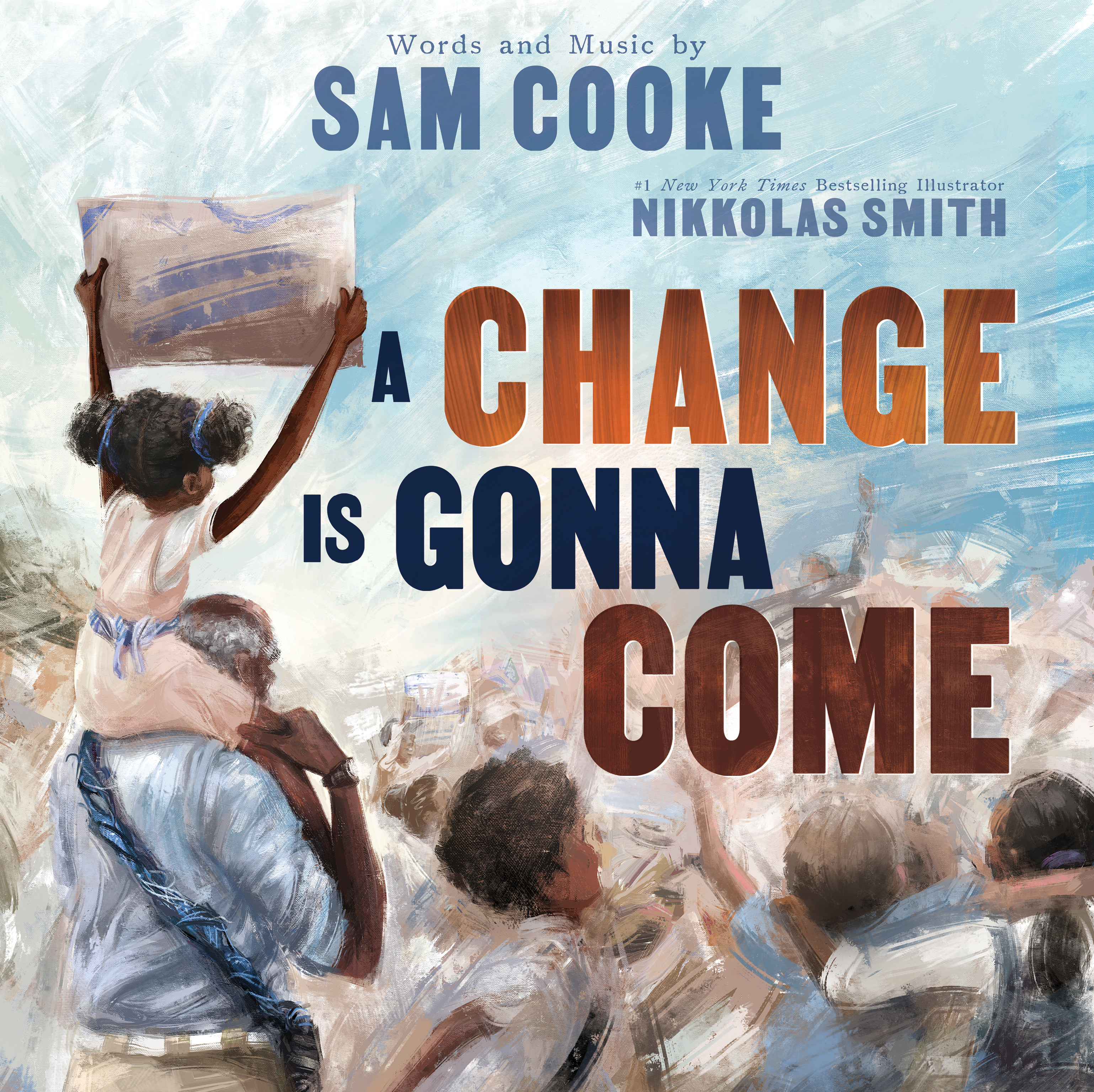
A Change Is Gonna Come words and music by Sam Cooke, illustrated by Nikkolas Smith (little bee books, 32 pages, all ages). Nikkolas Smith provides an illustrated version of the classic Sam Cooke song, with images of famous people and places from the civil rights movement. In the first few pages a boy, identified in the back matter as photographer Gordon Parks, finds a camera, which he later uses to photograph history. The pictures capture the song’s juxtaposition of despair and hope, with portrayals of Jim Crow laws in action and Medgar Evans’ funeral alongside those showing the March on Washington and the signing of the Civil Rights Act. Includes notes from the estate of Sam Cooke and from Nikkolas Smith, two pages of additional information about the people and events pictured, and a QR code that allows readers to hear the song.

Just like the song, this book packs a powerful punch, and made me think of Smith’s book The Artivist in which the narrator says, “I want to hold up a mirror to the world and show everyone what isn’t working right.” You’ll need multiple readings, including the back matter, to really get the full impact of this book, which I hope will be considered for both Caldecott and Coretta Scott King recognition. 

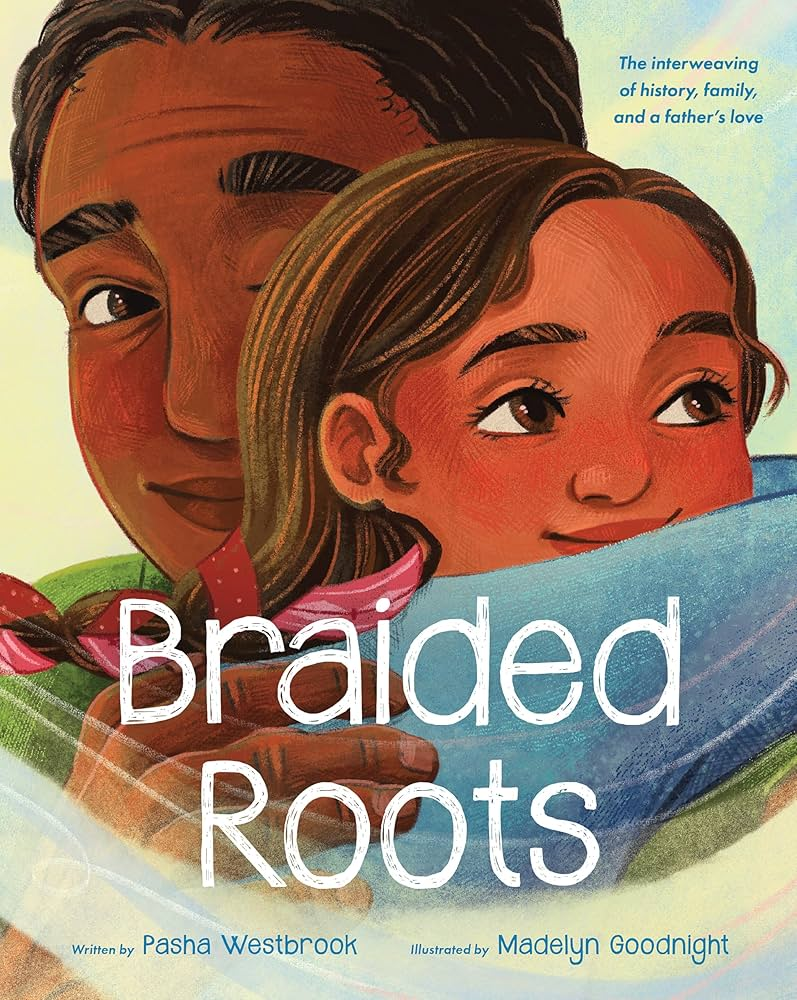
Braided Roots by Pasha Westbrook, illustrated by Madelyn Goodnight (Orchard Books, released November 4, 40 pages, ages 4-8). As her father braids her hair, a girl reflects on her family’s heritage, comparing the strands of her braid to DNA. Her ancestors include both enslaved people and those who walked the Trail of Tears. As Daddy finishes the braid, he tells her to be careful, because with such a strong braid, “You just might change the world.” Includes an author’s note about her inspirations from her own family, which included ancestors who were enslaved, mixed-race Black, Chicksaw, and Choctaw, and her single father who raised her and her three brothers, as well as an illustrator’s note.

This lovely family story reminded me of Hair Love by Matthew A. Cherry, which also features a father doing his daughter’s hair and My Powerful Hair by Carole Lindstrom, which explores the belief of Indigenous Americans that hair is a source of strength and memories. Kids may need some additional information to understand part of the story about the narrator’s ancestors, but this would be a good book to read to inspire them to investigate their own heritages.

Science acclaim, a mouse’s name, and the G.O.A.T. of the game

Jellyfish Scientist: Maude Delap and Her Mesmerizing Medusas by Michelle Cusolito, illustrated by Ellen Rooney (Charlesbridge, 32 pages, grades 1-5). Maude Delap never left home or went to school, but she became a scientist by studying the ocean life around her home on Valencia Island, Ireland. This story takes place from June, 1899 until September, 1900, a time when Maude made important discoveries about the compass jellyfish’s life cycle through careful observations in the Department, her name for her home lab. After unlocking the mysteries of this jellyfish, she’s shown on the last page scooping up a blue jellyfish, beginning the process all over again. Includes additional information about Maude, jellyfish (including an illustrated guide to their life cycle on the endpapers), notes from the author and illustrator, and some additional resources.

Told in the present tense, with dates shown on each page, this story conveys an air of you-are-there excitement about the scientific process. Maude had to overcome some very unfair obstacles to have a scientific career, but the main theme in the book is perseverance and the joy of new discoveries. The back matter reveals that she made significant contributions to marine science. The illustrations do a great job of capturing that joy, showing Maude with a young niece assisting her, her lab, and the jellyfish.

The Woman Behind the Magic: How Lillian B. Disney Shaped the Disney Legacy by Brittany Richman, illustrated by Joanie Stone (Beach Lane Books, 40 pages, grades 1-5). As the youngest of ten children, Lilly Bounds never had much, but she always enjoyed the magical moments that she shared with her warm, loving family. After her older siblings left home and her dad passed away, Lilly moved out to California to be near one of her sisters. She got a job at the fledgling Disney Brothers Cartoon Studio, where she inked and colored cartoons, eventually impressing her boss Walt enough that she became his secretary and then his wife. The studio almost went out of business a few times, but Lilly helped behind the scenes, most notably naming Mickey Mouse after Walt proposed the name Mortimer. From Snow White to the opening of Disneyland, Lilly gave her opinions and feedback that shaped the Disney empire. When Walt died shortly before the opening of Walt Disney World, Lilly pushed herself to step into the spotlight for the grand opening. Includes a three-page author’s note with additional information and a timeline of Lillian’s life.

It was fascinating to learn more about the early days of the Disney empire, particularly this quiet unassuming woman who liked to work behind the scenes, but who had a big impact on the Disney we know today and who saved us from Mortimer Mouse. This illustrations are charming, calling to mind some of the older animated Disney movies.

Messi’s Magic: How Lionel Messi Became the G.O.A.T. by Caroline L. Perry, illustrated by Luciano Lozano (Scholastic, 48 pages, grades 1-5). Lionel “Leo” Messi grew up in a loving, soccer-obsessed family in Argentina. From an early age, his talent was obvious, and his Grandma Celia was his biggest fan. As he got older, though, Leo faced obstacles to his soccer career. His grandma passed away, and he was diagnosed with a growth disorder. Without daily injections, he wouldn’t grow big enough to play professional soccer, but his family couldn’t afford the medicine. At the age of 13, he was signed to FC Barcelona, who also agreed to pay for his medical treatment. Leo struggled to fit in at Barcelona’s youth academy, but his soccer skills helped him find his place. He’s gone on to become one of the greatest soccer players of all times, and if you see him pointing to the sky when he makes a spectacular goal, you’ll know that he’s dedicating it to Grandma Celia. Includes a timeline, additional information about Messi, and notes from the author and illustrator.

Thanks to Scholastic for providing me with a copy of this book, which will be released September 2. I know it will be a huge hit in my library, where I have many football/soccer fans. Leo’s story is inspiring, as he never gave up his dreams despite some pretty difficult setbacks, and went on to succeed beyond the wildest of those dreams. The additional information about Messi’s family life and charity work portray him an excellent role model.

Making a difference

The Music Inside Us: Yo-Yo Ma and His Gifts to the World by James Howe, illustrated by Jack Wong (Harry N. Abrams, 48 pages, grades 1-5). Growing up in Paris and New York City, Yo-Yo Ma showed his musical gifts early, playing cello from the age of 4, performing for President John Kennedy at 7, and debuting at Carnegie Hall at 15. But Yo-Yo wanted more than just the life of a musical prodigy. As a teen, he started questioning who he was, aside from being an obedient son and a cellist. He studied anthropology at Harvard and learned about music as a universal language. As an adult, Yo-Yo has used his music to bridge the gaps of culture, language, and generations. He continues to develop his musical gifts and to share them with people of all ages from all over the world. Includes a timeline, notes from the author and illustrator, and lists of additional resources.

I love how this book shows how Yo-Yo Ma, an incredibly talented and hard-working musician from an early age, has never rested on his laurels, but has used music in innovative ways to have positive impacts on the world. Through his appearances on Mr. Rogers, Arthur, and Sesame Street, his creation of Silkroad Project to bring together musicians from around the world, and his performances of “Songs of Comfort and Hope” during the pandemic, Yo-Yo shows us all how to use our unique talents in creative and powerful ways.

The Friendship Train: A Story of Helping and Healing After World War II by Debbie Levy, illustrated by Boris Kulikov (Bloomsbury Children’s Books, 48 pages, grades 2-5). In the fall of 1947, Europeans were facing a winter of hunger due to postwar devastation. Journalist Drew Pearson had the idea of creating a Friendship Train that would start in California and travel to the east coast, stopping along the way to pick up donations of food from across the U.S. While Mr. Pearson initially worried that there wouldn’t be enough donations to fill a boxcar, the final collection was enough for 500 boxcars. The food was transferred onto ships which sailed for Europe in December of 1947 and brought welcome relief to Europeans. The French people reciprocated with a Merci Train, collecting and shipping gifts in 1949 that were distributed all around the US. Includes a two-page author’s note with additional information about the Friendship Train and ways readers can address the problem of hunger today, as well as a list of sources and a bibliography.

This well-researched book tells a heartwarming story of Americans rising to the occasion to help Europeans get through the winter before the Marshall Plan was implemented. It would make a great read-aloud for Thanksgiving or the December holidays. My curiosity led me to read more about Drew Pearson, who sounds like a remarkable person deserving of his own biography. I also learned that his wife Luvie was equally involved in the project, although she’s not mentioned in this story. And if you want to find out about what happened to the Merci Train donations to your state, you can learn about it here.