Jackie Ormes Draws the Future: The Remarkable Life of a Pioneering Cartoonist by Liz Montague

Published by Random House Studio

Summary:  Jackie Ormes loved drawing from an early age and captured her dreams of adventure through her art.  After high school, she took a job as a freelance reporter for the Pittsburgh Courier, a Black newspaper, and eventually created the cartoon character Torchy Brown, a fashionable nightclub star who moved from the South to Harlem.  Torchy made people laugh but also addressed issues like racism and segregation.  When Jackie and her husband moved to Chicago, Torchy’s run ended, and Jackie had the opportunity to formally study art for the first time in her life.  Several years later, she returned to the world of comics with Patty-Jo, a six-year-old girl who spoke out about current events, and who would become Jackie’s most famous creation.  Includes additional information about Jackie Ormes and Patty-Jo, including a photo of the Patty-Jo doll, described as “America’s first upscale Black play doll,” an author’s note, and a list of selected sources.  40 pages; grades 2-5.

Pros:  A fun and insightful look at cartoonist Jackie Ormes’s life, with illustrations inspired by Jackie’s work, and an emphasis on the theme of the perseverance that led to her success.  Kids will relate to Jackie’s love of art and her determination to be successful and make a difference.

Cons:  The story ends shortly after World War II, and Jackie died in 1985; like another recent biography of Ormes, this doesn’t tell much about the second half of her life.

Doodles from the Boogie Down by Stephanie Rodriguez

Published by Kokila

Summary:  Steph is in eighth grade at her Bronx Catholic school, which means she and her friends are applying to New York City high schools.  Her strict Dominican mother wants her to continue at a Catholic school near home, but Steph is drawn to an arts school in Manhattan.  Since the school of her dreams requires a portfolio, not an exam, Steph decides to secretly work with her art teacher and mentor, Ms. Santiago, on a portfolio and to purposely fail the high school entrance exam.  Naturally, this plan drastically backfires, and Steph finds herself in trouble with both her school and her mother.  Fortunately, her mother, helped by her own mother, sits down and talks to Steph, resulting in a better understanding on both sides, and ultimately, Steph’s admission to the Laguardia Arts High School.  Includes a note from the creator telling more about her own life and what was the same and different from the fictional Steph.  208 pages; grades 4-7.

Pros:  Fans of graphic memoirs, especially artists, will love this new addition to the canon and will root for Steph in spite of a few less-than-great choices on her part.  

Cons:  I was bummed to learn that the real Stephanie didn’t get to go to LaGuardia High School.

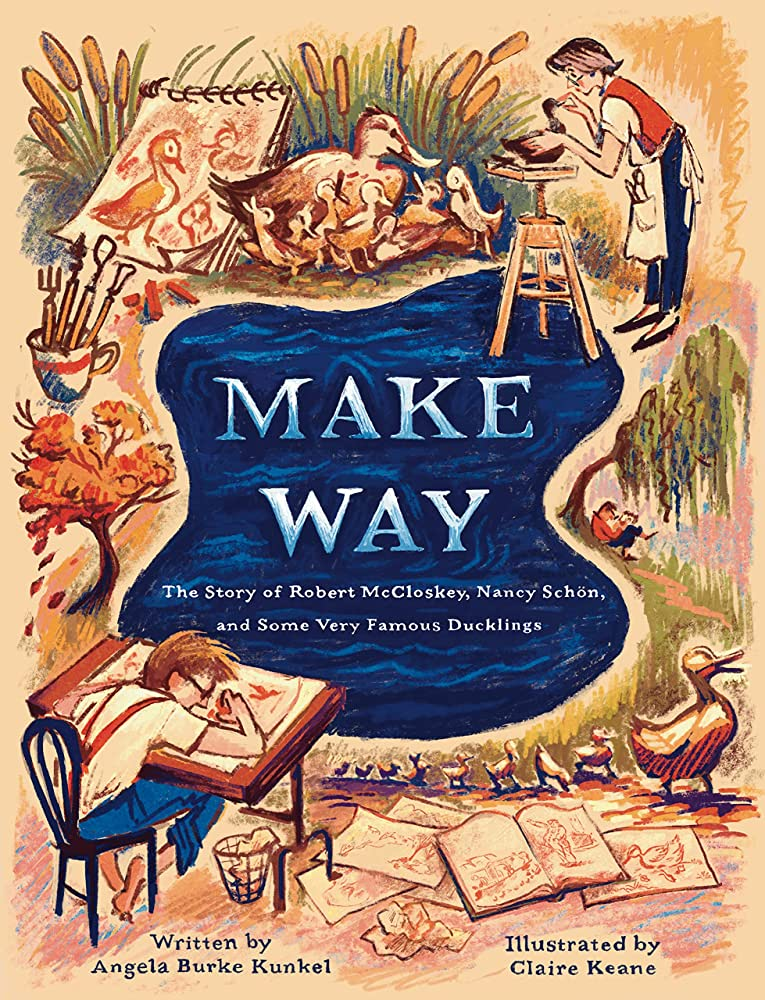
Make Way: The Story of Robert McCloskey, Nancy Schön, and Some Very Famous Ducklings by Angela Burke Kunkel, illustrated by Claire Keane

Published by Random House Studio

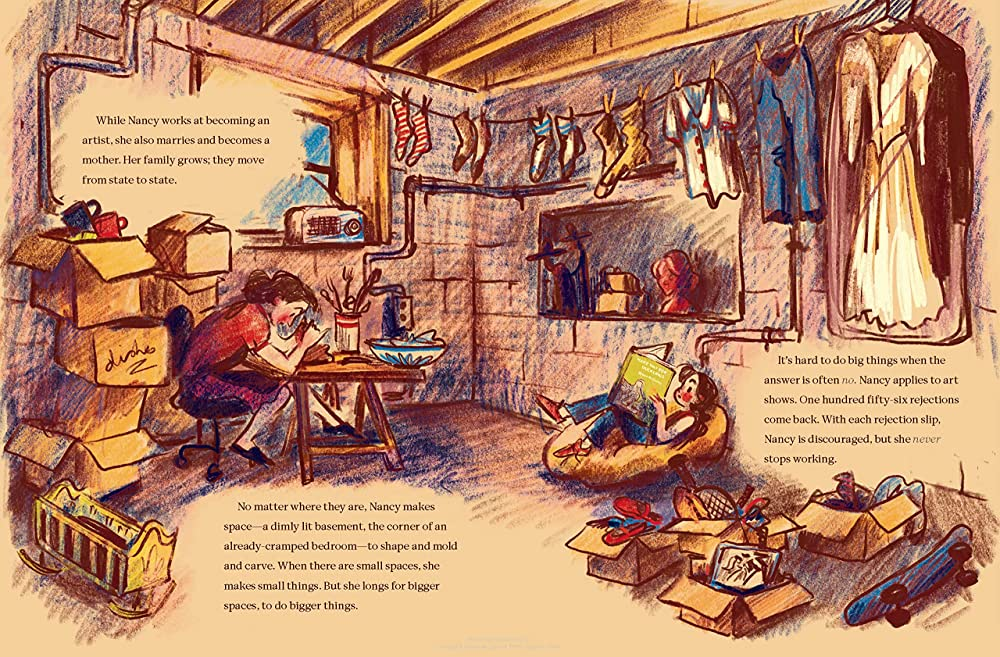
Summary:  Robert “Bob” McCloskey spent his childhood in Hamilton, Ohio, his active mind and hands always creating.  Nancy Schön spent hers–many years later–in Newton, Massachusetts, where she found solace in working with clay in art class.  Bob moved to Massachusetts to study art, and eventually wrote the classic Make Way for Ducklings.  Nancy struggled with her art for years, receiving one rejection after another, before being inspired to create a sculpture of Bob’s ducklings.  It wasn’t an easy process, but she was finally ready to unveil her project to Bob, who gave it a hesitant seal of approval.  When he saw kids interacting with the ducks, he became more enthusiastic.  The statues were installed in October 1987, and you can visit them in the Boston Public Garden today.  Includes an author’s note, timeline, and bibliography.  48 pages; ages K-4.

Pros:  A heartwarming story of two artists and the famous book and statues they created, with cozy illustrations that are reminiscent of Robert McCloskey’s books.  

Cons:  There’s a photo of several of the ducks (wearing rainbow sweaters for Pride) with the author’s note, but it would have been nice to include a photo of the entire family.

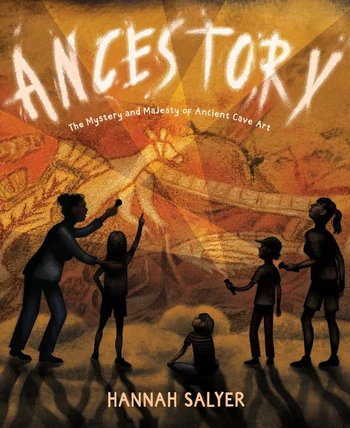
Ancestory: The Mystery and Majesty of Ancient Cave Art by Hannah Salyer

Published by Clarion Books

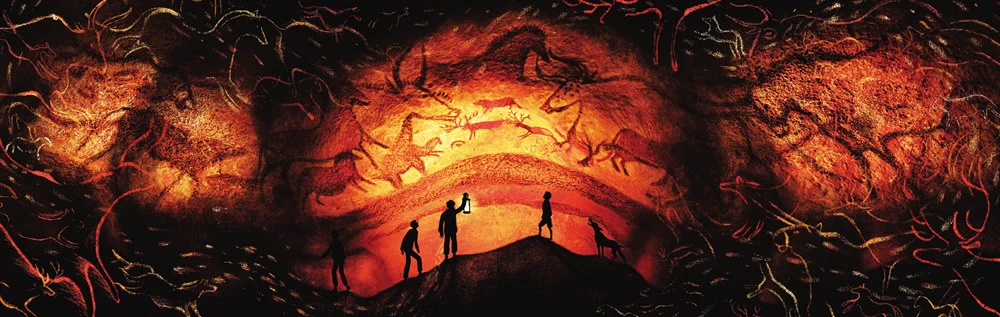
Summary:  All over the world, ancient rock paintings, drawings, and etchings have been discovered.  Who made them?  How did they create the artwork?  This book looks at the answers to some of those questions, showing some of the works and looking at the materials ancient people might have used to make them.  A gatefold spread shows an amazing cave painting illuminated only by the lamps of the people who are looking at it.  The art is part of our “ancestory”–the story of humanity that continues with our own lives.  Includes a site map showing where rock art can be found around the world; the story of the discovery of the Lascaux Caves; an author’s note; a glossary; a timeline; and resources for further investigation.  48 pages; grades 2-5.

Pros:  Budding archaeologists will find this book fascinating and will want to dive into the additional resources to learn more.  The illustrations are gorgeous, using light and dark to highlight the artwork.

Cons:  I was curious to know if the art shown in the illustrations was based on real art and, if so, I wish there had been some labels to tell where it could be found.

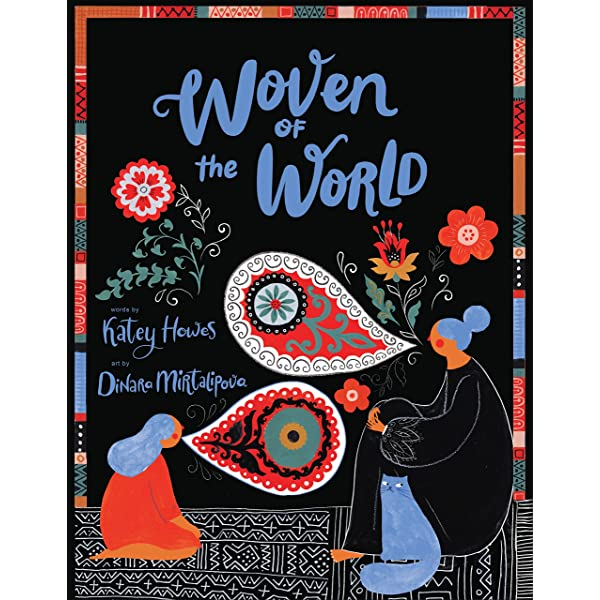
Woven of the World by Katey Howes, illustrated by Dinara Mirtalipova

Published by Chronicle Books

Summary:  As a child learns how to weave from a master, the two of them take a tour through history to look at how weaving has played a role in many past cultures.  From the “silken threads” of ancient China to the “backstrap loom tied to a tree” of nomadic tribes to the “trail of yarn” of immigrants moving to new countries, there are weaving traditions from all around the world.  The final page uses a weaving metaphor for life, with patterns unfolding as the work is done.  Includes additional information on weaving tools and the various cultures described, as well as notes from the author and illustrator.  44 pages; grades K-5.

Pros:  Anyone with even a passing interest in weaving will appreciate the excellent rhyming text and beautiful patterned illustrations, as well as the history lessons from both the main story and the back matter showing how weaving has been a part of so many people and places in history.

Cons:  I had a little trouble figuring out which description in the back matter went with which pages in the main text.

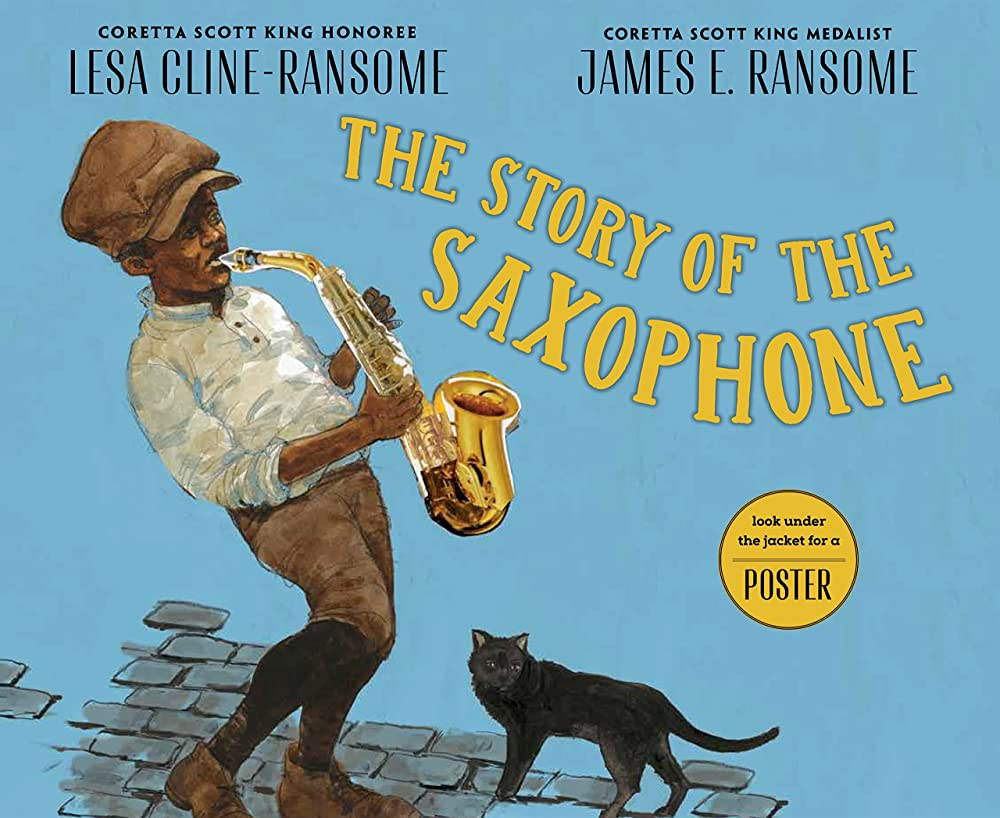
The Story of the Saxophone by Lesa Cline-Ransome, illustrated by James E. Ransome

Published by Holiday House

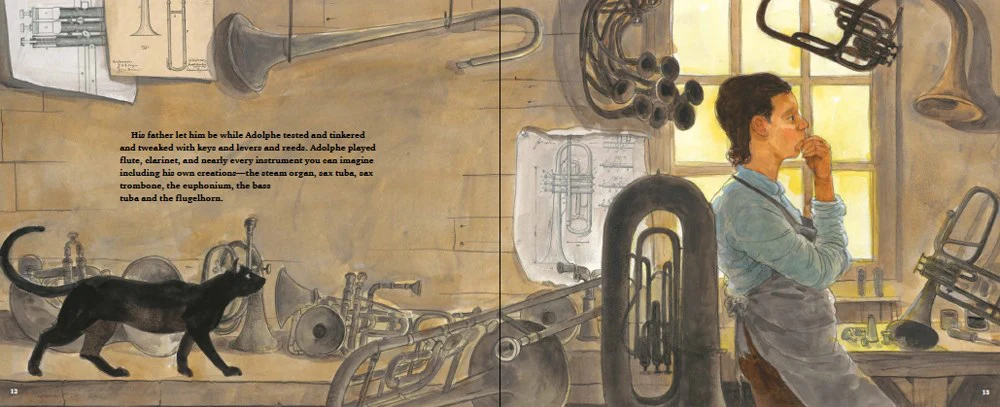
Summary:  Although the saxophone is known for its role in American jazz music, its story starts in 19th-century Belgium with a young man named Joseph-Antoine Adelphe Sax.  The son of an instrument maker, Adolphe was curious and inventive.  He loved creating new instruments and decided that symphonies and marching bands needed one whose volume was between a clarinet and a trumpet.  The result, the saxophone, was mostly met with disdain or even downright hatred until the French composer Hector Berlioz fell in love with it.  Soon, the saxophone was sweeping through regimental bands all over Europe.  When France went to war with Mexico in 1861, a member of the Mexican Cavalry Band got his hands on a saxophone and eventually brought it to New Orleans, where jazz musicians embraced it and continue to do so today.  Includes portraits of jazz saxophonists on the endpapers.  40 pages; grades 1-5.

Pros:  This would make an excellent addition to a music library, and budding saxophonists will find the history of their instrument inspiring.  James Ransome’s illustrations bring the various characters and time periods to life.

Cons:  I was looking forward to additional information about Sax and his instrument, with maybe a timeline and additional resources, but there were none of those things.

Cut! How Lotte Reiniger and a Pair of Scissors Revolutionized Animation by C. E. Winters, illustrated by Matt Schu

Published by Greenwillow Books

Summary:  Who created the first full-length animated film, inventing the multiplane camera and storyboarding in the process?  If you answered Walt Disney, it’s time for you to pick up this book and learn about Lotte Reiniger, a German artist who developed a love of shadow puppetry as a child and became renowned for her creations.  After studying filmmaking and stop-motion animation with director Paul Wegener, she started making short animated films but didn’t think any audience would be interested in a feature-length one.  A friend convinced her to try, though, and she spent the next three years creating The Adventures of Prince Achmed. When it was finally completed in 1926, she had trouble finding a theater that would show it, but it eventually became a big success.  Lotte went on to make approximately sixty films, including one in a basement during the bombing of Berlin before she emigrated to England.  Includes a timeline, a list of sources, and an author’s note with additional information about Lotte.  40 pages; grades 1-5.

Pros:  Don’t forget, March is Women’s History Month, and this would make a fascinating read-aloud, maybe shown with the Prince Achmed trailer.  The story is well-told, and the illustrations capture the feel of Lotte’s work with film and silhouettes.

Cons:  The thought of making a film like this makes me want to lose my mind.  Lotte must have had incredible patience.

Just Jerry: How Drawing Shaped My Life by Jerry Pinkney

Published by Little, Brown Books for Young Readers

Summary:  Award-winning illustrator Jerry Pinkney was working on this memoir at the time of his death in 2021.  He writes of his childhood, growing up in the Germantown section of Philadelphia in the 1940’s and 1950’s, surrounded by a chaotic but loving family and neighborhood.  Due to dyslexia (the book is written in a font created for those with dyslexia), he struggled in school, but always found solace in sketching and art.  His memories of home, school, and summers at the Jersey shore describe the racism he and his family had to deal with but also the support he got from his family, friends, and members of the community. Thanks to hard work and a little luck, he finds his way to beginning an art career by the end of the book. The epilogue describes how his early life led to his success as an illustrator. 160 pages; grades 3-7.

Pros:  Jerry Pinkney has created a wonderful memoir, showing what it was like to grow up in a loving family that also struggled with racism; with an undiagnosed learning disability; and with a passion and talent for art.  He emphasizes the positives in his childhood without shying away from some of the difficulties.

Cons:  Because Jerry died before this was completed, the illustrations are his rough sketches.  I enjoyed them but couldn’t help feeling wistful about what might have been.

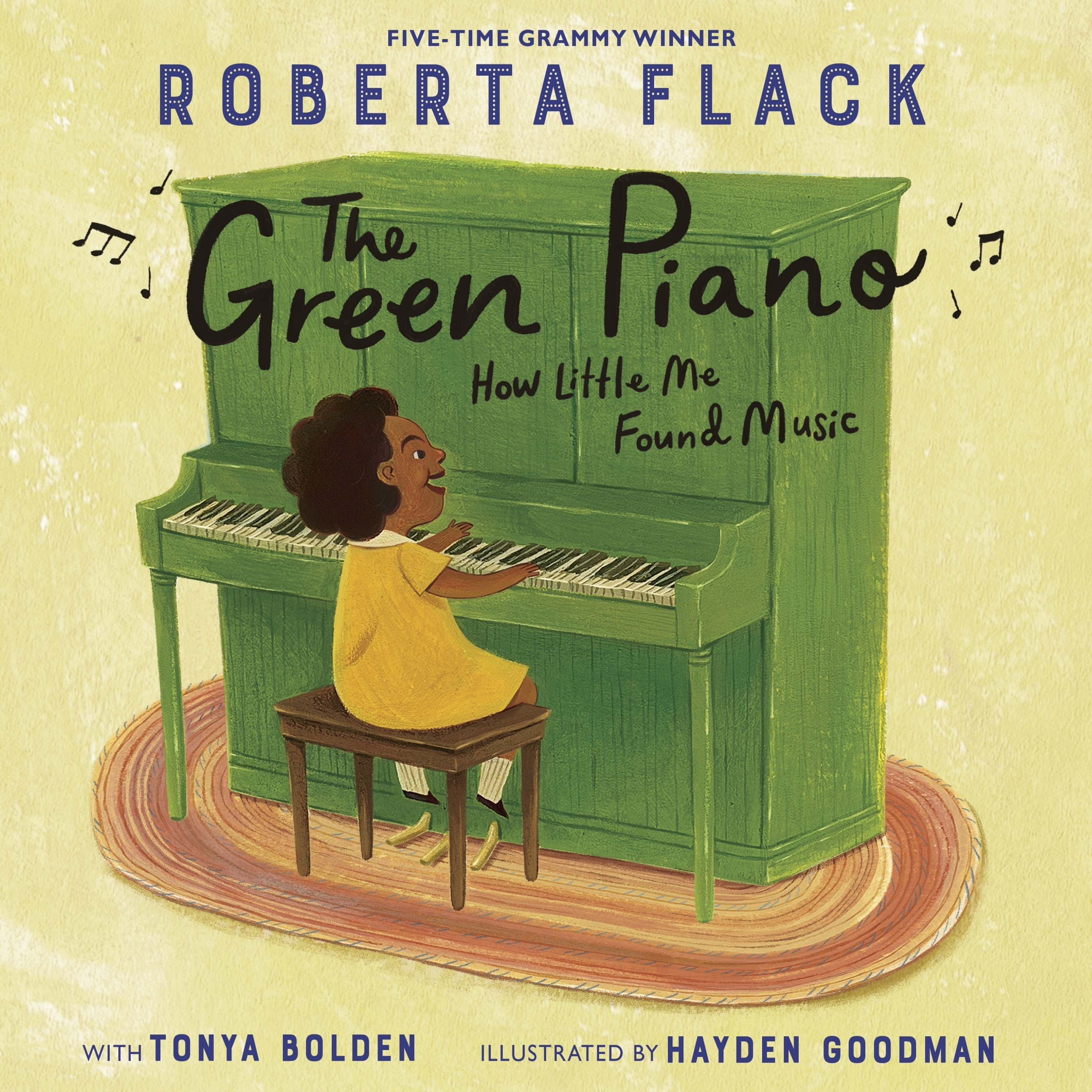
The Green Piano: How Little Me Found Music by Roberta Flack and Tonya Bolden, illustrated by Hayden Goodman

Published by Anne Schwartz Books

Summary:  Roberta Flack’s family didn’t have a lot of money, but they had plenty of love–for each other and for music.  From the time she was three, Roberta played the piano at church, and she started lessons at the age of six.  Her most fervent wish was to have a piano of her own, and her father was able to grant that wish when he found an old piano in a junkyard.  He hauled it home, cleaned it, tuned it, and painted it green.  She practiced for hours, dreaming of a life of a musician, a dream that is shown coming true on the last page.  Includes a timeline of Flack’s career highlights and an author’s note describing her training as a classical musician, which led to her career as a pop singer.  40 pages; grades K-4.

Pros:  A great story to share with early elementary kids, because so much of it is focused on Roberta’s early life.  I love the message of the author’s note, summarized in the last line: “Find your own ‘green piano’ and practice relentlessly until you find your voice, and a way to put that beautiful music into the world.”

Cons:  Kids may need an introduction to Roberta Flack’s music.

You Gotta Meet Mr. Pierce! The Storied Life of Folk Artist Elijah Pierce by Chiquita Mullins Lee and Carmella Van Vleet, illustrated by Jennifer Mack-Watkins

Published by Kokila

Summary:  In this fictionalized story about real-life artist Elijah Pierce, a boy and his dad enter Mr. Pierce’s barbershop.  The shop is full of wood carvings, and Mr. Pierce is happy to share stories about his life and art.  The boy has some new colored pencils and is trying to get an idea for a picture.  Mr. Pierce tells him how his art often came from stories, whether they were from his own life, the Bible, or something someone told him.  After the haircut and the stories are finished, Mr. Pierce gives the boy a carved elephant.  “I think I know what I want to draw…” he says as he and his dad leave the shop.  The final page shows a father and son (I think the father is the boy who is now grown up) about to enter a museum with an exhibit of Elijah Pierce’s work.  Just like the dad at the beginning of the story, the man tells his son, “You gotta meet Mr. Pierce!”  Includes a timeline of Elijah Pierce’s honors, additional information about the exhibit at the Corcoran Gallery in Washington, D.C., places to see Elijah’s work, and notes from the author and illustrator with additional information about Elijah Pierce, the book, and the illustrations.  40 pages; grades 1-5.

Pros:  A charming story about a little-known artist who will get some well-deserved recognition with this book.  The fictional format is engaging, and the folk-art inspired illustrations are the perfect complement.

Cons:  I found the ending a little confusing, as I couldn’t figure out what the boy had decided to draw, and I wasn’t sure who was pictured on the last page.