The Real Story by Sergio Ruzzier

Published by Harry N. Abrams

Summary:  “WHAT?!” shouts Cat when she sees the broken cookie jar on the floor.  Then “MOUSE!”  “Yes?” replies an innocent-looking Mouse.  When pressed, Mouse weaves some good tales about what happened to the cookies and their jar: the cookies themselves broke free; it was a slimy monster; no, it was an alien named Georgette; okay, it was actually a bug.  Finally, Cat insists that Mouse tell the truth, which is that Mouse ate all the cookies and the jar fell on the floor.  “That’s such a boring story,” says Cat.  “Can you tell me another cookie story?”  Mouse agrees, in exchange for a cookie.  32 pages; ages 3-7.

Pros:  An adorable ode to the power of storytelling that is sure to be a hit as a read-aloud.

Cons:  Kind of a squishy message about telling the truth.
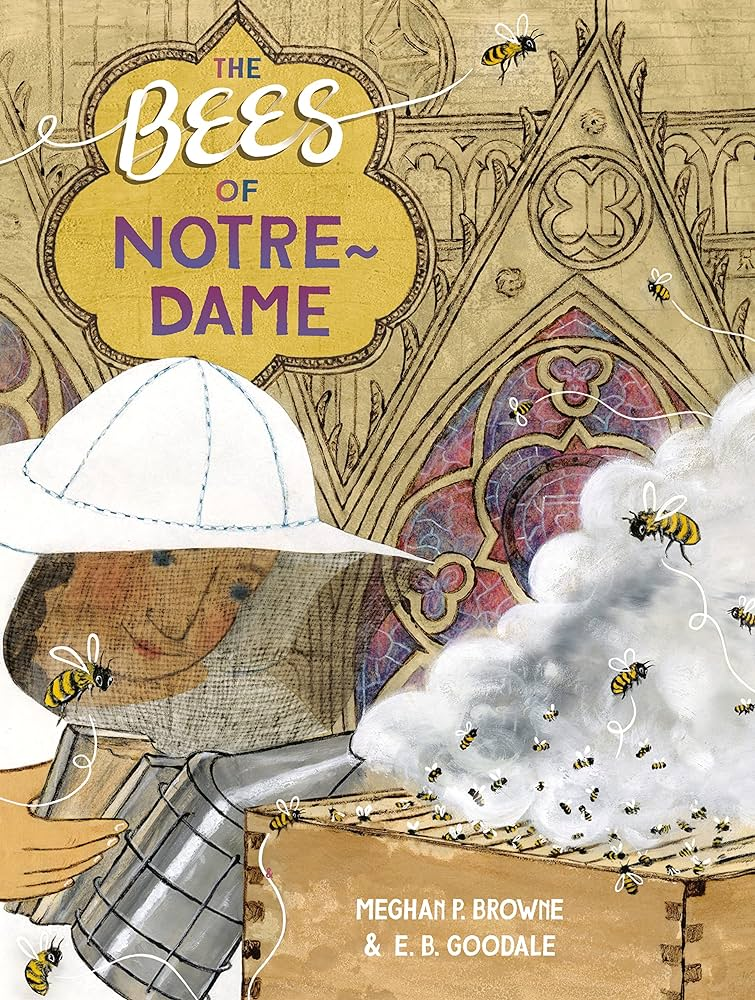
The Bees of Notre-Dame by Meghan P. Browne, illustrated by E. B. Goodale

Published by Random House Studio

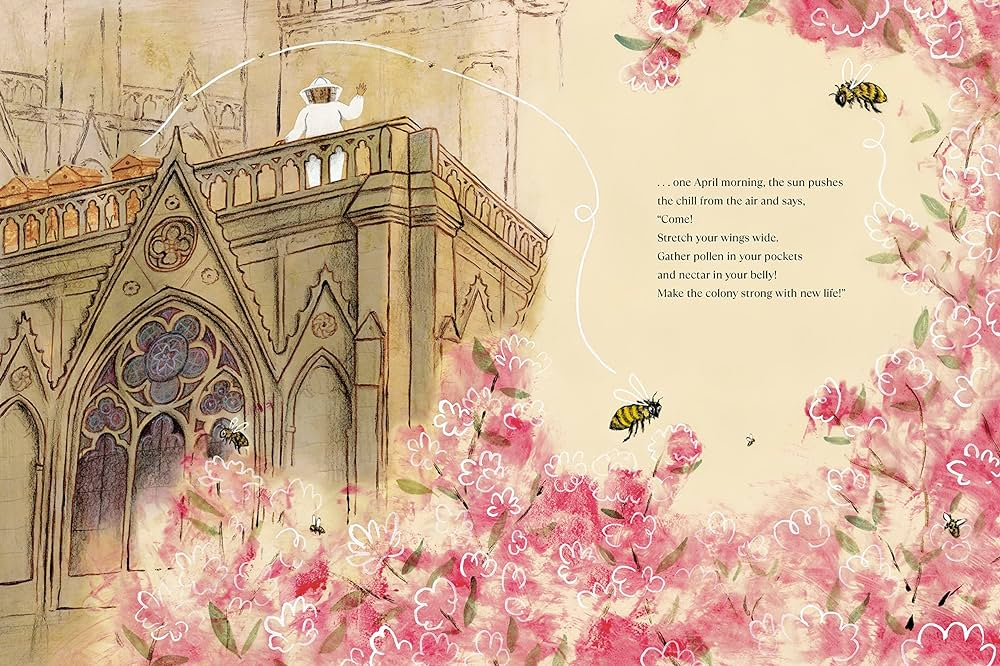
Summary:  It’s springtime in Paris, and while most people are out enjoying the warm weather, Sibyle is on the roof of Notre-Dame Cathedral taking care of the bees that live up there.  They enjoy the spring weather, too, going out into the city to find the abundant flowers.  No one is expecting the fire that sweeps across the cathedral’s roof one April morning.  When the fire is finally extinguished, Parisians rally to restore their ancient treasure…working hard to rebuild, just like the bees.  Includes additional information about the bees that live on the roof of Notre-Dame and the 2019 fire at the cathedral, as well as a few photos and a list of recommended reading.  40 pages; grades 1-4.

Pros:  The lyrical text and detailed illustrations of both the cathedral and the beehives introduce two topics that readers will find intriguing.

Cons:  The ending felt abrupt.

The Wishing Machine by Jonathan Hillman, illustrated by Nadia Alam

Published by Simon and Schuster Books for Young Readers

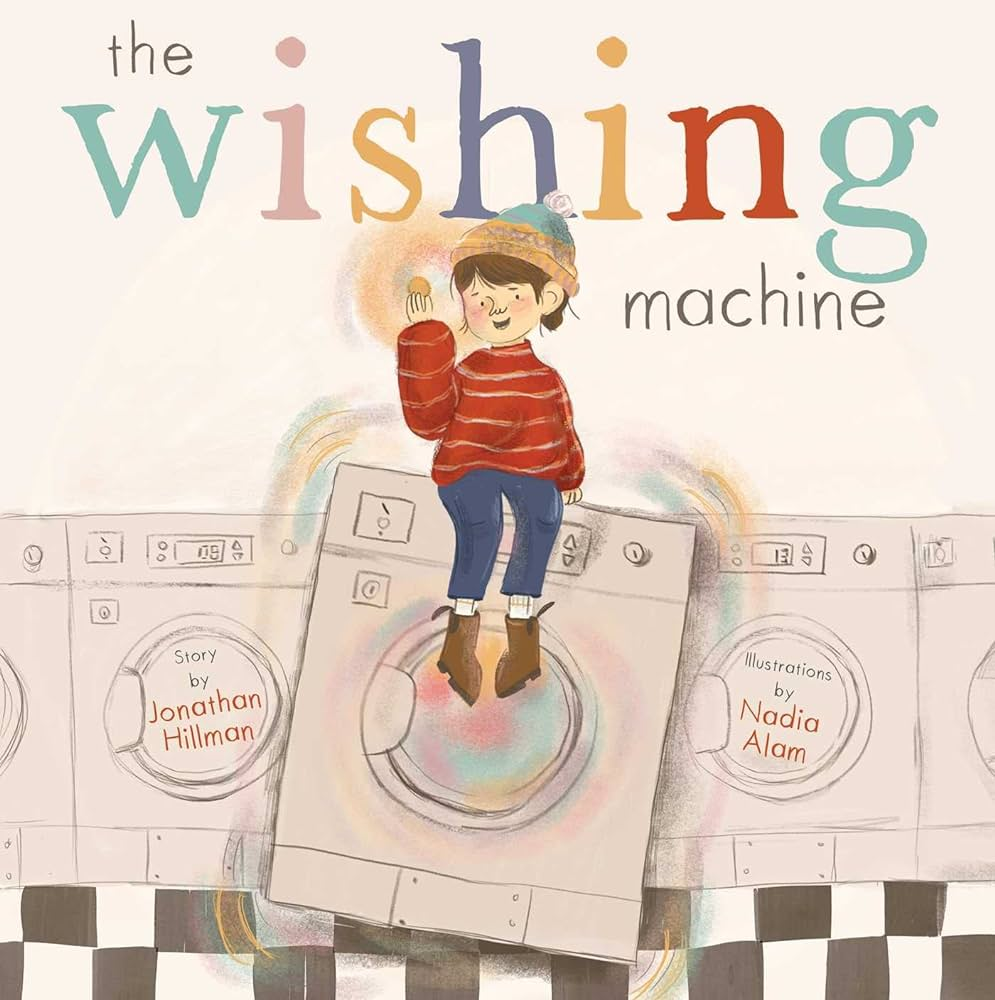
Summary:  A boy and his mom make their usual Sunday visit to the laundromat, but this week is different.  It’s their last time, because they have to leave their apartment and move in with his grandparents in their trailer.  While he tries to look at the bright side–being with grandparents, having a dog–he’s sad to be leaving his familiar home and his friends.  He pretends the washing machine and dryer are wishing machines, and he wishes to be able to stay.  While they wait for the machines to run, he asks his laundromat friends what their wishes are: a new scooter, a green card, a cat.  Finally, the laundry is done, and there are enough coins left for a bag of cookies from the vending machine, which he shares with his friends.  As he and his mom leave, she shares her wish with him–to be together and happy–and he realizes that being with his mom is the most important thing.  40 pages; ages 4-8.

Pros:  A poignant story about a family facing hard times, with a resilient mom who helps her son stay focused on the good in their lives.

Cons:  Seems like pretty tough times for everyone at the laundromat.

Slime Shop created by Karina Garcia with text by Kevin Panetta, illustrated by Niki Smith

Published by Versify

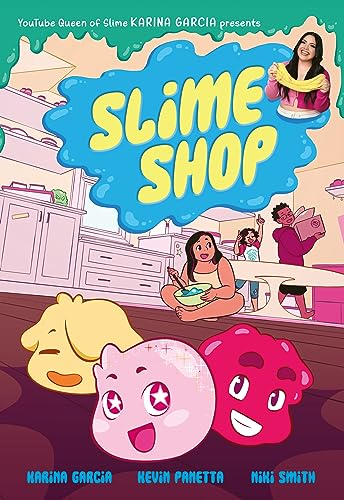
Summary:  Bailey, Sophia, and Jayden run a successful slime shop called BSJ.  What they don’t know is that when they leave the kitchen, their slimes have a life of their own.  Those slimes have been noticing that other slimes are being shipped off to unknown destinations, and they’re determined to stay in their home.  Adding another complication is Boris, a green slime who’s always been grumpy, but has suddenly gotten worse, transforming innocent slimes into his zombie minions.  When Bailey’s off for a weekend at her dad’s house, a few of the slimes stow away in her backpack, determined to get some answers from the Original Slime, who’s rumored to live in Bailey’s dad’s garage.  The action shifts between their adventures on the road and the battle continuing to unfold back at home as the slimes get some answers and learn some important lessons about themselves in the process.  Includes slime recipes and a cast of characters guide.  208 pages; grades 3-7.

Pros:  I wasn’t sure I would enjoy a graphic novel featuring a bunch of slime characters, but it turned out to be unexpectedly charming and cute with a satisfying storyline.  Kids will undoubtedly enjoy heading over to Karina Garcia’s slime-based YouTube channel after reading this.

Cons:  I struggled a little to keep the slimes straight and would have appreciated the cast of characters at the beginning instead of at the end.

The Voice in the Hollow by Will Hillenbrand

Published by Holiday House

Summary:  Young mouse Hubert Cumberbun loves stories and can often be found at the branch (in a tree) library.  One day, a blizzard hits when he’s there, and Hubert has to find his way home through the hollow.  A kind woman appears, offering to lead him, and together they make a journey that grows increasingly spooky.  Trees and rocks appear to have faces, and a gatefold page shows a large bear with two frightened-looking cubs.  They make it to a familiar lamppost, and Hubert strikes out on his own.  When he turns back to say thank you, the woman is gone, and he can only see his own footprints.  He finally makes it home, where his family is gathered around the fire drinking hot chocolate and reading books.  “Welcome home,” says his mother.  “It looks like you have a new story for us.”  40 pages; ages 4-8.

Pros:  A deliciously creepy tale with gorgeous snowy artwork and a reassuringly cozy ending.

Cons:  As I’ve no doubt mentioned before, I have mixed feelings about those fragile gatefold pages in the library.

Something Like Home by Andrea Beatriz Arango

Published by Random House Books for Young Readers

Summary:  Laura’s just arrived at her aunt’s house as this novel in verse opens.  Her parents are in rehab following Laura’s 911 call, and she’s trying to deal with the fallout, including guilt for having made that call.  Titi Silvia provides her with structure and a comfortable home but is emotionally distant.  When Laura finds an abandoned pit bull puppy, she resolves to train him as a therapy dog, believing this will be her ticket to getting to visit her parents.  A new friend, Benson, is struggling with sickle cell disease, but offers to help her with training as his health allows.  After Laura’s parents check themselves out of rehab, and her mom makes a disastrous unannounced visit to her school, Laura realizes that her path back home may be longer and more complicated than she first believed.  Some therapy and heart-to-heart talks with Titi Silvia help her find a greater acceptance of her new life and the new people who are trying to help her.  256 pages; grades 4-7.

Pros:  This follow-up to Andrea Beatriz Arango’s Newbery Honor book Iveliz Explains It All is a moving story narrated by a believable protagonist who has to navigate some pretty tough situations feeling like she is more or less on her own.  

Cons:  There was so much packed into this relatively short story–foster care, addiction, chronic illness, dysfunctional families, Laura’s Puerto Rican heritage, therapy dogs–that it felt like some of the topics didn’t get explored as fully as they could have.

Zora, the Story Keeper by Ebony Wilkins, illustrated by Dare Coulter

Published by Kokila

Summary:  Zora loves hearing her Aunt Bea’s stories about family members.  Aunt Bea used to teach acting, and she dresses up and acts out the tales, or reads from the pages of a family scrapbook she keeps.  Lately, though, Aunt Bea has been sick, and Zora has to help with the storytelling.  When her aunt has to go to the hospital, Zora visits and tells her the stories she remembers.  Aunt Bea doesn’t come home from the hospital.  At her funeral, people bring photos and share memories.  Later, Uncle Ralph gives Zora Aunt Bea’s scrapbook with the photos, saying Aunt Bea wanted her to have it, and together they start piecing together the story of Aunt Bea’s life.  40 pages; grades 1-4.

Pros:  A beautifully illustrated book that celebrates the power of stories and family love.

Cons:  This seems like it will have more appeal for adults or older kids than for the recommended age group.

If I Was a Horse by Sophie Blackall

Published by Little, Brown Books for Young Readers

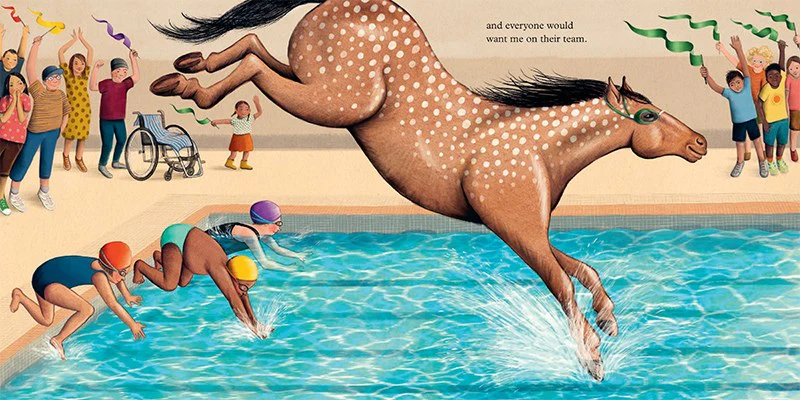
Summary:  The narrator imagines life as a horse, with more freedom to do things like not take a bath, not wear clothes (unless he was in a parade), and getting to go wherever he wants.  He would still enjoy some of the comforts of home, coming into the kitchen when he got hungry and giving his sister a ride to school.  It would be fun to roll in the mud, and the swim team would be thrilled to have him.  The last wordless page shows a boy giving his sister a piggyback ride, revealing the human narrator.  32 pages; ages 4-8.

Pros:  An ode to the power of pretending, gorgeously rendered with Sophie Blackall’s imaginative illustrations.

Cons:  I assumed this would be one of my Caldecott contenders, but it didn’t quite rise to that level for me.

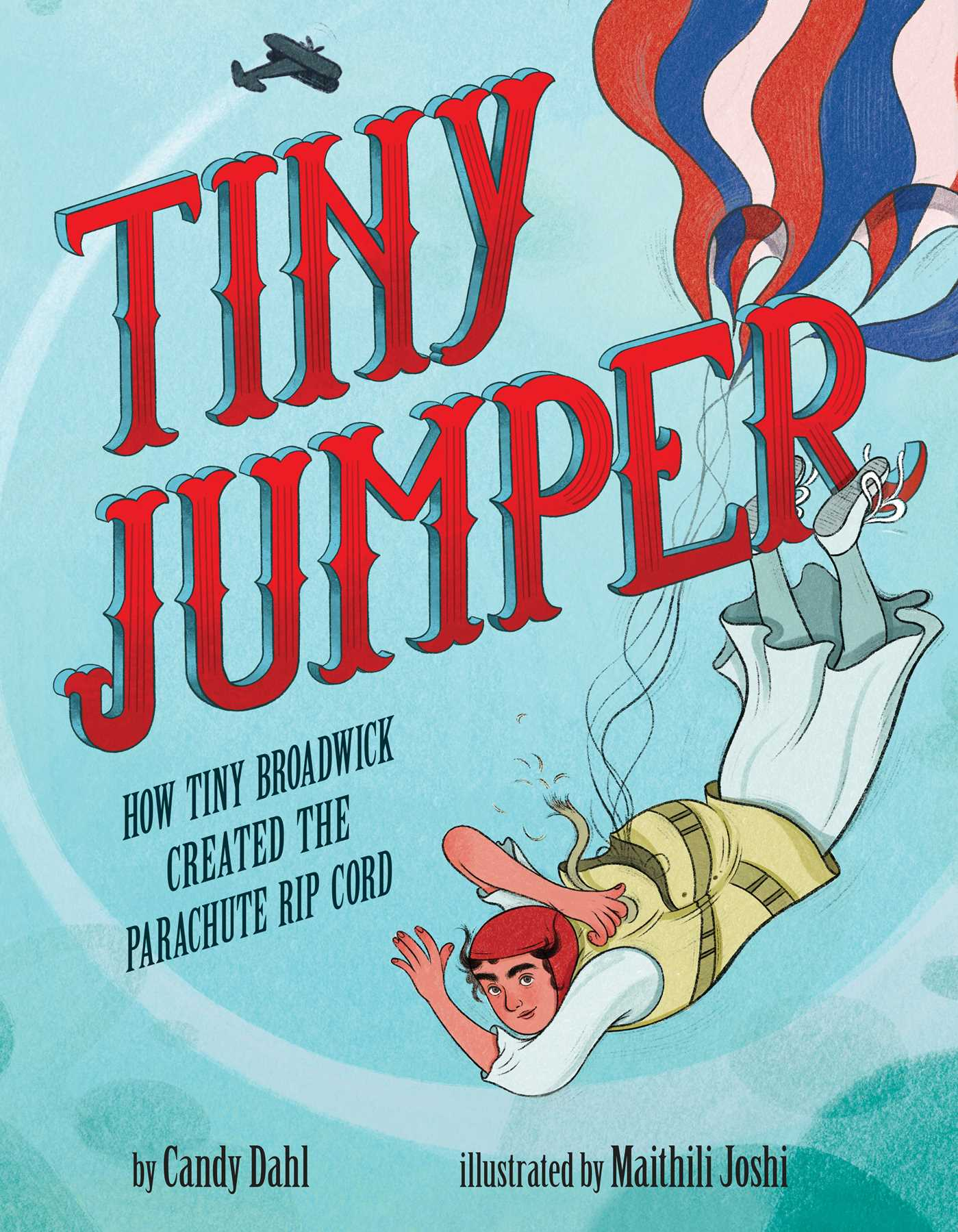
Tiny Jumper: How Tiny Broadwick Created the Parachute Rip Cord by Candy Dahl, illustrated by Maithili Joshi

Published by little bee books

Summary:  Georgia Ann Thompson only weighed three pounds when she was born in 1893.  She would remain Tiny all her life, both her stature and her nickname.  Forced to start working in factories at the age of 6, Tiny escaped by climbing trees and dreaming of the future.  When she saw a man parachute off of a hot air balloon at the 1907 North Carolina State Fair, she told the aeronaut that she must learn how to do the same thing.  Her determination paid off, and by the 1908 State Fair, she had become a parachutist.  She thrived in her career despite odd landing spots and multiple broken bones.  When airplanes arrived, Tiny became the first woman to parachute from a plane.  In one attempt, the line connecting her to the plane got tangled.  She cut herself loose, going into free fall until she was able to reach behind her and pull the cord that would open her parachute, inadvertently creating the first ripcord.  Includes an author’s note with additional information and photos of Tiny, as well as a bibliography.  40 pages; grades 1-4.

Pros:  A thrilling adventure story about a little-known woman whose courage and determination made her an early aviation pioneer.  

Cons:  I thought from the title that Tiny invented the ripcord, but it seems as though someone else developed it from her accidental innovativeness.

It’s Fall! By Renée Kurilla

Published by Little, Brown Books for Young Readers

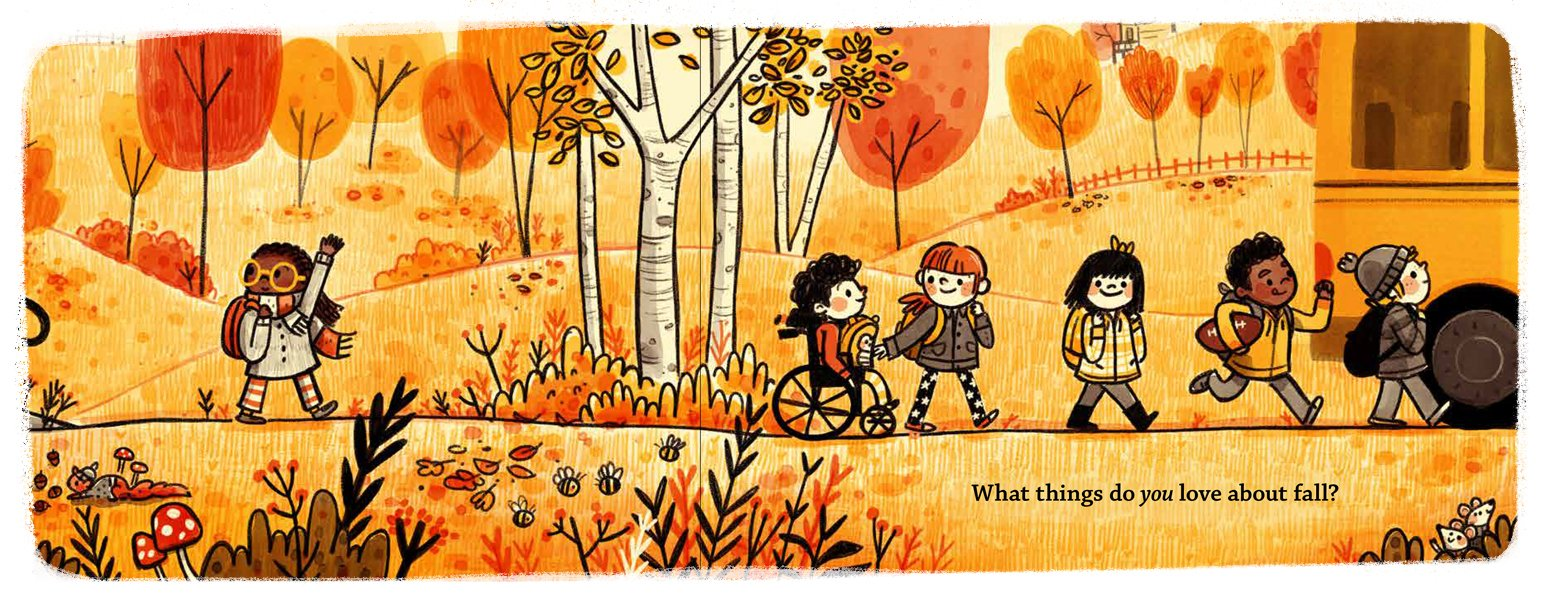
Summary:  Fall is introduced with rhyming text and lively illustrations.  A diverse group of kids, who appear to be in a class together, enjoy apple picking, pumpkin carving, Halloween, and Thanksgiving.  The illustrations reflect the season, with their predominantly yellow, orange, and red shades.  Be sure to check out the endpapers for kid-style drawings of their favorite fall things.  Between that and the question on the last page: “What things to you love about fall?” kids should be ready to write and draw about the season.  32 pages; ages 3-8.

Pros:  Preschool and kindergarten teachers will be thrilled to see this bouncy introduction to the simple joys of autumn with plenty of material to get kids thinking about what they enjoy about fall.

Cons:  I don’t see similar books about the other seasons, although this is listed on Amazon with a parenthetical “Celebrate the Seasons, 1”, so we can hope they’re on their way.