The Christmassy Cactus by Beth Ferry, illustrated by A. N. Kang

Published by HarperCollins

Summary:  Tiny Cactus has a special place in her family, especially with the little girl who greets her every morning with, “Hello, my little cupcake,” and tucks her in each evening saying, “Who’s the sweetest bonbon?”  When it’s time to decorate for Christmas, Tiny Cactus is as excited as the little girl, but as the weeks go by, there are more distractions–especially the big shimmery Christmas tree–and less time for a little cactus.  Tiny Cactus wishes that she could have some sort of decorations, and she keeps making her wish as the holiday draws nearer.  On Christmas Eve, a window blows open and snowflakes swirl in on top of the cactus.  As they melt away, the cactus can still feel their magic.  The next morning, there’s a surprise…Tiny Cactus turns out to be a Christmas cactus who has found a way to make her own decorations.  40 pages; ages 4-8.

Pros:  A cute and slightly quirky Christmas story with a subtle message about making your own wishes come true.

Cons:  I would have enjoyed a photo of an actual Christmas cactus.
Barely Floating by Lillian Rivera

Published by Kokila

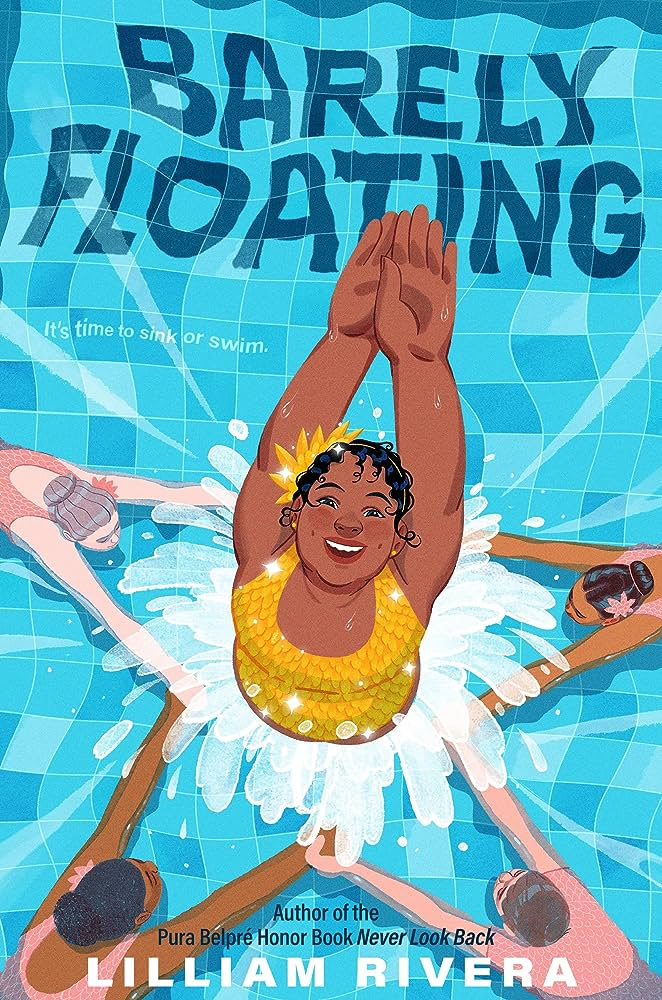
Summary:  Nat has grown up in a very progressive household, always encouraged to stand up for herself and to see herself as beautiful.  Her mom doesn’t understand Nat’s love of fancy clothes and make-up, and when Nat sees the L.A. Mermaids perform a synchronized swimming routine, she knows her parents won’t get why she wants to become part of the team.  They do, in fact, deny her request to join, so Nat enlists her older cousin Sheila to help her sneak off to practices and competitions, hoping that when she’s good enough she’ll be able to reveal her secret and persuade her parents.  But soon she’s entangled in a web of lies, hurting Sheila, her best friend Joanne, and herself.  When Nat’s deceptions catch up with her, she and her mother are finally able to communicate about their differences and to find a compromise that works for both of them.  240 pages; grades 4-7.

Pros:  A fun introduction to synchronized swimming with a memorable narrator who is both confident and vulnerable about putting herself out there.  The Mermaids are a gutsy group of kids who defy the stereotypes of thin white girls participating in the sport and really make it their own.

Cons:  I can generally get behind a good social justice warrior, but Nat’s mom’s constant outspokenness to various family members about progressive causes started to wear on me after a while.

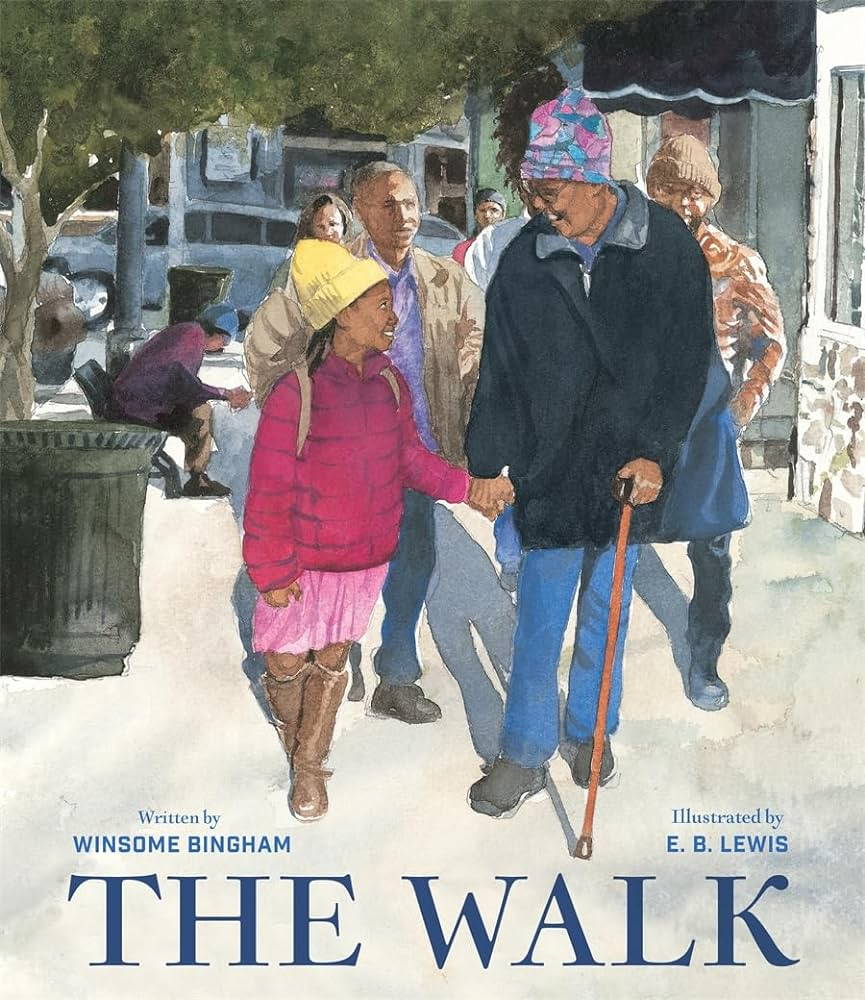
The Walk by Winsome Bingham, illustrated by E. B. Lewis

Published by Harry N. Abrams

Summary:  A girl and her granny are headed out for a walk to an undisclosed destination.  As they travel through the neighborhood, more and more people join them.  Comments give some hints about their journey: “I thought after 2008, I could skip a few of these walks. But I see we need them more than ever.”  “The walk wasn’t always this long, but folks keep making it longer.”  Finally, the group arrives at the girl’s school.  “You’re silly, Granny,” says the girl.  “There’s no school today.”  The school is closed for Election Day, but open for voting.  Everyone marks their ballots, then the group heads home, reversing the walk until it’s just the girl and her granny once again.  40 pages; ages 4-8.

Pros:  An excellent read-aloud for Election Day, emphasizing the importance of voting and the attempts to limit it, particularly in communities of color.

Cons:  An unfortunate lack of back matter that could have given some context to comments made by people about the history of voting.

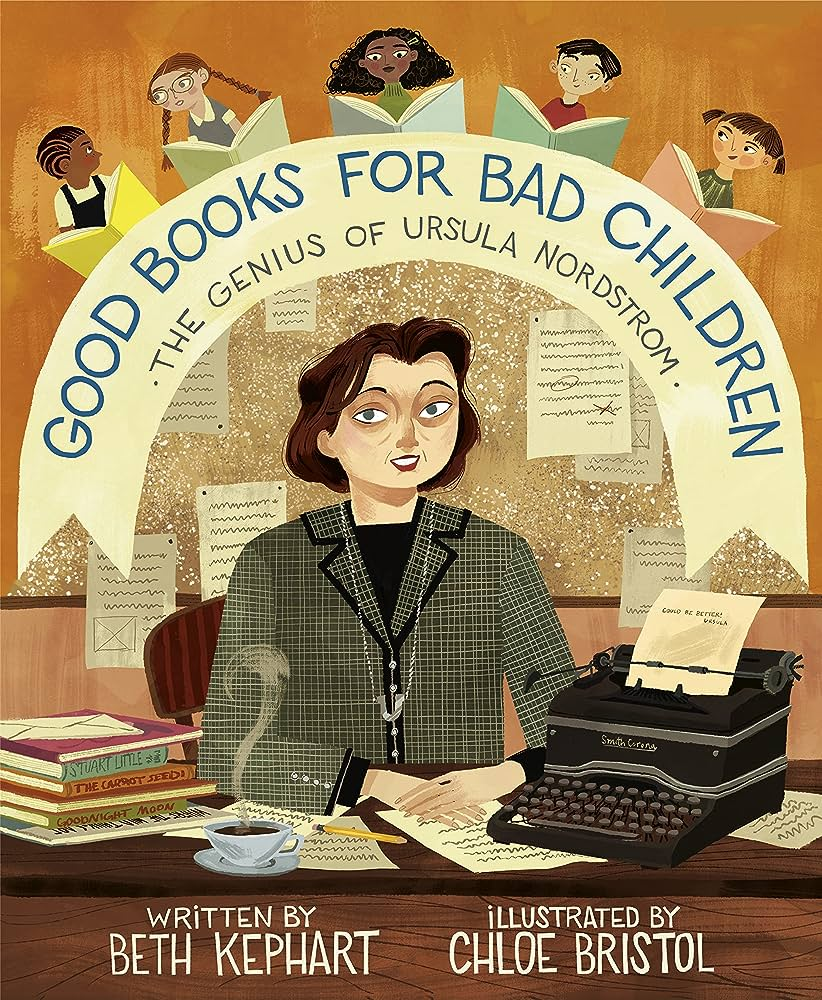
Good Books for Bad Children: The Genius of Ursula Nordstrom by Beth Klephart, illustrated by Chloe Bristol

Published by Anne Schwartz Books

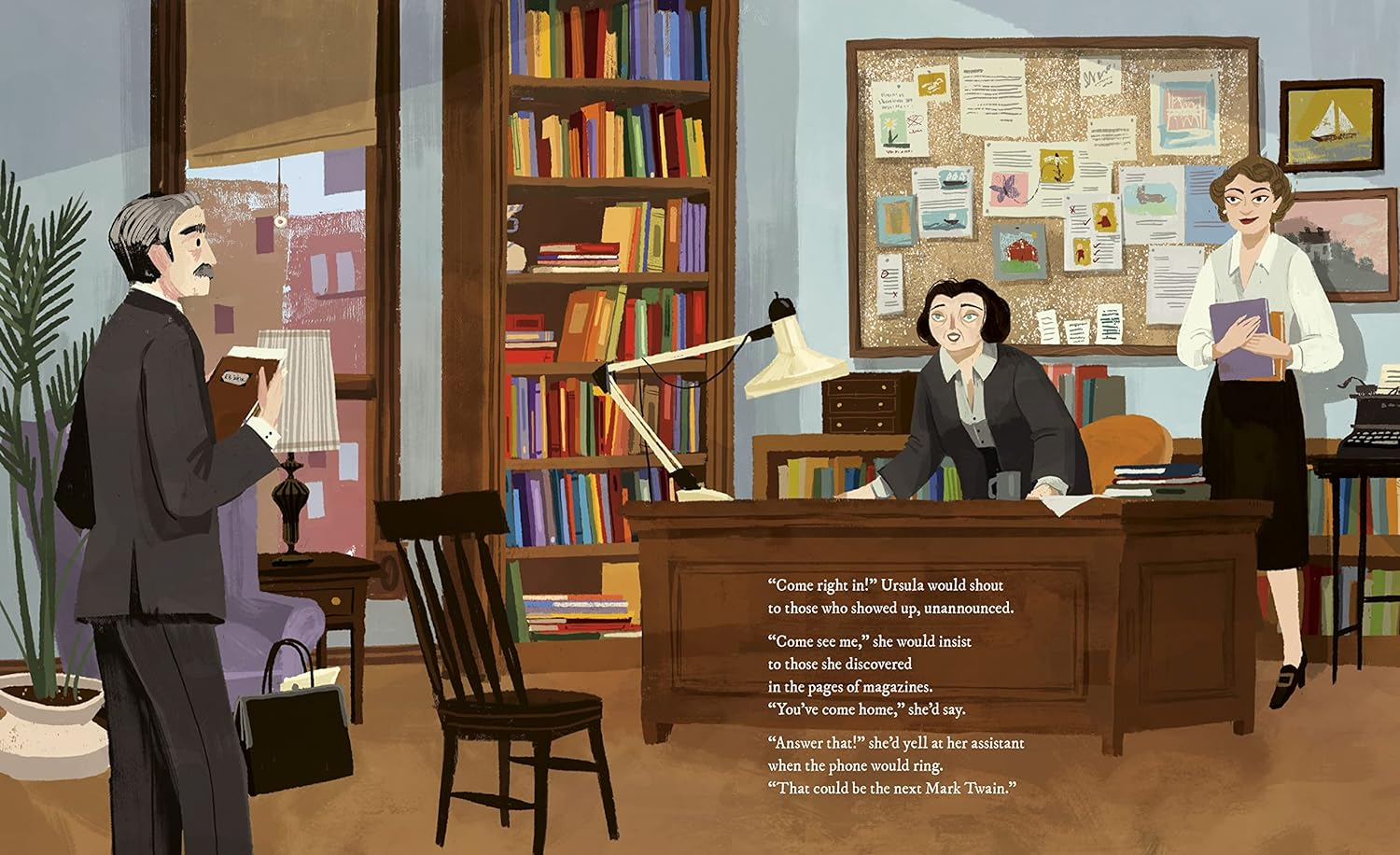
Summary:  Legendary children’s book editor Ursula Nordstrom began life as an only child whose parents divorced when she was seven years old and sent her to boarding school shortly thereafter.  Unable to attend college, she began working as a clerk in the college textbook division of Harper & Brothers, eventually becoming assistant to Louise Raymond, editor in the Department of Books for Boys and Girls.  When Louise left, Ursula was promoted to head the department, and spent the rest of her career nurturing authors like E.B. White, Maurice Sendak, Margaret Wise Brown, and Laura Ingalls Wilder (who is surprisingly never mentioned in this book).  Drawing on her own lonely childhood, Ursula understood that kids have different needs, whether they feel sad, mad, or left out, and that having all sorts of books can be helpful.  Includes an author’s note with additional information about Ursula Nordstrom and a list of sources.  48 pages; grades 1-5.

Pros:  I’ve long been fascinated by Ursula Nordstrom and enjoyed this engaging introduction to her life. The endearing illustrations contain lots of references to the many of the classic books and authors that were part of Ursula’s long career.

Cons:  I’m not sure how many children will be interested in the topic.

Loud and Proud: The Life of Congresswoman Shirley Chisholm by Lesa Cline-Ransome, illustrated by Kaylani Juanita

Published by Simon and Schuster/Paula Wiseman Books

Summary:  Shirley Chisholm learned about the fight for justice by listening through her apartment walls to the union meetings her father was part of.  In college, she took the advice of a professor who told her she should go into politics and joined a variety of movements.  After graduating, marrying, and starting a teaching career, Shirley decided to run for the New York State Assembly in 1964.  A landslide victory led to four years in the Assembly before running for U.S. Representative.  She became the first Black Congresswoman and a force to be reckoned with, fighting for issues that impacted women, children, and the poor.  In 1972, she ran an impressive campaign for President, then returned to Congress for another decade before retiring in 1983.  Her tenure in politics paved the way for other women of color, many of whom are shown on the last page.  Includes an author’s note with additional information and a timeline.  48 pages; grades 2-5.

Pros:  This book is the latest in a recent group of biographies about Shirley Chisholm and provides a comprehensive look at her life, with illustrations that capture her energy and fighting spirit.  

Cons:  It’s long for a picture book and may work better for kids doing research than as a read-aloud.

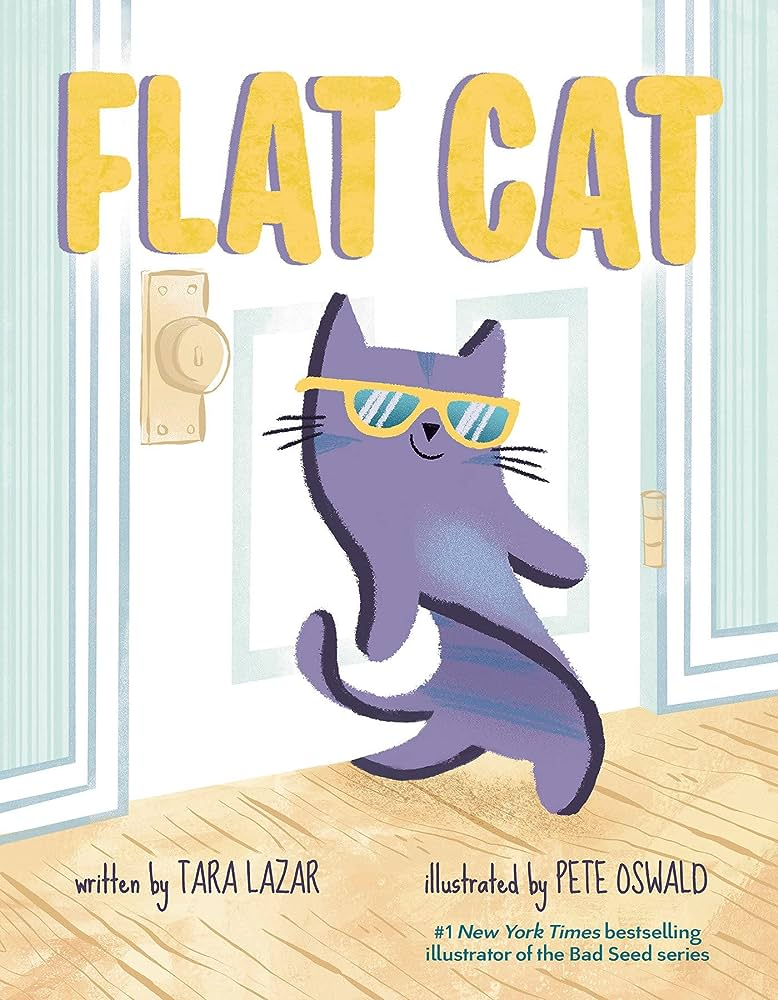
Flat Cat by Tara Lazar, illustrated by Pete Oswald

Published by Flamingo Books

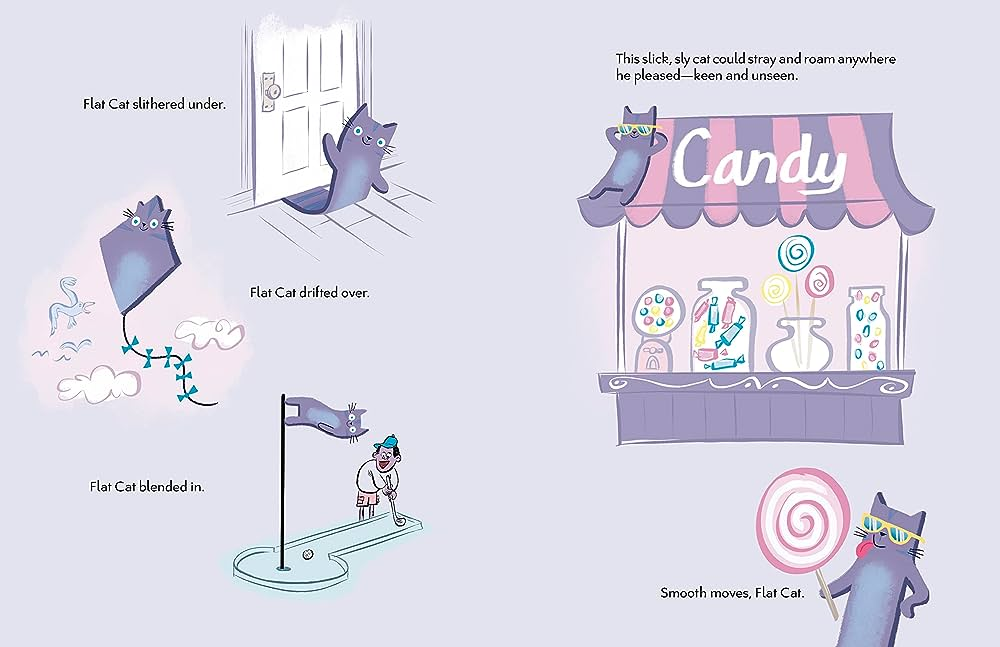
Summary:  How did Flat Cat get so flat?  Was he squashed by an ice cream truck or smushed in a waffle iron?  Nope, he was born flat, and he likes it that way.  He can slide under doors, fly like a kite, and hide almost anywhere.  But when he takes a nap in a laundry basket, the dryer turns him into “the most adorable puffy, fluffy, fuzzy-wuzzy feline you ever did see!”  At first Flat Cat tries desperate measures to become flat again, but he discovers that he kind of likes getting hugged and petted.  When Aunt Harriet sits on him, he’s Flat Cat once again, but he decides to go for another spin in the dryer to fluff himself up.  Now that he knows how to be flat or fluffy, Flat Cat enjoys his life, alternating between the two states.  40 pages; ages 4-8.

Pros:  A fun, quirky story enhanced by the funny illustrations.  Flat/Fluffy Cat embodies the introvert who also likes to socialize. Sure to be a hit at story time. 

Cons:  A flat creature that slides under doors and flies like a kite…Flat Stanley rip-off or homage?

Once a Bird by Rina Singh, illustrated by Nathalie Dion

Published by Orca Book Publishers

Summary:  There’s still snow on the ground when a robin starts a journey that offers a bird’s-eye view of the landscape: water, roads, farms.  As the bird makes stops on a playground, at a church, and in a fountain, the reader can see that the world is slowly turning green again.  Finally, the robin lands in a tree outside an apartment building, many of the windows covered by blinds or curtains.  When it starts to sing, people appear in the windows, looking out and connecting with each other over this novelty outside.  Before long there’s a bird feeder hanging in the tree just above the robin’s new nest.  Eggs are laid, babies hatch, and soon people are drawn outside and to be with each other in a new community.  32 pages; ages 4-8.

Pros:  This beautiful wordless book could be interpreted in many different ways: I read three very different reviews that ranged from a bleak environmental message to a post-pandemic liberation.  Readers will enjoy the artwork and the freedom to interpret the story in their own way.

Cons:  Building a nest and reproducing seems like a two-bird job, but there was just the one robin to be seen.

How Does Santa Go Down the Chimney? by Mac Barnett, illustrated by Jon Klassen

Published by Candlewick

Summary:  The dynamic Barnett-Klassen duo ponder the question of the title with a whole brainstorm of ideas.  Does Santa cinch up his belt or shrink to the size of the mouse?  Does he ever get stuck partway down and need a kick from the reindeer?  And what about those homes without chimneys?  Does he turn into a letter and drop through the mail slot?  Or slip through the pipes and come out the faucet?  And don’t even get started on how Santa goes back up the chimney!  However it is accomplished, the narrator concludes, we’re all so glad he can do it.  32 pages; ages 4-8.

Pros:  Get ready for some ho-ho-ho’s when you share this book with kids, who will no doubt be inspired to come up with some new ideas about Santa to add to Mac Barnett’s list.  Jon Klassen takes the idea and runs with it, and readers will love the images of Santa dripping through the faucet and flattening himself to go under the door.

Cons:  We can speculate, but we will never know for sure.

The Probability of Everything by Sarah Everett

Published by Clarion Books

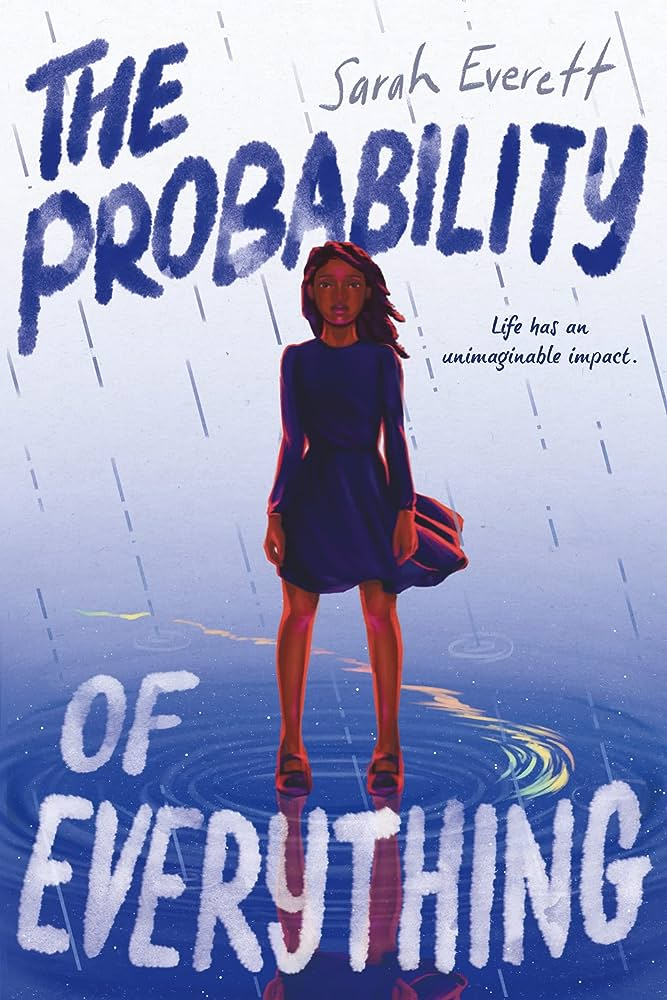
Summary:  It’s an ordinary day for 11-year-old Kemi when the news of an asteroid rapidly approaching Earth changes everything.  Kemi’s passion for statistics and probability tells her that the 84.7% chance of a collision means that life as she knows it will most likely end in four days.  As her extended family gathers together, Kemi decides to put together a time capsule to show anyone who finds it what her family was like. From her grandmother’s Nigerian recipes to her family’s “magical” sweatshirt, the time capsule soon has representation of each family member except her dad. Kemi goes on a scientific quest to find out his true passion, something he’s been searching for since leaving a demanding job.  As the days tick by, a huge plot twist emerges, and readers learn why it feels like the end to Kemi and her family, as they learn that even when the world ends, there is always an after.  336 pages; grades 4-7.

Pros and cons:  I started this book at the end of July, and it has taken me almost six weeks to finish it.  With record summer temperatures and wildfire smoke in the sky, it took all my willpower to keep reading about the impending destruction of the world.  But as I finally neared the end and learned what had really befallen Kemi’s family, it occurred to me that this may be the most timely book of 2023, with its meditations on loss, grief, racism, violence, and of course, the end of the world as we know it.  A Newbery contender for sure, if only Sarah Everett were American, not Canadian.

Chinese Menu: The History, Myths, and Legends Behind Your Favorite Foods by Grace Lin

Published by Little, Brown Books for Young Readers

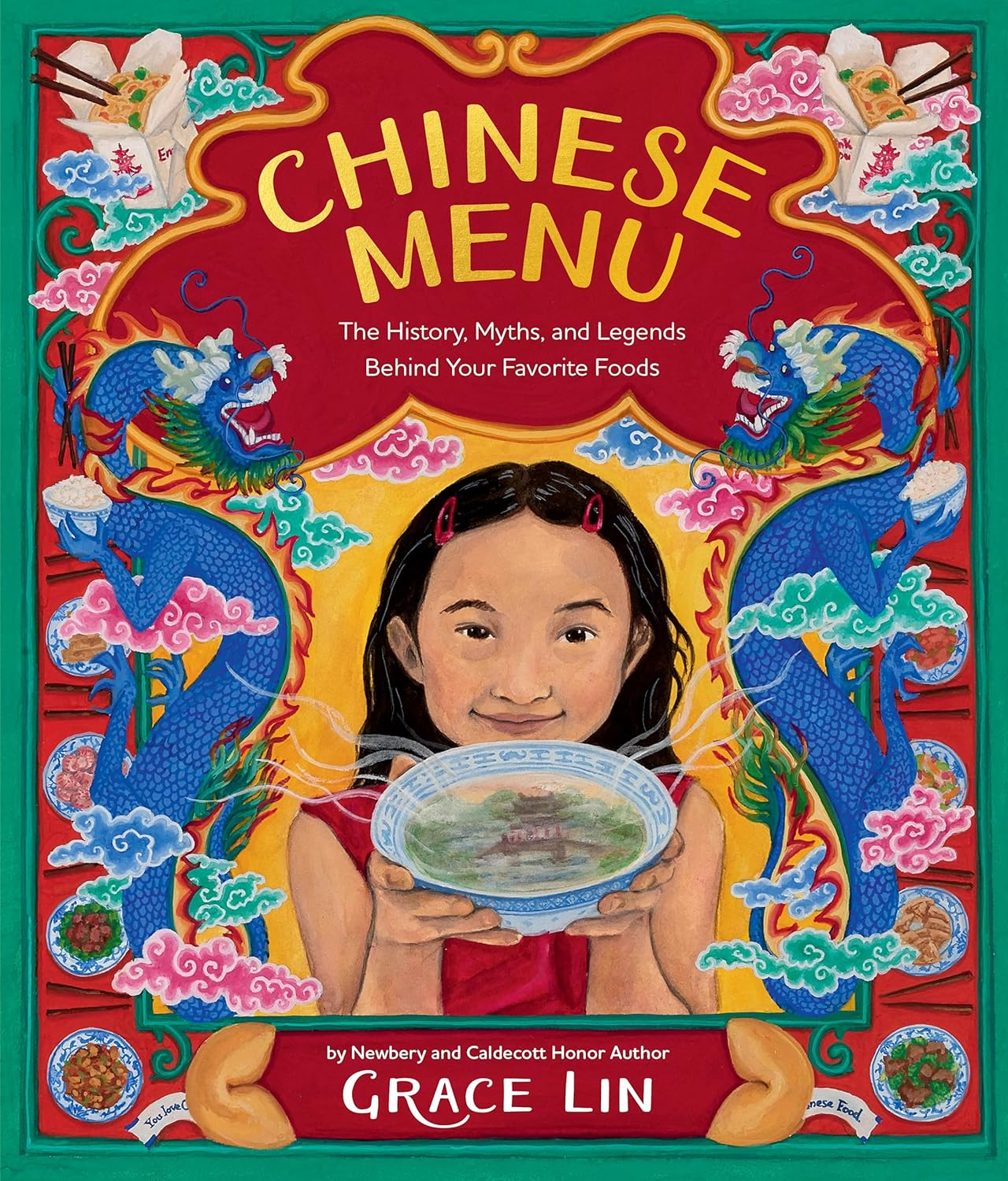
Summary:  Grace Lin traces the history of many foods from a Chinese menu with facts, personal anecdotes, and folklore.  Beginning with a map of China and a timeline that shows where each food fits into Chinese history, the narrative then dives into the food, which is arranged the way it might be on a menu.  From chopsticks to tea to soup, main dishes, and desserts, each section begins with an introduction, followed by different foods within the category, with an illustrated story or two about each one.  Includes an author’s note about the difficult history of Chinese immigrants in the U.S. and how their cuisine has sustained them and been adapted to American tastes; a recipe for Lin’s mother’s scallion pancakes; endnotes with additional information about each food; and a bibliography.  288 pages; grades 3-7.

Pros:  A fascinating, meticulously researched, beautifully illustrated collection of folklore that’s connected to cuisine familiar to many readers.  If you ever wondered who General Tso was or how egg rolls came to be, you will find all the answers here.

Cons:  This feels like it will appeal more to adults than to kids.