An Ofrenda for Perro by Judith Valdés B., illustrated by Carlos Veléz Aguilera

Published by little bee books

Summary:  Benito is devastated to lose his dog Perro, who has been his companion since he was born.  As his family gets ready to celebrate Día de Los Muertos, Benito is slowly drawn into the preparations.  His father explains that the holiday isn’t a celebration of the dead, but of the love they have for those who have passed.  His mother shows him that her memories of her great-grandfather mean that he’s not really gone.  When Benito finds Perro’s ball, he is able to smile at his memories of his beloved dog, realizing that his memories will always be with him.  Includes an author’s note with additional information about Día de Los Muertos and a glossary. 32 pages; ages 4-8.

Pros:  A great resource for Día de Los Muertos, or for anyone who has lost a pet, with explanations that kids will understand and relate to, and beautiful illustrations inspired by the holiday.

Cons:  I couldn’t help thinking that Perro (Spanish for dog) deserved a slightly more imaginative name.

Veo, Veo, I See You by Lulu Delacre

Published by Atheneum Books for Young Readers

Summary:  During the pandemic, a girl and her mother and brother play a game of Veo, Veo, or I Spy, to spot essential workers in their community.  Mami lost her job as a cook, so she cooks at home now, and the family takes food and medicine to some older relatives before stopping at the food pantry on the way home.  In the course of their errands, they see trash collectors, a nurse, a pharmacist, a bus driver, and other workers who are keeping their city going so that others can safely stay at home.  Back at home, the girl makes a collage sign saying, “I see you!” that includes pictures of many of the workers, leading to cheers and applause from the community.  Includes an author’s note about the pandemic, and how it brought essential workers, and the fact that many of them are Black or Brown, to people’s attention.  40 pages; ages 4-8.

Pros:  Although the setting is the Covid pandemic, this book could be used to introduce lots of different community helpers.  The illustrations are bright and appealing, with cartoon bubbles for dialog: Spanish for Mami and English for the kids.

Cons:  The pandemic setting makes this already feel a little dated, as many of the kids reading the book will have little or no memory of that time.

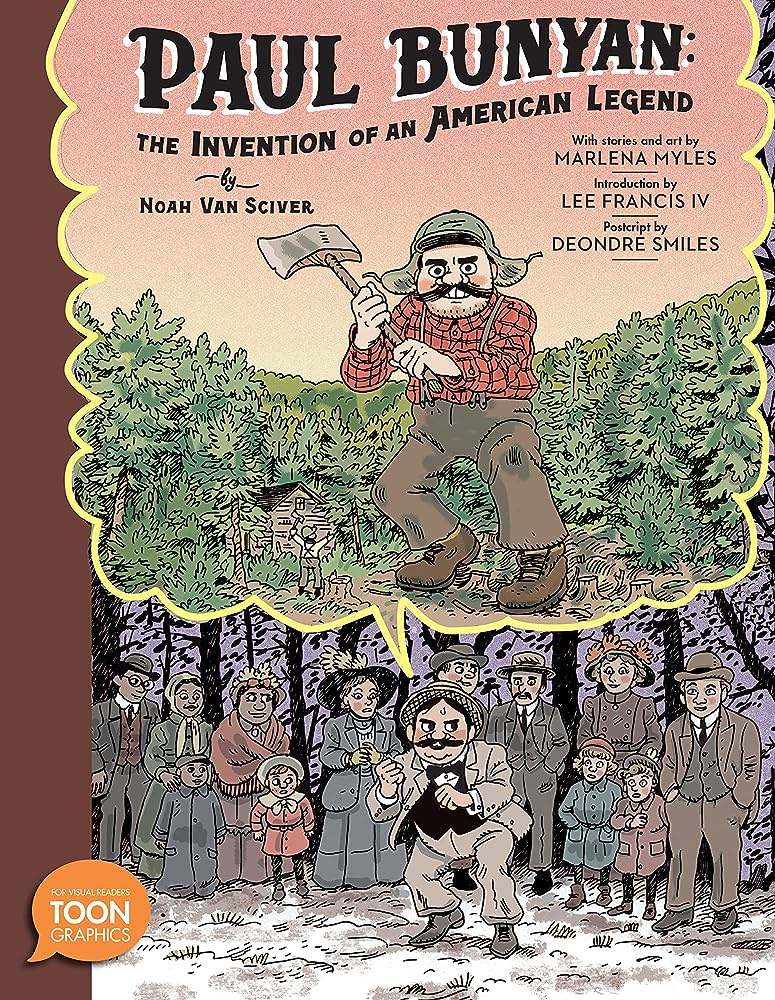
Paul Bunyan: The Invention of an American Legend by Noah Van Sciver and Marlena Myles

Published by TOON Books

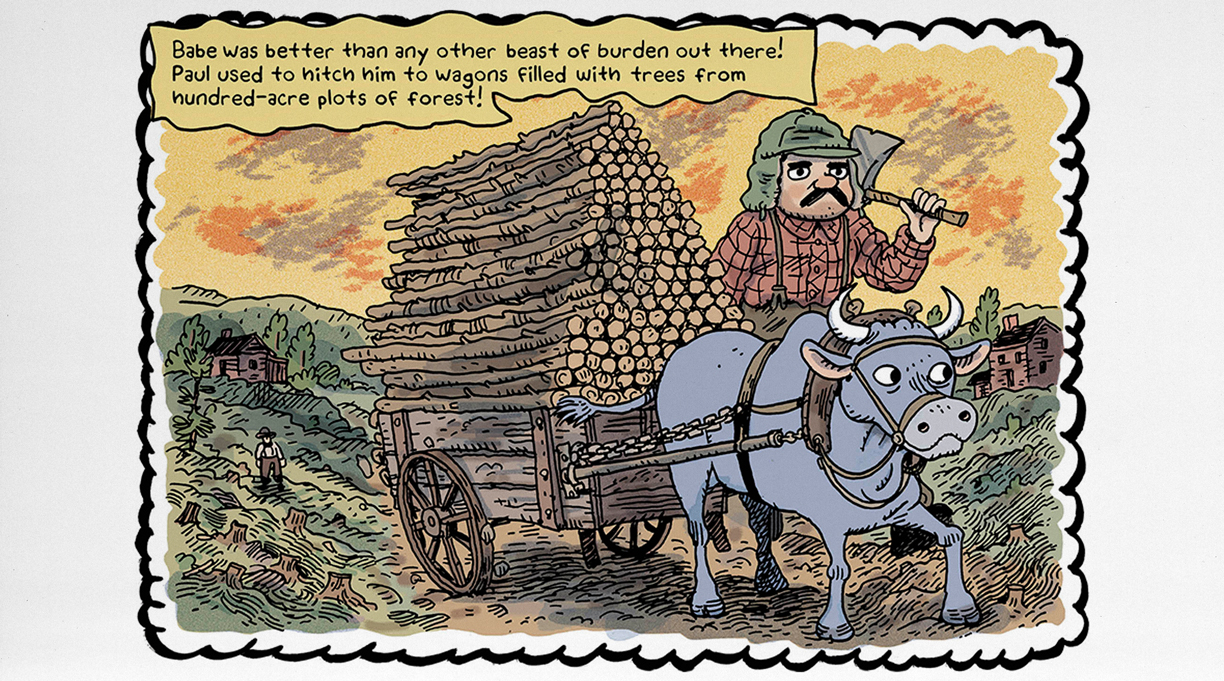
Summary:  A logging executive is traveling west when his train breaks down, stranding him and the other passengers in the middle of a snowy forest.  Someone manages to build a fire, and everyone gathers around to hear stories of famous lumberjacks.  The logging man tops them all with his tales of Paul Bunyan and his blue ox Babe.  Most of the audience loves the stories, but another man who’s spent his career working in the lumber industry tells of the devastation of clear-cutting forests, then moving west.  He describes how the land was taken from the Native Nations, whose people honored the spirits of each tree.  Includes a foreword and two afterwords by indigenous scholars about their experiences with Paul Bunyan stories and Native stories about trees.  48 pages; grades 3-6.

Pros:  Some interesting context is given to the Paul Bunyan tall tales so many of us grew up with, offering insights into the logging industry he was created to promote and its impact on indigenous lands.  

Cons:  I’m guessing that many in the intended audience will skip the foreword and afterwords, which is too bad, because they contain a lot of interesting information. I wish that the graphic novel part had been expanded on to include more of that information.  The tall tales were well done, but the ending felt rushed.

Two Tribes by Emily Bowen Cohen

Published by Heartdrum

Summary:  Mia lives with her mother and stepfather, observing her Jewish faith both at home and at her Jewish day school.  When a boy at school tells her she’s not a “real Indian,” Mia goes on a quest to discover her Muscogee culture, passed down to her from her father’s side.  She and her best friend hatch a plan in which Mia uses some of her bat mitzvah money to take a bus from L.A. to Oklahoma.  She manages to pull it off and spends a few days with her dad and his family, learning more about her heritage, before her mother discovers where she is and flies down to get her.  Back home, Mia must face the consequences of her actions, but her new discoveries have given her courage to talk to her mother and stepfather about making some changes to allow her dad and her Muscogee family to be part of her life.  Includes a note from the author about her own Jewish-Muscogee heritage, a glossary of Muskvoke terms used, and a note from Heartdrum author-curator Cynthia Leitich Smith.  256 pages; grades 4-7.

Pros:  This debut graphic novel offers an interesting look at a unique heritage and the difficulties of embracing that when divorce separates a family.  Readers will empathize with Mia and enjoy learning about her Jewish and Muscogee cultures alongside her.

Cons:  I was a bit stressed about Mia’s secret 24-hour bus trip on her own.

Dasher Can’t Wait for Christmas by Matt Tavares

Published by Candlewick

Summary:  Dasher the reindeer is back in this follow-up to Matt Tavares’s 2019 book Dasher.  Excited for Christmas, Dasher finds herself unable to sleep on the night of December 23 and goes off to look for adventure.  She finds carolers singing around a Christmas tree and enjoys herself so much she doesn’t notice the snow moving in.  When she realizes it’s time to go home, the storm is so thick that she can’t find her way.  She winds up at the home of a young boy named Charlie who gives her a compass to guide her back north.  Dasher makes it back just in time to take her place pulling Santa’s sleigh and makes sure that the jolly old elf has a compass to leave under Charlie’s tree.  40 pages; ages 4-8.

Pros:  Another beautiful Christmas story from Matt Tavares that perfectly captures kids’ excitement about the holiday and all of its magic.  

Cons:  In my opinion, the best Matt Tavares Christmas book remains Red and Lulu.

We Still Belong by Christine Day

Published by Heartdrum

Summary:  Wesley is excited about two things as she heads to seventh grade one day: having her poem about Indigenous People’s Day appear in the school newspaper and asking her crush Ryan to the school dance.  As the day unfolds, however, both dreams are destroyed in true middle school fashion. A teacher criticizes her poem, telling her it’s not good enough to read aloud in his class, and Ryan shows up on social media with another date to the dance.  Defeated, Wesley heads to the annual powwow with her family, where her day starts to turn around.  Not only does she get encouragement about both the poem and Ryan, but she discovers a new friend and comes to embrace and appreciate her family and her Upper Skagit community even more. Includes an author’s note. 256 pages; grades 3-7.

Pros:  Readers will enjoy getting to know Wesley as they follow her through a day in her life, navigating friendships, family issues, and school.  Information about indigenous culture is expertly woven into the story and expanded upon in the author’s note.

Cons:  While I appreciated the excellent writing and storytelling, I found this book a little slow going at the beginning.

The Artivist by Nikkolas Smith

Published by Kokila

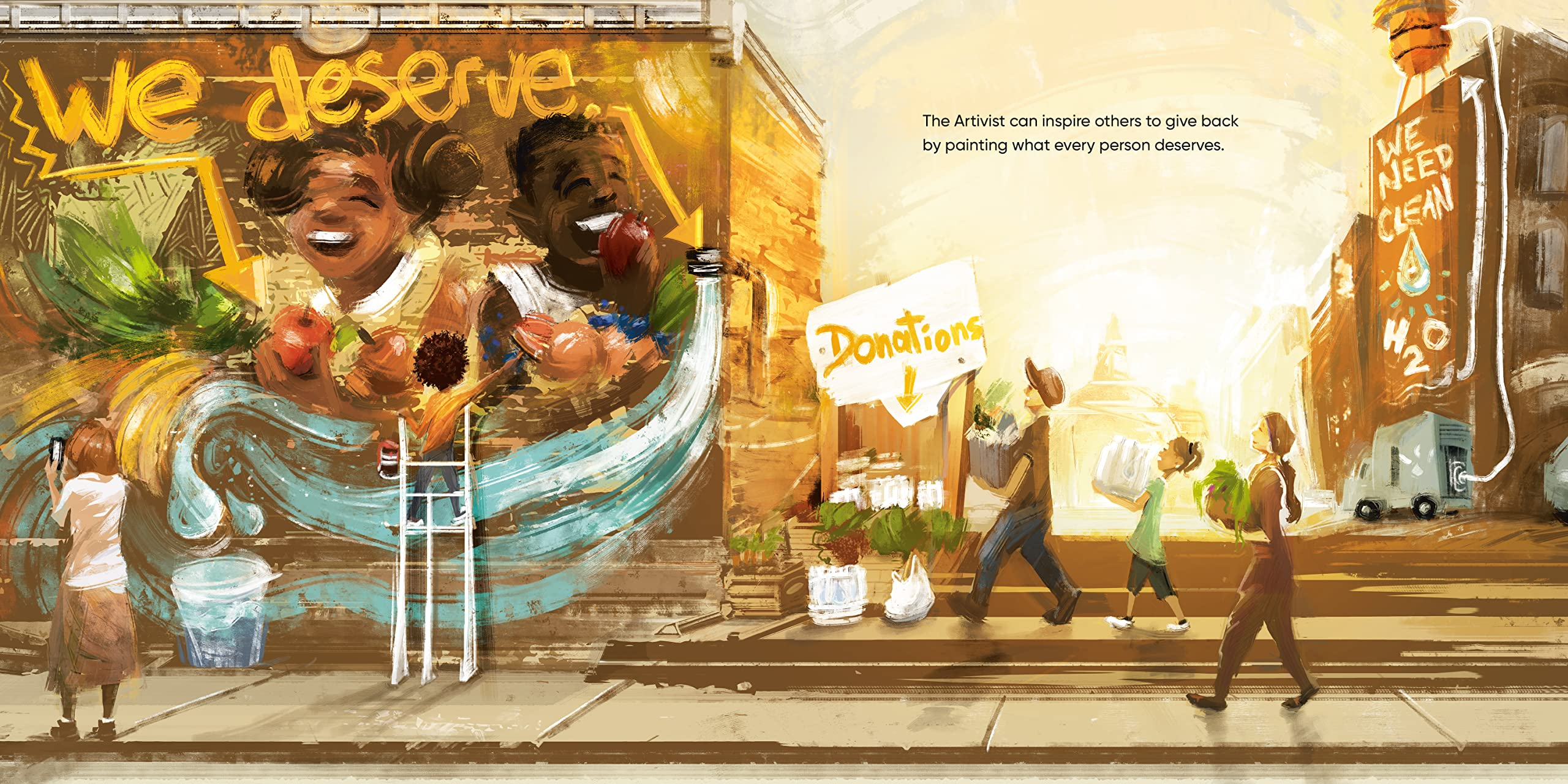
Summary:  Nikkolas Smith draws on his experiences as an artist and an activist to create a narrator who calls himself an artivist.  Observing the world around him, the boy says, “I want to hold up a mirror to the world and show everyone what isn’t working right.”  His murals and signs draw attention to issues like homelessness, gun violence, environmental concerns, racism, and trans rights.  He invites others to join him, saying that artivists can also sing, write, build, or film.  “The Artivist is you.  What change will you create?”  40 pages; all ages.  Includes a brief note about Smith’s own Artivist journey.

Pros:  The age recommendation I saw in other reviews was 4-8, but as I read this book, I envisioned it being used by older elementary and middle school kids as a jumping-off point for thinking about the issues they care about and creating art to express that.  In a world that seems more uncertain than ever, this book gives an empowering message to kids about using creativity to make change.

Cons:  Nikkolas Smith refers to an illustration he made that went viral.  I think it’s his portrait of George Floyd, but I wish there had been more information about it.

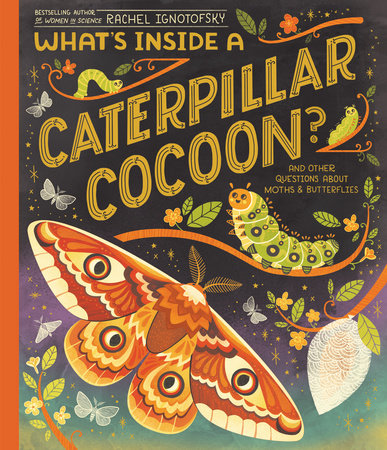
What’s Inside a Caterpillar Cocoon? And Other Questions About Moths and Butterflies by Rachel Ignotofsky

Published by Crown Books for Young Readers

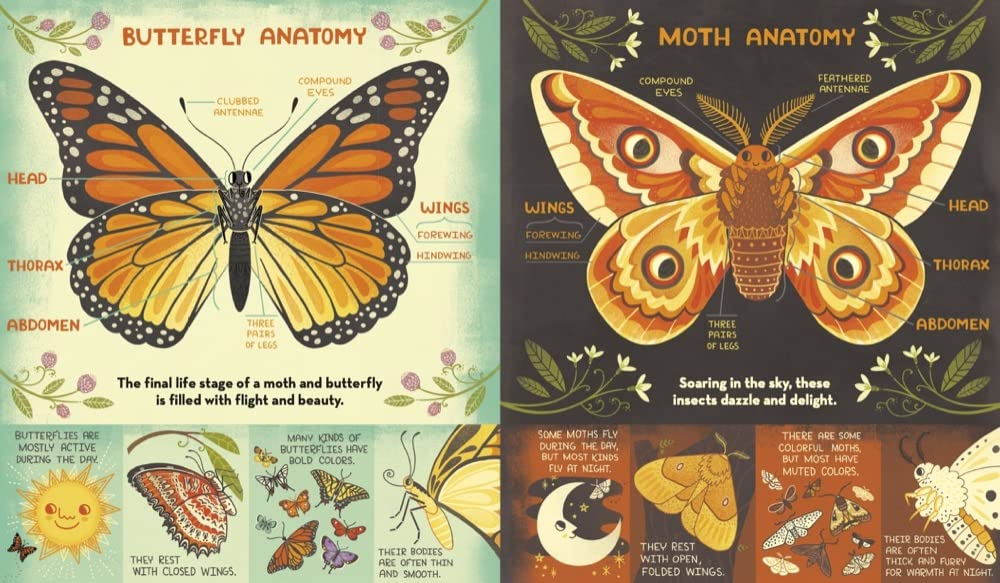
Summary:  From egg to caterpillar to pupa (called a cocoon for moths and a chrysalis for butterflies), butterflies and moths have similar life cycles.  Readers will learn the intriguing answer to the title question, as well as answers to many other questions about butterflies and moths.  Detailed illustrations portray a wide range of caterpillars, butterflies, and moths with labels to identify each one.  In addition to the life cycle, there is plenty of fascinating information about anatomy, food, defenses, and more.  Includes a page of sources and resources.  48 pages; grades K-3.

Pros:  I missed last year’s What’s Inside a Flower? and am delighted that I discovered this beautiful and informative science book.  The illustrations are unique and detailed, containing at least as much information as the text.  Just as I was wishing I knew the differences between butterflies and moths, I turned the page to discover a detailed comparison suitable for framing and hanging in the science corner.

Cons:  This book seemed a little long for the intended audience.  With so much information, you might want to break it up into several sections and read one at a time.

A Place Called America: A Story of the Land and People by Jennifer Thermes

Published by Harry N. Abrams

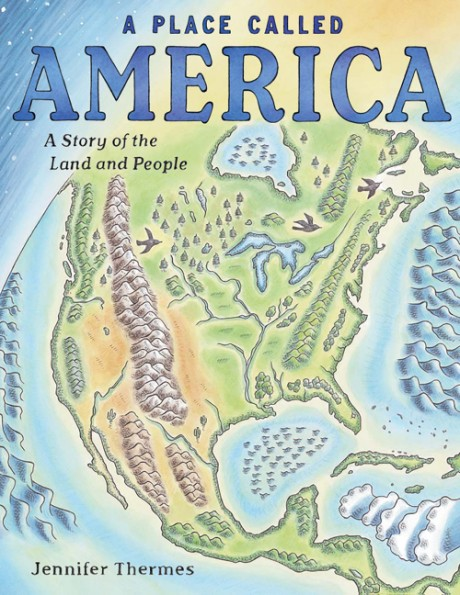
Summary:  Beginning with a global view of the Earth when “the land was owned by no one,” Jennifer Thermes dives into American history and the drive to acquire its land, shown by illustrated maps.  She focuses on marginalized people–indigenous, enslaved, immigrants–and how they helped shape history.  The two-page spreads look at a specific year or an era, portraying people and/or maps that show important events and movements of that time.  Includes an afterword about maps and history, a list of sources, and a timeline on the endpapers.  64 pages; grades 3-6.

Pros:  I am always thrilled to learn of a new Jennifer Thermes book featuring her amazing maps. You could use this one to cover a whole school year of American history, beginning with the author’s note with the assertion that “the stories we tell ourselves about what is happening make us who we are.”  Readers will spend hours poring over her beautiful maps and other complex illustrations of the people who made up the various eras that she writes about so engagingly.

Cons:  Except for a spread about 9/11, the history pretty much ends in the middle of the 20th century.

The Story of Gumluck the Wizard by Adam Rex

Published by Chronicle Books

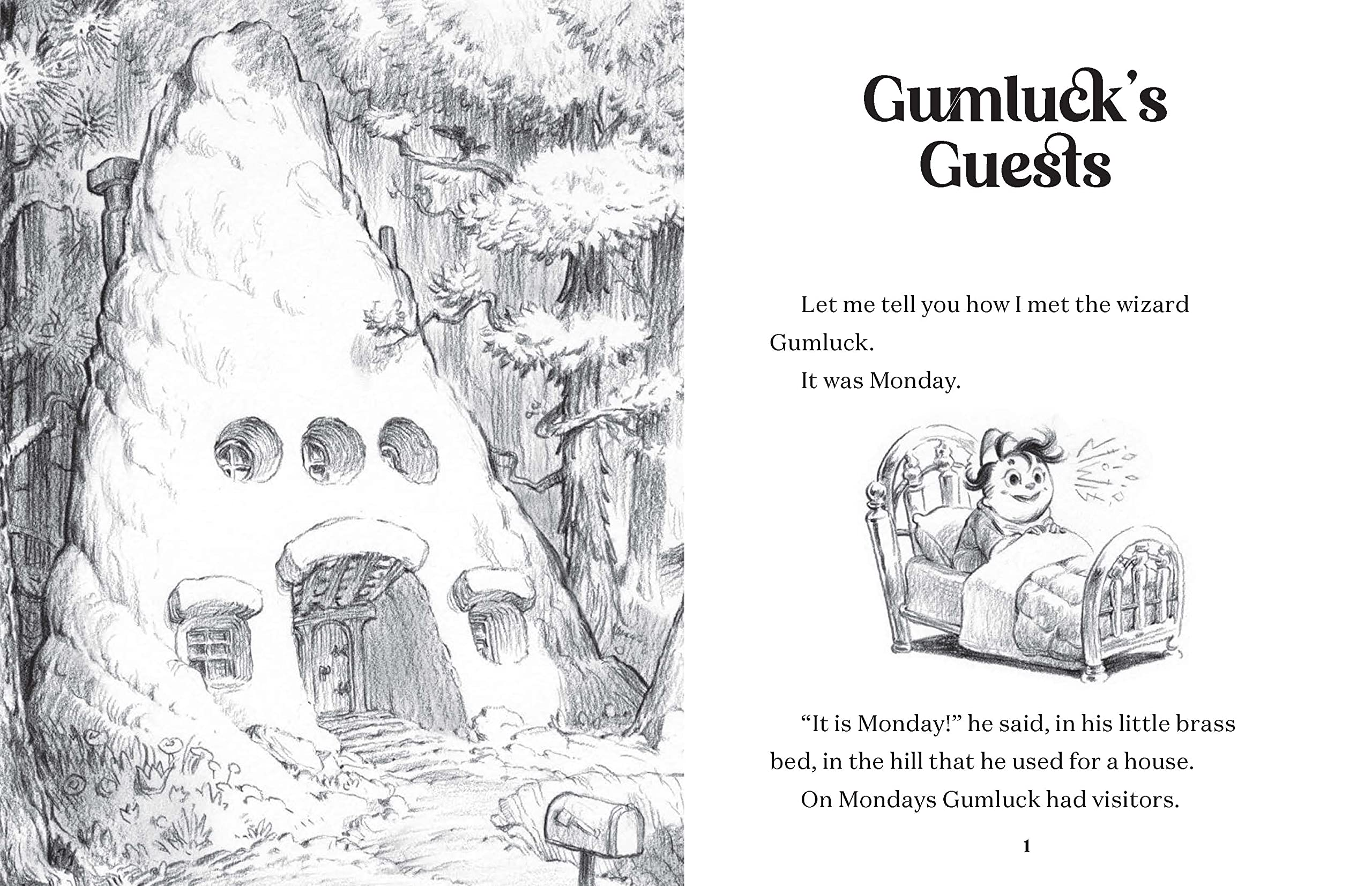
Summary:  Helvetica the raven narrates the story of his neighbor Gumluck, a little wizard who likes to help people.  Believing the best about his neighbors, Gumluck fails to notice that they are spreading unkind rumors about him behind his back.  Helvetica notices, though, and in spite of himself, he begins to befriend the wizard and try to help him out.  When the king’s greed precipitates a crisis for the town, it’s up to Gumluck and Helvetica to save everyone.  The crisis causes Gumluck to realize who his real friends are and to become a bit more discerning about how he uses his wizardly powers.  140 pages; grades 1-4.

Pros:  Adam Rex uses plenty of his trademark humor in both the story and the illustrations of what appears to be book one of a new early chapter book series.

Cons:  I think colored illustrations would have given this more kid appeal.