Two books for back-to-school eve

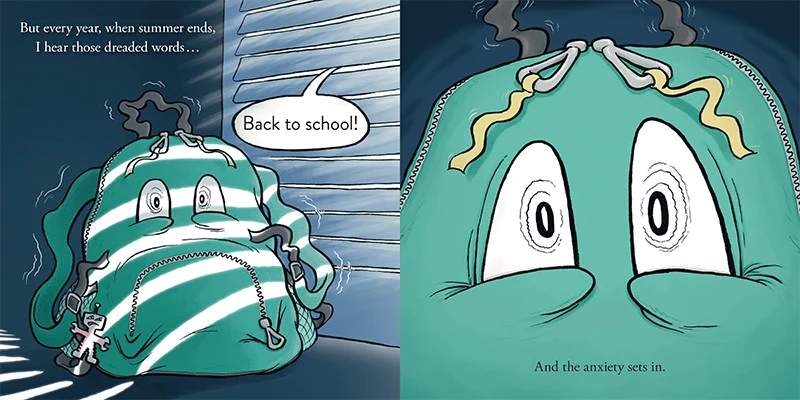
Back to School, Backpack! by Simon Rich, illustrated by Tom Toro

Published by Little, Brown Books for Young Readers

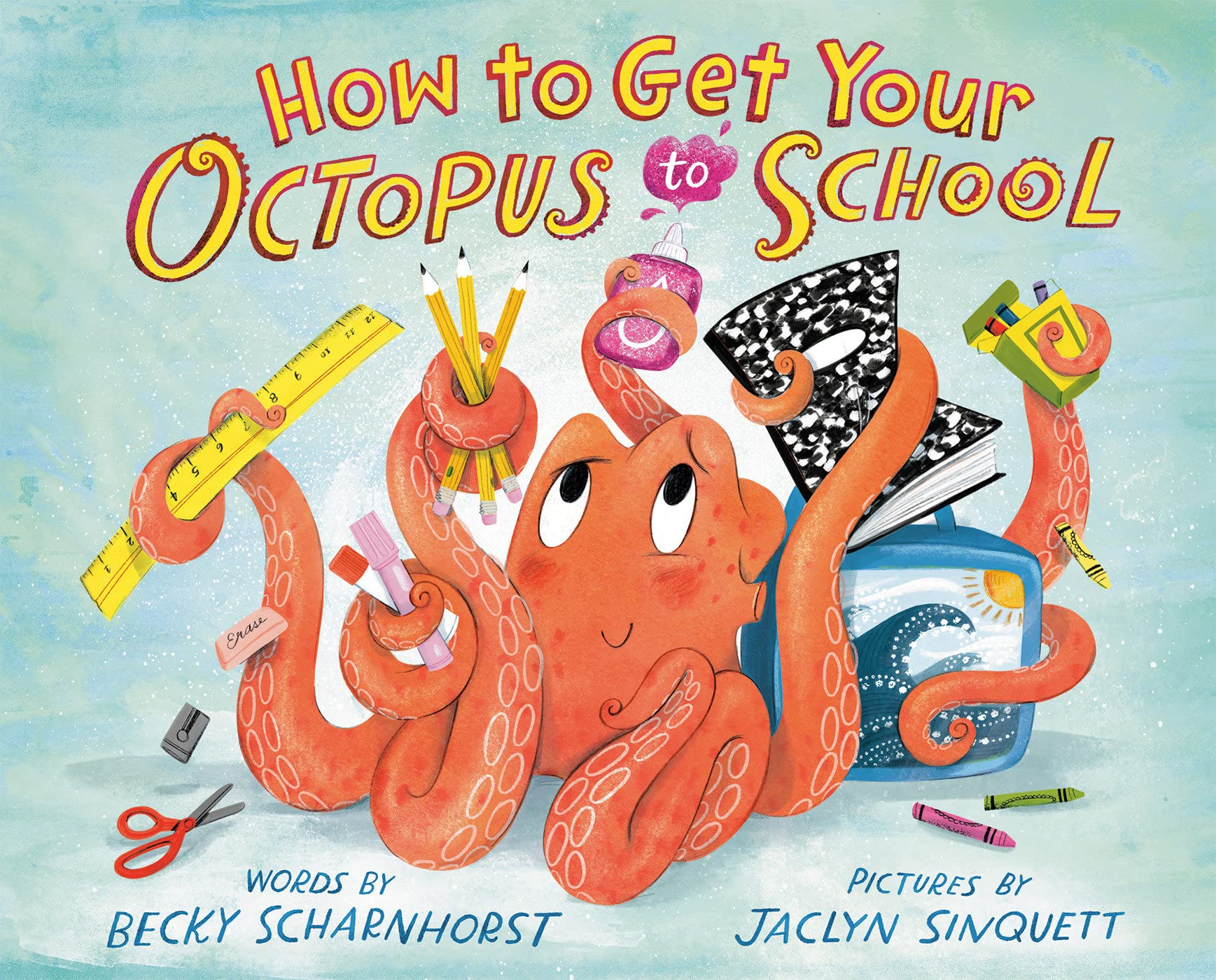
How to Get Your Octopus to School by Becky Scharnhorst, illustrated by Jaclyn Sinquett

Published by Flamingo Books

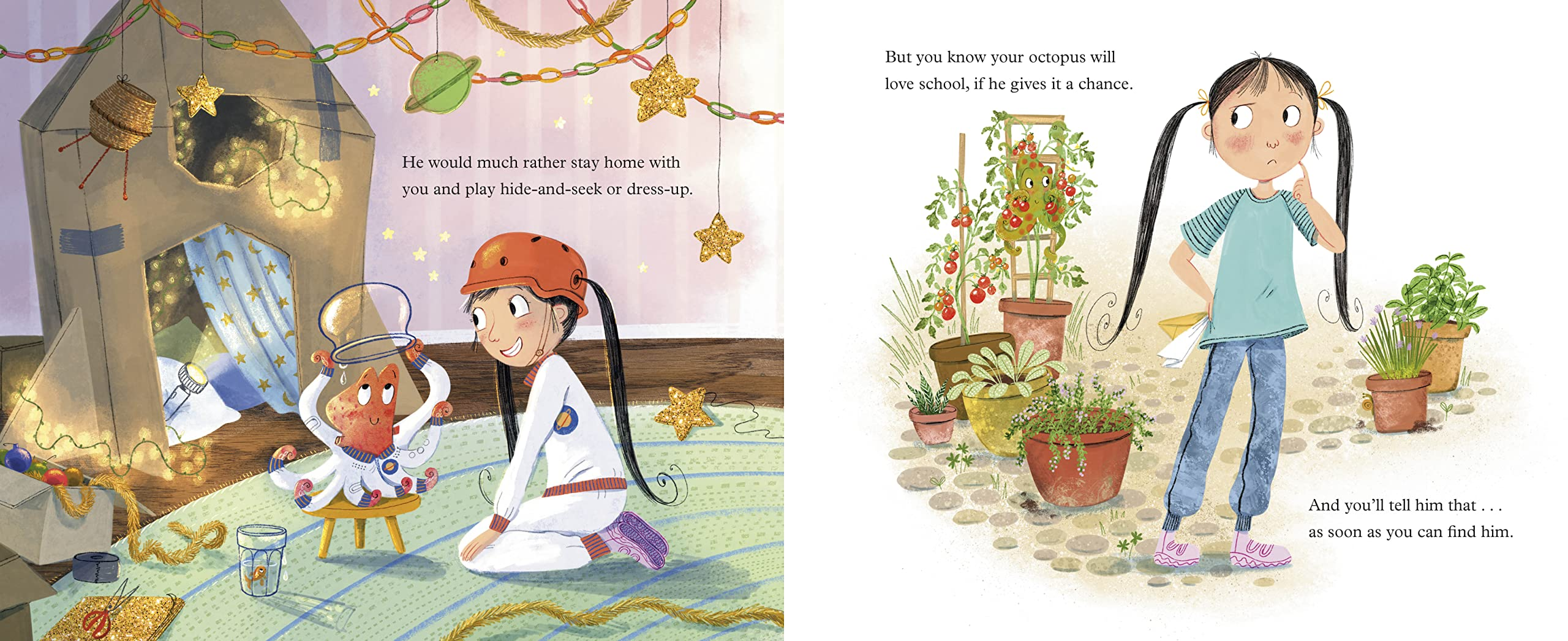
Summary: An octopus and a backpack are both dealing with first-day-of-school jitters. The octopus lives with a girl who’s trying to convince him that school is fun. Octopuses are shy, though, and also good at hiding. Once he’s been discovered, the two work together to find him a perfect outfit, a process that’s disrupted when the octopus’s nerves cause him to shoot a cloud of ink. They finally make it to school, and the octopus is excited to be with new friends. When it comes time to say goodbye, it’s the girl who has some trouble letting go. Includes ten facts about octopuses.

The backpack of the second book also has a case of nerves. It has spent the summer chilling in the closet with Hamper and Winter Coat and isn’t excited to have books jammed down its throat and to head off to school backwards, not able to see where it’s going. The backpack feels like it doesn’t fit in, and the illustrations suggest that its girl is having the same experience. A hallway collision leads to a friendship between the humans and their backpacks, and the first day of school suddenly gets a lot better for everyone. Octopus is 32 pages; Backpack is 40 pages; ages 4-8 for both.

Pros: If you’re on the same schedule as I am, you may be looking for books like these tomorrow morning. Each provides a short, funny read with great visuals (I loved the picture of the octopus classroom with all the students camouflaging against various backgrounds). Backpack is a little more laugh-out-loud funny, while Octopus has more of a If You Give a Mouse a Cookie vibe. Both could provide excellent writing prompts, writing from the point of view of your backpack of some other back-to-school object, or a how-to for getting your pet to school.

Cons: I guess this means summer is over.

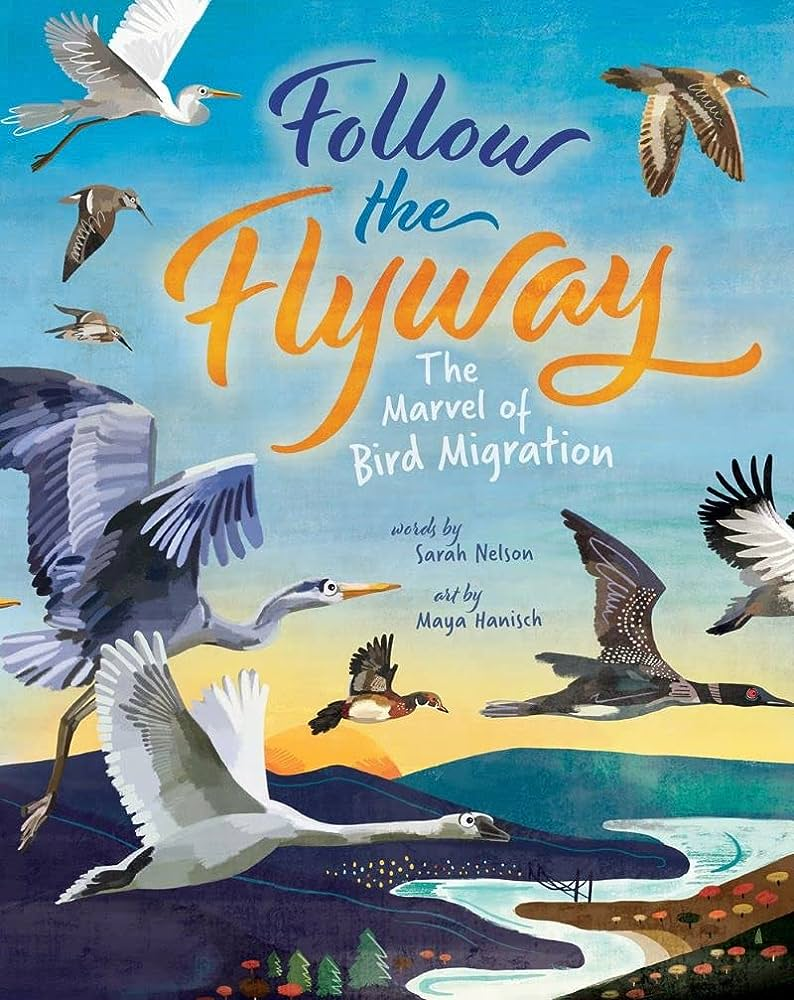
Follow the Flyway: The Marvel of Bird Migration by Sarah Nelson, illustrated by Maya Hanisch

Published by Barefoot Books

Summary:  The text follows a variety of birds, starting with hatchlings emerging from eggs, and continuing as those babies learn to fly.  By the time autumn comes, they are strong enough flyers to join the flyway of birds migrating to warmer places.  Flying in groups of all sizes, they head south, stopping for a week or two to rest until the cold catches up and sends them on their way.  When they reach the ocean, they settle in and wait until spring arrives to call them back north again.  Includes additional information about bird migration, including ways to help migratory birds; a map of the four North American flyways; thumbnail portraits and additional information about the twelve birds in the book; and sources of additional information.  32 pages; grades K-4.

Pros:  A great introduction to bird migration, with poetic text and lots of interesting pictures of a variety of birds.  The back matter makes it a good resource to begin further research.

Cons:  The only birds covered were water birds.

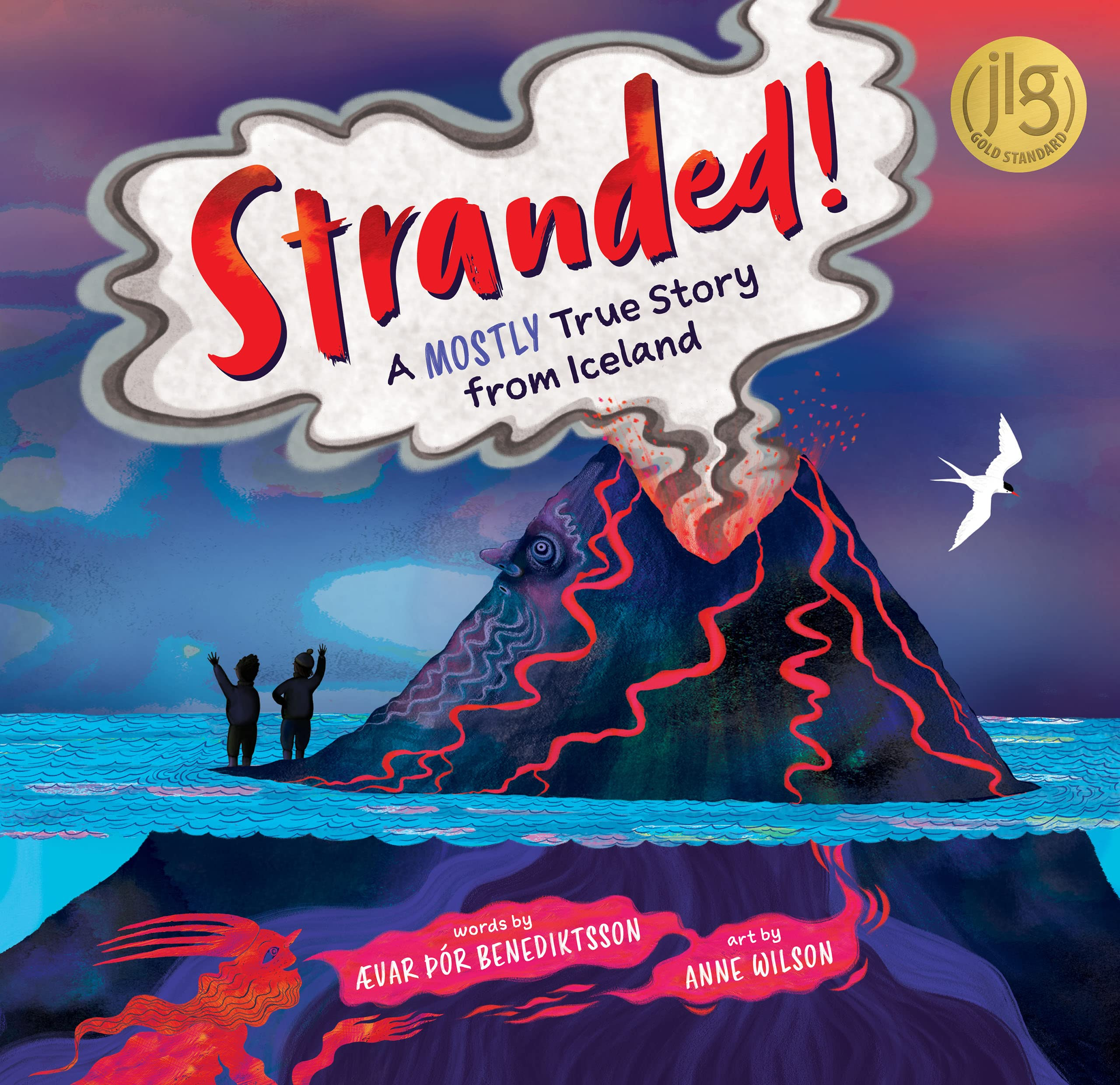
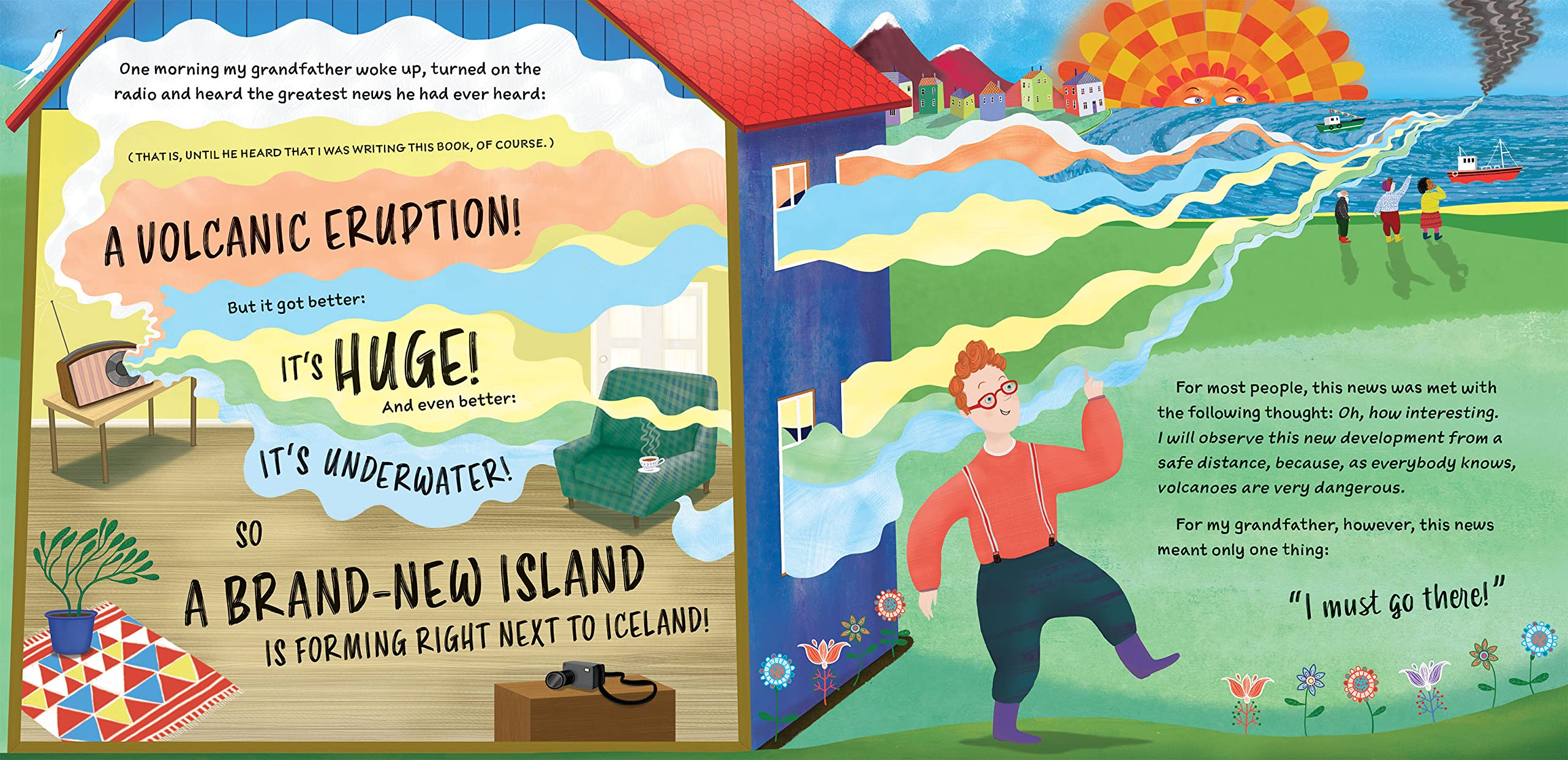
Stranded! A Mostly True Story from Iceland by Ævar Þór Benediktsson, illustrated by Anne Wilson

Published by Barefoot Books

Summary:  “This is the story of my grandfather: how he got stranded on a volcanic island, was almost turned into barbecue and found the most important moment in the world.”  The island is Surtsey, formed in the 1960’s by underwater volcanic explosions off the coast of Iceland, where Ævar’s grandfather (also named Ævar) was from.  Ævar Senior was an explorer, a scientist, and a photographer, so when he heard about Surtsey, he wanted to go check it out.  A fisherman dropped him and a friend off, and the two scientists enjoyed a day of exploring.  Unfortunately, the fisherman never returned, and they spent two days trying to keep warm (the molten lava helped) and surviving on the small amount of food and drink they had with them.  On the third day, an American man, part of a U.S. scientific expedition, found them (at the most important moment in the world).  They made it back to Iceland and lived happily ever after, although they never found out why the fisherman didn’t pick them up.  Includes additional information about Iceland, Surtsey, volcanoes, a few Norse gods, and the legend of Surtsey’s tomatoes, which involves poop.  32 pages; grades 2-5.

Pros:  This quirky book is a total delight, both the folksy story and the illustrations that perfectly capture the magic and colors of Iceland.  The author states on the title page that everything in the story is true, except for one little thing, and invites readers to see if they can spot it.  That made me want to read carefully, which we can hope will be the result for kids as well.  

Cons:  The detail that is not true turns out to be quite the anticlimax, although Benediktsson has fun pointing out the outlandish parts that are true throughout the story.

Yenebi’s Drive to School by Sendy Santamaria

Published by Chronicle Books

Summary:  Yenebi and her younger sister Melanie get woken up at 4:00 a.m. to begin their trip to school.  On the road with Mami and Melanie, Yenebi confronts her archenemy: la línea, the line of cars waiting to cross the border.  Will they wait two or three hours this morning?  Mami and Yenebi debate while Melanie sleeps.  Then Mami says the magic words, “hora de desayunar!”  It’s time to decide what to buy for breakfast, choosing from the vendors all around them.  They enjoy chicken tamales as they get closer to the border.  After showing their papers to the stern border patrol agent, they’re finally in the United States and on their way to school.  It’s 7:00 a.m., right on schedule, and when they finally get to school, Yenebi is feeling wide awake.  “Estoy listo,” she declares, ready for her day.  Includes an author’s note about her own experiences crossing the border to go to school.  Available in English and Spanish (El viaje de Yenebi a la escuela). 40 pages; grades K-4.

Pros:  I plan to pair this book with 9 Kilometers as an introduction to the lengths some kids have to go to to get to school.  Yenebi is pretty cheerful about her long drive, and Sendy Santamaria beautifully portrays the sense of community she experienced from this daily journey. I’ve added this to my back to school book list.

Cons:  I wondered what Mami did all day, since I assume she would have to take her daughters home after school.

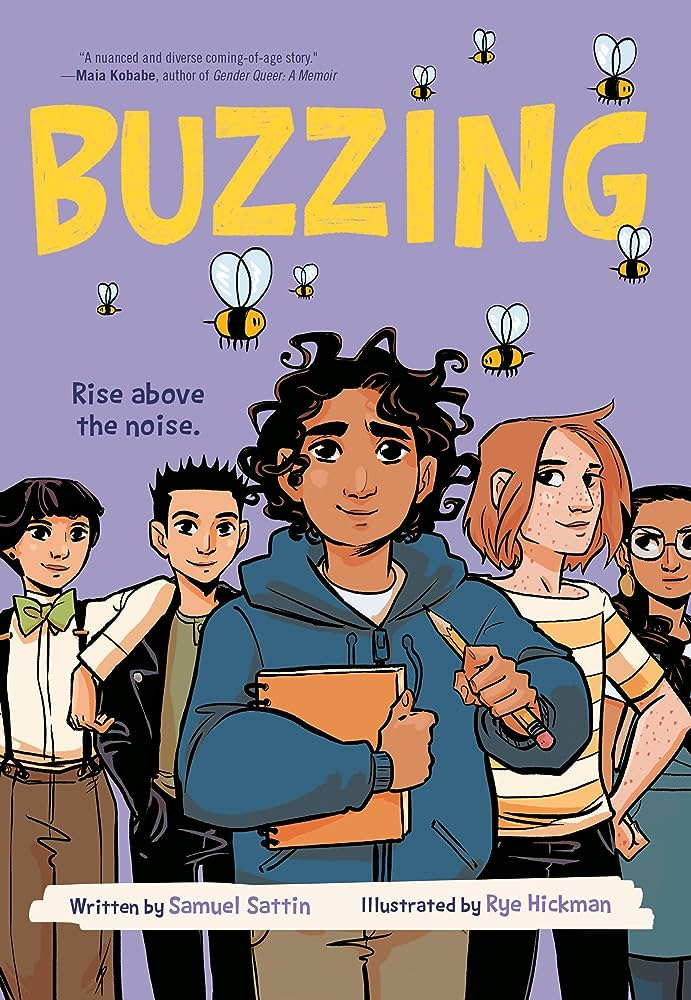
Buzzing by Samuel Sattin, illustrated by Rye Hickman

Published by Little, Brown Ink

Summary:  The bees swarming around Isaac’s head represent the thoughts brought on by his obsessive-compulsive disorder (OCD).  They’re constantly reminding him that if he doesn’t tug his ear five times or keep the foods on his plate from touching, his house may burn down, or his car may crash.  When another kid at school makes friendly overtures, the bees remind Isaac how worthless and weird he is.  His overprotective mom keeps him on a strict regimen of therapies, causing his older sister Miriam to feel ignored and resentful.  Isaac’s talent for drawing fantasy creatures catches a classmate’s eye, and Micah invites Isaac to join a group playing Swamps & Sorcery, a role-playing game (think Dungeons & Dragons).  Isaac loves the group immediately, but his mother is less sure.  When she eventually prohibits him from playing the game, Isaac’s world goes into a tailspin.  Fortunately, Miriam is perceptive enough to see what is happening, and the siblings work together to finally break through to their mother and help her to accept Isaac exactly as he is.  Includes an author’s note about his own OCD and neurodivergence. 224 pages; grades 5-8.  

Pros:  This graphic novel perfectly captures the vibe of a group of middle school outsiders who have fully embraced their weirdness (their word).  Isaac’s joy at finding the group is shown by the switch from monochromatic illustrations at home to full color when he’s with his friends.  

Cons:  RPG fans will undoubtedly enjoy the fantasy subplot based on the kids’ game that’s woven throughout the main story, but I found those sections to be more of a distraction.

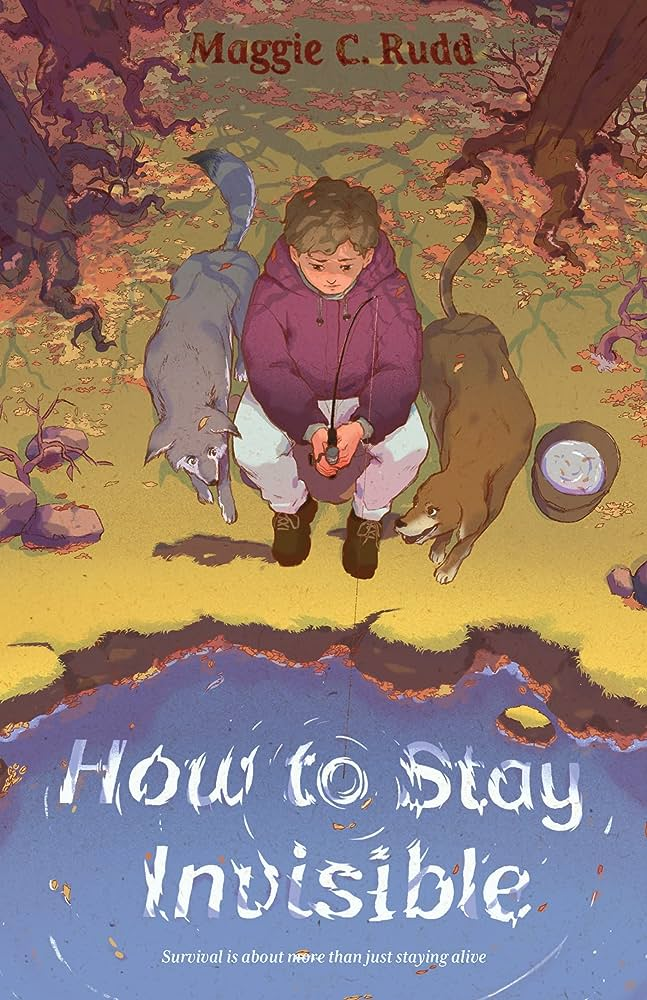
How to Stay Invisible by Maggie C. Rudd

Published by Farrar, Straus and Giroux

Summary:  When Raymond realizes that his neglectful parents have left him for good, he feels that he has no choice but to camp out in the woods near his middle school.  He manages to survive there for the better part of a year, sleeping with his dog Rosie inside a hollow fallen tree, fishing and dumpster diving for food, and occasionally helped by a couple of kind new friends: Harlin and Lexi from school and an old man named Stigs who fishes in the same river.  It’s a pretty desperate existence, but Raymond finds it preferable to foster care, which he’s had some experience with.  A combination of a middle school bully and Mother Nature eventually catches up with Raymond, but with the help of his new friends, he finds what may be a happy ending.  240 pages; grades 4-7.

Pros:  Fans of Hatchet and other survival stories will enjoy getting to know Raymond, whose situation may feel a little closer to home than Gary Paulsen’s tale.  Despite his terrible parents, Raymond is a likable kid who finds himself drawn toward friendship and connection even as he tries to be self-sufficient.

Cons:  With one somewhat notable exception, most of Raymond’s teachers seem more concerned with his grades and behavior than any of the signs that all is not well with him at home.

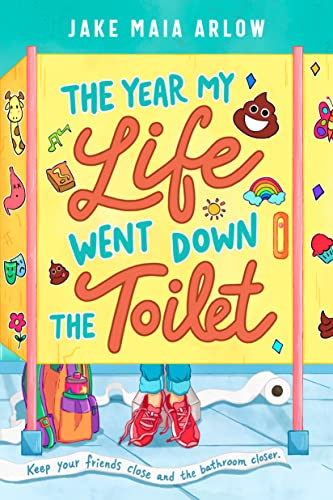
The Year My Life Went Down the Toilet by Jake Maia Arlow

Published by Dial Books

Summary:  Al is hoping her new doctor can make her stomach problems disappear, so she’s crushed to learn she has Crohn’s disease, which can be controlled but not cured.  Her flare ups seem to get worse with stress, and Al has plenty of that when her best friend Leo gets a part in the school play and has less time for her, and her mom and Leo’s mom start dating.  An IBS support group proves helpful in helping Al process some of her feelings about having a chronic disease and introducing her to some new friends who can relate to her experiences. Al develops a crush on one of the girls in the group and has to deal with the additional stress of coming out to her friends and family.  Communication proves to be the key, and after a rocky few months, Al finds her way back to those she loves the most.  288 pages; grades 4-7.

Pros:  I’ve gone my whole life without reading a book about a middle schooler with Crohn’s disease and now…two in less than a month.  Al’s story, like Will’s, conveys the difficulties of dealing with this illness and the grief of learning that it’s chronic, while at the same time containing universal and relatable middle school issues with family and friends. If you’re looking for an LGBTQ+ friendly book, every main character in this story falls into that category.

Cons:  Al spends a lot of the book being sulky and uncommunicative, behavior that is certainly understandable given her circumstances, but if I had to choose someone to hang out with from these two books, I’d have to go with Will.

Together We Swim by Valerie Bolling, illustrated by Kaylani Juanita

Published by Chronicle Books

Summary:  A family is enjoying some time at the pool.  Mom, Dad, and the sister are all accomplished swimmers, but the youngest is still learning.  Short rhymes describe the action (“Toe dip/Side grip”) as he tentatively explores the water.  The other family members are encouraging, showing him the basics and staying nearby with a kickboard and noodle to keep him safe.  By the end, he’s learned how to move his arms and legs and is thrilled to be starting to swim.  They towel off, have a family hug, and “filled with pride/off I stride.”  40 pages; ages 3-6.

Pros:  A perfect summer book and an empowering one that shows a Black family that loves swimming and is making sure their kids know how to swim too.  I missed last year’s Together We Ride, which features the same family teaching the daughter how to ride a bike.

Cons:  Seems like June 15 would have been a better release date for this book than August 15.

Night Owl Night by Susan Edwards Richmond, illustrated by Maribel Lechuga

Published by Charlesbridge

Summary:  Sova is eager to accompany her scientist mother on one of her evening owl watches, but every time she asks, Mama tells her that a scientist must learn to wait.  Finally, Sora is old enough, and the big night arrives when the two of them go off together.  Once again, there’s a lot of waiting: Mama sets a timer for thirty minutes, and the two of them play games in the wildlife sanctuary’s cabin until the timer goes off.  They go out to check the nets for owls.  The first two times, there are just leaves, but on the third trip–finally–there’s a saw-whet owl.  Back at the cabin, Mama measures and bands the owl, explaining how the bands help scientists track the owls’ migration.  Together, the two of them release the owl, and Sora feels a part of herself take wing and fly away with the owl.  Includes additional information about four types of owls; a note from the author about saw-whet owl banding (with a photo); and additional resources.  32 pages; ages 4-9.

Pros:  Fans of Jane Yolen’s Owl Moon will enjoy this story with its portrayal of a woman scientist.  It’s remarkably engaging, considering how much waiting is involved, and incorporates quite a bit of scientific information.

Cons:  I was getting a little impatient to finally see an owl.

My Head Has a Bellyache and More Nonsense for Mischievous Kids and Immature Grown-Ups by Chris Harris, illustrated by Andrea Tsurumi

Published by Little, Brown Books for Young Readers
Summary:  A companion to I’m Just No Good at Rhyming, this book of poems begins with “World, Watch Out!” where the narrator is ready to conquer the world…until he trips down the stairs after forgetting to tie his shoes.  The poems cover all kinds of topics like families (“Sometimes Dads Are No Help At All”), holidays (“Valentine Poem for Someone You Don’t Care About”), books (“Help! I’m Trapped in ‘Happily Ever After’!”), and so much more.  Many of the page numbers have fun facts next to them that also form rhymes: “78: one right through twelve added up all the way, 79: a really bad year to have been in Pompeii.”  Includes a glossary of terms (written as a 14-verse poem); somewhat unconventional indexes by title and subject; and a list of books by (and not by) the author and the illustrator.  192 pages; grades 1-5.

Pros:  The back cover cautions that, “extreme laughter while reading this book may give your belly a headache.”  It’s a fair warning, as the book is packed with funny and clever poems and illustrations.  Just the first few pages gave me ideas for sharing with various age groups.  I wouldn’t try to read the whole book at once but to savor it a few pages at a time.

Cons:  I prefer a bit more color variety in illustrations.