The Great Art Caper by Victoria Jamieson

Published by Henry Holt
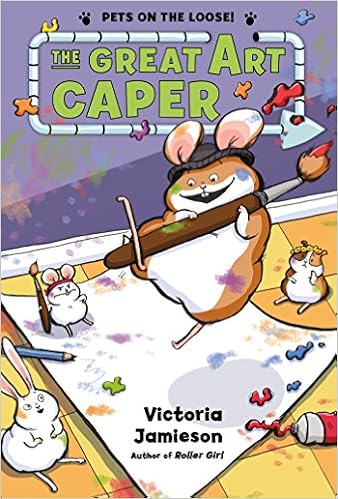
Summary:  GW the hamster and his class pet friends Sunflower and Barry are back for another adventure, this time in the art room. GW wants to make a special gift for his friend Carina, one of the girls in the classroom where he lives.  The three pets sneak into the art room one night in search of inspiration.  They find some, but before their projects are complete, they are attacked by Harriet and her minions.  These evil mice have hatched a plot to sabotage the school art show, and they won’t let three pesky rodents get in their way.  When GW finds out that Carina is one of the winning artists, nothing will stop him from taking down the mice and saving the day. There’s a happy ending in store for all, and a hint of another adventure ahead.  64 pages; grades 2-5.

Pros:  I don’t usually review sequels, but I so loved The Great Pet Escape that I wanted to see what the furry friends were up to next.  No disappointments, the humor is just as sharp as in the first book, and the pets are as irrepressible as ever.

Cons:  Sunflower, who was hilarious in the first book, had a much smaller role here.
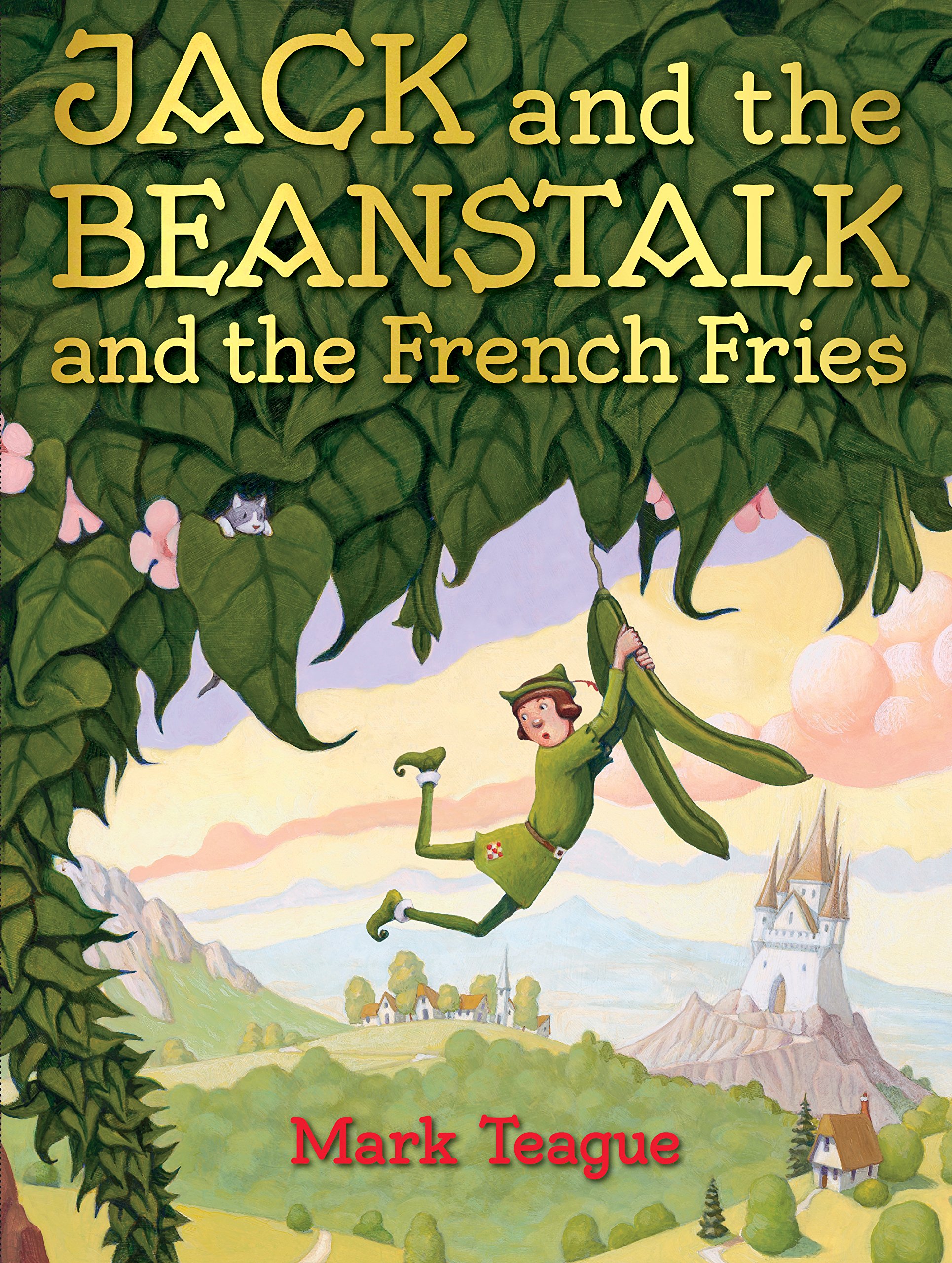
Jack and the Beanstalk and the French Fries by Mark Teague

Published by Orchard Books

Summary:  The familiar story of Jack begins as usual when he trades the family cow for some bean seeds that his irate mother tosses out the window.  The huge stalk grows, but then the story veers off into a new and humorous direction.  Jack’s mother is thrilled with the free food the beanstalk provides, and Jack finds himself eating bean soup, bean salad, and other bean dishes three times a day.  When he receives a bean bag and a slice of bean cake on his birthday, he’s ready to take a hatchet to the stalk.  But the old man who sold him the seeds reappears and encourages Jack to check out what’s at the top of the huge plant.  Jack takes his advice and discovers a giant’s wife, who is cooking…you guessed it, beans.  The giant feels the same way as Jack does about beans, and the two return to Jack’s home in search of French fries.  They plant a vegetable garden, which proves to be influenced by the presence of the beanstalk, and grows a plethora of large vegetables.  Everyone–humans and giants alike–is thrilled with the new diet, which of course includes extra-large fries.  40 pages; grades K-3.

Pros:  Mark Teague has produced another winning takeoff on a fairy tale.  Kids will love the funny story and illustrations, and teachers will enjoy comparing it to other versions of Jack and the Beanstalk.

Cons:  There’s no golden egg-laying goose.

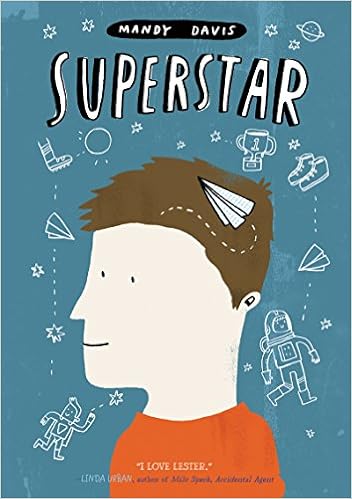
Superstar by Mandy Davis

Published by HarperCollins

Summary:  Lester Musselbaum is starting fifth grade after being homeschooled by his mom all his life.  His father was an astronaut who was killed in an accident when Lester was five.  Lester loves science, especially astronomy, but is apprehensive about going to public school.  He struggles in the first few weeks with a couple of mean boys, too much noise in the cafeteria, and a teacher who sometimes makes last-minute changes to the schedule.  His inclination at such times is to run away, but he gradually learns other coping strategies.  A girl named Abby becomes a friend, and a diagnosis of Asperger’s leads to an IEP that makes school a little easier for Lester to handle.  There are still good days and bad days, but Lester begins to see his strengths and to use them to make his way in a new world.  336 pages; grades 3-7.

Pros:  As I mentioned in an earlier post, I fear that “give this book to fans of Wonder!” is becoming a tired cliché.  However, the comparison is inevitable in this engaging tale of a fifth grader with a difference that sets him apart from his peers.  First-time novelist Mandy Davis does an outstanding job of portraying Lester sympathetically yet realistically.  I read this book in less than 24 hours.

Cons:  Teachers and other school personnel seemed unnecessarily nasty at the beginning of the story, although they improved as time went on.

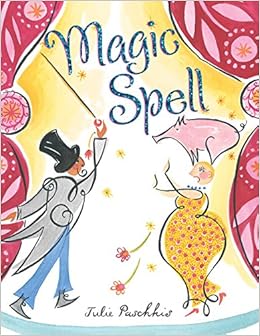
Magic Spell by Julie Paschkis

Published by Simon and Schuster Books for Young Readers

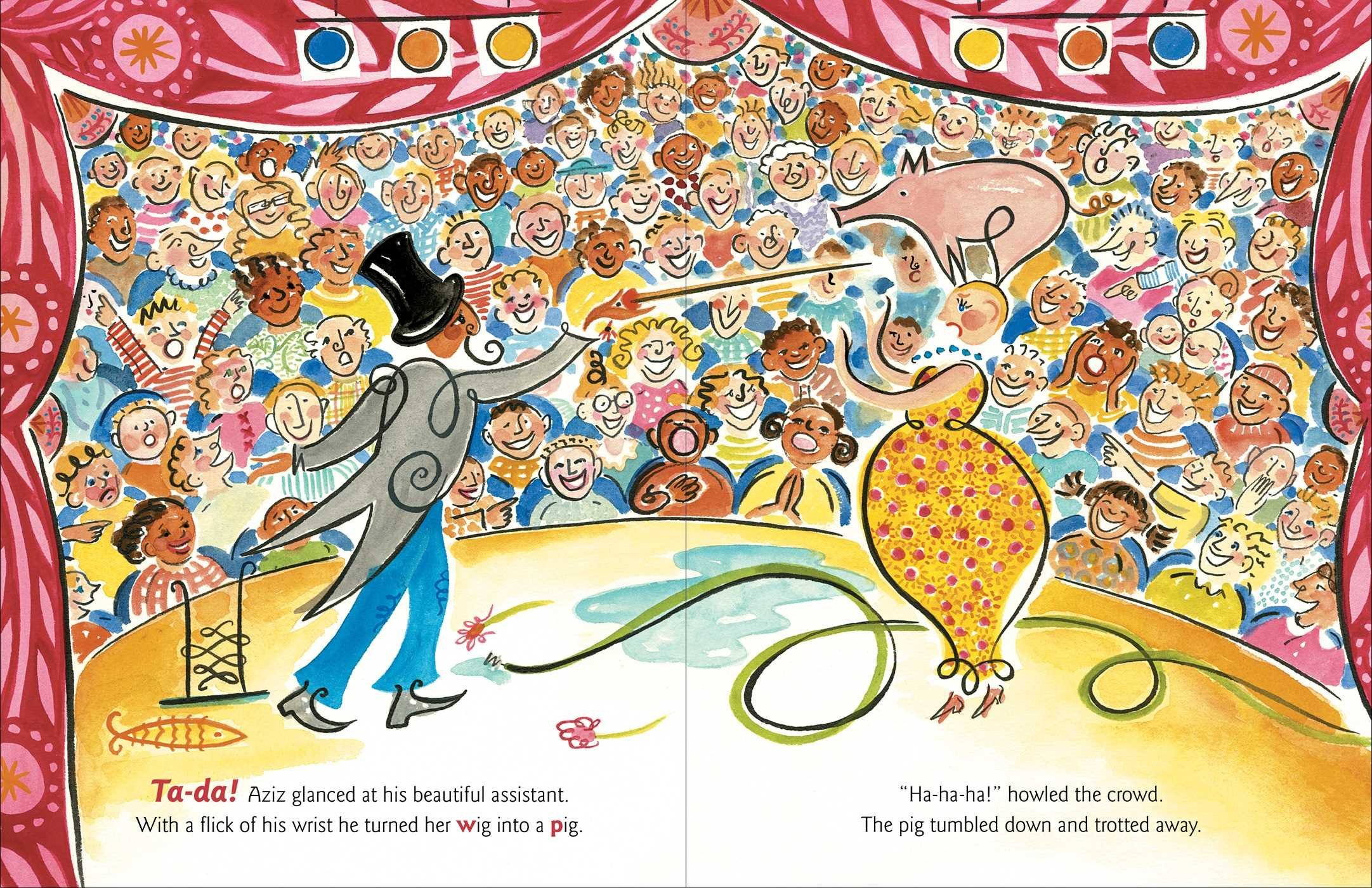
Summary:  The Great Aziz can magically transform one thing into another with the flick of a wand and the changing of a letter.  A dish becomes a fish, a rose becomes a hose, and a wire becomes a fire, while his adoring assistant takes care of the ensuing chaos.  But when he turns her wig into a pig, she’s had enough and takes revenge by changing his hat into a bat.  When beads become bears, however, the two magicians have to work together to avert danger.  They learn to share the light each night…and everything turns out just right.  32 pages; ages 4-8.

Pros:  Lots of word fun, illustrated with Paschkis’s somewhat impressionistic paintings.  Kids could enjoy creating their own transformation by changing one letter to another.

Cons:  The poor assistant never gets her hair back.

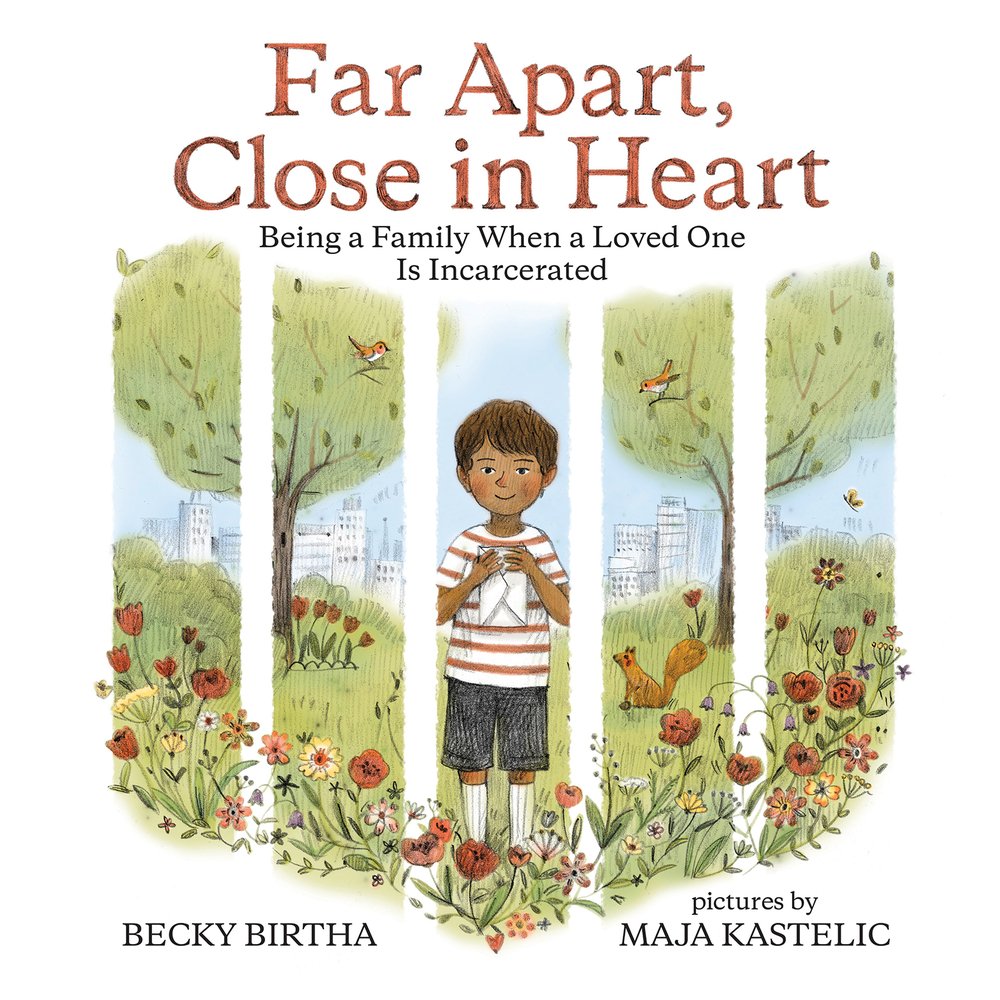
Far Apart, Close in Heart: Being a Family When a Loved One is Incarcerated by Becky Birtha, illustrated by Maja Kastelic

Published by Albert Whitman and Co.

Summary:  What does it feel like to have a parent in jail, and how do you deal with those feelings?  The children in this book all react differently to their parents’ incarceration.  They feel scared, angry, and confused.  One girl wonders if it was her fault her mom went to jail.  A boy’s mom begs him not to tell anyone about his dad, so he stops talking altogether.  Another girl’s family is torn apart when her mom gets arrested and sent to jail, just like her dad.  Kids are encouraged to share their feelings with other adults in their lives, and to try to stay in touch with their incarcerated parents through visits, or, if that’s not possible, phone calls and letters.  One mom writes to assure her daughter that, “You and I may be far apart, but you’re always close to me in heart.”  Includes an author’s note and tips for adults from the National Resource Center on Children and Families of the Incarcerated.  32 pages; ages 4-8.

Pros:  A useful and engaging book to help kids feel more accepting of having a parent in prison, and to learn how to deal with their feelings about it.

Cons:  With nine kids featured, there were a lot of people to keep track of in such a short book.

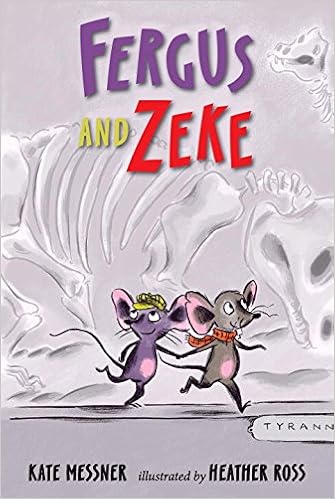
Fergus and Zeke by Kate Messner, illustrated by Heather Ross

Published by Candlewick

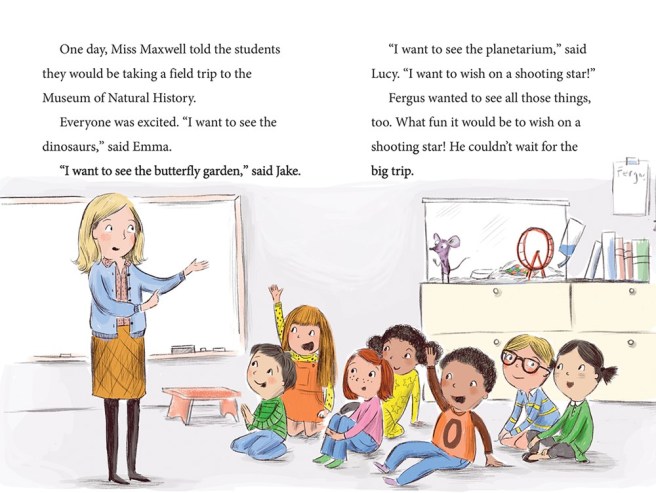
Summary:  Fergus is a mouse who lives in a classroom and enjoys participating in all the routines and activities of Miss Maxwell’s class.  When he hears they are going on a field trip to the museum, he can’t wait, and is disappointed to find out he won’t be joining them.  Undaunted, he stows away in Emma’s backpack and rides on the bus along with the rest of the class.  The museum is everything he expected and more, as he makes a new mouse friend, Zeke.  Zeke is more of a daredevil than the rule-abiding Fergus, and he takes Fergus on a behind-the-scenes adventure that almost causes them both to miss the bus back home.  They make it, though, and when the class gets back to school, they are amazed to see two mice instead of one in Fergus’s cage.  56 pages; grades K-3.

Pros:  Readers not quite ready for the Humphrey books will enjoy this illustrated chapter book with endearing mouse characters and plenty of action

Cons:  If I were Miss Maxwell, I’d be a bit more thorough in my investigation into how a second mouse mysteriously appeared in the classroom.  

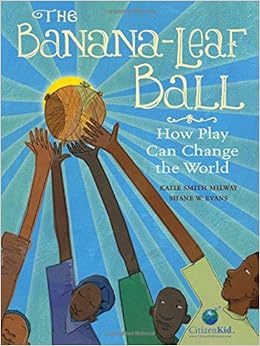
The Banana-Leaf Ball: How Play Can Change the World by Katie Smith Milway, illustrated by Shane W. Evans

Published by Kids Can Press

Summary:  When Deo is forced to flee his home in Burundi, he gets separated from his family and eventually ends up in a refugee camp in Tanzania.  Life there is difficult and sometimes scary, with a bully named Remy who forces the other kids to hand over their meager possessions to him.  Deo tries to make a soccer ball from banana leaves like the one he had back home, but Remy discovers it and takes it away.  One day, a man comes to camp with a leather soccer ball and starts organizing the kids into teams.  Deo and Remy end up on the same team and work together to score the winning goal.  It’s the beginning of a friendship; that and the soccer games sustain Deo until he is able to return home to his family and a chance to coach kids from his village.  Includes information and photos of the real Deo (see above); information about organizations that help kids learn how to trust each other and play together; and a paragraph called “What You Can Do”.  32 pages; grades 2-7.

Pros:  Another excellent entry from Kids Can Press’s CitizenKid series, introducing readers to other young people from around the world and showing them ways they can make a difference.

Cons:  The small font and large amount of text on each page may make this a more challenging read-aloud book.

The Quilts of Gee’s Bend by Susan Goldman Rubin

Published by Harry N. Abrams

Summary:  In 1845, plantation owner Mark Pettway moved his plantation to Gee’s Bend Alabama.  When the Civil War ended, the former slaves from that plantation stayed and formed a community that still exists today.  The women of Gee’s Bend have made quilts for generations, primarily to keep warm in the drafty cabins they lived in on the plantation, but also as a form of creative expression.  The history of this community and their quilts includes a visit from Martin Luther King, Jr. and participation by many in the Civil Rights movement.  The quilts were “discovered” in the 1960’s, and the women formed a collective that for a few years produced items to be sold in Bloomingdales and Saks Fifth Avenue.  In 2002, art collector Bill Arnett helped organize a quilt exhibit at New York City’s Whitney Museum, attracting record-breaking crowds.  The acclaim has helped the women to see their work as an art form that reflects the history of their unique community.  Includes instructions for making a quilt square, bibliography, and index.  56 pages; grades 5-8.

Pros:  The story is fascinating, but the real attraction of this book is the gorgeous full-page color photos of the quilts.

Cons:  The photo on page 8 appears to have been mislabeled with the wrong date.