Life by Cynthia Rylant, illustrated by Brendan Wenzel

Published by Beach Lane Books
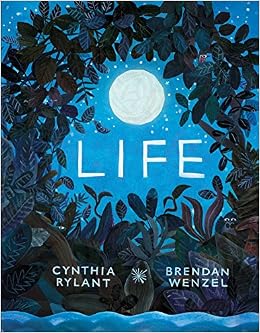
Summary:  Life begins small and grows.  Ask any animal what it loves about life, and you will get different answers: the hawk loves the sky, the camel loves the sand, the snake loves the grasssss.  Life isn’t always easy, but it is constantly changing.  So if you’re in the wilderness now, it will most likely end eventually.  “And it is worth waking up in the morning to see what might happen.”  48 pages; grades K-3.

Pros:  This lovely book features poetic text by Newbery Medalist Cynthia Rylant, complemented by the gorgeous illustrations of animals all over the world.  This would make a perfect gift for a graduate or someone else moving into a new chapter of life.

Cons:  This may not have instant appeal for young kids; it’s probably best read with adult accompaniment.
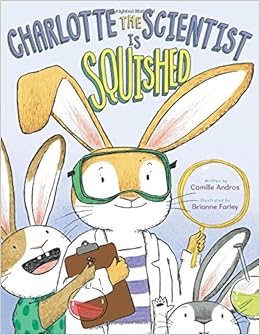
Charlotte the Scientist is Squished by Camille Andros, illustrated by Brianne Farley

Published by Clarion Books

Summary:  Charlotte the rabbit loves to use science to solve her problems.  Her biggest problem is that she is squished by her large family.  So she tries the steps of the scientific method, first asking a question, then forming a hypothesis, and finally running a series of experiments.  The first few fail, but she thinks she has found success when she builds a rocket and sends herself to the moon.  In space, she has all the space she could want, and when she makes her observations and draws her conclusions, she decides that her hypothesis was correct.  Being less squished has made her a better scientist!  But then a new problem arises: Charlotte is lonely.  So it’s back to the scientific method, and ultimately, back to earth, where she finally arrives at a solution that makes everyone happy.  The last two pages review the scientific method in greater detail.  40 pages; ages 4-8.

Pros:  The engaging story and cute rabbits make an appealing introduction to the scientific method.  Kids can even email Charlotte to tell her of their scientific successes.

Cons:  The word “hypothesis” is frequently used in the story, but isn’t defined until the last two pages.

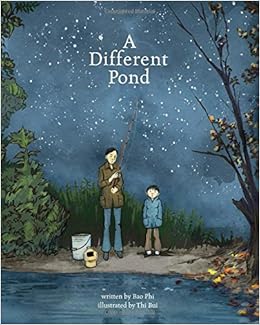
A Different Pond by Bao Phi, illustrated by Thi Bui

Published by Capstone

Summary:  Poet Bao Phi tells a slice-of-life story from his childhood, growing up as the son of Vietnamese immigrants.  The father in the story wakes his son early on a Saturday morning so that they can get in some fishing before Dad has to go to work.  After a stop at the bait shop, they make their way through the darkness, past a “No Trespassing” sign, to their favorite fishing spot.  Fishing isn’t a sport for them, but a way to feed their family of seven.  As they wait for a nibble, the father tells the boy about how he and his brother used to fish at a different pond in Vietnam.  Later, they were both soldiers, but he was the only one who came home from the war.  After catching a couple fish, they make their way home again.  The boy watches as his parents both get ready for work, leaving him at home with his older brothers and sisters.  He’s a little sad to see them go, but knows they’ll be home in time to eat the fish he helped catch.  Includes notes from both the author and the illustrator about how their childhoods as Vietnamese immigrants in America inspired their work.  32 pages; grades 1-5.

Pros:  A beautiful story, deceptively simple, showing a loving immigrant family struggling for success in their new country.

Cons:  Many of the recommendations I saw for this book were for K-3, but I think older kids might better appreciate the many layers to it.

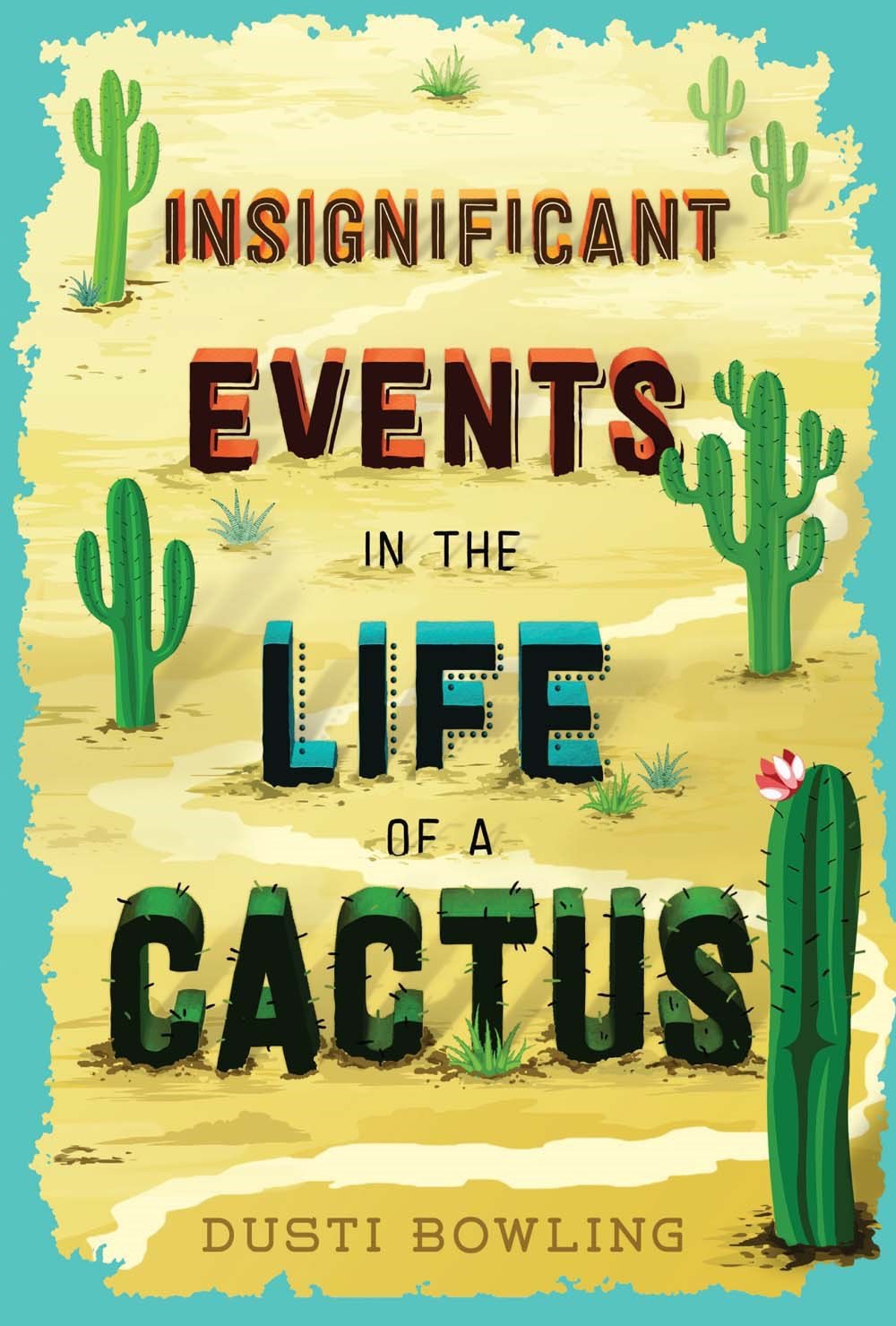
Insignificant Events in the Life of a Cactus by Dusti Bowling

Published by Sterling Children’s Books

Insignificant Events in the Life of a Cactus (Volume 1): Bowling, Dusti,  Bowling, Dusti: 9781454923459: Amazon.com: Books

Summary:  Aven has always believed she can do whatever she wants, and being born without arms hasn’t stopped her from playing guitar, excelling at soccer, and making plenty of friends at her Kansas middle school.  But when her parents suddenly decide to take over Stagecoach Pass, a has-been theme park in Arizona, Aven has to start eighth grade in a new school.  Unable to face the stares of her new classmates, she takes to eating her lunch in the library, where she meets Connor, a boy with Tourette’s syndrome and Zion, a boy struggling with weight and self-esteem issues.  The three become friends, and uncover a mystery at Stagecoach Pass involving tarantulas, a locked desk, and a mysterious girl who bears an uncanny resemblance to Aven.  In the process of solving the mystery, the kids also have to acknowledge their own limitations and learn to reach out and help each other reach their full potential.  272 pages; grades 4-7.

Pros:  Aven is a confident, hilarious narrator whose fun and supportive parents have taught her to face life head-on and learn to do as much as she can for herself.  The story ends on a realistically uplifting note for all the characters.

Cons:  Zion seemed like a bit of an afterthought.  I would have liked to have known more about him and seen a little growth and change for him.

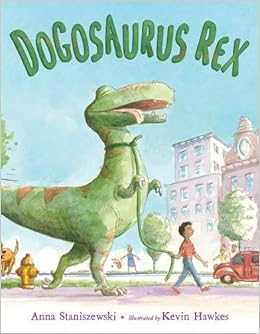
Dogosaurus Rex by Anna Staniszewski, illustrated by Kevin Hawkes

Published by Henry Holt

Summary:  When Ben and his mom go to the shelter to find a dog, he settles on the biggest one he can find, Sadie.  Readers will notice what Ben and those around him don’t: that Sadie is a Tyrannosaurus Rex.  When Sadie sits on a car, rolls over through a fruit stand, and fetches a mail truck, Ben’s mom isn’t sure they can keep her (don’t even ask what happens when Sadie “does her business”).  Ben is desperate to find a way to save his beloved pet, and the opportunity arises when they hear the words, “Stop! Thief!”  Sadie springs into action, blocking the robber’s path and fetching him back when he tries to run away.  Sadie’s talents are recognized, and soon she is the most popular dog in town.  40 pages; ages 4-8.

Pros:  Readers will love feeling “in the know” as they recognize what Sadie really is when Ben and those around him keep thinking she’s a dog.  The laughter will continue with the muted, retro-feel illustrations of all the T-Rex’s antics.

Cons:  The whole situation feels untenable.

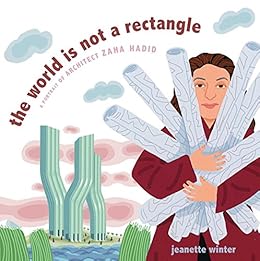
The World Is Not a Rectangle: A Portrait of Architect Zaha Hadid by Jeanette Winter

Published by Beach Lane Books

Summary:  Growing up in Iraq, Zaha Hadid loved to see patterns in nature and in her surroundings, and dreamed of turning those patterns into buildings.  She moved to London to study architecture, then, with a few friends, opened her own firm called Studio 9.  Her designs were so unusual that she had trouble convincing others that they could be built.  But she knew that the world is not a rectangle, and had the confidence to persevere.  Her determination paid off, and her unique buildings are now in cities around the world.  Zaha died in 2016, but Studio 9 lives on, continuing to make her dreams reality.  Back matter includes two pages of thumbnail sketches of the buildings mentioned in the text, identifying where they are located, a bit more biographical information, and a page of sources.  56 pages; grades K-4.

Pros:  This would be useful as a biography or an art book, maybe inspiring kids to design their own buildings from nature.  I really love Jeannette Winter’s style of art (she also illustrated The Secret Project), and am hoping that the Caldecott committee takes a look at both of her books this year.

Cons:  There were no photos of the buildings.