Published by Little, Brown Books for Young Readers
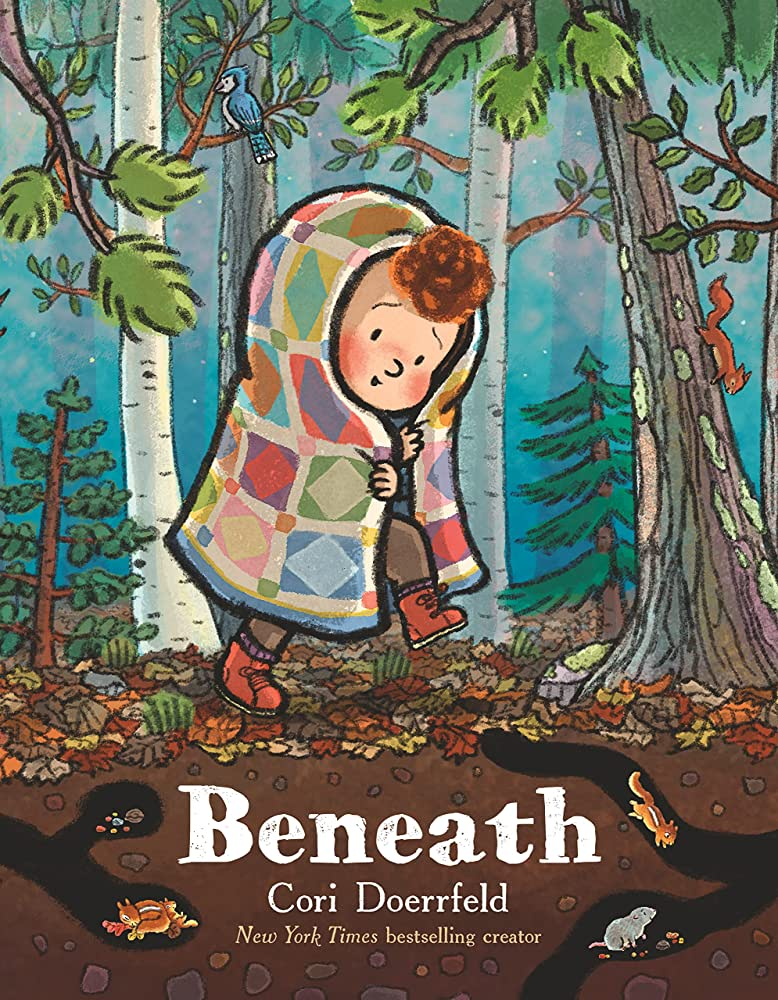
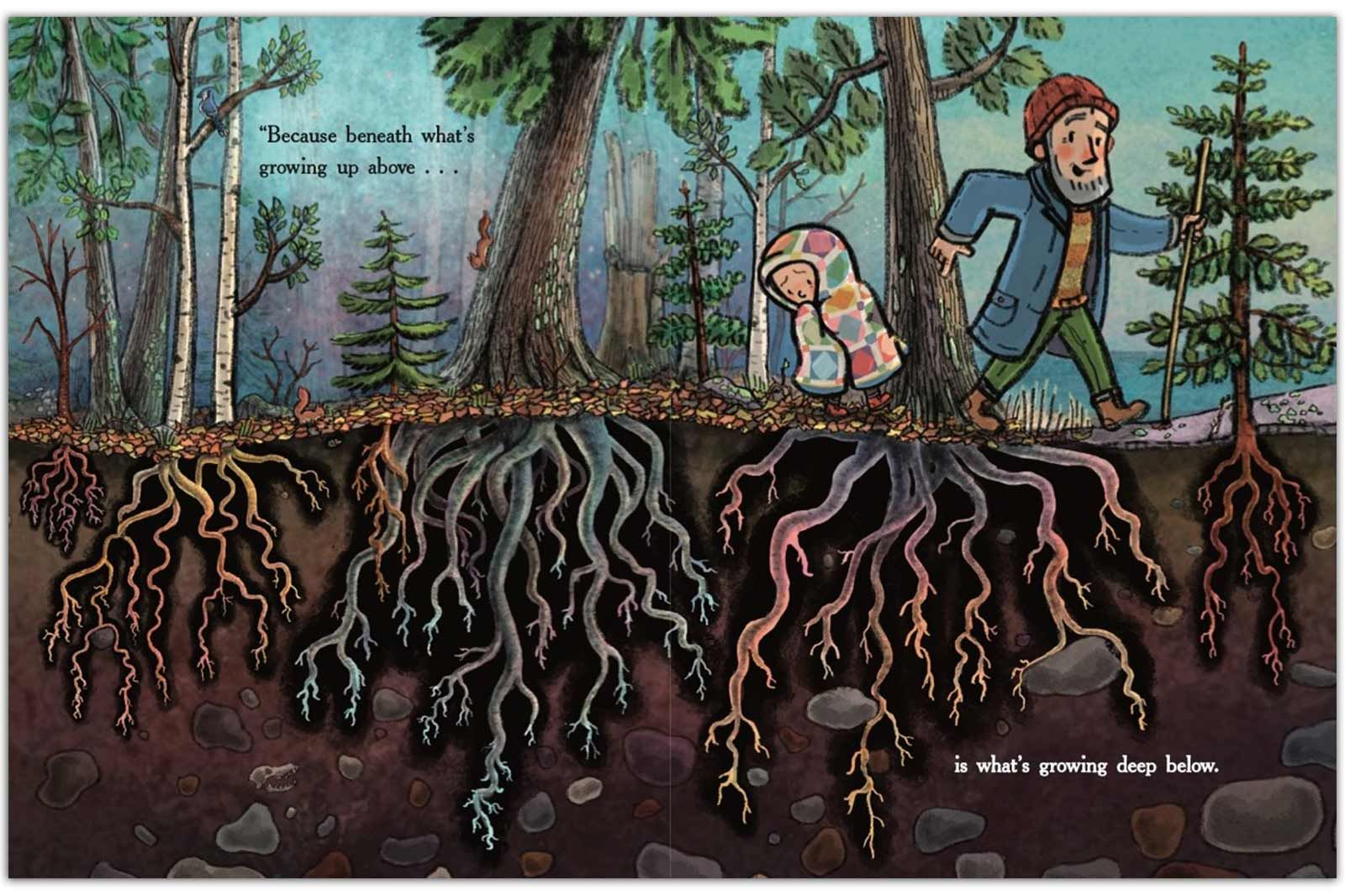
Summary: Finn is in a horrible mood, sitting on his bed completely covered by a patchwork quilt. Grandpa wants to talk, but Finn tells him that he won’t understand. Finally, Finn agrees to go for a walk, but only if he can stay underneath his quilt. “Don’t worry,” says Grandpa, “I’ll remember to think of what’s beneath.” As they walk, Grandpa points out that beneath the trees, there are roots; beneath the still water, there are fishing swimming around; beneath appearances are experiences, and beneath what’s different is what’s the same. “And sometimes,” says Grandpa, “Beneath someone who looks like they won’t understand…is someone who knows exactly how you feel.” The illustrations reveal that both Finn and Grandpa have broken hearts, maybe from the loss of the person who made the patchwork quilt. As night falls, the quilt is transferred from Finn’s head to Grandpa’s shoulders, and both of them are shown with hearts that are no longer broken. 40 pages; ages 4-8.
Pros: There are many layers to this little story, and it will take an astute reader of both the words and the illustrations to catch them all. Grandpa is truly a wise man who sees much more than meets the eye, and Finn is lucky to have him as they both process loss and grief.
Cons: It would be difficult to get everything from this book with just one reading.
 A Kids Book A Day