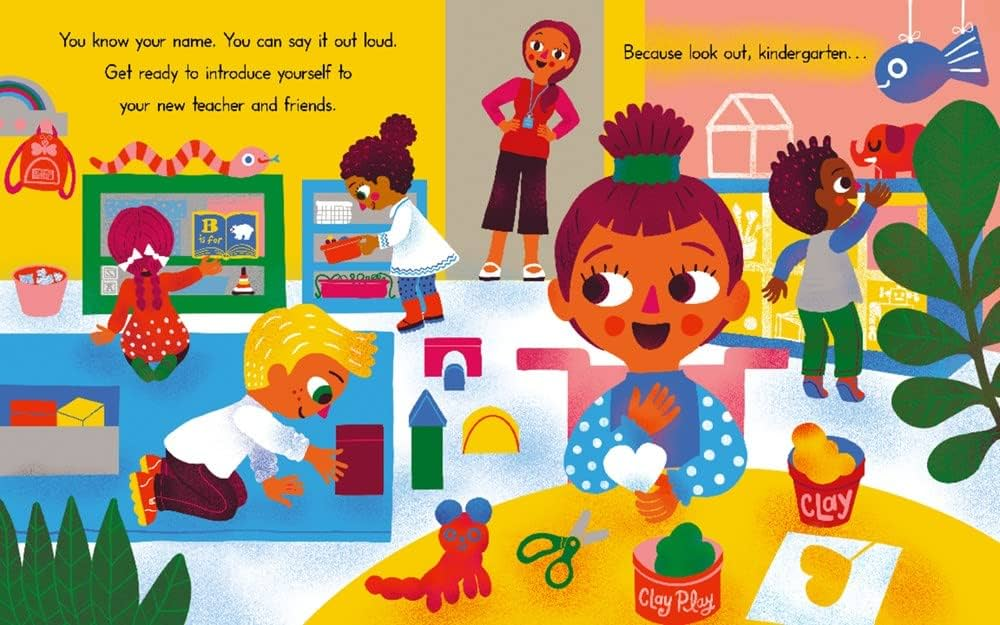
Summary: Are you ready for kindergarten? You’ll be practicing skills and learning new ones, like singing the alphabet, counting, creating art, and identifying shapes and colors. If you like to play with friends and be on the go, you’re ready. Practice saying your name so you can introduce yourself to your new teacher and classmates. Get ready for a fun year of kindergarten! Includes tips for caregivers about preparing kids for kindergarten. 32 pages; ages 4-6.
Pros: This cheerful and encouraging book with its bright, busy illustrations will have kids excited for the first day of kindergarten. The tips at the end make it a great resource for parents and other caregivers.
Cons: Feels like preschool kids are doing a lot of what’s portrayed here as being done in kindergarten.
Summary: Drew and Mia were born on the same day at the same hospital in Half Moon Bay, California. When Drew wouldn’t stop crying, the two babies were put in the same bassinet, which calmed Drew down. Mia and her family moved to Sacramento, but the summer after sixth grade, her family is back for a few months, and she and Drew, initially not knowing their history, become friends. Their story is told in chapters that alternate between Drew’s prose journal entries and Mia’s verse ones as each one faces family difficulties: Drew’s father’s mysterious illness seems to be worsening, while Mia is dealing with the heartbreaking loss of a home that the family has dreamed of for years. When they decide to train together for a half marathon, each one has individual reasons for running, but they support each other to keep going, both during their early morning runs and on the day of the race itself. The end of the summer means Mia is moving back home, but the friendship promises to keep going through potentially difficult days ahead. 288 pages; grades 4-7.
Pros: A compelling story of two kids dealing with some pretty serious family difficulties who show readers how to cope with courage and grace. Their two distinctive voices, with the alternating prose and poetry narratives, keep the story moving along at a good pace.
Cons: The story about the two kids meeting as babies was cute but felt like a bit of an unlikely coincidence.
Summary: Stray dog GoGo follows his nose to a night market in Taipei, filled with stands and carts selling all kinds of delicacies. He eats what he can find, following a rolling watermelon that takes him to a lost young girl sitting under a tree. GoGo encourages the girl to share the fun of the market with him, and there she finds her parents, who greet her with tearful hugs. As GoGo turns to leave, the family calls him back, and just like that, he has a new home. 32 pages; ages 4-8.
Pros: A heartwarming story told with a bouncy rhyme and colorful illustrations that capture the magic of the Taiwanese night market.
Cons: The illustrations feel a little too precise to fully convey the market’s energy.
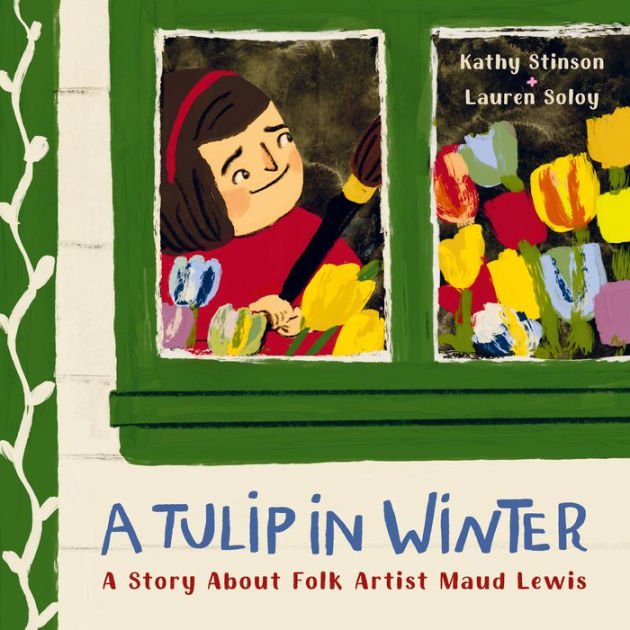
Summary: Maud Dowley was small and bent from a young age, a condition that her doctor could not explain. Still, she had a happy childhood in Nova Scotia, exploring the world of color through her painting. As an adult, though, life became tougher. Her parents died, her brother moved away, and no one would hire Maud because of her physical condition. Eventually she became the housekeeper, and later the wife, of local fish peddler Everett Lewis. Although they were poor, they found ways to get Maud paint and she continued with her art, and the two drove around the countryside selling fish and Maud’s paintings. Eventually, she became too disabled to paint, and Everett pushed her around in a wheelbarrow. After her death, the little house they had lived in, and that Maud had decorated with paintings, was restored and placed in the Art Gallery of Nova Scotia. Includes additional information and notes from the author and illustrator. 44 pages; grades K-3.
Pros: A fascinating story of a little-known artist who overcame physical disabilities and poverty to create beautiful works of art full of color and joy.
Cons: I wish there had been reproductions of some of Maud’s paintings included.
Summary: From a honey farm in Yemen to a circular garden in Senegal to an underwater biosphere in Italy, this book takes readers on a tour of innovative sustainable food production sites around the world. Each two-page spread has a rhyming couplet about the farm or other site, with illustrations showing people at work. A map at the end shows all the sites and provides information about sustainable farming and food justice. There’s additional information about each place, including a description and why it’s sustainable. Includes notes from the author and illustrator about how they were inspired to create this book. 40 pages; ages 4-8.
Pros: An inspiring look at sustainable food production that includes both indigenous practices and new technology. The built-in definitions and pronunciation guides make this a great resource for younger kids, who will also find the bright folk art style illustrations appealing.
Cons: Some additional resources would have been nice.
Summary: Each of the fifteen tiny animals profiled here has a superpower. Whether it’s the pygmy seahorse’s ability to camouflage, the axolotl’s regenerative powers, or the black-footed cat’s lethal aim, each animal has something that allows it to survive despite being so small. Each profile includes an illustration, a poem, and a comic strip that gives the animal the chance to show off its special abilities. The final poem asks readers to consider what their superpowers might be. 36 pages; grades K-4.
Pros: The cute poems, comics, and illustrations offer a fascinating look at some unique animal adaptations, and the last poem is a nice way to get kids thinking about what makes them unique as well.
Cons: I would have loved some additional information at the end, particularly about how the hydra stays young forever.
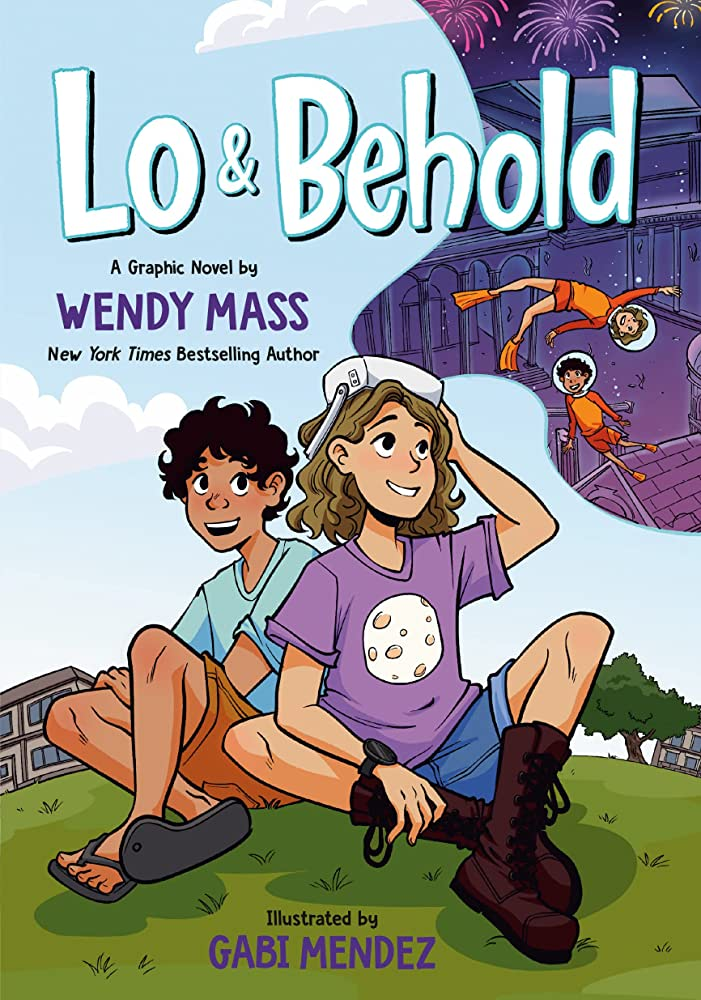
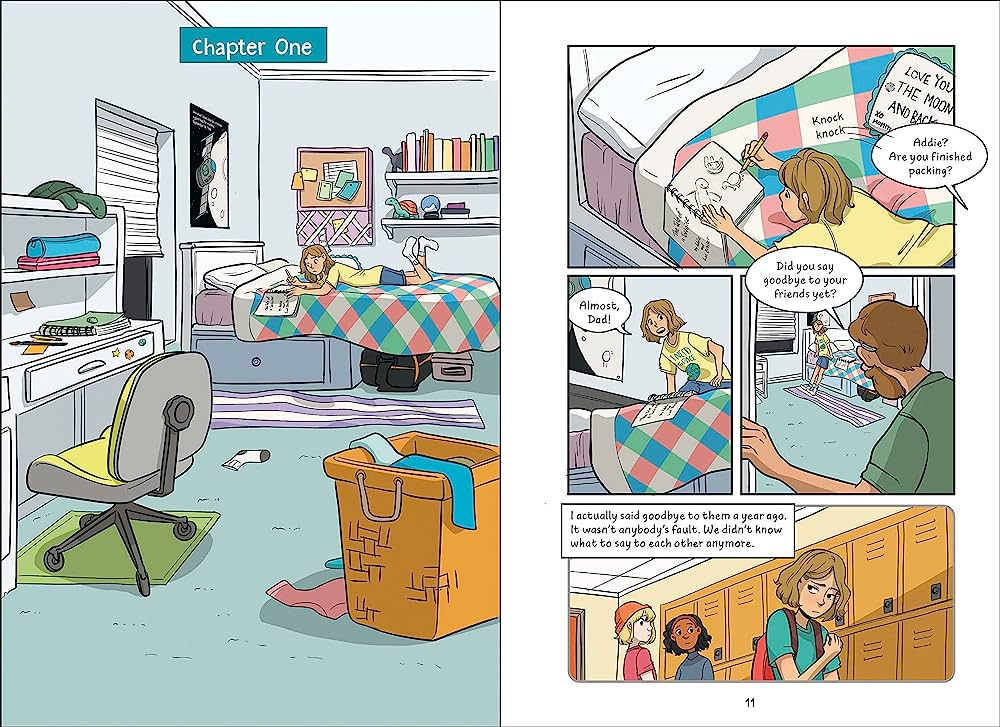
Summary: Addie remembers a happy childhood with two parents who loved her and encouraged her interests, but after her mom’s bike accident, she changed and no longer lives with the family. When Addie’s dad gets a chance to work on a virtual reality project at a university, he takes Addie with him to live on campus for the summer. There Addie discovers VR and the immersive worlds it can create, while tentatively making steps toward Mateo, her across-the-hall neighbor. Addie’s virtual discoveries help her uncover some truths about her real life, and by the end of the summer, she’s willing to confide in Mateo and to learn about a tragedy that occurred in his family. As Addie begins to accept the reality of what’s happened to her mom, her whole family finds a way to heal and move forward together. 224 pages; grades 4-7.
Pros: There’s a lot going on in this appealing graphic novel, and fans of the middle school realistic fiction graphic novel genre will be only too happy to discover Wendy Mass (and maybe try some of her excellent non-graphic novels). The artwork is inspired, particularly the way Gabi Mendez differentiates the virtual reality sequences.
Cons: This seems like a book that would appeal to elementary kids, but reviews seem to recommend it more for middle school, maybe due to the addiction storyline.
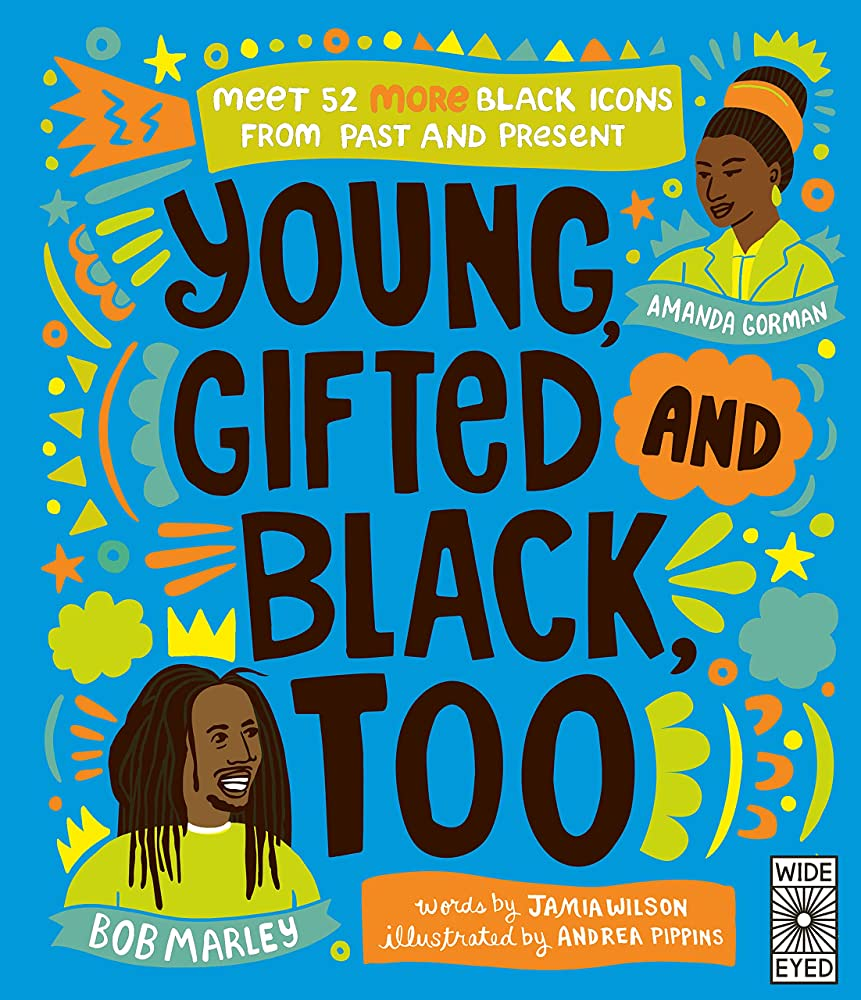
Summary: In this second volume of the series, profiles of 52 Black people from all over the world are arranged chronologically, beginning with Spanish poet Juan Latino (c. 1518-c. 1594) and concluding with Flint, Michigan activist Mari Copeny (2007-present). Each subject gets several paragraphs of text and a folk art-style illustration that includes objects that show the subject’s area of expertise. The introduction encourages readers to think about what contributions they want to make to the world. Includes a glossary. 64 pages; grades 2-6.
Pros: An excellent addition to Black history collections, with plenty of recognizable names like Thurgood Marshall and Coretta Scott King but lots of lesser-known ones that deserve to have some light shone on them. There’s lots of international representation and the illustrations do a nice job celebrating the subjects’ achievements.
Cons: The information is necessarily short, so additional resources will be needed for more in-depth research.
Summary: Alex has loved soccer since she was five, improving her game with her rec league teammates and their coach Jayda, who has always supported and inspired her. When Alex gets recruited by the elite Select team, she’s excited about the possibility of winning a national title and getting on a path to playing college soccer. But things are different on the Select team. Not only does Alex have to figure out a way to get to games in far-away towns, not easy with a somewhat irresponsible mother who works two jobs, but the coach turns out to be a bully. He favors the girls whose parents contribute financially to the team and unfairly punishes Alex, who’s on a scholarship. Alex isn’t afraid to stand up for herself, though, and as she slowly befriends some of her teammates, they begin to help each other in the face of Coach’s abuses. As the team piles up wins, their coach becomes more and more demanding, and a showdown between him and the team feels inevitable. Includes an author’s note about abusive coaches in youth sports a list of resources. 224 pages; grades 4-7.
Pros: This fast-paced sports story brings the issue of abusive coaches to light, with a courageous protagonist who must deal with difficult issues both at home and on the field. Her coach Jayda provides an example of good coaching while also serving as something of a stand-in parent.
Cons: There wasn’t a lot of subtlety in portraying who was good and who was bad. It would have made a more interesting story to give the coach a charming side rather than making him an abusive bully right off the bat.
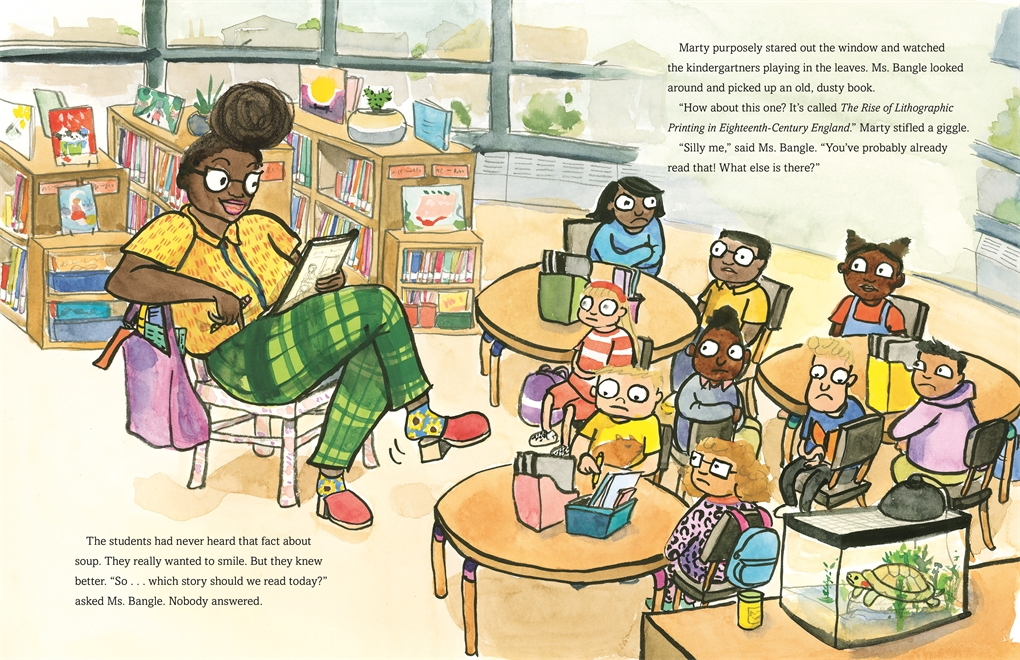
Summary: Everyone’s excited about the first day of school until they discover that beloved librarian Ms. Stack has moved away and been replaced by Ms. Bangle. The kids decide, sight unseen, that they will refuse to read with Ms. Bangle until Ms. Stack comes back. Even when they discover that Ms. Bangle is funny and has some great books, they hold fast to their resolve. Ms. Bangle is understanding and unperturbed, assigning them some of her library jobs while she hems a pair of pants instead of reading to the kids. After trying to write lesson plans, sort books, and take boxes down to the basement, the kids are ready to reconsider. They enjoy a good read-aloud, then check out books and settle down to read in the library. A few wonder if Ms. Bangle was pretending all along, but at this point, what does it matter? 32 pages; ages 4-8.
Pros: If you’re looking for a new book for the first day of library–or for a librarian role model–you may have found one with this entertaining book that will have kids clamoring to go to the library.
Cons: Ms. Stack–undoubtedly one of my contemporaries–looked to be about 102 years old.








 A Kids Book A Day