Saving Sunshine by Saadia Faruqi, illustrated by Shazleen Khan

Published by First Second

Summary:  Pakistani American twins Zara and Zeesh are constantly fighting, despite sharing scientific passions, Zara for animals and Zeesh for astronomy.  When their parents take them to Key West for a medical conference where their doctor mother will be honored, the two bicker the entire way down.  Exasperated, their parents take away their phones, telling them that they must spend some time together.  Without the distractions of technology, the two eventually find and help rescue a stranded loggerhead sea turtle.  Woven into the main story are incidents of prejudice and racism, including flashback scenes showing Zara’s decision to start wearing hijab, and the bullying that led to Zeesh’s quitting the space club.  224 pages; grades 3-7.

Pros:  This graphic novel seamlessly incorporates the experience of being Muslim and Pakistani American into a universal tale of sibling rivalry and devotion that many readers will connect with.

Cons:  When Zeesh gets annoyed at people always asking where he’s from (he was born in the US), both his dad and later, the white vet dismiss his feelings.
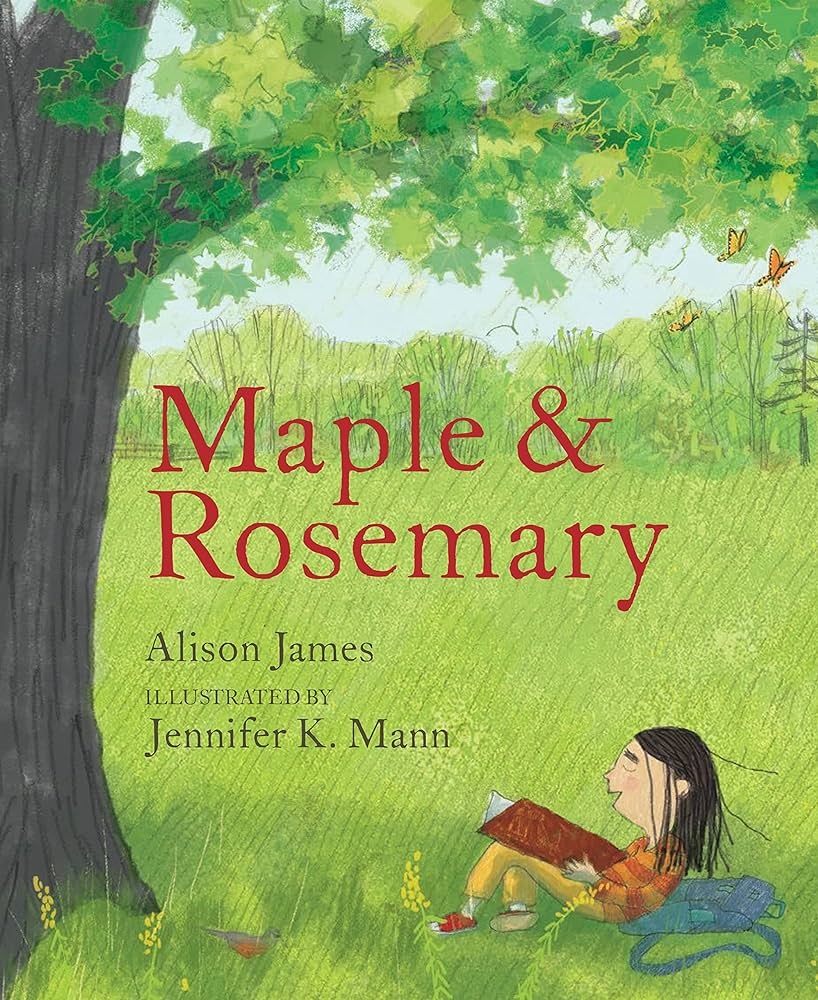
Maple & Rosemary by Alison James, illustrated by Jennifer K. Mann

Published by Neal Porter Books

Summary:  Maple is a lonely tree, surrounded by evergreen cedars and pines who have no time for a tree that loses its leaves for half the year.  Rosemary is a girl who feels friendless and comes to Maple to find solace.  As the years go by, their friendship grows, and each teaches the other.  There comes a day, though, when Rosemary no longer comes to visit.  Maple is lonely, although by now, other maples have grown from her seeds.  One day, a grown-up Rosemary returns, now a teacher who brings her students to meet Maple.  Maple loves the visits year after year, until Rosemary is old and visits by herself.  Maple gives her a stick to lean on, and the two celebrate their friendship, with Maple realizing that true friends are with you forever.  48 pages; ages 4-8.

Pros:  A wonderful celebration of both trees and friendship, richly illustrated to show the beauty of Maple at every season.

Cons:  The ending was–pardon the expression–a little sappy.

The Wild Robot Protects written and illustrated by Peter Brown

Published by Little, Brown Books for Young Readers

Summary:  Everyone’s favorite robot is back.  At the end of The Wild Robot Escapes, Roz had finally returned to the beloved island that she made her home in The Wild Robot.  Now that home is being threatened by the poison tide, a toxic substance in the ocean that is sickening and killing animals.  When it reaches her island, Roz decides she must travel north to find the legendary shark who is said to have the power to stop the poison tide.  After discovering that her new body is waterproof, Roz walks and swims through the ocean until she finds not only the shark but the source of the poison, which turns out to be a substance created during the mining process for minerals used to make robots.  A lengthy battle ensues that results in the destruction of the mining operation and almost the destruction of Roz.  She survives, though, and makes it home to meet her new grandchildren/grandgoslings.  320 pages; grades 3-7.

Pros:  I don’t usually review three books in a series, but I had to find out what was new with Roz and was not disappointed.  Peter Brown explores the themes of home and the interconnectedness of life (to quote from his author’s note) in an exciting adventure that sees the wild robot exploring the ocean depths and making new friends with the animals she meets there.

Cons:  As in the other two books, I kind of skimmed through the battle scenes, my least favorite part of the story.

Autumn Peltier, Water Warrior by Carole Lindstrom, illustrated by Bridget George, foreword by Autumn Peltier

Published by Roaring Brook Press

Summary:  The narrator of this story is water, which tells how humans valued and respected it for a very long time.  As that started to change, some of the women who had traditionally cared for the water began to make their voices heard. One of those was Grandma Josephine, who walked miles around the Great Lakes to honor the water.  Her great-niece Autumn took up the work after Grandma Josephine passed on.  The last page invites readers to consider what they will do to protect Earth’s water.  Includes additional information about Josephine Henrietta Mandamin and Autumn Peltier, who began her activism at the age of 12; also, a list of resources and a glossary.  40 pages; grades 2-5.

Pros:  Poetic text and beautiful water-inspired illustrations combine to tell a story of indigenous activism that encourages kids to find ways to protect the environment.

Cons:  I found the book quite confusing before I got to the back matter.  Kids would need a pretty thorough introduction before reading this.

The City Tree by Shira Boss, illustrated by Lorena Alvarez

Published by Clarion Books

Summary:  Dani lives in a city apartment building with a big hole in front of it.  One day, a truck pulls up with a tree that gets planted in that hole.  The tree brings positive changes to Dani’s world, as birds’ chirping replaces traffic noise outside her window, and the sound of rustling leaves adds a calming note to the busy pace of the city.  Although Dani enjoys the bigger trees in the park, her tree is special.  It changes with the seasons and with different types of weather.  Dogs and people passing by are not always kind to the tree, so Dani and her friends learn how to help it, and in return, the tree becomes an important part of the neighborhood.  Includes additional information about how street trees help people, how people can help them, and a list of resources.  40 pages; ages 4-8.

Pros:  A lovely introduction to the benefits of urban trees, with brilliantly colored illustrations filled with details of Dani’s neighborhood that kids will enjoy tracking from one page to the next.  The back matter makes it a great resource for all ages.

Cons:  The tree seemed to grow at a supernaturally fast rate.

The Mona Lisa Vanishes: A Legendary Painter, A Shocking Heist, and the Birth of a Global Celebrity by Nicholas Day, illustrated by Brett Helquist

Published by Random House Studio

Summary:  When the Mona Lisa was stolen on August 21, 1911, the Louvre was a sleepy museum where guards sometimes left their posts to take naps or get a snack, and the Mona Lisa was just another Renaissance portrait.  The theft changed everything, becoming a detective story that captivated a global audience, and making the Mona Lisa the most famous painting in the world.  Alternating between the 20th-century whodunit and the 16th-century tale of Leonardo da Vinci and Lisa Gherardini, the story captures many details of both pre-World War I Europe and the Renaissance.  Includes 16 pages of sources and an index.  288 pages; grades 5 and up.

Pros:  Holy Isabella Stewart Gardner Museum!  I was engaged immediately by this impeccably researched and humorous tale that takes readers on a roller coaster ride of (botched) detective work and life with the original Renaissance man.  Complemented perfectly with art by–Lemony Snicket!–Brett Helquist, this is sure to be a serious contender for some awards.

Cons:  I struggled to keep straight the many characters with unfamiliar French and Italian names.


Two books about mindfulness

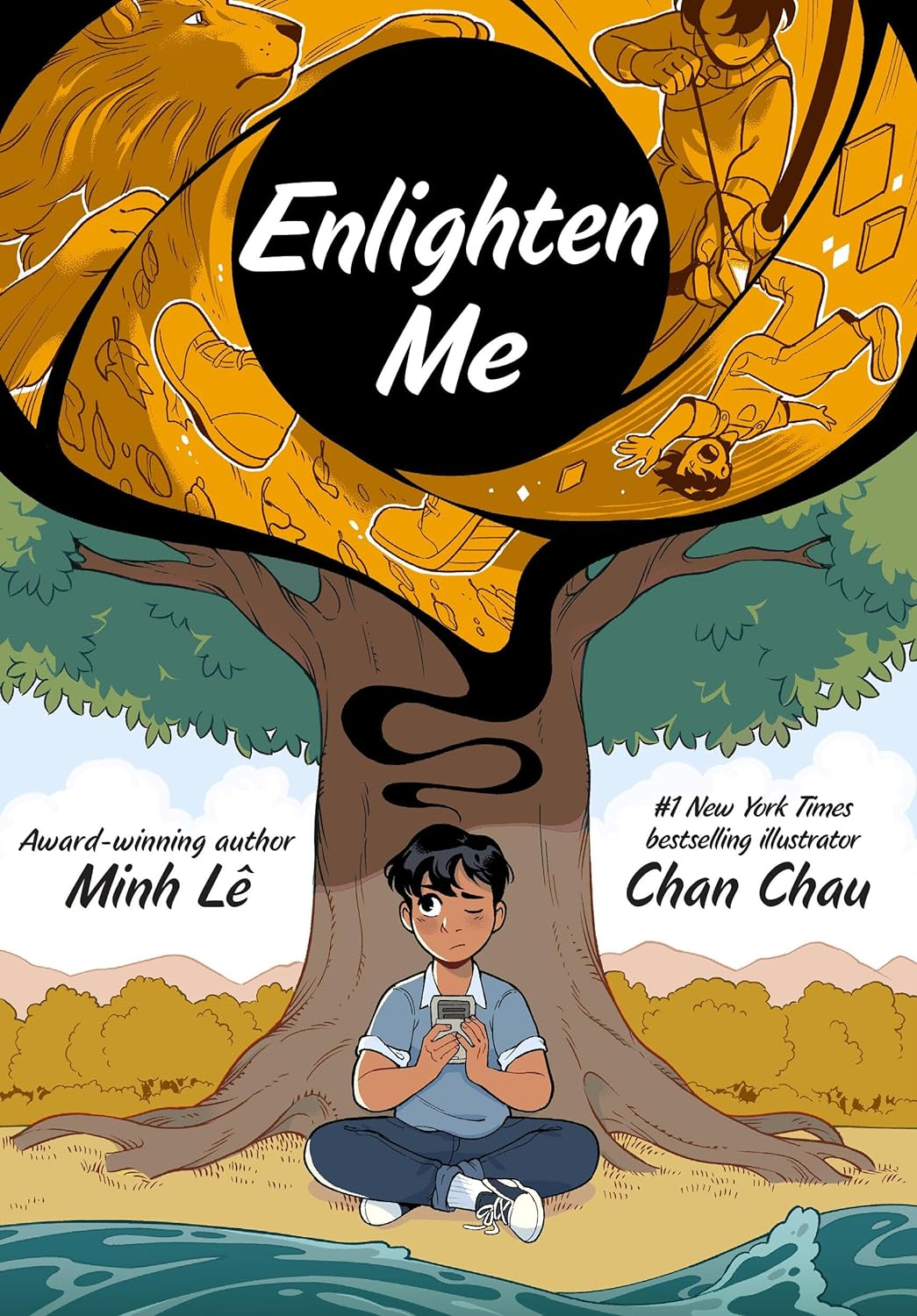
Enlighten Me by Minh Lê, illustrated by Chan Chau

Published by Little Brown Ink

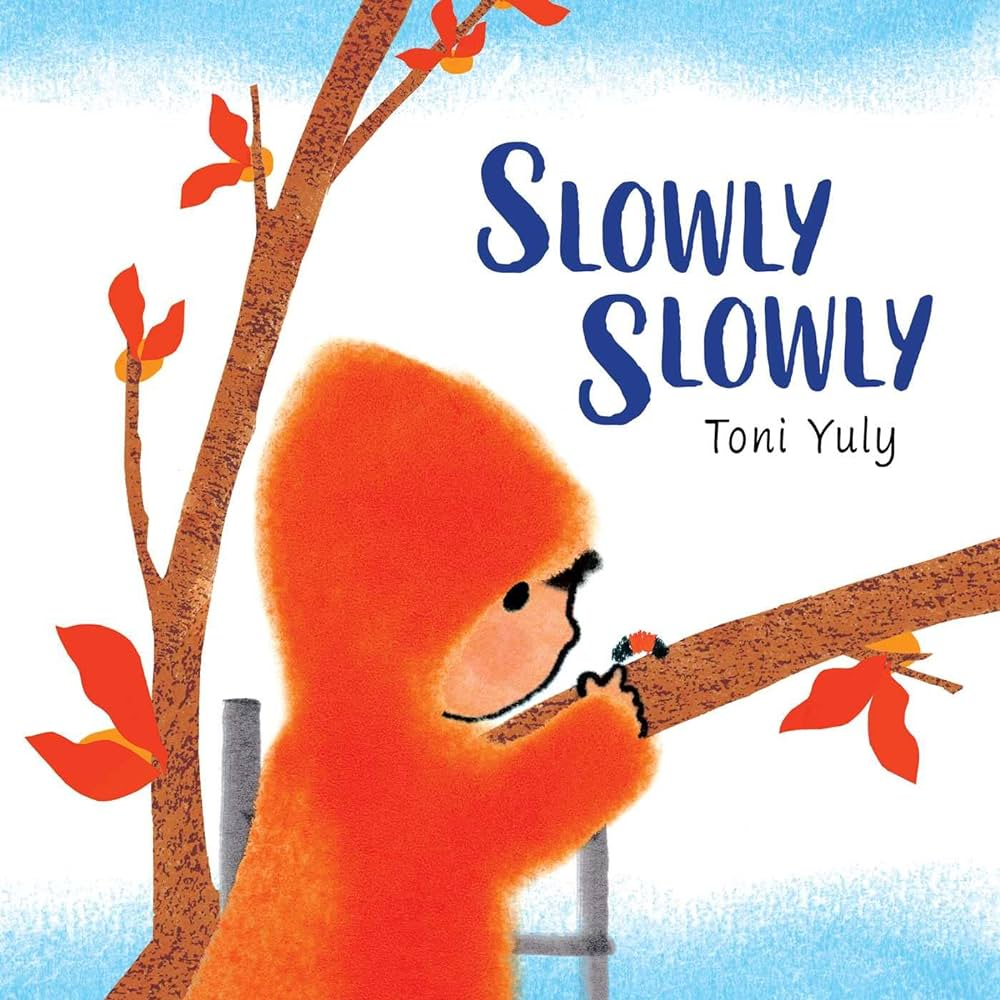
Slowly Slowly by Toni Yuly

Published by Atheneum Books for Young Readers

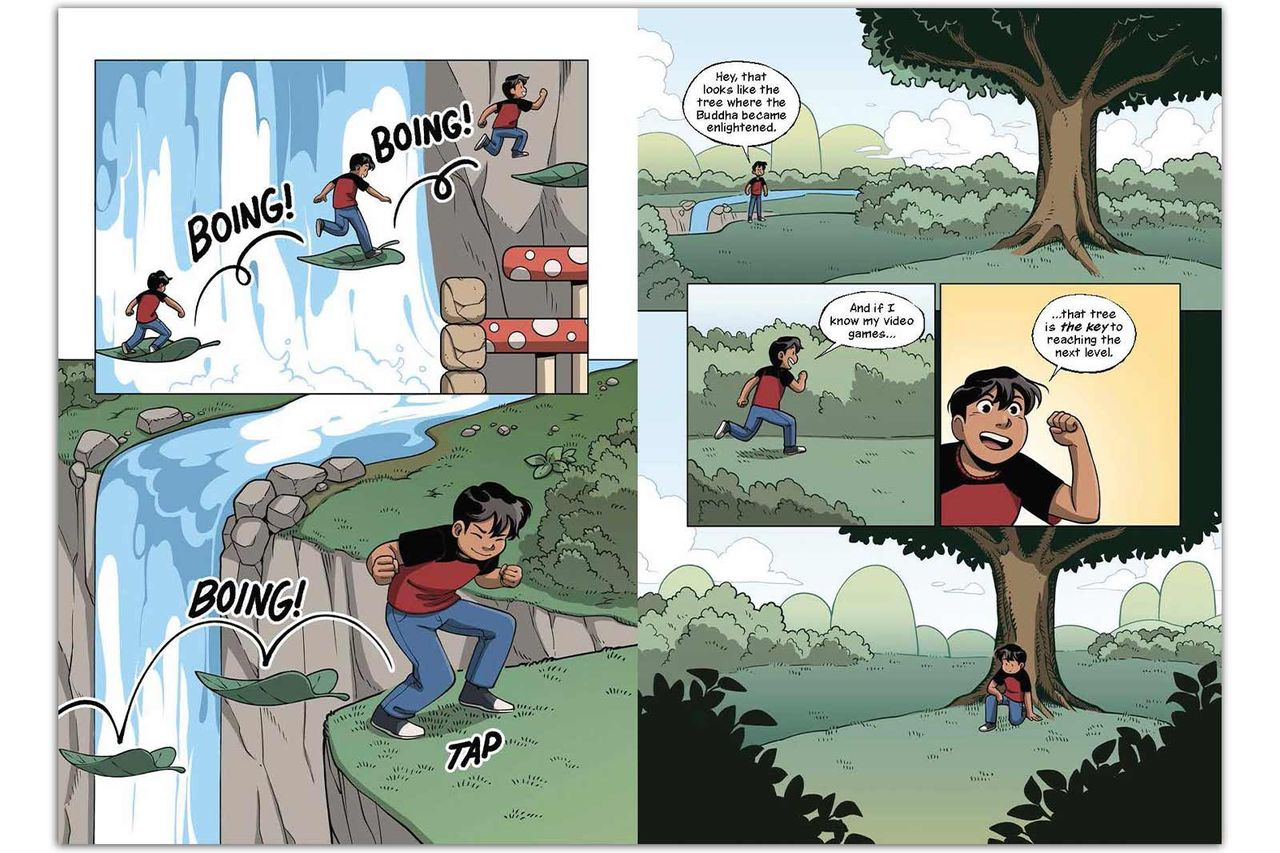
Summary: Binh and his family are off to a silent Buddhist retreat in Enlighten Me. During meditation times, Binh struggles with a recent memory of racist bullying at school. When he fought back, he ended up being the one to get in trouble. In between meditation sessions, a monk named Sister Peace shares stories about the Buddha with the kids that teach Binh some lessons about dealing with his issues. Those issues don’t get resolved, but by the time the family is heading for home, it’s clear that Binh is seeing things in a new light.

“When you slow down…you see more,” begins Slowly Slowly, as a child and dog explore the natural world. They observe winter turning to spring, and a persimmon tree slowly, slowly, slowly, slowly, slowly, slowly, slowly, slowly makes persimmons. With each page of “slowly”, readers can look for other changes going on in the child’s world. Enlighten Me is 140 pages; grades 4-7; Slowly Slowly is 40 pages; ages 4-8.

Pros: Both books focus on mindfulness through beautiful artwork and kids’ experiences. Minh Lê uses Binh’s story and love of video games to tell some tales of the Buddha while offering some kid-friendly insights Binh has about meditation and enlightenment. Readers of Slowly Slowly will want to take the time to notice all that is happening in the busy yet peaceful illustrations and to reflect on how slowing down can help us notice the world around us.

Cons: Both books are pretty spare, offering more of an opportunity for reflection than a fleshed-out story.

National Monuments of the U.S.A. by Cameron Walker, illustrated by Chris Turnham

Published by Wide Eyed Editions

Summary:  It all began in 1906 when Theodore Roosevelt made Devil’s Tower in Wyoming a National Monument.  Now there are over 130 such places, given the designation of National Monument for their historical, cultural, or scientific significance.  This book looks at some of them, divided geographically, with a map at the beginning of each section showing where they are located.  Two-page spreads offer additional facts presented in ways that invite readers to explore, whether it’s with a visit or additional research.  Includes a list of National Monuments by state and a conclusion that invites readers to think about creating their own monuments.  112 pages; grades 2-5.

Pros:  A fun book to browse with inviting text and retro style illustrations that will have kids making lists of places to visit across the United States.

Cons:  The font on the spreads was a little too small.

Mascot by Charles Waters and Traci Sorell

Published by Charlesbridge

Summary:  Six eighth graders and their teacher take on the topic of racist mascots when they are assigned to a debate about their town’s Braves mascot, which often inspires face paint and tomahawk chopping at sports events.  At first, only the girls are opposed: Callie, a member of the Cherokee nation and Black; Priya, the Indian American editor of the school paper; and Tessa, a White girl who has been homeschooled through seventh grade.  The boys mostly just want to enjoy the local teams, but eventually Franklin, who is Black, joins the girls in their campaign and loses Luis’s friendship in the process.  Sean’s family is struggling with poverty but has long supported the Braves and opposes changing tradition.  As the school year draws to a close, tensions mount as the anti-mascot campaign kicks into gear and the kids learn more about what is most important to them and to their families.  Includes lists of Cherokee and Salvadoran Spanish words used in the text and additional information about mascots and taking action.  256 pages; grades 4-8.  

Pros:  A timely issue is explored through the voices of a diverse group of middle school kids, all of whom are presented sympathetically with realistic reasons for their various points of view.  A quick read that could easily inspire students to look around them to see what might need to change in their own communities.

Cons:  The story was extremely agenda-driven; the novel-in-verse format didn’t allow for much character or plot development outside of the mascot issue.

Two books about Christmas and teamwork

Otto the Ornament by Troy Cummings

Published by Random House Books for Young Readers

Elves Are the Worst! by Alex Willian

Published by Simon and Schuster Books for Young Readers

Summary: Otto the Ornament knows his dazzling looks should earn him a front and center position on the Christmas tree. When the other ornaments try to take him down a notch, Otto goes looking for another tree. His journey into the world leaves him battered, without his former shine and glitter. A chance encounter with a familiar ornament sends Otto back home where he’s happy to find a place on the tree and simply reflect some of the holiday light onto the other ornaments.

The goblin from Elves Are the Worst! may be familiar to those who have read Alex Willian’s books declaring unicorns, dragons, and yetis as the worst. Elves, he tells the reader, may seem hard-working and perfect, but in reality, they hang out in trees baking cookies, pour bowls of the world’s loudest cereal, or just sit on a shelf all day. When he stops by the North Pole to show that a goblin can do what the elves there do, he learns that caring for reindeer and making toys are actually pretty tough tasks. Elves aren’t perfect, after all, just good at the teamwork needed to get everything ready for Santa’s big night. Both books 40 pages; ages 4-8.

Pros: Two fun, cartoon-style books for the holidays that deliver their message about playing well with others with plenty of humor. Kids will be delighted to find either Otto or a bunch of elves under the tree.

Cons: Probably not destined to become holiday classics.