I started my time in Maine at the Wells Beach Powwow. Although it was held in Maine, this event was sponsored by the New Hampshire Intertribal Native American Council, and most of the participants were from New Hampshire. I recommend attending any powwow if you have the opportunity, since it’s a unique way to witness contemporary Native culture.
The powwows I went to opened in the morning, with booths selling art, crafts, and food. Dancing began at noon with the Grand Entry, in which all the dancers and flag bearers entered the powwow ring, usually with the American flag, tribal flags, and maybe a POW flag. The Wampanoag powwow I attended had a drum roll call, with the four drumming groups each playing a solo before the dancing began. After the Grand Entry, there’s a dance honoring veterans and their families. Then there might be dances for children, dances for elders, dance competitions, a blanket dance to raise money, and dances in which everyone is invited to join the circle.
I found it helpful to learn some powwow etiquette before I attended. There will likely be a master of ceremonies who may go over some rules about taking pictures, when to stand or sit, who can join various dances, and more. I felt that the powwows were really more for the participants than the audience, and I’ve opted not to post photos here.
Although I only made it to three powwows this summer, there were a number of others held in all the New England states. I recommend Powwows.com to find one near you. If you’re in New England, the Massachusetts Center for Native American Awareness (MCNAA) has a calendar that includes powwows and other Native events from all around New England.
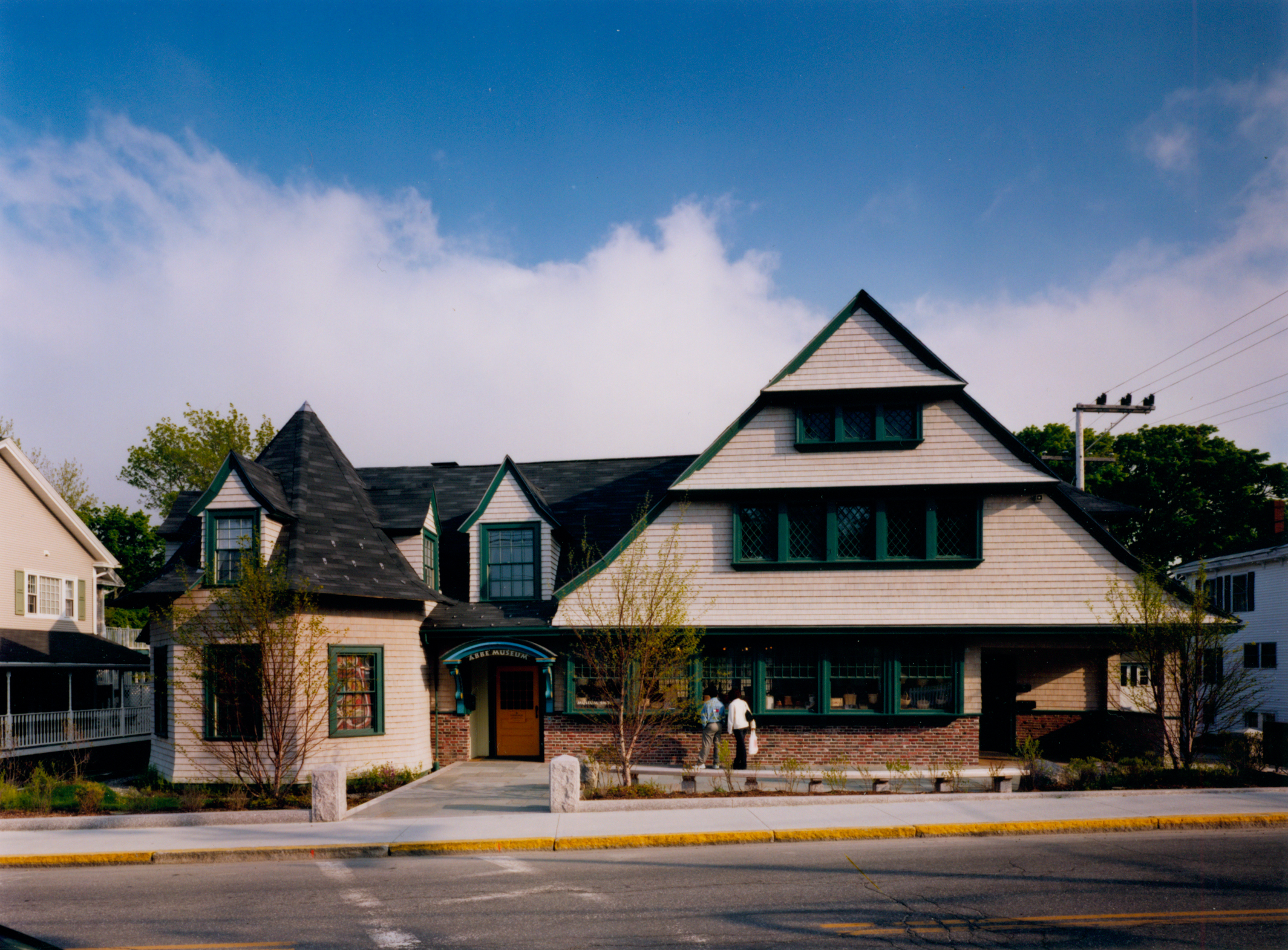
From Wells, I drove up to Bar Harbor to visit the Abbe Museum, which turned out to be one of my favorites. Founded in 1926 by physician and summer Maine resident Dr. Robert Abbe, it became a Smithsonian affiliate in 2013 and has increasingly sought Native American collaboration and involvement. While I recommend paying admission and enjoying all the exhibits, there’s a room at the entrance that’s free. It includes excellent information on all of the Maine tribes, a good explanation of federal recognition of tribes, and an introduction to the decolonized approach the Abbe takes to presenting indigenous history.
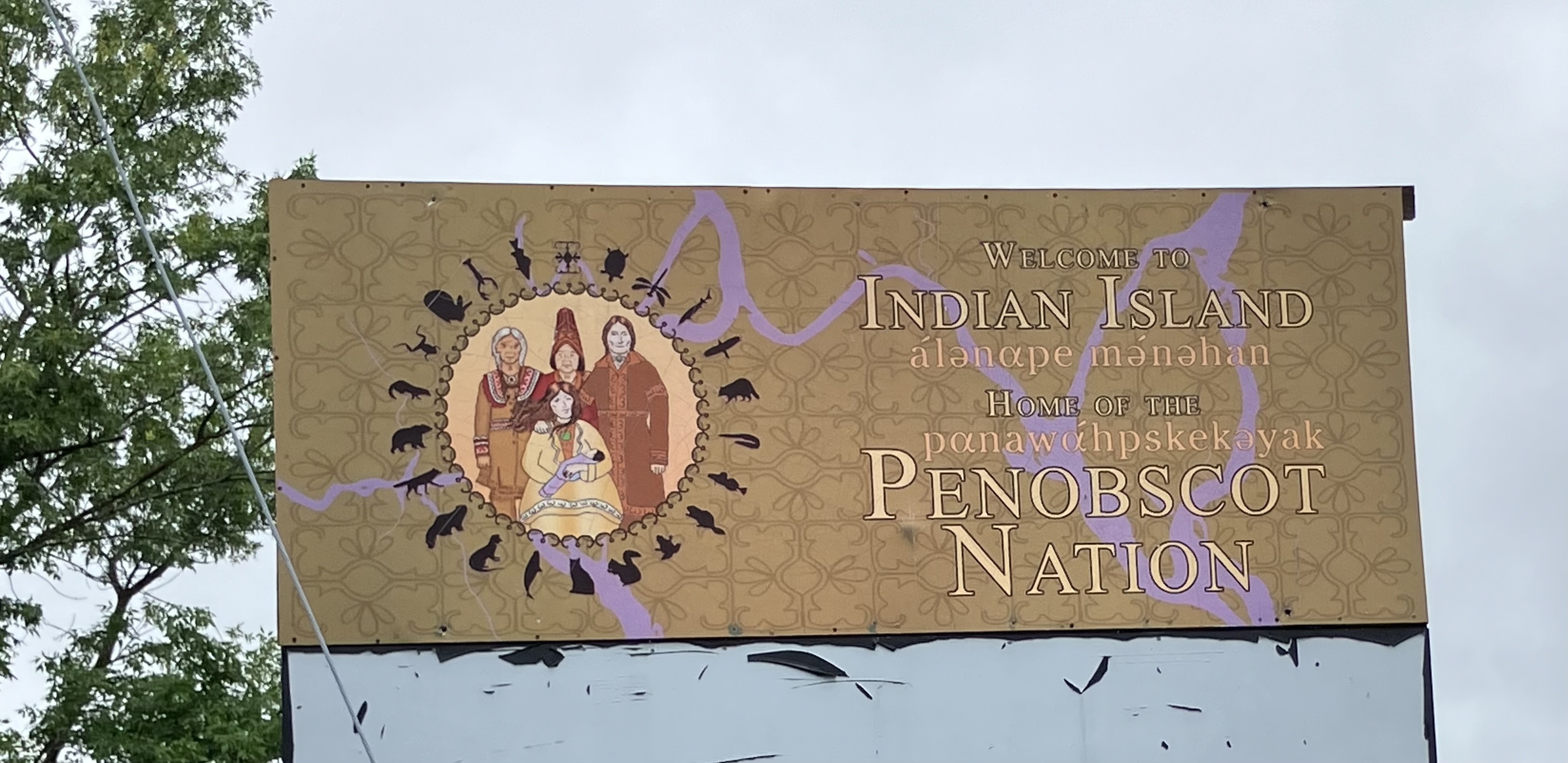
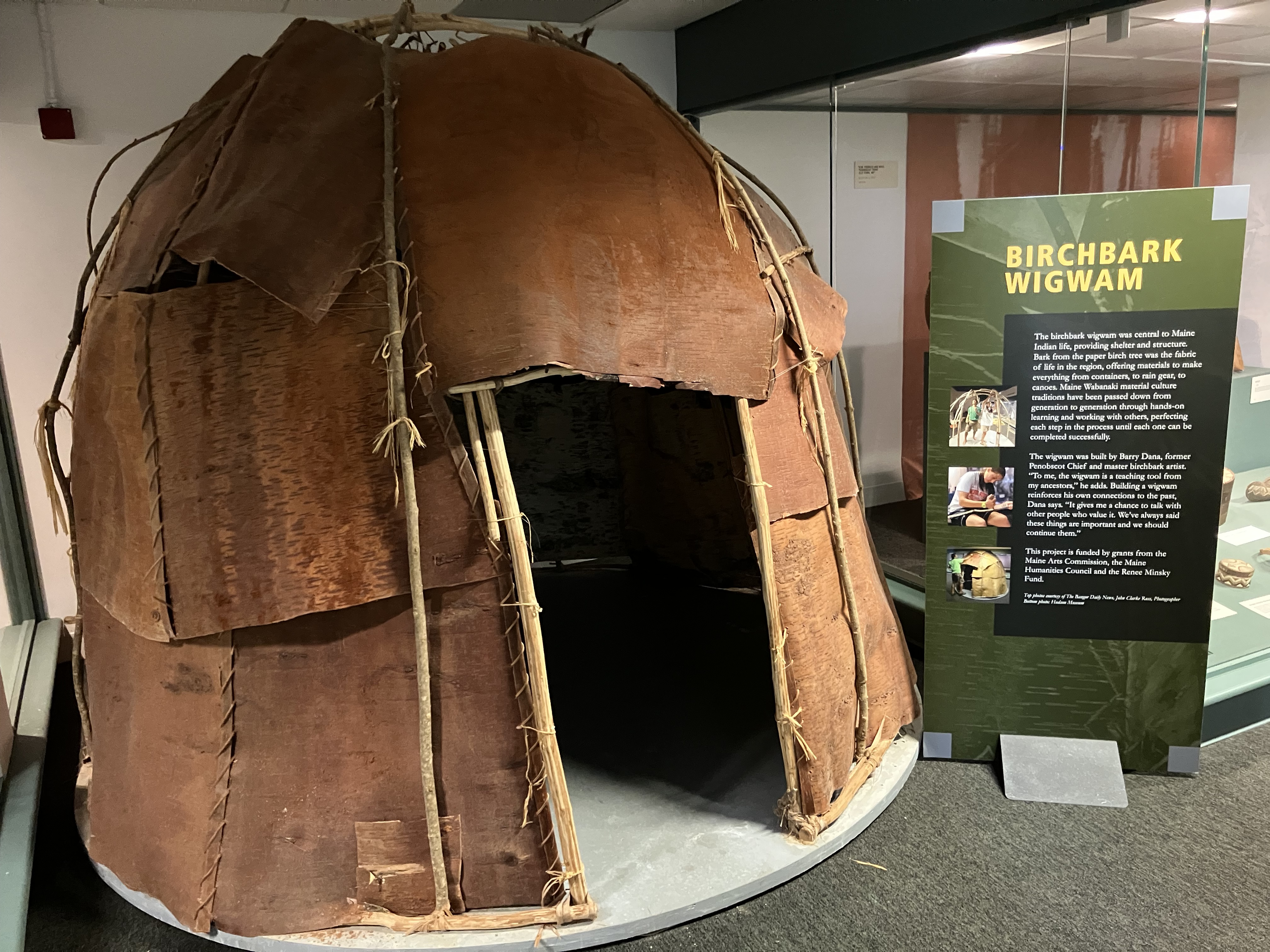
From there, I headed north to visit the Penobscot Nation, about 60 miles from Bar Harbor. I’ve been curious about this since I read the novel in verse Rez Dogs by Joseph Bruchac. It’s about a girl quarantining during Covid-19 with her grandparents on what is called the Penacook reservation, but which I think is modeled on the Penobscot one. I drove around the reservation a bit, then headed a few miles down the road to the Hudson Museum on the campus of the University of Maine in Orono. Admission is free, with two excellent but quite distinct galleries. One is about the five Maine Wabanaki tribes (Abenaki, Maliseet, Micmac, Passamaquoddy, and Penobscot), and the other looks at world cultures from different perspectives like food, clothing, and sacred practices, with artifacts from all over the world.
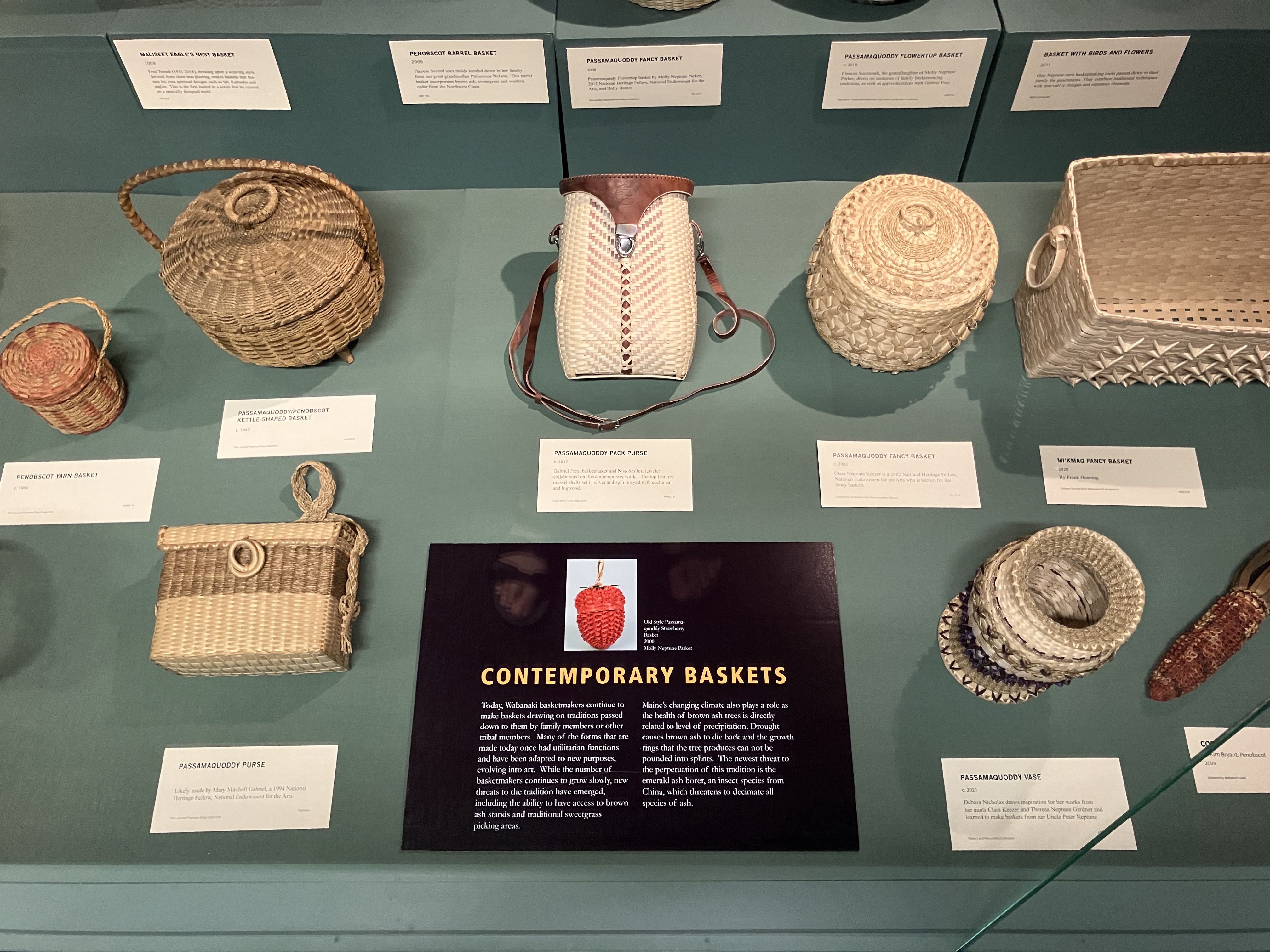
One excellent exhibit in the Wabanaki gallery is about basketry, focusing on the ash and sweetgrass baskets that are one of the best-known forms of Wabanaki art, now threatened by an invasive beetle that kills ash trees. Despite this, the baskets on display are a testament to the continuity of this art form to the present day. The First Blades of Sweetgrass by Suzanne Greenlaw is an excellent picture book about a contemporary basket maker passing along this art form to her granddaughter.
My last stop as I headed for home was the Mt. Kearsarge Indian Museum in Warner, NH. This museum was founded by Charles “Bud” Thompson, a white man who died in 2021 at the age of 99. From childhood, he was fascinated by Native Americans and collected artifacts from all over the country. As I mentioned previously, I preferred the museums that focus on local tribes and cultures, and that have ownership or strong input from members of those tribes. I found those museums in Connecticut, Massachusetts, Rhode Island, and Maine, which, not coincidentally, are the New England states with federally recognized tribes.
Books about indigenous people of Maine
Rez Dogs by Joseph Bruchac (Dial Books, 2021)
The First Blades of Sweetgrass: A Native American Story by Suzanne Greenlaw and Gabriel Frey, illustrated by Nancy Baker (Tilbury House Publishers, 2021)
Books about powwows
Bowwow Powwow by Brenda J. Child, translation by Gordon Jourdain, illustrations by Jonathan Thunder (Minnesota Historical Society, 2018)
Josie Dances by Denise Lajimodiere, illustrations by Angela Erdrich (Minnesota Historical Society, 2021)
Ancestor Approved: Intertribal Stories for Kids edited by Cynthia Leitich Smith (Heartdrum, 2021)
Powwow Day by Traci Sorell, illustrated by Madelyn Goodnight (Charlesbridge, 2022)
Finding My Dance by Ria Thundercloud, illustrated by Kalila J. Fuller (Penguin Workshop, 2022)
Tribes
Maine
Houlton Band of Maliseet Indians
Mi’kmaq Nation
Passamaquoddy Tribe
Penobscot Nation
Reservations and Trust Lands
Maine
Indian Township Reservation/Passamaquoddy
Pleasant Point Reservation
Mi’kmaq Nation Trust Land
Passamaquoddy Land Trust
Penobscot Land Trust
 A Kids Book A Day