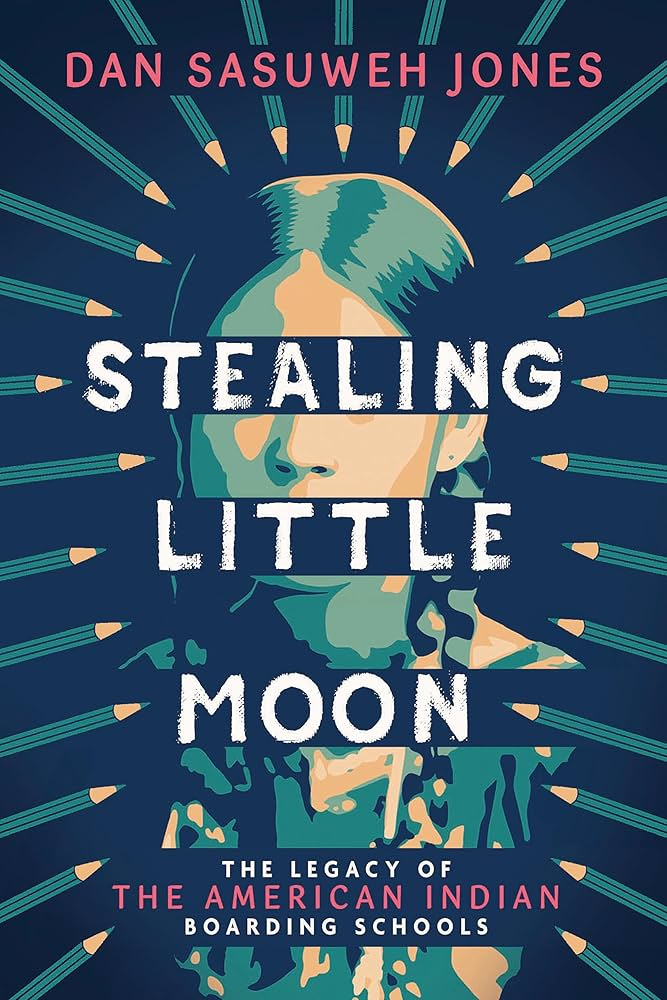
Stealing Little Moon: The Legacy of the American Indian Boarding Schools by Dan SaSuWeh Jones (Scholastic Focus, 304 Pages, grades 5-8). Dan SaSuWeh Jones tells the story of his family’s history with the Chilocco Indian Agricultural (boarding) School, beginning with the forcible capture of his grandmother Little Moon There Are No Stars from the Ponca reservation in 1885 at the age of four. The Chilocco school, run by Quakers, did not condone the physical abuse found at other Indian boarding schools, but it did use strict, military-inspired practices to force the students to assimilate to white culture. Little Moon There Are No Stars, renamed Elizabeth, stayed on for several years after her graduation to work as a school matron, and sent her own daughter there as well. By the time the author’s sister attended the school in the 1950’s, there had been many changes, becoming a vocational school that provided a positive experience for many (although certainly not all) of the students. The 1960’s and 1970’s saw political movements that helped the school and its students embrace their various cultures and languages. While the author didn’t attend the school, he worked there after it closed in 1985 as part of a maintenance crew trying to preserve the buildings and grounds. In his final chapter, he writes of the appropriateness that those buildings have crumbled, leaving the land to its natural state, a metaphor for the enduring nature of Indigenous cultures that have survived so much trauma yet still continue to live on. Includes an introduction by Denise K. Lajimodiere (Turtle Mountain Band, Chippewa), photos throughout the text, and a long list of additional resources.
Reading this book caused me to reflect on how much this blog has educated me and changed my views on American history. I’m not sure I knew anything about Indian boarding schools ten years ago, but I’ve learned from children’s books over the years, and this one added a lot to that knowledge. It’s masterfully written, weaving together a personal family memoir and the history of boarding schools in North America. The author writes unflinchingly about a multitude of abuses and deaths of children at many different schools, while at the same time acknowledging that some students had positive experiences and learned to embrace their heritage, particularly in the later years of the schools’ histories. The final chapters give hope that some of the many, many crimes and trauma committed against indigenous people are finally being at least brought to light and possibly, in some cases, addressed and healed. There are some horrific descriptions of child abuse, so be aware of that element when sharing this book with kids. I hope this book will be considered for awards, especially by the Sibert committee.
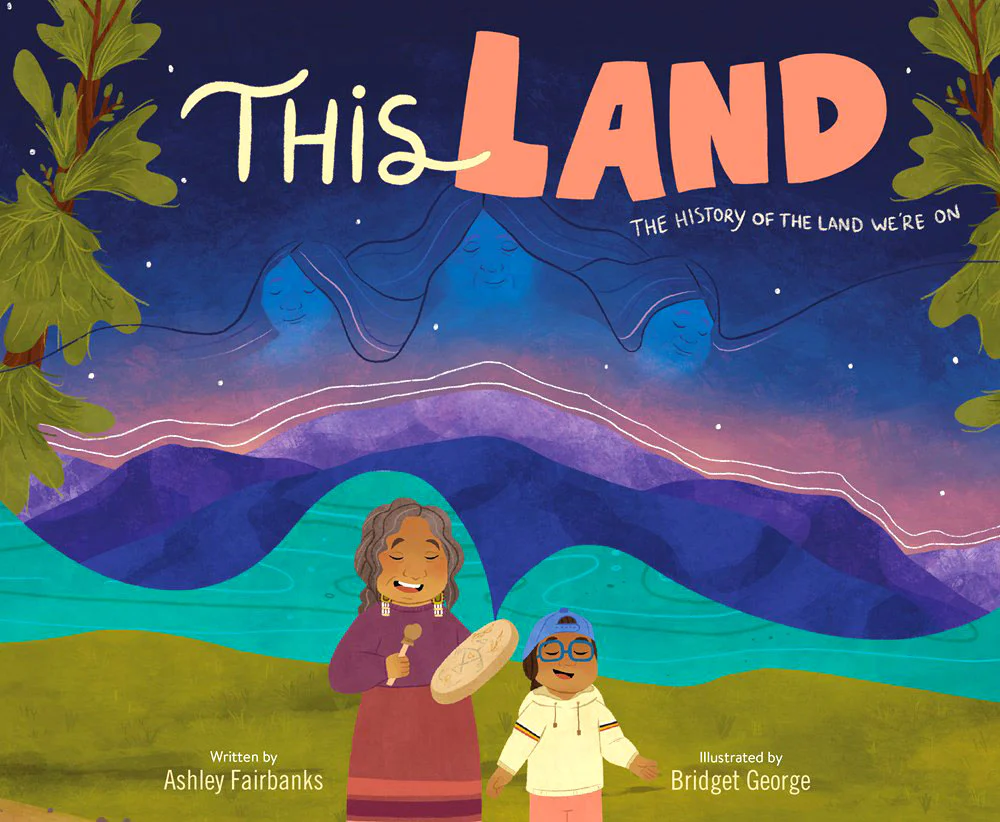
This Land: A History of the Land We’re On by Ashley Fairbanks, illustrated by Bridget George (Crown Books for Young Readers, 40 pages, ages 4-8). “This is my house. I live here with my family,” the narrator begins. “Before us, another family lived here.” Other families lived there, too, but further back in time, a whole community lived on the land before they were forced off by Europeans, something that happened all across the country. The narrator has a friend who is Anishinaabe (like the author and illustrator), and he and his grandma remind the boy of the Indigenous people who once lived there: their food, their songs, and mostly, the way they considered the land to be sacred. Now, as he travels around the U.S. with his family, the boy learns about different Indigenous groups who lived in those places and remembers how they once honored the land they were on. Includes additional information about land acknowledgement, discussion questions, and ideas for learning more about local Native people.
This straightforward story reminds readers to learn about the history of the land they now call home and recall that it once belonged to people who were forced to leave their homes. I really liked how the book acknowledges those who lived on the land of well-known sites like Mount Rushmore and New York City. I read in a review that the title calls to mind the controversy around the song “This Land Is Your Land,” a song that is considered problematic by many Indigenous people. I wasn’t aware of this and was reminded once again of how much I have learned from reading books for this blog.
 A Kids Book A Day
Reading about nature and weather can help children develop a sense of wonder and curiosity about the world, encouraging them to explore and ask questions about their environment.
LikeLike