Music and art

How Sweet the Sound: A Soundtrack for America by Kwame Alexander, illustrated by Charly Palmer (Little, Brown Books for Young Readers, 48 pages, ages 7 and up). Kwame Alexander’s poetry and Charly Palmer’s bright, bold paintings trace the history of Black music, beginning with drumming, dancing, and chanting in Africa, then moving to the gospel music and blues that grew out of slavery in America. Next comes jazz, which, along with the blues, leads to rock and roll, and finally, hip hop and rap. “Listen to the soundtrack of America/a symphony/of refuge and redemption/the sweet sound of a people/surviving and thriving/all the while learning/to love themselves/ by singing it LOUD and PROUD.” Includes six pages of “musical notes” that offer additional information about each musician along with a thumbnail portrait from the illustrations.

Music fans of all ages will appreciate this celebration of Black musicians who have made incredible contributions to American music. Every illustration feels like a party, and readers will have fun figuring out who’s who in them. Put this on the watch list for Caldecott and Coretta Scott King awards.
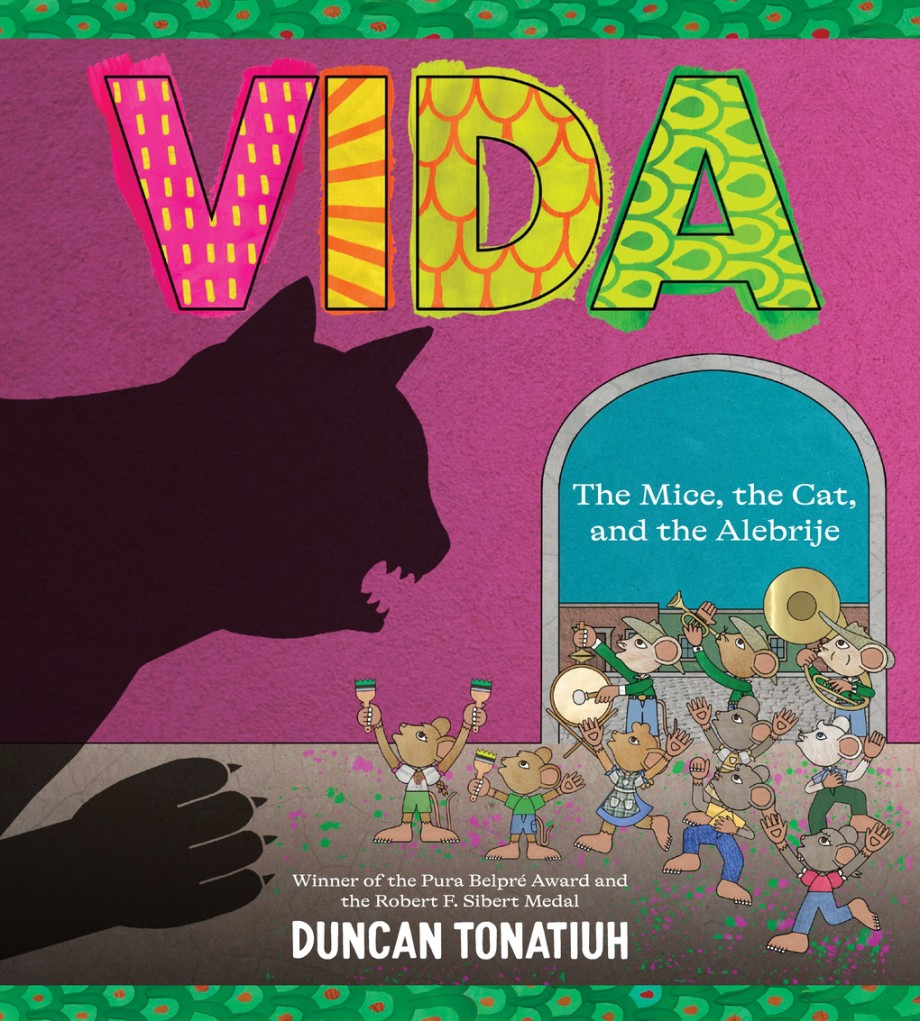
Vida: The Mice, the Cat, and the Alebrije by Duncan Tonatiuh (Harry N. Abrams, 48 pages, ages 5 and up). Mousetepec is a thriving mouse community with a vibrant culture, filled with art, music, good food, and fiestas. But one day a cat appears, and gradually the mice go into hiding, no longer able to engage in their enjoyable pursuits. Vida and her brother miss their old life and try to re-create it by making brightly-colored animals in their house. One night Vida has a dream about a fantastic creature called an alebrije, and when she wakes up, she knows how to scare the cat away. She gathers all the mice to make a huge creature like the one in her dream, covering it with brilliantly painted designs. When it’s completed, the mice lure the cat with a fiesta and loud music. The alebrije and all the noise terrify the cat, and Mousetepec is able to thrive once again. Includes an author’s note with information on alebrijes and Pedro Linares, the artist who created them. There’s also a note on the inspiration for Vida, which is a response to Aesop’s fable about belling the cat, and champions art and solidarity for overcoming evil forces in the world; also a glossary and pronunciation guide and a bibliography.

I read this book just hours after learning about the Fall of Freedom movement taking place this weekend, with artists all over the country creating works to protest what is happening in the U.S (you can read about it on my other blog). It’s a perfect complement to that, with the themes of art, community, and resistance, plus it’s an engaging story with plenty of cute mice and colorful creatures, plus it features Duncan Tonatiuh’s unique illustrations that manage to work in a few lessons about Mexican art. So win-win-win, and maybe a contender for an award or two.
Living with disabilities

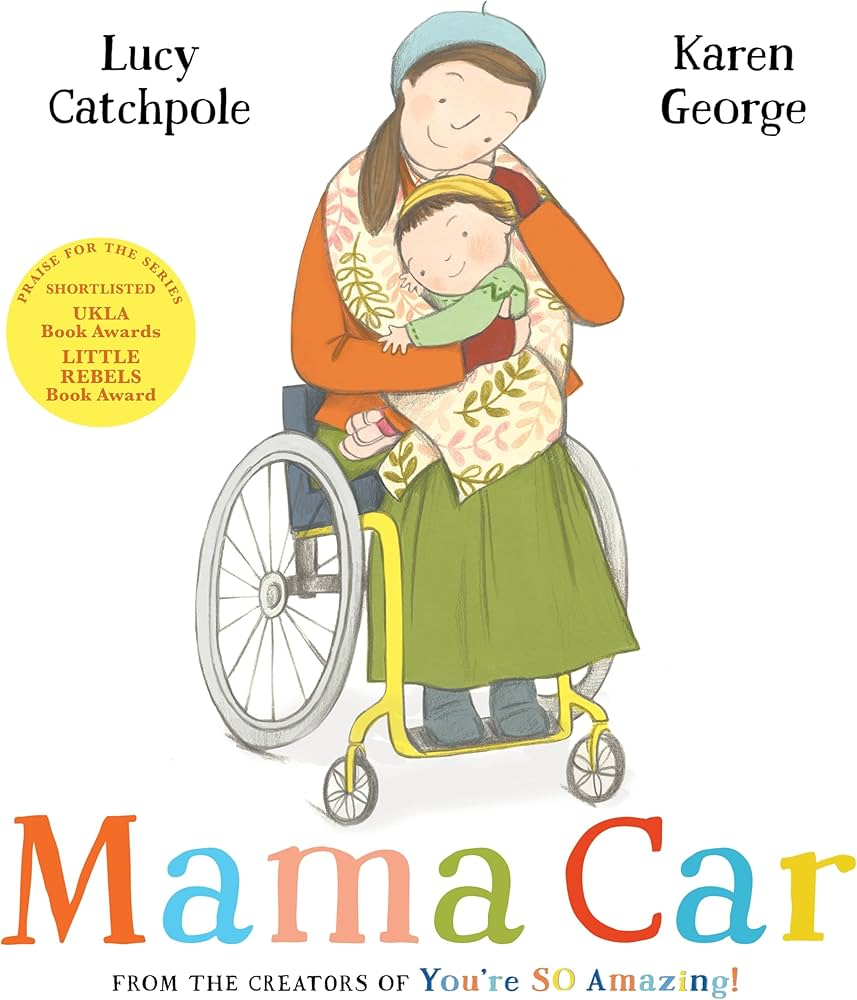
Mama Car by Lucy Catchpole, illustrated by Karen George (Little, Brown Books for Young Readers, 40 pages, ages 3-8). A young girl shows the reader her mother’s “Mama Car,” the wheelchair that helps her get around. The two of them like having expeditions, and they prepare for them together, moving around the kitchen to pack a lunch, then snuggling together in bed to eat it. Although the illustrations show that her father has only one leg, no mention is made of that, as he drives the family on a bigger expedition. When the girl falls off her tricycle, her mother is quick to reach her and take her on to her lap to comfort her. “The Mama Car has so many things, but the best thing is it has Mama.” Includes a note from the author about her own wheelchair and how it affects the way she parents her two daughters.

A great choice for starting a conversation about disabilities with the youngest readers, or helping kids with a parent in a wheelchair see themselves in a book. Reading this led me to learn more about Lucy Catchpole and her husband James, the dad in the book with one leg, who have written other books together about living with disabilities.

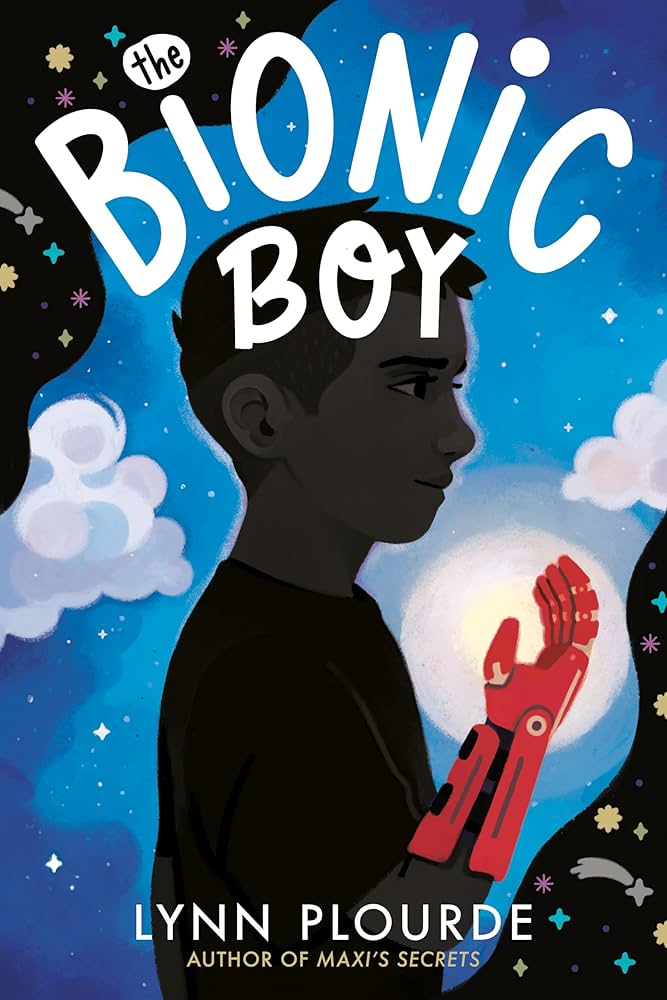
The Bionic Boy by Lynn Plourde (Nancy Paulsen Books, 208 pages, grades 3-7). Benji was born without hands and spent the first few years of his life in an orphanage before being adopted by his two fathers; a few years later, they adopted his younger sister Becka who has Down Syndrome. Benji used prosthetic hands when he was first adopted, but he struggled with them and has been afraid to try again. Inspired by both a veteran who lost parts of all four limbs in combat and Becka’s victory at the Special Olympics, Benji makes the decision to visit a prosthetist. Things go much better this time, and even a temporary hand made with a 3D printer gives Benji exciting new skills. He momentarily questions his decision when the misuse of his new hand results in an injury and the escape of the family cat, but Benji has learned to be resilient and is able to overcome these setbacks. The story ends with Hands Day, when Benji gets his permanent prostheses, making him feel like the superhero he’s always dreamed of being.

Benji’s story will be interesting to a wide range of readers, especially the parts where he works through his doubts about prosthetic hands and then goes through the process of getting them, all the while supported by his unique but loving family of two dads and a younger sister with Down Syndrome. I did feel like a lot of the dialog didn’t ring true, particularly between fifth graders Benji and his best friend Sam, to the point of being a bit cringey to read. And Becka’s constant cheerfulness and the way her speech was written (e.g., replacing all her r’s with w’s) made her character’s portrayal feel a bit stereotypical. Still, this is an upbeat story about kids with disabilities and will encourage readers to be resilient about facing their own struggles.

Slice of life picture books

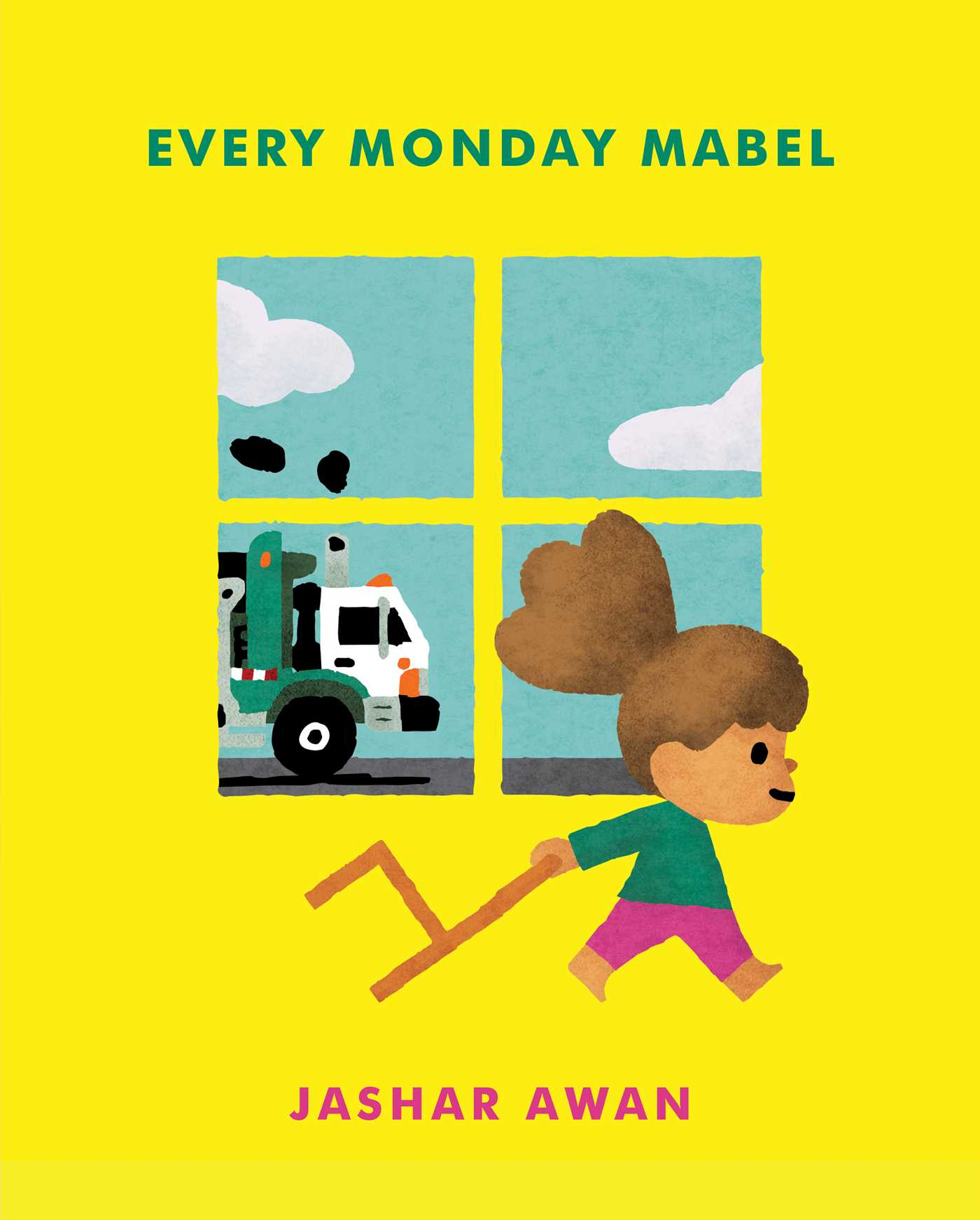
Every Monday Mabel by Jashar Awan (Simon and Schuster Books for Young Readers, 48 pages, ages 3-7). Monday is the best day of the week as far as Mabel is concerned, and the reader slowly gets to find out why as Mabel wakes up early, grabs some cereal, and heads outside, ignoring her older sister (who thinks she’s boring), her mom (who thinks she’s cute), and her dad (who thinks she’s funny). Perched on a chair, she hears the garbage truck before she sees it, and its arrival is worth the wait! Mabel cheers as the truck’s mechanical arm grabs the trash can, dumps the trash, and puts it back down again. As Mabel heads back home, the truck rumbles down the street, and the reader gets to see other eager faces pressed against their windows, enjoying the spectacle as much as she did.

Who doesn’t enjoy a good vehicle book? This one nicely captures the sights and sounds of the garbage truck, but it also celebrates enjoying small moments, something kids often do better than the older people in their families. The last page, showing other kids eagerly awaiting the truck, is a perfect validation of Mabel’s enthusiasm.

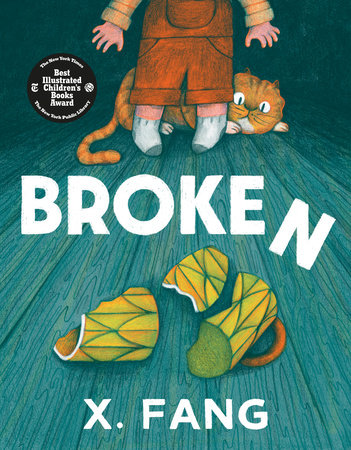
Broken by X. Fang (Tundra Books, 48 pages, ages 3-7). When Mei Mei accidentally breaks Ama’s cup after scaring Mimi the cat, she worries what will happen when Ama finds out. Ama serves tea, where she scolds Mimi about the broken cup. Mei Mei is tempted to let Mimi take the blame, but, overcome with guilt, she finally makes a tearful confession. Much to her surprise, Ama doesn’t get mad, but hugs Mei Mei, then goes about fixing the cup, reminding her that every patch and repair has a story to tell. On the last page, Mei Mei enjoys a slice of cake while Ama sips tea from her newly-mended cup.

This simple story will resonate with anyone who’s ever felt guilty about confessing a misdeed to a loved one and/or experienced forgiveness for said misdeed. There are some excellent lessons, but they are put forth in such a gentle and relatable way that kids won’t notice that they’re getting a good dose of SEL education.

Fireflies and dragonflies

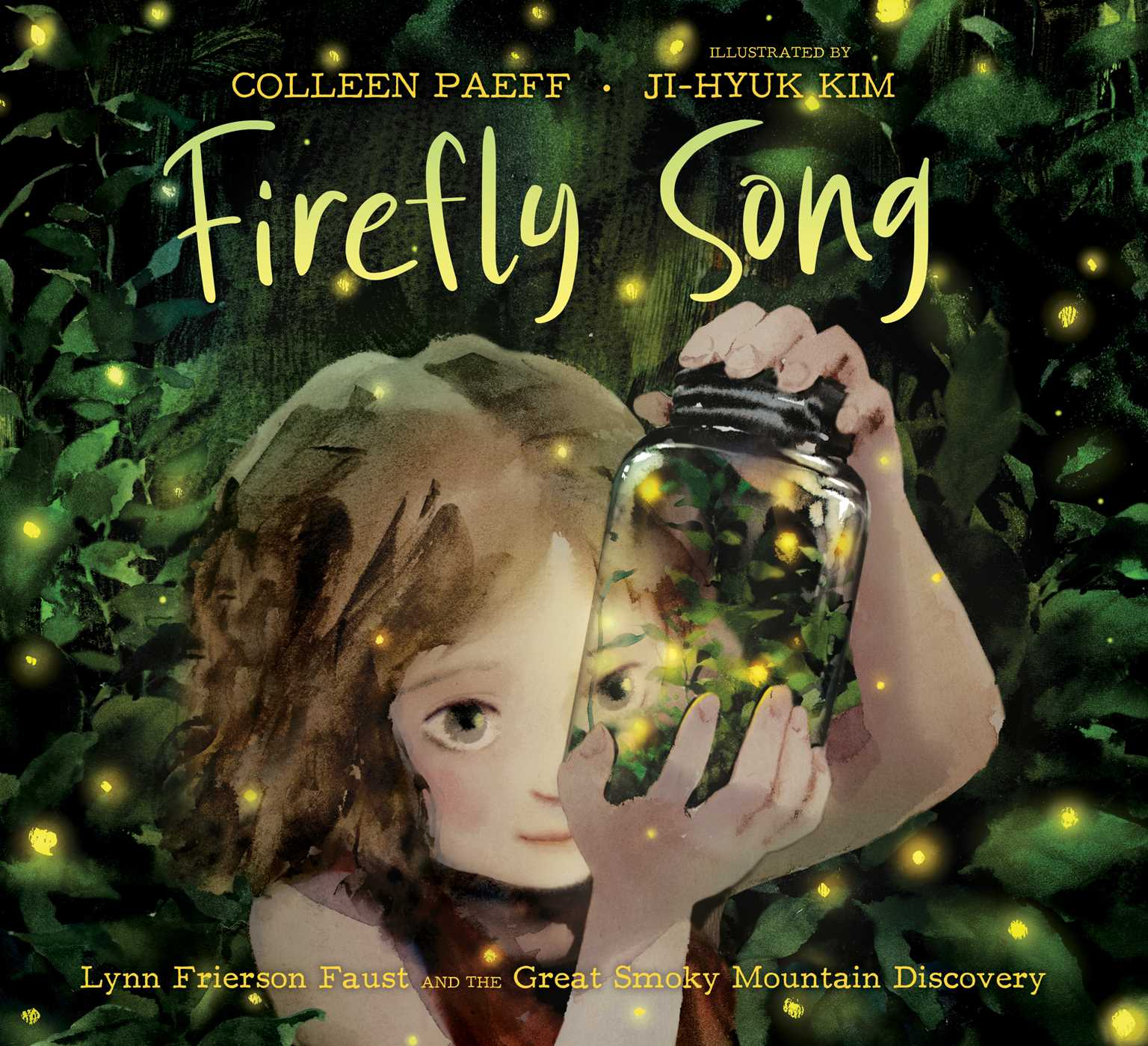
Firefly Song: Lynn Frierson Faust and the Great Smoky Mountain Discovery by Colleen Paeff, illustrated by Ji-Hyuk Kim (Margaret K. McElderry Books, 40 pages, grades 1-5). As a child spending summers in the Great Smoky Mountains, Lynn Frierson Faust was fascinated by fireflies who would flash their lights and go dark in unison. Years later, her family’s summer cabin and the land it was on became part of the national park, but Lynn never forgot those fireflies. When she read that synchronous fireflies didn’t exist in North America, she was determined to prove that they did. Working with other scientists, Lynn’s perseverance over many years finally paid off when she helped a biologist and his team observe the synchronous phenomenon. Although her scientific training is self-taught, Lynn is known globally for her firefly expertise. Includes tips for observing fireflies, firefly facts, a bibliography, and an author’s note.

Lynn’s story is a fascinating one and may inspire readers to become citizen scientists, or at least to be persistent in pursuing their passions. The illustrations are gorgeous, with backgrounds that look like slightly blurry photos, making the fireflies’ lights even more striking. I think the illustrator lives in South Korea, so unfortunately not eligible for a Caldecott, but this would be a good choice for another Sibert award for Colleen Paeff.

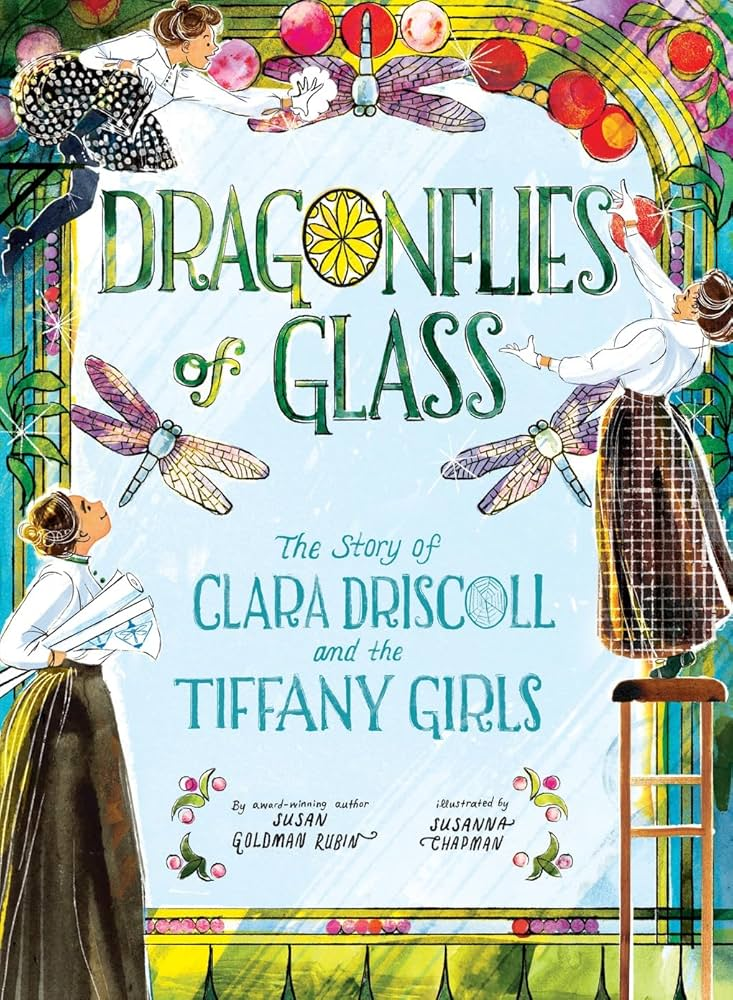
Dragonflies of Glass: the Story of Clara Driscoll and the Tiffany Girls by Susan Goldman Rubin, illustrated by Susanna Chapman (Harry N. Abrams, 40 pages, grades 1-5). Clara Driscoll grew up on a farm in Ohio, where she loved drawing the flowers and animals she observed around her. Her father died when she was 12, but her mother encouraged Clara and her sisters to become self-sufficient. In 1888, Clara and her sister Josephine moved to New York City to study at the Metropolitan Museum of Art School. Clara was hired by Louis Comfort Tiffany, son of the famous jeweler, to work in his studio making stained glass. She was part of the women’s division there, where she learned to cut glass and turn it into designs. Drawing on her memories of the Ohio farm, she was soon creating her own designs incorporating dragonflies, butterflies, and flowers, including the wisteria that was part of Tiffany’s most famous lamp. Includes notes from the author and artist, a list of places to see Clara’s work, and a bibliography.

Another story of an amazing woman who built a full artistic life at a time when sexism was a big obstacle. While Louis Comfort Tiffany sounds pretty progressive (he defended the women’s division when the men threatened to strike if he didn’t get rid of it), the author’s note reveals that Clara was forced to quit working there after she got married. The illustrations are gorgeous, especially the depictions of the Tiffany lamps. Clara’s story came to light thanks to round robin letters that she, her mother, and sisters wrote, and the story of those letters arriving at the farm is shown in small illustrations running along the bottom of each page.

Introducing my new blog: for those who enjoy history, travel, and children’s books

One of the unexpected side effects of reading so many children’s books over the last decade is that I’ve learned a lot more about many aspects of U.S. history that I was never taught about in school. I’ve posted from time to time about some of my travels exploring places around the country where I’ve explored some of that history.

I’ve decided to give those posts a blog of their own, which I started working on over the summer. I’m calling it The Resistance Files, because after the 2024 election, I became extra interested in how people in the past resisted injustice.

Resistance can take many forms, whether it’s protesting in the streets outside of the Stonewall Inn in 1969; striking against unfair labor practices in New England’s Blackstone River Valley, the birthplace of the American Industrial Revolution; creating art that lifts up Black people during the Harlem Renaissance; or commemorating peacemakers instead of celebrating war.

Since much of my interest in this history has been inspired by books for children and young adults, I’ll be including book lists with all my posts. It’s my hope that families will be inspired to read and explore some of these places themselves. The Resistance Files is still definitely a work in process, so please feel free to give me feedback, either in the comments or emailing me at jkdawson115@gmail.com.

A double dose of family feasts and Frank Morrison

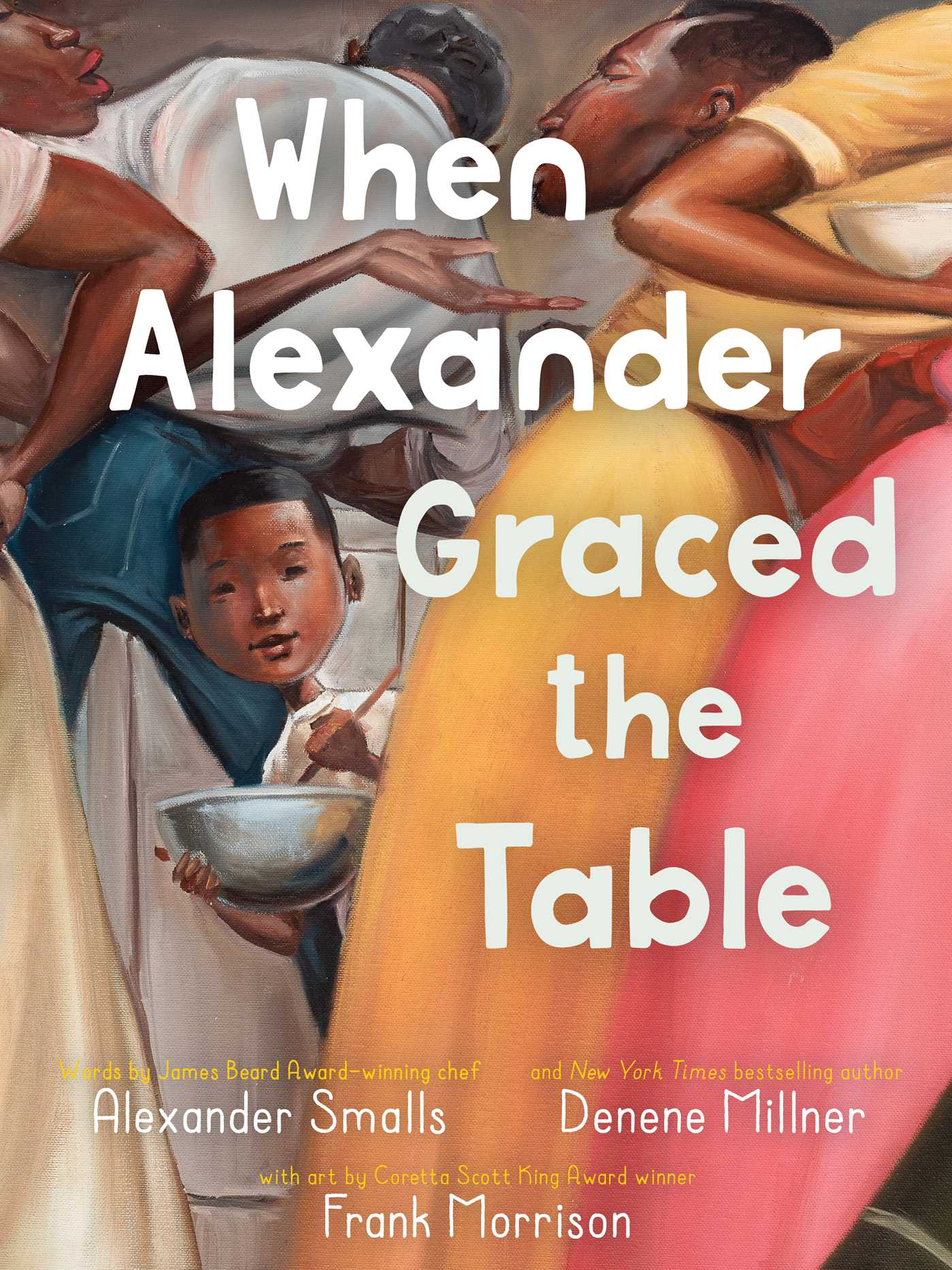
When Alexander Graced the Table by Alexander Smalls and Denene Millner, illustrated by Frank Morrison (Denene Millner Books/Simon and Schuster Books for Young Readers). Alexander loves Sunday dinners, which start on Saturday night with the whole extended family cooking and prepping for the big feast. His mom is at the center of it all, Alexander working at her side, but his quiet dad always seems too busy to notice. When Alexander makes franks and beans all by himself one Saturday night, he’s crushed that Dad doesn’t want a sample. His mom knows what to do, though: she puts Alexander to work baking Dad’s favorite dessert, and the next day reveals his creation to the whole family. Alexander holds his breath as his father takes the first bite of his lemon icebox pie, and the whole world seems to stand still as Dad chews it slowly. Finally, he speaks, “That’s some good pie,” he says, creating a memory that Alexander will cherish forever. Includes a recipe for the pie.

I wasn’t familiar with Alexander Smalls, but apparently he’s a famous chef, and his fans will undoubtedly enjoy this story about his first forays into cooking. The illustrations colorfully capture the happy chaos of a family dinner and the mouth-watering food created by so many cooks. I wish there had been a little back matter to allow Smalls to tell more of his story.

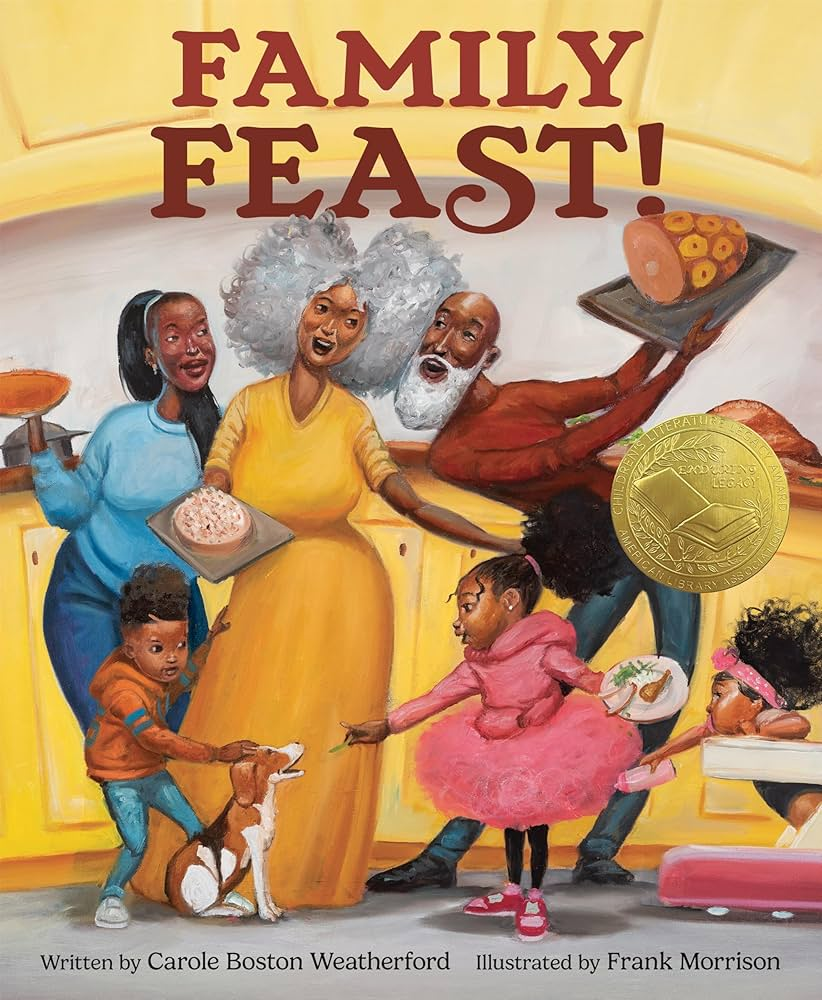
Family Feast! by Carole Boston Weatherford, illustrated by Frank Morrison (Crown Books for Young Readers, 32 pages, ages 4-8). Pops and Big Ma are up at 5 to start making dinner while family members make the drive to get there in time to help. The rollicking rhyming text and busy illustrations show a growing crowd, young and old, and the delicious abundance of food making its way to the table. Finally, grace is said, and the feast begins. Afterwards, children race through the house, Uncle snores, and Big Ma smiles benevolently on the whole scene until the family heads out to their cars to drive back home again, wrapping up with the repeating refrain, “Tastes like home when family meet/A bond so warm, so strong, so sweet.”

Another book full of delicious food and family fun brought to you by an award-winning author-illustrator team. Although no holiday is cited, this would be a great choice for reading at Thanksgiving or any time in December. It could also serve as a writing prompt for describing a family tradition, using the strong verbs and adjectives throughout the story as examples.

Two chapter books for younger elementary kids

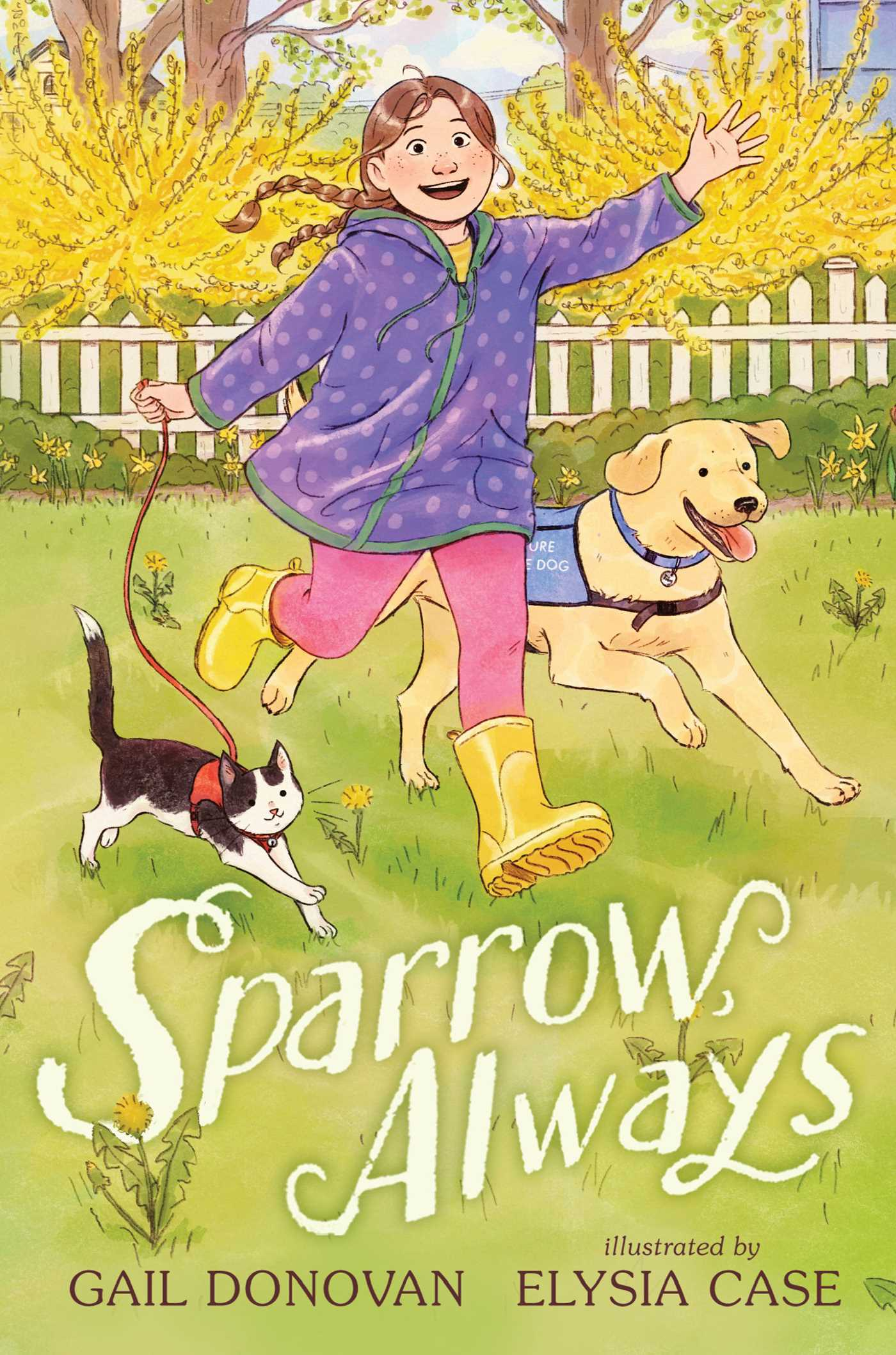
Sparrow, Always by Gail Donovan, illustrated by Elysia Case (Atheneum Books for Young Readers, 160 pages, grades 2-5). Sparrow’s dealing with a lot in fourth grade: a new baby brother, a best friend who seems to be growing up faster than Sparrow is, and some difficulties following directions at school that get her placed in a friendship group with a counselor. She loves animals, though, and the incentive of getting to helping Toby, the new puppy next door, pass his guide dog test motivates her to do better in school. Despite her difficulties, Sparrow’s heart is in the right place, and as fourth grade ends, she realizes that she’s a good friend, sister, and dog trainer, and that if she stays true to herself, she’ll be okay in fifth. Readers will enjoy the last chapter which tells about the guide dog test in Toby’s own voice.

I missed book one of this series, Sparrow Being Sparrow, which came out in 2024. Books 2 and 3 were released together, and I accidentally read book 3, but no prior knowledge was needed for me to thoroughly enjoy it. Sparrow has a Ramona Quimby vibe, and as I’ve said before, I always like discovering real middle grade books about third and fourth graders, which tend to be a bit of a rarity. Unfortunately, I find it hard to pry my students away from graphic novels long enough to read a book like this one, but I know there are many who will relate to and enjoy Sparrow’s adventures if they give her a try.

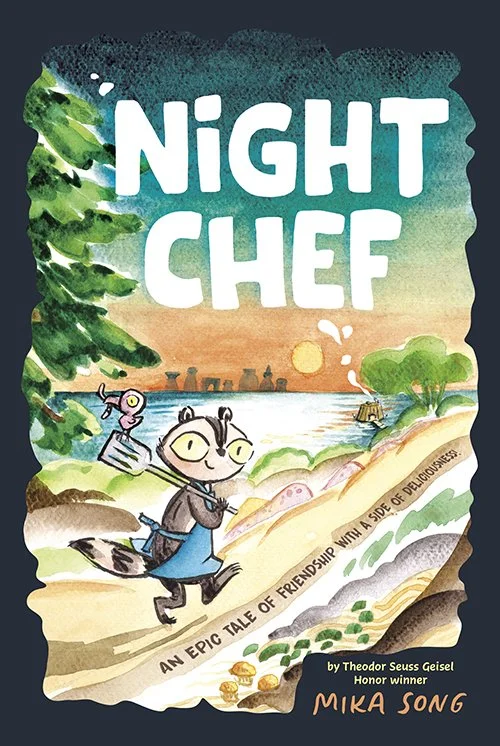
Night Chef by Mika Song (Random House Graphic, 160 pages, grades 1-4). The Night Chef is a raccoon who has learned cooking by living in the walls of a restaurant. After saving a baby crow that she names Ichi, the Night Chef decides to go on a journey to return Ichi to his flock. Along the way, the chef does a cooking stint at an animal-run restaurant called Mole’s Hole that’s being terrorized by an owl, travels as a stowaway on a train (more cooking, to pay her fare), and finally finds the crows and returns Ichi. On the way home, she stops back at the Mole’s Hole where she’s able to rescue them from the owl’s tyranny, aided by Ichi and the crows who return at just the right moment. The Night Chef learns about her early connection to the crows and discovers that she belongs at the Mole’s Hole, creating delicacies for the animals.

This cute animal graphic novel is sure to be popular with early elementary kids. It took me a minute to understand Night Chef’s circumstances and relationship to humans, but I loved all her animal adventures and the way she used her cooking talents to help herself and others, and the ending was extremely satisfying.

Survival stories for those who like the edge of their seats

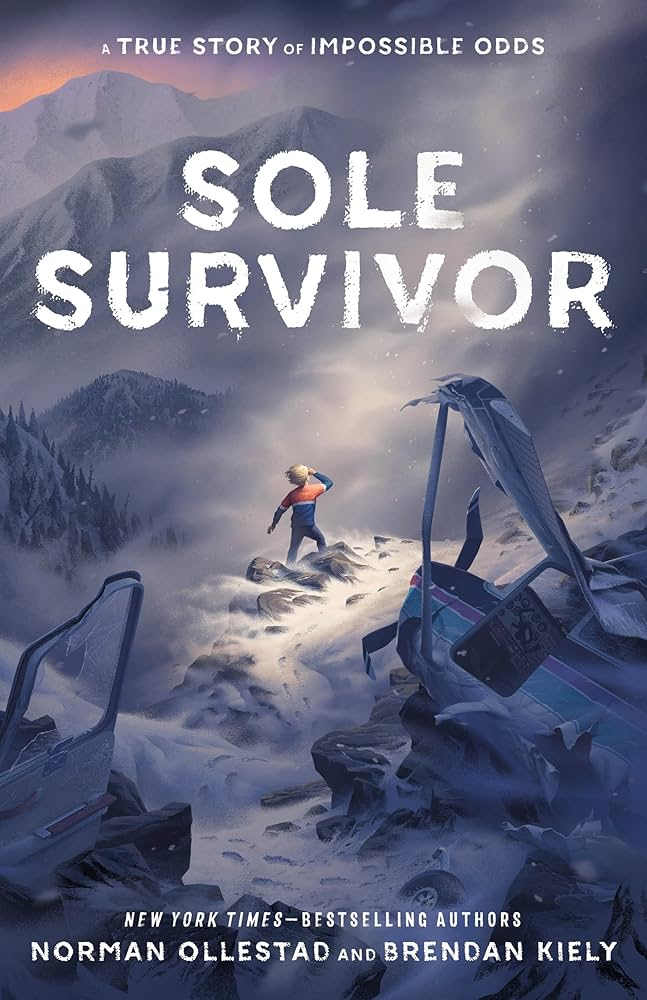
Sole Survivor by Norman Ollestad and Brendan Kiely (Farrar, Straus and Giroux, 272 pages, grades 5-8). Norman Ollestad recounts his experience of surviving a plane crash as an 11-year-old in 1979. His father and the pilot were killed instantly, and his father’s girlfriend Sandra, seriously injured, fell to her death when Norm was trying to help her. His dad had always pushed Norm to try the exhilarating but sometimes terrifying skiing and surfing adventures he enjoyed, and Norm found himself using the lessons from those experiences in his struggle to survive. Living with his mom and abusive stepfather had also taught him a thing or two about survival, and he miraculously was able to climb down the the icy California mountain in blizzard conditions to find help. The last part of the book tells of the aftermath of the event, in which Norm had to navigate his trauma while living full time with his mother and stepdad. After a rocky few years, he found release and healing through surfing. Based on the 2009 book Crazy for the Storm.

Okay, first off, if you’re looking for less stress in your life, do not read this book and Murder in the Jungle back-to-back, as I did. Norm’s story is harrowing, to say the least, made more so by the flashbacks to his abusive stepfather and risk-addicted father who put his son in some pretty questionable situations. It is definitely a page-turning survival story that will appeal to fans of Hatchet and other Gary Paulsen books.

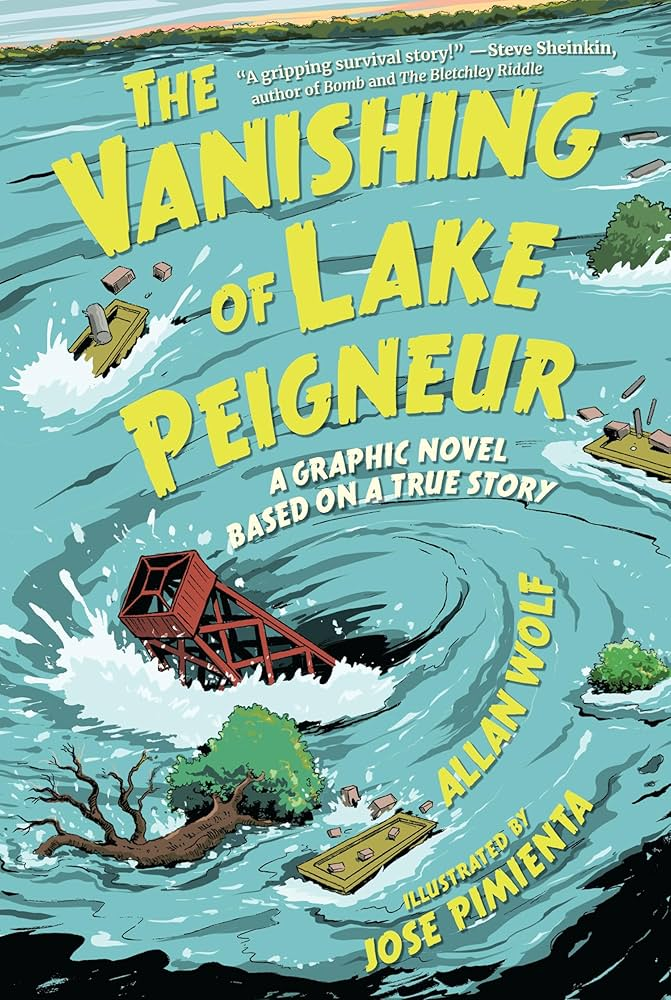
The Vanishing of Lake Peigneur: A Graphic Novel Based on a True Story by Allan Wolf, illustrated by Jose Pimenta (Candlewick, 176 pages, grades 4-8). November 20, 1980 starts as an ordinary day for Lake Peigneur (who narrates the story), the miners who work in the salt mine there, the oil rig workers, the wealthy owner of a house on the lake’s shore and his gardener, and various boaters on the lake. But it quickly becomes anything but ordinary when a combination of oil drill accident and precarious mine construction causes a huge vortex in the lake that threatens to destroy everything around it. Those in and around the lake are in a race against time to get off the rig, off the water, and out of the mine. Close calls and heroism are plentiful as the story shifts quickly from one site to another. The lake claims on page 1 that it “vanished,” and in a way that’s true, at least temporarily, as it’s transformed in size and composition from a freshwater lake to the saltwater lake that exists today. Includes an author’s note with extensive additional information, how he did his research, and clarification of what is fact and fiction.

This book took me a couple of tries to get into–the beginning feels a little stilted with many characters introduced. But once things start to happen, it’s hard to put down in a way reminiscent of the best “I Survived” books. I’m hesitant to reveal the spoiler that everyone survives, but amazingly that is the case, thanks to the good judgement and courage of many involved in rescue efforts. As Allan Wolf notes in the author’s note, this good fortune is one of the reasons it didn’t become more of a news story, and kudos to him for tracking down the story and interviewing many of the eyewitnesses to create this excellent graphic novel, greatly enhanced by Jose Pimenta’s art.

New science books

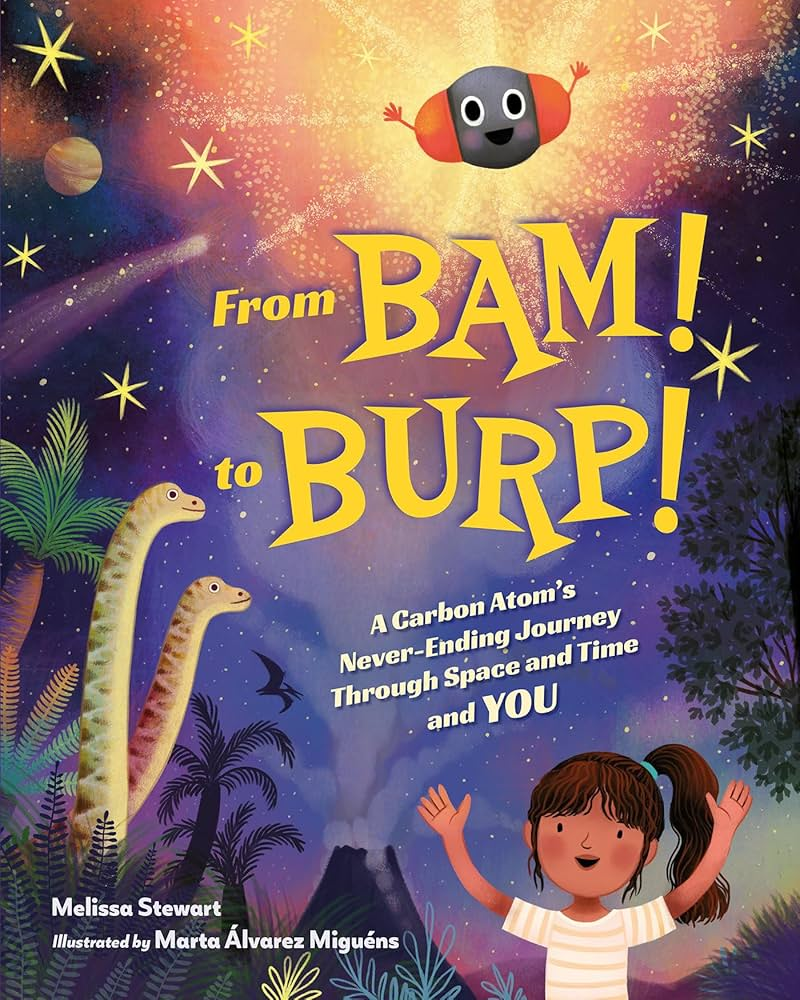
From Bam! to Burp!: A Carbon Atom’s Never-Ending Journey Through Space and Time and You! by Melissa Stewart, illustrated by Marta Alvarez Miguens (Charlesbridge, 40 pages, grades 1-4). The story begins with a planet called Theia, which 4.5 billion years ago smashed into Earth (the bam! of the title) and broke into pieces, some of which eventually became the moon, and some of which were buried deep into the Earth’s core, including carbon atoms. The carbon atom featured in this story combined with oxygen to become carbon dioxide, which was later released from the Earth’s core following a volcanic eruption. The molecule wanders the Earth until it’s pulled apart by a plant that uses it to make sugar. The journey continues through a dinosaur, a rotting pumpkin, even toilet paper, until the carbon winds up in maple syrup, entering the body of a present-day kid who eats it on pancakes, and later burps it out into the world once again. Includes a wonder wall with questions and answers about carbon and related topics, additional facts about carbon, fossil fuels, and the climate crisis, as well as notes from the author and illustrator about the evolution of this book.

Seems like finding a fun picture about chemistry is about as likely as a carbon atom becoming a diamond, but budding scientists will enjoy this one and learn all sorts of information about carbon in the process. The presentation, both text and illustrations, really bring this potentially dry topic to life. I also appreciated the notes from the author and illustrator that emphasized the need for many drafts and much hard work to produce the final book.

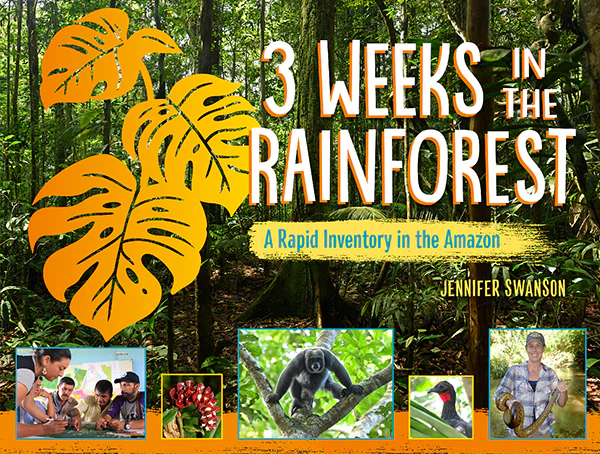
3 Weeks in the Rainforest: A Rapid Inventory in the Amazon by Jennifer Swanson (Charlesbridge, 80 pages, grades 3-7). To measure the health of Colombia’s rainforest, a rapid inventory team from Chicago’s Field Museum spends three weeks observing and recording plants, birds, fish, mammals, and reptiles. They also work with the indigenous people there to learn what they need to live sustainably on the land. The narrative follows different teams of scientists as they travel to this remote area, set up camp, and tirelessly work round the clock in all kinds of weather to inventory as many species of plants and animals as they can in three weeks. After leaving the rainforest, the team compiles its findings into a report to the Colombian government with their recommendations for preserving this ecosystem. Includes a note from the rapid inventory team, an author’s note that recounts how an exhibit at the Field Museum inspired her to write this book, a list of those who were on the team, and an index.

This engagingly written science book offers readers an intriguing look at scientists in the field, with plenty of photos and sidebars to keep things interesting. It was refreshing to read a book about the rainforest that was pretty upbeat in its reports on the health of this particular portion of it, and the descriptions of the fascinating work being done to preserve it will no doubt inspire future generations of scientists.

Perceiving the world around us

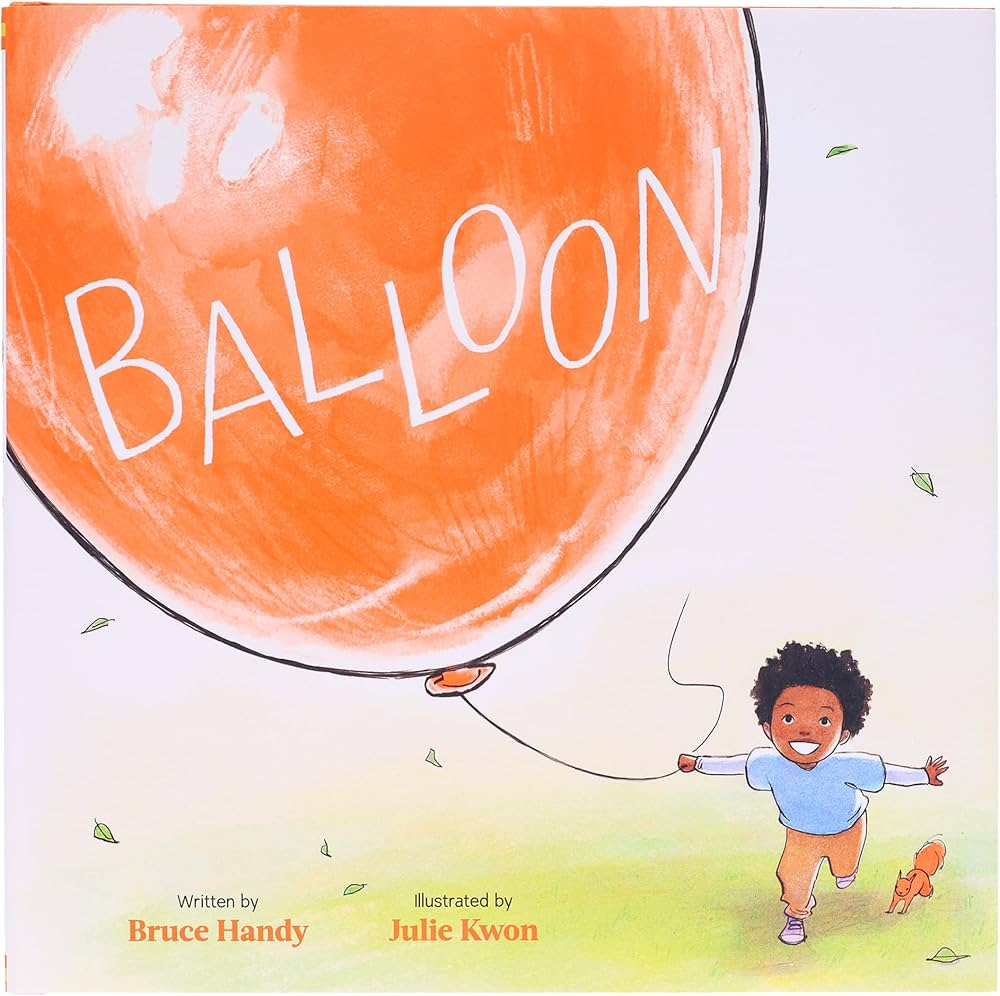
Balloon by Bruce Handy, illustrated by Julie Kwon (Chronicle Books, 44 pages, ages 3-7). A young child is devastated when a flock of pigeons causes him to let go of his orange balloon. Refusing a replacement, he goes on a search for the balloon through the city park. Illustrations show different objects that appear to be the balloon–a bit of an orange frisbee hidden by a picnic blanket, an orange cap on the head of a musician obscured by a crowd–but when the full picture is revealed, it’s never the balloon. Finally, the boy spots something else orange: a kitten for sale. He and his mom adopt the kitten, and the boy tells it, “Balloon. That’s your name.” As the two sleep together on the last page, astute readers will notice the tiny shadow of a balloon against the full moon. Includes an author’s note that tells how the story was inspired by his son, who also named his cat after a lost balloon.

This nearly wordless book is so much fun, giving kids an opportunity to guess what the various orange objects are and to spot the squirrel that enlivens many of the illustrations. The final page provides a most satisfying conclusion, not only with the boy and his new kitten, but the balloon in the background and a stuffed squirrel sitting on a bookcase.

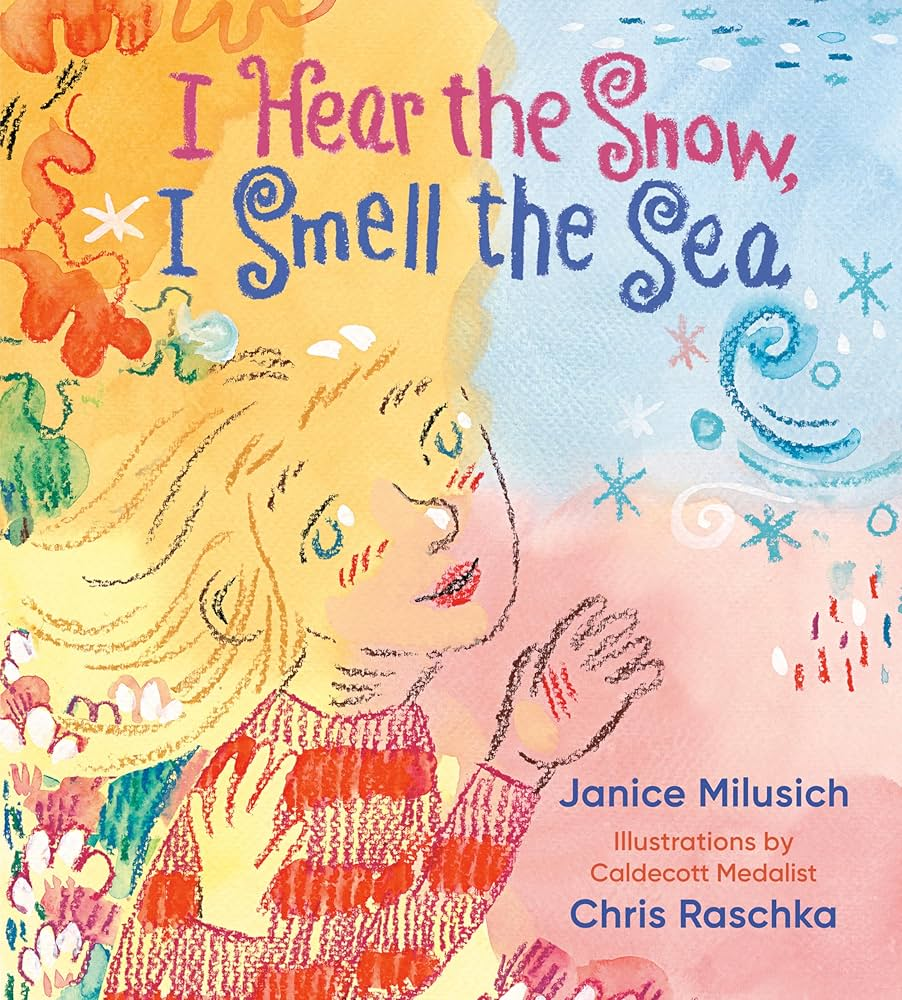
I Hear the Snow, I Smell the Sea by Janice Milusich, illustrated by Chris Raschka (Anne Schwartz Books, 48 pages, ages 4-8). Neveah enjoys the four seasons with her mother using her senses of hearing, smell, taste, and touch to experience them. Playing in the snow, taking a spring stroll, walking on the beach, and playing in the fall leaves, she enjoys the sounds, smells, and textures all around her. While she never mentions being visually impaired, the story and illustrations imply that, but it doesn’t slow her down from experiencing each season to the fullest.

I have a blind student who started kindergarten this year, which makes me extra appreciative of this book, not only for her, but for her classmates who can learn about perceiving the world through other senses. The simple illustrations do a great job of portraying the different seasons while leaving a great deal to the imagination, which will be inspired by the descriptions in the text.