When history repeats itself

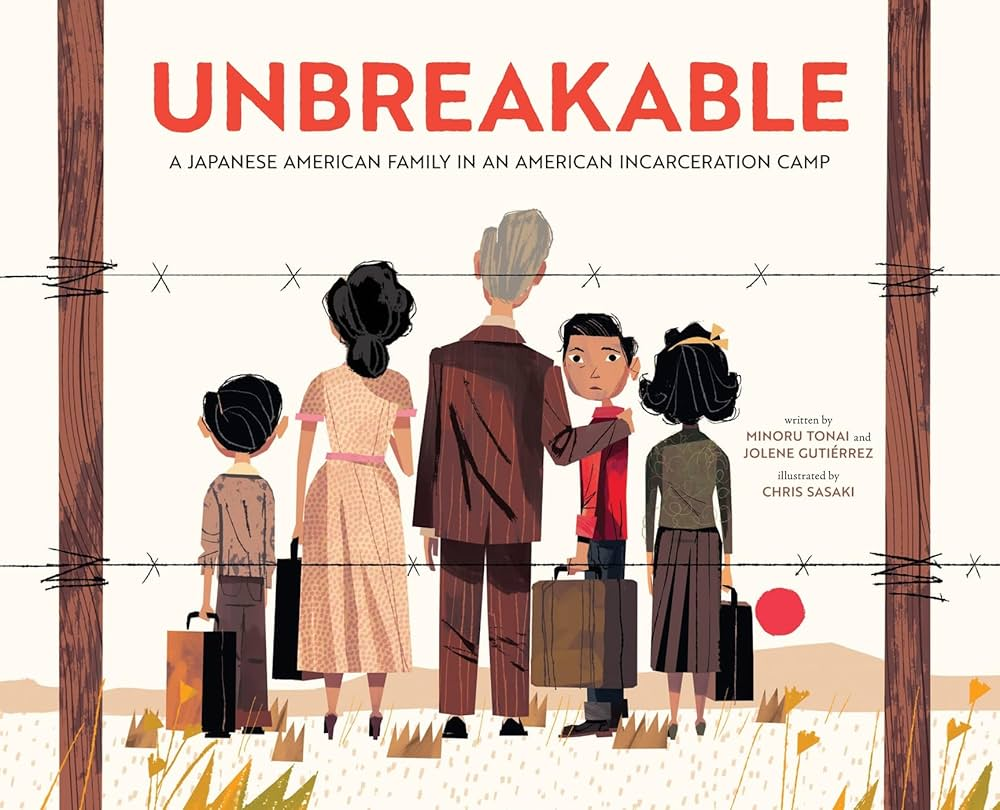
Unbreakable: A Japanese American Family in an American Incarceration Camp by Minoru Tonai and Jolene Gutiérrez, illustrated by Chris Sasaki (Harry N. Abrams, 40 pages, grades 2 and up). Minoru Tonai tells the story of his family’s imprisonment during World War II. His father was questioned as early as October of 1941 about being a spy, despite his work as a farmer and his near deafness, and was taken away shortly after Pearl Harbor. Just six months later, the rest of the family was forced to leave their farm and their dog to move to a “detention center.” For the next three years, they endured desert heat and cold, barracks living, and a constant wind that blew sand everywhere. After two years, Papa was finally allowed to join the rest of the family, and in the fall of 1945, after more than three years of imprisonment, the family was allowed to go back home to California. Includes extensive back matter with notes from the illustrator and author (Gutiérrez only, as Minoru Tonai passed away in 2023 at the age of 94), a timeline and other additional information, and a bibliography.

The spare text and stark, brown-toned illustrations capture this dark chapter in American history as seen through the eyes of a young boy. Min’s father collected rocks, and these are symbolic in the story of the strength and resilience the family needed to get through these difficult years. Min doesn’t shy away from the injustice of their situation and the pain of their many losses. His story is an extremely valuable resource for teaching kids about the experience of thousands of Japanese Americans, and the back matter gives plenty of additional information as well as opening up topics for discussion.

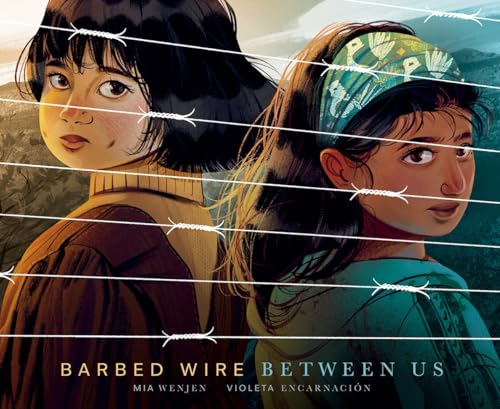
Barbed Wire Between Us by Mia Wenjen, illustrated by Violeta Encarnación (Red Cornet Press, 48 pages, grades 2 and up). “In this land of promise, we hoped to find a place to belong.” So begins–and ends–this reverso poem that shows a Japanese-American family in World War II and a contemporary immigrant family detained at the southern border. In both cases, families are separated, and children are imprisoned behind barbed wire. They suffer from “meager food” and dust everywhere but are also heartened by the kindnesses of strangers and other immigrants, while they try to find beauty where they can. The girl on the last page looks out at the reader as she stands next to barbed wire, with a hope–but no promise–of finding a place to belong. Includes information about Fort Sill, Oklahoma, the site of both imprisonments, as well as that of members of the Chiricahua Apache tribe in the late 19th century; reverso poems; and the author’s family’s experience as Japanese Americans during World War II.

Wow, this book is so powerful, and the reverso poem is absolutely masterful. With spare text and haunting illustrations, Mia Wenjen shows how shameful history continues to repeat itself in America. Mia, I know you are a subscriber to this blog, so congratulations to you on this beautiful book, and I hope it gets some awards recognition.

Summer fun with a dose of social and emotional learning

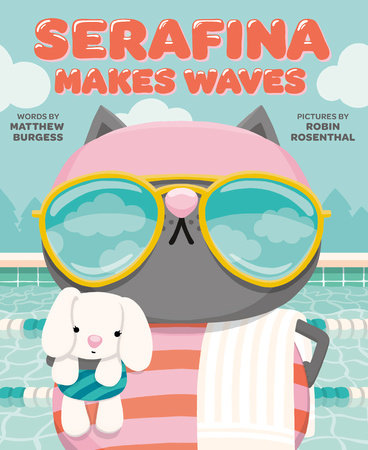
Serafina Makes Waves by Matthew Burgess, illustrated by Robin Rosenthal (Dial Books, 40 pages, ages 3-8). On rainy days, you can find Serafina inside with her stuffed bunny Noodles. Because Serafina hates, loathes, DESPISES water. Whether it’s the bathtub or the ocean, Serafina gives water a definitive thumbs-down. So when the “powers-that-be” (Mom and Dad) say she has to take swimming lessons, Serafina tries every trick to get out of them. But nothing works, and she finds herself one Saturday morning standing dangerously close to the pool with her friend Lennie. When Lennie gets overly excited by a ball, he accidentally knocks Noodles out of Serafina’s arms. Instinct kicks in, and the next thing she knows, Serafina is in the water rescuing her stuffed bunny. Much to her surprise (and her parents’ shock), she kind of likes it! And, Reader, nowadays you can find Serafina stomping through puddles, soaking in the tub, and snorkeling through the ocean.

Serafina’s got a lot of cat-titude, and kids will get a big kick out of her one-kitty rebellion against all forms of water. Amidst the spot-on storytelling and the hilarious illustrations, there’s a good lesson about trying new things. This would make a great end-of-the school-year story time with Judgy Bunny (below), Jabari Jumps, or a summer kickoff one paired with Matthew Burgess’s Caldecott Award-winning Fireworks.

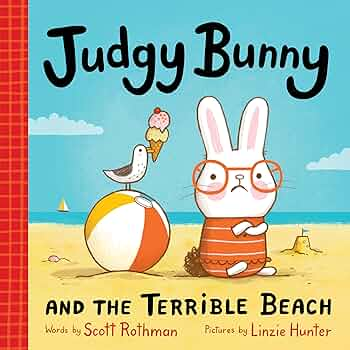
Judgy Bunny and the Terrible Beach by Scott Rothman, illustrated by Linzie Hunter (Sourcebooks Jabberwocky, 40 pages, ages 30-8). What’s wrong with the beach? Everything, according to Judgy Bunny. It’s too hot, the water is yucky, and the sandcastles and kites other kids are playing with are nothing special. When JB gets bonked by a beach ball, he declares it too round until another bunny comes up to him with an apology and an invitation to join the rest of the bunnies. The judgement continues until Judgy gets hit by another beach ball and breaks it with a giant POP. That doesn’t feel great, but the other bunnies assure him they have plenty of beach balls and continue to make friendly overtures. Finally, not-quite-as-Judgy Bunny admits that he likes ice cream, sandcastles, kites, and most surprisingly, boogie boards, but he’s still not crazy about beach balls.

We’ve all been with some version of Judgy Bunny (or maybe been a version ourselves), and perceptive readers will discern that Judgy Bunny might be critical because he feels left out. As with Serafina, the story and cartoon illustrations are funny enough to be enjoyed on their own merits, but they could also start a good conversation about including others–even grumpy, judgy others.

A graphic novel grab bag

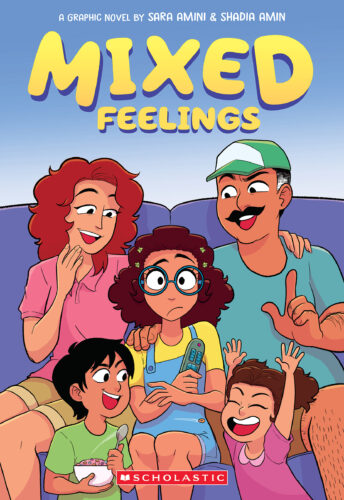
Mixed Feelings by Shadi Amini, illustrated by Shadia Amin (Graphix, 240 pages, grades 3-7). Based on the author’s life, this story follows sixth-grader Sara through her first year of middle school. There are the usual ups and downs: losing a best friend, discovering the joys of drama club, and dealing with physical changes, especially, in Sara’s case, new hair on her arms and legs that her mom won’t let her shave. One issue not shared by many of her peers is Sara’s mixed cultural identity. Her mom is Colombian and speaks Spanish, while her dad is Iranian and insists that she attend Farsi school, where the other students bully her for not being Persian enough. As the year goes on, Sara learns to embrace her dual heritage and stand up for who she is, which also allows her to see others around her with more empathy and eventually reconnect with her former best friend. Readers can look forward to the sequel, Mixed Signals, which will be available in October.

Seems hard to believe that there’s space on the shelves for another graphic novel about starting middle school, not fitting in, and ultimately learning to embrace who you really are, yet they keep coming, and, to be fair, readers keep loving them. This one is charming and does a nice job of addressing issues kids with mixed heritages may encounter. I liked how the book used different color fonts to show different languages (Spanish and Farsi), and there was a fun amount of 1990’s nostalgia woven into the story and illustrations.

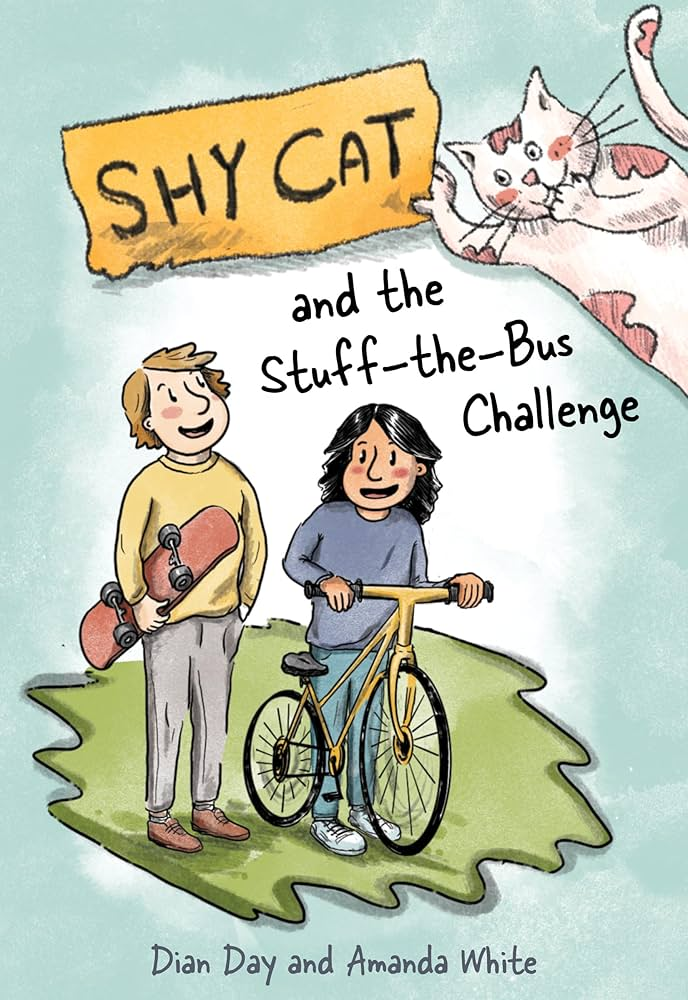
Shy Cat and the Stuff-the-Bus Challenge by Dian Day and Amanda White (Second Story Press, 208 pages, grades 3-7). Mila and Kit are best friends, sharing a love of drawing, cats, and filmmaking, When Kit has a meltdown at school over a rusty, expired can of vegetables someone has brought in for the food drive, Mila starts noticing that Kit spends a lot of time thinking and talking about food. Her mom gently explains that she suspects that Kit and his mother are food insecure, and that Kit’s behavior stems from anxiety over whether they will have enough to eat. Mom tries to provide as many snacks and meals as she can for Kit and his mother without being too obvious about what she’s doing, and Mila’s mama, who lives in another part of town, gives her some advice about advocating for those who are food insecure. Kit is thrilled when he and his mom secure a community garden plot, but both he and Mila notice the unfairness that there aren’t enough plots for everyone who wants one. By the end of the story, Mila has learned enough about Kit’s situation to grant him some slack if he sometimes seems more interested in the snacks at her house than the fun they have together. Includes information about the Hungry Stories Team, a group that uses various creative outlets to share information about food insecurity.

This graphic novel provides important information about food insecurity for elementary readers with a story that’s both sobering and fun (the kids’ cat comics are sprinkled throughout, and there’s a subplot about a cranky neighbor who is eventually won over by a stray cat). At times, the message overwhelmed the story a bit, but it’s sure to open up kids’ eyes to what may be going on with some of their classmates and neighbors.

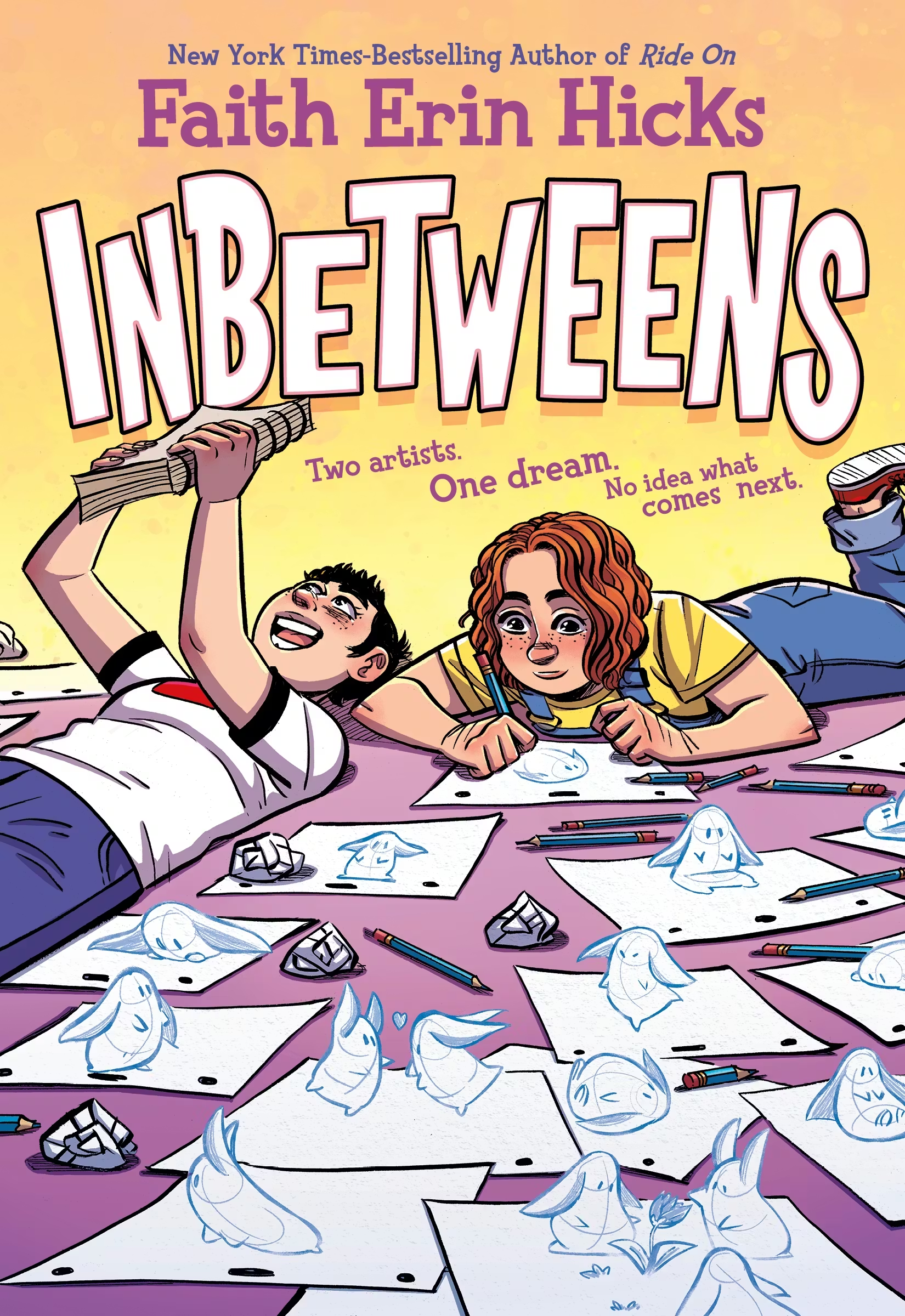
The Inbetweens by Faith Erin Hicks (First Second, 240 pages, grades 5-8). Twins Ash and Sloan are heading off to a summer animation course at the local art school, determined to pursue a dream they’ve shared since experiencing Disney’s World of Animation as kids. They’re excited to meet the celebrity teachers and other teens who love art and animation as much as they do. But as the weeks go by, things start to go wrong. Douglas Frye, a Disney animator and one of the teachers, turns out to favor the boys over the girls and almost shuts down Ash’s dreams completely. Meanwhile, Sloan is starting to question if animation is really the right path for her, not wanting to risk losing her love of art by turning it into a career. They decide to team up with two of their new friends for the final project, and it helps all four kids reconnect with the spark that brought them there originally and to create a film that they are all proud of.

While kids as young as third or fourth grade may enjoy this graphic novel, it really hits the sweet spot for middle schoolers. The teen characters have plenty of angst, but also plenty of heart, and ultimately each one uses the summer experience to discover his or her true passions. There’s plenty about animation and drawing woven into the story that young artists will enjoy and perhaps learn from as well.

Back to nature

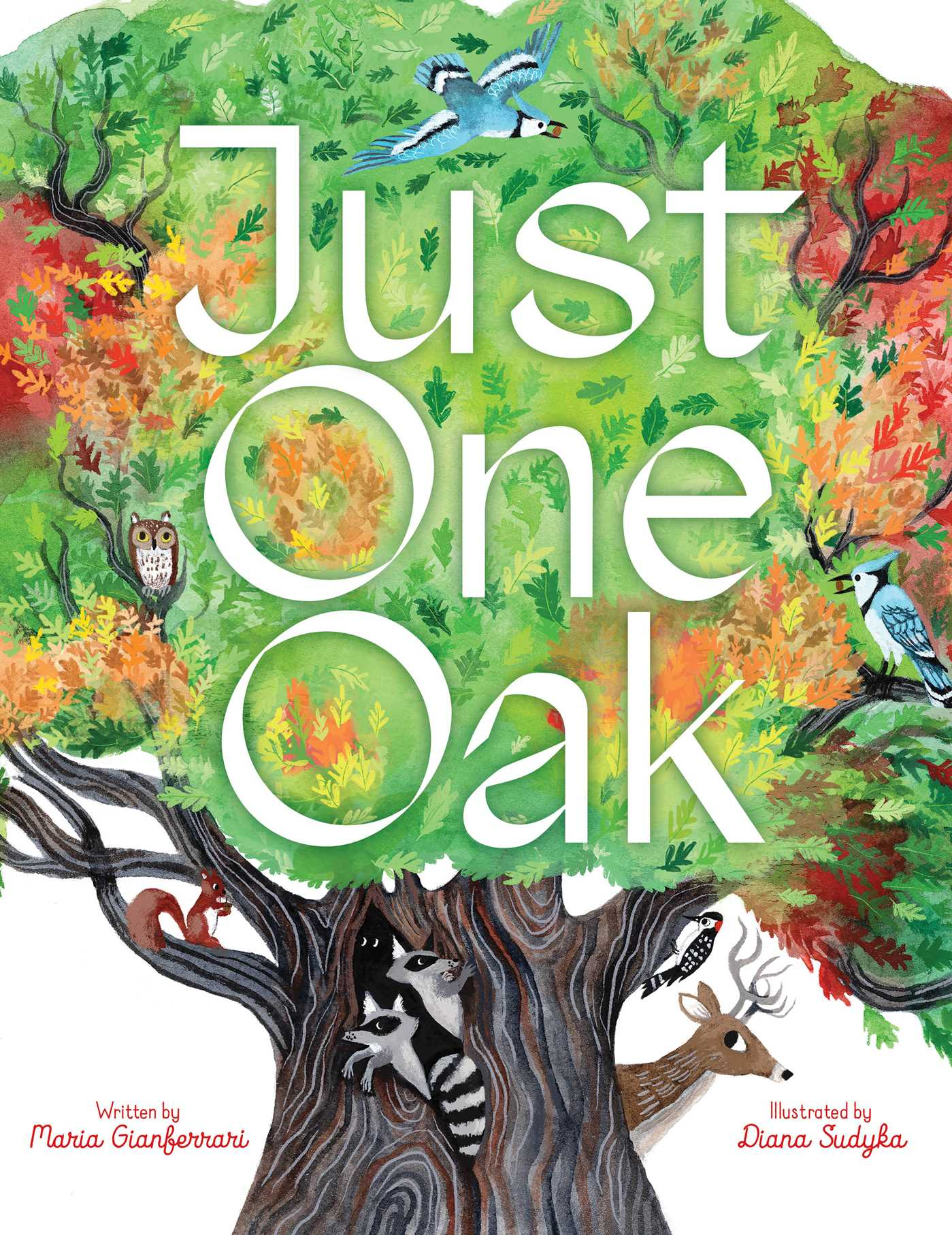
Just One Oak: What a Single Tree Can Be by Maria Gianferrari, illustrated by Diane Sudyka (Beach Lane Books, 48 pages, ages 4-9). What can one oak be? A home for all kinds of animals in all seasons, from its roots to its leaves. A provider of nutritious food, with the millions of acorns it produces over its life time. A climate regulator, slowing winds in the winter and giving shade in the summer. A single oak tree “is beautiful and bountiful to all.” Includes additional information and resources, ways to help oak trees, and an illustration of the oak’s life cycle.

The main narrative of this beautifully illustrated book tells the many amazing things an oak tree provides, while the smaller blocks of text give additional details. The information is fascinating, and this would make a great book for Earth Day as well as for any environmental educational program wanting to highlight the impact of a single tree on many areas of the ecosystem.

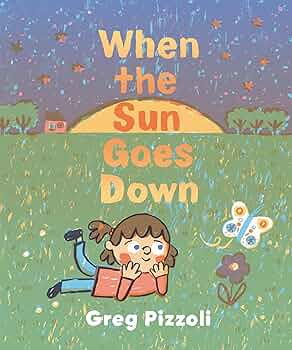
When the Sun Goes Down by Greg Pizzoli (Knopf Books for Young Readers, 40 pages, ages 2-5). “Where do you go when the sun goes down?” This question is posed to creatures who live outside (a butterfly, an ant, and a bird), to a couple of indoor pets (fish and cat), and finally, to a child getting ready for bed. Does she go under a leaf like a butterfly? In the dirt like an ant? Curled up in a chair like a cat? No! She goes to bed, to sleep safe and sound. Good night.

Greg Pizzoli keeps cranking out fun and entertaining books for the youngest readers that they’ll be able to read along with sooner rather than later–a deceptively simple art form! This time he’s created a lovely bedtime story that slowly moves from the outside world to the inside, and finally into bed. You can pair it up with another Greg Pizzoli bedtime story, Good Night Owl. Both have nice touches of humor to make an easy transition to sleep.

American musicians

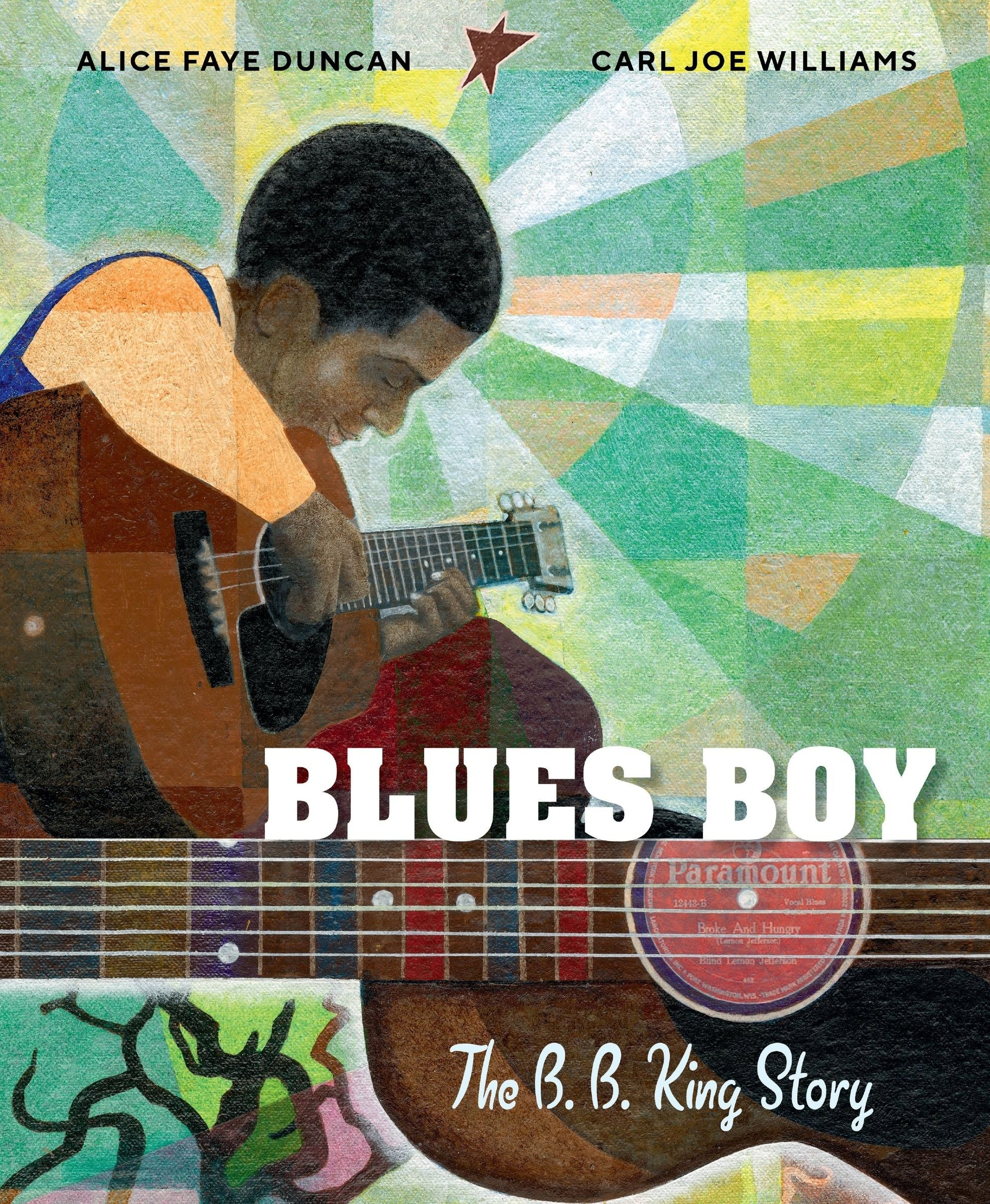
Blues Boy: The B.B. King Story by Alice Faye Duncan, illustrated by Carl Joe Williams (Greenwillow Books, 40 pages, grades 2-5). Young Riley King’s life in Mississippi during the Great Depression gave him plenty of material for singing the blues. His mother died when he was 9; he lived with his grandmother until she passed away when he was 15. He was bullied for his stutter and had to go to work in the cotton fields at a young age. But hearing blues records as a young teen inspired him to learn guitar and eventually choose a music career over the steady paycheck of a farm worker. Making his way to Memphis, he acquired a new name of Blues Boy, eventually shortened to B.B., and had his first hit in 1951 with “Three O’Clock Blues.” Following his mother’s advice to “do good and treat folks right,” B.B. soared to success, playing his blues music across the country 300 days a year. Includes a timeline, additional information, places to visit, and lists of books and music.

This biography of B.B. King shows the influences of his early life on his music, not only his tough personal life as a kid, but the effects of growing up in the Jim Crow South. Readers will be inspired to seek out “Three O’Clock Blues” as well as the other songs suggested in the playlist.

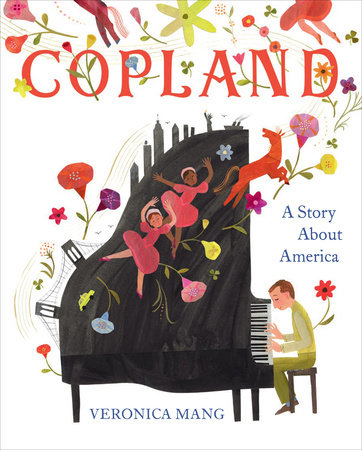
Copland: A Story About America by Veronica Mang (Viking Books for Young Readers, 40 pages, grades 2-5). The youngest of five children born to Russian immigrants in Brooklyn, Aaron Copland grew up with the music of New York City, jazz records, the klezmer sounds of the synagogue, and his sister’s piano. He particularly loved the piano and started his studies in Manhattan, moving to Paris at the age of 21, where he learned new ways of making music and looking at the world. Returning to New York, Aaron focused on making music that sounded like America. He was inspired by jazz and folk music, as well as by the protests and social movements of the 1930’s. He believed that his compositions for movies were just as important as those performed in Carnegie Hall. Aaron’s music still invites listeners to think about their dreams for America and a better future. Includes additional information and photos, an author’s note, suggested listening for kids, and a bibliography.

This biography does a nice job of celebrating Aaron Copland’s life and his vision for creating a uniquely American music. The illustrations capture scenes from Copland’s personal life as well as the America he lived in. Both books would make great introductions before sharing King’s or Copland’s music with kids.

Royal families

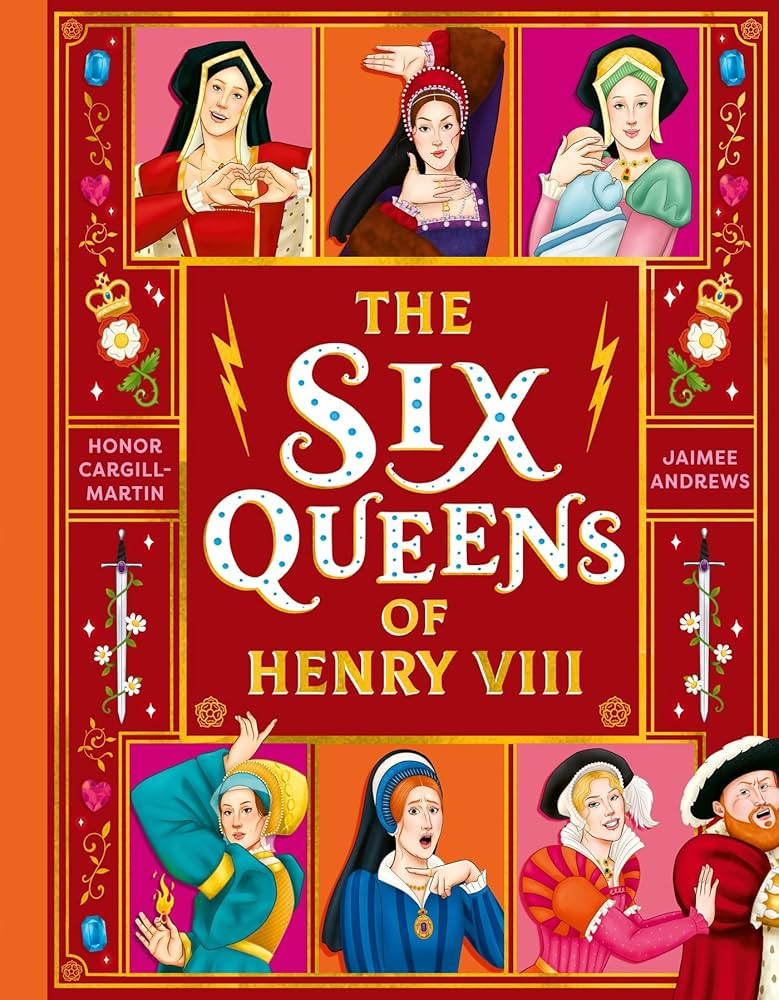
The Six Queens of Henry VIII by Honor Cargill-Martin, illustrated by Jaimee Andrews (Sourcebooks Explore, 48 pages, grades 3-8). “A Word from the Author” kicks things off by giving a brief history of the dazzling, exciting, and dangerous Tudor royal court of King Henry VIII, where six women caught the king’s eye, and, for better or worse, became queens of England. Each one is profiled with illustrations that resemble a graphic novel but contain a little more text. The emphasis is on the women, who are described as smart, educated, ambitious, and as powerful as they were allowed to be. As the author states in her introduction, “one led an army, one helped create a whole new church, and one was the first woman to publish a book under her own name in English.” After the facts of each queen’s life and marriage are given, there’s a two-page flashback scene that tells a story from the woman’s life showing her intelligence and/or courage. The book ends with a Tudor family tree, a timeline, and additional information about each of Henry’s three children, Mary, Elizabeth, and Edward.

Originally published in the UK, this book shines a spotlight on six brave, interesting, intelligent, and occasionally reckless women, relegating their husband to the background. The bold, brightly colored illustrations are lots of fun and help bring the story to life. Although there may not be a lot of interest in this topic in the US, hopefully the eye-catching cover will draw in readers who will not be disappointed.

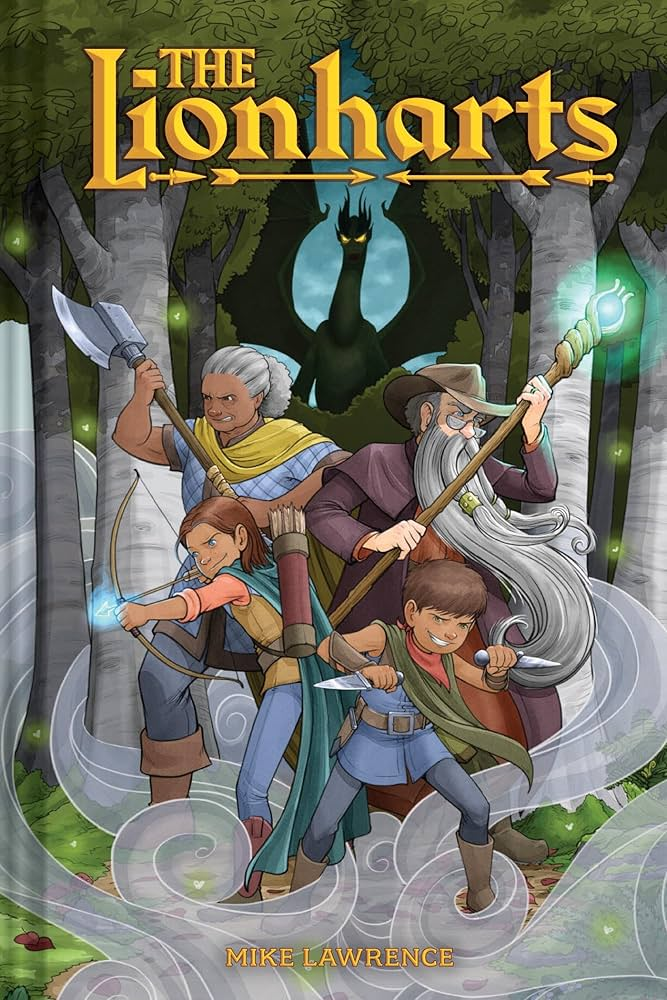
The Lionhearts by Mike Lawrence (Harry N. Abrams, 240 pages, grades 4-8). Flynt and Alder are the two sons of the renowned Lionheart family, known for fighting dragons and other troublesome creatures. While their grandparents are retired from active duty, they help out at home and with the business side of things so that the kids’ parents can go off on adventures. When the parents disappear after a mysterious woman shows up on their doorstep, the grandparents decide to come out of retirement to track them down. They insist that Flynt and Alder stay in the background, but the boys are having none of that, and when everyone realizes the enemy that they’re up against, it takes the courage, strength, and unique talents of all the Lionheart family members to defeat it. While there’s a satisfying ending for the good guys, there are also hints that their work isn’t done yet.

Although this isn’t about a royal family per se, it’s clear that the Lionhearts are treated with respect by the good people of their community and feared by the bad guys. The artwork and world building (which is based on Dungeons and Dragons) blew me away, and older elementary and middle school fantasy fans will love this graphic novel and be eagerly awaiting book 2.

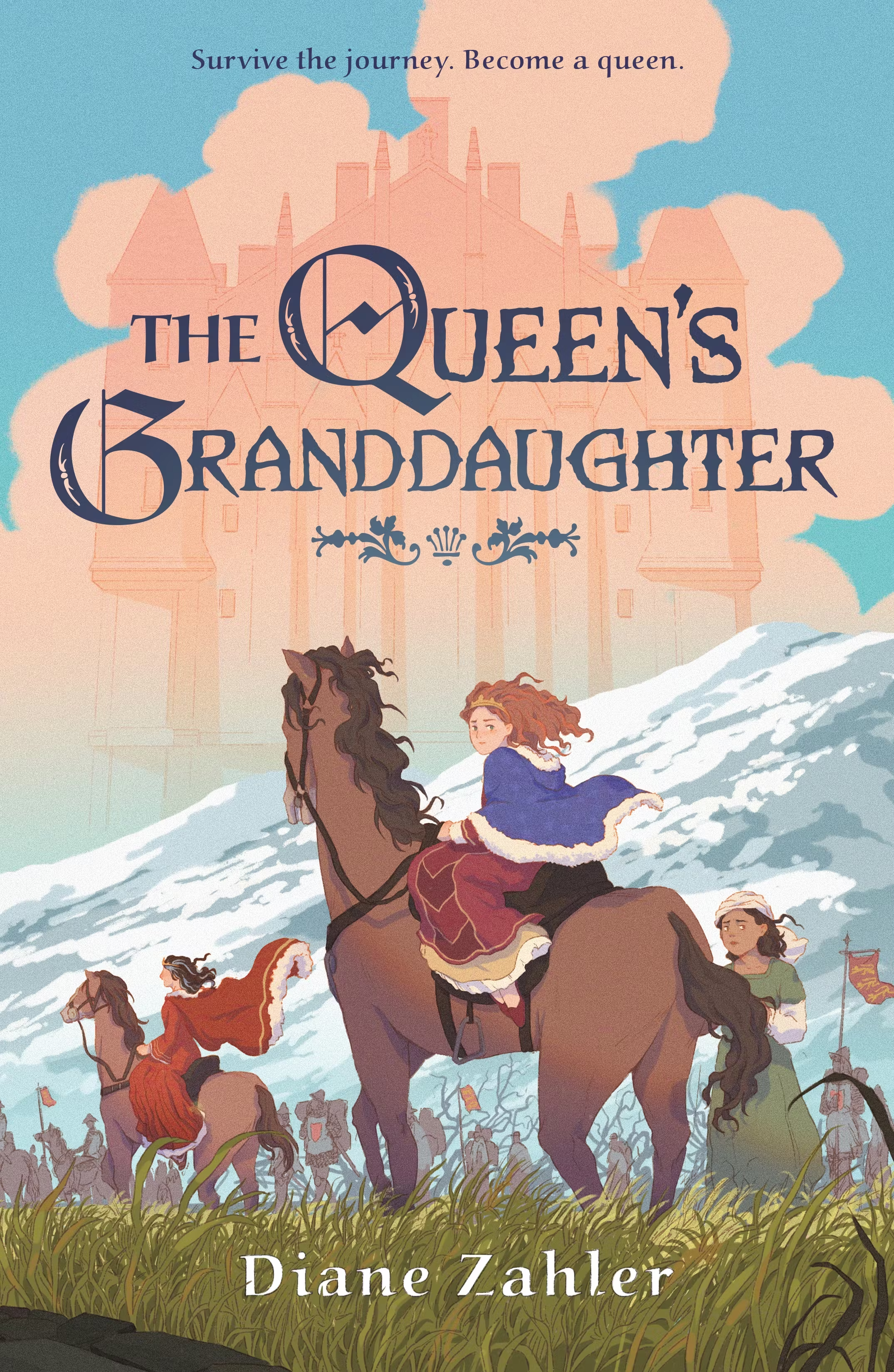
The Queen’s Granddaughter by Diane Zahler (Roaring Brook Press, 304 pages, grades 5-8). 12-year-old Blanca is excited to learn that her grandmother Eleanor (of Aquitaine) is coming to visit her family in Castille, allegedly to choose a wife for her son Prince Louis of France. Everyone is certain that Blanca’s older sister Urraca will be chosen, but at a great banquet, Eleanor makes the shocking announcement that it’s to be Blanca. Blanca is horrified to contemplate marriage, sad to leave her family, scared to move to France, but also intrigued and excited to be traveling to new places with her grandmother who is as bold and stubborn as she is. The only one from Castille who is to go with Blanca is her best friend Suna, a Muslim girl who has lived at the castle since her father died in service to the king. The travelers set off on their journey, where they face a series of dangers including a deadly blizzard and vengeful kidnappers. As she meets these challenges head on, Blanca begins to think she may have what it takes to be a queen. By the time they reach the last leg of the journey, it’s apparent that Blanca must travel to Paris alone. While she is sad to leave Eleanor and Suna, she now knows that she is ready to meet her fate. Includes additional information about Eleanor of Aquitaine, Blanca (or Blanche, as she became known), and Europe in the late twelfth century, including facts about Muslims like Suna.

It may be a challenge to convince middle schoolers to try an historical fiction novel set in the Middle Ages, but once they get to know Blanca, Eleanor, and the many other interesting characters, they’ll be hooked. The plot moves along briskly, particularly once the big journey begins, and there is plenty of page-turning adventure. I knew just about nothing about this time period, but there’s plenty of history seamlessly woven into the narrative that had me researching and learning more about the time and the people in the story.

Three books for Earth Day

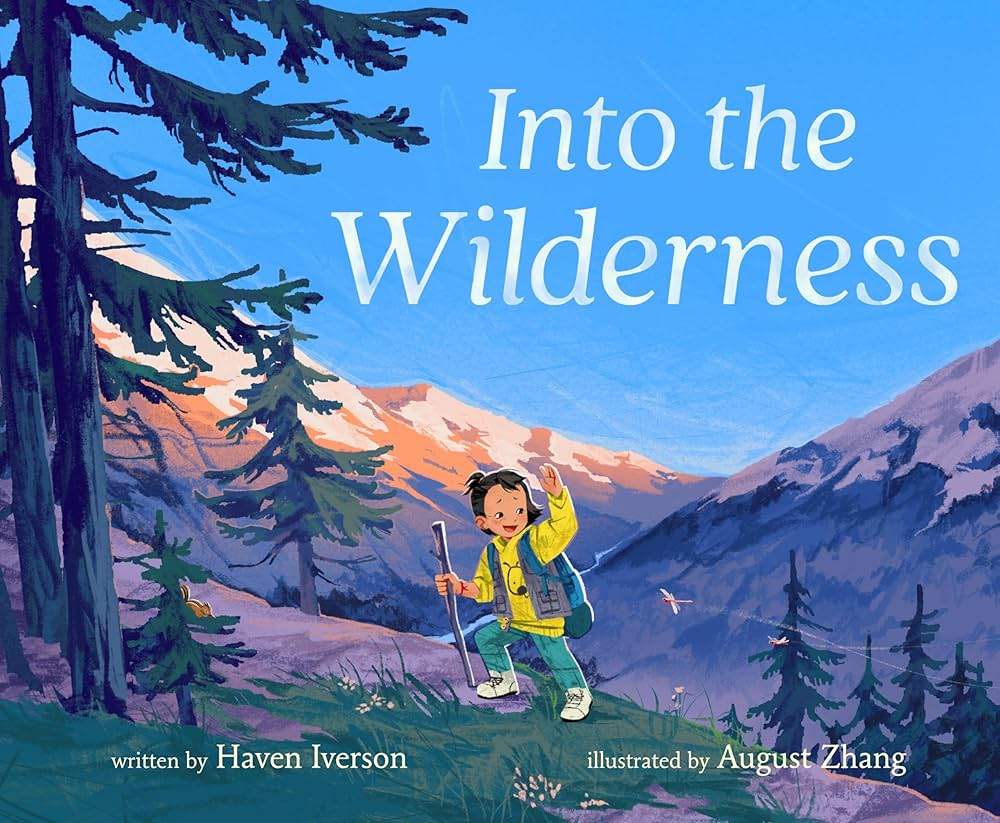
Into the Wilderness by Haven Iverson, illustrated by August Zhang (Roaring Brook Press, 32 pages, ages 4-8). The narrator describes family backpacking trips into the wilderness that started when the child was a baby, carried in a backpack up the mountains. Later on, they are able to carry progressively bigger backpacks and heavier loads, learning to read a map and enjoy moments of solitude. The natural world makes the difficulties of school and navigating friendships seem far away, but eventually the family drives home and school begins again. The narrator hangs up their backpack, but sometimes pulls invisible gifts from it that were acquired in nature: strength, wonder, bravery, and quiet. Includes a two-page note from the author about her own experiences in the Colorado wilderness, as well as information about the 1964 Wilderness Act, original people of the American wilderness, and tips for being a good steward of the wilderness.

Kids will be empowered by the narrator’s story to go on their own nature explorations. This would be a great book to share at the beginning of camp or a family hiking, camping, or backpacking trip. I love how it shows the power of wilderness and the natural world that can be carried into the rest of life.

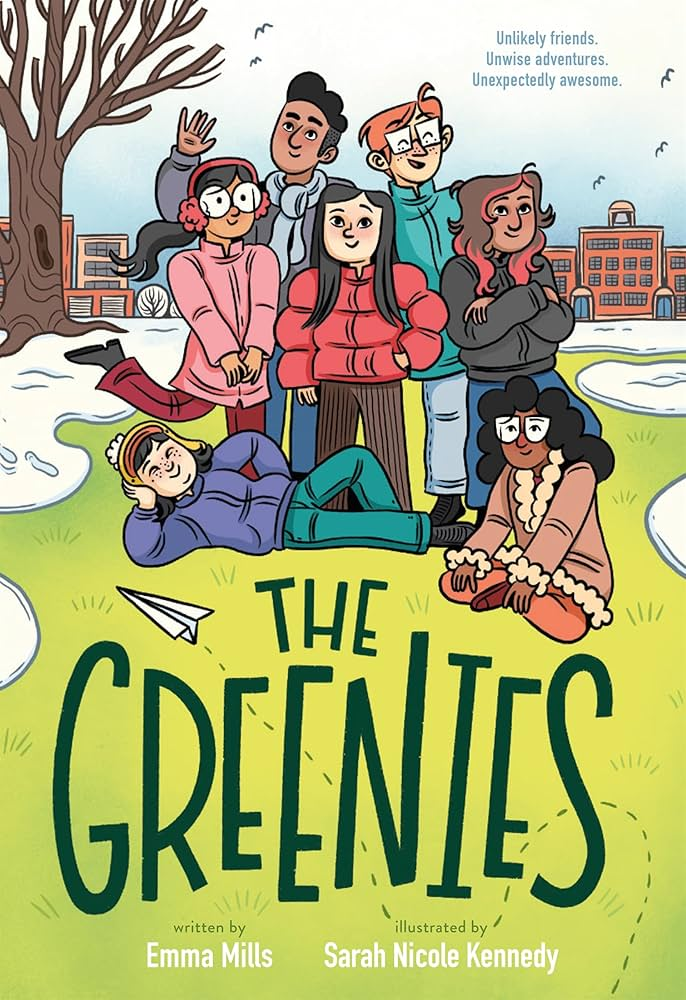
The Greenies by Emma Mills, illustrated by Sara Nicole Kennedy (Henry Holt and Co., 256 pages, grades 3-7). After her parents divorce and her mom gets a new job, Violet has to move and start a new school mid-year. The only kid she knows is her cousin Kris, whom she considers a bit of an oddball. Happy to meet some kids she likes, Violet goes to a secret under-the-bleachers gathering during lunch–and promptly gets caught and given detention along with the rest of the group. They’re assigned to help high-achiever Isabel who’s trying to start an environmental club. The other kids aren’t so enthusiastic and find a variety of ways to get out of doing too much work. But when their fooling around results in still more trouble, Violet and the others feel bad. She finally breaks down and admits to her mom what’s going on at school, as well as how much she misses her dad and her old friends. Together they come up with a plan that gets Violet on the right track and ultimately results in the formation of a real environmental club: The Greenies.

Another fun middle school graphic novel that’s sure to find readers from the Raina Telgemeier crowd. Mills and Kennedy do a great job creating the memorable characters that constitute Violet’s new friend group, and kids will be happy to learn that this is billed as book 1. It’s a bit of a stretch to connect it to Earth Day, but perhaps we’ll see more environmental club action in book 2.

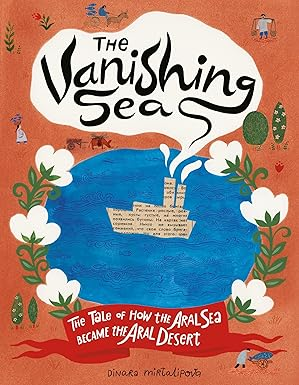
The Vanishing Sea: The Tale of How the Aral Sea Became the Aral Desert by Dinara Mirtalipova (Chronicle Books, 40 pages, grades 1-5). In a prologue before the title page, Dinara Mirtalipova shares information about the Aral Sea and how it disappeared in just a few decades due to mismanaged irrigation projects, including two pages of maps that show this progression from 1960 until 2021. Then the brief story begins, “A long, long time ago, there was a lake so vast that the people called her Mother Sea.” At first, people are content with the fish and drinking water the lake provides, but over time they grow greedier. “Like a selfless mother, the Sea gave them ALL of her resources.” The tale ends with a question: “Can the people save Mother Sea?” An author’s note tells of her journey to the desert in a remote part of Uzbekistan, along with photos of her mother in 1963, picking the cotton that led to the sea’s destruction. There’s a brief history of the Aral Sea with a timeline from 305 CE to the present, as well as information on local and global ecological impact.

This sobering story is a good reminder of what prioritizing human greed over the environment can do. The main story, illustrated in Dinara Mirtalipova’s unique style, could be shared with primary grade students, while the additional material at the front and back of the book makes it a great resources for older kids.