They Say Blue by Jillian Tamaki

Published by Harry N. Abrams
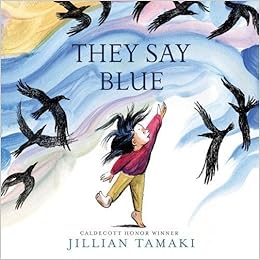
Image result for they say blue tamaki amazon

Summary:  A girl offers a stream-of-consciousness meditation on the world around her.  It begins with colors: “They say blue is the color of the sky. Which is true today! They say the sea is blue, too. It certainly looks like it from here.”  From the beach, she moves to a meditation on colors she can’t see, but knows are there like the golden egg yolk or her red blood. Later, her thoughts turn to the changing seasons, as she imagines herself a tree, first green, then brown, then covered with white. Finally, she moves back home, where she thinks of black, the color of her hair and of the crows she sees from the window as her mother braids her hair.  40 pages; ages 5-8.

Pros:  Caldecott honoree Jillian Tamaki has created beautiful (potentially award-winning) illustrations on every page , her colors and bold strokes of acrylics on watercolors perfectly rendering the various seasons and setting the narrator imagines.  The wandering narration captures the spirit of children’s conversations.  

Cons:  Some readers may struggle to figure out what this book is about.
If you would like to buy this book on Amazon, click here.

If I Had a Horse by Gianna Marino

Published by Roaring Brook Press

Image result for if i had a horse marino amazon

Image result for if i had a horse marino

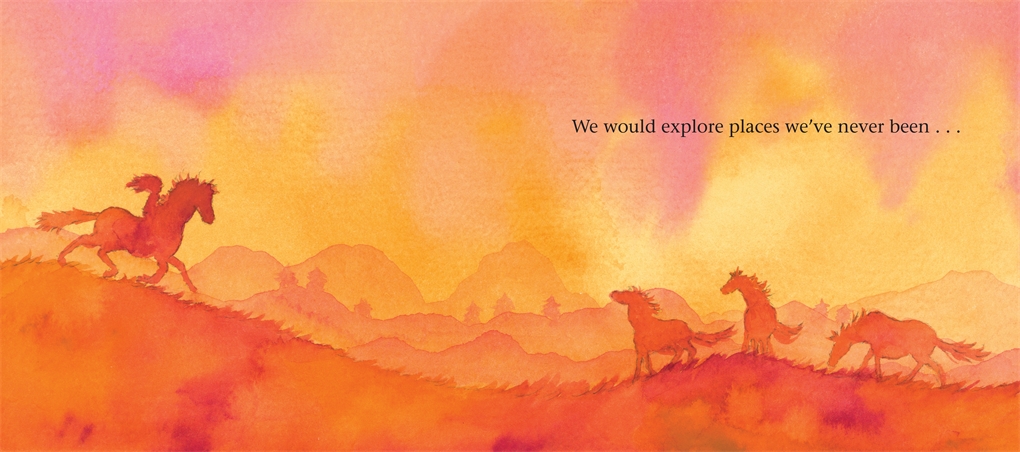
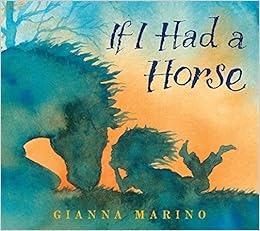
Summary:  A girl imagines what it would be like to have a horse.  At first, both she and the horse would be shy, but gradually they would become friends and learn to work together.  She pictures the horse helping her to make friends with other horses and their riders, but still keeping their own unique identities.  By the end of the book, the girl is visualizing herself standing on the horse’s back, fearless enough to do anything.  The illustrations are all in silhouette, with the dark figures of the horse and girl against a watercolor background that goes from the pink of early morning to the purple of twilight.  40 pages; ages 3-8.

Pros:  The unique illustrations are Caldecott-worthy, and the brief text is inspiring.

Cons:  Readers expecting a “horse-ier” book may be disappointed.

If you would like to buy this book on Amazon, click here.


A Lady Has the Floor: Belva Lockwood Speaks Out for Women’s Rights by Kate Hannigan, illustrated by Alison Jay

Published by Calkins Creek

Image result for a lady has the floor amazon

Image result for a lady has the floor kate hannigan

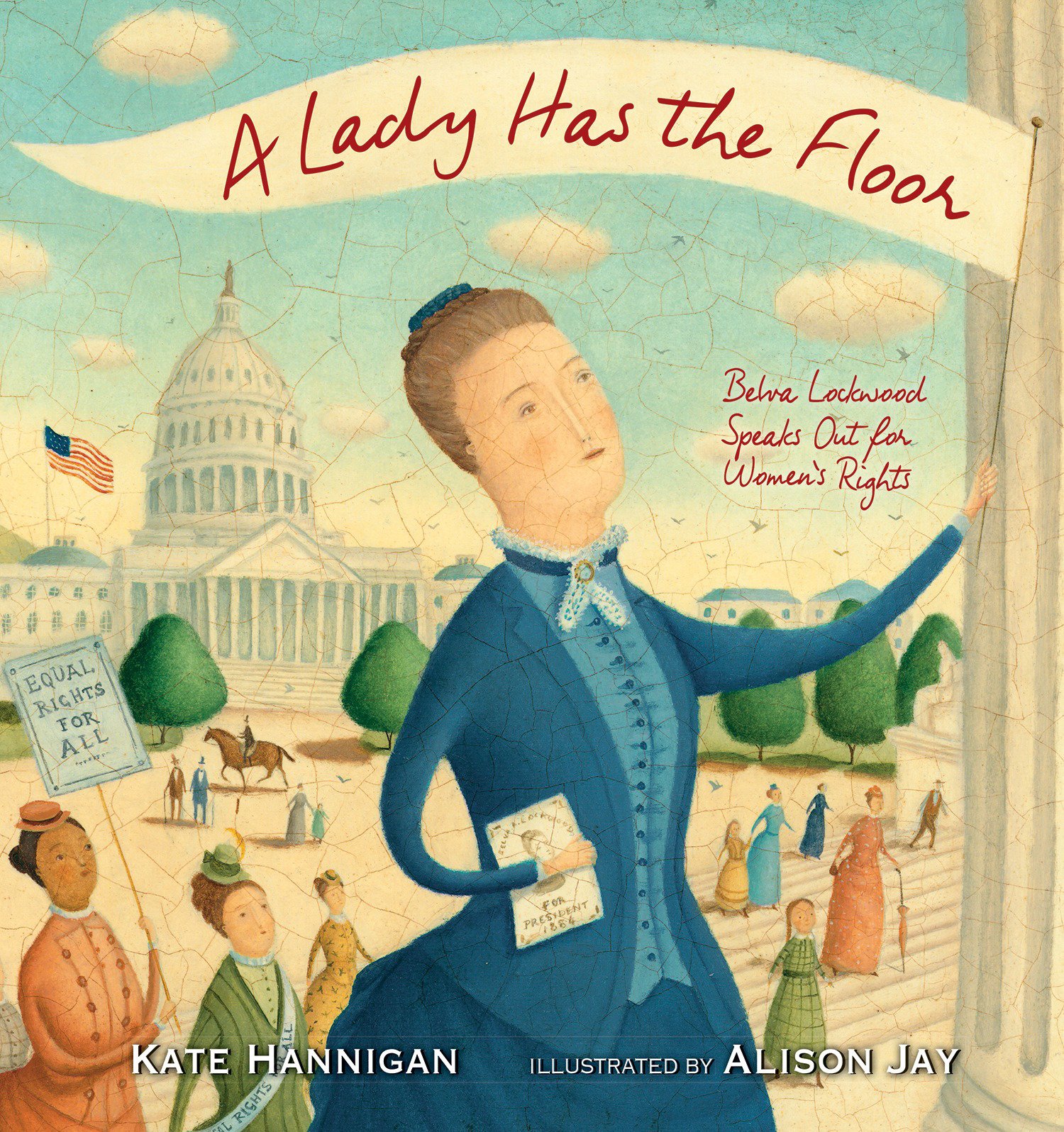
Summary:  Although a contemporary of Susan B. Anthony and Elizabeth Cady Stanton, Belva Lockwood is (unfairly) less well-known for her contributions to women’s rights.  Starting as a teacher at the age of 14, Belva began her activism in the world of education, introducing public speaking and physical education for both boys and girls, and eventually opening up her own private school.  From there, she went to law school, sticking it out when other female classmates quit. She graduated, but had to petition President Ulysses S. Grant to receive her diploma. As a lawyer, she fought for the underserved: widows, Civil War veterans, and former slaves, and eventually became the first woman to argue a case before the Supreme Court.  In 1884, she ran for President of the United States and received over 4,000 votes. Sadly, Belva Lockwood died in May, 1917, a little more than three years before the Nineteenth Amendment gave women the right to vote. Includes author’s note, timeline of U.S. women’s history to 2016, and bibliography.  32 pages; grades 2-5.

Pros:  A lively and engaging biography of an important and often overlooked suffragist; the timeline does a nice job of placing her life in the context of history.  

Cons:  Some readers might struggle with the cursive font that appears on some pages.

If you’d like to buy this book on Amazon, click here.

The Un-Friendship Bracelet (Craftily Ever After book 1) by Martha Maker, illustrated by Xindi Yan

Published by Little Simon

Image result for craftily ever after amazon

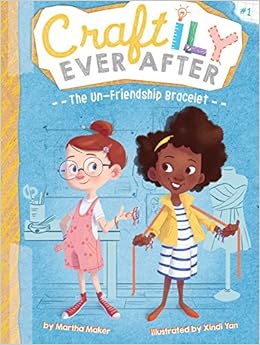
Summary:  Maddie and Emily are two best friends (they call themselves Mad-ily) who bond over crafting.  When Maddie makes friendly overtures to new girl Bella, Emily is worried that she is being excluded.  She starts to spend lunch time in the art room, where she gets to know Sam, a budding artist who loves to draw and paint.  Eventually, Mad-ily’s misunderstanding is resolved, and the four kids bond over a project turning an old shed at Bella’s new house into a craft studio.  By the end of the book, they’ve created a space with a desk, tool cabinet, shelf, easel, and worktable to allow them all to pursue their hobbies.  Includes instructions for making a friendship bracelet and a sneak peek at book 2.  128 pages; grades 1-3.

Pros:  The combination of crafts and friendship will appeal to many early chapter book readers.  A large font and plenty of illustrations make this an accessible choice.

Cons:  Those kids seem awfully young to be building tables and sewing cushions.

If you would like to buy this book on Amazon, click here.

New Shoes by Sara Varon

Published by First Second

Image result for new shoes varon amazon

Image result for new shoes sara varon

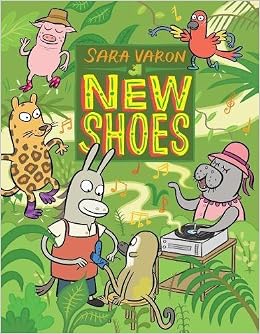
Summary:  Francis is living his dream, working as a shoemaker on the outskirts of the jungle.  He uses the finest coconut wood for the soles, goats’ wool for extra padding, and wild tiger grass collected from his friend Nigel the squirrel monkey to weave into fabric.  When he gets a rush order for famed calypso singer Miss Manatee, and Nigel is nowhere to be found, Francis decides to venture into the forest himself.  Clearly leaving his comfort zone, Francis eventually finds the tiger grass, resolves a darker side of Nigel’s personality, and meets some new types of animals who become friends.  Upon his return, he comes up with an innovative way to create shoes for Miss Manatee (who, it turns out, doesn’t have feet), and works with his old and new friends to help her make her dry-land debut.  Includes photos from Guyana, the real-life inspiration for Francis’s home. 208 pages; grades 1-4.

Pros:  This graphic novel combines the best of the picture book and chapter book worlds, with a big cast of fun and funny characters, an interesting story with chapters, and lots of engaging artwork.  It was an extra treat to see the photos of Guyana. Sure to be popular with the newly independent reading crowd.

Cons:  I worried that the “downstairs chickens” who wove the wild tiger grass into fabric could be experiencing some unfair labor practices.

If you would like to buy this book on Amazon, click here.

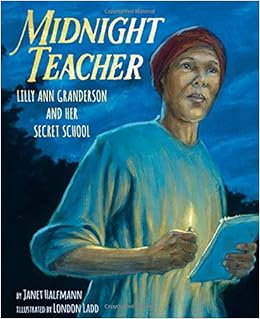
Midnight Teacher: Lilly Ann Granderson and Her Secret School by Janet Halfmann, illustrated by London Ladd

Published by Lee and Low

Image result for midnight teacher amazon

Image result for midnight teacher london ladd

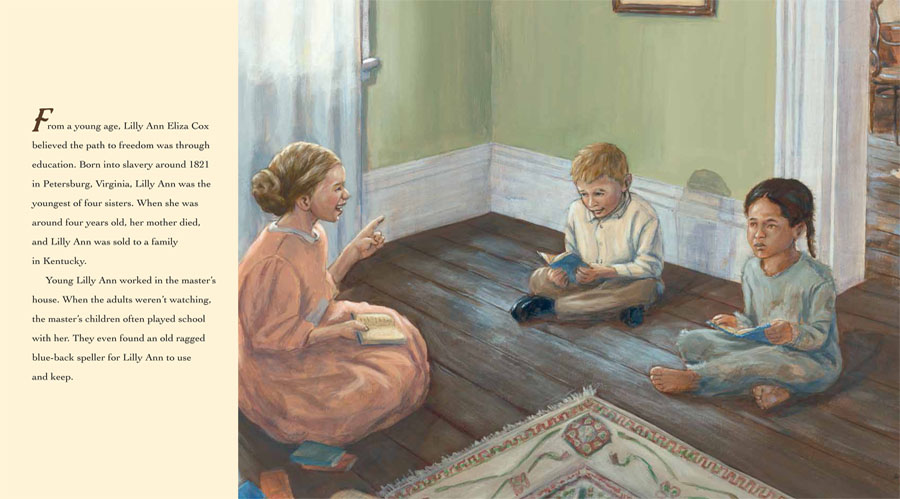
Summary:  As a young child working in the master’s house, Lilly Ann Cox was sometimes included in games of school with the other children.  She learned how to read and write, and enjoyed teaching other slaves when the master’s family went visiting on Sundays.  When the master died, Lilly was sold to a plantation in Mississippi, where she was forced to work in the cotton fields, often beaten for not being able to keep up.  When she became ill, she was moved into the kitchen.  On her trips to the market, Lilly discovered an abandoned cabin, and eventually opened a school there.  Slaves would sneak out in the middle of the night.  The penalty if they were caught was 39 lashes with a whip; however, when they were finally found out seven years later, they were miraculously allowed to keep the school going with no punishment.  After the Civil War, Lilly married and raised three children, while continuing her career as a teacher.  An afterword describes her work in greater detail and how it positively influenced her descendants, including great-grandson Charles C. Diggs, Jr., who became a Congressman and helped found the Congressional Black Caucus.  40 pages; grades 2-5.

Pros:  A fascinating story about one woman’s courage to improve the lives of others that had an impact for generations after her.  The acrylic paintings nicely illustrate Lilly’s story.

Cons:  Be prepared to answer questions about Lilly’s difficult days working in the cotton fields of Mississippi.

If you would like to buy this book on Amazon, click here.

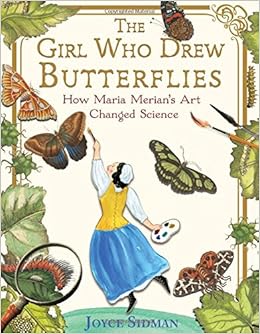
The Girl Who Drew Butterflies: How Maria Merian’s Art Changed Science by Joyce Sidman

Published by HMH Books for Young Readers

Image result for girl who drew butterflies amazon

Image result for maria merian paintings

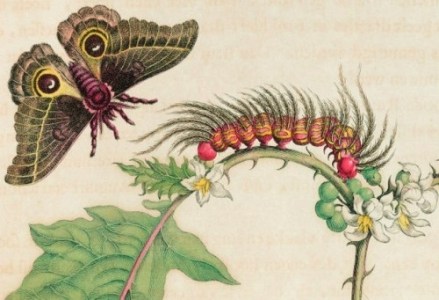
Summary:  Maria Merian faced some tough obstacles to studying science in the 17th century, not the least of which was the risk of being painfully executed for practicing witchcraft.  Fortunately, she had a supportive family who was pretty tolerant of her obsession with insects.  Her father was a printer and engraver; after he died, she had an artist stepfather.  Both included her in the family business, and Maria used her artistic skills to capture what she observed in nature.  She set about disproving the theory of spontaneous generation by studying the life cycles of as many moths and butterflies as she could.  As an adult she produced books of her subjects, usually in their natural habitats, making connections between plants and animals that few of her contemporaries observed.  In her 50’s, she traveled with her daughter to Suriname, where she was among the first European naturalists.  Her final masterpiece, an illustrated guide to the insects and plants she observed there, was well-received throughout Europe and influenced John James Audubon and other naturalists more than a century later.  Includes an author’s note, timeline, bibliography, and index.  160 pages; grades 5-8.

Pros:  A fascinating biography of a woman who was many centuries ahead of her time, balancing family and running a household with her art and science careers.  Her paintings and engravings throughout the book are almost unbelievably detailed and realistic.  Newbery poet Joyce Sidman named each chapter for a stage of a butterfly’s life and wrote an appropriate poem for each.

Cons:  While the book seems like it could appeal to third and fourth graders (only 120 pages of text and lots of pictures), the subject matter makes it more appropriate for grades 5-8.

If you would like to buy this book on Amazon, click here.


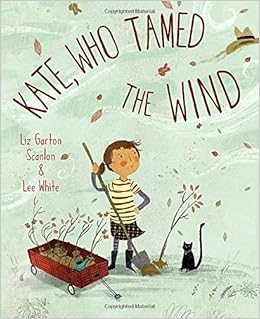
Kate, Who Tamed the Wind by Liz Garton Scanlon, illustrated by Lee White

Published by Schwartz and Wade

Image result for kate who tamed the wind amazon

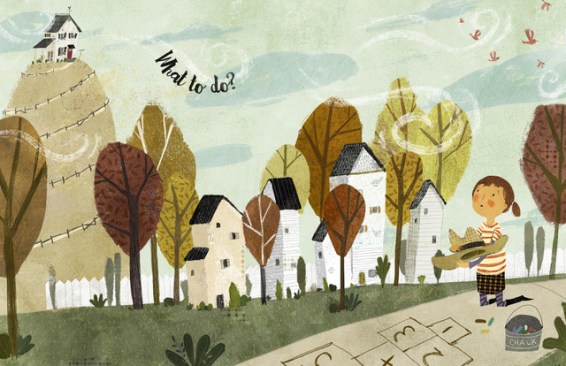
Image result for kate who tamed the wind scanlon

Summary:  A man living at the top of a steep hill is tortured by wind.  The shutters bang, the tea spills, and dust flies all around.  “What to do?” cries the man.  Fortunately, his neighbor at the bottom of the hill, a girl named Kate, has a solution.  Hauling a wagon filled with saplings, she helps the man plant the trees around his house.  Years pass, the trees grow, and so does Kate.  A grown-up Kate comes back to visit, and enjoys a peaceful cup of tea with the man, the wind no longer a problem thanks to the trees.  Includes an author’s note that tells the many ways trees help the earth, gives kids ways they can make a difference, and includes a few tree-related websites. 40 pages; ages 4-8.

Pros:  A good choice for an Earth Day story time.  The poetic text would be fun to read aloud, and follow-up activities could help kids learn more about trees.

Cons:  It seemed like the man had a long time to wait before his wind problem was solved.

If you would like to buy this book on Amazon, click here.

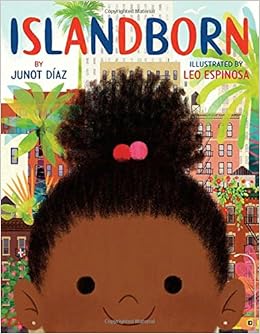
Islandborn by Junot Diaz, illustrated by Leo Espinosa

Published by Dial Books

Image result for islandborn amazon

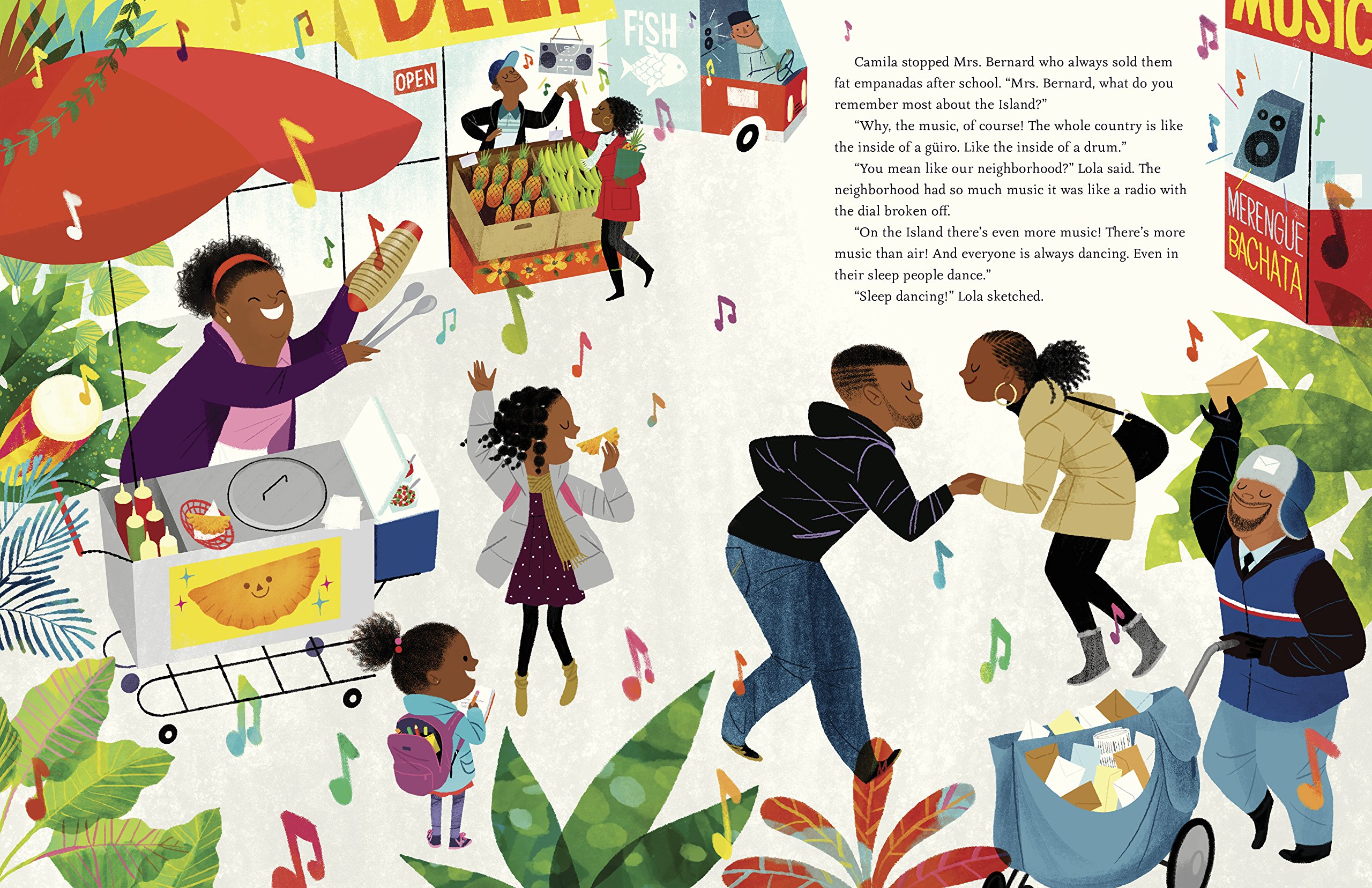
Image result for islandborn amazon

Summary:  “Every kid in Lola’s school was from somewhere else.”  When Lola’s teacher assigns the class to draw a picture of their country of origin, Lola isn’t sure what to do.  Unlike her classmates, she has no memory of the island where she was born. She asks her cousin, her mother, and her grandmother about the island, and they tell her about beautiful beaches, fun music, and delicious fruits.  The island sounds so idyllic, Lola can’t understand why her family left it.  Then she talks to Mr. Mir, the superintendent in her apartment building.  He describes the monster that terrorized the island for 30 years until brave men and women “got tired of being afraid and fought the Monster.”  By the time she’s done with her interviews, Lola has enough material to create a book of pictures, which she enjoys sharing with her classmates the following day.  48 pages; grades K-3.

Pros:  Apparently, Junot Diaz is some big-shot writer at MIT, which I didn’t know since I never read books for adults anymore.  His story of Lola is a beautiful meditation on immigration, memory, and the history of the Dominican Republic, which is the island that both Diaz and Lola come from.  The busy, colorful illustrations should be considered for a Caldecott.

Cons:  Since I am also ignorant of Dominican history, I didn’t recognize the Monster as dictator Rafael Trujillo, and I’m guessing many young readers won’t understand this part of the story either.

If you would like to buy this book on Amazon, click here.

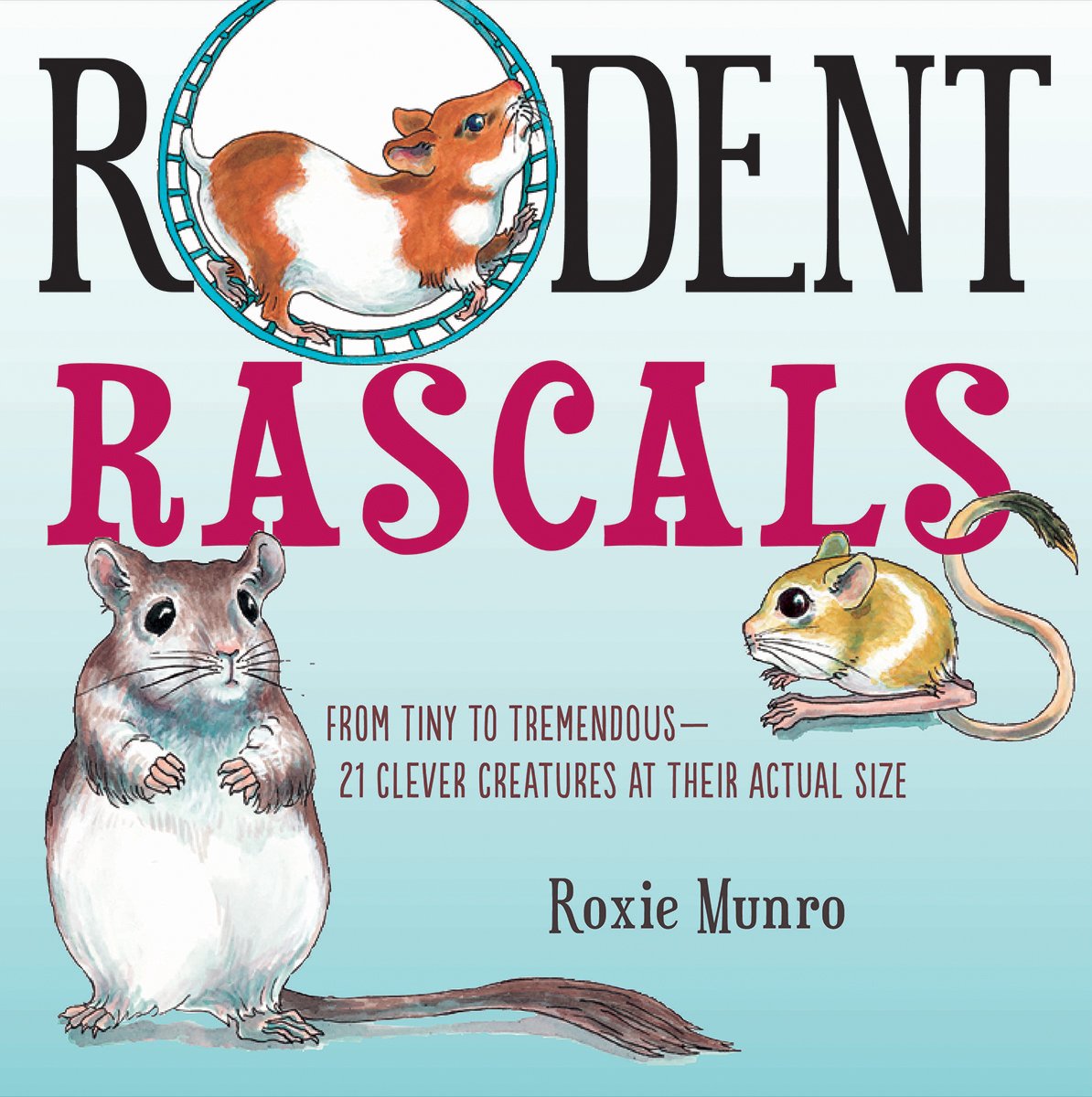
Rodent Rascals: From Tiny to Tremendous–21 Clever Creatures At Their Actual Size by Roxie Munro

Published by Holiday House

Image result for rodent rascals amazon

Summary:  Rats! A book about rodents? Yes, and there are rats…and lots of other rodents from the two-inch pygmy jerboa to the 150-pound capybary. Each animal is portrayed in actual size (or as much of it as can fit on a page) with a paragraph of text providing some interesting facts about it. An introductory page explains what makes an animal a rodent; two pages at the end provide researchers with the size, habitat, and scientific name of each creature. Includes a glossary, index, and additional resources. 40 pages; grades K-4.

Pros: Animal lovers as well as rodent-phobes (I just made up that word, but I kind of am one) will learn quite a bit and enjoy the large ink and acrylic illustrations.

Cons:  Is it accurate to have guinea pigs in this book? Back in the days when I was a guinea pig owner (technically, my children were the owners, but you know how that goes), I was told guinea pigs aren’t rodents.  There seems to be some controversy about this, and guinea pigs may be leaving the world of rodents for their own order, as rabbits did before them.

If you’d like to buy this book on Amazon, click here.