Evergreen by Matthew Cordell

Published by Feiwel and Friends
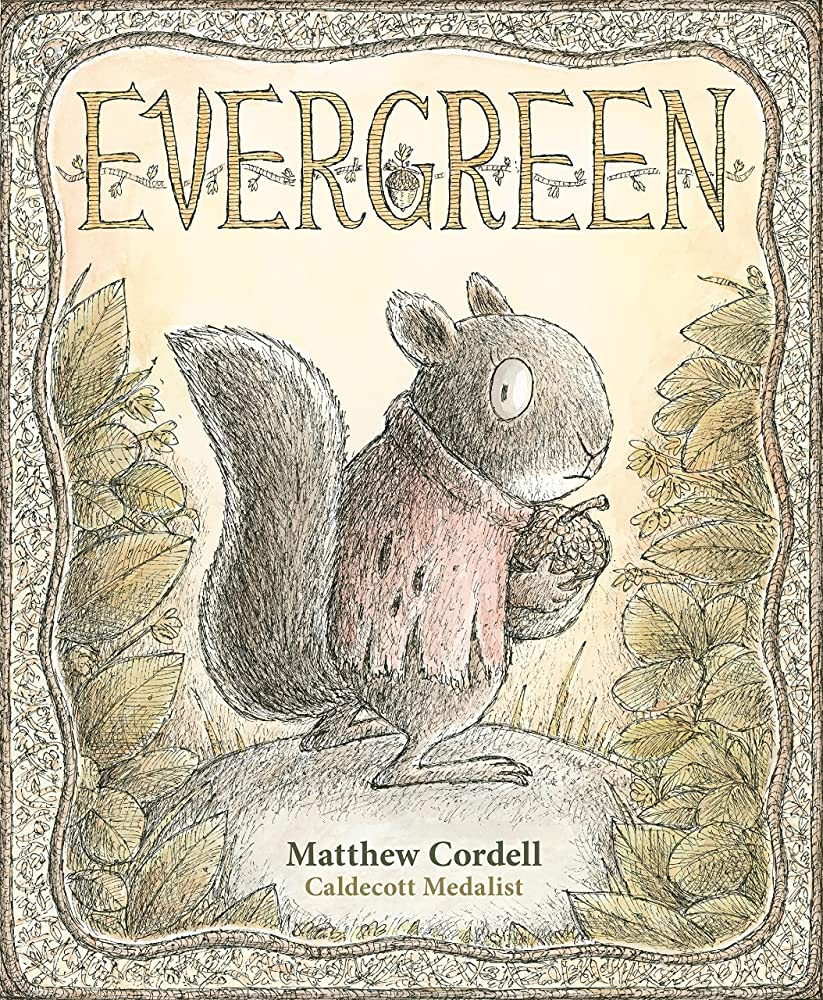
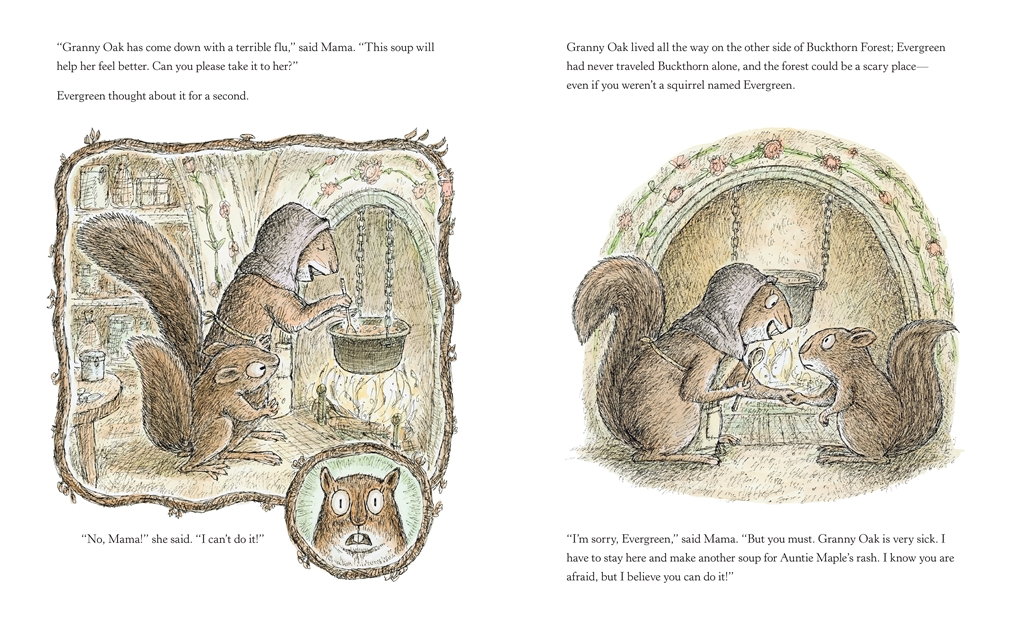
Summary:  Evergreen is a squirrel who is afraid of just about everything–everything except soup, that is.  So when her mother, whose specialty is making magic soup, asks her to take some soup to Granny Oak, Evergreen is scared.  And as it turns out, she has reason to be.  In the four sections of her journey, she encounters a soup-stealing rabbit, a hungry hawk, a toad with a mission, and a big, big bear.  As Evergreen figures out how to handle each situation, she grows more confident and courageous.  Back home, her mother greets her with some more soup that needs to be delivered, and Evergreen is more than ready to head back out again.  48 pages; grades K-2.

Pros:  Caldecott Medalist Matthew Cordell has created a real page-turner complete with scary sound effects that will have kids rooting for Evergreen and her brave deeds.  I thought this might be kind of long to read aloud, but it’s so engaging that I look forward to giving it a try.

Cons:  I prefer a brighter color palette.
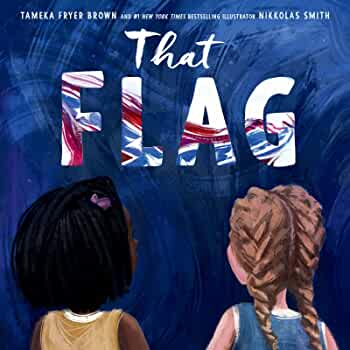
That Flag by Tameka Fryer Brown illustrated by Nikkolas Smith

Published by HarperCollins

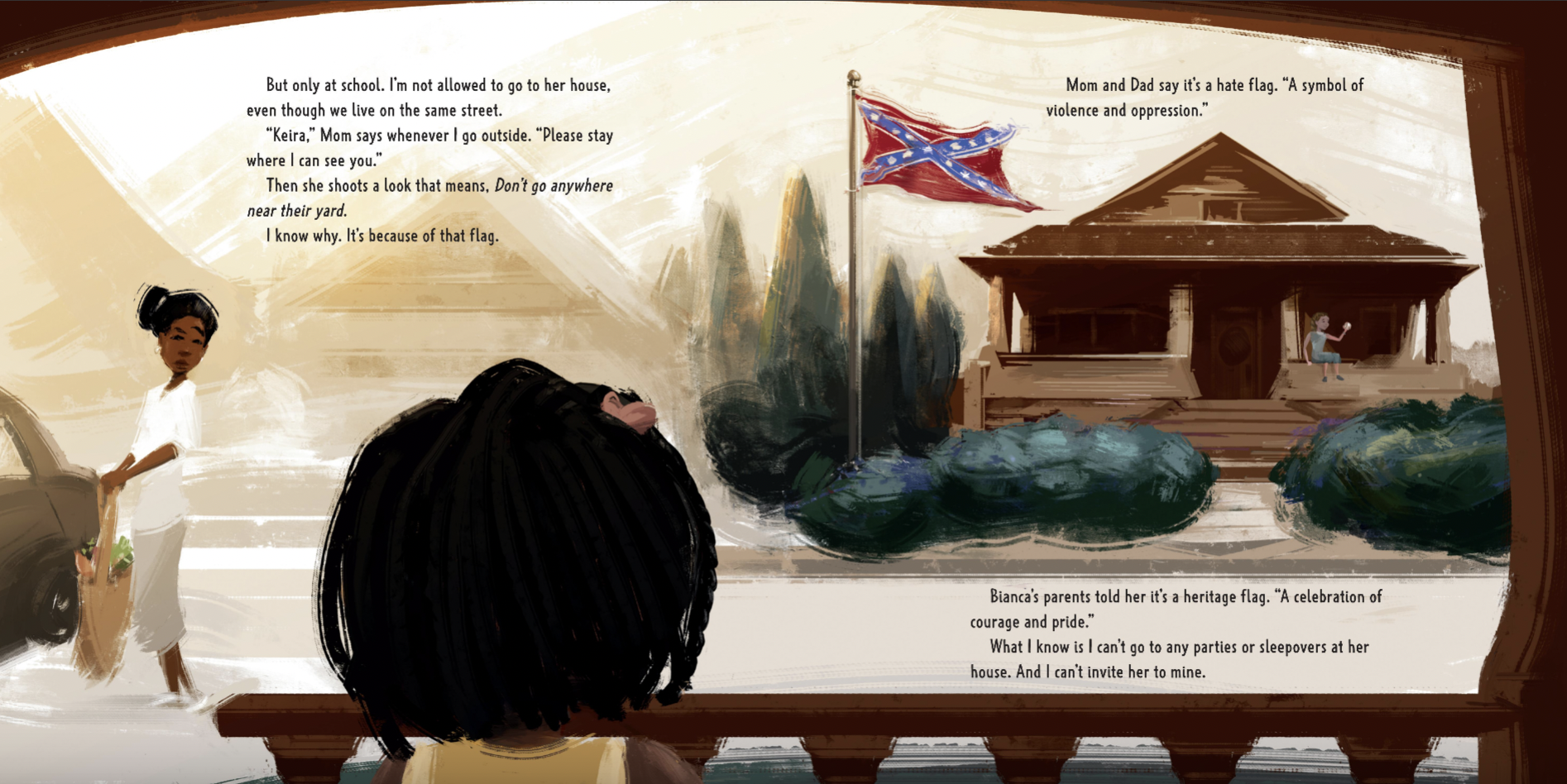
Summary:  Although Kiera considers Bianca her best friend, she’s not allowed to go over to Bianca’s because of the Confederate flag that flies outside their house.  While Kiera’s parents tell her that the flag is a symbol of violence and oppression, Bianca’s family describes it as a celebration of courage and pride.  Kiera is confused until a class trip to the Legacy Museum where she learns a history of racism that she didn’t know about. That night her family shares stories about their own experiences of racism that Kiera has never heard about before.  The stories leave her feeling scared and angry, and she finds that she no longer wants to be friends with Bianca, who seems unaffected by the museum trip.  A few days later, both girls see news reports of two Black people shot by three white men wielding a Confederate flag.  When Kiera and her parents go to a candlelight vigil, she’s surprised to see Bianca there with her family, and even more surprised on the drive home when she sees that they’ve taken down their flag.  The next day, Bianca passes Kiera a note saying, “You were right,” and Kiera wonders if they might be able to be friends after all.  Includes additional information about the Confederate flag, a list of sources, and notes from the author and illustrator.  40 pages; grades 1-4.

Pros:  This story addresses some difficult topics in a way that elementary students will understand, offering hope for friendship between the two girls while explaining why this is difficult for Kiera.  The additional information adds context to the story.  An excellent choice for teaching Black history and how it continues to affect us today.

Cons:  Be sure to block out plenty of time to share this book…there’s a lot to unpack.

Jump In! by Shadra Strickland

Published by Bloomsbury Children’s Books

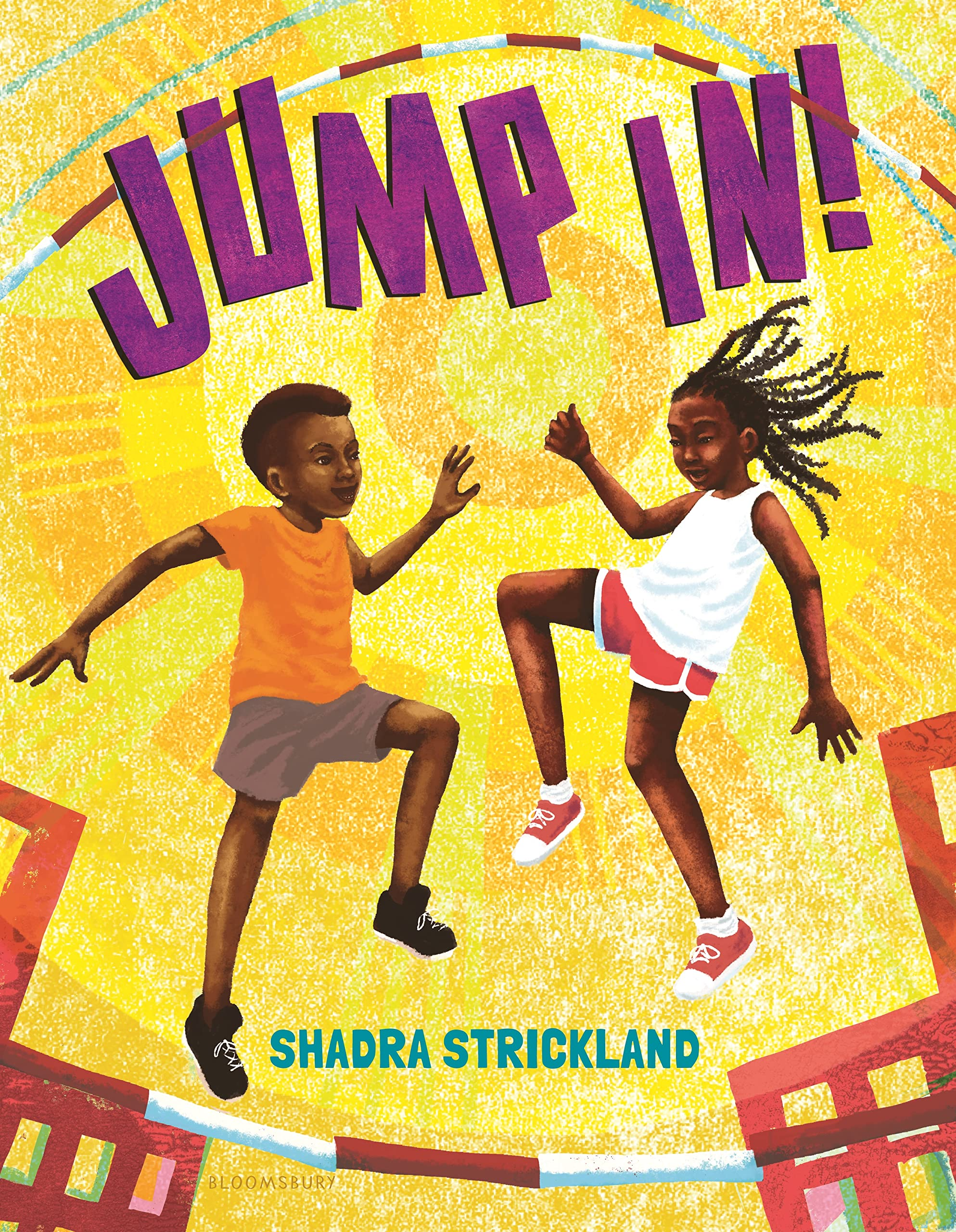
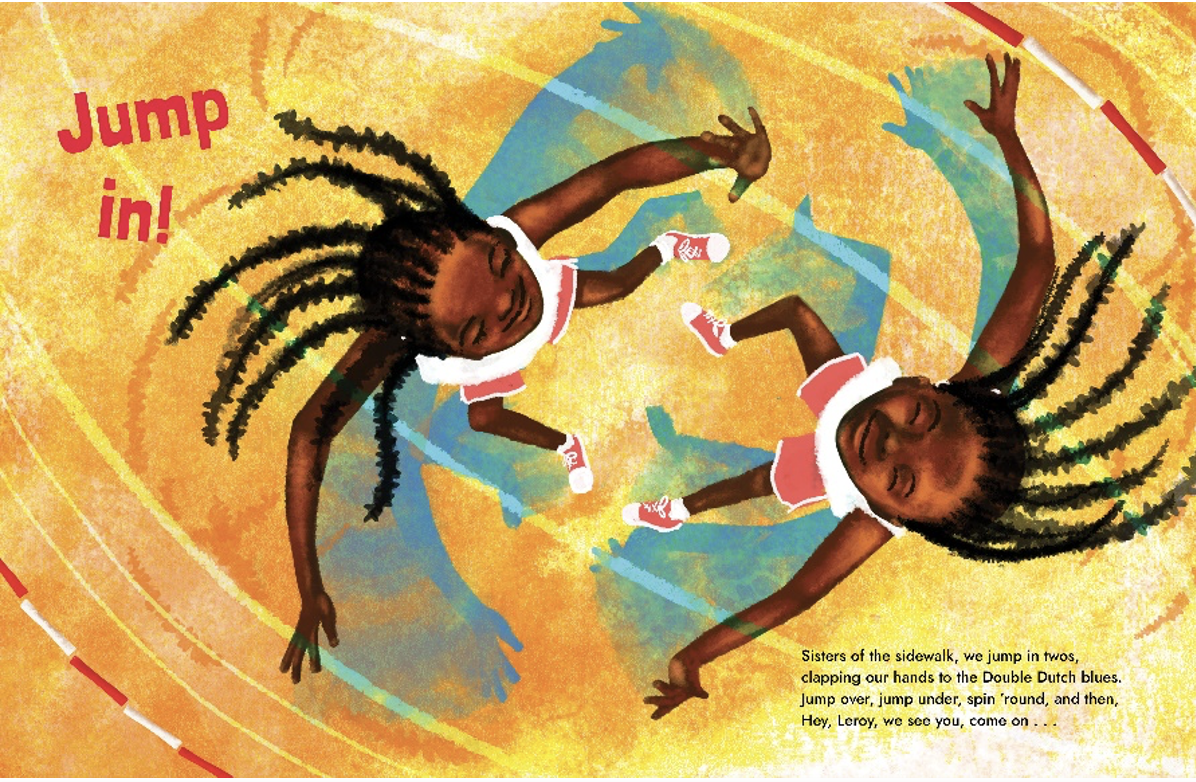
Summary:  The golden light of a summer morning beckons kids to the playground where the invitation, “Jump in!” is answered by young and old alike.  Kids line up for a turn at Double Dutch, a boy shows off his moves on the basketball court, a skateboarder returns from school, and even adults join in the fun:  a grandmother surprises everyone with her funky dancing and a hip young pastor jumps in, too.  As the light changes to purple, streetlights flicker on, and moms begin to call kids home.  The last spread shows abandoned jump ropes on the dark playground with the words, “Jump Out.”  32 pages; ages 4-8.

Pros:  The bouncy rhythmic text and high-energy illustrations will have kids up on their feet celebrating the world of play and community on a hot summer’s day.

Cons:  While kids always enjoy gatefold spreads like the ones scattered through this book, I find they don’t hold up well in the library.

The Carrefour Curse by Dianne K. Salerni

Published by Holiday House

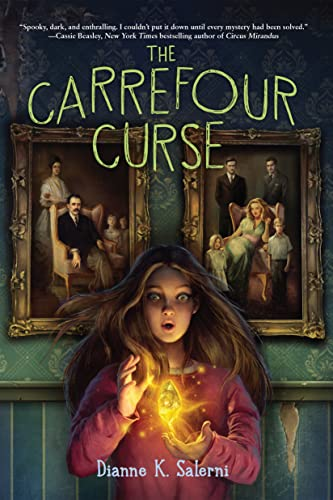
Summary:  Garnet has always loved her mother’s stories about growing up with her large extended family at the Crossroad House, but her mom fled the house long ago, and Garnet has never seen it.  It takes an episode of vomiting frogs to get the two of them back there, where they find the house in disrepair and the family dealing with the family patriarch, Jasper, who is staying alive by sucking the life energy from anyone he can.  As Garnet learns more about her magical family and their history, she discovers powers of her own beyond the magic she has always practiced.  When a crisis threatens her and her cousins, she must use those powers to save herself and to put her family on a new and more promising path.  224 pages; grades 4-7.

Pros:  Buckle yourself in for a magical mystery tour of an ancient house and family that holds more than its share of dark secrets.  Anyone who enjoys a good mystery with a generous dose of spookiness is in for a treat. Dianne Salerni does an amazing job of creating a richly detailed magical family history in just over 200 pages.

Cons:  I struggled to keep all the members of the family straight.  I wish the family tree, which I had to refer to frequently, had been at the beginning of the book instead of on pages 10 and 11.

The Gentle Genius of Trees by Philip Bunting

Published by Crown Books for Young Readers

Summary:  This friendly introduction to trees starts out with the ways humans benefit from them (wood, paper, food, shade), then moves on to the many amazing things trees can do.  Their roots sink deep into the earth, allowing trees to connect with and even communicate with each other.  The genius of trees extends to their growth, allowing them to optimize the location of branches and leaves for making food through photosynthesis.  The book ends with some lessons humans can learn from trees: be flexible, branch out (but look for the things that give you the most energy), look out for those around you, and grow slow to grow strong.  32 pages; grades 2-5.

Pros:  There’s a surprising amount of information about trees here, all presented with clear explanations, gentle humor, and cute yet informative illustrations. 

Cons:  No back matter.

Once Upon a Book by Grace Lin and Kate Messner

Published by Little, Brown Books for Young Readers

Summary:  “I wish I were someplace that wasn’t so frozen and gray!” grumbles Alice on a cold winter’s day.  An open book catches her eye, telling the story of a warm, colorful morning.  “That sounds like our home,” say the birds in the story, and Alice finds herself in a steamy jungle.  When it starts to rain, a pair of camels invite her into the desert.  From there, the book takes her under the ocean and on a flight across the sky and up to the moon.  The moon is lonely, though, so Alice wishes herself back home again, just in time for dinner with her family.  40 pages; ages 4-8.

Pros:  Beautiful illustrations depict the various places Alice visits, with a repeating text that celebrates the journeys books can take readers on.

Cons:  Considering the talented creators and the three starred reviews, I was expecting some slightly more imaginative storytelling.

Cut! How Lotte Reiniger and a Pair of Scissors Revolutionized Animation by C. E. Winters, illustrated by Matt Schu

Published by Greenwillow Books

Summary:  Who created the first full-length animated film, inventing the multiplane camera and storyboarding in the process?  If you answered Walt Disney, it’s time for you to pick up this book and learn about Lotte Reiniger, a German artist who developed a love of shadow puppetry as a child and became renowned for her creations.  After studying filmmaking and stop-motion animation with director Paul Wegener, she started making short animated films but didn’t think any audience would be interested in a feature-length one.  A friend convinced her to try, though, and she spent the next three years creating The Adventures of Prince Achmed. When it was finally completed in 1926, she had trouble finding a theater that would show it, but it eventually became a big success.  Lotte went on to make approximately sixty films, including one in a basement during the bombing of Berlin before she emigrated to England.  Includes a timeline, a list of sources, and an author’s note with additional information about Lotte.  40 pages; grades 1-5.

Pros:  Don’t forget, March is Women’s History Month, and this would make a fascinating read-aloud, maybe shown with the Prince Achmed trailer.  The story is well-told, and the illustrations capture the feel of Lotte’s work with film and silhouettes.

Cons:  The thought of making a film like this makes me want to lose my mind.  Lotte must have had incredible patience.

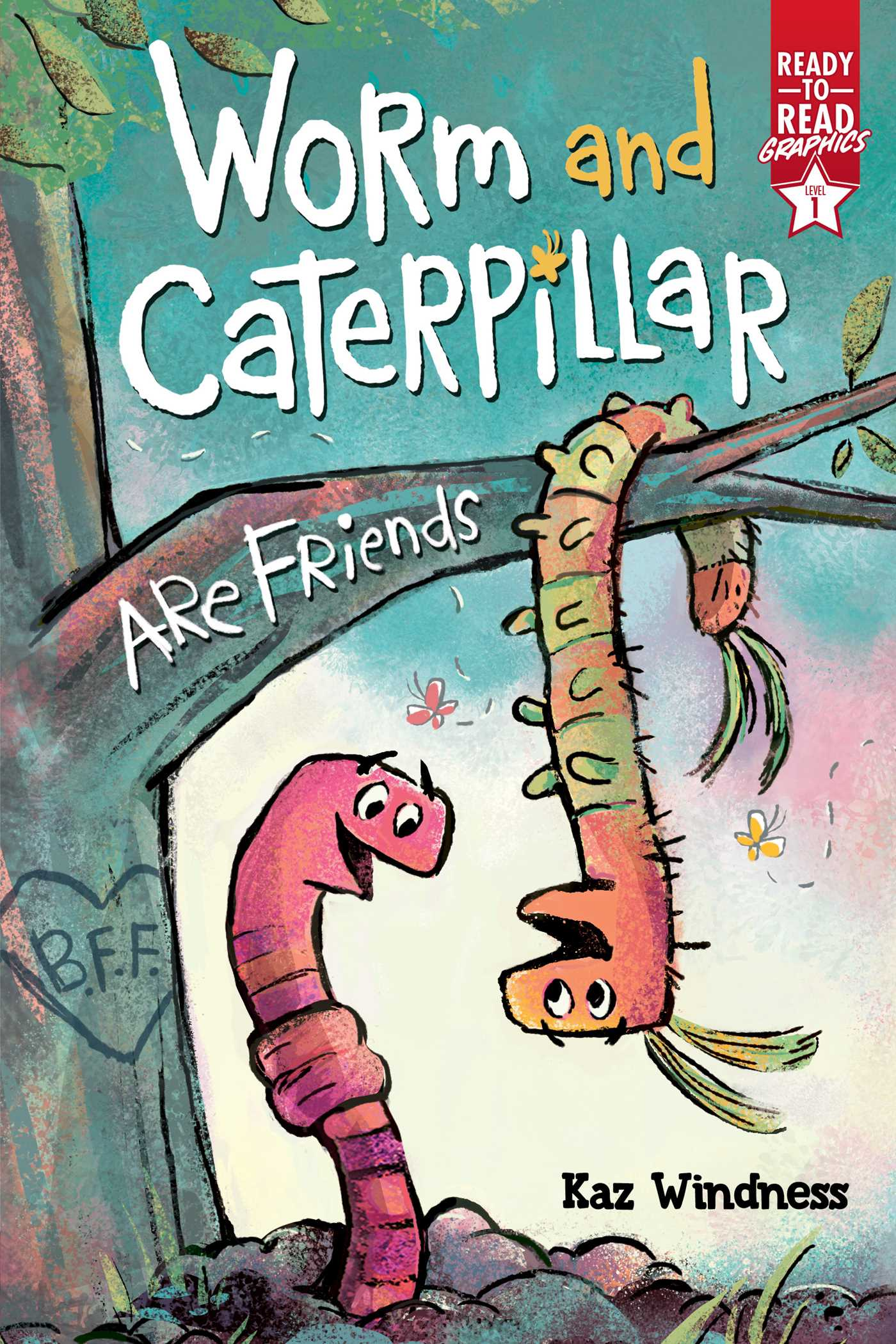
Worm and Caterpillar Are Friends by Kaz Windness

Published by Simon Spotlight

Summary:  Worm and Caterpillar are best friends share many similarities but also have some differences.  Worm is nervous when Caterpillar begins to change even more, eventually falling silent inside of a chrysalis.  When Caterpillar finally wakes up, he’s afraid that if he emerges, Worm will no longer like him.  Finally, Caterpillar reveals himself in his new incarnation as Butterfly.  At first Worm thinks he is a scary bird and hides deep underground, but eventually the two reclaim their best friendship.  Includes directions for drawing Worm and Butterfly.  64 pages; ages 4-7.

Pros:  A fun early reader, with a comic format that includes just a sentence or two of text on each page. The message is positive about keeping friends even when one or both parties go through some changes. There’s a nice introduction to reading comics before the main story begins.

Cons:  Early reader comics about two animal friends seem to be a bit of a glut on the market these days.

Watch Out for the Lion! by Brooke Hartman, illustrated by Anna Süßbauer

Published by Page Street Kids

Summary:  On the first page, readers are shown a labeled diagram of a lion–tail, ears, snout, fangs, and claw–so that they’ll know what to look for and avoid danger.  On the next page, watch out, it’s a lion’s tail!  Or is it?  Another page turn reveals the tail actually belongs to a giraffe.  And so it goes, with different body parts revealed to be a sloth, a hamster, and a walrus.  When a lion finally comes along, it turns out to be a cute baby cub.  But there really was a lion, so stay on your toes!  You never know what may be lurking around the corner.  32 pages; ages 3-8.

Pros:  Any story that is this interactive is a win in my book, and I can’t wait to read it to kindergarteners sometime in the near future.

Cons:  I wish there had been a few more animals included. It was over too quickly.

Just Jerry: How Drawing Shaped My Life by Jerry Pinkney

Published by Little, Brown Books for Young Readers

Summary:  Award-winning illustrator Jerry Pinkney was working on this memoir at the time of his death in 2021.  He writes of his childhood, growing up in the Germantown section of Philadelphia in the 1940’s and 1950’s, surrounded by a chaotic but loving family and neighborhood.  Due to dyslexia (the book is written in a font created for those with dyslexia), he struggled in school, but always found solace in sketching and art.  His memories of home, school, and summers at the Jersey shore describe the racism he and his family had to deal with but also the support he got from his family, friends, and members of the community. Thanks to hard work and a little luck, he finds his way to beginning an art career by the end of the book. The epilogue describes how his early life led to his success as an illustrator. 160 pages; grades 3-7.

Pros:  Jerry Pinkney has created a wonderful memoir, showing what it was like to grow up in a loving family that also struggled with racism; with an undiagnosed learning disability; and with a passion and talent for art.  He emphasizes the positives in his childhood without shying away from some of the difficulties.

Cons:  Because Jerry died before this was completed, the illustrations are his rough sketches.  I enjoyed them but couldn’t help feeling wistful about what might have been.