Skater Cielo by Rachel Katstaller

Published by Orchard Books

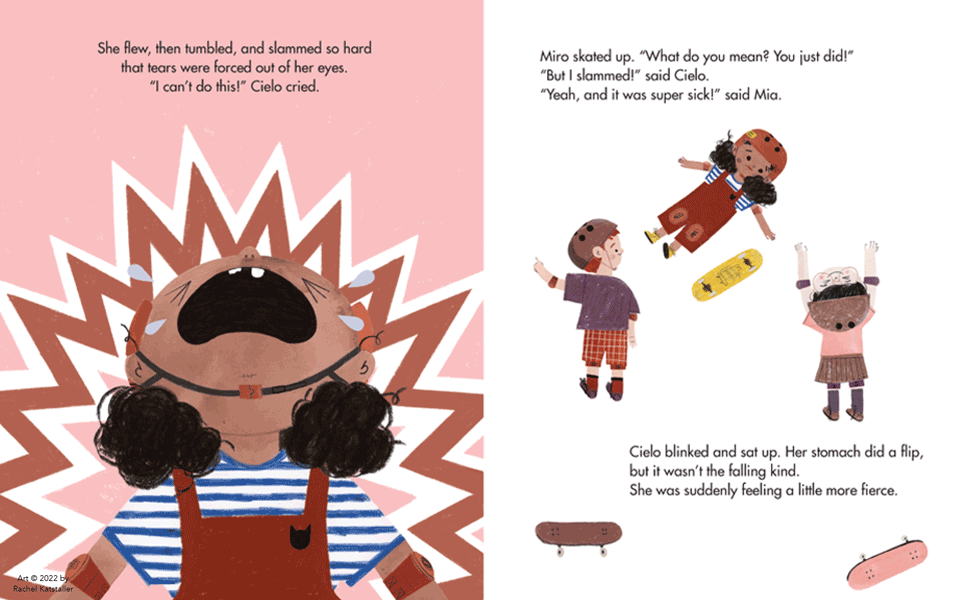
Summary:  Cielo loves to skateboard and is excited when she discovers a new park with deep pools (ramps in the shape of swimming pools) opens in her town.  She tries the biggest one, called The Whale, and ends up falling harder than she ever has before.  Her confidence shaken, she finds she can’t do her usual tricks and tearfully shoves her skateboard in a closet when she goes home.  Yet she can’t help walking past the park and watching others on The Whale.  One day a girl invites her to try again, and once again Cielo falls.  But her new friends encourage her to keep trying, and after many, many falls, Cielo finds herself flying higher than she ever has before.  Includes a glossary and an author’s note.  40 pages; ages 4-8.

Pros:  I’ve found skateboarding books to be popular with kids and this one delivers a great message about persistence, with lots of action-packed illustrations.

Cons:  Some of those falls looked pretty painful.

Pizza! A Slice of History by Greg Pizzoli

Published by Viking Books for Young Readers

Summary:  Sure, everyone loves pizza, but where did it come from originally?  A pizza-loving rat guides readers through a somewhat random assortment of facts (Americans eat 350 slices of pizza every second!) to trace its history from pizza-like (but not quite pizza) foods of the ancient world to the early pizzas of Italy (it helped that Italians, unlike other Europeans, didn’t think tomatoes were poisonous).  The immigration of four million Italians to the US between 1880 and 1924 brought pizza to America, and its popularity increased after World War II when American soldiers returned from Italy.  A review of different pizzas around the US and the world rounds things out.  “Right now somewhere in the world, someone is enjoying a pizza.  Are you?”  56 pages; grades 1-4.

Pros:  A fun and quirky nonfiction book about a topic that everyone will enjoy.  The text draws the reader in with lots of questions and the colorful cartoon illustrations are appealing.

Cons:  Some of the text could have used a bit more context, like comparing the colors of a pizza to the Italian flag with no flag pictured.  Also, I was sad to find no back matter.

The Inflatables in Bad Air Day by Beth Garrod and Jess Hitchman, illustrated by Chris Danger

Published by Scholastic

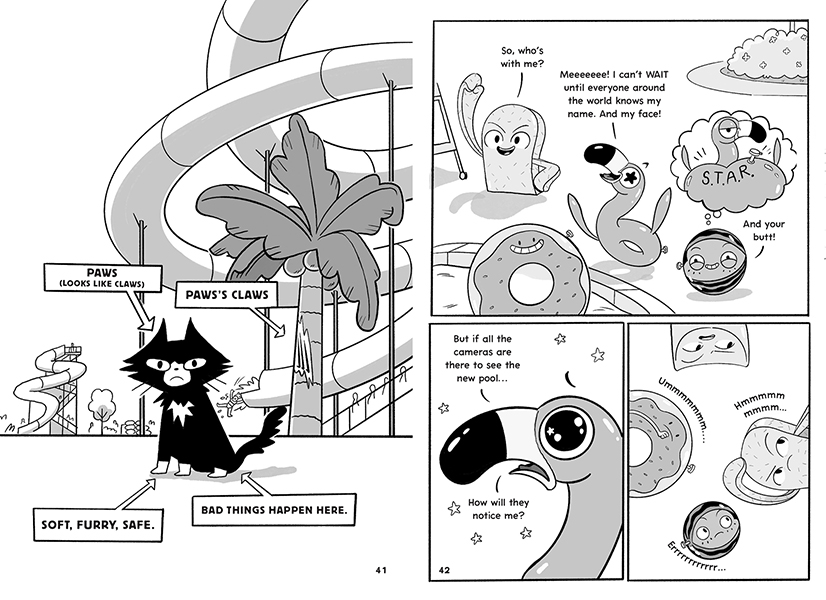
Summary:  A group of inflatable toy friends (flamingo, donut, cactus, watermelon, and raft) live in a water park and help each other out in all kinds of situations, like when they hear there’s a new wave pool opening on the other side of the park.  Seems like inflatables wouldn’t be able to travel, but where there’s a will there’s a way for this crowd.  When they get to the pool, though, Flamingo discovers that his worst nightmare is living there, and they all have to quickly find a way back home again (spoiler alert: this involves a helium tank).  There’s a happy ending for all, and I’m not full of hot air when I tell you book 2 is available now, and book 3 will arrive in October.  128 pages; grades 2-5.

Pros:  Summer may be coming to an end, but you can pretend you’re still at a pool party with this funny group of inflatable friends.  This is sure to be a hit with fans of Dog Man and other graphic novels.

Cons:  This has the look of a Branches book, but it’s more of a graphic novel than those are.  I think a larger format with color would have worked better.

School Is Wherever I Am by Ellie Peterson

Published by Roaring Brook Press

Summary:  A boy introduces his school as a building where he goes to a classroom that has desks, a teacher, and his classmates.  But then he wonders if school can be in other places too.  He thinks about field trips to museums or a pumpkin patch, as well as experiences he’s had with his family like cooking and woodworking.  Sometimes school is on a computer screen.  School can even look like making a mistake, figuring out how to fix it, and apologizing.  Inside or outside, the boy decides that school is wherever he is.  40 pages; ages 4-8.

Pros:  A great back-to-school book that encourages curiosity, both in the traditional school setting and outside of it.  Kids can brainstorm their ideas about school before reading this.  I love the endpapers that show different sets of collections associated with places mentioned in the book.

Cons:  Flashbacks to remote learning with the teacher on the computer screen.

Hope Is an Arrow: The Story of Lebanese-American Poet Kahlil Gibran by Cory McCarthy, illustrated by Ekua Holmes

Published by Candlewick

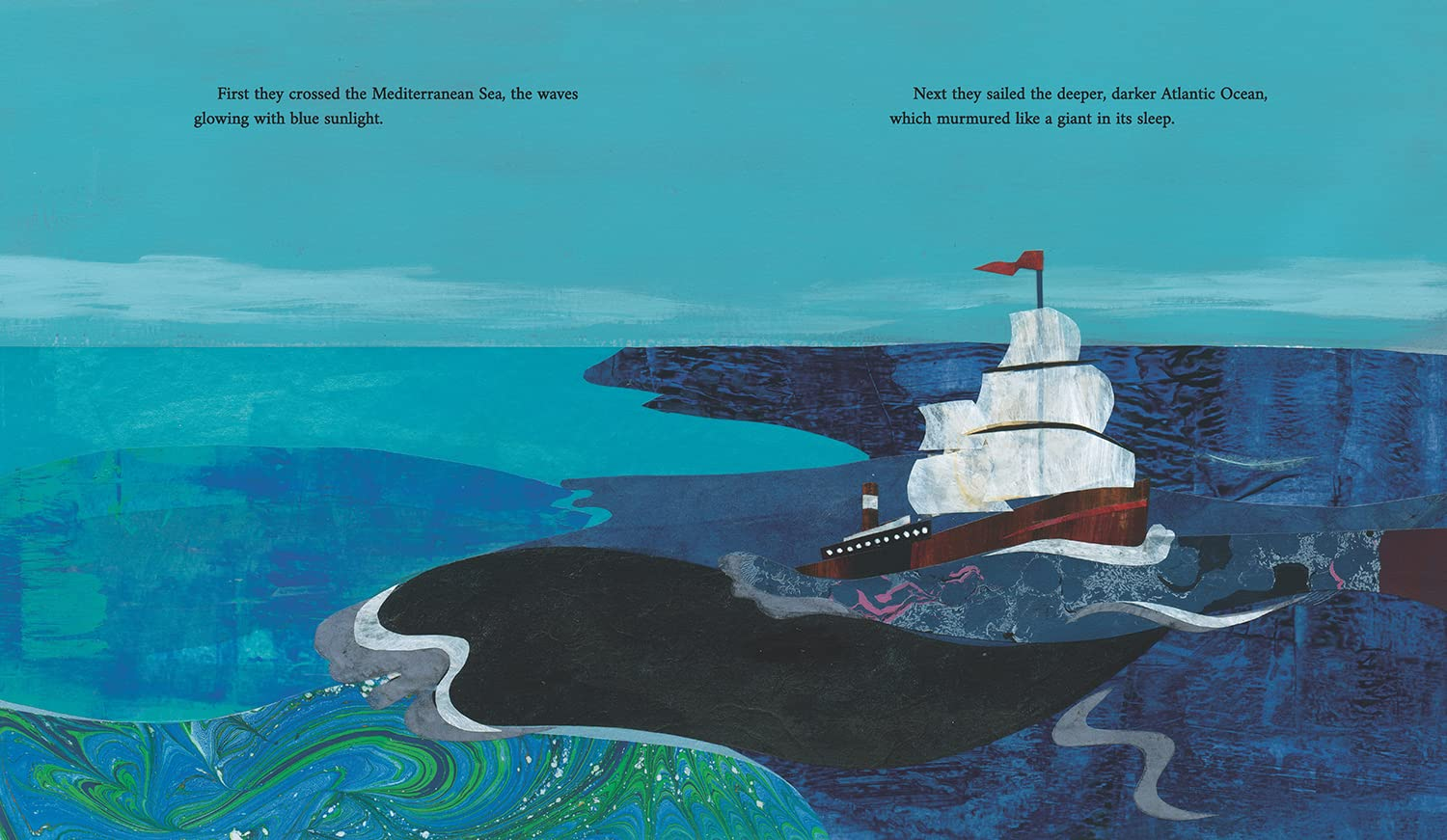
Summary:  Gibran Khalil Gibran was a shy boy growing up in Lebanon.  He loved his country, but there was unrest there, and he often escaped into nature, hiking in the woods or swimming in the ocean.  After his father was jailed, he and his mother and three siblings left for America.  They settled in Boston’s South End, where a teacher changed his name to Kahlil Gibran, and where he often saw his mother treated disrespectfully despite her hard work as a shopkeeper.  Kahlil often felt divided between his American self and his Lebanese self and began expressing himself through his poetry and art.  Studying in Beirut and losing his mother, sister, and brother in a short period of time deepened and intensified his art, and in 1923, he published his most famous work, The Prophet.  Includes source notes and additional stories from Kahlil Gibran’s life.  40 pages; grades 2-5.

Pros:  The lyrical text and beautiful illustrations capture Kahlil Gibran’s spirit.  Many of his quotes are included (including my favorite, “Work is love made visible”) which are helpful in introducing his writing.  As usual, Ekua Holmes’s art is worthy of award consideration.

Cons:  I wasn’t crazy about the format of the source notes and additional stories, which did not seem particularly kid friendly.

The Ogress and the Orphans by Kelly Barnhill

Published by Algonquin Young Readers

Summary:  Stone-in-the-Glen used to be a happy town where people helped each other and loved to read and discuss books.  But when a new Mayor takes over and the library burns down, the town falls on hard times and neighbors begin to distrust one another.  An ogress moves to the edge of town and begins observing the residents.  She grows to love them all, particularly the group of kids living in an orphanage, and begins to make secret nightly deliveries of food and cards to their homes .  After she rescues one of the children one night, the town turns on her, accusing her of kidnapping.  The children get to know and love the ogress and come up with a plan that not only redeems her reputation but unites the town back into a loving community and reveals the Mayor for who he truly is.  400 pages; grades 4-7.

Pros:  Another complex and interesting fantasy from Newbery Award winner Kelly Barnhill.  The Mayor bears a resemblance to Trump, and the reaction of the townspeople provides a timely message. With four starred reviews and a current number 3 spot on the Goodreads Mock Newbery list, this is sure to get plenty of consideration at awards time.

Cons:  On both Amazon and Goodreads, there’s a small number of reviewers who felt that the message of this book overwhelmed the story.  Unfortunately, that was my takeaway as well.

Abuelita and I Make Flan by Adrian Hernández Bergstrom

Published by Charlesbridge

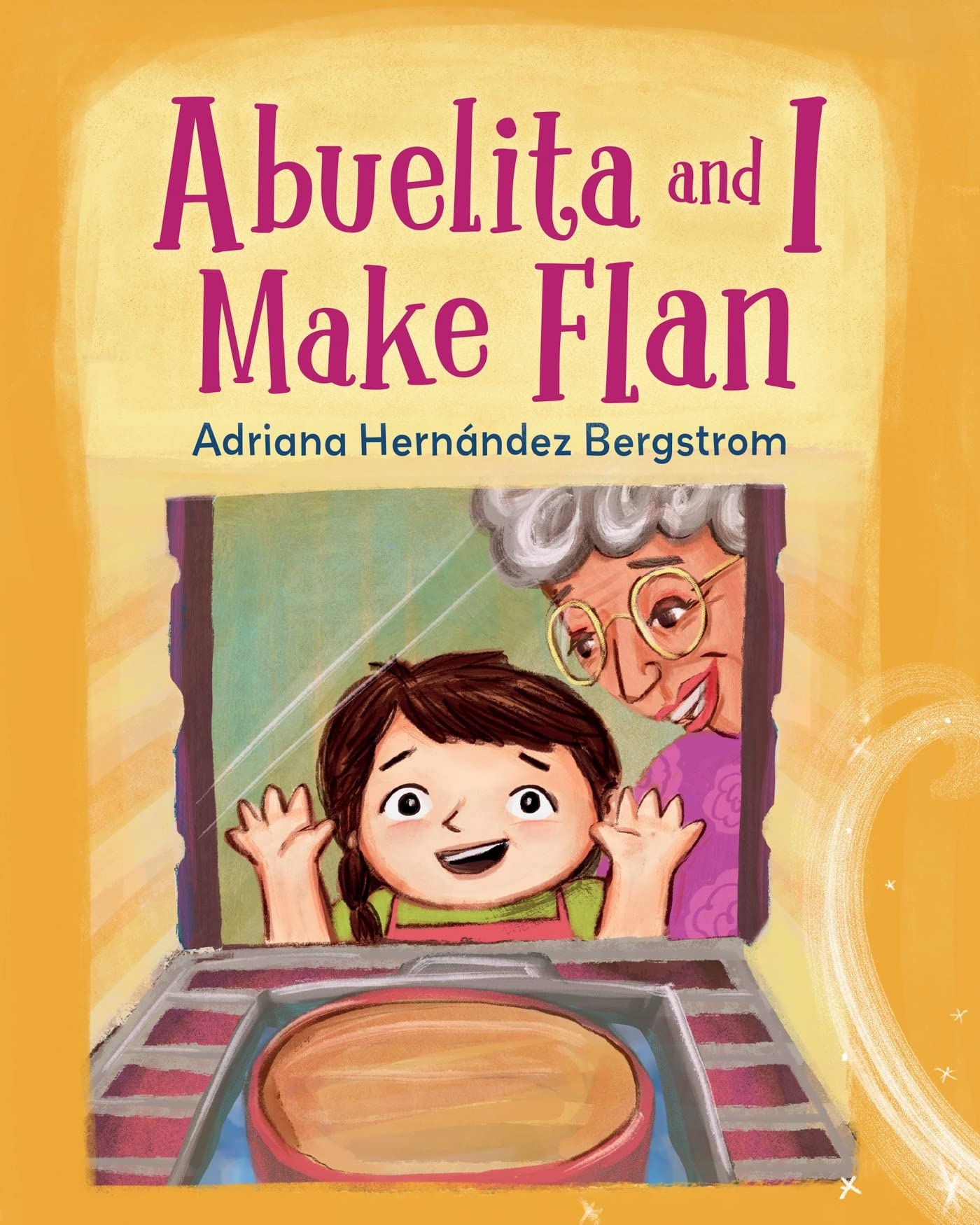
Summary:  Anita is excited to be learning how to make flan with Abuelito as they prepare the treat for Abuelo’s birthday.  But before they can even get started, Anita accidentally drops the beloved glass flan plate.  She sweeps up the pieces, hoping no one will notice.  She and Abuelita have a great time working their way through the flan-making process, but at last the moment comes when it’s time to get out the plate.  Anita tearfully confesses what happened, to which Abuelita replies, “A plate is a plate, but YOU are irreplaceable.”  Turns out that Abuelo broke the first flan plate years ago, and the one Anita dropped was a replacement.  They end up using a plate Anita made for grandparents’ day, and the birthday celebration goes off without a hitch.  Includes a recipe for cheese flan and English translations of the Spanish words used in the story.  32 pages; ages 4-8.

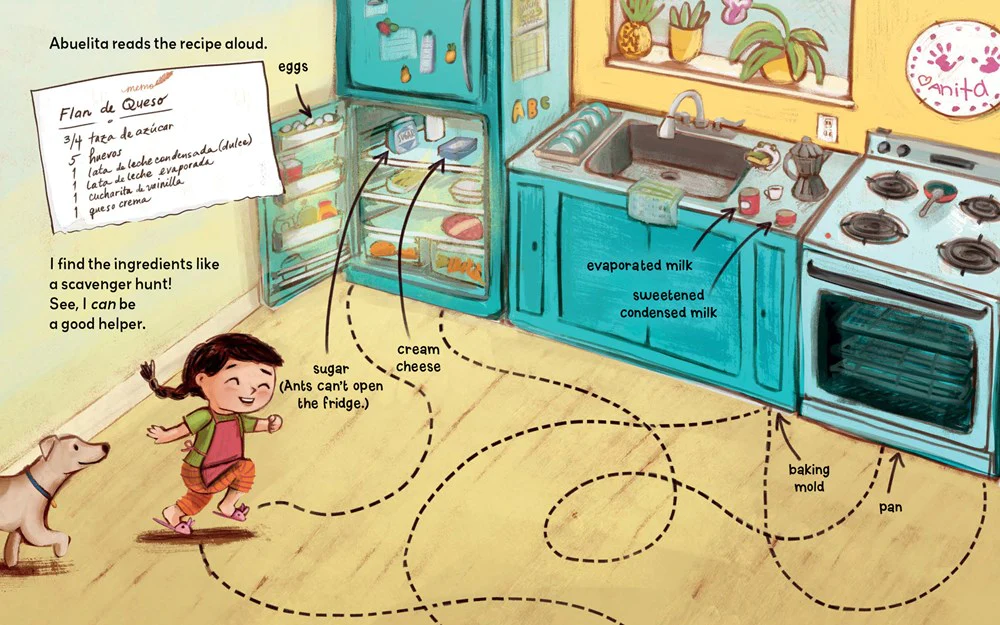
Pros:  A heartwarming intergenerational story about a shared love of food and cooking.  The illustrations are appealing with their cartoon bubbles and labeling of items around the kitchen, activities Abuelita needs help with due to arthritis, etc.

Cons:  Making flan looks pretty complicated
.

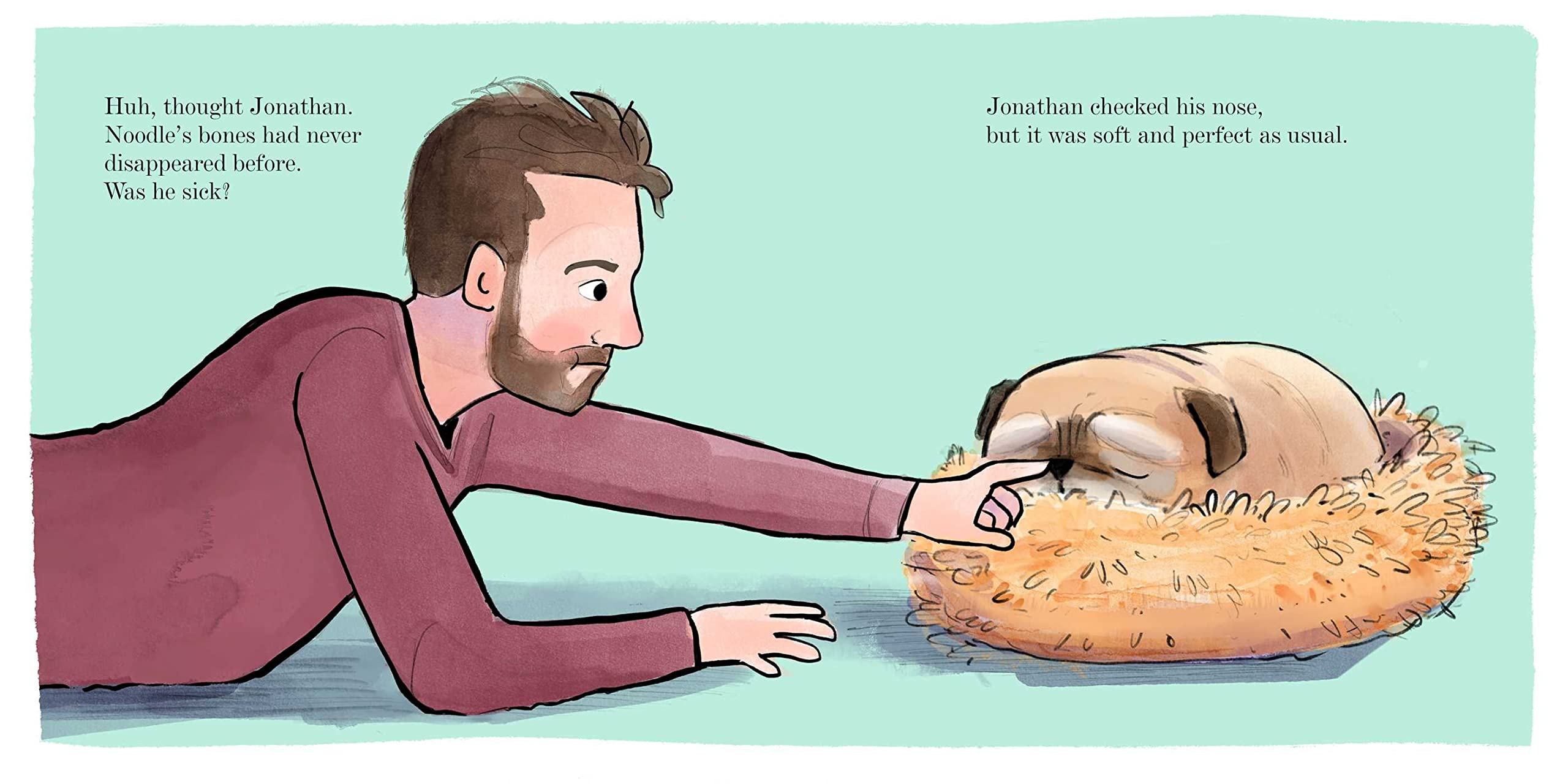
Noodle and the No Bones Day by Jonathan Graziano, illustrated by Dan Tavis

Published by Margaret K. McElderry Books

Summary:  Apparently Jonathan and Noodle the Pug are a TikTok sensation (don’t worry, I had no idea either), and a No Bones Day is one in which Noodle acts as though he has no bones.  He stays in his bed, not interested in playing or walking.  He does enjoy it when Jonathan rubs his belly and eats when Jonathan brings him his dish.  At first, Jonathan is concerned that he’s sick, but eventually he realizes that Noodle just needs a day of rest, snuggling in bed and eating snacks.  Inspired, Jonathan plants himself on the couch with a bowl of popcorn for a No Bones Day of his own.  Includes a brief author’s note.  32 pages; ages 3-8.

Pros:  Pugs are always a big hit at my school, and I’m sure kids will love this story that uses cuteness and gentle humor to deliver a message about self-care.

Cons:  I was forced to go on TikTok to check out Noodle and Jonathan (@jongratz).

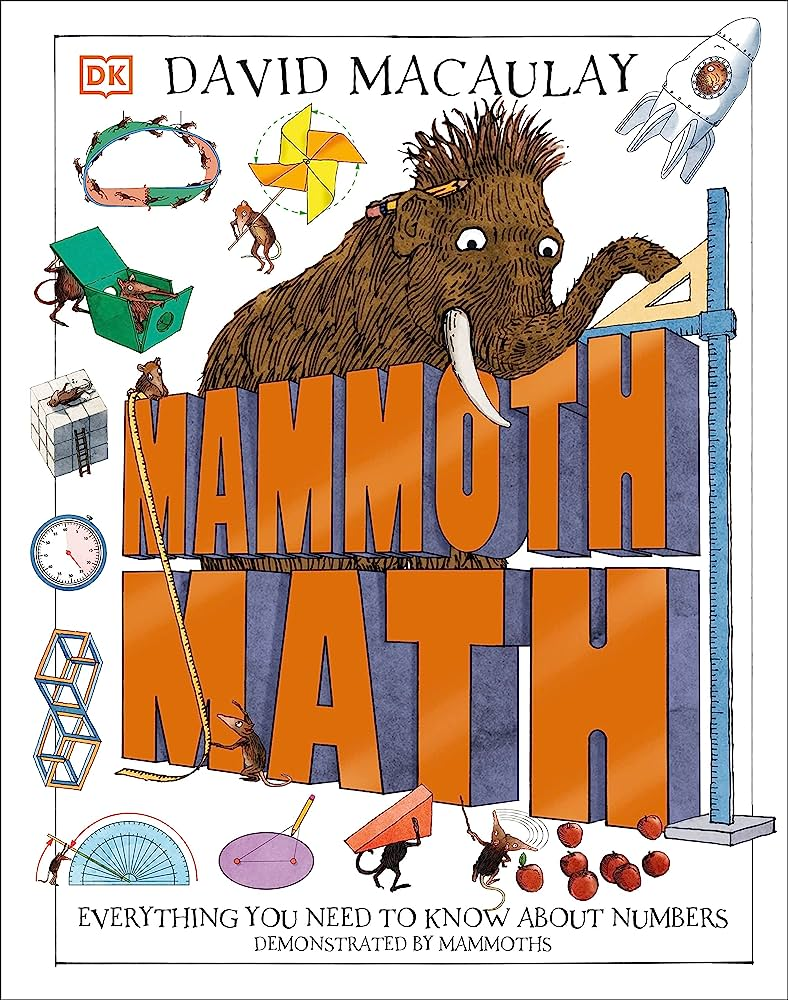
Mammoth Math: Everything You Need to Know About Numbers by David Macaulay

Published by DK Children

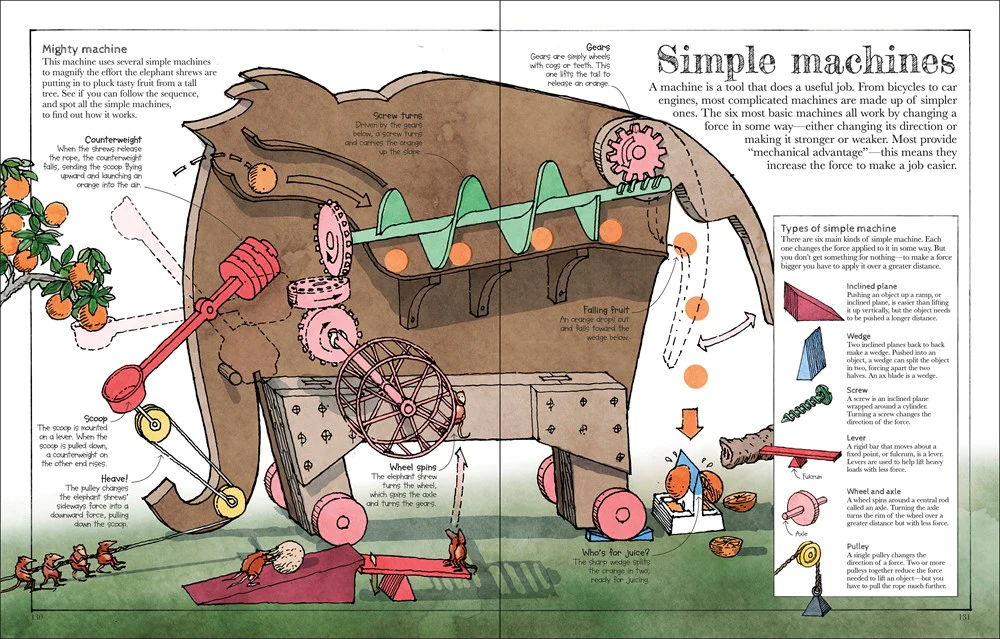
Summary:  A wooly mammoth and an elephant shrew take readers on a tour through all different mathematical concepts including counting, number know-how, patterns and sequences, geometry, maps, measurement, and using data.  David Macaulay still has his gift for using illustration to show a variety of concepts, with mammoths and shrews appearing on every page to add plenty of humor.  Includes a reference section with multiplication tables, illustrations showing fractions and percentages, geometrical shapes, units of measurement, and signs and symbols; also, an extensive glossary and an index.  160 pages; grades 2-6.

Pros:  Wasn’t it just a few weeks ago that I said there aren’t enough good math books in the world?  This one is amazing, with so many topics covered, great illustrations, and plenty of humor.  Math fans will have fun just browsing through it, and teachers will find it useful to engage those who aren’t yet fans.

Cons:  Somehow, I missed Mammoth Science, which came out in 2020.

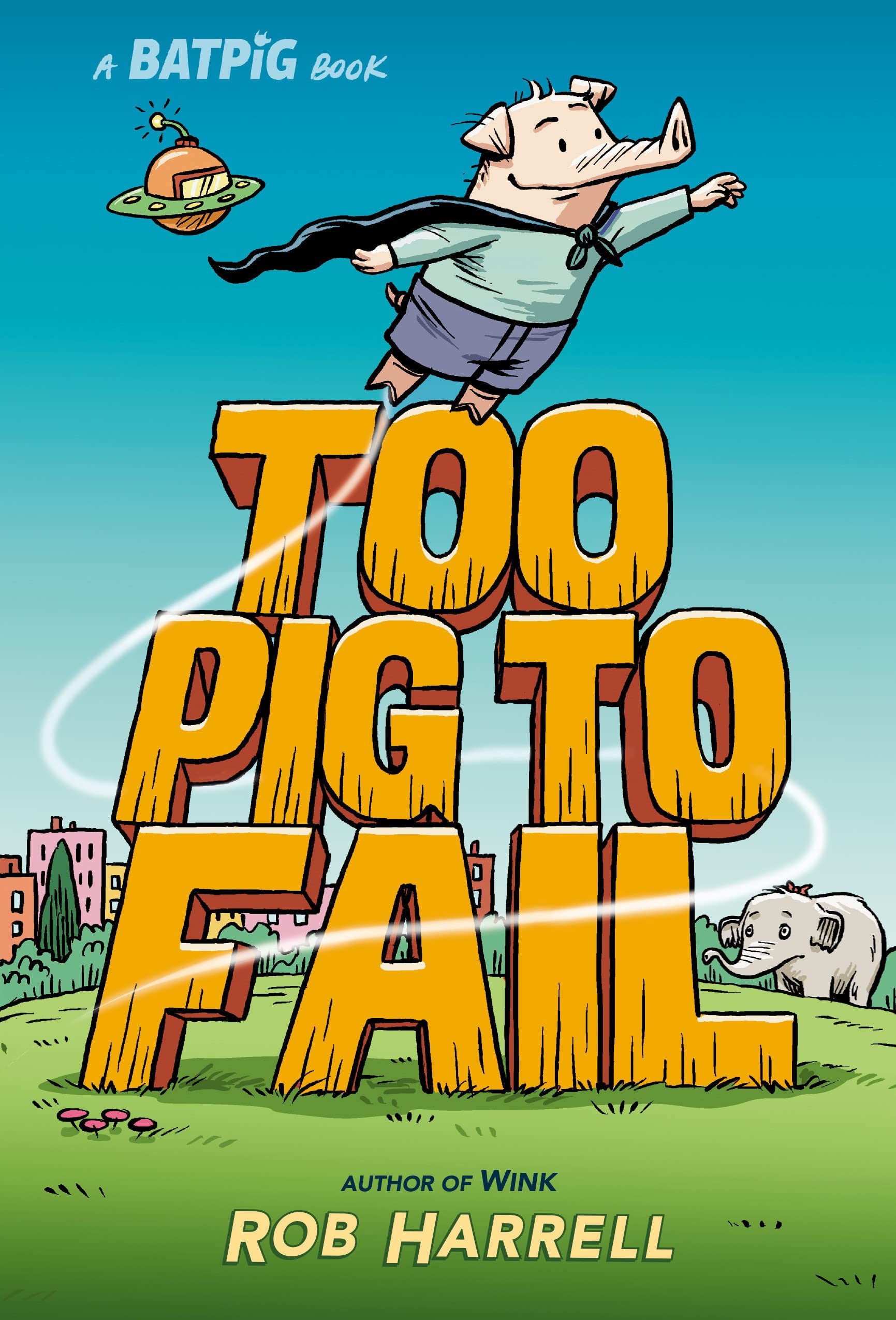
Too Pig to Fail: A Batpig Book by Rob Harrell

Published by Dial Books

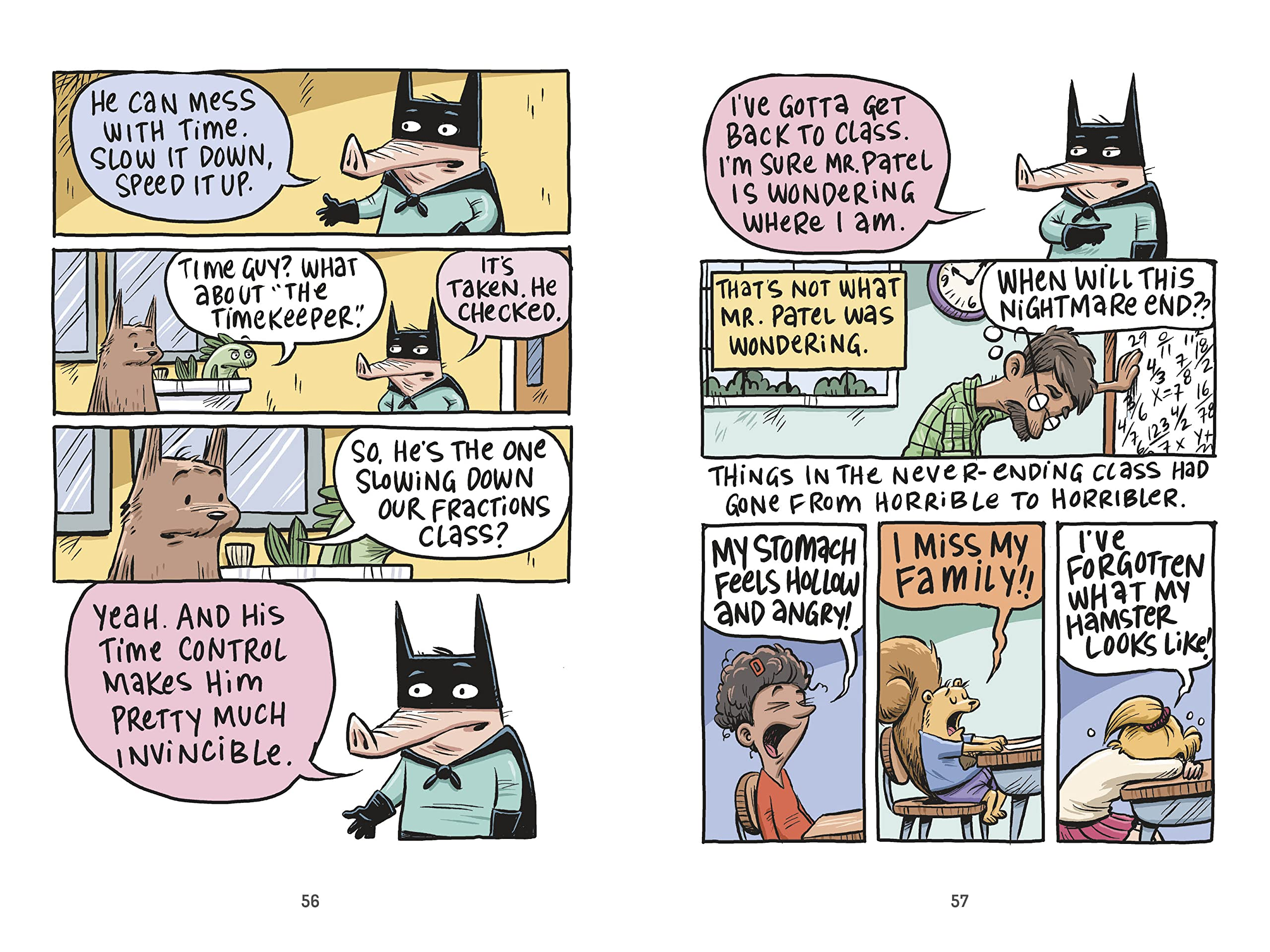
Summary:  In this second installment of the Batpig series, Gary uses his superpowers in two stories.  First, math class seems interminable for him and his friends, and eventually they discover it’s not just their imaginations.  Kindly janitor Mr. Guffen has turned into evil villain Time Guy and has complete control of the passage of time.  Batpig finds a way to rescue the hapless math students and turn Time Guy back to his old self based on the idea that time flies when you’re having fun.  The second story sees Gary/Batpig foiling an attack by evil aliens who unleash a shower of smelly gym socks and a half-bumblebee-half-kitten monster on the town.  248 pages; grades 2-5.

Pros:  Another entry in the “for fans of Dog Man” genre that will have kids laughing and quickly turning the pages to see how Gary and his friends defeat the bad guys.  You might want to direct them to When Pigs Fly (book 1) before reading this one.

Cons:  It’s embarrassing how frequently I laughed out loud at the humor meant for 8-year-olds.