The Puppy Problem (The Daily Bark, book 1) by Laura James, illustrated by Charlie Alder

Published by Bloomsbury Children’s Books

Summary:  When Gizmo the dachshund moves from the city to a small village called Puddle, he’s a little nervous about meeting new dogs.  Fortunately, his neighbor Jilly is a friendly Irish wolfhound with four adorable puppies.  Trouble is soon on the horizon, though, when Jilly learns that her humans are sending the puppies to new homes that are far away.  Jilly is desperate to find local places for her pups, and she and Gizmo set out to enlist the help of the other village dogs.  They hit one dead end after another until Gizmo has an idea inspired by his newspaper editor owner.  He writes up a notice for the other dogs to post, and in no time, new owners in Puddle have been found for all the puppies.  The dogs are so pleased with their success that they decide to start their own newspaper, The Daily Bark, which will undoubtedly be further explored in book 2 of this series. 128 pages; grades 2-4.

Pros:  Early chapter book readers will find it difficult to resist the four adorable puppies and the watchful dachshund on the cover of this charming book.  Filled with colorful illustrations and written in a large font, this would make a great first chapter book.

Cons:  If it takes Gizmo all night to write a 60-word notice, he’s going to have a heck of a time putting out a whole newspaper.

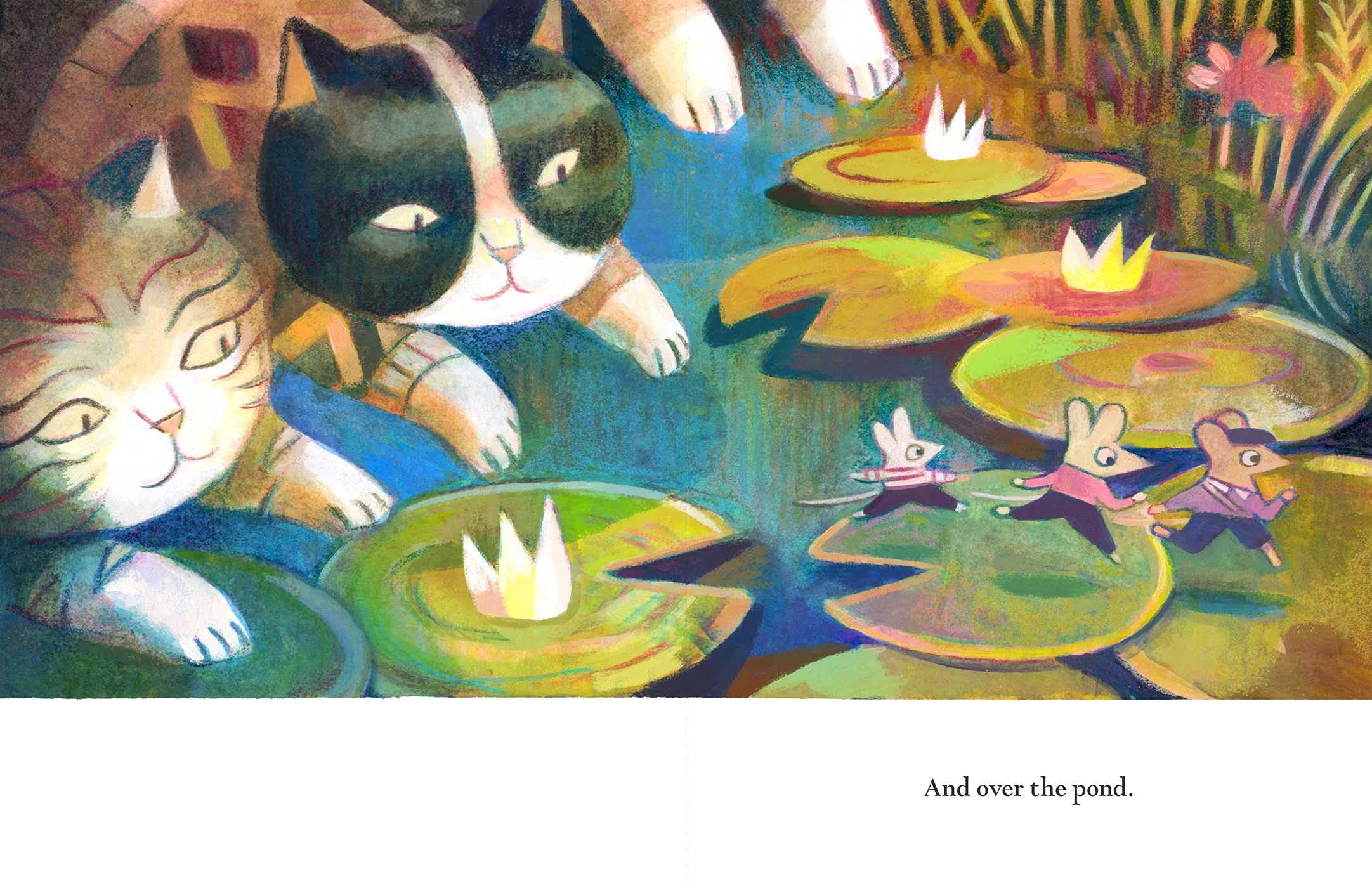
Olu & Greta by Diana Ejaita

Published by Rise X Penguin Workshop

Summary:  Olu and Greta are cousins who have never met, since Olu lives in Lagos, Nigeria, and Greta is from Milan, Italy.  How would they get together?  It’s too far to walk, skate, or dance, and they don’t know how to fly or operate a spaceship.  It’s possible to take a boat or plane, but that hasn’t happened yet.  So they send each other packages and talk through their computers to share their lives long-distance.  The final illustration shows them as teenagers taking a selfie.  32 pages; ages 3-8.

Pros:  This brief story with striking digital illustrations would make a great introduction to a pen pal project, or to get kids thinking or writing about what they would send to someone they had never met.

Cons:  The postal service may struggle to deliver Greta’s package, which is addressed to “Olu, Nigeria.”

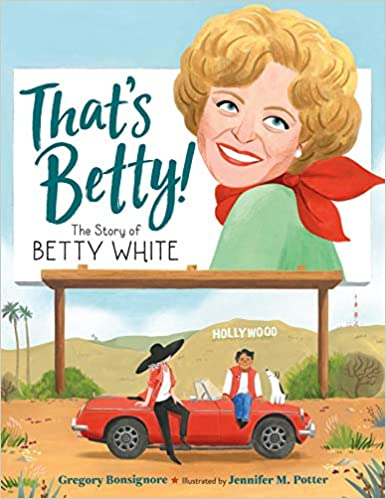
That’s Betty! The Story of Betty White by Gregory Bonsignore, illustrated by Jennifer M. Potter

Published by Henry Holt and Co.

Summary:  When the narrator gets assigned to do a project on a trailblazing woman, he chooses Betty White.  Not everyone is thrilled with his decision: his teacher and one of his dads keep asking, “Wouldn’t you rather choose someone more…traditional?”  But his mind is made up, and off he goes to the library to do his research.  A woman in sunglasses and a big hat gives him some help, adding some details about Betty’s early career as an actress and producer and continuing to her fame in The Mary Tyler Moore Show and The Golden Girls.  His presentation turns out to be a smashing success, and the mysterious lady is there to cheer him on.  As the crowd in school watches her drive off in a red convertible, it suddenly dawns on them: “That’s Betty!”  Includes a timeline (which sadly ends with the 2022 entry “Betty turns 100 years old!”), photos, and a list of sources.  48 pages; grades 1-5.

Pros:  Appropriately, this picture book biography of Betty White is somewhat unconventional with a quirky cast of characters that includes Betty herself.  Clearly the book was written to coincide with the actress’s 100th birthday, and although she didn’t make it to that milestone, the book feels appropriately celebratory.

Cons:  This is a book that may be enjoyed more by adults than kids, who may not be familiar with Betty White and her acting career.

Sofía Acosta Makes a Scene by Emma Otheguy

Published by Knopf Books for Young Readers

Summary:  Sofía has always taken being part of a ballet family somewhat for granted.  Her parents were both members of the Ballet Nacional de Cuba before immigrating to New York, and both her older sister and younger brother are at the tops of their classes.  By fifth grade, though, Sofía is starting to realize that her talents lie more with costume design than with dance, and she worries that she’s not living up to her family’s expectations.  She’s also starting to notice some anti-immigration sentiment as a variety of issues unfold around her: new affordable housing in the neighborhood, her teacher from Ireland who’s just become a US citizen, and a young friend who’s considering defecting from Cuba to dance with the American Ballet Theater.  As the days count down to the big Nutcracker performance, her teacher’s surprise party, and her Cuban friend’s decision, Sofía has to decide how and when to speak up for what’s important to her.  288 pages; grades 4-6.

Pros:  Readers will enjoy the chance to become part of Sofía’s warm Cuban-American family that always has room (and good snacks) for any friends or family who want to visit.  Sofía is realistically portrayed, worried about her friends and her place in her family as she gradually becomes more aware of the larger world around her.  

Cons:  I was sorry that Sofía never had a talk with her aunt who wasn’t into ballet and who sometimes, like Sofía, seemed to feel overshadowed by her talented older sister.

Mina by Matthew Forsythe

Published by Simon and Schuster/Paula Wiseman Books

Summary:  Mina usually keeps her nose buried in a book when her father brings home one of his “surprises”.  But when one surprise turns out to be a cat (“It’s a squirrel! Squirrels are bigger than mice and have long, bushy tails!”), Mina starts to worry.  Despite her concerns, the cat becomes part of the family, even sporting a sweater that Mina knits for it.  When the cat stops eating, though, Dad’s solution is to bring home two more cats, who also refuse to eat.  The doctor is called, who diagnoses the problem correctly: “These squirrels are definitely cats,” at which point the cats chase the three mice.  All seems hopeless until a surprise twist–the direct result of Mina’s ingenuity–saves them all.  68 pages; ages 4-8.

Pros:  Any child who has secretly wondered if they are smarter than the adults around them will love this quirky story.  Pay careful attention to the clever illustrations which often reveal more than the words.

Cons:  We all know someone like Mina’s father, who seems like he would have a “dad joke” for every occasion.

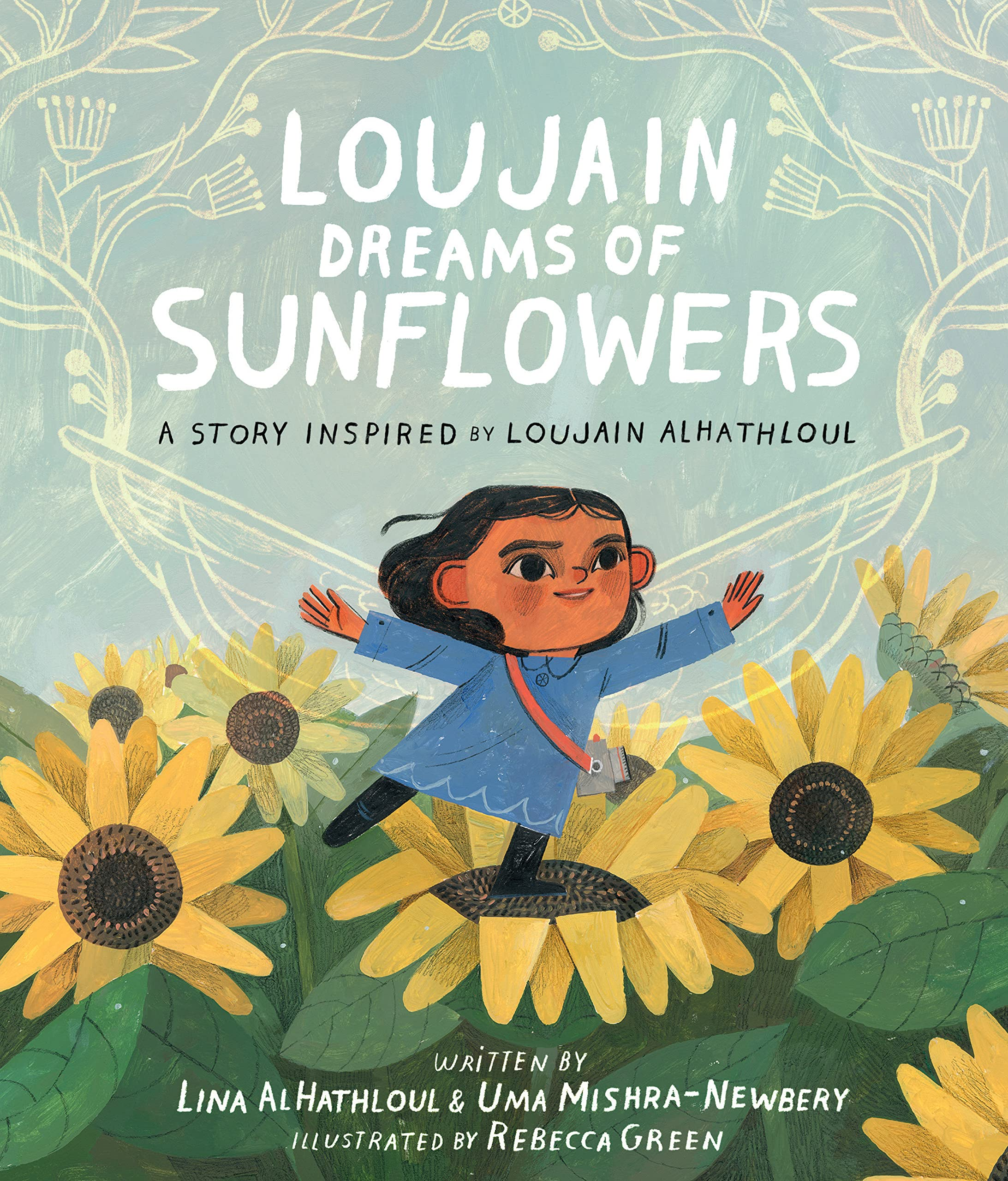
Loujain Dreams of Sunflowers by Lina AlHathloul and Uma Mishra-Newbery, illustrated by Rebecca Green

Published by mineditionUS

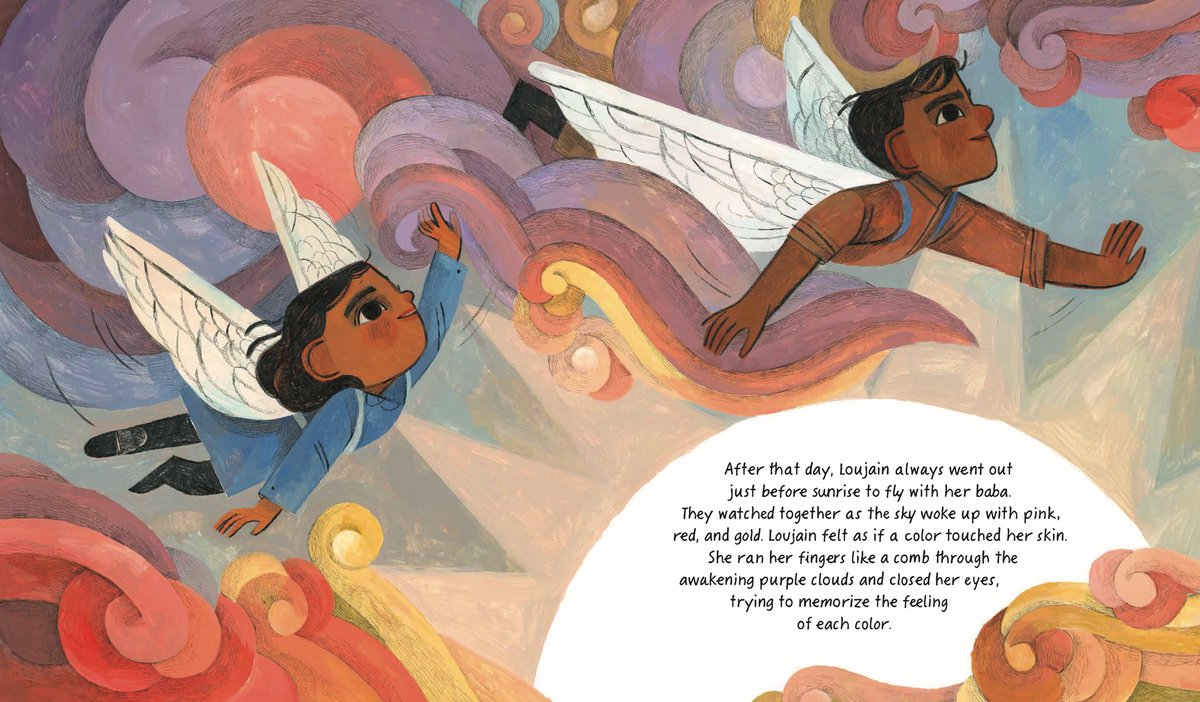
Summary:  Loujain dreams of flying to a beautiful field of sunflowers with her baba.  But in her community, only boys and men are allowed to fly.  All Loujain can do is put on a set of wings and run around the garden, pretending.  Baba tells her that she will fly “someday”.  Finally, Loujain confronts him and tells him that it’s not fair that boys can fly and she can’t.  She wants to learn to fly now.  Her wise mama tells him, “If you don’t support her, who will?  You have to believe things will change.  Otherwise they never will.”  Soon Loujain and Baba are getting up before sunrise for flying lessons.  One day he wakes her up extra early, telling her that they have a long flight to make.  It’s the field of sunflowers!  The next day, Loujain is in the news for defying the flying law.  Her parents are proud of her, and a young girl in the market sees her and immediately asks her baba to teach her to fly.  Includes a note about the real Loujain: Loujain AlHathloul, the author’s sister, who has been jailed for protesting the law prohibiting Saudi women from learning to drive.  40 pages; grades 1-5.

Pros:  This inspiring book would make an excellent discussion starter with older elementary students.  The information about Loujain AlHathloul gives a real-world example about protesting unjust laws.

Cons: The message of the book sometimes seemed to take priority over the story.

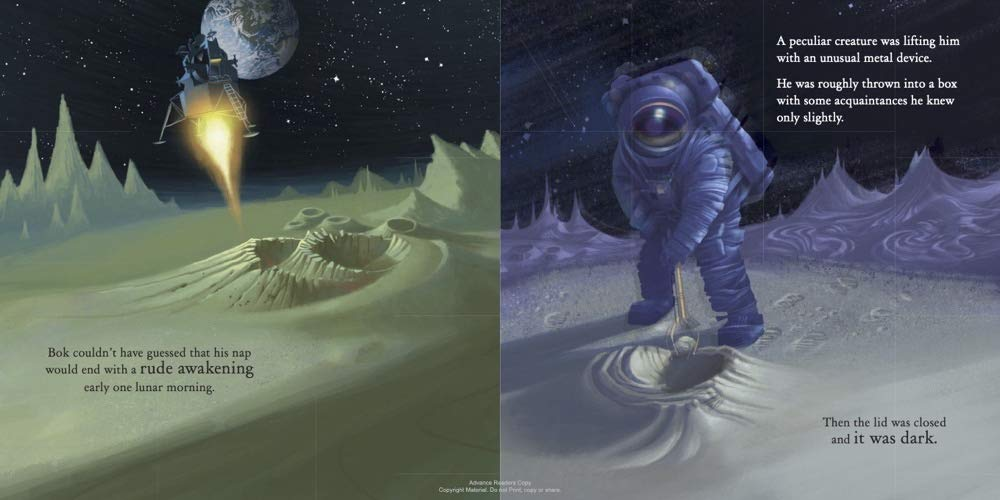
Bok’s Giant Leap: One Moon Rock’s Journey Through Time and Space by Neil Armstrong, illustrated by Grahame Baker Smith

Published by Crown Books for Young Readers

Summary:  While Neil Armstrong was dreaming of flight from his boyhood home in Ohio, a rock was hanging out on the moon, where it had lived for the last four billion years.  Young Neil learned how the moon had been formed when a small planet crashed into Earth, and how rocks were created at the end of the turbulent early time of the moon’s history.  As the years went by, different creatures came and went from the Earth, and eventually humans appeared.  The ancient rock slept through most of human history, but when Neil Armstrong finally traveled to the moon, he picked up the rock and brought it back to Earth.  Neil named the rock Bok, and it now rests in the Cincinnati Museum Center.  Includes additional information about the moon, the Earth, and Neil Armstrong’s journey to the moon.  48 pages; ages 4-8.

Pros:  Kids interested in space exploration, geology, and/or paleontology will get a taste of all of these in this whirlwind tour of the moon and Earth.  Armstrong’s personal connection with the moon and Bok makes the scientific facts even more interesting.

Cons:  Covering five billion years in a picture book means a pretty sketchy history and there are no resources given for additional research.

Good Eating: The (Short) Life of Krill by Matt Lilley, illustrated by Dan Tavis

Published by Tilbury House Publishers

Summary:  A tiny egg sinks deep into the ocean.  As the days pass it changes shape, growing spines, eyes, and a mouth.  In four weeks, the organism travels almost two miles from the depths of the sea to the surface.  Finally, it is a full-grown krill, with 26 legs and spots that can light up.  There are millions and millions of other krill, and it’s a good thing because they provide food for all kinds of animals like seabirds, penguins, and the gigantic blue whale.  Includes additional facts about krill and a list of resources: books, websites, and a National Geographic game called Krill Smackdown.  36 pages; grades 1-4.

Pros:  It seems like it would take considerable creative energy to write an engaging story about an animal whose main purpose in life is to be eaten, and to illustrate it with a cute and endearing krill, but this team has pulled it off.  The additional material at the end makes it a good research resource and emphasizes the important role krill plays in food chains around the world.

Cons:  Kids may need to be persuaded that they really want to read a book about krill.

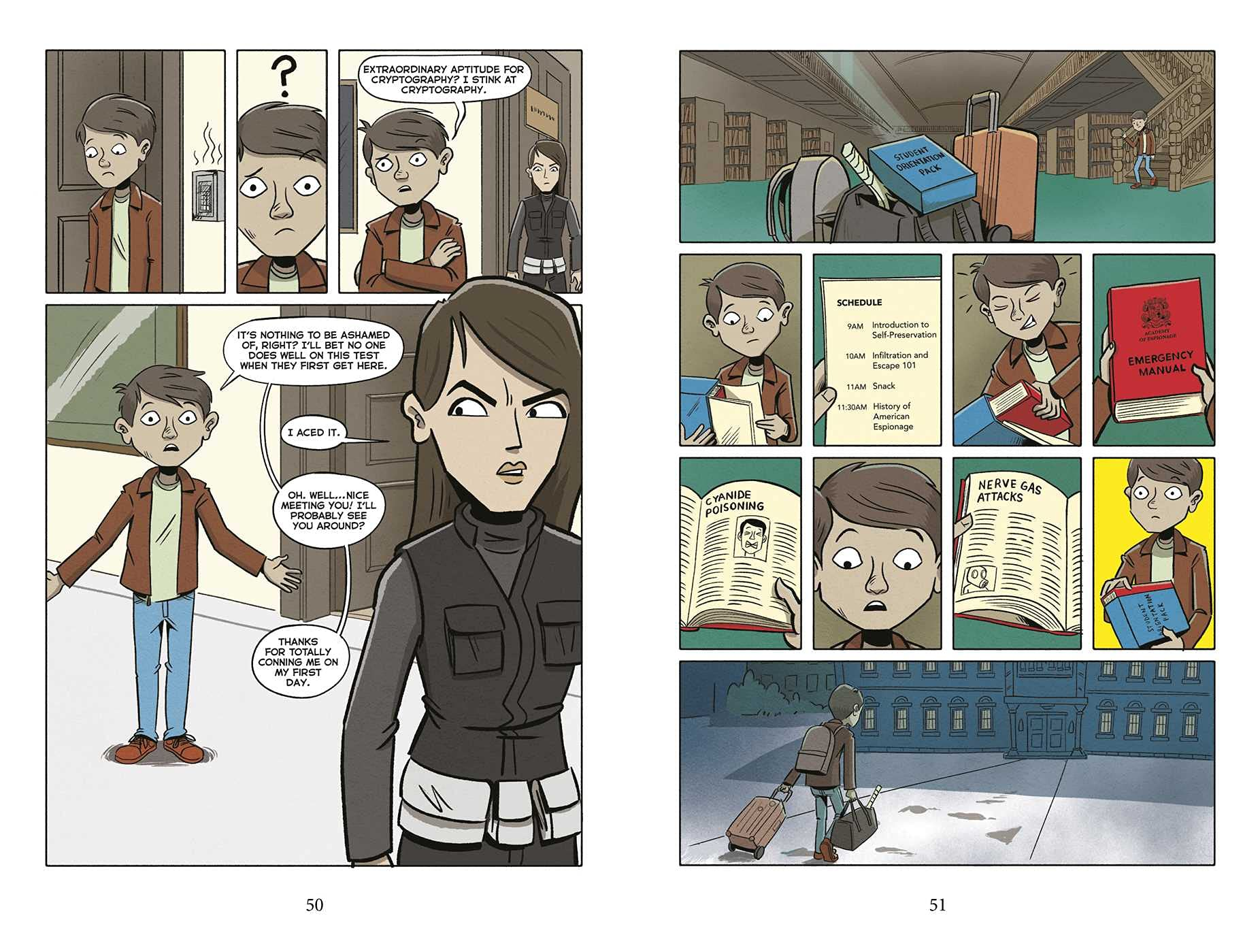
Spy School: The Graphic Novel by Stuart Gibbs, illustrated by Anjan Sarkar

Published by Simon and Schuster Books for Young Readers

Summary:  Ben Ripley has always dreamed of being a spy, but he’s still pretty shocked when he suddenly gets recruited to a school that’s secretly training young CIA operatives. The school is similar to a regular middle school in some ways: bad food, boring classes, and pompous administrators, but the attempted assassinations and hidden bombs put a new spin on things.  It appears that someone has brought Ben to the school for their own nefarious purposes but trying to figure out who that is and why proves to be both challenging and dangerous.  Fortunately, Ben is aided by Erica, the smartest (and coolest) girl in the school.  The enemy is foiled at last, but a letter at the end promises a sequel, and fans of the non-graphic Spy School series know that Ben’s adventures are just beginning. 296 pages; grades 4-7.

Pros:  There are already legions of Spy School fans, and the graphic novel will undoubtedly recruit many more.  I haven’t read the original, so I don’t know how this compares, but there’s plenty of action and humor which is always a winning combination for upper elementary and middle school.

Cons:  The artwork lacked much background detail and was a bit flat.


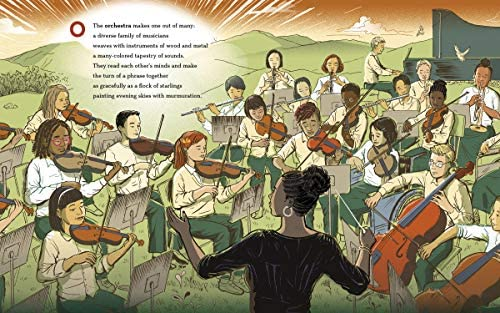
A Is for Oboe: The Orchestra’s Alphabet by Lera Auerbach and Marilyn Nelson, illustrated by Paul Hoppe

Published by Dial Books

Summary:  This musical alphabet book has a poem for every letter: from the A the oboe plays to warm up the orchestra to the Zzz’s the musicians and audience members catch after the performance.  In between there are poems celebrating different instruments, the people involved in making music, and the music itself, both what’s written on paper and what is performed.  40 pages; grades 1-5.

Pros:  An A to Z poetry book of music didn’t really grab me, but once I started reading, I found every poem engaging and I zipped through the book in no time.  Many different aspects of music were covered (and of course I appreciated the fact that the letter L celebrates music librarians), and the energetic illustrations help readers understand the topics of the poems.

Cons:  Readers unfamiliar with music will need some additional context; it would have been nice to have some of that provided with either information on each page or with some back matter.