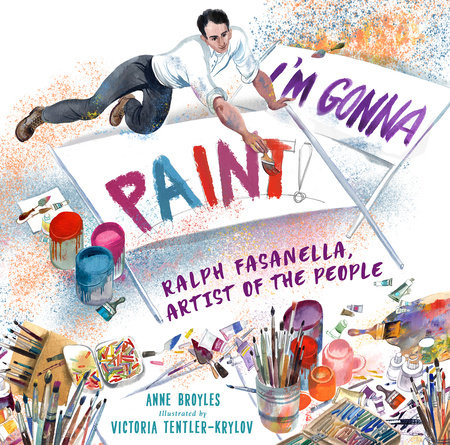
I’m Gonna Paint! Ralph Fasanella, Artist of the People by Anne Broyles, illustrated by Victoria Tentler-Krylov

Published by Holiday House

Summary:  Ralph Fasanella’s early life didn’t seem particularly auspicious for becoming a renowned artist.  The son of Italian immigrants, Ralph grew up in a tenement with five siblings and was in and out of a Catholic reform school from the age of ten.  He left school as a teenager and took a series of jobs before becoming a trade union organizer.  When he started having pain in his hands, a friend recommended drawing, and Ralph created his first art at the age of 31.  Recalling his mother’s labor activism, as well as his own union experiences, Ralph focused on working people and political messages in his paintings.  Family members supported him so he could quit working and paint full time.  His works hang today in the Smithsonian, Ellis Island, and other museums around the world, as well as in union halls and subway stations.  “I didn’t paint my paintings to hang in some rich guy’s living room,” Ralph said.  “My paintings are about people, and they should be seen by people, not hidden away.”  Includes additional information with photos and reproductions of some of Ralph’s paintings; a timeline of his life with relevant events from American history; a list of some of his paintings; and additional resources.  48 pages; grades 1-5.

Pros:  A fascinating, well-written introduction to the life of an artist who captured many important moments from American history, with illustrations that perfectly reflect Ralph’s style.  This would pair nicely with Cynthia Levinson’s The People’s Painter, about Ralph’s contemporary Ben Shahn.

Cons:  Although several museums were mentioned, I wish there had been a list of places to see Ralph Fasanella’s works.

What Your Ribbon Skirt Means to Me: Deb Haaland’s Historic Inauguration by Alexis Bunten, illustrated by Nicole Neidhardt

Published by Christy Ottaviano Books

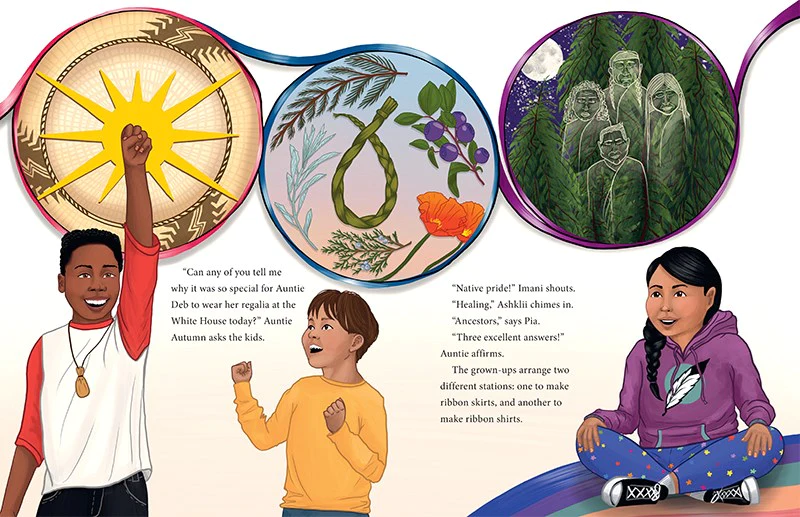
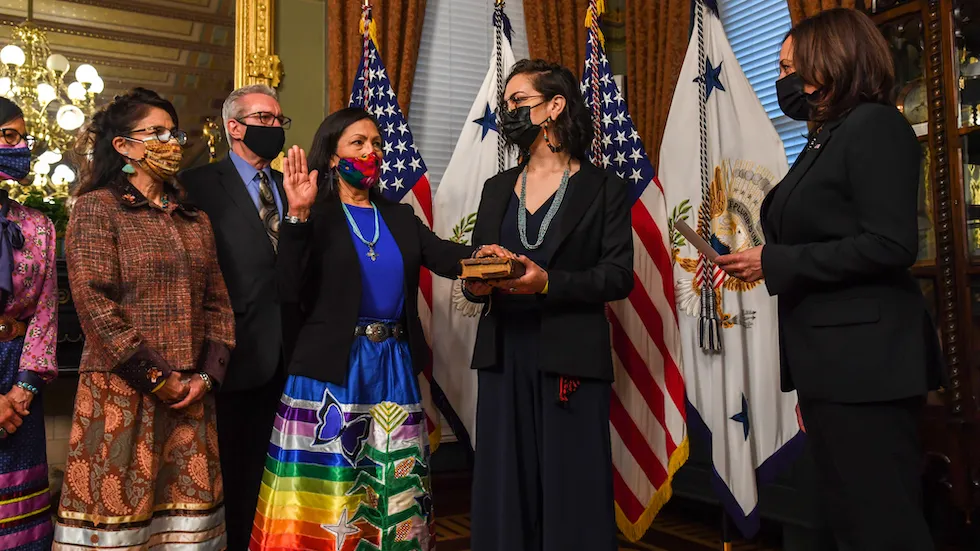
Summary:  At the end of the school day, Pia is excited to go to the Native American Center.  Everyone is gathered around the TV to watch the inauguration of Deb Haaland as Secretary of the Interior.  After the ceremony, there’s a potluck feast, then the adults help the kids make ribbon shirts or ribbon skirts, like the one Auntie Deb wore on TV.  As they work, they talk about the significance of the ribbon skirt.  When her skirt is done, Pia decides to give it to Jasmin, a new girl at the center, to help her feel welcome.  Includes additional information about Deb Haaland, with a photo of her swearing-in ceremony, as well as more about ribbon skirts and suggestions for writing a letter to the government about preserving the environment.  40 pages; ages 4-8.  

Pros:  Details about Turtle Island indigenous culture (food, prayers, clothing) are woven into this story which also does a good job of introducing Secretary of the Interior Deb Haaland.  I liked how the back matter encourages kids to take action.

Cons:  It would take me a lot longer than the time shown here to put together a ribbon skirt.


Tomfoolery!: Randolph Caldecott and the Rambunctious Coming-of-Age Children’s Books by Michelle Markel, illustrated by Barbara McClintock

Published by Chronicle Books

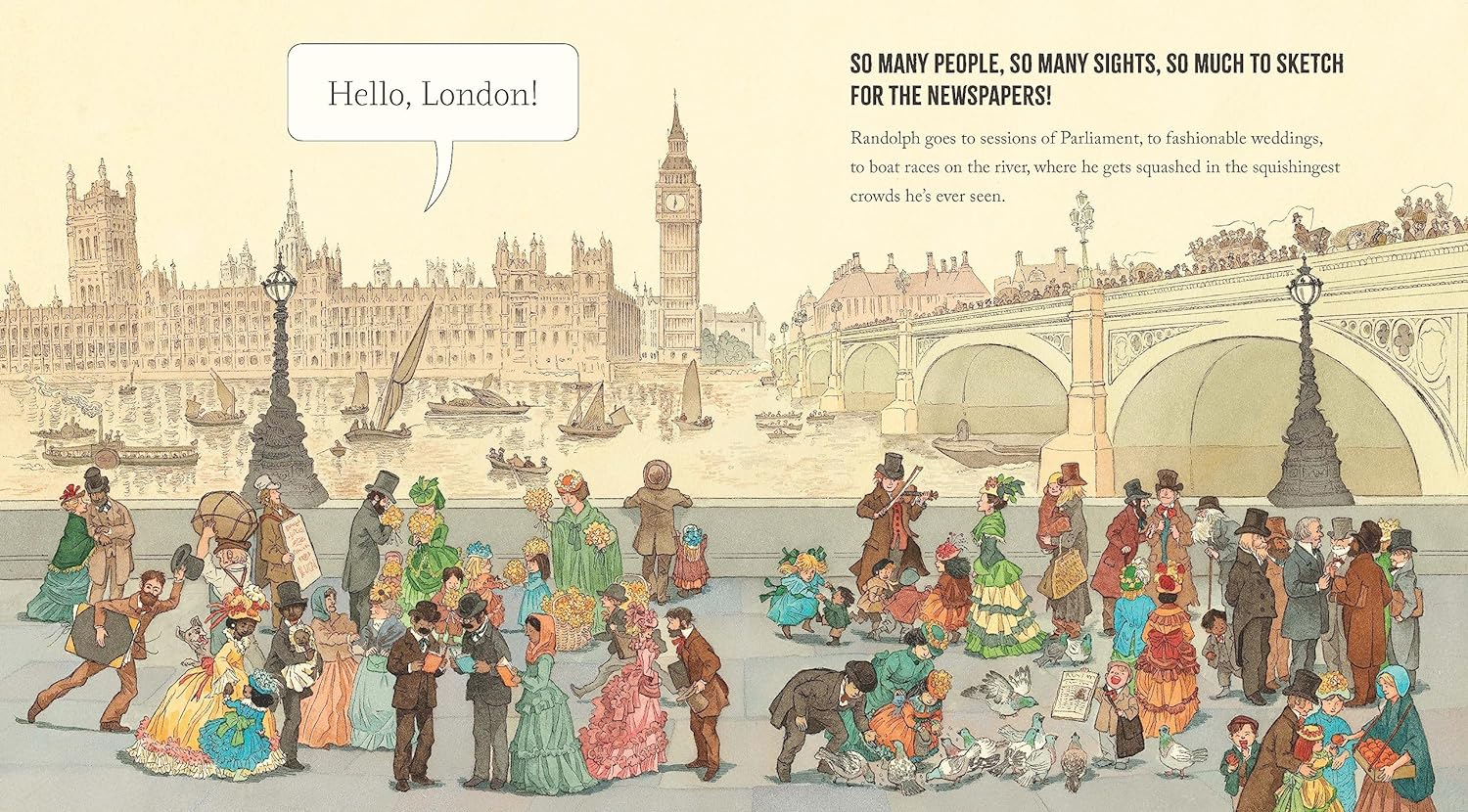
Summary:  In this follow-up to Balderdash! John Newbery and the Birth of Children’s Books, Michelle Markel looks at the man who was the namesake for another famous children’s literature award.  Despite a weak heart, Randolph Caldecott loved being outdoors, hanging out with animals, and capturing what he saw on paper.  His father sought to quash his love of art with a career as a banker, but Randolph kept drawing.  When offered a chance to illustrate children’s books, he went against the prevailing fashion of stilted decorations and created art with plenty of action and animals.  Kids and adults loved his work, and Randolph became an international success, his work continuing to influence illustrators 150 years later.  Includes a list of the Caldecott reproductions included in the illustrations; a list of annotations; a picture of the Caldecott medal; additional information about illustrated Victorian periodicals and the big three toy book illustrators (Caldecott, Walter Crane, and Kate Greenaway); and a list of books by Randolph Caldecott.  44 pages; grades K-3.

Pros:  This exuberant book brings Randolph Caldecott to life with beautiful illustrations inspired by his art.  It seems only fitting for this to be considered for a Caldecott medal or honor.

Cons:  There’s a great illustration of several Caldecott medalists reading their own books; I wasn’t able to identify all of them, and I wish the back matter had included a list.

On the Tip of a Wave: How Ai Weiwei’s Art Is Changing the Tide by Joanna Ho, illustrated by Catia Chien

Published by Orchard Books

Summary:  Chinese artist Ai Weiwei spent his childhood in a labor camp after his father, a renowned poet, was targeted by the government.  They lived in an underground hole, where Ai would create sculptures from the dirt.  He grew up to be an artist, studying in the US before returning to China where he was imprisoned for criticizing the government.  After his release, he moved to Germany where he uses his art to bring attention to the plight of refugees, people displaced from their homes the same way he was.  One of his most famous works was created from lifejackets left behind by refugees landing in Greece.  Ai’s art “challenged the world to see differently…[and] invited the world to take action.”  Includes four pages of additional information and photos.  48 pages; grades 3-8.

Pros:  A beautiful and moving tribute to Ai Weiwei’s work with illustrations in shades of blue and orange that incorporate photos of refugees and his art into the pictures.

Cons:  I think this would be a very difficult book for kids to understand without having a considerable amount of background knowledge.  I was pretty confused by the story until I read the information at the end. 

Game of Freedom: Mestre Bimba and the Art of Capoeira by Duncan Tonatiuh

Published by Harry N. Abrams

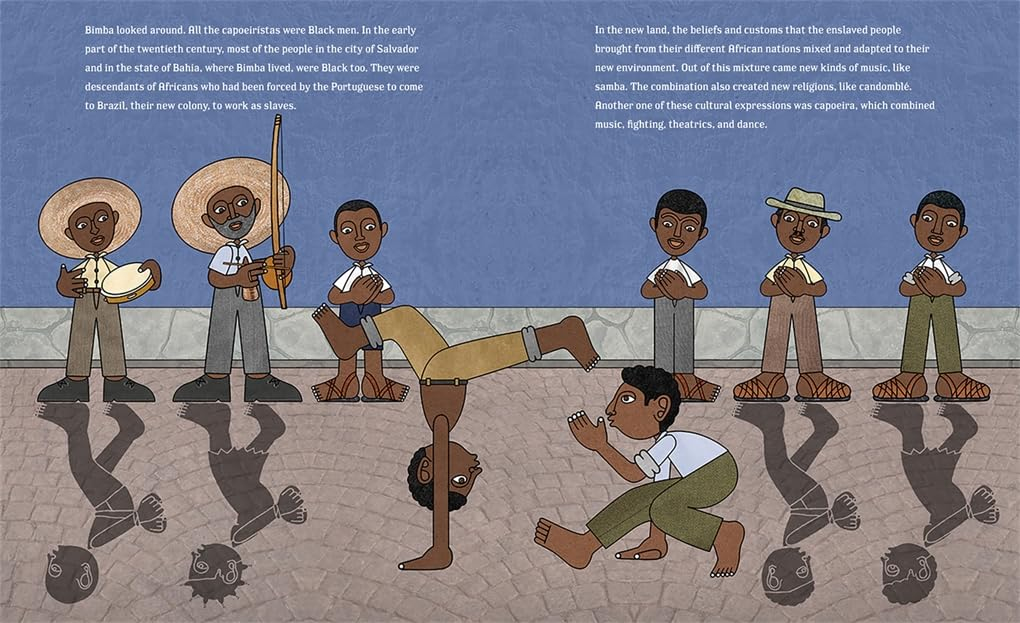
Summary:  Manoel dos Reis Machado, a.k.a. Bimba, loved capoeira, a sport involving martial arts-like moves done to musical accompaniment.  Involving predominantly Black players, the sport had been banned in Brazil by the all-White government who considered it barbaric.  In 1932, Bimba became Mestre Bimba when he opened a school to teach the art of capoeira, introducing a rigor and discipline that eventually made it appealing to a wealthier clientele.  It took twenty years of hard work, but in 1953, Mestre Bimba and his students were invited to do a demonstration for the president of Brazil.  This removed the last of the discrimination against capoeira, and although Mestre Bimba passed away in 1974, the sport is widely popular throughout Brazil today.  Includes a glossary, an author’s note, photos, and a bibliography.  48 pages; grades 3-6.

Pros:  Illustrated in Duncan Tonatiuh’s trademark folk-art style, this fascinating biography will have readers heading over to YouTube to see some live demonstrations of capoeira.  Tonatiuh has won both the Pura Belpré Award and Robert F. Sibert Medal, and this book could be a contender for both.

Cons:  I saw some recommendations for as young as preschool, but I would say this is definitely for upper elementary and middle school kids.

Tiny Jumper: How Tiny Broadwick Created the Parachute Rip Cord by Candy Dahl, illustrated by Maithili Joshi

Published by little bee books

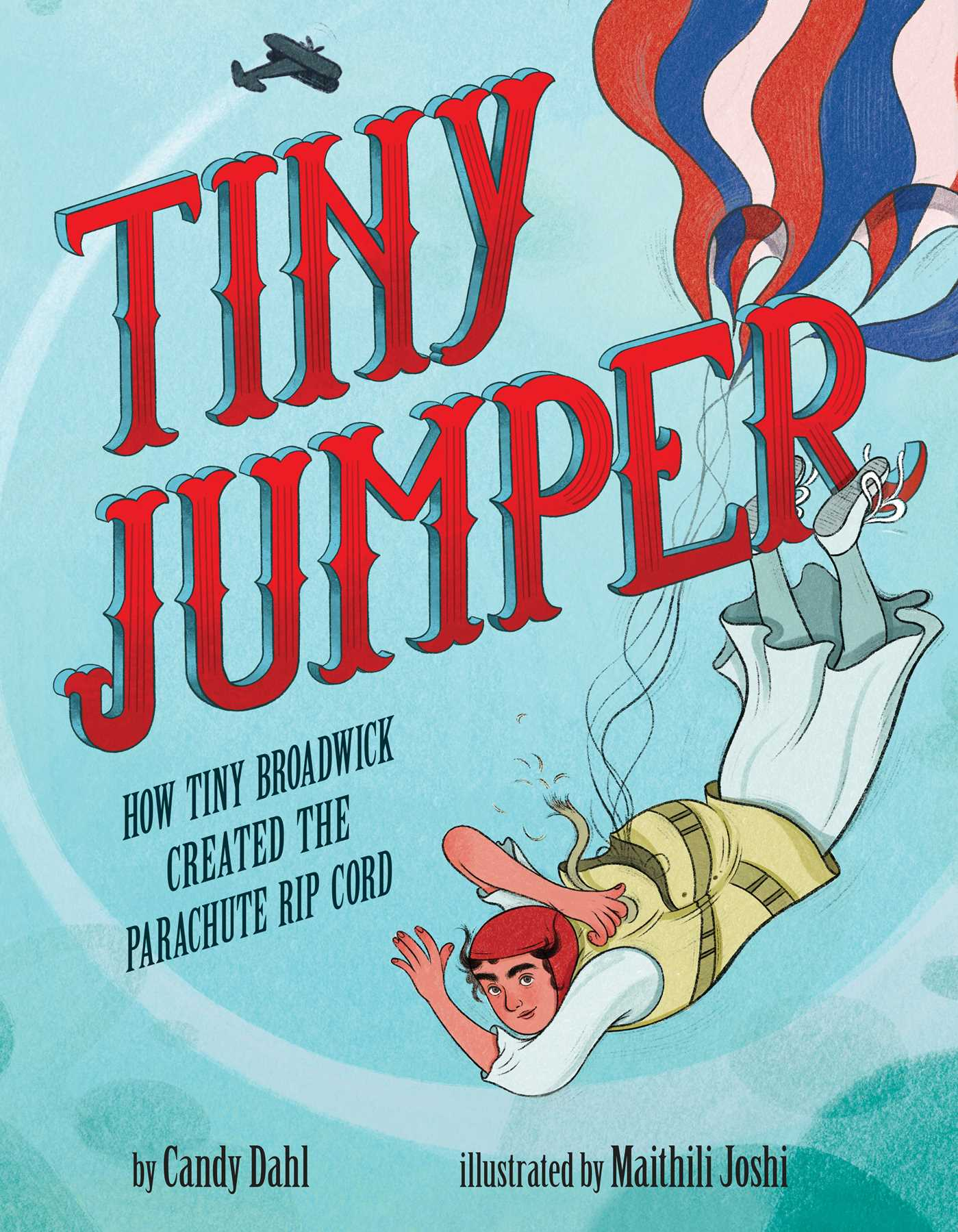
Summary:  Georgia Ann Thompson only weighed three pounds when she was born in 1893.  She would remain Tiny all her life, both her stature and her nickname.  Forced to start working in factories at the age of 6, Tiny escaped by climbing trees and dreaming of the future.  When she saw a man parachute off of a hot air balloon at the 1907 North Carolina State Fair, she told the aeronaut that she must learn how to do the same thing.  Her determination paid off, and by the 1908 State Fair, she had become a parachutist.  She thrived in her career despite odd landing spots and multiple broken bones.  When airplanes arrived, Tiny became the first woman to parachute from a plane.  In one attempt, the line connecting her to the plane got tangled.  She cut herself loose, going into free fall until she was able to reach behind her and pull the cord that would open her parachute, inadvertently creating the first ripcord.  Includes an author’s note with additional information and photos of Tiny, as well as a bibliography.  40 pages; grades 1-4.

Pros:  A thrilling adventure story about a little-known woman whose courage and determination made her an early aviation pioneer.  

Cons:  I thought from the title that Tiny invented the ripcord, but it seems as though someone else developed it from her accidental innovativeness.

The Snow Man by Jonah Winter, illustrated by Jeannette Winter

Published by Beach Lane Books

Summary:  When he first came to the mountain, he lived in an abandoned shack with no electricity or running water.  Eventually, he built himself a house with solar panels and a greenhouse.  Boredom drove him to start measuring and recording the natural world around him: snowfall, the return of animals in the spring, the first wildflower blossoms.  In between, he would chop wood, watch movies, and ski to town and back for supplies (800 miles every winter).  He stayed for many years and began to notice patterns: less snow, earlier springs.  When he shared his information with a scientist, the scientist was amazed at his painstaking records that showed the patterns of climate change.  Older now, he no longer chops wood or skis, but he continues his record-keeping on animals, plants, and–for now–snow.  Includes additional information about billy barr, a man who has spent most of his life living a solitary existence in the Rocky Mountains of Colorado; also, a short list of additional resources. 40 pages; ages 4-8.

Pros:  A fascinating story about a man who chose an unconventional path in life but has found a way to make a difference in the world, observing climate change before much of the rest of the world did. 

Cons:  The story is a little confusing without the context given in the author’s note, so you might want to read that first.

Coretta’s Journey: The Life and Times of Coretta Scott King by Alice Faye Duncan, illustrated by R. Gregory Christie

Published by Calkins Creek

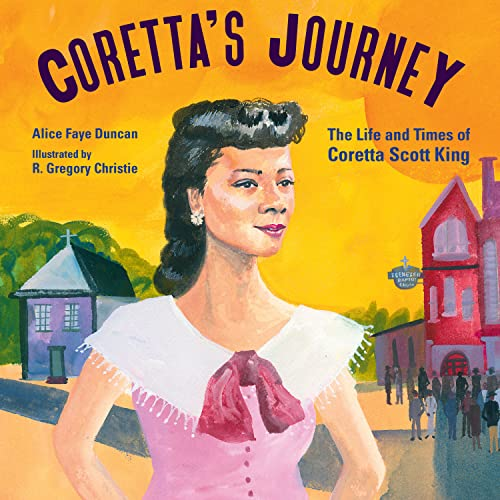
Summary:  With alternating pages of poetry and prose, Alice Faye Duncan tells the story of Coretta Scott King, starting with her childhood in Alabama.  Her parents were determined to give their children an education and worked hard as farmers and small business owners, starting over again when both their home and their lumber mill were burned by segregationists who didn’t want to see them succeed.  Coretta went on to study education at Antioch College, then to Boston to pursue her love of music.  It was there that she met Martin Luther King, Jr.  The two of them found much in common with their passion for justice, and even after they were married with four children, they supported each other’s work.  After Martin’s death, Coretta continued this work, focusing on the establishment of the King Center in Atlanta to teach nonviolence and the campaign to get Martin’s birthday made a national holiday.  Includes a timeline, author’s note, photos, and bibliography.  48 pages; grades 2-5.

Pros:  Duncan writes in the introduction that she chose to tell some of Coretta Scott King’s story in poetry because of Coretta’s love of music and lyrical voice.  It works well, interspersed with the lengthy prose pieces.  There were a lot of rich details about her early life which showed how she got her love of justice and her determination to work for it.

Cons:  Although this has the look of a picture book, the prose pages are so long that this would be difficult to do as a read-aloud.

Good Books for Bad Children: The Genius of Ursula Nordstrom by Beth Klephart, illustrated by Chloe Bristol

Published by Anne Schwartz Books

Summary:  Legendary children’s book editor Ursula Nordstrom began life as an only child whose parents divorced when she was seven years old and sent her to boarding school shortly thereafter.  Unable to attend college, she began working as a clerk in the college textbook division of Harper & Brothers, eventually becoming assistant to Louise Raymond, editor in the Department of Books for Boys and Girls.  When Louise left, Ursula was promoted to head the department, and spent the rest of her career nurturing authors like E.B. White, Maurice Sendak, Margaret Wise Brown, and Laura Ingalls Wilder (who is surprisingly never mentioned in this book).  Drawing on her own lonely childhood, Ursula understood that kids have different needs, whether they feel sad, mad, or left out, and that having all sorts of books can be helpful.  Includes an author’s note with additional information about Ursula Nordstrom and a list of sources.  48 pages; grades 1-5.

Pros:  I’ve long been fascinated by Ursula Nordstrom and enjoyed this engaging introduction to her life. The endearing illustrations contain lots of references to the many of the classic books and authors that were part of Ursula’s long career.

Cons:  I’m not sure how many children will be interested in the topic.

Loud and Proud: The Life of Congresswoman Shirley Chisholm by Lesa Cline-Ransome, illustrated by Kaylani Juanita

Published by Simon and Schuster/Paula Wiseman Books

Summary:  Shirley Chisholm learned about the fight for justice by listening through her apartment walls to the union meetings her father was part of.  In college, she took the advice of a professor who told her she should go into politics and joined a variety of movements.  After graduating, marrying, and starting a teaching career, Shirley decided to run for the New York State Assembly in 1964.  A landslide victory led to four years in the Assembly before running for U.S. Representative.  She became the first Black Congresswoman and a force to be reckoned with, fighting for issues that impacted women, children, and the poor.  In 1972, she ran an impressive campaign for President, then returned to Congress for another decade before retiring in 1983.  Her tenure in politics paved the way for other women of color, many of whom are shown on the last page.  Includes an author’s note with additional information and a timeline.  48 pages; grades 2-5.

Pros:  This book is the latest in a recent group of biographies about Shirley Chisholm and provides a comprehensive look at her life, with illustrations that capture her energy and fighting spirit.  

Cons:  It’s long for a picture book and may work better for kids doing research than as a read-aloud.