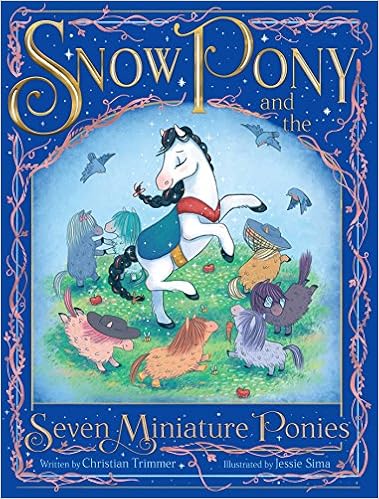
Snow Pony and the Seven Miniature Ponies by Christian Trimmer, illustrated by Jessie Sima

Published by Simon and Schuster Books for Young Readers

Image result for snow pony trimmer amazon

Image result for snow pony trimmer amazon

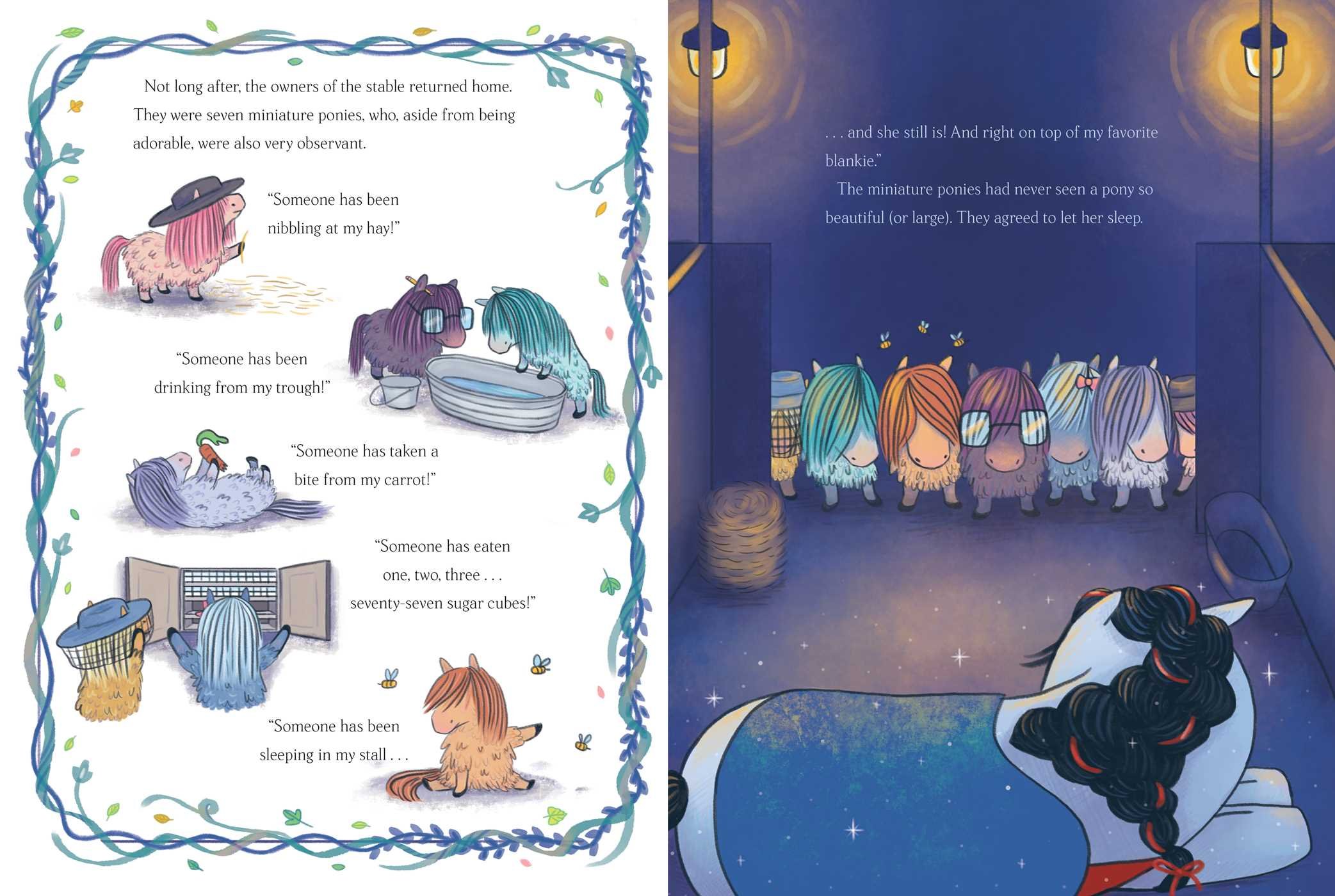
Summary:  Snow Pony is a beautiful snow white pony who loves and is loved by (almost) all the humans and animals on the farm.  Queenie (another pony) is jealous of Snow Pony, and creates a trail of apples to lead her away from her home. Snow Pony gets lost and ends up in a barn with seven miniature ponies, who invite her to live with them.  She grows to love them, but misses her old friends. One day, her favorite human tracks her down and convinces her to come back home. She brings the miniature ponies along with her, and they all live happily ever after…even Queenie.  48 pages; ages 4-8.

Pros:  A fun retelling of Snow White with cute illustrations and a sly humor adults will appreciate at least as much as kids.

Cons:  I recoiled in horror at the sight of what I thought was Queenie’s fate, but turned the page and was reassured by the final illustration.

If you would like to buy this book on Amazon, click here.

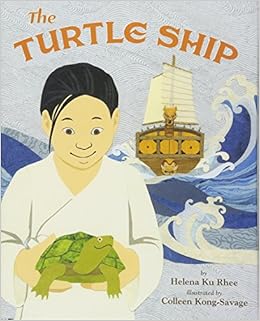
The Turtle Ship by Helena Ku Rhee, illustrated by Colleen Kong-Savage

Published by Shen’s Books

Image result for turtle ship rhee amazon

Image result for turtle ship rhee

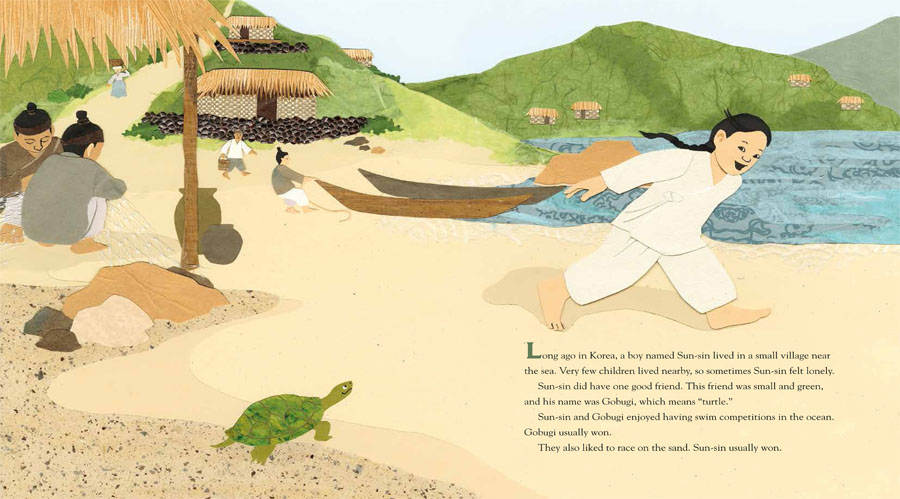
Summary:  Sun-sin lived in a small village in Korea; there weren’t any other children close by, so his closest friend was a turtle named Gobugi.  When Sun-sin heard about a contest sponsored by the king to design a battleship, the boy looked to his turtle for inspiration. He convinced his parents to travel to the royal palace, where Sun-sin was ridiculed for trying to compete with the adults.  But when Gobugi protected himself against an attack by the palace cat, the king saw the value of the turtle’s shell, and, like Sun-sin, was able to envision transforming the idea into a ship’s design. Years later, Sun-sin became a navy admiral and defeated 130 ships with just thirteen of his Turtle Ships.  An afterword tells the history of the Turtle Ship and Admiral Yi Sun-sin’s contributions to its design. Includes an author’s note, an illustrator’s note, and a photo of a Turtle Ship in a museum. 32 pages; grades 1-4.

Pros:  An interesting blend of Korean folklore and history, meticulously researched.  The collage illustrations are rich and detailed, and the lessons of persevering and staying true to your vision make this a good choice to share with kids.

Cons: It seemed like a pretty big leap for the king to come up with a ship design after watching the cat attack the turtle.

If you would like to buy this book on Amazon, click here.

Giants, Trolls, Witches, Beasts: Ten Tales from the Deep, Dark Woods by Craig Phillips

Published by Allen and Unwin

Image result for giants trolls witches beasts amazon

Image result for giants trolls witches beasts amazon

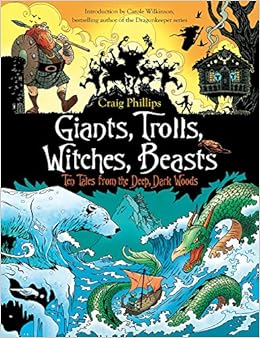
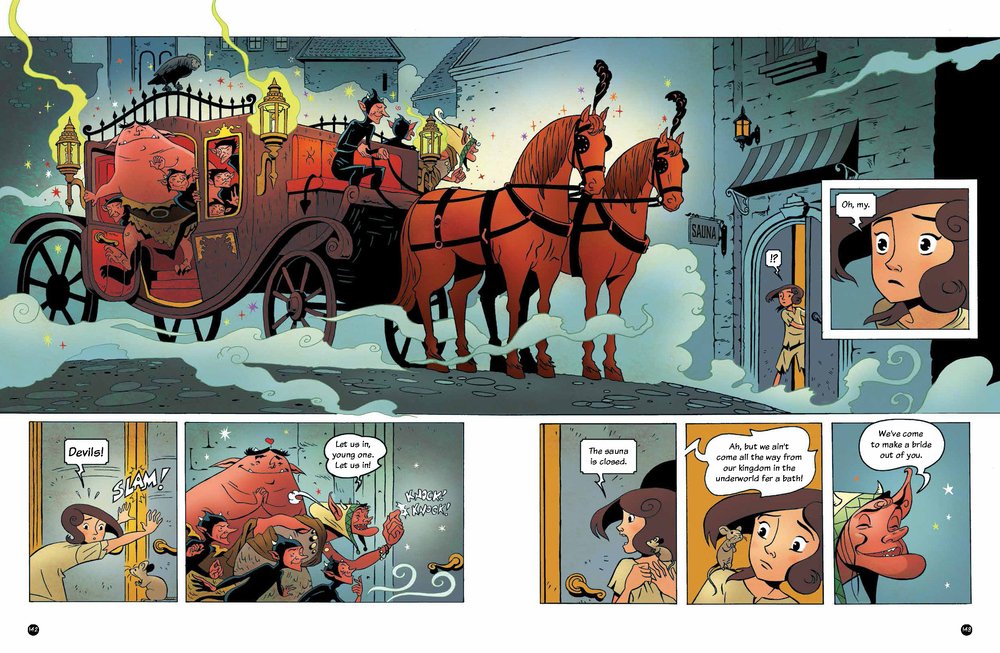
Summary:  Each of the ten folktales tells the story of an underdog, often a child or teen, who defeats some sort of a monster…witches, nixies, giants, and other monsters.  The introduction describes how folktales were passed down through telling, eventually being published in books which often had few or no illustrations.  The graphic novel format of this book allows readers to see all the action, characters, and settings that are often from different cultures.  The table of contents tells which country each story is from.  192 pages; grades 3-7.

Pros:  An excellent addition to folktale collections.  Kids will love the graphic novel format; the stories are quick reads (15-25 pages with lots of pictures) with beautiful artwork and plenty of action.

Cons:  It would have been nice to have more cultural diversity.  With the exception of “Momotaro” from Japan and “The King of the Polar Bears” from America, all the stories are European.

If you would like to buy this book on Amazon, click here.

Who Will Bell the Cat? by Patricia C. McKissack, illustrated by Christopher Cyr

Published by Holiday House

Image result for who will bell the cat mckissack

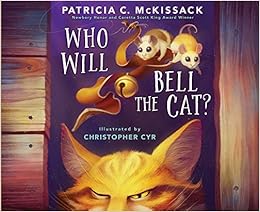
Summary:  In this retelling of an Aesop’s fable, a group of mice takes care of a sick cat, only to be terrorized by her when she recovers.  The mice discuss how to solve their problem, and one of them suggests tying a bell around the cat’s neck so they can hear her coming. It’s a great idea, but who will do it?  They try and fail several times until a human family moves into the house. The young girl in the family finds the bell and ties it around the scowling feline’s neck. Now the cat problem is solved, but old Wise Mouse reminds them that humans can be even more dangerous.  “When you use a tiger to get rid of a lion, what will you do with the tiger?” 32 pages; ages 4-8.

Pros:  Large, realistic illustrations of cute animals illuminate this longer version of an ancient fable.  Readers can discuss the ending and what may happen to the cat and mice now that humans are on the scene.

Cons:  It’s kind of a downer.

If you would like to buy this book on Amazon, click here.

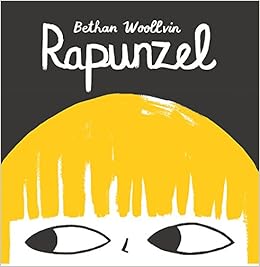
Rapunzel by Bethan Woollvin

Published by Peachtree Publishers

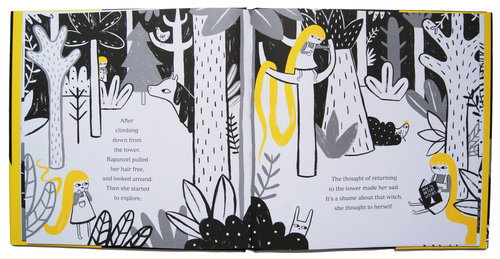
Summary:  Rapunzel lives in a tower, visited only by a witch who climbs up her long hair to visit, then steals some of Rapunzel’s golden locks to sell.  When the witch leaves, she tells Rapunzel that if she tries to escape, the witch will put a terrible curse on her.  “But was Rapunzel frightened? Oh no, not she!”  She makes a ladder from her hair, and goes out to explore.  Freedom is exhilarating, and she and a new (horse) friend make an escape plan.  One day, the witch tries to climb out of the tower using Rapunzel’s hair; the girl quickly cuts her hair, and the witch falls to the ground.  Rapunzel’s equine friend is waiting, and the two ride off in bandit costumes to become witch hunters.  32 pages; ages 4-8.

Pros:  A quick and funny retelling of Rapunzel, casting the heroine as an independent girl with no sign of a prince in sight.

Cons:  The style of art and the yellow and black palette aren’t really my cup of tea.

If you’d like to buy this book on Amazon, click here.

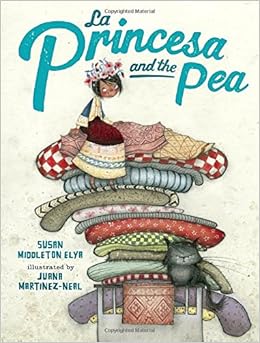
La Princesa and the Pea by Susan Middleton Elya, illustrated by Juana Martinez-Neal

Published by G. P. Putnam’s Sons

Summary:  The prince is longing for a wife, but no woman is perfect enough for his mother’s approval.  When a maiden happens by, the prince is hopeful, but Mom decides to test her with the old pebble under the mattress(es) trick.  Naturally, the young woman tosses and turns all night, convincing the mother that she’s the one for her son.  There’s a bit of a twist at the end, as it’s revealed that the prince stuck some pitchforks and stones in with the mattresses, but everyone lives happily ever after anyway.  Includes a glossary of Spanish words used in the text and an illustrator’s note explaining how she was inspired by textile arts of indigenous people of Peru in creating her art.  32 pages; ages 4-8.

Pros:  The catchy rhyming text and South American influences in both language and illustrations make this a perfect companion to the more traditional tale of the princess and the pea.

Cons:  Kids will find it helpful to have some background knowledge of the original story before reading this one.

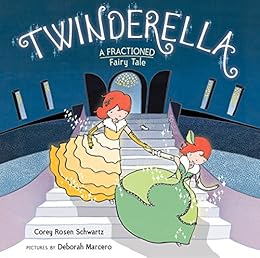
Twinderella: A Fractioned Fairy Tale by Corey Rosen Schwartz, pictures by Deborah Marcero

Published by G. P. Putnam’s Sons

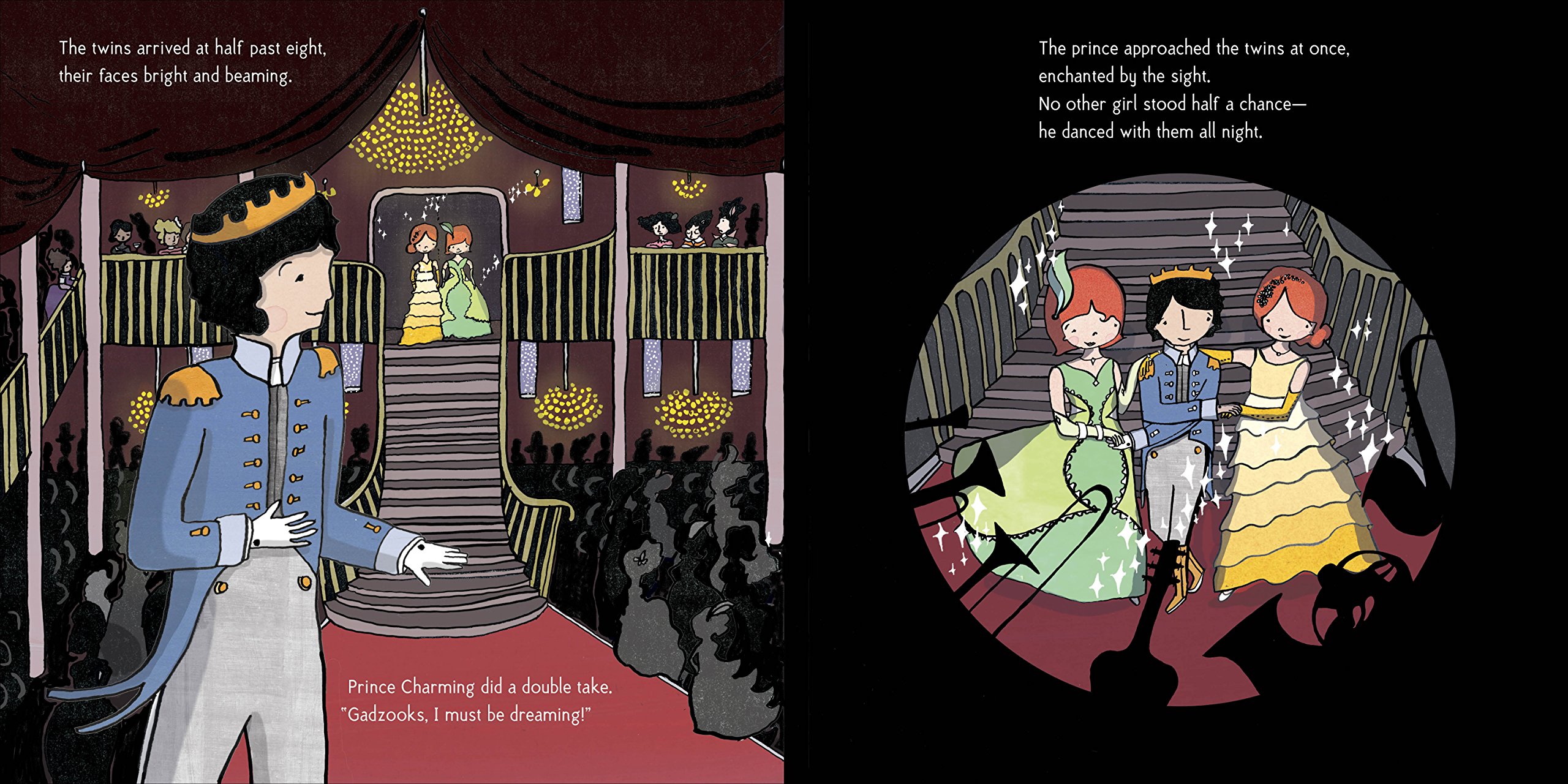
Summary:  What if Cinderella had a twin?  It would make the work easier, as they could divide the chores.  And each one could handle one of the evil stepsisters.  Even going to the ball wouldn’t be so bad, as long as they were willing to divide the jewelry and share the coach.  But the prince is a different matter.  There’s only one Prince Charming.  He has a great time dancing with both Cinderella and Tinderella until midnight, finds the glass slipper, and winds up at their home.  Forced with a difficult decision, the twins bring back their fairy godmother, who magically creates a twin prince.  Before long, there’s a double wedding, then Cinderella and her prince go on to rule the land, while Tinderella and her prince go on to win all the highest math awards.  32 pages; ages 4-8.

Pros:  Schwartz’s infectious rhymes from her ninja fairy tales are back to entertain readers with an unusual and fun twist on the Cinderella story.

Cons:  While the pictures are cute, I missed the Dan Santat illustrations from the previous tales.

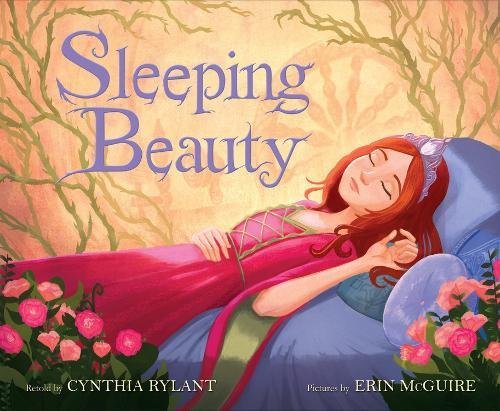
Sleeping Beauty retold by Cynthia Rylant, illustrated by Erin McGuire

Published by Disney Hyperion

Summary:  A retelling of the classic fairy tale by master storyteller Cynthia Rylant.  This version is geared toward a younger crowd, with simple language, a short amount of text on each page, and Disneyesque illustrations.  The whole story is told by an omniscient narrator, with the only dialog being when the angry fairy puts a spell on the sleeping baby and when the final fairy comes along and makes a counter-spell that will undo the evil one after a century.  Most of the story takes place at the celebration of the princess’s birth, attended by the various fairies.  After all the spells have been cast, the tale moves along quickly to the fateful spinning wheel accident, the 100-year slumber of the kingdom, and the awakening by the prince.  40 pages; ages 4-8.

Pros:  A simple, straightforward introduction to the story of Sleeping Beauty.  The illustrations of fairies and royal family members will appeal to young readers, and the story will be easy for them to understand.  I didn’t realize Cynthia Rylant has also done retellings of Cinderella and Beauty and the Beast.

Cons:  An author’s note giving the history of this fairy tale would have been an interesting addition.

Jack and the Beanstalk and the French Fries by Mark Teague

Published by Orchard Books

Summary:  The familiar story of Jack begins as usual when he trades the family cow for some bean seeds that his irate mother tosses out the window.  The huge stalk grows, but then the story veers off into a new and humorous direction.  Jack’s mother is thrilled with the free food the beanstalk provides, and Jack finds himself eating bean soup, bean salad, and other bean dishes three times a day.  When he receives a bean bag and a slice of bean cake on his birthday, he’s ready to take a hatchet to the stalk.  But the old man who sold him the seeds reappears and encourages Jack to check out what’s at the top of the huge plant.  Jack takes his advice and discovers a giant’s wife, who is cooking…you guessed it, beans.  The giant feels the same way as Jack does about beans, and the two return to Jack’s home in search of French fries.  They plant a vegetable garden, which proves to be influenced by the presence of the beanstalk, and grows a plethora of large vegetables.  Everyone–humans and giants alike–is thrilled with the new diet, which of course includes extra-large fries.  40 pages; grades K-3.

Pros:  Mark Teague has produced another winning takeoff on a fairy tale.  Kids will love the funny story and illustrations, and teachers will enjoy comparing it to other versions of Jack and the Beanstalk.

Cons:  There’s no golden egg-laying goose.

Hans Christian Andersen’s The Little Mermaid by Metaphrog

Published by Papercutz

Summary:  The littlest mermaid longs to see the world above her ocean home, but she must wait until she’s 15.  One by one her older sisters get to go explore, returning with stories of gorgeous sunsets and great floating icebergs.  Finally, her big day arrives.  Reaching the surface, she sees a ship and watches a handsome prince dance with a succession of beautiful women.  A sudden storm sinks the ship, and the little mermaid rescues the prince, the slips away before he regains consciousness.  More than anything, she wants to be human and to marry him.  She makes a deal with a sea witch, trading in her tail for legs, even though she is in great pain with every step.  In return, she gives up her voice.  She gets her wish to meet the prince, and they become great friends.  But, alas,  he eventually falls in love with another woman, leading to the typical Hans Christian Andersen downer of an ending.  80 pages; grades 3-7.

Pros:  A lyrical, haunting retelling in graphic novel form of one of Andersen’s most famous tales.

Cons:  Disney fans may be dismayed by the ending.