Mimi and the Cutie Catastrophe by Shauna J. Grant

Published by Scholastic Graphix
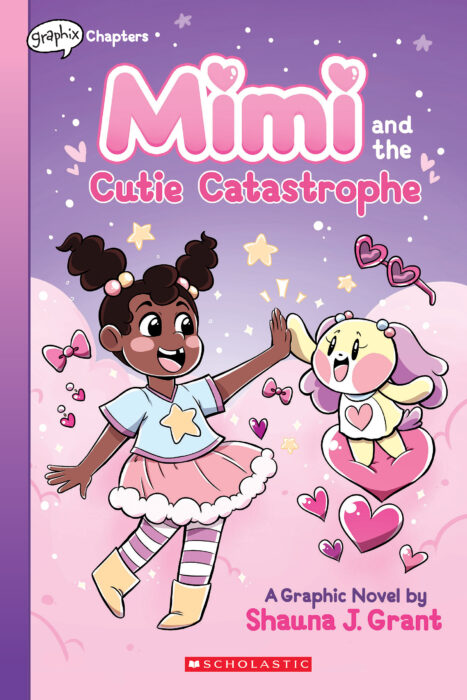
Summary:  Mimi loves pink and purple, dressing up, and playing with her magical stuffie, Penelope.  An unfortunate consequence of this is that she often gets called “cute”.  To counter this, she tries on different personalities that Penelope is able to create for her: a superhero, a smart teacher, and a cool kid.  Each one fails for one reason or another, and by the end she’s decided to be herself and to speak up for what she wants.  To her happy surprise, those around her see her as strong, smart, and cool.  80 pages; grades K-3.

Pros:  Kids will relate to Mimi’s wish to be seen as more grown up, and the repeating structure of the story makes this a good choice for beginning readers.

Cons:   The girly-girl cuteness was a little thick, as per usual with Scholastic series marketed to girls.
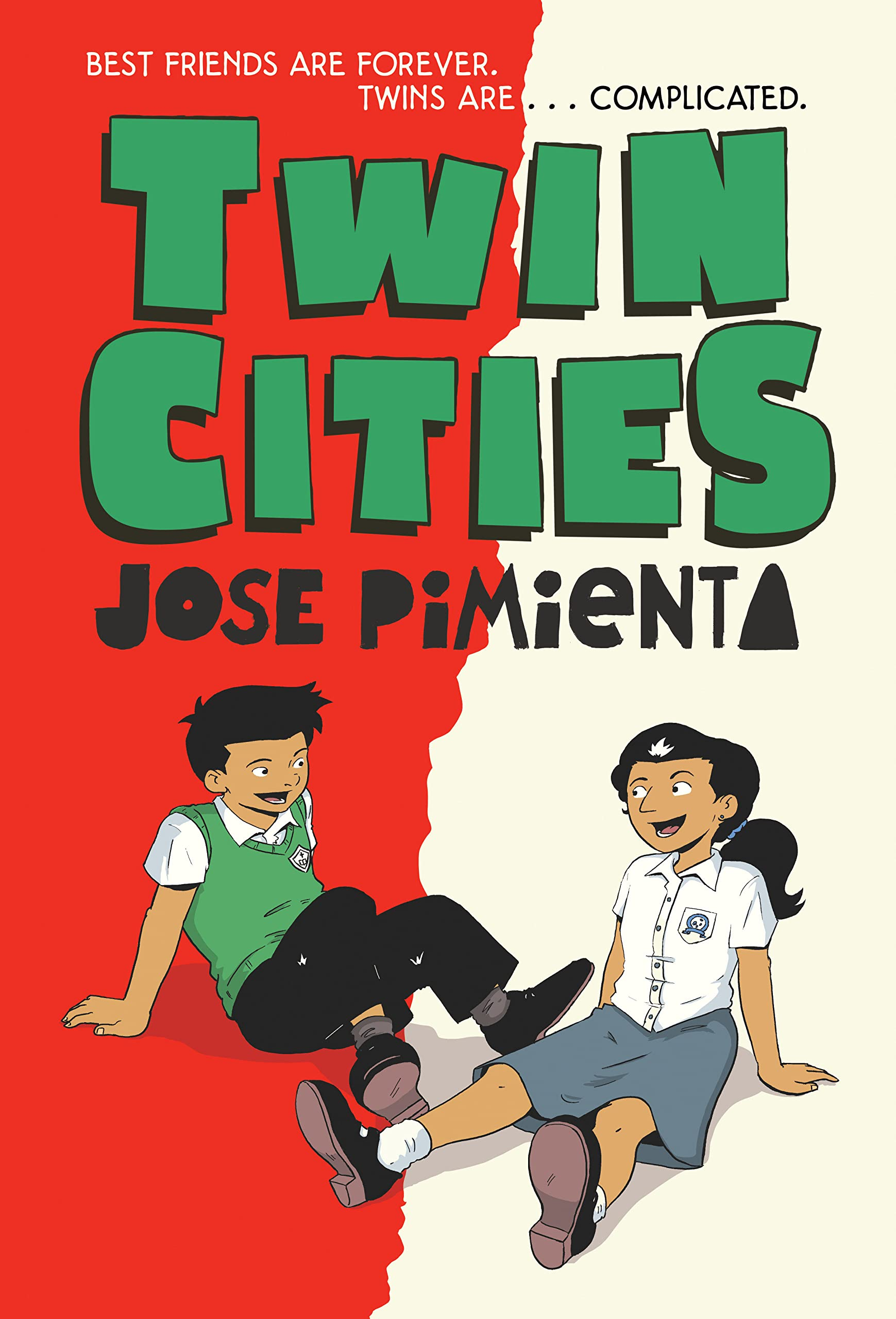
Twin Cities by Jose Pimienta

Published by Random House Graphic

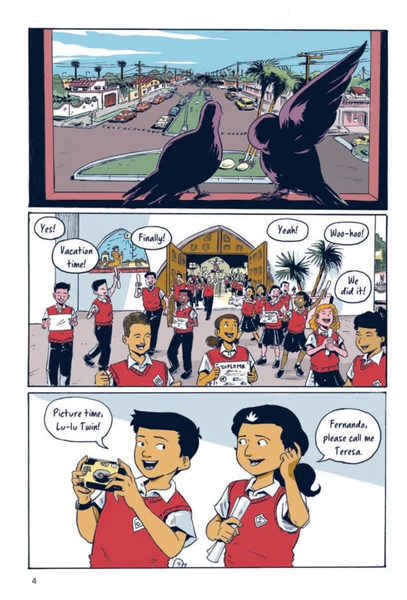
Summary:  Luisa Teresa and Luis Fernando are twins collectively known as the Lu-Lu’s.  When they get to sixth grade, though, they are eager to seek their own identities.  They start going by Teresa and Fernando, but more importantly, Teresa heads to school across the border in Calexico, California, while Fernando continues on in Mexicali, Mexico, where the family lives.  Each finds sixth grade to have its struggles.  Teresa’s workload is tough, and she has to get up early to make it to her carpool in time.  Fernando’s friends are at Teresa’s school, and he feels lonely until he befriends eighth-grader Alex who tries to recruit him to sell weed.  This activity leads to a showdown between the twins, but it also finally gets them talking about what they’ve been going through.  By the last few pages, Teresa finally has gotten her own room to work in, and Fernando is starting to make some friends his own age.  256 pages; grade 4-7.

Pros:  This fascinating look about life at the border is richly illustrated with many pictures that show what is going on in each twin’s life simultaneously.  Kids will relate to Teresa and Fernando’s struggles and learn about life in an area that may be unfamiliar to them.

Cons:  The sixth-grade protagonists make this a great elementary read, but the weed storyline may raise a few eyebrows.

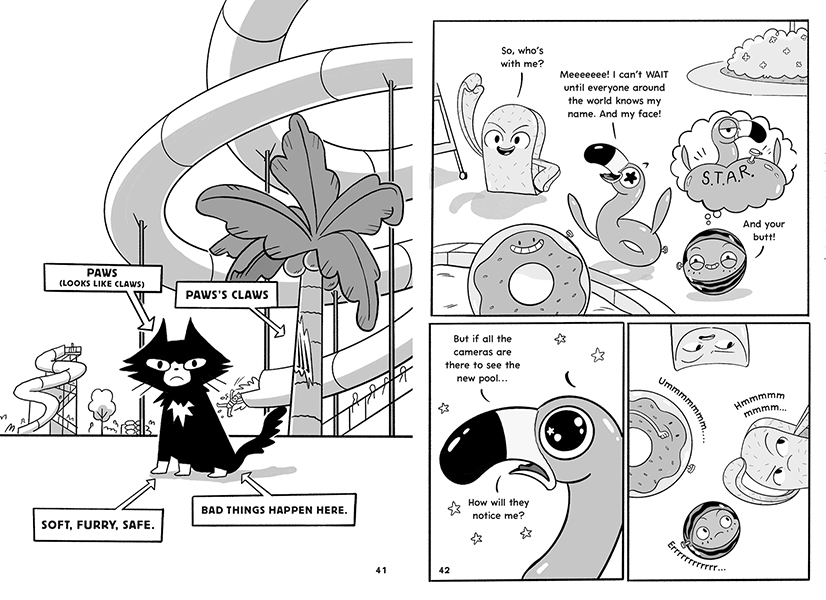
The Inflatables in Bad Air Day by Beth Garrod and Jess Hitchman, illustrated by Chris Danger

Published by Scholastic

Summary:  A group of inflatable toy friends (flamingo, donut, cactus, watermelon, and raft) live in a water park and help each other out in all kinds of situations, like when they hear there’s a new wave pool opening on the other side of the park.  Seems like inflatables wouldn’t be able to travel, but where there’s a will there’s a way for this crowd.  When they get to the pool, though, Flamingo discovers that his worst nightmare is living there, and they all have to quickly find a way back home again (spoiler alert: this involves a helium tank).  There’s a happy ending for all, and I’m not full of hot air when I tell you book 2 is available now, and book 3 will arrive in October.  128 pages; grades 2-5.

Pros:  Summer may be coming to an end, but you can pretend you’re still at a pool party with this funny group of inflatable friends.  This is sure to be a hit with fans of Dog Man and other graphic novels.

Cons:  This has the look of a Branches book, but it’s more of a graphic novel than those are.  I think a larger format with color would have worked better.

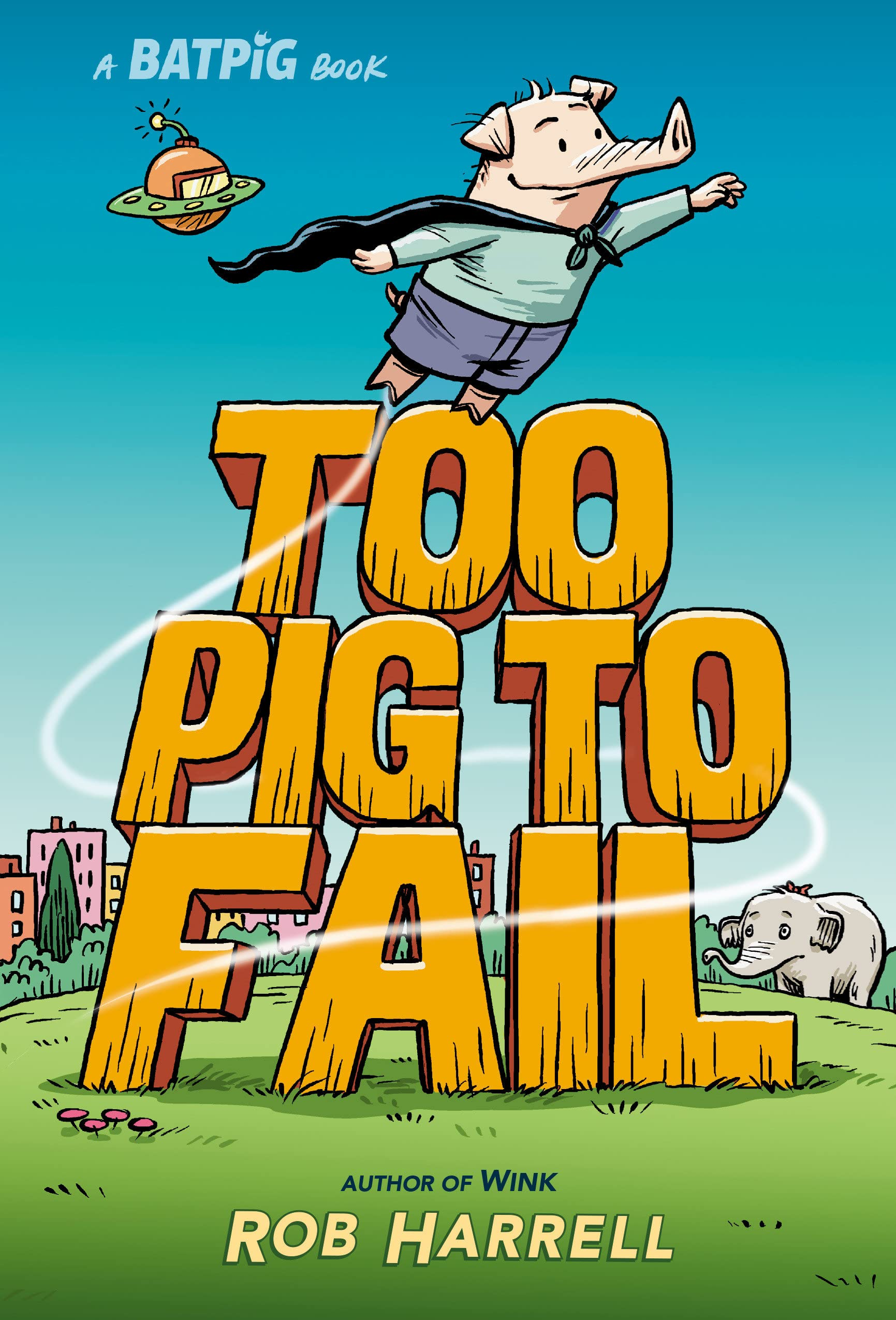
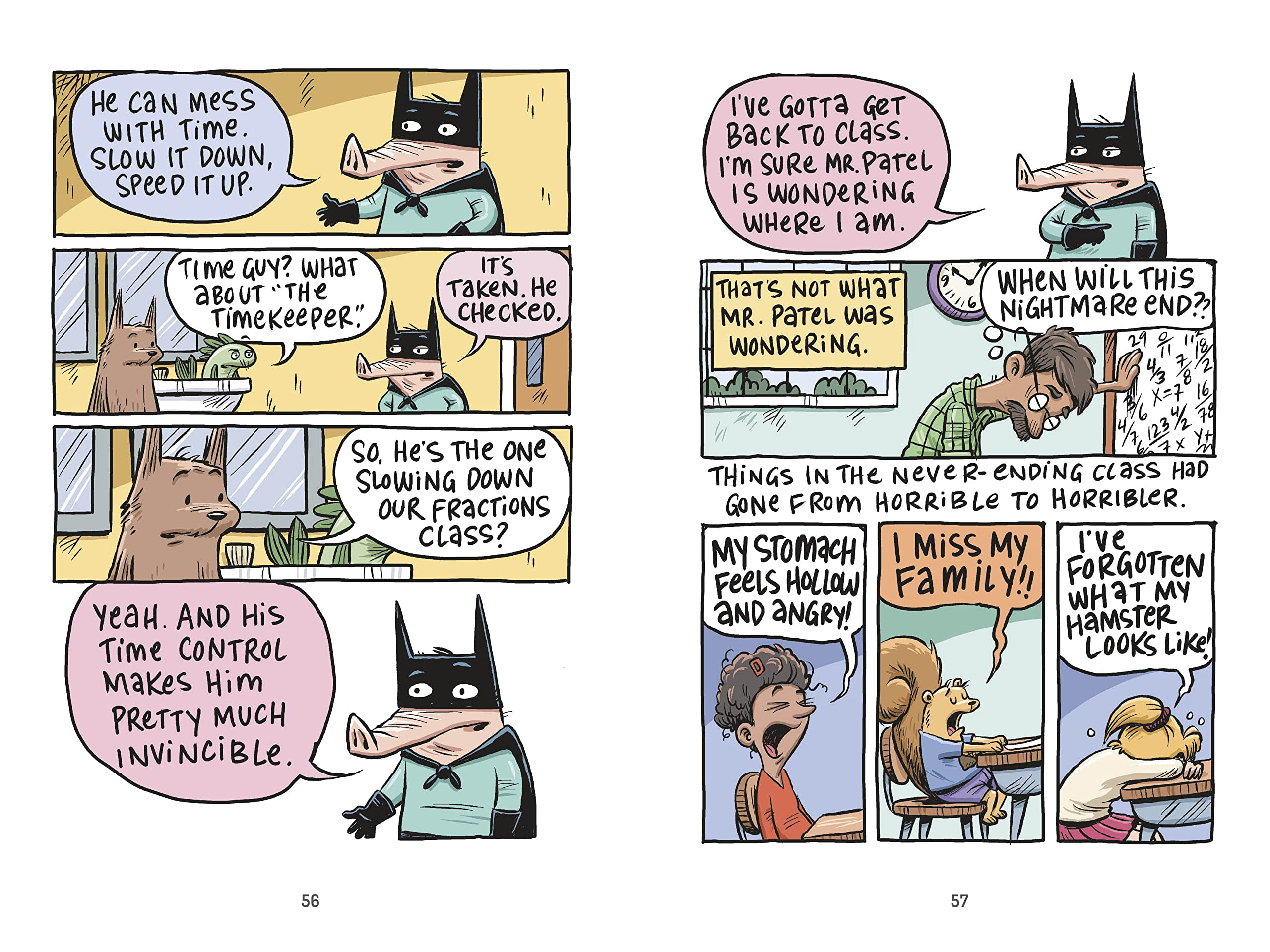
Too Pig to Fail: A Batpig Book by Rob Harrell

Published by Dial Books

Summary:  In this second installment of the Batpig series, Gary uses his superpowers in two stories.  First, math class seems interminable for him and his friends, and eventually they discover it’s not just their imaginations.  Kindly janitor Mr. Guffen has turned into evil villain Time Guy and has complete control of the passage of time.  Batpig finds a way to rescue the hapless math students and turn Time Guy back to his old self based on the idea that time flies when you’re having fun.  The second story sees Gary/Batpig foiling an attack by evil aliens who unleash a shower of smelly gym socks and a half-bumblebee-half-kitten monster on the town.  248 pages; grades 2-5.

Pros:  Another entry in the “for fans of Dog Man” genre that will have kids laughing and quickly turning the pages to see how Gary and his friends defeat the bad guys.  You might want to direct them to When Pigs Fly (book 1) before reading this one.

Cons:  It’s embarrassing how frequently I laughed out loud at the humor meant for 8-year-olds.

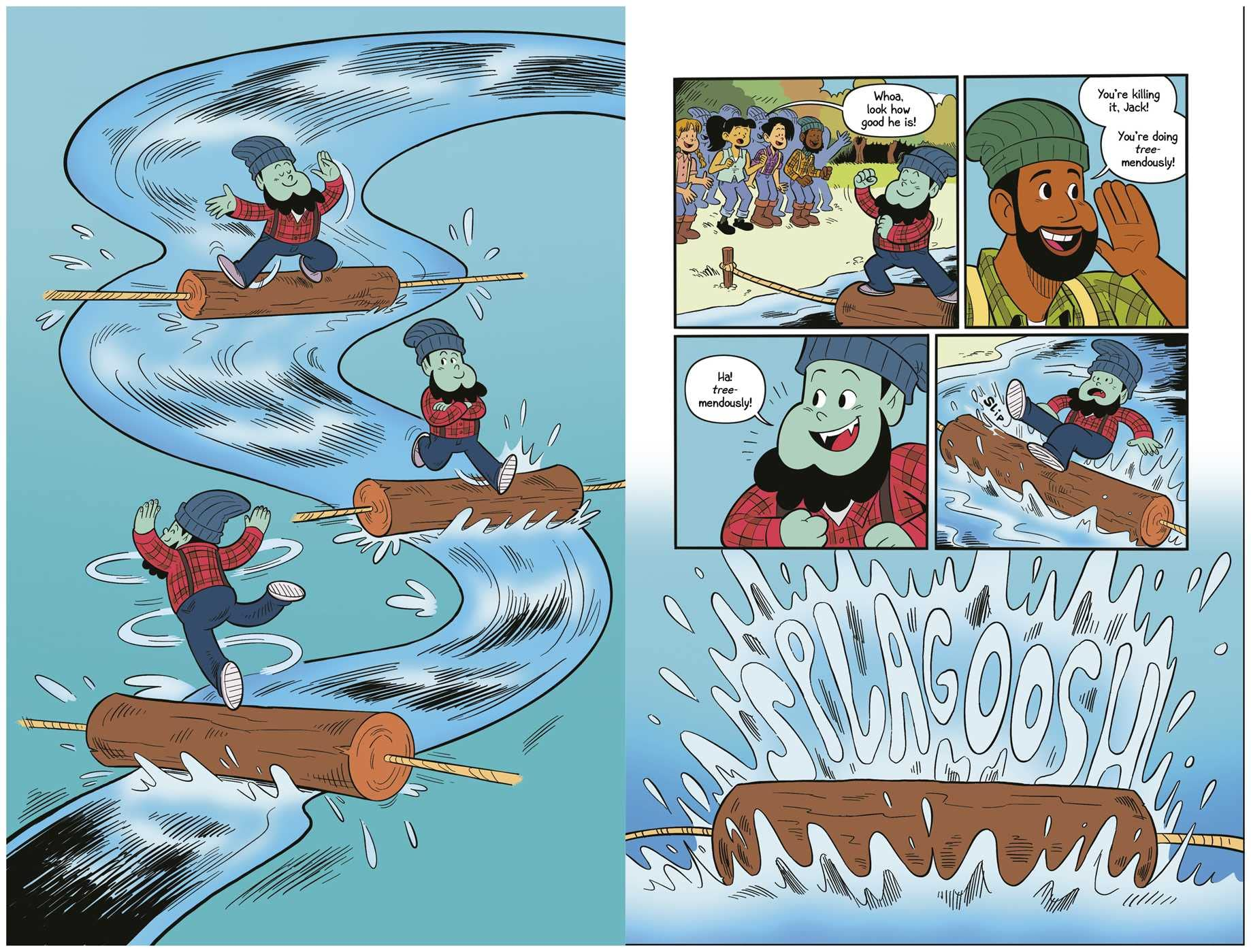
Lumberjackula by Mat Heagerty, illustrated by Sam Owen

Published by Simon and Schuster Books for Young Readers

Summary:  Jack’s ready to pick a secondary school, but he’s torn between following in his lumberjack mom’s bootsteps or choosing the eerier path of his vampire dad.  He tries out both of their alma maters, but neither feels like a great fit.  When he accidentally stumbles upon a school for dancers, it seems perfect for his talents, but he’s afraid he’ll disappoint his parents.  Finally, a wise teenage manatee rescues Jack from a near-drowning and gives him some good advice about being himself.  He finally gets up the courage to tell his parents what he wants, and they proudly cheer him on to become a great dancer.  152 pages; grades 3-6.

Pros:  Elementary kids will happily snap up this quirky graphic novel with lots of fun characters and a good “be yourself” message.

Cons:  There wasn’t a lot of suspense since it was pretty evident early on what Jack’s decision was going to be.

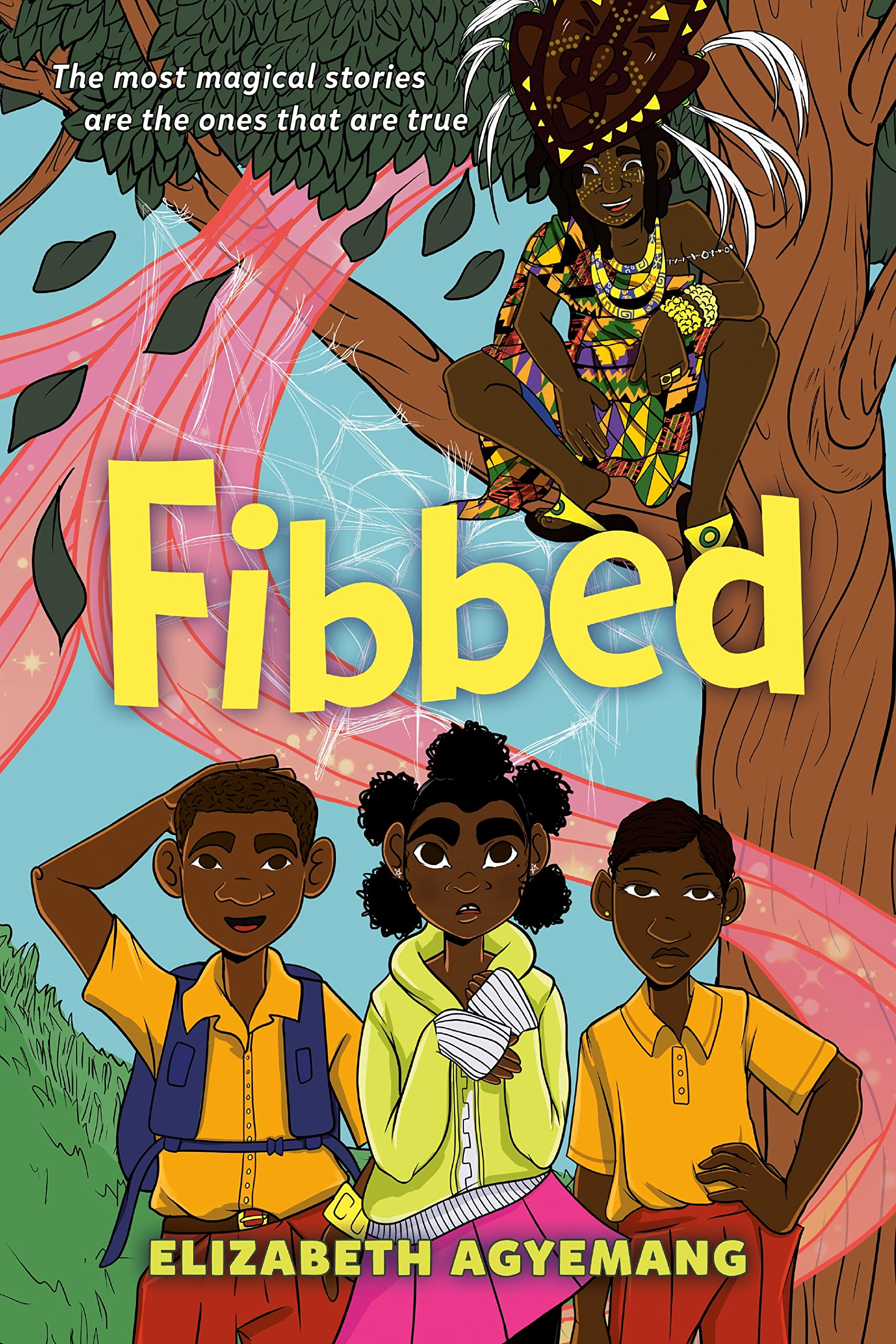
Fibbed by Elizabeth Agyemang

Published by Razorbill

Summary:  Nana’s in trouble again for lying, even though she swears her story about how her teacher’s toupee disappeared is true.  Her parents have had enough, however, and they decide to send her to stay with family in Ghana for the summer.  There she meets relatives and learns about the trickster spider Ananse who exchanges favors and magic for stories.  When Nana, her cousin, and a classmate discover men who are destroying a local forest by stripping it of magic, they end up working with Ananse to defeat the villains and save the forest.  As a reward, Nana gets a wish granted and is happy that her stories are finally believed by family members in both Ghana and the U.S.  Includes four pages of additional information about Ananse.  256 pages; grades 4-7.

Pros:  This graphic novel cleverly weaves together a realistic family story and folklore. The artwork is gorgeous, particularly the wordless pages that show the Ghanian countryside.

Cons:  There’s a lot going on in the story, and I was a little confused about some of the details.

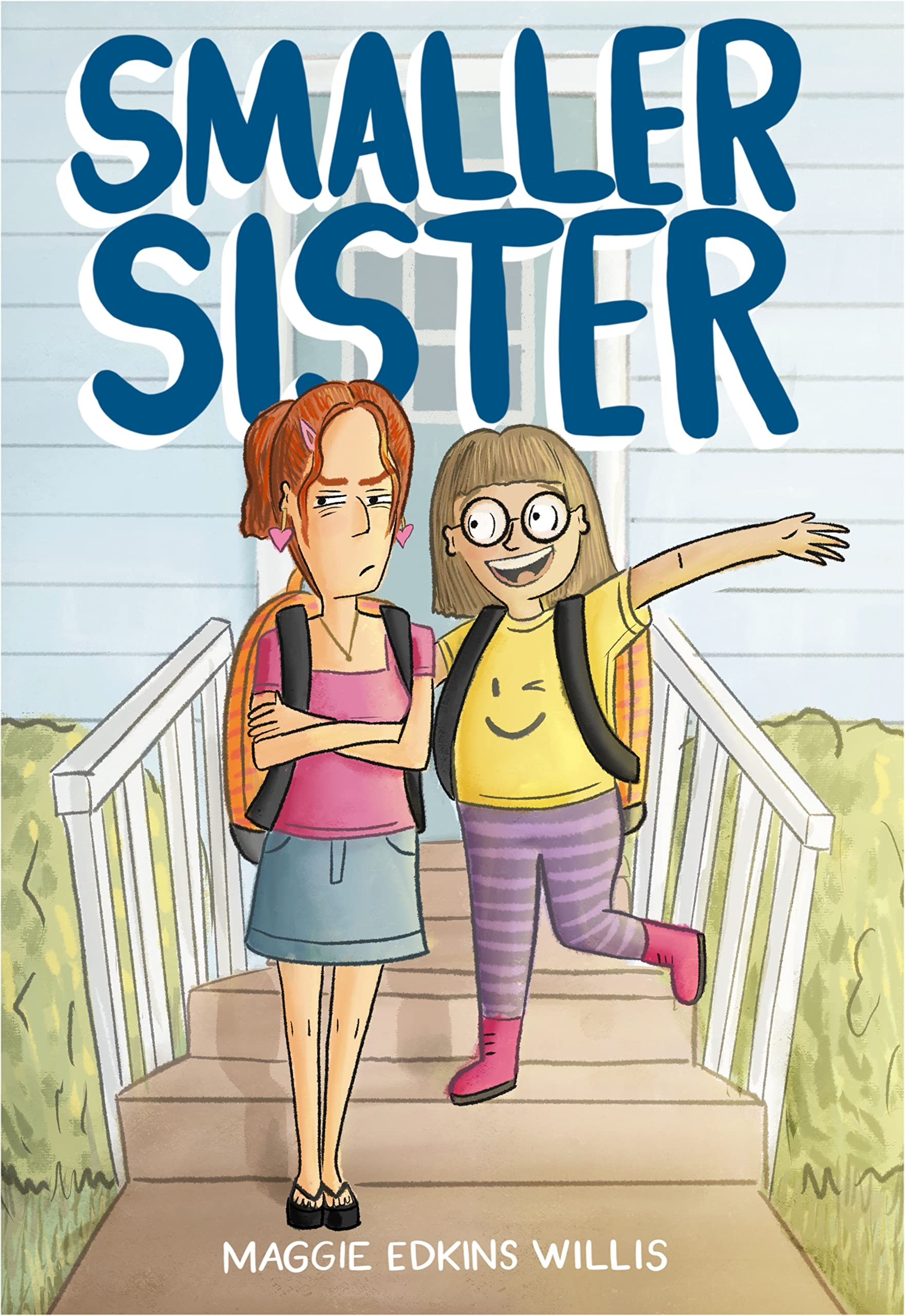
Smaller Sister by Maggie Edkins Willis

Published by Roaring Brook Press

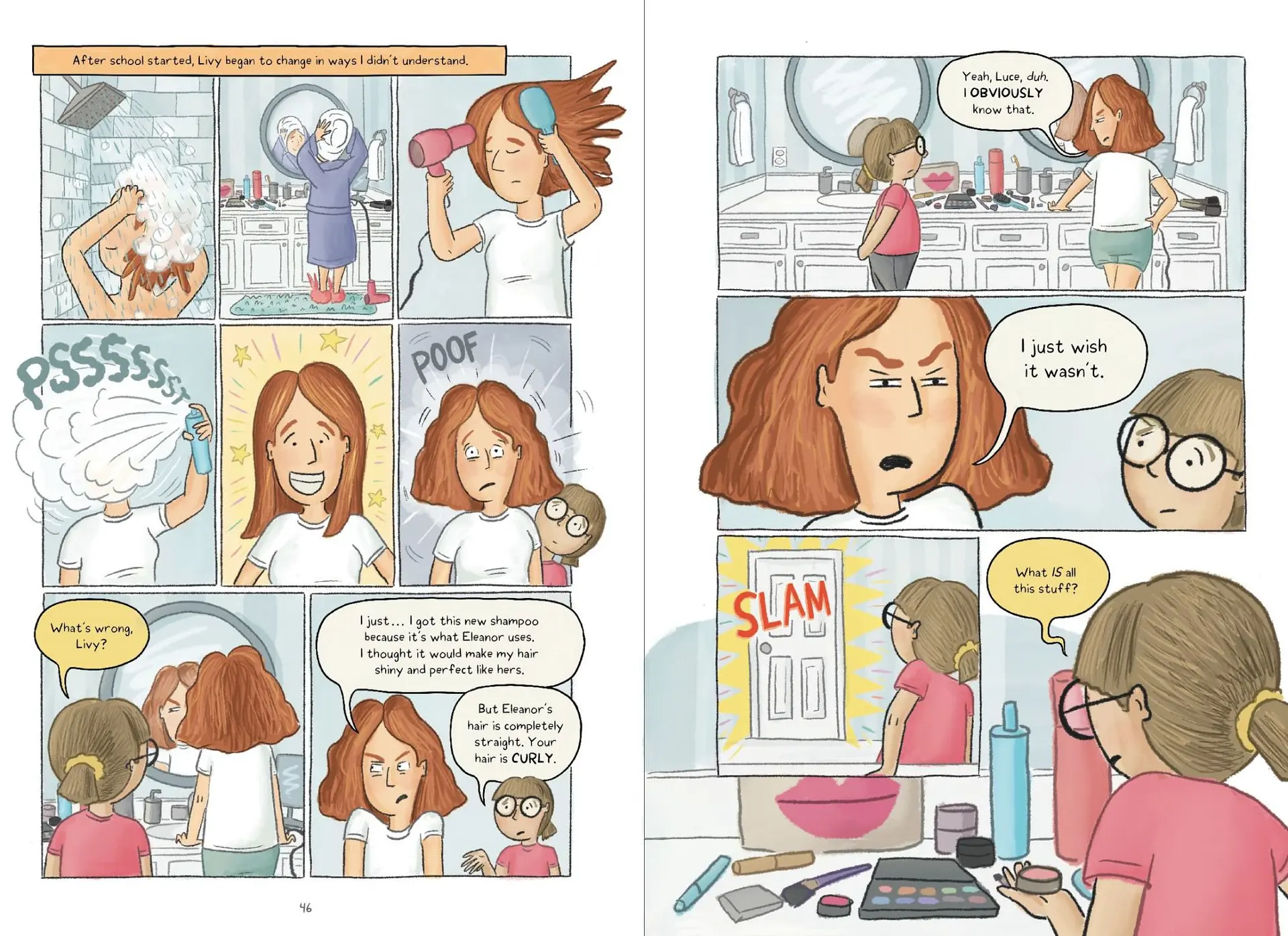
Summary:  Lucy and her older sister Olivia have always been close, but when they switch schools right before fifth and sixth grades, things start to unravel.  Olivia develops an eating disorder, and Lucy struggles to try to understand the unhappy person her sister has become and the difficult changes her whole family is going through.  Just as Olivia is starting to recover, the family moves from Indiana to Massachusetts, a transition that proves difficult for both of the girls.  As Lucy faces peer pressure and mean girls, she begins to doubt herself and to adopt some of Olivia’s techniques for losing weight.  Fortunately, Olivia and their parents have learned a lot in the last couple of years and are able to intervene.  Two weeks at a theater camp between sixth and seventh grade give Lucy a huge boost in confidence, helping her to start seventh grade on a much more positive note.  Includes an author’s note telling of her experiences that inspired this book.  320 pages; grades 4-7.

Pros:  Another middle school girl graphic memoir that will undoubtedly be popular with the many readers who love this genre.  The topics of eating disorders and girls’ struggles with body image are addressed sensitively and in an appropriate manner for upper elementary and middle school readers.  I’d love to see how seventh grade goes for Lucy, so I’m hoping for a sequel.

Cons:  The parents, who were sensitive in other ways, seemed kind of oblivious about how tough it was for the girls to change schools twice in two years.

Crab & Snail: The Invisible Whale (Crab & Snail book 1) by Beth Ferry, illustrated by Jared Chapman

Published by HarperAlley

Summary:  Crab and Snail are BBF’s (best beach friends), who hang out with a couple of barnacle sidekicks named Drip and Grip.  When a mysterious rain shower starts following Crab and Snail around, they can’t figure out what’s happening until a know-it-all gull tells them an invisible whale is following them around.  They send their friendliest smiles out to the ocean and are rewarded with a new friendship with Isabel who is, in fact, an invisible whale.  She ends the book by serenading them with a lullaby as the sun goes down.  Look for book 2 in November.  64 pages; grades 1-3.

Pros:  There are plenty of laughs and celebrations of friendships in this graphic series starter that will definitely be a hit with Narwhal and Jelly fans and other beginning readers. 

Cons:  I would have preferred the structure of a chapter book.

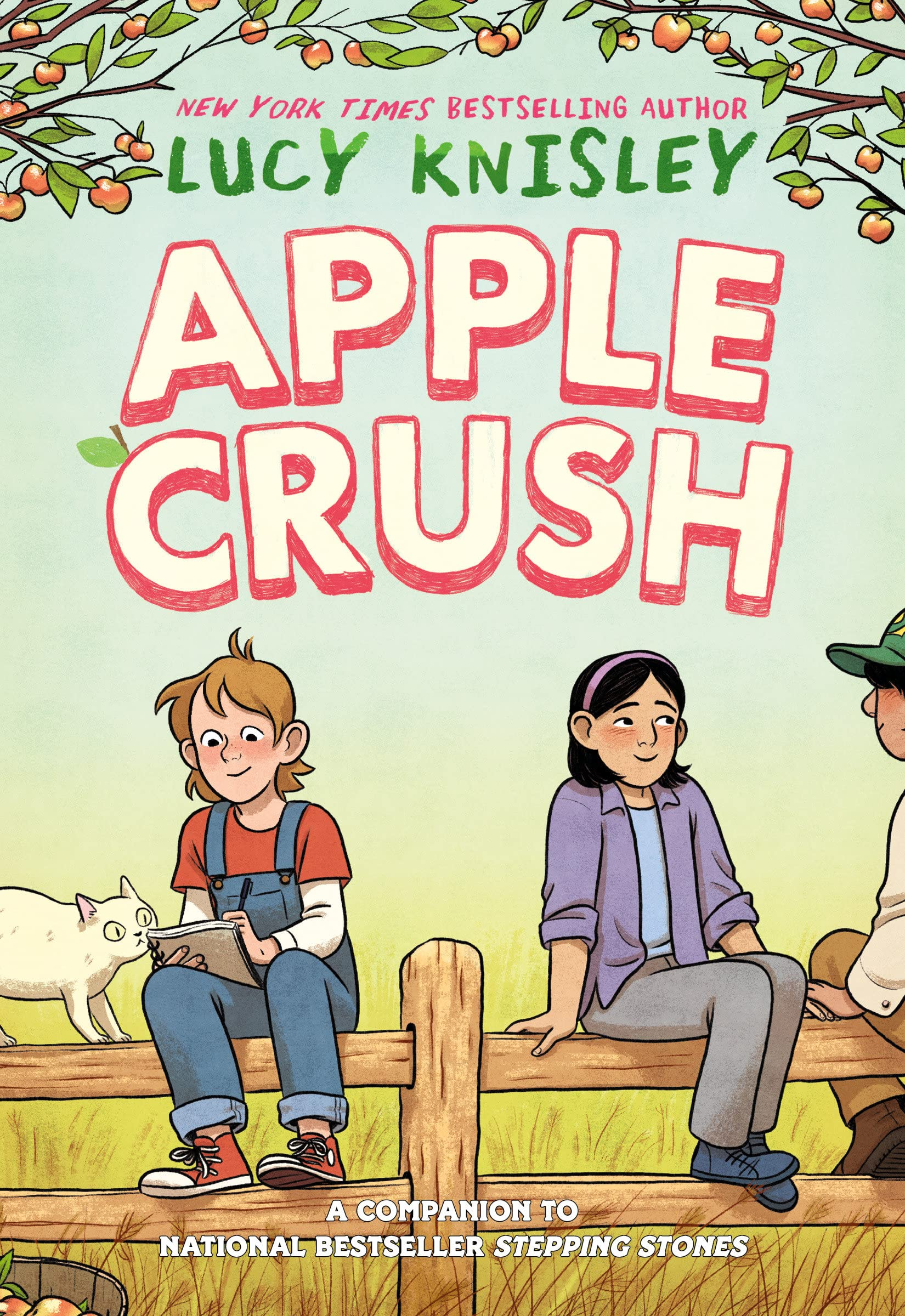
Apple Crush by Lucy Knisley (Peapod Farm, book 2)

Published by Random House Graphic

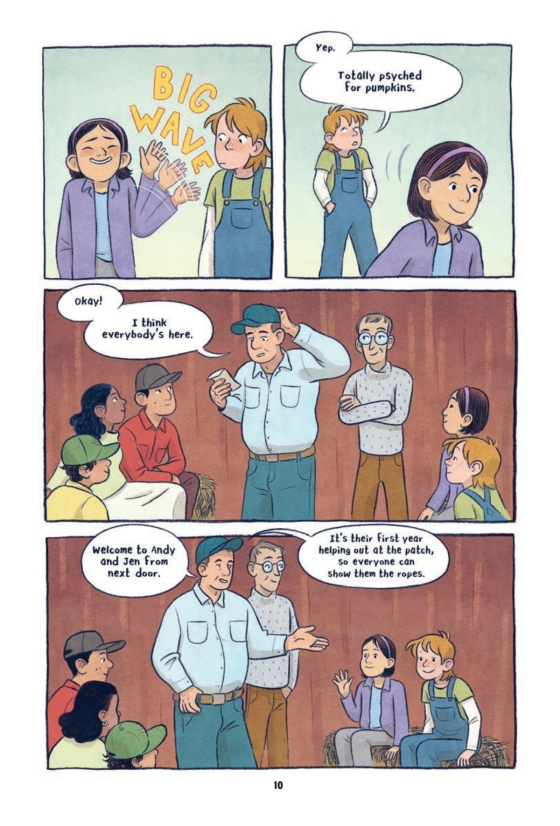
Summary:  Jen and her family continue the story started in Stepping Stones.  She and her mom have settled into the routine of life on Peapod Farm with her mother’s boyfriend Walter.  Walter’s daughters Andy and Reese visit on the weekends.  Fall brings the beginning of middle school and a job for Andy and Jen helping to set up a haunted hayride at a neighboring farm.  The owner’s nephew Eddie is also working there, and even though he and Jen have a lot of common interests, Andy has a crush on him.  Jen doesn’t understand all the fuss made about romance and runs into even more issues with this when she becomes friends at school with a boy named Ollie.  Like it or not, romance is part of middle school life, and Jen has to learn to both deal with it and to speak up for herself and what she wants in her own life.  Includes several pages at the end in which Lucy shares incidents from her childhood that influenced this book.  208 pages; grades 3-7.

Pros:  Another fun graphic novel about a middle school girl that does a great job capturing family and friendship dynamics.  The fall setting makes this a perfect back-to-school book.

Cons:  While I would no longer describe Walter as verbally abusive (as I did in my review of book 1), he still presents as an insensitive dunderhead.  

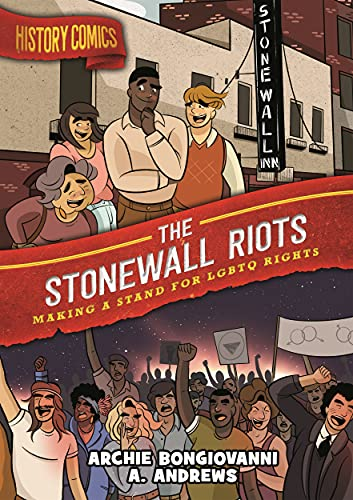
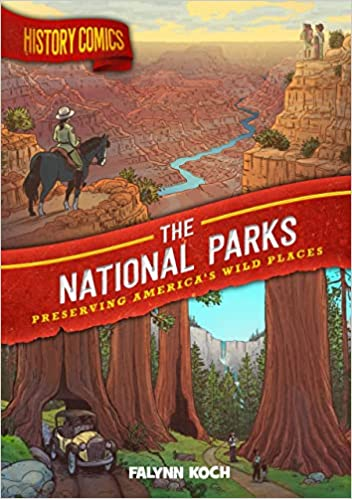
The Stonewall Riots: Making a Stand for LGBTQ Rights by Archie Bongiovanni, illustrated by A. Andrews and The National Parks: Preserving America’s Wild Places by Falynn Koch

Published by First Second

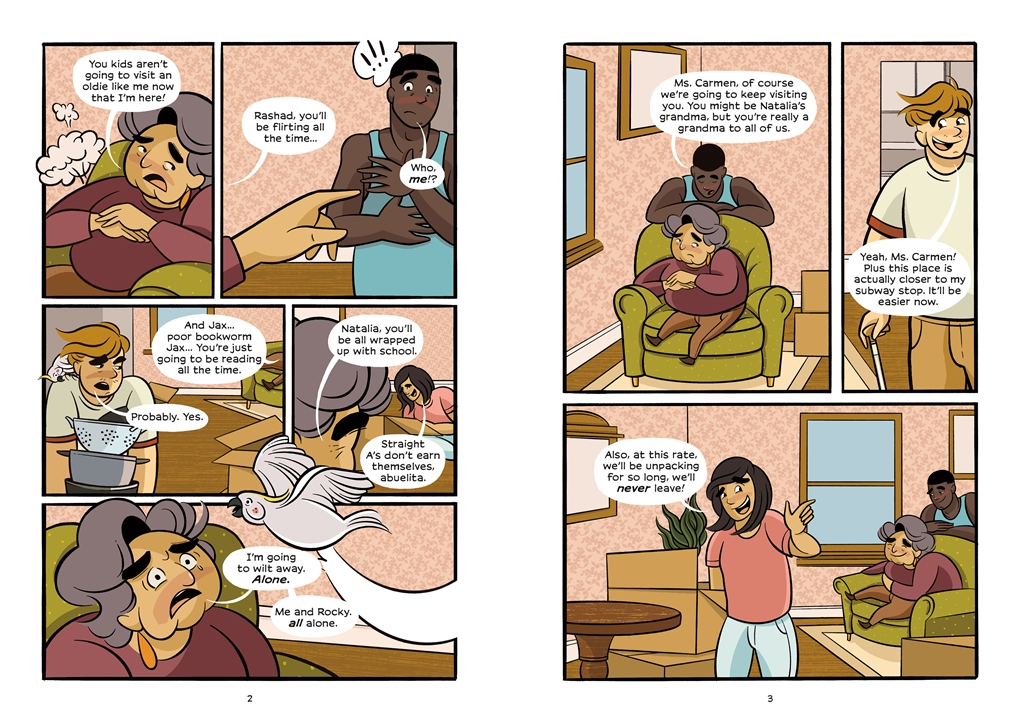
Summary: These two entries into the History Comics series tell the story of the 1969 Stonewall Riots that helped bring gay rights into the national spotlight and the history of the National Parks System that helped preserve natural wonders and historical artifacts in the United States.  In The Stonewall Riots, Natalia’s abuela takes teen Natalia and her friends Jax and Rashad back in time to the night of the first protest.  Abuela had a girlfriend at the time, and the three kids, all part of the LGBTQIA+ community, get some lessons about the people and events of that time.  The National Parks features two narrators, a bigfoot and an eagle, who look at the patchwork history of the National Parks System, going all the way back to the early 19th century.  Each book starts with a foreword and includes an author’s note with additional information and resources at the end.  128 pages; grades 4-8.

Pros:  Both books make history accessible through the graphic format and the fun narrators (abuela and Bigfoot).  The additional resources at the end make these a good introduction that could lead to further research.

Cons:  I thought this format worked better for a specific incident (Stonewall Riots) than a longer period of time (National Parks).  I could see kids losing interest in such a sprawling history that included so many different people and places.