Strangers in strange lands

How to Say Goodbye in Cuban by Daniel Miyares (Anne Schwartz Books, 240 pages, grades 4-8). Daniel Miyares tells the story of his father, Carlos, a young boy living in the Cuban countryside in 1956. When his father wins the lottery, he decides to pursue his dream of opening a furniture store, moving the family to the big city. Carlos is heartbroken to leave his friends and grandparents, but things take a darker turn as the political landscape in Cuba changes dramatically. The beginning of each chapter shows Castro’s slow rise to power, as he gathers enough supporters to overthrow Batista and takes over the country. Carlos’s parents aren’t particularly political, but that doesn’t protect them from the state taking his dad’s business. Carlos secretly watches Papi and some other men work every night building a boat, and shortly after that, his dad disappears. When life gets more dangerous in the city, the family returns to their grandparents’ farm, where Papi reunites with them and tells them they’re going to America. Carlos is heartbroken all over again, but his father convinces him it’s their only chance for a better life. After a dangerous nighttime journey, they arrive in Florida, ready to begin that life. Includes a four-page author’s note with additional information about Carlos and how his son Daniel came to write this book, along with several photos.

I was surprised to learn that Daniel Miyares has never won a Caldecott, and this graphic novel could easily remedy that situation–or win him a Newbery. The story and gorgeous artwork capture both the beauty of Cuba and the tension, confusion, and danger of the early days of Fidel Castro’s regime. The last part of the book, covering the family’s escape is both suspenseful and moving, and readers familiar with today’s immigration situation will be surprised at the welcome the Cubans get from the American military.

The Experiment by Rebecca Stead (Feiwel and Friends, 288 pages, grades 4-7). Despite his normal New York City upbringing, Nathan has always know that he’s different from other kids. He brushes his teeth five times a day with special pink toothpaste, his mother carefully records every calorie he eats, and…he and his family are aliens. Known as the Kast, his parents have raised Daniel on tales of how they traveled from their home planet as children to begin an experiment living on Earth. Nathan meets each month on Zoom with other Kast children, and he’s begun secretly texting one of them, a girl named Izzy. But recently a few of the kids, including Izzy, haven’t been on the calls, and when Nathan discovers that he’s growing a tail, he suspects he’ll be the next to disappear. He’s not wrong, and he and his parents are summoned to the mother ship, which sits in a parking lot outside a Pennsylvania mall, disguised as a storage container. As Nathan learns more about the ship and his parents’ past, he begins to suspect that it’s all a deception, and that he and the others might be human after all.

This science fiction story is hard to put down once you get through the first few chapters, and the last half has plenty of twists and turns that will keep readers guessing until the very end. It reminded me a little bit of a Margaret Peterson Haddix story and would make a great introduction to the sci-fi genre.

Courageous women of World War II

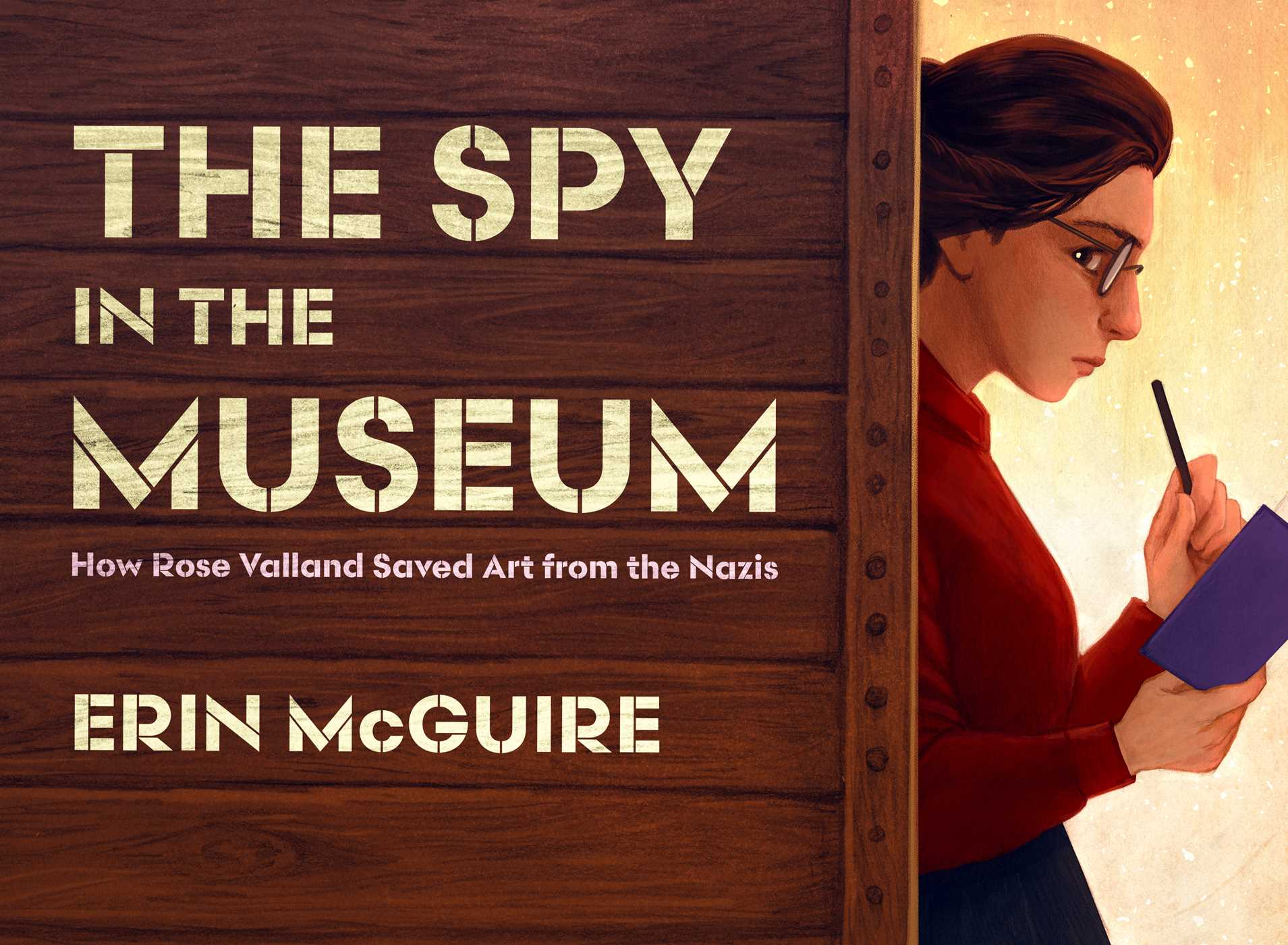
The Spy in the Museum: How Rose Valland Saved Art from the Nazis by Erin McGuire (Beach Lane Books, 40 pages, grades 2-5). Rose Valland loved art. As curator of Paris’s Jeu de Paume Museum, she appreciated all kinds of art: ancient, classical, or modern. Adolf Hitler hated modern art. When Nazis took over Rose’s museum, they fired all the staff except Rose, who was kept on as manager. As they started to steal the art, selling it to fund the war, Rose secretly listened to their conversations and made notes about where the art was going. The soldiers didn’t know she spoke German, but they still became suspicious of her, which put her in grave danger. Towards the end of the war, as the Nazis fled Paris, Rose worked with the French Resistance to stop their final train, loaded with valuable artworks, from leaving the country. For much of the rest of her life, she used her notes to help restore the stolen artworks from around the world. Includes additional information about Rose Valland and the art she worked to save, as well as a list of sources.

This inspiring story is supplemented with interesting and timely questions in the author’s note: why does protecting art matter, and why did the Nazis want to destroy it? The illustrations, many including famous artworks, add to the story and the conversation.

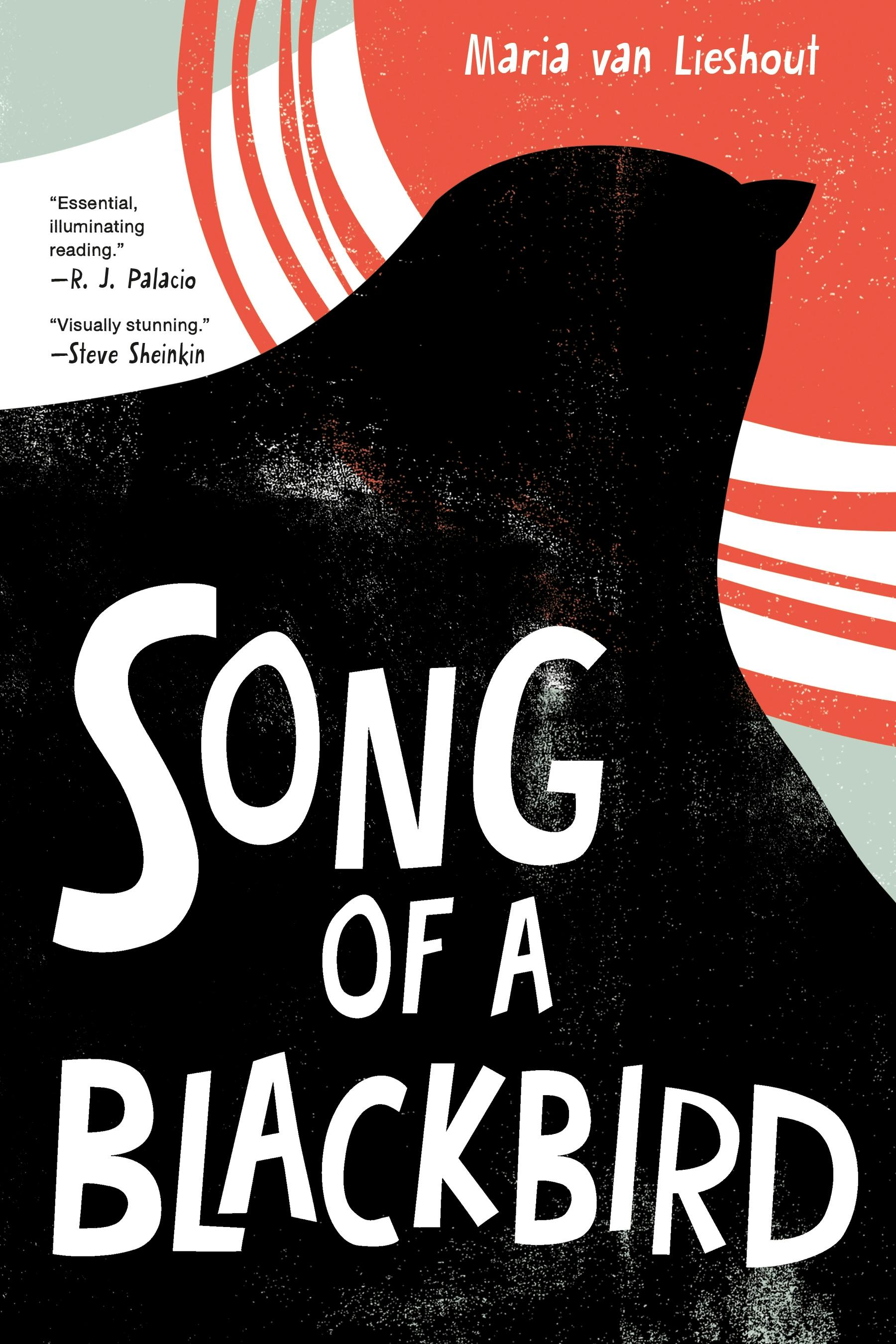
Song of a Blackbird by Maria van Lieshout (First Second, 256 pages, grades 8 and up). The narrative of this graphic novel alternates between 2011 and 1943 Amsterdam. In 2011, Annick is trying to find help for her Oma’s leukemia. When bone marrow tests reveal she was adopted, the two turn to a set of prints from her childhood, each signed by “Emma B.” to try to learn more about her past. Emma is the 1943 protagonist, an artist and student whose education is interrupted by the Nazi invasion of the Netherlands. She uses her talents to aid the Resistance, helping to create false documents and working to rescue children whose parents are being sent to concentration camps. A blackbird that represents art and creativity narrates, showing how his gifts help those in the darkest of circumstances. The two stories eventually meet, and the reader learns the fate of all the characters in a moving epilogue. Includes extensive back matter about the buildings pictured in Oma’s prints and the real-life people on whom Maria van Lieshout based her story.

I learned about this book when the National Book Award Longlist was announced a couple of weeks ago, and it absolutely blew me away. I truly can’t imagine creating this impeccably researched historical fiction, with its two riveting narratives, each one portrayed in its own color palette. Usually I’m rooting for a middle grade win over YA, but this is a compelling choice for sure. Although both books take place over 80 years ago, their stories speak to the timeless power of art and will surely inspire those fighting to create a brighter world.

Surviving tough times

The Library in the Woods by Calvin Alexander Ramsey, illustrated by R. Gregory Christie (Carolrhoda Books, 32 pages, grades 1-5). When a hailstorm destroys their crops, Junior and his family are forced to leave their farm and move to the city. City living feels strange, with indoor plumbing, cars driving up and down the roads, and the need for shoes all the time. But Junior is thrilled when some new friends introduce him to a public library just for Black people. He borrows three books for himself and his parents and excitedly gives his mom a book of poetry by Phillis Wheatley and his dad a book about George Washington Carver. Every night for two weeks, Dad sits out on the porch with his book, until Junior finally learns from his mother that his father can’t read. When Junior gently takes the book and starts to read it out loud, he sees tears of joy in his dad’s eyes. Includes an author’s note about his childhood, the library on which this book is based, and the ways his community and family supported education for themselves and their children.

Junior tells his story with hope and determination, showing a family doing their best to make better lives despite hard times and racism, and emphasizes the importance of books and education. The illustrations place the story in the mid-twentieth century (the author’s note reveals he first visited the library in 1959) and do an excellent job portraying the family and their North Carolina surroundings.

A Place for Us: A Story in Pictures by James E. Ransome (Nancy Paulsen Books, 32 pages, grades 1-5). The author’s note at the beginning challenges readers to think about this question: In a country of vast resources, what is our responsibility to those without access to the basic necessities? The story begins with a woman walking across a city street. Soon we see that she’s picking up her son from school. They go to a fast food restaurant where, after saying grace, they eat their dinner. From there, they head to the library, where she reads a book (Finding Langston by the author’s wife Lesa Cline-Ransome, if I’m not mistaken). When the library closes, they head for a park bench where the boy sleeps with his head in his mother’s lap, covered by her jacket, while she sits up all night. After changing his shirt and washing up at a park fountain, the boy and his mom walk back to school.

This is a powerful story, all the more so for being wordless, leading to greater reflection as you study the pictures. The falling brown leaves made me think winter is coming and wonder what these two will do. Watching them get ready in the morning raised the question of where they do their laundry and how they can live out of two backpacks. The author’s note at the front sets the tone for the story, which will undoubtedly fuel many thoughtful conversations.

Let’s visit the Goodreads 2026 Mock Newbery list!

As you’ll see, I’ve been a little resistant to these three books, all of which are currently at or near the top of the Goodreads 2026 Mock Newbery list. I thought I’d dive into them during the last couple weeks of summer before school started. One that I did not get to, and probably won’t, is Max in the Land of Lies by Adam Gidwitz, simply because it’s a sequel which I don’t usually review. I did love the original, Max in the House of Spies, so I feel pretty confident rooting for it to get Newbery acclaim.

Rebellion 1776 by Laurie Halse Anderson (Atheneum/Caitlyn Dlouhy Books, 416 pages, grades 5-9). Elsbeth tells her story from March, 1776 through the end of November, a time when she is working for the Pike family in Boston while searching for her father who’s mysteriously gone missing. He’s the only family member she has left after her mother and siblings died of smallpox when they lived in Philadelphia. There’s a lot going on in 1776 Boston, starting with the evacuation of all British loyalists after the Patriot army takes the city (I finally learned what Evacuation Day is and why it’s still celebrated in Boston). Elsbeth witnesses the financial fall and rise of the Pike family, as well as their struggles with the decision about whether to inoculate their children against smallpox. In the end they proceed, and it falls on Elspeth to nurse them through the mild cases of the disease that they have to suffer in order to create immunity. After months of anxious searching, Elsbeth is finally reunited with her father, and a final chapter gives a report of what happens to her and other characters up until 1781. Includes a note on sources which details the immense amount of research that went into writing this book.

I didn’t know that I wanted to read a 400-page historical fiction novel about the American Revolution, and I’m afraid many middle school readers will feel the same way. Which would be a shame, because this is an extremely compelling story with all sorts of interesting characters, many of whom I’ve had to leave out of my brief review. The chapters are short and the plot keeps humming along, making it a quicker read than I thought it would be. Readers will learn a lot about American Revolution history and find parallels to contemporary life, most notably the vaccine controversy and the fact that ordinary life goes on even when you are living through revolutionary times.

The Undead Fox of Deadwood Forest by Aubrey Hartman (Little, Brown Books for Young Readers, 320 pages, grades 4-7). Clare is an undead fox who has made his home in Deadwood Forest for the last six years, ushering lost animals to their afterlife in one of four realms: Pleasure, Peace, Purpose, or Pain. His life, such as it is, is quiet, and he has learned to keep himself busy reading and tending his mushroom garden to keep away disturbing thoughts about being abandoned by his mother and the car accident that led to his demise as a kit. When he gets wind of a prophecy that could shatter his peaceful life, Clare sets out to make sure that it doesn’t happen. His least favorite animal, a badger, appears at his door, and although he tries to usher her into the afterlife, she seems unable to cross over. As All Hallows’ Eve approaches, Clare begins to have some insights into his life that eventually allow him to let the prophecy unfold and his own path to change dramatically.

I can’t decide how I feel about this book. The story, characters, and world-building are all exceptionally well done, and there are interesting questions about life, death, and self-acceptance that would make this a great choice for a book club. At the same time, I felt myself having to push to get through it, as it started to feel like kind of a heavy read, so it may not be for everyone. Based on the writing alone, though, I would not be unhappy to see it get a Newbery.

The Trouble with Heroes by Kate Messner (Bloomsbury Children’s Books, 368 pages, grades 4-7). This novel in verse opens at the end of the 7th grade school year for 13-year-old Finn Connelly. Not only is he in danger of failing two classes, but he’s in a lot of trouble for vandalizing the headstone of Edna Grace Thomas, a local woman famous for her love of the Adirondack Mountains and her support of other climbers. Edna’s daughter makes Finn an offer: he and his family won’t have to pay for damages if Finn will hike the 46 highest peaks in the Adirondacks over the summer along with Edna’s dog Seymour. Knowing his mom can’t afford to pay, Finn reluctantly agrees to go, accompanied on each hike by one of three local climbers. As the summer progresses, Finn’s resentment gradually gives way to a love of hiking, as he uses the long climbs and the beautiful vistas to process his grief about his dad, a firefighter known for his heroism on 9/11 who struggled with addiction and died while working long hours during Covid. Finn learns more about his dad and slowly unravels his own feelings of grief and anger, while figuring out his own talents and using them to help his family move forward.

This book sounded a bit mawkish to me, but I’m happy to say I was completely wrong. I would love to see it get a Newbery, because I think it has a lot of kid appeal. The verse format makes the 350+ pages move pretty quickly, and Messner injects plenty of humor and lightheartedness despite the weighty topics. Finn goes through some pretty big changes, but they all feel in keeping with being 13 years old. And there’s a pretty lovable dog as the cherry on top.

Learning Black history through historical fiction

Radiant by Vaunda Micheaux Nelson (Dutton Books for Young Readers, 320 pages, grades 4-7). Fifth grader Cooper Dale is ashamed of the fact that she sometimes wishes she were white, but she can’t help feeling that it would make her life easier at school where she’s the only Black student. While she shares events like grieving the assassination of President Kennedy and excitement about the Beatles with some of her classmates, she’s also the target of racist bullying by other kids, especially Wade. When Cooper’s mom gets a cleaning job with Wade’s family, Cooper finds out that his mother is dying of cancer. Although it’s hard for her to be compassionate, she learns from those around her, including her parents and older siblings, members of her church, and the new Black boy who is dealing with the loss of his own mother. By the end of the book, Cooper has realized that she and Wade may never be friends, but her empathy can help him get through a difficult time and may even change how he sees her and her family.

This novel in verse does an excellent job of weaving historical events of 1963 into a story that today’s readers will relate to. Cooper’s honest voice expresses both her wish to live up to her parents expectations of being “radiant” and her very human emotions in response to some of the difficult situations she encounters.

Will’s Race for Home by Jewell Parker Rhodes (Little, Brown Books for Young Readers, 208 pages, grades 4-7). Will’s family is barely making it as sharecroppers on a cotton farm in Texas when Father hears about the chance for free land in Oklahoma–if they can win the race to get there. Despite the risks of the journey, Father decides it’s worth a try, and 12-year-old Will successfully makes the case to join him. Along the way they encounter a rattlesnake, a rushing river that must be crossed to get to Oklahoma, and a mysterious ex-Civil War soldier named Caesar with some dangerous enemies. Caesar and his horse Midnight join Father and Will, and the three work together to survive and overcome the racism that threatens to derail their plans. When Caesar gets shot, it’s up to Will to ride Midnight all night, covering the last leg of their trip and making his family’s dream of owning land a reality. Includes an author’s note giving more historical context, particularly on the removal of indigenous groups from the land being claimed in the story and the Tulsa Race Massacre that took place in Oklahoma a generation after Will and his family settled there.

Fans of the I Survived series will enjoy this action-packed adventure featuring a courageous hero committed to helping his family. The author’s note addressed some of the more troubling aspects of the land rush, as well as the fact that the story for Black people settling in Oklahoma was unfortunately not as happily-ever-after as Will’s seems to be. I’m guessing both of these books will receive consideration for Newbery and Coretta Scott King awards.

Immigrant kids

Don’t Cause Trouble by Arree Chung (Henry Holt and Co., 256 pages, grades 4-7). Things don’t look good for Ming on his first day of middle school: his mom has given him his usual bowl haircut, and he’s dressed in the thrift store clothes she insists on buying. Ming’s accidentally placed in an ESL class, even though he only speaks English, but with his parents’ injunction, “Don’t make trouble” ringing in his ears, he goes along with it. Eventually, the teacher figures things out, and he’s moved to honors English, where he finds a couple of new friends,. When Ming’s desire to fit in lands the three of them in some serious trouble, he’s forced to reconsider what’s really important to him and try to make amends with his parents and his friends. Sixth grade ends on a high note, with the possibility of summer basketball, a new family business making egg rolls, and a new girl in the picture who may or may not a crush on him. Includes an author’s note and family photo telling how his own childhood inspired this story and several pages of instructions on making a graphic novel.

The story and art in this graphic novel are fairly simple and straightforward but really capture the feeling of being torn between two worlds: the Chinese one at home and the American one at school, as well as the pressure Ming feels as his parents, whose own dreams have been deferred, pin all their hopes on his success.

Outsider Kids by Betty C. Tang (Graphix, 288 pages, grades 5-8). In this sequel to Parachute Kids, the three Li kids are still living on their own in California while their parents try to supervise them from Taiwan. The burden falls on oldest daughter Jessie, who is trying to get into Harvard while working at a job where her boss knows he can cheat her because she’s in the country illegally. Meanwhile, middle brother Jason falls in love and must deal with his sisters finding out that he is gay. When cousin Josephine comes to stay, 10-year-old Ann’s excitement turns to dismay as Josephine is constantly mean to Ann and tries to steal her new friends at school. When Ann’s attempt at revenge on her cousin results in Josephine calling the police on them, the three siblings have a panicky scramble trying to figure out what to do next. They wind up at a new home in San Francisco, which I hope sets things up for a possible third installment. Includes an author’s note about her own life as a Parachute Kid from Taiwan.

I was excited to discover a sequel to Parachute Kids, and it didn’t disappoint. The Li kids are incredibly resourceful and supportive of each other despite their constant squabbling. The tension of their undocumented status is particularly relatable today. The book tackles subjects like Jason’s coming out and Josephine’s father’s adultery that made this feel like it was geared for a slightly older audience than the first one.

Some of Us: A Story of Citizenship and the United States by Rajani LaRocca, illustrated byHuy Voun Lee (Christy Ottaviano Books, 32 pages, grades K-4). “Some of us are born American. Some choose.” With just a sentence or two of text to accompany the vibrant illustrations on each page, the book shows people from all over the world, of all ages, in all sorts of circumstances, who choose to leave their homes, families, and native countries to come to America. They may come seeking jobs or education, or to escape poverty, war, or oppression, and they bring music, languages, food, and stories that enrich their new country. There’s a description of the process involved in becoming a naturalized citizen, including the rights and responsibilities that come with citizenship. An author’s note traces the history of US immigration and citizenship and tells her own story of becoming a naturalized citizen at age 15. Includes the United Nations’ Universal Declaration of Human Rights and a bibliography.

This book celebrating immigration and U.S. citizenship could hardly be more timely and important to share with kids right now. LaRocca does a masterful job of conveying lots of information and emotion in spare, simple language that’s easy to understand. Her text is illuminated by the beautiful illustrations that celebrate the many different cultures of people immigrating to the U.S. and that capture the pride of becoming a citizen.

Life during wartime

The Enemy’s Daughter by Anne Blankman (Viking Books for Young Readers, 288 pages, grades 4-7). Marta and her papa are traveling aboard the Lusitania, trying to get back to Germany with falsified documents. Just as her father’s true identity is discovered, the Lusitania is torpedoed, and the two must fight for their lives. Although they both survive, Papa is arrested immediately upon their arrival in England, while Marta manages to slip away. Hiding in a barn, she’s befriended by an Irish girl named Claire, whose family is poor but manages to find food and shelter for Marta. Marta’s talent for acting and imitating accents comes in handy to conceal her German identity and impersonate a Dutch girl. The two girls work together in a chocolate factory, and Marta saves her earnings for a train ticket to Amsterdam, where she hopes she can book passage back to Berlin. Despite having been taught to hate the British, Marta can’t help but respond to Claire’s friendship and the loving kindness of her family. When Marta’s true identity is discovered by a factory employee, Claire is horrified at first, but eventually she too realizes that their friendship is real and helps Marta escape. The last pages see Marta getting ready to travel to Amsterdam, worried but hopeful that her family will be reunited at last in Germany.

Readers will be drawn into this book right away with the tragic sinking of the Lusitania in the early chapters, followed by Marta’s struggle to survive and find her way home. I was hoping for a bit more resolution to her story, as well as finding out what happened to her father, but it’s a realistic ending given the time and place. The reflections on humanity and who is an enemy occasionally felt a little didactic but could definitely engender some interesting discussions.

Revolutionary Mary: The True Story of One Woman, The Declaration of Independence, and America’s Fight for Freedom by Karen Blumenthal and Jen McCartney, illustrated by Elizabeth Baddeley (Roaring Brook Press, 40 pages, grades 2-5). Mary Katharine Goddard didn’t get to go to school like her younger brother William did, but her mother taught her reading and math at home. When William decided to pursue bigger ambitions, Mary and her mother took over his print shop. After her mother died, Mary took charge, running a successful business until her brother asked her to move to Baltimore to help him with another shop. Once again, he left to pursue other interests, and Mary took over. As news of a revolution made its way through the colonies, Mary engaged in the risky business of publishing news and opinions about independence. After the Declaration of Independence was signed, the Continental Congress moved from Philadelphia to Baltimore, where they made the bold decision to send a copy of the document to each of the thirteen colonies. Mary was chosen as the printer, and she included her name on the declaration, using her full name, Mary Katharine Goddard instead of her usual M. K. Goddard signature. Includes additional information about Mary Katharine Goddard, the Declaration of Independence, and printing and publishing in colonial times; also a bibliography and an author’s note from Jen McCartney that tells how she completed this book after her mother (Karen Blumenthal) died in 2020.

This engaging story of a courageous woman deserves a place in any study of the American Revolution. The text and illustrations are lively, with action words like crank, whoosh, pound, and revolution woven into the pictures. The author’s note about completing the book after her mother passed away unexpectedly at the age of 61 adds a poignant note to the story of a woman who was inspired by her own strong mother.

Skywalkers, buffalo hunters, and ribbon dancers: three books about Indigenous Americans

To Walk the Sky: How Iroquois Steelworkers Helped Build Towering Cities by Patricia Morris Buckley, illustrated by E. B. Lewis (Heartdrum, 40 pages, grades 1-5). For more than a century, members of the Mohawk tribe from Canada’s Caughnawaga reserve have worked construction as “skywalkers,” balancing on beams high above the ground. Many of them were working on a bridge across the St. Lawrence River near Quebec City that collapsed in August, 1907, killing 75, including 33 from Caughnawaga. Beginning in the 1920’s, Mohawk skywalkers from New York and Canada traveled to New York City to build skyscrapers, including the World Trade Center. After the towers’ destruction on September 11, 2001, skywalkers helped dismantle broken beams and later were an important part of building One World Trade Center. Today, skywalkers continue their work across North America, including Native women who have entered the profession. Includes an author’s note about her family’s connection to the story, additional information about the Quebec bridge collapse and the Kahnawà:ke reserve (formerly Caughnawaga), a glossary, and a list of some of the buildings constructed by skywalkers.

Kids will be fascinated by the story of these skilled, courageous workers who have helped build some of the most famous structures in North America. The Mohawks originally worked as unskilled laborers in exchange for some of their reserve land, but soon proved their fearless skill as skywalkers and have continued the tradition for over a century. Look for YouTube clips to supplement the book with heart-pounding visuals.

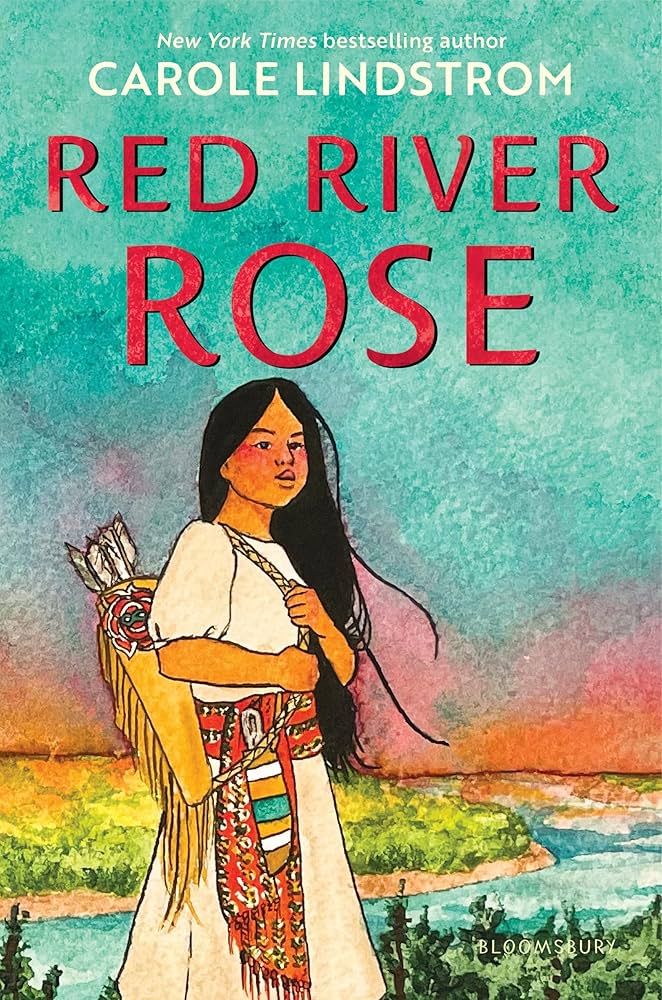
The Gift of the Great Buffalo by Carole Lindstrom, illustrated by Aly McKnight (Bloomsbury Children’s Books, 40 pages, grades K-3). Rose is excited to be at the semi-annual Métis buffalo hunt. Pa is a captain for the first time, in command of ten other hunters. After several days of scouting, no buffalo have been seen, and Rose hears Pa saying they’re scarce because of the settlers and their iron horse. Rose is sure she could find the herd, but Pa says she’s too young to help. But Rose is determined, and with the help of a wolf skin, she finds the buffalo, and the men hunt what they need for their people. At the end of the day, she tells Pa she wishes he would take her with him on the next hunt. “I just might,” he replies. Includes an author’s note relating how she enjoyed the Laura Ingalls Wilder books but felt alienated by their portrayal of Native Americans as savages, and how that led her to write this story about the same time and place; also includes additional information about the buffalo hunt and a bibliography.

This is a fascinating parallel story to Laura Ingalls Wilder’s books. Rose has Laura’s same independent spirit and desire to help her family, and she even calls her parents Ma and Pa. It’s a much-needed portrayal of the indigenous people of the plains who are often marginalized in the Little House books.

Raven’s Ribbons by Tasha Spillett, illustrated by Daniel Ramirez (Little, Brown Books for Young Readers, 32 pages, ages 4-8). Raven loves participating in round dances with his family and friends, and his favorite part is watching the ribbon skirts. His grandmother is famous for making these colorful garments that are created with just the right ribbons for each dancer. When Raven asks if he can have a ribbon skirt, Grandma says, “I’ve lived for a long time, Nosesim, and have never seen a boy in a ribbon skirt.” While Raven sleeps, however, she works late into the night, and by morning there is a beautiful ribbon skirt that looks just like a rainbow. “I’ve lived for a long time, Nosesim,” she tells him, “And I’m lucky to see beautiful things that I’ve never seen before.” Includes notes from the author and the illustrator with additional information about the Round Dance and Two-Spirit people.

This simple story celebrates Indigenous dancing as well as offering a gentle, empowering message about being yourself and affirming gender differences. I loved how Grandmother was able to acknowledge both that a boy wearing a ribbon skirt was new to her and that there can be beauty in doing things in a new way.

And two final 2024 novels in verse

Black Star by Kwame Alexander (Little, Brown Books for Young Readers, 384 pages, grades 5-8). In this sequel to The Door of No Return, Kofi is now Nana Kofi, grandfather to Charlene, a.k.a. Charley, who dreams of being the first Black female baseball player. She and her best friend Willie Green get tricked into a bet with a local bully, forcing them to quickly organize a baseball team and play a game at the church picnic. When the picnic grounds are being used for other activities, the team sneaks over the bridge to the whites-only field, where an encounter with a group of white kids ends with Willie accidentally hitting one of the boys with a baseball. Back home, Charley can’t figure out what’s going on, but the adults start talking in hushed tones and seem to be preparing for a journey. In the final pages, the family flees in Uncle Albert’s car, except for Daddy who stays behind to defend their home, while Willie Green and his brother Johnnie run from their burning home to join them after the Klan has done something unspeakable to their father. Those in the car are heading north, with Charley wracked by guilt over her actions that have led to this moment. Readers will have to wait for the third book of the trilogy to find out what happens next in the family saga.

This incredibly rich novel has so many elements woven together: Nana Kofi’s stories that fill in some of the details between books 1 and 2, appearances by real-life people like Marcus Garvey and Mary McLeod Bethune, and everyday descriptions of the life of a Black family living on the 1920’s South. I do think most readers will need some guidance with this book, particularly with the historical context, and they will understand and appreciate it much more if they have read book 1.

Unsinkable Cayenne by Jessica Vitalis (Greenwillow Books, 304 pages, grades 4-7). It’s 1985, and 12-year-old Cayenne is excited at the prospect of finally settling down. She and her free-spirited parents have always l lived in a van, but with the addition of twins to the family, they’re feeling the need for a home and some money. Cayenne loves seventh grade, making a few new friends and developing a crush on the new boy Beau, but when there are layoffs at the local sawmill, her dad loses his job, and she learns that Beau’s father was responsible. As food gets leaner and her parents start fighting more, Cayenne fears that her days in a real home may be numbered. By the end of the story, her hunch proves correct, and the family takes to the road again, although Cayenne feels a bit wiser about appreciating herself and her family and about questioning the importance of “fitting in.” An ongoing school project about the Titanic offers additional insights about class, and the author includes additional information at the end, as well as the connections to her own family, and Cayenne’s dad’s PTSD from Vietnam which he self-medicates by smoking weed.

While not exactly an upbeat story, Cayenne is an endearing protagonist who learns some important life lessons, and the focus on class and poverty is one that’s often not explored much in children’s books. I was kind of surprised when Dad was smoking a joint on page 1, but the author’s note gave his marijuana use some good context.

A couple of courageous kids

Monster Locker by Jorge Aguirre, illustrated by Andrés Vera Martínez (First Second, 256 pages, grades 4-7). Pablo Ortiz is as about as unlikely a hero as any sixth grader at Garfield Middle School. Basically friendless after an embarrassing incident at his ex-best friend’s house, he winds up with one of the worst lockers, in the school basement. What he doesn’t know is that a dangerous (if slightly goofy) monster named Obie the Evil lurks inside. When Pablo accidentally releases Obie, it sets off a chain events that culminates with Aztec earth goddess Coatlicue setting up her throne on the roof of the school and preparing to destroy humanity, starting with Pablo’s school. Assisted by his fierce abuela, Pablo discovers resources he didn’t know he had, and he and two new friends find a way to not only defeat Coatlicue but befriend her. He and his friends give her a quinceañera, paying their respects by promising to take care of the earth in a variety of ways. Things seem to be getting back to normal, but an appearance by Obie all but guarantees that book 2 is on its way. Includes an introduction to Aztec mythology by Pablo at the end.

With plenty of humor and non-stop adventure, this is sure to be a big hit with upper elementary and middle school readers. Try it out on fans of Rick Riordan and the Last Kids on Earth series. I hope there will be many installments to come, and I could see a Netflix series for Pablo and his friends in the future.

Light and Air by Mindy Nichols Wendell (Holiday House, 208 pages, grades 3-7). Halle has a pretty happy life until Mama is diagnosed with tuberculosis. It’s 1935, when TB means an indefinite stay in a sanatorium. Halle misses her mother terribly, especially when Papa becomes difficult and demanding. One day, Halle decides to walk to the sanatorium to visit her mother, a day’s trip on a route she’s only traveled by car before. As the day goes on, she becomes increasingly exhausted until she finally collapses. After being rescued, she’s diagnosed with pneumonia and sent to the children’s wing of the sanatorium. Although they don’t have symptoms, both Halle and Papa test positive for TB, and it’s decided that it will be easier for both of them to have Halle stay. She’s placed in a room with three other girls, and soon becomes accustomed to the routine of the TB ward: good food, rest, and plenty of fresh air. The death of one of her roommates brings the reality of the disease home, and Halle launches a plan to help her mother get better. Although her good intentions are somewhat misguided, in the end her courage and determination help heal herself and her family, both physically and emotionally. Includes an author’s note with additional information about the J. N. Adam Memorial Hospital in Perrysburg, NY, where the story takes place.

I do enjoy a good hospital story, and it was interesting to learn more about sanatorium life in the 1930’s. The good food, extended periods of rest, and plentiful fresh air honestly sounded a bit like a spa, except for the constant coughing, occasional lung hemorrhages, and possibility of death. Halle’s struggles with family and friends felt genuine, and her perseverance in helping both her parents was inspiring.