Hanukkah Upside Down by Elissa Brent Weissman, illustrated by Omer Hoffmann

Published by Abrams Books for Young Readers

Summary: Noah lives in New York; his cousin Nora lives in Aotearoa New Zealand. When they talk on the phone, they like to argue about which one of them is upside down. When Nora discovers that Noah celebrates Hanukkah in the winter, and Noah learns that it’s summer in New Zealand, each is convinced that their holiday is better. They set up a shared photo album to settle the score and start posting pictures each day. During the days, Noah eats pastrami on rye, learns Spanish, and throws snowballs, while Nora eats hokeypokey in a cone, practices te reo Māori, and does cannonballs into the water. But each night is the same as they light candles, say Hebrew prayers, and eat potato latkes. On the last night, they receive each other’s gifts, a shirt with “World’s Best Cousin” printed upside down. 40 pages; ages 4-8.

Pros: A cute Hanukkah story about two feisty cousins who enjoy debating each other while also appreciating their friendship and the interesting aspects of the other’s life. The story cleverly weaves in details of both the holiday and life in New York and New Zealand.

Cons: A map showing the two locations would have been a nice addition.

Come and Join Us! 18 Holidays Celebrated All Year Long by Liz Kleinrock, illustrated by Chaaya Prabhat

Published by HarperCollins

Summary:  Throughout the year, a class learns about the holidays different kids celebrate as part of their cultures.  Each child describes the holiday in a paragraph, with colorful illustrations showing a family celebration.  There are sure to be some new ones to many readers, including Obon, Makahiki, and Vesak, as well as some that may be familiar like the Jewish High Holidays, Kwanzaa, and Día de Los Muertos.  At the end of each holiday description is a question for discussion, like “What kinds of stories do you tell on your holiday?” and “Do you gather with family to celebrate your holidays?”  Includes an author’s note about her own childhood experience celebrating Jewish holidays and not observing Christmas, as well as a glossary.  40 pages; grades K-5

Pros:  A fascinating look at other cultures and the special days they observe with appealing illustrations and interesting questions that will help make connections with readers’ own experiences.

Cons:  This felt like kind of a lot to read all at once; it might be better to do a little at a time, or to use it as a resource for learning about specific holidays.

Two books about Christmas and teamwork

Otto the Ornament by Troy Cummings

Published by Random House Books for Young Readers

Elves Are the Worst! by Alex Willian

Published by Simon and Schuster Books for Young Readers

Summary: Otto the Ornament knows his dazzling looks should earn him a front and center position on the Christmas tree. When the other ornaments try to take him down a notch, Otto goes looking for another tree. His journey into the world leaves him battered, without his former shine and glitter. A chance encounter with a familiar ornament sends Otto back home where he’s happy to find a place on the tree and simply reflect some of the holiday light onto the other ornaments.

The goblin from Elves Are the Worst! may be familiar to those who have read Alex Willian’s books declaring unicorns, dragons, and yetis as the worst. Elves, he tells the reader, may seem hard-working and perfect, but in reality, they hang out in trees baking cookies, pour bowls of the world’s loudest cereal, or just sit on a shelf all day. When he stops by the North Pole to show that a goblin can do what the elves there do, he learns that caring for reindeer and making toys are actually pretty tough tasks. Elves aren’t perfect, after all, just good at the teamwork needed to get everything ready for Santa’s big night. Both books 40 pages; ages 4-8.

Pros: Two fun, cartoon-style books for the holidays that deliver their message about playing well with others with plenty of humor. Kids will be delighted to find either Otto or a bunch of elves under the tree.

Cons: Probably not destined to become holiday classics.

The Christmassy Cactus by Beth Ferry, illustrated by A. N. Kang

Published by HarperCollins

Summary:  Tiny Cactus has a special place in her family, especially with the little girl who greets her every morning with, “Hello, my little cupcake,” and tucks her in each evening saying, “Who’s the sweetest bonbon?”  When it’s time to decorate for Christmas, Tiny Cactus is as excited as the little girl, but as the weeks go by, there are more distractions–especially the big shimmery Christmas tree–and less time for a little cactus.  Tiny Cactus wishes that she could have some sort of decorations, and she keeps making her wish as the holiday draws nearer.  On Christmas Eve, a window blows open and snowflakes swirl in on top of the cactus.  As they melt away, the cactus can still feel their magic.  The next morning, there’s a surprise…Tiny Cactus turns out to be a Christmas cactus who has found a way to make her own decorations.  40 pages; ages 4-8.

Pros:  A cute and slightly quirky Christmas story with a subtle message about making your own wishes come true.

Cons:  I would have enjoyed a photo of an actual Christmas cactus.

How Does Santa Go Down the Chimney? by Mac Barnett, illustrated by Jon Klassen

Published by Candlewick

Summary:  The dynamic Barnett-Klassen duo ponder the question of the title with a whole brainstorm of ideas.  Does Santa cinch up his belt or shrink to the size of the mouse?  Does he ever get stuck partway down and need a kick from the reindeer?  And what about those homes without chimneys?  Does he turn into a letter and drop through the mail slot?  Or slip through the pipes and come out the faucet?  And don’t even get started on how Santa goes back up the chimney!  However it is accomplished, the narrator concludes, we’re all so glad he can do it.  32 pages; ages 4-8.

Pros:  Get ready for some ho-ho-ho’s when you share this book with kids, who will no doubt be inspired to come up with some new ideas about Santa to add to Mac Barnett’s list.  Jon Klassen takes the idea and runs with it, and readers will love the images of Santa dripping through the faucet and flattening himself to go under the door.

Cons:  We can speculate, but we will never know for sure.

An Ofrenda for Perro by Judith Valdés B., illustrated by Carlos Veléz Aguilera

Published by little bee books

Summary:  Benito is devastated to lose his dog Perro, who has been his companion since he was born.  As his family gets ready to celebrate Día de Los Muertos, Benito is slowly drawn into the preparations.  His father explains that the holiday isn’t a celebration of the dead, but of the love they have for those who have passed.  His mother shows him that her memories of her great-grandfather mean that he’s not really gone.  When Benito finds Perro’s ball, he is able to smile at his memories of his beloved dog, realizing that his memories will always be with him.  Includes an author’s note with additional information about Día de Los Muertos and a glossary. 32 pages; ages 4-8.

Pros:  A great resource for Día de Los Muertos, or for anyone who has lost a pet, with explanations that kids will understand and relate to, and beautiful illustrations inspired by the holiday.

Cons:  I couldn’t help thinking that Perro (Spanish for dog) deserved a slightly more imaginative name.

Dasher Can’t Wait for Christmas by Matt Tavares

Published by Candlewick

Summary:  Dasher the reindeer is back in this follow-up to Matt Tavares’s 2019 book Dasher.  Excited for Christmas, Dasher finds herself unable to sleep on the night of December 23 and goes off to look for adventure.  She finds carolers singing around a Christmas tree and enjoys herself so much she doesn’t notice the snow moving in.  When she realizes it’s time to go home, the storm is so thick that she can’t find her way.  She winds up at the home of a young boy named Charlie who gives her a compass to guide her back north.  Dasher makes it back just in time to take her place pulling Santa’s sleigh and makes sure that the jolly old elf has a compass to leave under Charlie’s tree.  40 pages; ages 4-8.

Pros:  Another beautiful Christmas story from Matt Tavares that perfectly captures kids’ excitement about the holiday and all of its magic.  

Cons:  In my opinion, the best Matt Tavares Christmas book remains Red and Lulu.

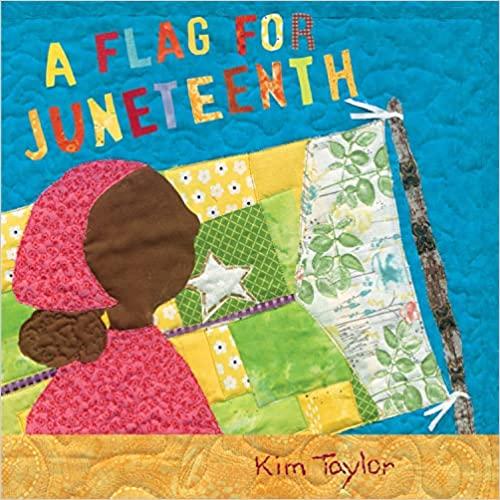
A Flag for Juneteenth by Kim Taylor

Published by Neal Porter Books

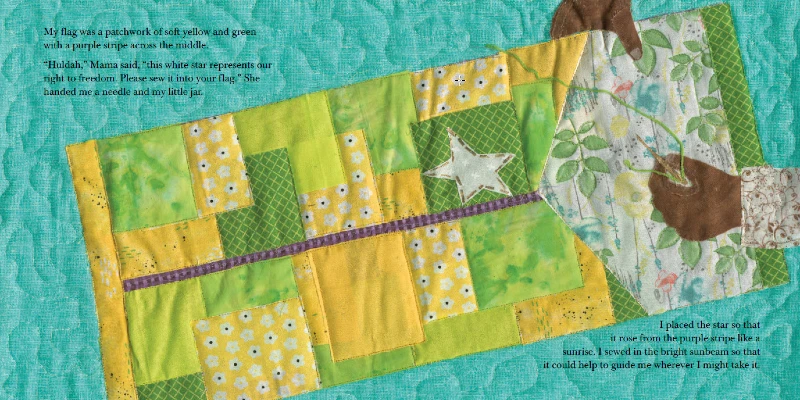
Summary:  Huldah is excited to be turning ten on June 19, 1865.  That excitement grows when, on the morning of her birthday, soldiers ride up to the Texas plantation where Huldah and her family live and announce that all slaves are free and have been since Abraham Lincoln signed the Emancipation Proclamation two years earlier.  All around her is a celebration, and a group of women begins to create freedom flags.  Huldah takes some time for herself, climbing a tree to capture a sunbeam in a jar.  When she returns, it’s time for her birthday celebration.  Her friends and family give her her own freedom flag; later, during a moonlit walk with her family, she wraps her baby sister in the flag, and the family celebrates this day of jubilee.  Includes an author’s note about how she came to create the quilts that illustrate this book.  40 pages; ages 4-8.

Pros:  With Juneteenth coming up in a few weeks, this is a great introduction for younger readers, illustrated with distinctive quilt-inspired illustrations.  Kids may want to design their own freedom flags after reading this.

Cons:  There’s not a ton of information about Juneteenth here, so you may want to supplement with some other resources.

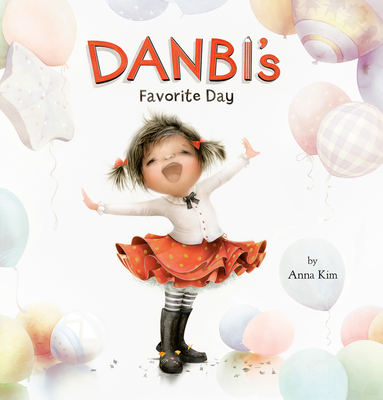
Danbi’s Favorite Day by Anna Kim

Published by Viking Books for Young Readers

Summary:  In this follow-up to Danbi Leads the School Parade, Danbi is excited to celebrate Children’s Day.  “Back in Korea,” Danbi tells her friends when she invites them to the celebration, “it’s the day when all your wishes come true.”  But Danbi’s parents, who have to work at their deli, can’t host a big party. Her mother reminds her that Children’s Day is “about celebrating the children on Earth who will one day lead the world.”  They compromise with a party behind the deli, and all the children arrive on the big day.  There’s dancing and drawing with sidewalk chalk until a sudden storm sends everyone inside.  Danbi is sure the party is ruined, but her parents give the kids permission to eat whatever they want from the deli, and that, combined with her mother’s special rainbow cake, makes Children’s Day a true celebration of children.  40 pages; ages 4-8.

Pros:  The story and illustrations convey the joyful energy Danbi seems to bring to all aspects of her life and can serve as a good introduction to the Children’s Day holiday.

Cons:  No additional information about Children’s Day.

Moon’s Ramadan by Natasha Khan Kazi

Published by Versify

Summary:  Moon travels around the world during the month of Ramadan, as the part of her visible to Earth changes from the tiny crescent that signifies the beginning of the month to a full circle, and back to the sliver that heralds the end of the month and the Eid celebration.  She watches Muslims in countries around the world fasting, worshiping, and practicing kindness and charity.  As night falls on the Eid celebration, “a billion faces smile up at Moon.  Moon sees a world of love and kindness, and she glows with gratitude.”  Includes a brief author’s note with additional information about Ramadan, information about the lunar cycle with pictures of the phases of the moon, and a Ramadan glossary.  40 pages; ages 4-8.

Pros:  This is a much-needed introduction to Ramadan with beautiful illustrations that show Muslims from all around the world.  I love that it’s told from the perspective of the moon and includes some scientific information…check out the phases of the moon on the endpapers.

Cons:  The labels identifying the different countries were in a smallish font that didn’t show up well; it took me a few pages to notice them.