Mathemagical

Zero! The Number That Almost Wasn’t by Sarah Albee, illustrated by Chris Hu (Charlesbridge, 40 pages, grades 3 and up). It’s hard to imagine a world without zero, but for much of human history, calculations were made without it. This book begins with a look at some of the earliest people to use the concept that came to be zero: Babylonians, Mayans, and Indians. Zero came to be accepted in the Arabic world, and European traders to that area brought the idea back to Europe, where it was met with…derision and scorn. While some mathematicians enthusiastically embraced zero, other Europeans mistrusted something that came from a different part of the world and continued to use Roman numerals. The invention of the printing press helped spread the word about zero, and when it was finally universally accepted, it opened the door up up to the complex ideas of modern calculus and physics. Includes additional information about zero and some of the other words we use for the concept, a map of places mentioned in the book, a bibliography, a list of math books for younger readers, a “blurry” timeline of zero, and some notes about the art.

This is a fascinating story of something most of us don’t think about, but which has been a key to scientific and technological advancement. The history of its evolution shows the dangers of not being open to the contributions of other cultures. There’s a lot of information and a huge span of history covered, making me wonder exactly what ages to recommend it for. I can see some older elementary students finding it interesting, but I think it could also be used in middle school or high school STEM classes.

The Five Sides of Marjorie Rice: How to Discover a Shape by Amy Alznauer, illustrated by Anna Bron (Candlewick, 40 pages, grades 2-5). As a child, Marjorie Rice was fascinated by shapes and arts. She learned to read at an early age, starting second grade at the age of five. Despite her interests and intelligence, her parents encouraged her to pursue a career as a secretary, and she didn’t go to college. Marjorie married and had five children. As they grew up, she started reading her son’s Scientific American and particularly enjoyed Martin Gardner’s “Mathematical Games” column. She was intrigued by one column about the problem of finding pentagons that could be tessellated infinitely without gaps. Gardner stated that all such pentagons had been discovered, but a month later, a reader discovered a new one. This inspired Marjorie to look for new ones on her own, and she eventually found four more. In 1995, she was recognized at a Mathematical Association of America meeting with a standing ovation, a true amateur who was motivated solely by her own interests and passion for shapes and art. Includes an author’s note about her personal connections to Marjorie Rice; additional information about the problem Marjorie worked on; information on how to discover a shape; a bibliography; and a couple of photos.

This engaging biography is an inspiration to follow your passions, no matter where you are in life. The storytelling is lively, and I particularly enjoyed the illustrations that do a great job of bringing Marjorie’s work to life. I struggled a little to understand exactly what she was working on, and like the previous book, this is one that may be enjoyed more by older readers with more of a mathematical background.

A long trip, a packing blip, and numbered pages that flip

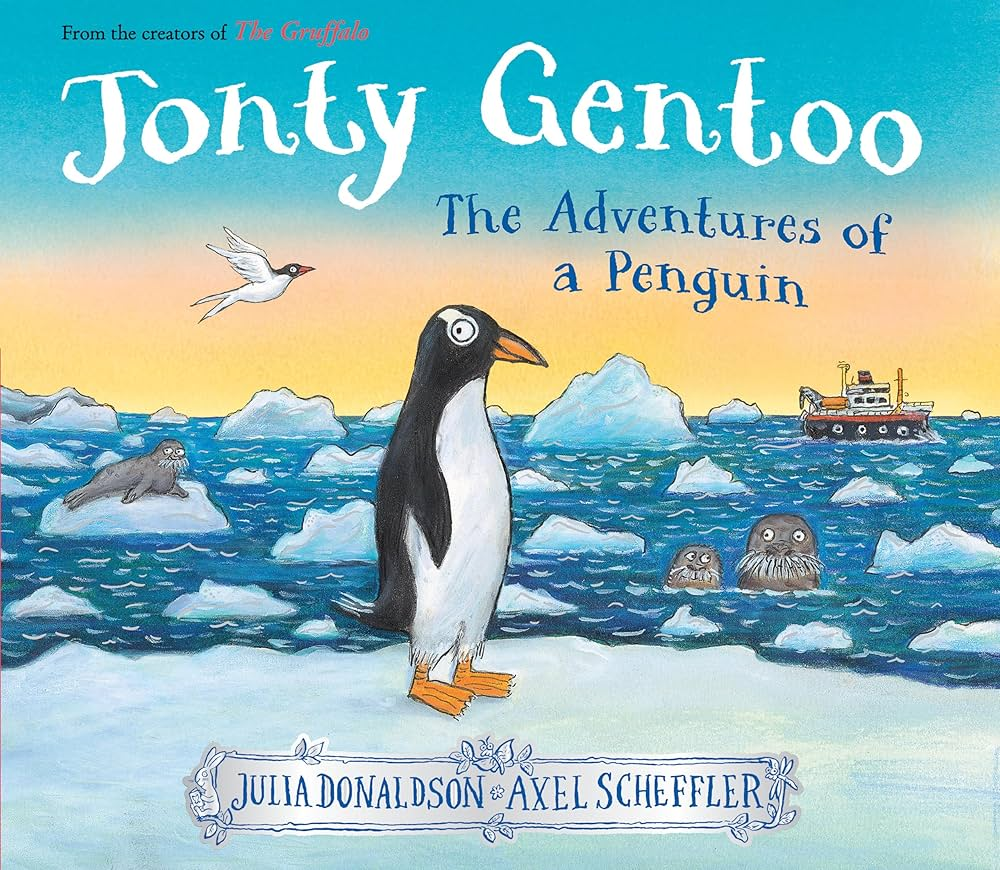
Jonty Gentoo: The Adventures of a Penguin by Julia Donaldson, illustrated by Axel Scheffler (Scholastic Press, 40 pages, ages 4-8). Although Jonty has a happy life at the zoo, he’s intrigued by the stories his aunts tell him about life at the South Pole. One night, Jonty slips through a hole in the fence and heads off on a polar adventure. He sees some poles, like a flagpole and a tent pole, but they don’t seem quite right. Finally, he discovers the ocean and swims until the water starts to grow cold. He finally makes it to the pole…only to learn that it’s the North Pole! A tern offers to guide him south, and they set off together, the tern flying and Jonty swimming. Some scientists on a boat help him make it through the last leg of his trip, and Jonty is thrilled to discover a place with penguins galore. He soon finds his place among the gentoos, and the tern is able to notify his aunts that Jonty has found happiness at the South Pole. Includes additional information about Arctic terns and Gentoo penguins.

This rhyming story from the creators of The Gruffalo has catchy text and colorful cartoon-style illustrations that beautifully portray the landscapes and animals that Jonty encounters as he travels around the globe.

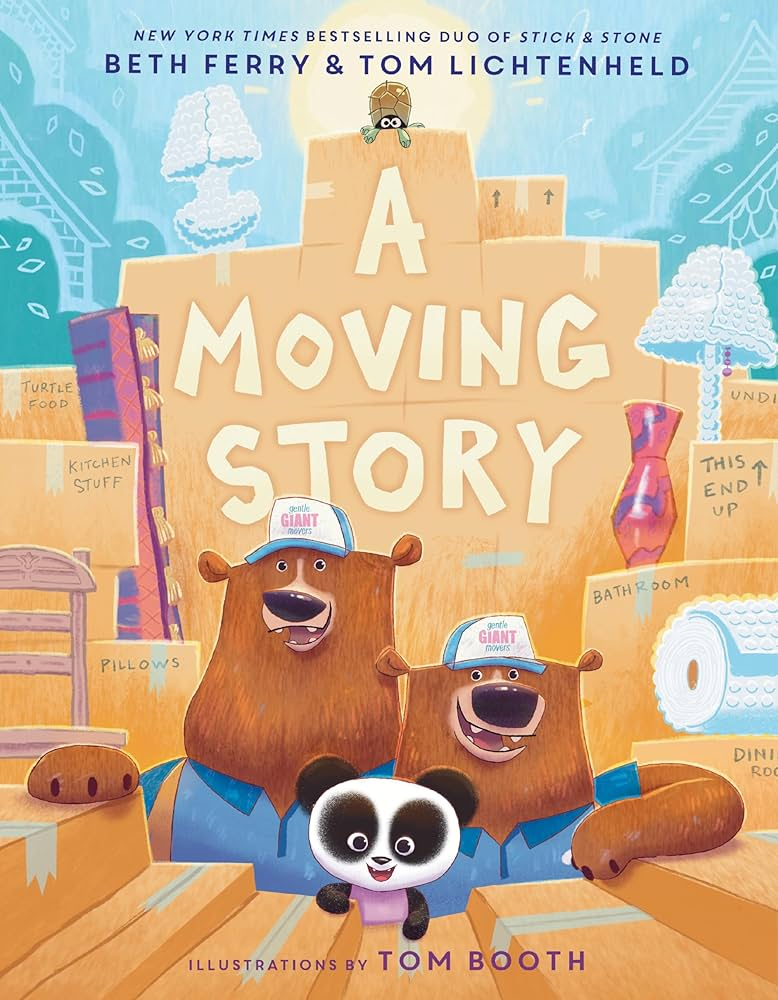
A Moving Story by Beth Ferry and Tom Lichtenheld, illustrated by Tom Booth (HarperCollins, 40 pages, ages 4-8). Pete and Tiny may be big bears, but they’re gentle movers who take extra care with their clients’ possessions. So when the littlest panda discovers that her pet turtle has gone missing, the bears know what they have to do: unpack everything they’ve just loaded onto the moving van. The turtle is nowhere to be found, although the panda parents appreciate the effort, and the truck is repacked. As Pete and Tiny start to drive away, they hear a sound coming from their lunchbox. it’s the turtle! The bears get a big hug from the little panda, “because nothing and no one was too big to wrap up tight and treat just right.”

The team behind Stick and Stone have created another feel-good story that emphasizes kindness and going the extra mile that will prove reassuring to kids facing a move. Pete and Tiny have an admirable work ethic, and the whole packing/unpacking/packing again ordeal is rendered perfectly with illustrations depicting various perspectives including an aerial view of everything unpacked.

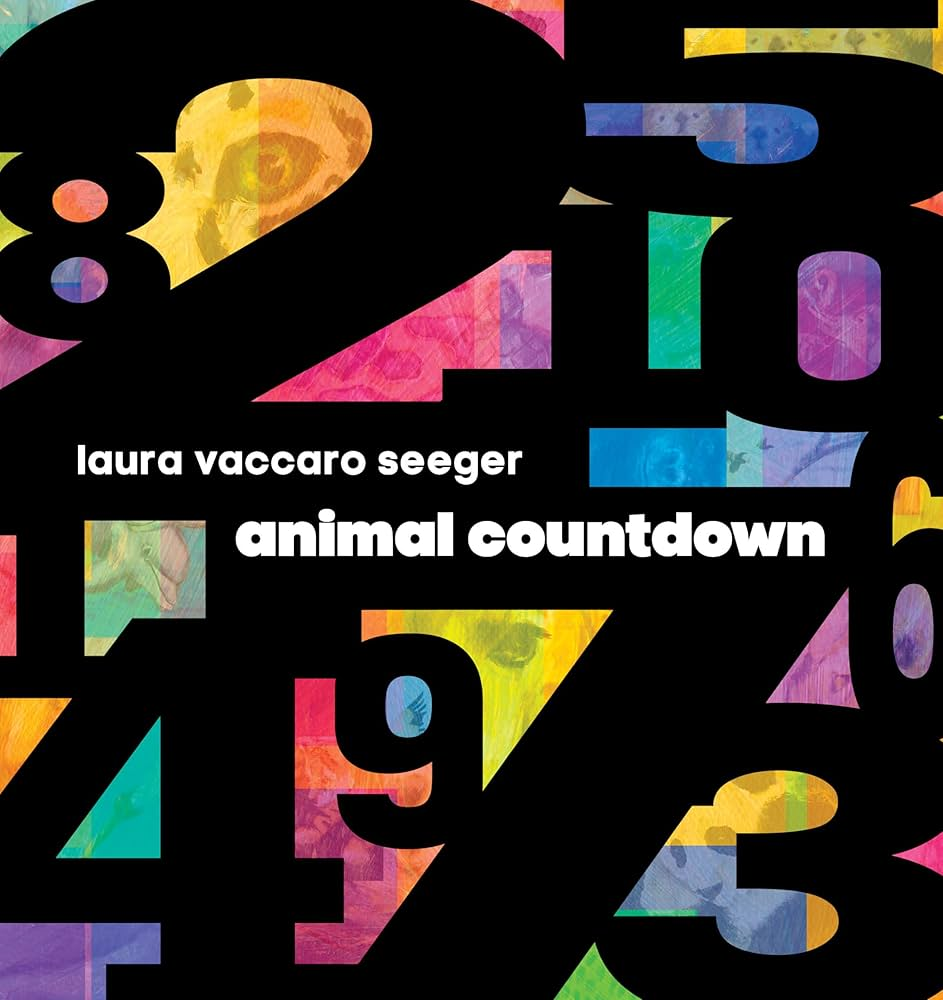
Animal Countdown by Laura Vaccaro Seeger (Neal Porter Books, 32 pages, ages 3-8). Page 1 has the word “ten” printed on a background that looks like a watery animal habitat. A window cut on a flap of the facing page shows a small rectangle that looks like the number 10. Lift the flap to find ten sea otters. The countdown continues to one, introducing numbers, number words, and ten endangered animals. End matter gives additional information about each one, as well as a list of five additional resources.

Seeger’s work is always beautiful and creative, and kids will have fun trying to figure out the animals that are hiding behind the flaps. Unfortunately, the flaps make me think the book itself may become an endangered species in a public library.

Two books from Eerdmans

Long-time subscribers may recall that a few years ago I reviewed a book every week from an independent publisher. I haven’t kept up with it recently, but a few of those publishers still reach out to me from time to time. I recently received these two excellent books from Eerdmans Books for Young Readers. They are a great reminder of the unique and beautiful work being produced by smaller publishers. Both books will be released in September.

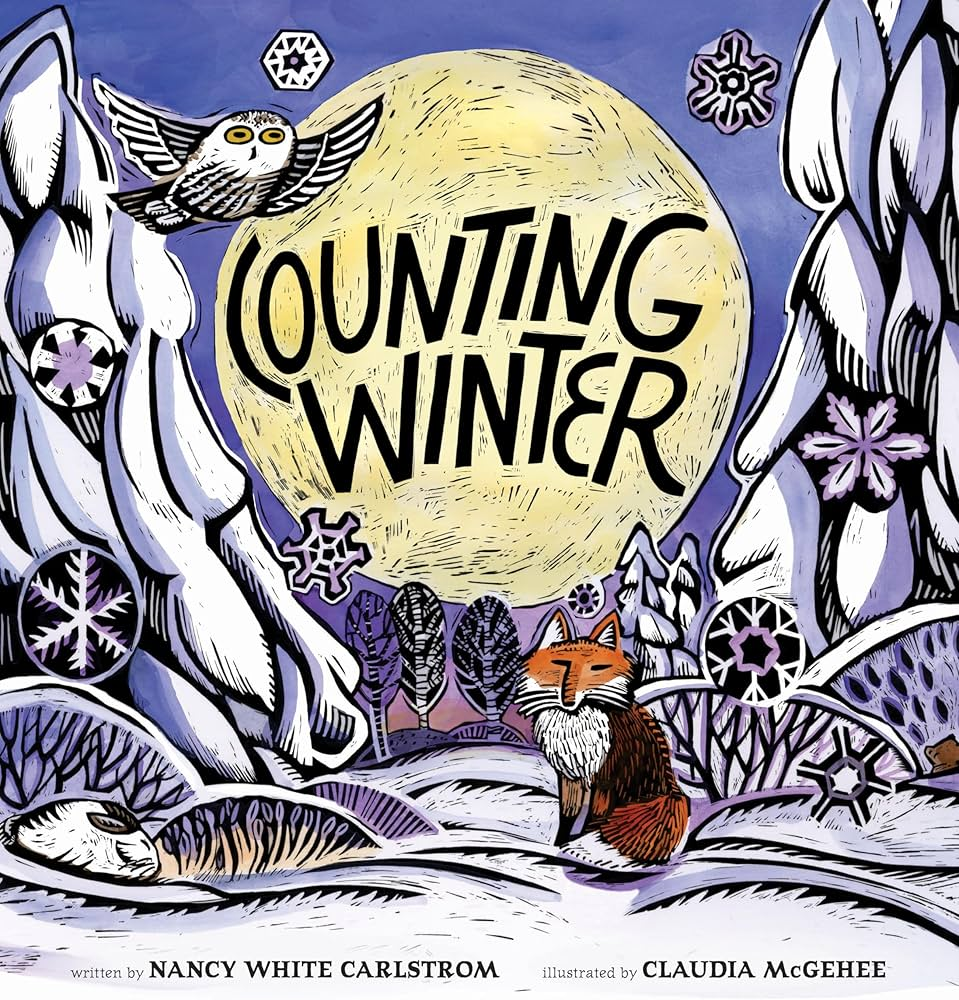
Counting Winter by Nancy White Carlstrom, illustrated by Claudia McGhee (44 pages, ages 4-8). Nancy White Carlstrom drew on her eighteen years in Alaska to create this counting book that includes eleven different animals, with verses written in similar fashion: “One red fox walks/across the white snow/quietly/stalking winter.” These could be used as models for kids to write their own four-line poems about animals with a similar combination of verbs, adverbs, and adjectives. The stunning scratch board and watercolor illustrations perfectly capture the animals and the snowy landscapes. When the counting reached eleven, I started to think it was going all the way to twenty, but the last page features twelve excited children, which was the perfect stopping place. Includes a wordless two page spread showing all the animals, two pages of animal profiles, and notes from the author and illustrator.

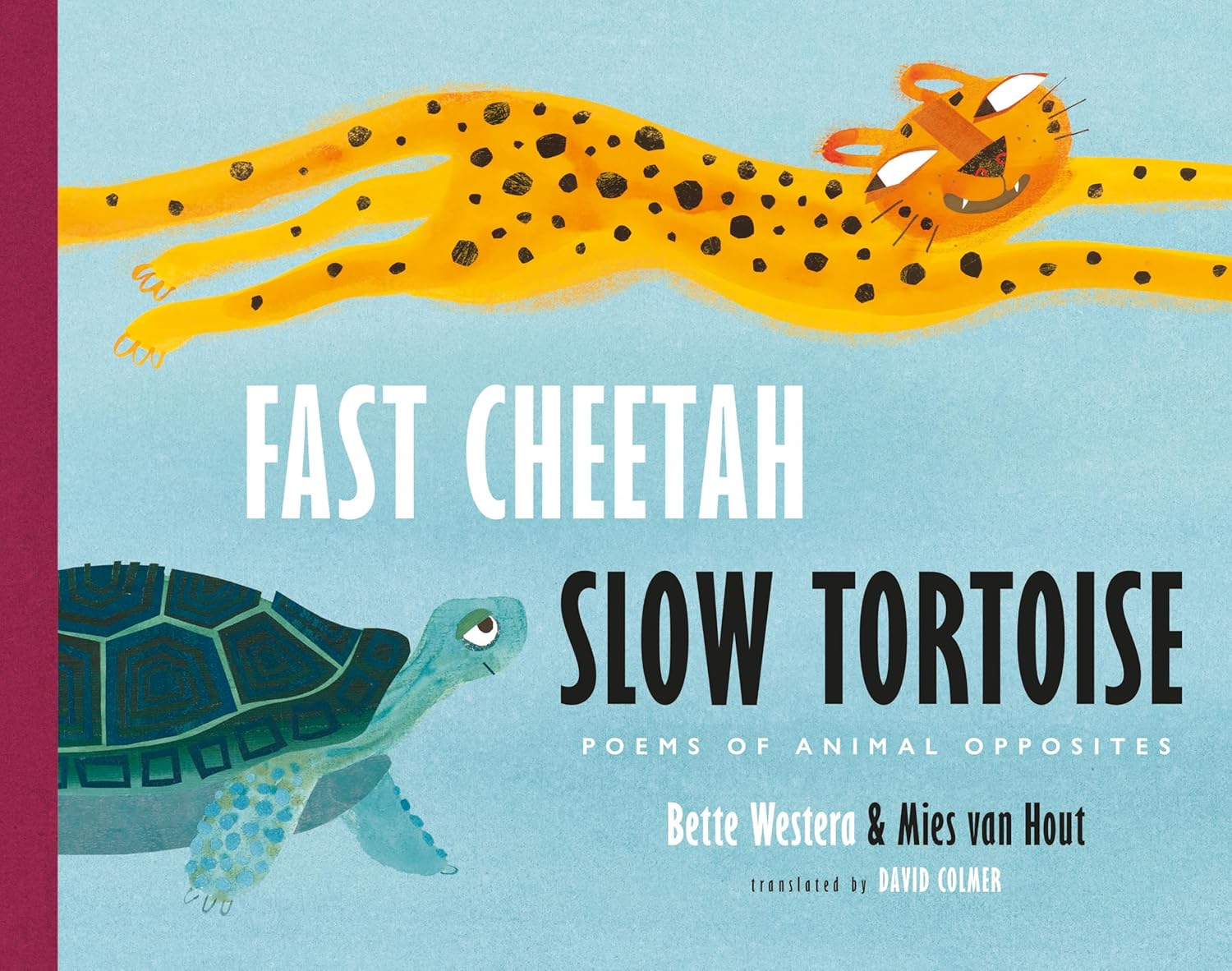
Fast Cheetah, Slow Tortoise: Poems of Animal Opposites by Bette Westera and Mies van Hout, illustrated by David Colmer. (40 pages, grades K-4). This Dutch import pairs animal poems that illustrate antonyms; a two-page spread features the tortoise in a poem entitled “Slow” with the cheetah, which is “Fast.” Others are noisy and quiet (cricket and pill bug), relaxed and busy (sloth and ant), and bossy and meek (gorilla and lesula). As this last example shows, there are some animals that may be new to kids. Each poem is accompanied by an illustration, which will help kids visualize those unfamiliar animals. This would be fun to share by reading a poem and having kids guess the animal and maybe the antonym as well. Unfortunately, there’s no back matter that could have offered more information on the animals.

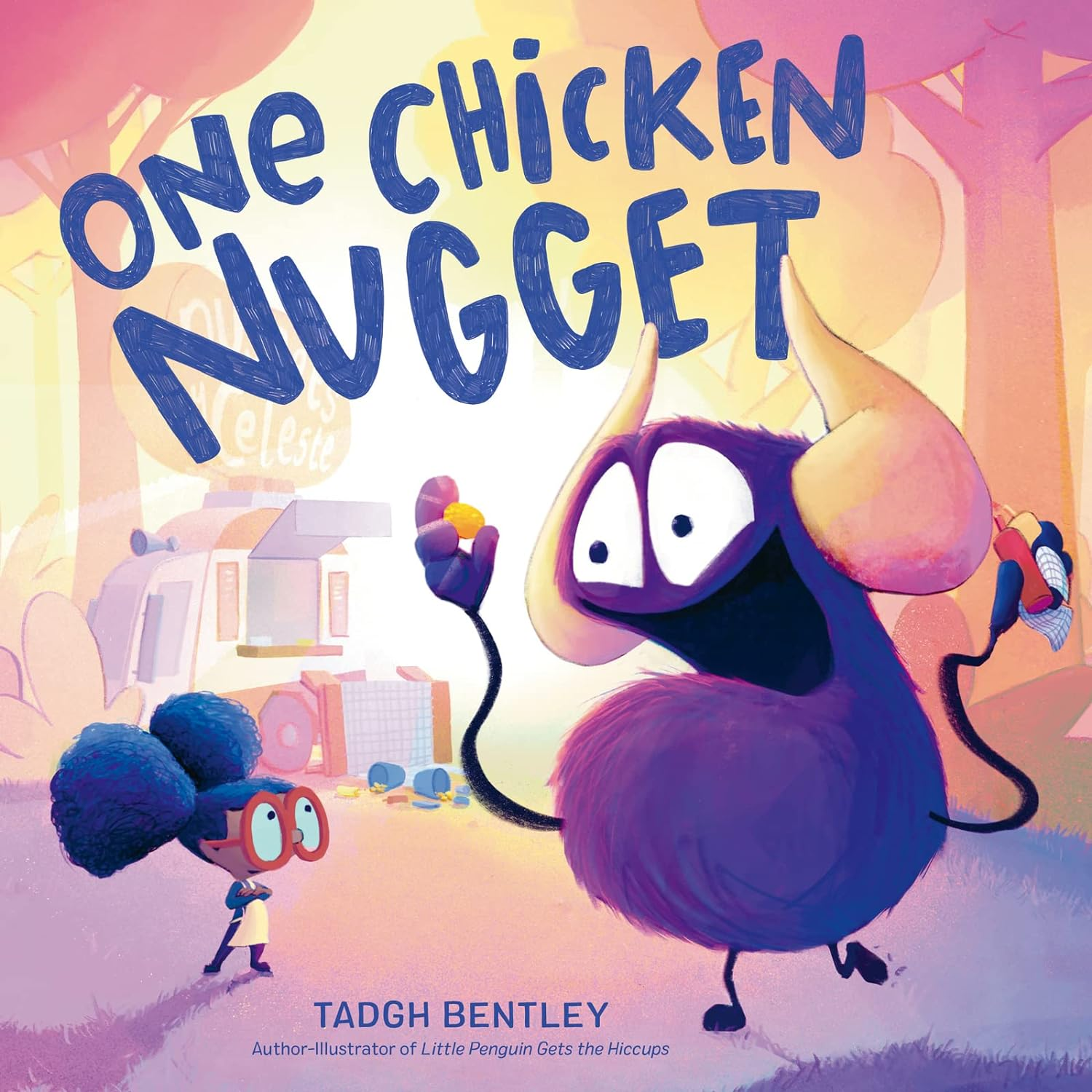
One Chicken Nugget by Tadgh Bentley

Published by Balzer + Bray

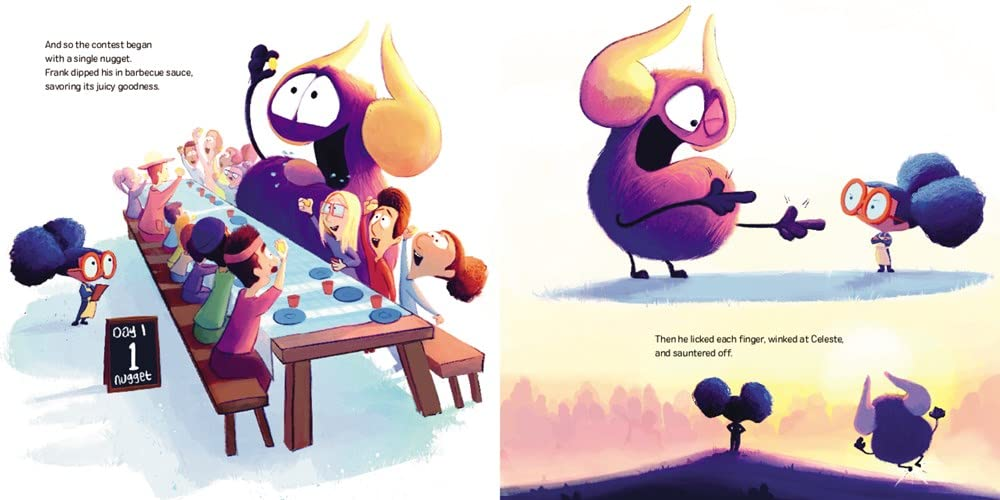
Summary: Frank is a monster with a passion for chicken nuggets, especially the ones Celeste sells on her food truck. Since Frank isn’t exactly an ideal customer (scares away other customers, doesn’t pay, terrible table manners), Celeste is desperate for a way to get rid of him. Some library research gives her an idea: the 30-Day Double Nugget Challenge. Each day the number of nuggets offered will doubled, and anyone who can eat them all wins free chicken nuggets for life. Seems easy enough on the first few days but by day 14 (8,192 nuggets), Frank is the only customer left. On day 30, he starts in on the pile of 536,870,912 nuggets and makes it all the way to the final one, and then…. Includes an author’s note and additional information on exponential growth. 40 pages; grades K-3.

Pros: Similar stories have been told for ages (as the author acknowledges in his note), but this is a particularly fun one with humorous monster illustrations that really bring home the concept of exponential growth.

Cons: The interesting endnotes were printed on the back cover, where the taped-down dust jacket obscured approximately one-sixth of them.

Talia’s Codebook for Mathletes by Marissa Moss

Published by Walker Books

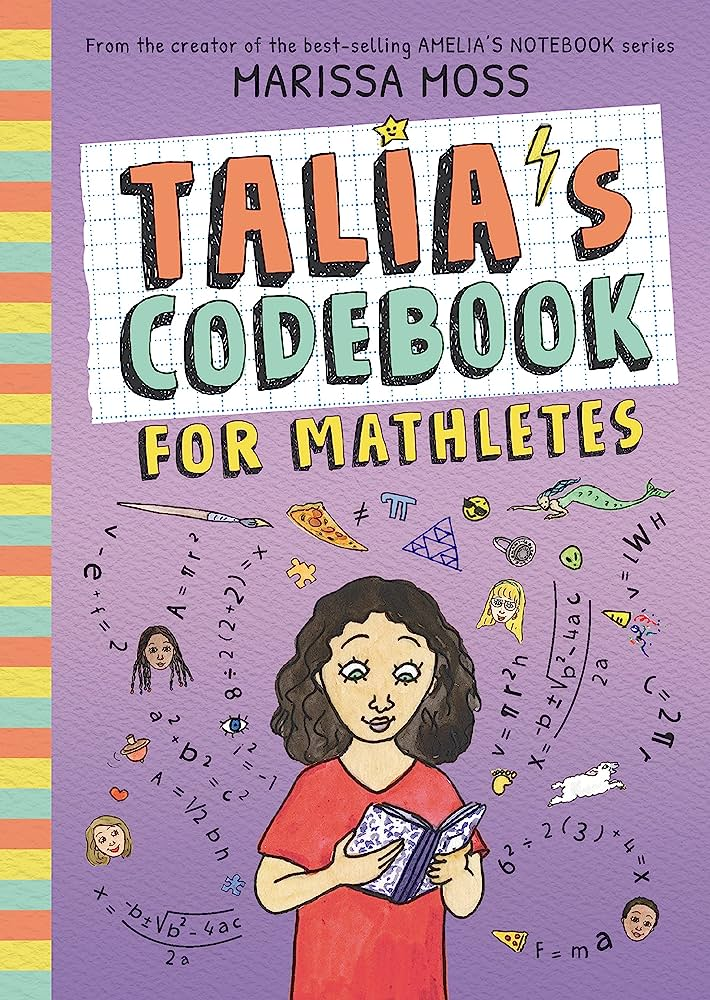
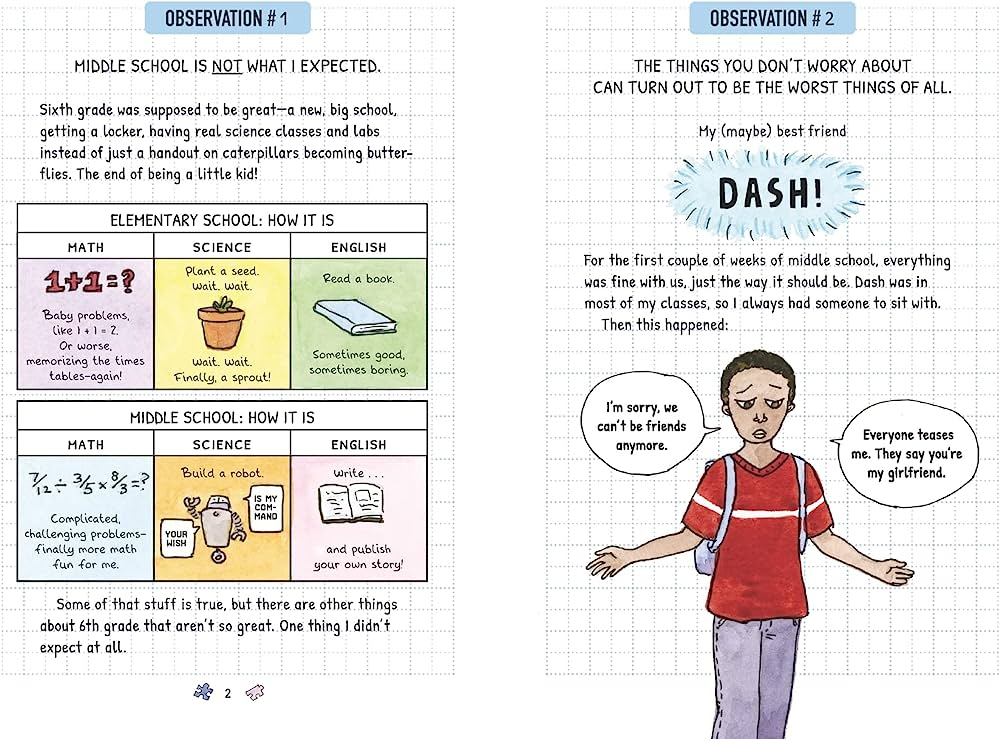
Summary:  Talia’s dealing with lots of ups and downs at the beginning of middle school, but the worst is that her neighbor and best friend Dash doesn’t want to be seen with a girl at school.  When Talia joins the mathletes, she learns that she’s the only girl, and the coach and some of the other boys treat her disrespectfully.  Fed up, she decides to form her own girls’ mathletes team.  Her two best friends aren’t interested in being on the team, but they’re supportive and help her get things going.  Much to her surprise, sixteen girls show up to the first meeting, and before long, the Mathlete Mermaids are ready for competition.  At the big meet, Talia messes up, but she learns from her mistake, and the rest of the team does well enough to win.  The boys are shocked but see that their sexism has lost them some valuable teammates, and the two teams decide to merge.  Talia has mixed feelings about this but is proud that she stepped up and created a way for girls to shine in math. Includes additional information about codes and an author’s note about her own experience with mathletes.  240 pages; grades 3-6.

Pros:  Middle school graphic novel fans will enjoy this story of STEM girl power that includes a number of fun codes, and that does an excellent job of chronicling middle school friendship and family issues without neatly resolving them all.  

Cons:  I was hoping that Talia’s parents, who focused on her mistake at the competition instead of her team’s win, would learn a lesson or two, but no such luck.

Wings, Waves & Webs: Patterns in Nature by Robin Mitchell Cranfield

Published by Greystone Books

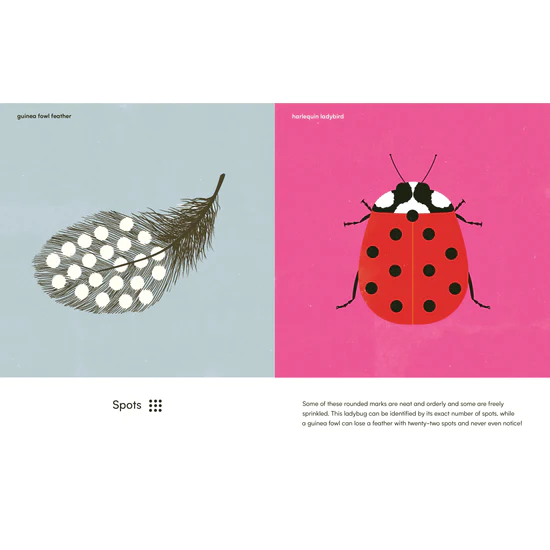
Summary:  Readers are invited to find patterns in nature, beginning with simple ones like spots (a ladybug and a guinea fowl feather) and stripes (a skunk and a sunflower seed).  The patterns become increasingly complex, moving on to mirror and radial symmetry, branching, and collective motion.  Each type is accompanied by one or two illustrations that show the pattern in nature.  The final spread of a flower garden invites the reader to look for the different patterns that have just been introduced.  36 pages; ages 4-8.

Pros:  A simple but thorough introduction to patterns that will have kids recognizing them in everyday life.  The beautiful graphics make this an eye-catching addition to STEM collections.

Cons:  I know the Oxford comma is optional, but I would have made the title Wings, Waves, & Webs.

Friends Beyond Measure: A Story Told With Infographics by Lalena Fisher

Published by HarperCollins

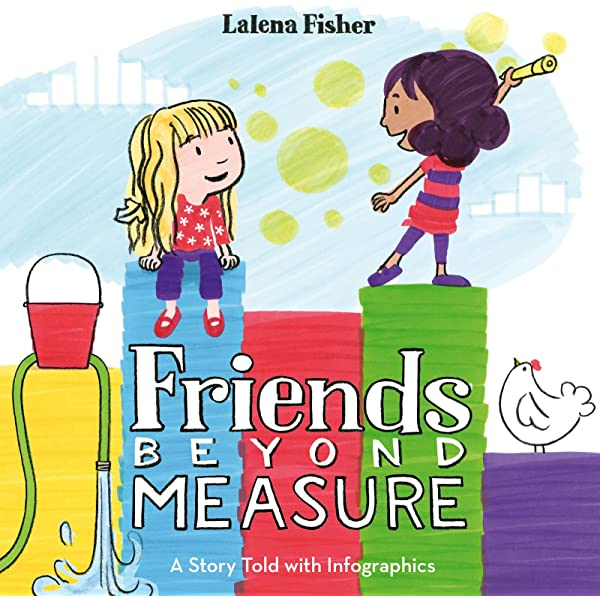
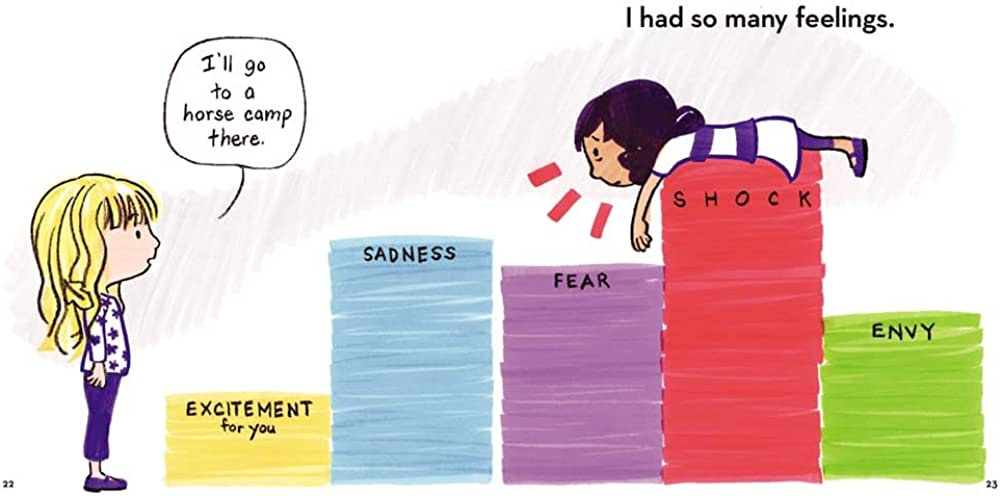
Summary:  Ana and Harwin are best friends, a relationship that Ana likes to chart through infographics.  She starts with a Venn diagram of the two girls, showing what is unique to them and what they have in common.  Other charts and graphs show how they spend their time and how they work out disagreements.  When Harwin announces she is moving far away, both girls are devastated.  Ana shares her emotions through a bar graph, then makes a flowchart to weigh the consequences of packing herself in Harwin’s suitcase.  The move goes ahead, but the two girls make plans (with charts) for staying in touch and for adventures they will have together when they’re older.  Includes additional information on twelve different types of infographics.  40 pages; grades 1-4.

Pros:  There’s a lot of mathematical information packed into this cute friendship story, providing a fun way to introduce infographics that could serve as a springboard for kids making their own.

Cons:  This could be slow going as a group read-aloud since each page may require a lengthy explanation.  

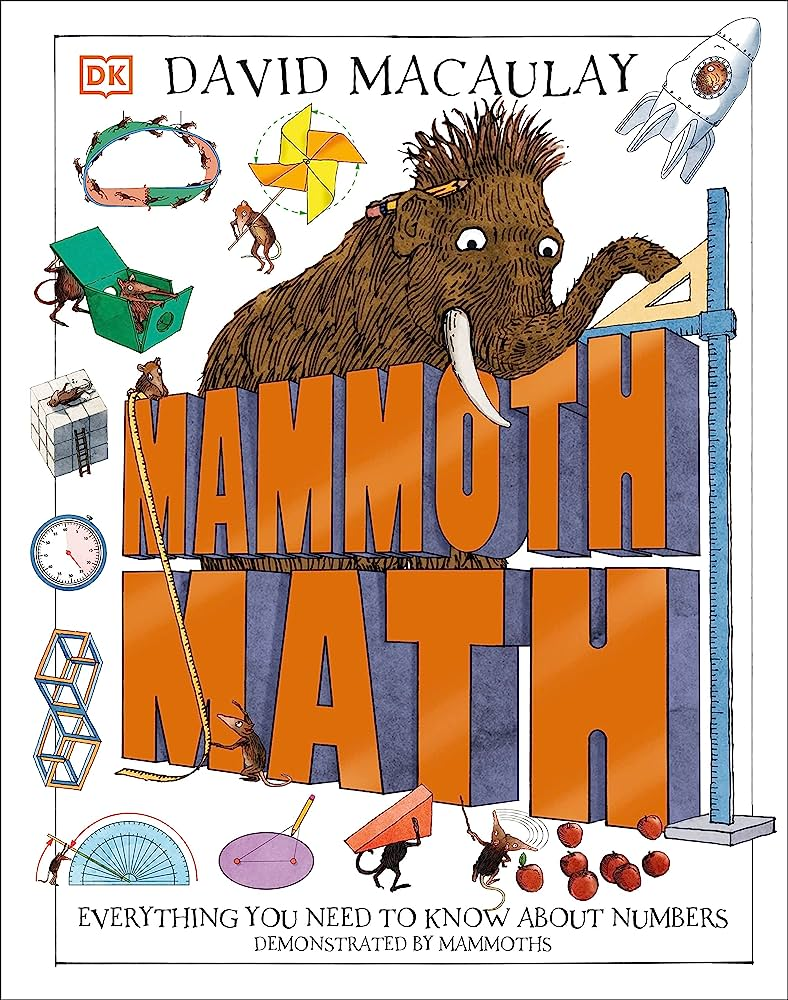
Mammoth Math: Everything You Need to Know About Numbers by David Macaulay

Published by DK Children

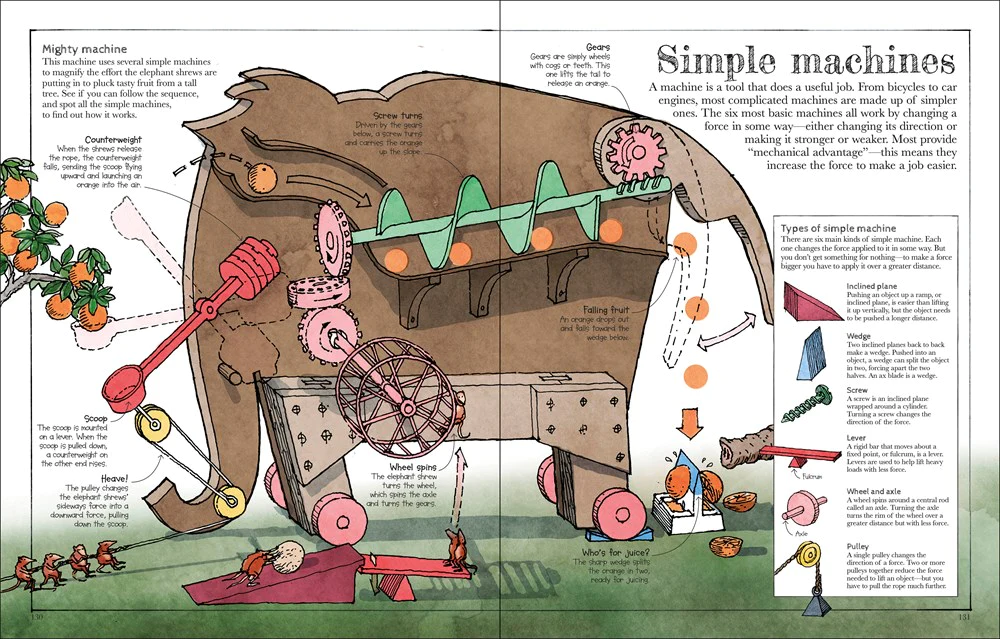
Summary:  A wooly mammoth and an elephant shrew take readers on a tour through all different mathematical concepts including counting, number know-how, patterns and sequences, geometry, maps, measurement, and using data.  David Macaulay still has his gift for using illustration to show a variety of concepts, with mammoths and shrews appearing on every page to add plenty of humor.  Includes a reference section with multiplication tables, illustrations showing fractions and percentages, geometrical shapes, units of measurement, and signs and symbols; also, an extensive glossary and an index.  160 pages; grades 2-6.

Pros:  Wasn’t it just a few weeks ago that I said there aren’t enough good math books in the world?  This one is amazing, with so many topics covered, great illustrations, and plenty of humor.  Math fans will have fun just browsing through it, and teachers will find it useful to engage those who aren’t yet fans.

Cons:  Somehow, I missed Mammoth Science, which came out in 2020.

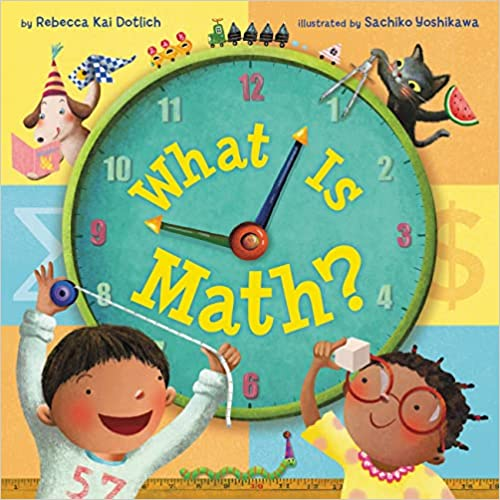
What Is Math? by Rebecca Kai Dotlich, illustrated by Sachiko Yoshikawa

Published by Christy Ottaviano Books

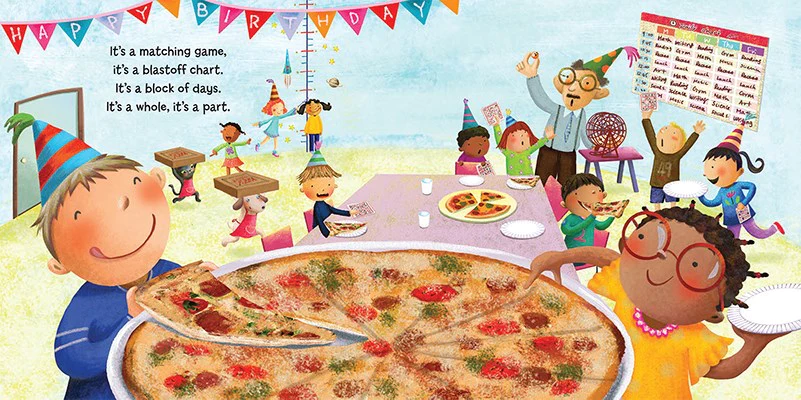
Summary:  Rhyming text and lively illustrations show the many ways that math is used in everyday life from cooking to making change to building a house.  Many mathematical concepts are introduced including counting, measuring, comparing, geometry, money, and patterns.  The illustrations show lots of busy children using math in a variety of activities which may better answer the question of how math is used than what math is.  40 pages; ages 4-8.

Pros:  A spirited introduction to math for preschool and early elementary kids.  It would be fun to spend some time brainstorming about how math is used before reading this book.  There are not enough math picture books in the world, and this is a good addition to that limited collection.

Cons:  I wanted to weep when I reached the last page and discovered there was no back matter.

Trillions of Trees: A Counting and Planting Book by Kurt Cyrus

Published by Henry Holt and Co.

Trillions of Trees: A Counting and Planting Book: Cyrus, Kurt, Cyrus, Kurt:  9781250229076: Amazon.com: Books
Trillions of Trees | Kurt Cyrus | Macmillan

Summary:  When the narrator’s sister calls the nursery to order “a trillium, please”, the worker there hears “a trillion trees”.  Before long, the first installment–a thousand saplings–is delivered to their house.  The whole family races to plant the trees all over town, identifying many of them as they go.  Exhausted, they return home, only to face the next delivery arriving.  40 pages; ages 4-8.

Pros:  This follow-up to Billions of Bricks has the same fun rhyming text and big numbers incorporated into the story.  There’s some good information on trees here as well as plenty of humor tied to the impossibility of the family’s tree-planting situation.

Cons:  The lack of back matter about trees and/or large numbers.