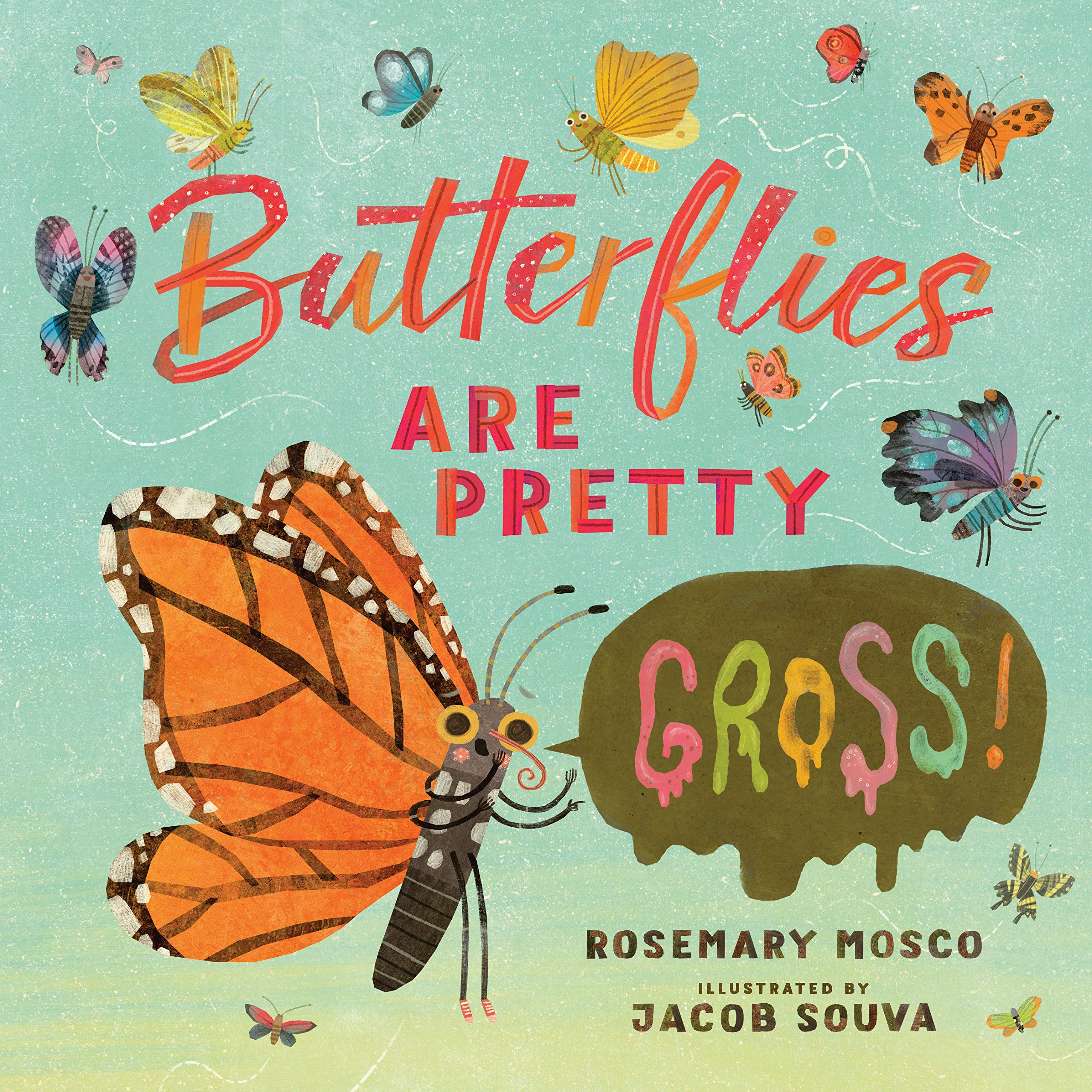
Butterflies Are Pretty…Gross! by Rosemary Mosco, illustrated by Jacob Souva

Published by Tundra Books

Butterflies Are Pretty ... Gross! (Nature's Top Secrets): Mosco, Rosemary,  Souva, Jacob: 9780735265929: Amazon.com: Books
Butterflies Are Pretty . . . Gross: A Q&A with Rosemary Mosco - A Fuse #8  Production

Summary:  A butterfly tells readers that “everyone knows that butterflies are pretty.”  If that’s as much as you want to know about butterflies, you’re warned not to read any further.  But, of course, who can resist?  Keep going, and you’ll learn that butterflies can be drab, noisy, and eat rotten food or poop.  Some are stinky, sneaky, and all are shape-shifters, turning from a caterpillar into a butterfly.  They taste with their feet and drink other animals’ tears.  Butterflies are gross, they are amazing, AND they are beautiful…just like humans!  Includes additional information about the butterfly species in the book.  36 pages; grades K-4.

Pros:  This is a fun approach that is a nice counterbalance to more traditional butterfly books.  I used to teach in a school where there was a second grade field trip to The Butterfly Place in Westford, MA, and there were always one or two kids who were completely freaked out by butterflies.  They might enjoy having their phobias validated by this book.

Cons:  Honestly, I was hoping for something a little bit grosser.

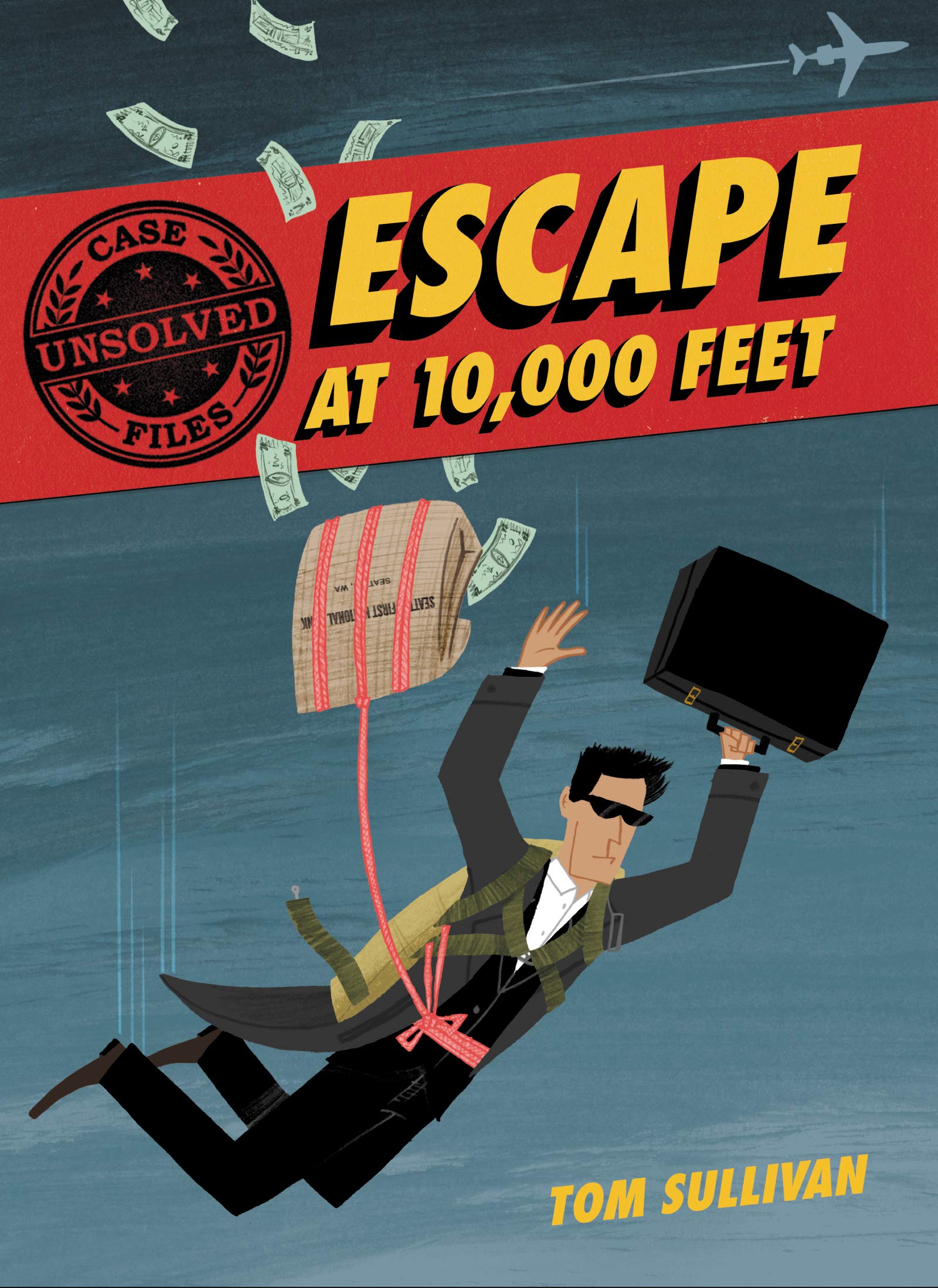
Escape at 10,000 Feet (Unsolved Case Files, book 1) by Tom Sullivan

Published by Balzer + Bray

Unsolved Case Files: Escape at 10, 000 Feet: D.B. Cooper and the Missing  Money (Unsolved Case Files, 1): Sullivan, Tom, Sullivan, Tom:  9780062991522: Amazon.com: Books
Unsolved Case Files: Escape at 10, 000 Feet: D.B. Cooper and the Missing  Money (Unsolved Case Files, 1): Sullivan, Tom, Sullivan, Tom:  9780062991515: Amazon.com: Books

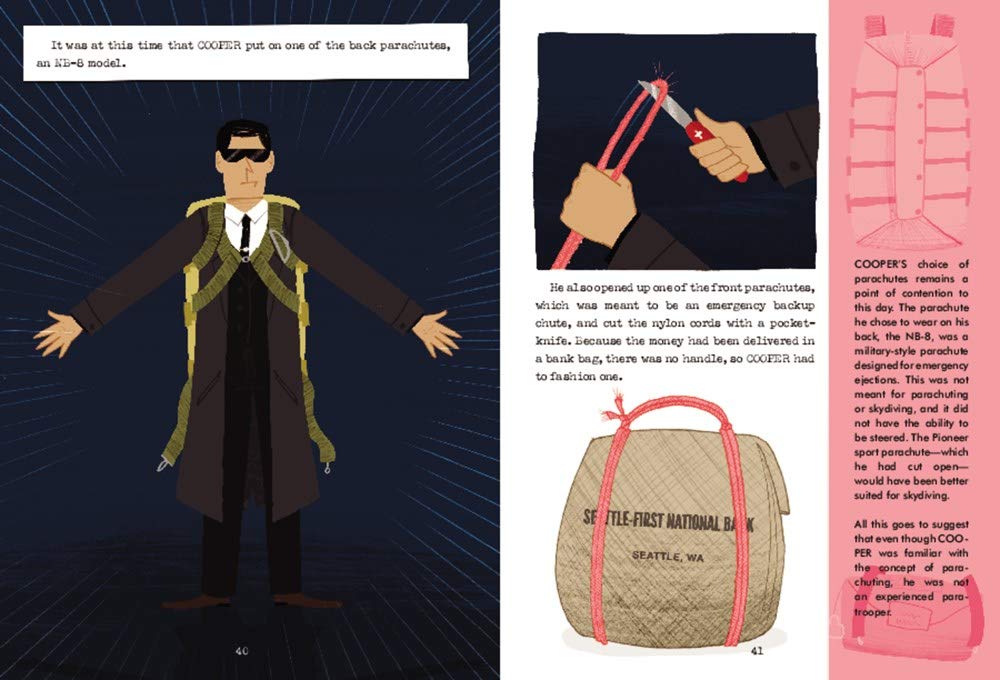
Summary:  On November 24, 1971, a man named Dan Cooper boarded a flight from Portland, Oregon to Seattle.  Six hours later, that man parachuted out of the back of the plane with $200,000 strapped to him.  No trace of him has ever been found, and only a small portion of the money has been recovered ($5,800 was discovered by a 10-year-old boy in 1980 when he was camping with his family in the woods of Washington).  The details of what happened that day are retold here with brief text, illustrations, and primary documents such as Cooper’s boarding pass and the transcript from the plane alerting the authorities about the hijacking.  Includes half a dozen photos and a list of sources.  104 pages; grades 3-7.

Pros:  It’s hard to imagine a kid unimaginative enough not to be intrigued by this mystery (and gobsmacked that in 1971 you could walk into an airport with a bomb, buy a ticket for $20, and saunter onto a plane unchecked).  The graphic format is appealing, but it’s also well-written nonfiction, with theories put forth and then carefully debunked, primary documents, and an impressive list of sources.  Look for book 2, Jailbreak at Alcatraz, coming in early September.

Cons:  The font, designed to look like it was made with a typewriter that needs a new ribbon, feels authentic but is not necessarily the easiest for kids to read.

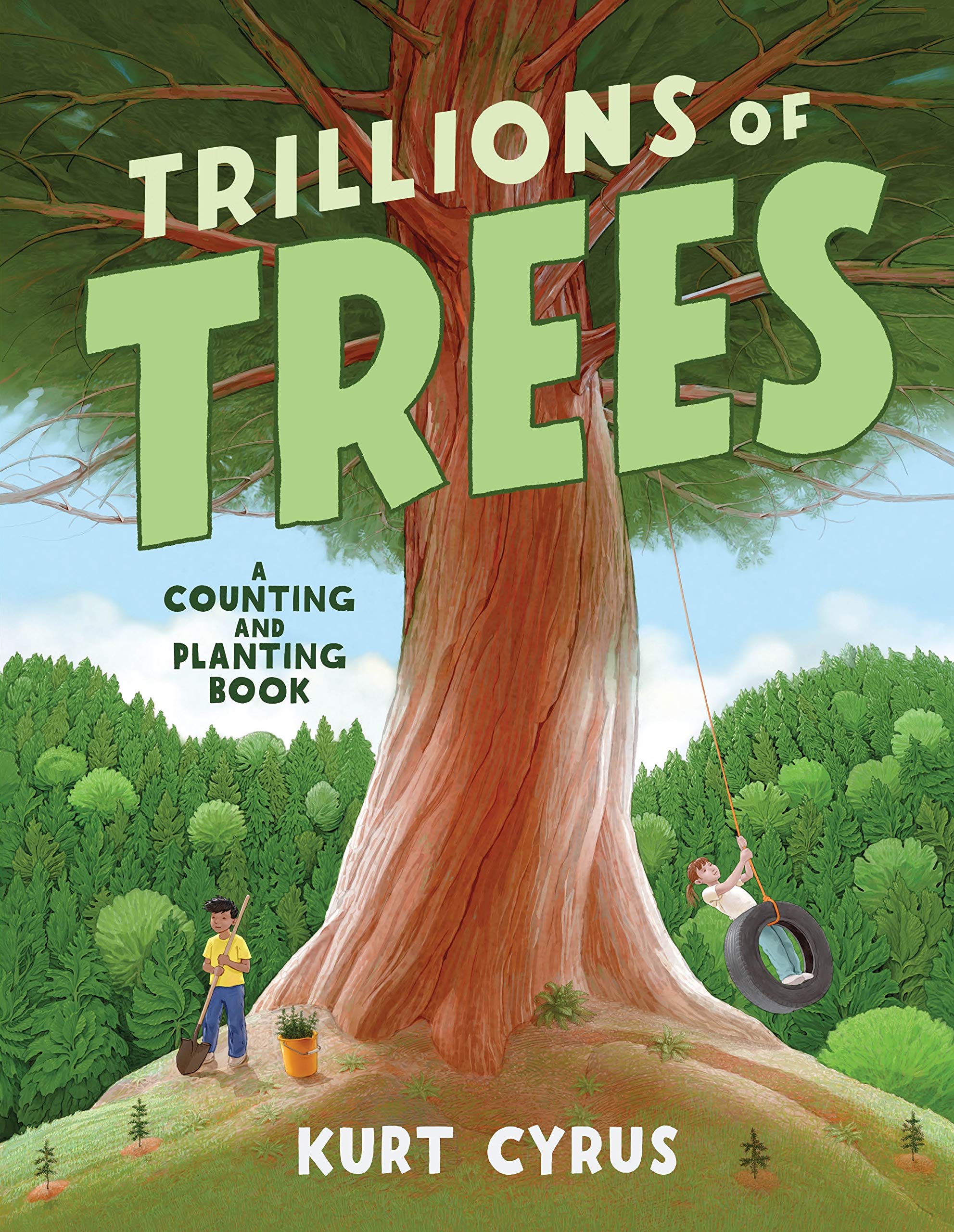
Trillions of Trees: A Counting and Planting Book by Kurt Cyrus

Published by Henry Holt and Co.

Trillions of Trees: A Counting and Planting Book: Cyrus, Kurt, Cyrus, Kurt:  9781250229076: Amazon.com: Books
Trillions of Trees | Kurt Cyrus | Macmillan

Summary:  When the narrator’s sister calls the nursery to order “a trillium, please”, the worker there hears “a trillion trees”.  Before long, the first installment–a thousand saplings–is delivered to their house.  The whole family races to plant the trees all over town, identifying many of them as they go.  Exhausted, they return home, only to face the next delivery arriving.  40 pages; ages 4-8.

Pros:  This follow-up to Billions of Bricks has the same fun rhyming text and big numbers incorporated into the story.  There’s some good information on trees here as well as plenty of humor tied to the impossibility of the family’s tree-planting situation.

Cons:  The lack of back matter about trees and/or large numbers.

Peace by Baptiste Paul and Miranda Paul, illustrated by Estelí Meza and Walking Toward Peace: The True Story of a Brave Woman Called Peace Pilgrim by Kathleen Krull, illustrated by Annie Bowler

Published by North South Books

Peace | Book by Miranda Paul, Baptiste Paul, Estelí Meza | Official  Publisher Page | Simon & Schuster
Peace: Paul, Miranda, Paul, Baptiste, Meza, Estelí: 9780735844490:  Amazon.com: Books

Published by Flyaway Books

Amazon.com: Walking toward Peace: The True Story of a Brave Woman Called Peace  Pilgrim (9781947888265): Kathleen Krull, Annie Bowler, Annie Bowler: Books
Walking Toward Peace: The True Story of a Brave Woman Called Peace Pilgrim  – Mutually Inclusive

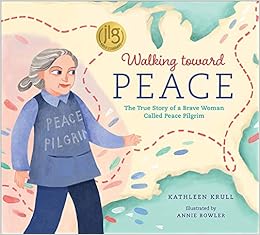
Summary: These two books arrived in the library for me from interlibrary loan land on the same day. Walking Toward Peace is the story of Mildred Lisette Norman, who had a vision of walking across the U.S. advocating for peace in the aftermath of World War II. She changed her name to Peace Pilgrim, and from 1953 until her death in 1981, walked through all 50 states, handing out flyers and talking to people about ending war and living in peace. Remarkably, she never carried any money with her, relying on her knowledge of outdoor living and, to a great extent, the kindness of people she encountered on the road.

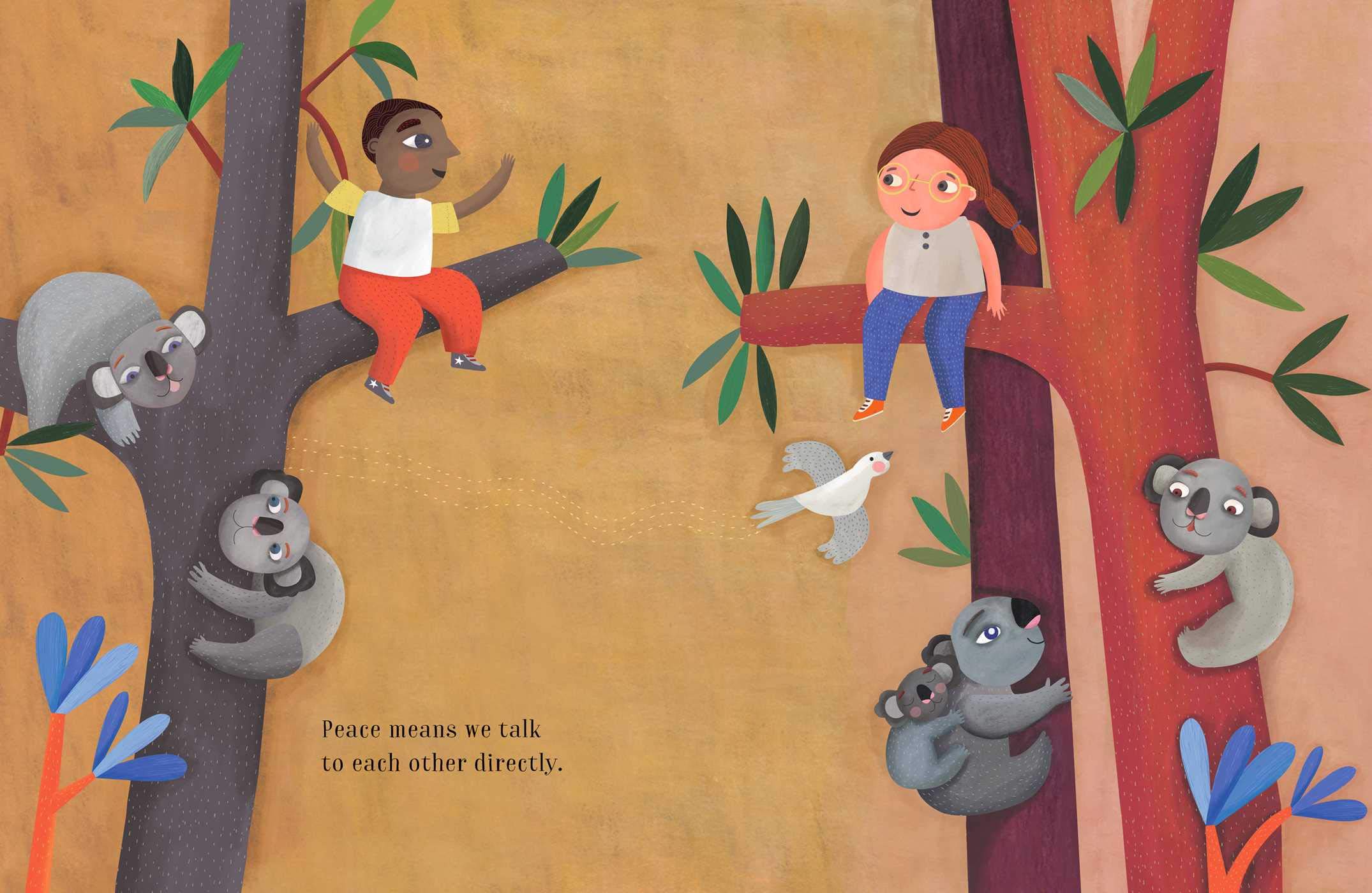
Peace draws on Baptiste and Miranda Paul’s experiences growing up in war-torn Mozambique. With simple rhyming text (“Peace is pronouncing your friend’s name correctly/Peace means we talk to each other directly”) and pictures of kids and animals living harmoniously, the book offers concrete actions for fostering peace. The authors’ note explains how war affects not only humans, but animals and the natural world as well. Both books are 40 pages and recommended for ages 4-8.

Pros: I’ve heard about Peace Pilgrim for years, so I was happy to learn about this new book. Her story is sure to intrigue both children and adults, and is a moving testimony to following your own path in life (literally, in her case). Peace would make a great follow-up book to read, with its emphasis on how peace is important to animals as well as humans, something that will resonate with a lot of kids. I loved the simple actions described, and the illustrations, especially the beautiful tree on the endpapers, with the word “peace” written in different languages on its leaves.

Cons: It seems like an ironic bummer that Peace Pilgrim was killed in an accident while riding in a car at the age of 72, and did not live to see the end of the Cold War.

ESTELÍ MEZA | Amie's Book Reviews

First Friend: How Dogs Evolved from Wolves to Become Our Best Friends by Kersten Hamilton, illustrated by Jaime Kim

Published by Farrar, Straus, and Giroux

First Friend: How Dogs Evolved from Wolves to Become Our Best Friends:  Hamilton, Kersten, Kim, Jaime: 9780374313432: Amazon.com: Books
First Friend | Kersten Hamilton | Macmillan

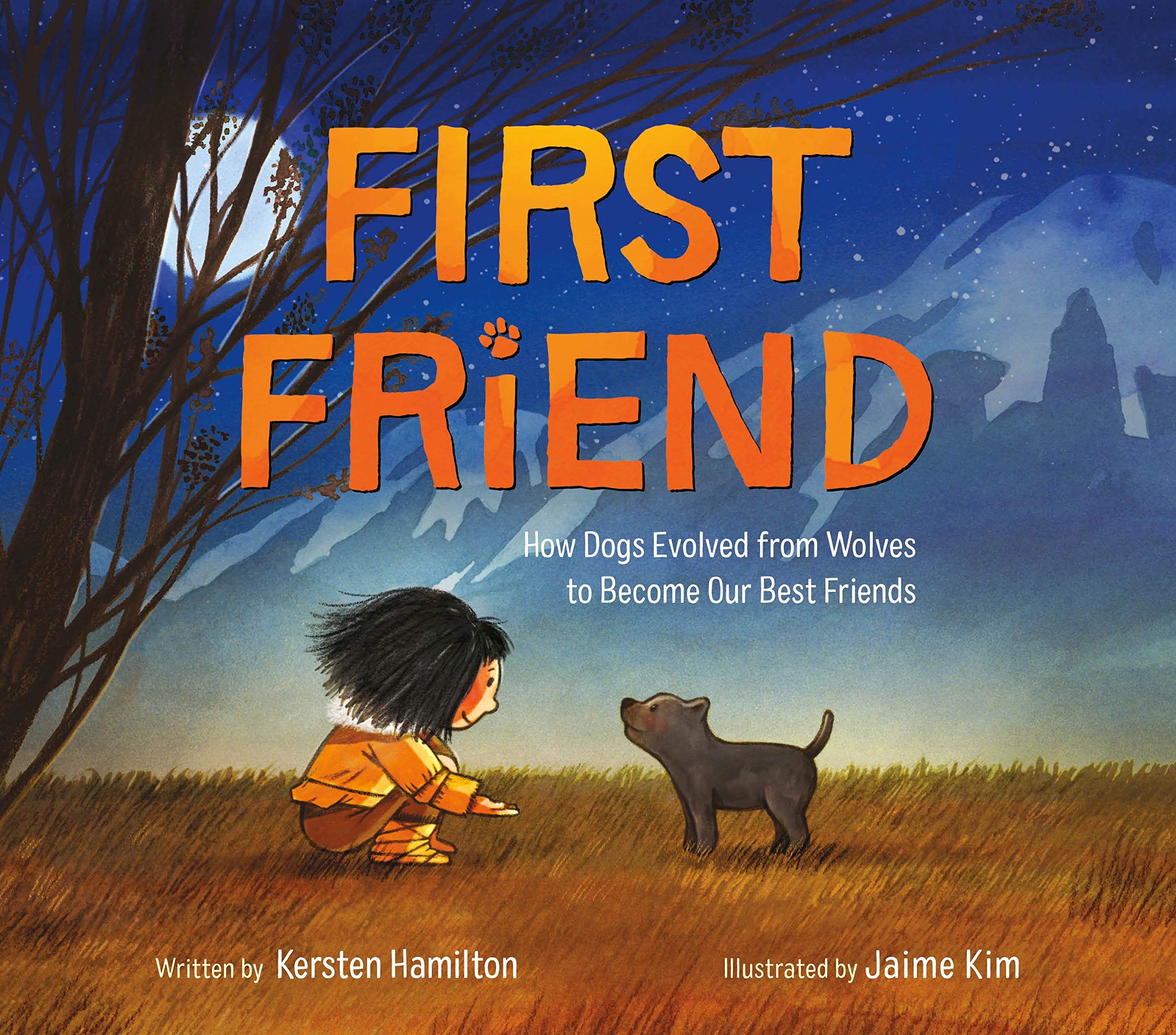
Summary:  The narrative begins long ago when nomads traveled through Europe and Asia, fighting wolves for their prey.  A girl meets a young wolf and they play together until the pup gets older.  This cycle is repeated throughout history, with the bond between child and pup growing, and the certainty that their friendship can’t last becoming less.  In the last iteration, the human group packs up and leaves the area, the boy calls to his wolf friend, “and Dog left the wolf pack to follow his boy away.”  The last spread shows a contemporary girl and puppy meeting for the first time.  Includes two pages of back matter giving additional information on how dogs became domesticated and a bibliography.  40 pages; ages 4-8.

Pros:  Dog lovers will be intrigued by the progression of domestication over thousands of years.  The illustrations seem simple with cartoon-inspired characters, but also include gorgeous backgrounds portraying the natural world.  The back matter adds to the research value and will make the book more interesting to older kids.

Cons:  The process of domestication is very simplified.

There Goes Patti McGee! The Story of the First Women’s National Skateboard Champion by Tootie Nienow, illustrated by Erika Medina

Published by Farrar, Straus, and Giroux

There Goes Patti McGee!: The Story of the First Women's National Skateboard  Champion: Nienow, Tootie, Medina, Erika Rodriguez: 9780374313999: Amazon.com:  Books
There Goes Patti McGee! | Tootie Nienow | Macmillan

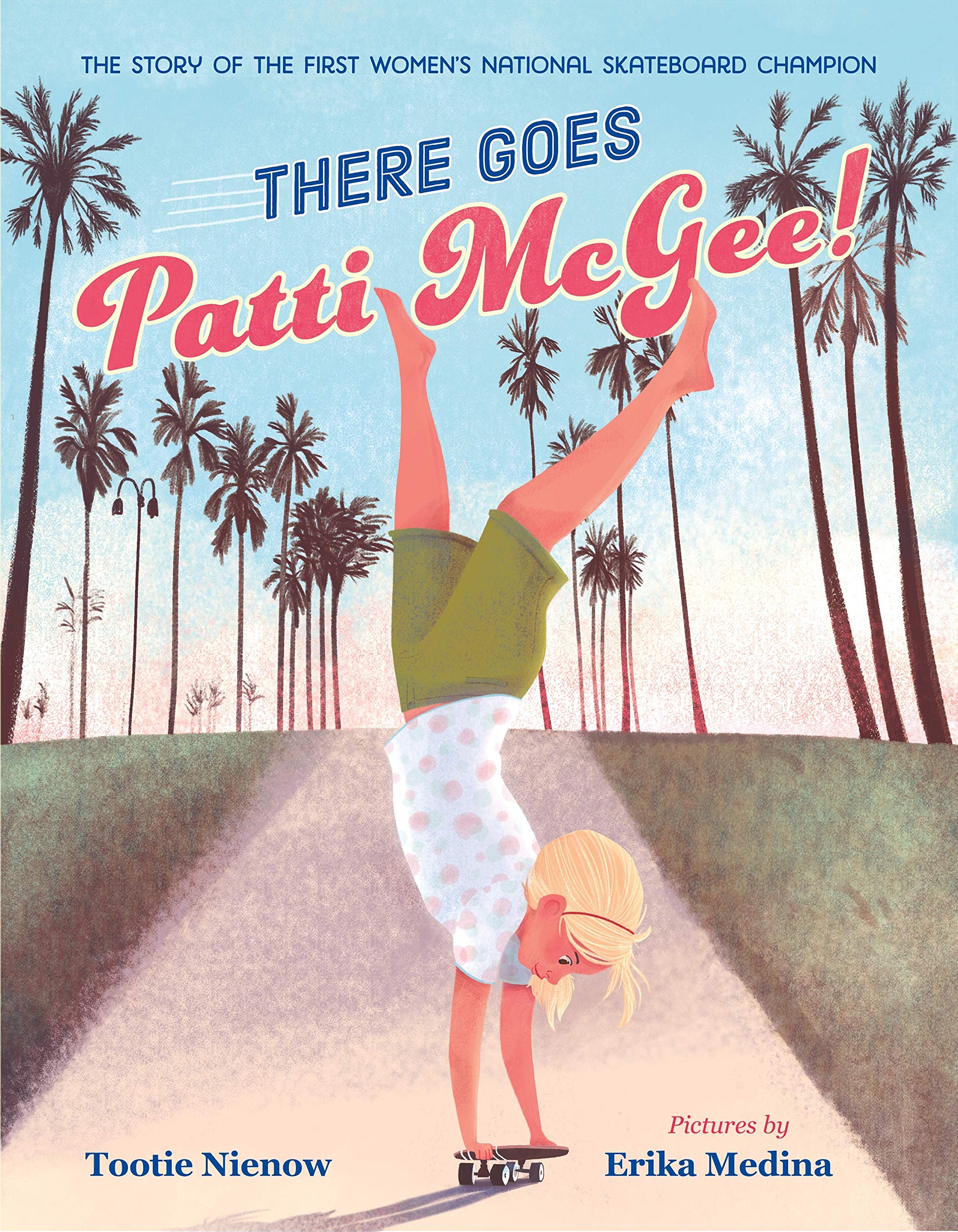
Summary:  The first time Patti McGee saw a group of boys on skateboards, she mounted a board on her roller skate wheels, and took off down the tallest hill in her neighborhood.  She was hooked, but the wheels kept falling off her board, and a real skateboard was expensive.  When she heard about a new skateboarding team starting up, with a free board as part of the deal, she practiced even harder.  Making the team inspired her to enter a competition, where she showed off her best trick: a handstand on a moving board that she held for six seconds.  Her perfect score won her the championship and launched a skateboarding career.  Includes a page answering the question “Where Is She Now?”, an author’s note, a photo of Patty performing her handstand, and a list of sources.  48 pages; grades K-4.

Pros:  Patti’s enthusiasm and determination (particularly on the page that shows her applying multiple band-aids to her bleeding arms and legs) will be an inspiration and introduce kids to a little-known sports star.  

Cons:  Missed Women’s History Month by that much.

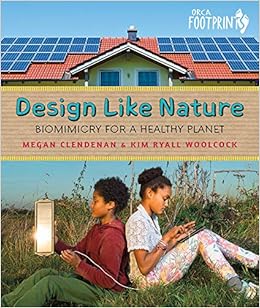
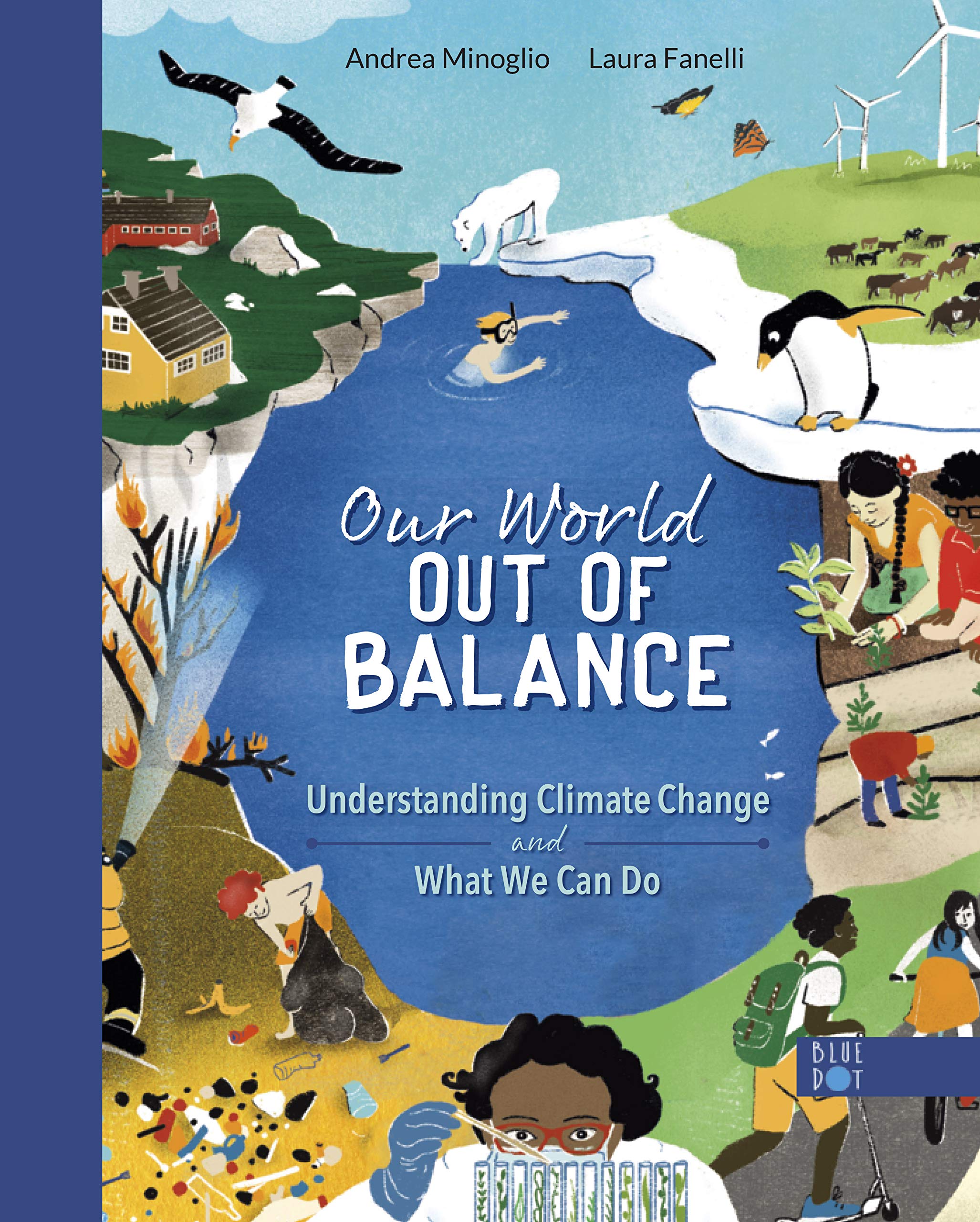
Design Like Nature: Biomimicry for a Healthy Planet by Megan Clendenan and Kim Ryall Woolcock and Our World Out of Balance: Understanding Climate Change and What We Can Do by Andrea Minoglio, illustrated by Laura Fanelli (released April 13)

Published by Orca Book Publishers

Design Like Nature: Biomimicry for a Healthy Planet (Orca Footprints, 20):  Clendenan, Megan, Woolcock, Kim Ryall: 9781459824645: Amazon.com: Books

Published by Blue Dot Kids Press

Our World Out of Balance: Understanding Climate Change and What We Can Do:  Minoglio, Andrea, Fanelli, Laura: 9781735000534: Amazon.com: Books

Summary:  These two books provide a starting point for learning more about climate change and actions kids can take, both now and as they begin their careers.  Our World Out of Balance has 17 chapters that address various areas of environmental concern, such as global warming, plastics in the ocean, and extreme weather.  In addition to facts, there are sidebars on how kids can help address these problems.  Design Like Nature looks at ways people can study nature to inspire designs that will help the environment.  Both books include additional resources, an index, and a glossary.  Design Like Nature, 48 pages; Our World Out of Balance, 72 pages; both, grades 3-7.

Pros:  As environmental problems worsen around the world, it’s important to raise awareness with kids as to what the issues are and what can be done to solve them.  Both books take the problems seriously, but also offer a note of optimism that there are solutions.

Cons:  The illustrations in Design Like Nature are mostly stock photos that don’t always do a great job supporting the text.

Let Liberty Rise! How America’s Schoolchildren Helped Save the Statue of Liberty by Chana Stiefel, illustrated by Chuck Groenink

Published by Scholastic Press

Let Liberty Rise!: How America's Schoolchildren Helped Save the Statue of  Liberty: Stiefel, Chana, Groenink, Chuck: 9781338225884: Amazon.com: Books

Summary:  When the crates containing the pieces of the Statue of Liberty arrived in New York, there was one problem: the pedestal for the statue was only half-built, and there didn’t seem to be much interest in raising the $100,000 needed to complete it.  Then Joseph Pulitzer, an immigrant himself and owner of the New York World newspaper, wrote in his paper, “Let us not wait for the millionaires to give money.  [The Statue of Liberty] is a gift of the whole people of France to the whole people of America.”  The “whole people of America”, including many children, rose to the occasion, sending the pennies and dollars that they could afford to build the pedestal.  By August, the full amount had been raised from 120,000 donors, and on October 28, 1886, about a million people came to New York to celebrate the new statue.  Includes a timeline, additional facts about the Statue of Liberty, a bibliography of books and websites, and two pages of photos and a map.  40 pages; grades K-4.

Pros:  Excellent nonfiction, with just the right balance of engaging and informative, and the perfect amount of back matter–love all those photos!

Cons:  It was a little anti-climactic to learn in the back matter that the original $100,000 price tag eventually jumped to $320,000 when construction began.  Fortunately, additional donors and Congress footed the bill.

13 Ways to Eat a Fly by Sue Heavenrich, illustrated by David Clark

Published by Charlesbridge

13 Ways to Eat a Fly: Heavenrich, Sue, Clark, David: 9781580898904:  Amazon.com: Books

13 Ways to Eat a Fly – Charlesbridge

Summary:  Zapped, wrapped, trapped, or poked: those are a few of the ways flies get eaten by other animals.  Each method is accompanied by a cartoon illustration along with a few sentences of text describing how the fly is trapped and consumed.  The last few pages give nutrition facts for flies, show their edible parts, and offer lists of books and websites, as well as a selected bibliography.  32 pages; ages 4-8.

Pros:  The emphasis on the gross-out factor, reinforced in the illustrations, will undoubtedly have readers flocking to this book like the proverbial flies to honey.

Cons:  If flies are such easy prey, why are there still so many of them around?

Old Enough to Save the Planet by Loll Kirby, illustrated by Adelina Lirius

Published by Magic Cat Publishing

Old Enough To Save The Planet: 9781916180529: Amazon.com: Books
Why everybody is old enough to save the planet | BookTrust

Summary:  Twelve children from around the world are profiled, each one having started an initiative to help the planet.  Each two-page spread shows kids at work, with a brief paragraph describing the young person and their activity.  Captions in the illustrations give additional information.  The last few pages offer ten things kids can do to help save the planet; ten things they can do to make their voices heard; and a list of seven websites with additional information.  32 pages; grades 1-5.

Pros:  Readers will be inspired by these kid activists who have already done amazing things to help make the world a better place.  There’s a lot to see in each illustration, and the information is brief enough for the younger grades.

Cons:  In the back matter, the author states that the Intergovernmental Panel on Climate Change “found that the world is already 34 degrees Fahrenheit warmer than two hundred years ago.” Was a decimal point left out?