Hidden Planet: Secrets of the Animal Kingdom by Ben Rothery

Published by Tilbury House Publishers

Hidden Planet: Rothery, Ben: 9780241361016: Amazon.com: Books
Hidden Planet: An Illustrator's Love Letter to Planet Earth: Rothery, Ben:  9780241361009: Amazon.com: Books

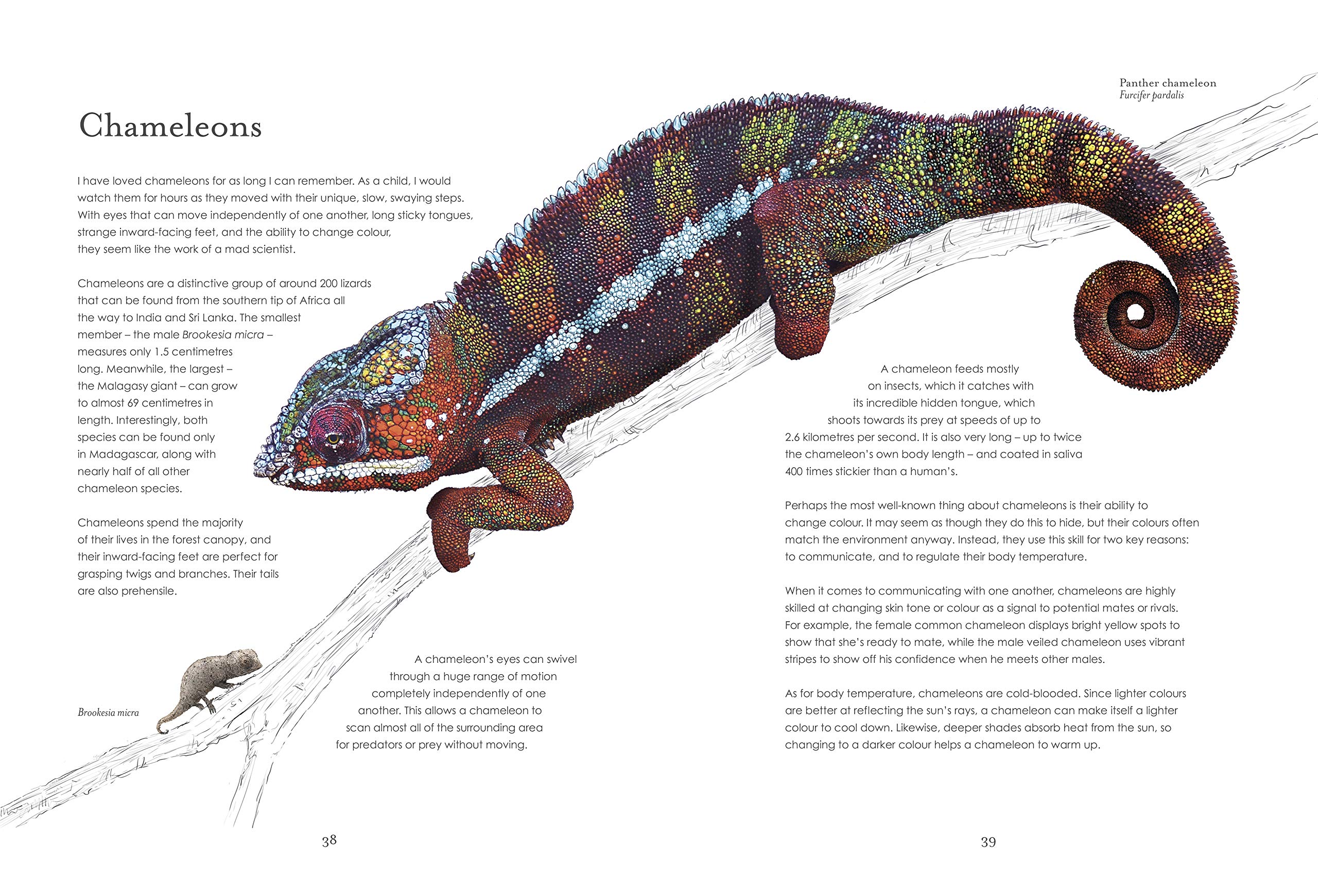
Summary: This animal book focuses on secret or hidden aspects of the animal kingdom.  There are hidden relationships like mutualism and parasitism; hidden families, like the surprising connections among the elephant, the manatee, the dugong, and the rock hyrax; and hidden abilities, such as camouflage and other defenses.  Each oversized page contains at least one illustration (sometimes filling the whole page), and often has two, three, or more, some in color and some black and white.  Includes an introduction and a final author’s note that explain how he became interested in illustrating and writing about animals, why it’s so important to understand animals better, and an invitation to readers to start their own writing and drawing; also, an index.  96 pages; grades 3-8.

Pros:  The wealth of information and especially the illustrations are phenomenal.  Any kid interested in animals will love this book, whether it’s just to browse through the gorgeous pictures or to pore over the interesting facts. 

Cons:  So many of the full-color illustrations are suitable for framing; if I were a kid with an Exacto knife, well…I might not be responsible for my actions.

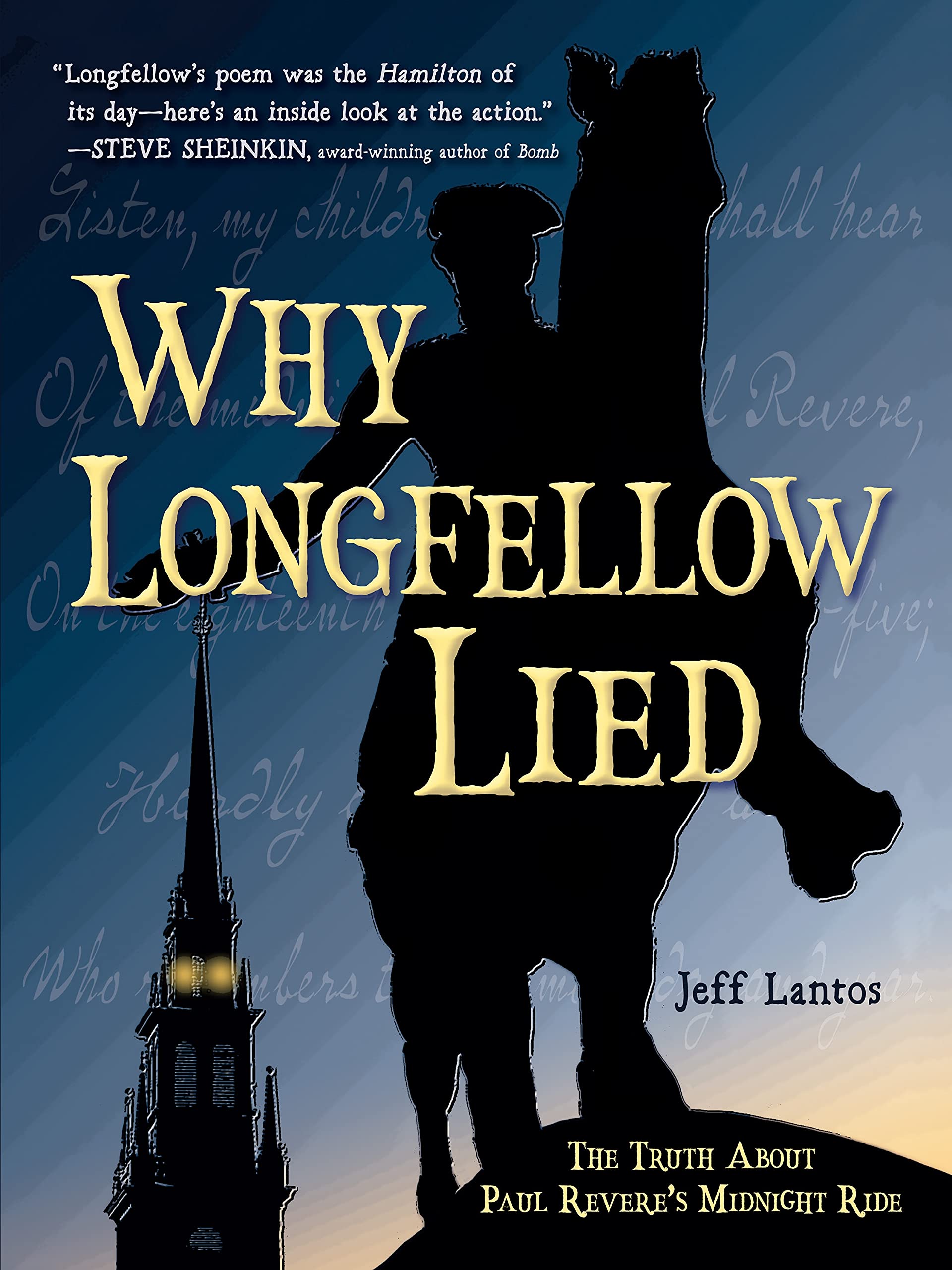
Why Longfellow Lied by Jeff Lantos

Published by Charlesbridge

Why Longfellow Lied: The Truth About Paul Revere's Midnight Ride: Lantos,  Jeff: 9781580899338: Amazon.com: Books

Summary:  Listen, my children: many of us have grown up with at least some knowledge of Henry Wadsworth Longfellow’s poem “Paul Revere’s Ride”.  Jeff Lantos takes a deeper look, going through it piece by piece with a retelling of the actual events and how they compare with the poem.  Both the prologue and the final chapter give additional context to the poem and the reasons that Longfellow wrote it in the early days of the U.S. Civil War.  Includes a cast of characters (the people mentioned in the book); the complete text of the poem; many illustrations, photos, maps, and sidebars; 18 pages of source notes; a six-page bibliography; and an index.  160 pages; grades 5 and up.  

Pros:  A lively addition to any American history curriculum, which not only presents the facts around the events of April 18-19, 1775, but also puts Longfellow’s poem in the context of the U.S. Civil War, and his fervent hope to end slavery and preserve the Union.  The plentiful illustrations and maps, the brief but interesting sidebars, and the extensive source material make this an excellent nonfiction resource.

Cons:  The title seems a bit of a harsh judgement on Longfellow, although I guess “Why Longfellow Used Artistic License in Recounting Historical Events in a Heartfelt Attempt to Preserve the Union” isn’t quite as catchy.  

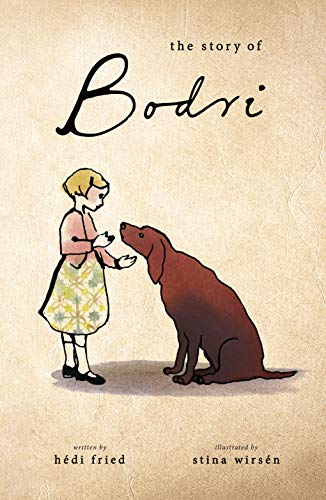
The Story of Bodri by Hédi Fried, illustrated by Stina Wirsén

Published by Eerdmans Books for Young Readers

The Story of Bodri - Kindle edition by Fried, Hédi, Wirsén, Stina. Children  Kindle eBooks @ Amazon.com.
Sneak peek: The Story of Bodri – Eerdlings

Summary:  The author recounts the story of her childhood, beginning with a happy life with her parents, younger sister, best friend Marika, and most of all, her special dog Bodri.  Then soldiers came to their town, and everything changed.  Jews like the author and her family could no longer go places, and the two best friends couldn’t play together.  Eventually, her family was taken away to a concentration camp, and the two sisters separated from their parents.  They almost died, but Hédi kept dreaming about Bodri, and the memories kept her going.  Finally, the two girls–emaciated, with their heads shaved–were free, and Hédi and Bodri had a miraculous reunion.  “We are here, and we go on telling everyone about what happened.  So that it will never happen again.”  32 pages; grades 2-5.

Pros:  A moving Holocaust story, with an unusual focus on what happened to the family dog.  The illustrations of the girls in the concentration camp are disturbing, but appropriately so for the history being told.  The beautiful pictures of trees throughout the story help to mark the passage of time.

Cons:  I was curious to learn more of Hédi Fried’s story, but I couldn’t find much biographical information about her.

Saving American Beach: The Biography of African American Environmentalist MaVynee Betsch by Heidi Tyline King, illustrated by Ekua Holmes

Published by G. P. Putnam’s Sons

Saving American Beach: The Biography of African American Environmentalist  MaVynee Betsch: King, Heidi Tyline, Holmes, Ekua: 9781101996294:  Amazon.com: Books

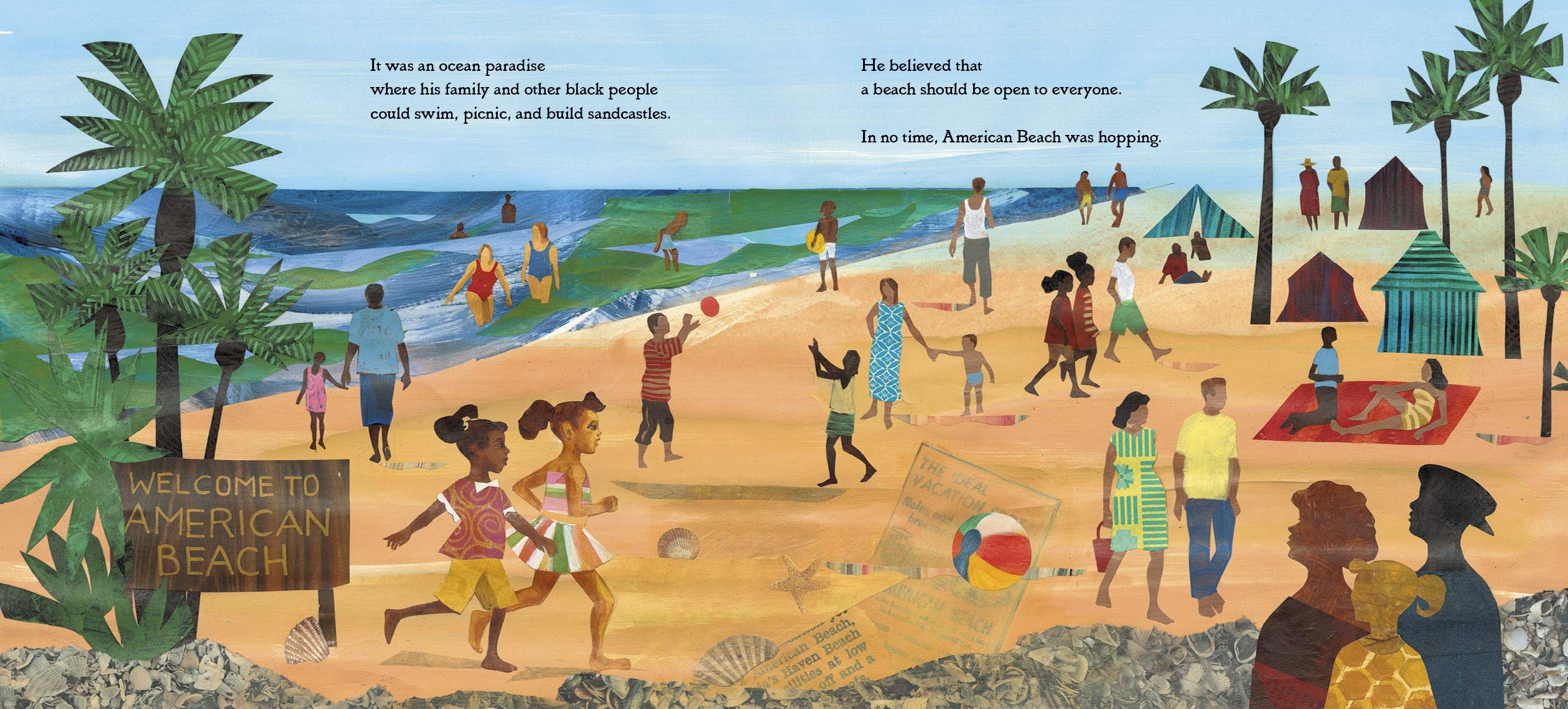
Summary:  Growing up, MaVynee Betsch loved the beach, but because she was Black, she was restricted by the “Colored Only” signs.  Her grandfather, Abraham Lincoln Lewis, Florida’s first African-American millionaire, bought a beach that he called American Beach.  It was open to everyone, and was visited by celebrities like Ray Charles, Louis Armstrong, and Duke Ellington.  MaVynee grew up to become an opera singer, finding success across Europe.  When her mother became sick, MaVynee came home to take care of her and never returned to opera.  After her mother died, MaVynee became an activist, determined to save American Beach from developers.  It took years of protest, but in 2001, the beach was listed on the National Register of Historic Places.  MaVynee, or the Beach Lady as she was known, passed away in 2005.  Includes notes from the author and illustrator.  40 pages; grades K-5.

Pros:  In the author’s note, Heidi Tyline King writes that operas often feature an aria, “a profoundly sad and emotional solo where the singer turns sorrow into something beautiful”.  MaVynee Betsch’s story is like that; she seems to have felt profound sadness in many areas of her life, but her single-minded determination ultimately met with success in saving her beloved beach.  Caldecott honoree Ekua Holmes’s beautiful collage illustrations enhance the story with their vibrant colors and patterns.

Cons:  I was sorry there were no photos of the Beach Lady or her beach.

Sing With Me: The Story of Selena Quintanilla/Canta Conmigo: La Historia de Selena Quintanilla by Diana López, illustrated by Teresa Martínez

Published by Dial Books for Young Readers

Sing with Me: The Story of Selena Quintanilla: López, Diana, Martinez,  Teresa: 9780593110959: Amazon.com: Books
Canta conmigo: La historia de Selena Quintanilla (Spanish Edition): López,  Diana, Martinez, Teresa: 9780593323304: Amazon.com: Books
Sing with Me: The Story of Selena Quintanilla: López, Diana, Martinez,  Teresa: 9780593110959: Amazon.com: Books

Summary: Selena’s love of singing is obvious from the first page of this biography, in which she’s using a rolled tortilla as a microphone.  She started at a young age, and by the time she was nine, she was singing in a band at the family restaurant with her siblings on drums and guitar.  Hard economic times meant losing the restaurant and a move to Corpus Christi, Texas, where the family bought a bus and went on the road to perform.  Wanting to connect with her audience, Selena taught herself Spanish so she could sing the much-loved Tejano songs, ultimately succeeding in the male-dominated field of Tejano music.  The story ends with Selena’s final concert at the Houston Astrodome performing before over 60,000 people, inviting them to “¡Canta conmigo!”  Includes author’s note with additional biographical information and a list of Selena’s studio albums.  Available in both English and Spanish versions. 32 pages; grades K-4.

Pros:  Another great picture book biography about Selena that can be paired with last year’s Selena: Queen of Tejano Music.  This one emphasizes Selena’s hard work and how she overcame sexism and racism to succeed.  With the Netflix series introducing Selena’s music to a new generation, there’s sure to be a big demand for both of these books.

Cons:  Selena’s marriage is covered in one sentence, with no mention of her married name Perez, and her death is described in the author’s note simply as “she was killed on March 31, 1995”.

Dr. Fauci: How a Boy from Brooklyn Became America’s Doctor by Kate Messner, illustrated by Alexandra Bye

Published by Simon and Schuster Books for Young Readers

Dr. Fauci | Book by Kate Messner, Alexandra Bye | Official Publisher Page |  Simon & Schuster

Dr. Fauci | Book by Kate Messner, Alexandra Bye | Official Publisher Page |  Simon & Schuster

Summary:  From the time he was a boy growing up in Brooklyn, Anthony Fauci always had a curious mind.  His family encouraged that, telling him to always gather evidence and keep an open mind when solving a problem.  Although he wasn’t the biggest kid in the neighborhood, he learned to be competitive in sports, using speed to make up for what he lacked in stature.  In 1966, Anthony became Dr. Fauci when he graduated first in his class from Cornell Medical School.  Throughout his career, he studied new diseases like AIDS, West Nile virus, and, of course, COVID-19.  Keeping an open mind, working with scientists around the world to gather evidence and look for solutions, Dr. Fauci worked tirelessly on the problem of COVID-19.  The book ends on a positive note, with the vaccine rollout; Dr. Fauci is happy to get his vaccine, reunite with family, and get back to work on whatever problem comes along next.  Includes additional information on vaccines and their safety; Dr. Fauci’s five tips for future scientists; a timeline of his life; a recommended reading list; and several photos of Anthony Fauci growing up.  48 pages; grades K-3.

Pros:  A much-needed picture book biography of Dr. Fauci, along with timely information about vaccine safety.  The information is straightforward, emphasizing the importance of hard work and critical thinking in the scientific world.

Cons:  Probably appropriate for the age group, but the tone of the book is consistently upbeat, with none of the political controversy around Dr. Fauci touched upon.

I Is for Immigrants by Selina Alko

Published by Henry Holt and Co.

I Is for Immigrants: Alko, Selina, Alko, Selina: 9781250237866: Amazon.com:  Books

I Is for Immigrants | Selina Alko | Macmillan

Summary:  Each page of this alphabet book is a collage of immigration-related words that begin with the featured letter.  For instance, A is for ancestors, African dance, Abuelita, ambition, and aspire; the Z page shows zest, a ziti dinner, Zen, a zither, and a sleeping mother and child (“Zzzzzzzzz”).  An author’s note tells of her own immigrant experience.  40 pages; grades K-4.

Pros:  This would make an excellent introduction to immigration, whether it’s for a preschool class or the start of a third- or fourth-grade social studies unit.  The colorful collage illustrations and words will get readers thinking about all the contributions immigrants have made to American culture.  Students could make their own collages as an extension activity.

Cons:  There’s not much context for the individual words, and younger kids will undoubtedly need some help with understanding some of them.

Horse Power: How Horses Change the World by Jennifer Thermes

Published by Harry N. Abrams

Horse Power: How Horses Changed the World: Thermes, Jennifer:  9781419749452: Amazon.com: Books

Summary:  Horses first appeared on Earth fifty-six million years ago, and although the earliest ones lived in North America, they eventually died out.  They survived in Europe and Asia, though, and their domestication revolutionized societies there.  Eventually, horses found their way back to North America in Spanish ships, and became part of life for both European settlers and indigenous people.  Horses allowed people to travel faster and work harder, and were a key part of the Industrial Revolution.  At the end of the 19th century, though, they began to be replaced by cars, and today are used by humans mostly for sports, fun, and entertainment.  Includes an author’s note timeline, and list of sources.  48 pages; grades 2-7.  

Pros:  Anyone who has enjoyed a Jennifer Thermes book knows that maps are a key part of her illustrations, and this one is no exception.  Her maps and diagrams help show horses in local settings as well as how they have traveled around the world.  Horse lovers everywhere will enjoy this book and undoubtedly learn a lot from the text and illustrations.

Cons:  As with any nonfiction picture book that covers a huge topic and span of time, this one is necessarily a little brief on the details.  It’s a good introduction, but kids seeking more information will need to delve into other sources.

Unbound: The Life and Art of Judith Scott by Joyce Scott with Brie Spangler and Melissa Sweet, art by Melissa Sweet

Published by Knopf Books for Young Readers

Unbound: The Life and Art of Judith Scott: Scott, Joyce, Spangler, Brie,  Sweet, Melissa, Sweet, Melissa: 9780525648123: Amazon.com: Books

Melissa Sweet on Unbound: The Life and Art of Judith Scott | The  TeachingBooks Blog

Summary:  Until the age of 5, Joyce Scott and her twin sister Judy are inseparable.  But when Joyce starts kindergarten, Judy, who had “what will come to be known as Down syndrome”, stays home.  One day Joyce wakes up and finds that Judy is gone.  From that day on, Judy lives in a big gray institution where Joyce only sees her on occasional visits.  Joyce finds it harder and harder to leave at the end of each visit until, as an adult, she decides to bring Judy home to live with her and her family.  Since Joyce works during the day, she enrolls Judy at the Creative Growth Art Center, an art school for adults with disabilities.  For many months, Judy sits and looks at magazines, until one day she creates a small sculpture with twigs, yarn, twine, and paint.  From that day on, she works at the studio every day, making unique art from all sorts of colorful materials.  After her death, her work becomes renowned and continues to be exhibited all over the world.  Includes information on Creative Growth Art Center and Down Syndrome, a timeline of Judith Scott’s life, notes from the author and illustrator, sources, and photographs of Judy and one of her sculptures called “Twins”.  48 pages; grades K-5.

Pros:  Judith Scott’s story is so engaging that, even though it’s a bit long for a picture book, it would hold the attention of younger readers, and possibly inspire them to try their own creations.  Joyce’s voice passes along the love and appreciation she feels for her sister and Judy’s artistic gifts.  And, as always, I would be happy to see Melissa Sweet get some Caldecott recognition, which I wanted so badly for Some Writer! that I feel compelled to still mention it four years later.

Cons:  I wish there were more photos of Judy’s work in the book.

Judith Scott - 20 artworks


Areli Is a Dreamer: A True Story /Areli Es Una Dreamer: Una Historia Real by Areli Morales, a DACA recipient/beneficiaria de DACA, illustrated by Luisa Uribe

Published by Random House Studio

Spanish and English versions available

Areli Is a Dreamer: A True Story by Areli Morales, a DACA Recipient:  Morales, Areli, Uribe, Luisa: 9781984893994: Amazon.com: Books

Areli Es Una Dreamer (Areli Is a Dreamer Spanish Edition): Una Historia  Real por Areli Morales, Beneficiaria de DACA - Kindle edition by Morales,  Areli, Uribe, Luisa. Children Kindle eBooks @ Amazon.com.

Areli Es Una Dreamer (Areli Is a Dreamer Spanish Edition): Una Historia  Real por Areli Morales, Beneficiaria de DACA: Morales, Areli, Uribe, Luisa:  9780593380086: Amazon.com: Books

Summary:  Areli Morales tells her story, beginning with her childhood in Mexico where she lived with Abuela.  Every Saturday her parents would call from the United States, and Areli dreamed of the day she could join them there.  Her older brother Alex lived with her, but eventually was able to leave, because, unlike Areli, he had been born in the U.S.  Finally, when Areli was in kindergarten, she got word that she would be able to join the rest of the family.  When Areli arrived, she was thrilled to be with her parents and Alex, but struggled to learn English and fit in at school, where kids sometimes called her “illegal”.  As the years passed, things got easier, and a fifth grade field trip to Ellis Island made Areli realize how many other immigrants had come to America just like she had, and helped her to dream of a bright future in America.  Includes an author’s note about her DACA status: how she obtained it, what opportunities it opened up for her, and how it has been threatened.  40 pages; grades K-4.

Pros:  Areli’s story is told in a way that will engage younger readers but also show older kids the experience of immigrating to the U.S. and what it means to be a DACA recipient.  Kids who have had an experience similar to Areli’s will appreciate her story, and those who haven’t will get a child’s perspective on what it’s like.

Cons:  I liked Areli’s author’s note, but I would have liked even more information or additional resources about DACA.