R-E-S-P-E-C-T: Aretha Franklin, the Queen of Soul by Carole Boston Weatherford, illustrated by Frank Morrison

Published by Atheneum Books for Young Readers

RESPECT: Aretha Franklin, the Queen of Soul: Weatherford, Carole Boston,  Morrison, Frank: 9781534452282: Amazon.com: Books

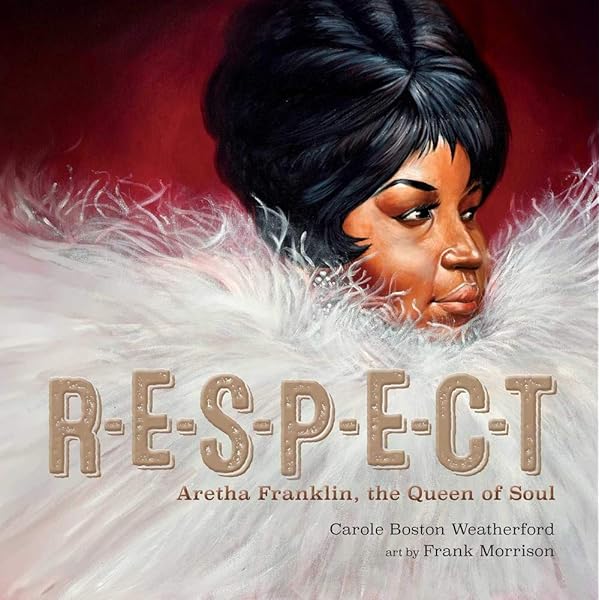
Summary:  The story of Aretha Franklin’s life is told in rhyming couplets, each one titled with a word written like “R-E-S-P-E-C-T” in the title.  Starting with “B-L-E-S-S-E-D”, showing a young Aretha praying while her parents watch, the story traces her life and career from singing gospel at her church to performing at President Obama’s inauguration.  In addition to her musical career, Aretha’s civil rights work is touched upon.  The final two pages celebrate both her legacy and her humility, ending with her description of her voice as “the gift that God gave me”.  Includes an author’s note with additional information about Aretha Franklin’s life and a list of her biggest hits.  48 pages; grades K-4.

Pros:  The large, colorful illustrations capture Aretha Franklin’s big personality and singing voice, starting with a gorgeous pink Cadillac on the title page. This is the third book I’ve reviewed this year illustrated by the prolific Frank Morrison, and I hope he gets some recognition at awards time.  This would make a good companion to A Voice Named Aretha.

Cons:  Those who don’t know much about Aretha Franklin’s life may struggle to make sense of the brief text unless they start with the author’s note at the end.

Wild Girl: How to Have Incredible Outdoor Adventures by Helen Skelton, illustrated by Liz Kay

Published by Candlewick

Wild Girl: How to Have Incredible Outdoor Adventures: Skelton, Helen, Kay,  Liz: 9781536212860: Amazon.com: Books

Summary:  Helen Skelton is a British TV personality who also enjoys taking on incredibly difficult outdoor challenges, usually for charity, such as kayaking the length of the Amazon River,  bicycling to the South Pole, and running three back-to-back marathons in under 24 hours in the Namibian desert.  Each chapter covers a certain type of terrain: adventures in the snow, the sand, the water, the mountains, the countryside, and the city.  Much of the chapter is taken up with an account of her own adventure, including preparation, training, gear, and the actual experience with all of its highs and lows.  At the end of each chapter, she suggests wild adventures and extremely wild adventures, with places around the world to enjoy each.  There’s also a “Wild Girl Wall of Fame” which gives short profiles of other women’s adventures in that chapter’s terrain.  144 pages; grades 5-8.

Pros:  Although most of us won’t attempt Helen’s feats, she’s an enthusiastic storyteller who may inspire girls (and boys) to step out of their comfort zones.  She’s also modest about her accomplishments, frequently citing mistakes she made and encouraging readers to tune out the types of naysayers she experienced.  The book, with its plentiful illustrations, photos, and sidebars, is engaging and will be an easy sell to middle schoolers.

Cons:  Some of the stories (the marathons in the desert comes to mind) were so harrowing they actually made me want to be less adventurous.

Our Subway Baby by Peter Mercurio, illustrated by Leo Espinosa

Published by Dial Books

Our Subway Baby: Mercurio, Peter, Espinosa, Leo: 9780525427544: Amazon.com:  Books

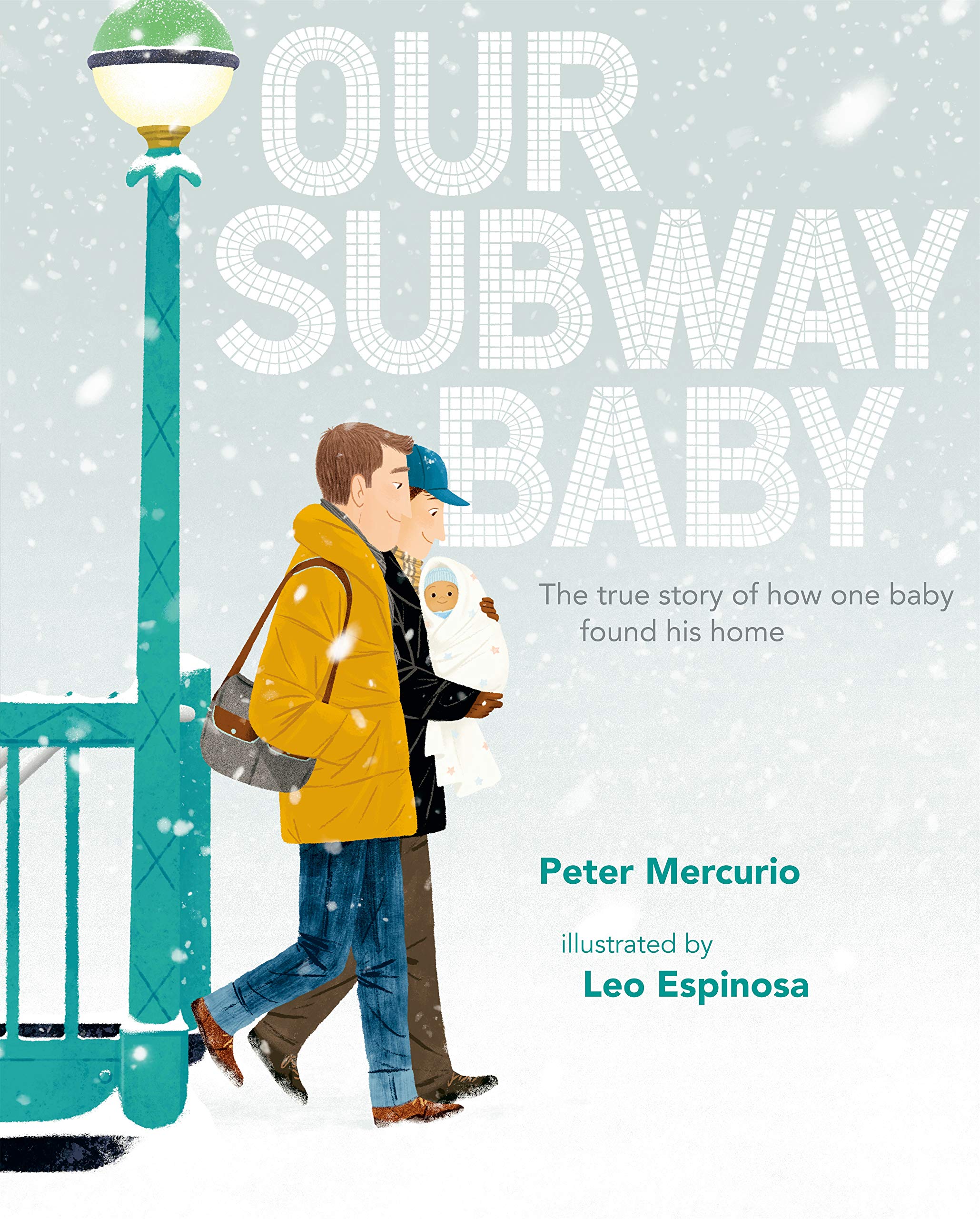
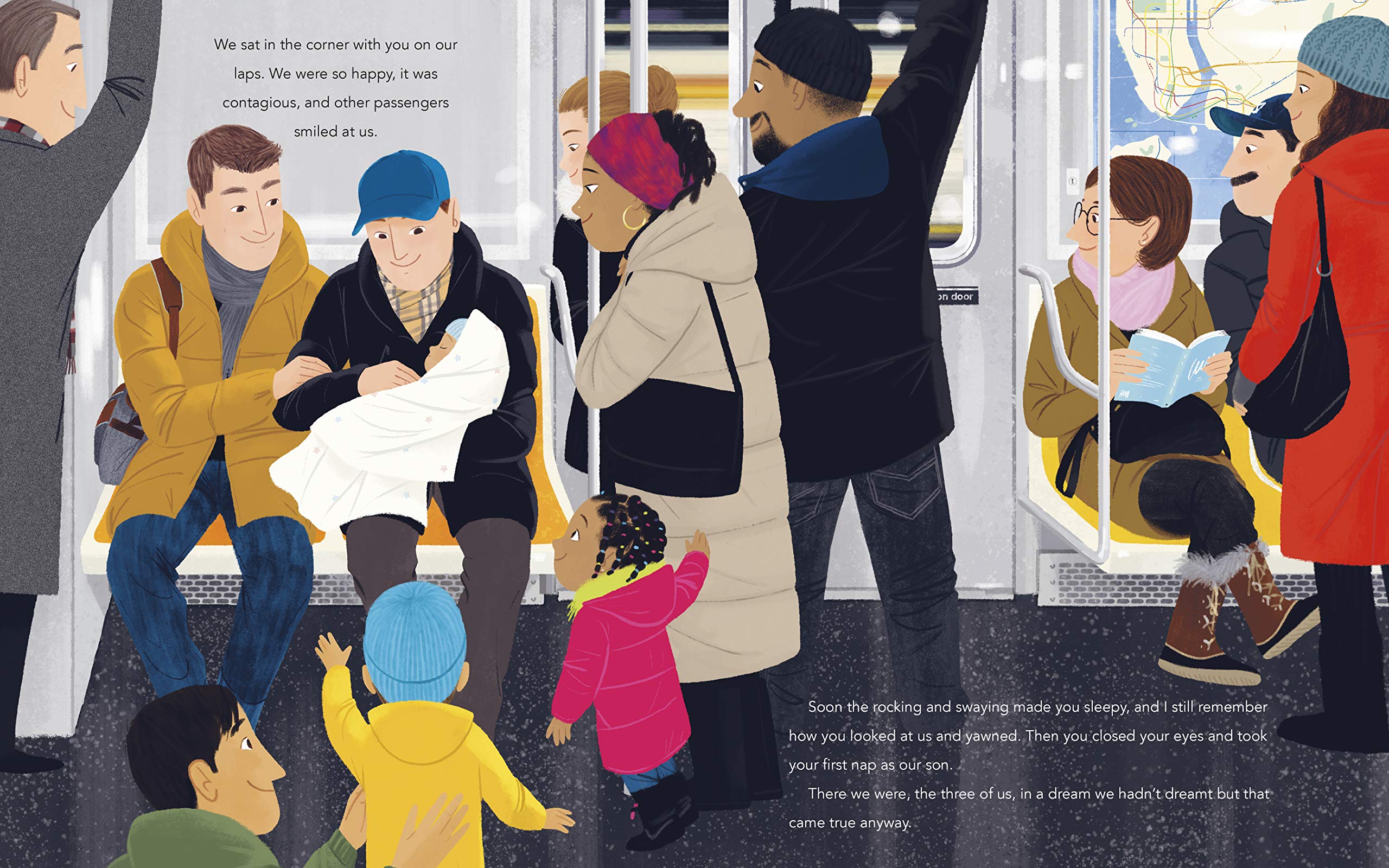
Summary:  Peter Mercurio tells his son Kevin the story of how he came to live with their family.  When Peter’s husband Danny found a baby in a New York City subway station, it seemed at first like the little boy would be spending a long time in foster care.  The two men lived in a small apartment, and their “piggy banks were empty.”  But they had fallen in love with this tiny baby, and a sympathetic judge speeded up the process, choosing a loving family for him over common concerns at that time about whether or not two men could raise a child together.  The ruling gave them just three days to prepare, but friends and family pitched in to get them what they needed for a baby.  They brought Kevin home just before Christmas….opting, of course, to take the subway to get there.  Includes an author’s note with three photos of Kevin as an infant, a toddler, and today as a college student.  40 pages; ages 4-9.

Pros:  Talk about heartwarming.  This book is written like a love letter from a father to a son, but manages to avoid sentimentality or mawkishness.  The colorful illustrations are engaging and perfectly capture the emotions of two people suddenly thrust into the spotlight…and parenthood.  A beautiful celebration of a unique family.

Cons:  Thinking of all the things that could have gone wrong for baby Kevin.  He is one lucky kid.

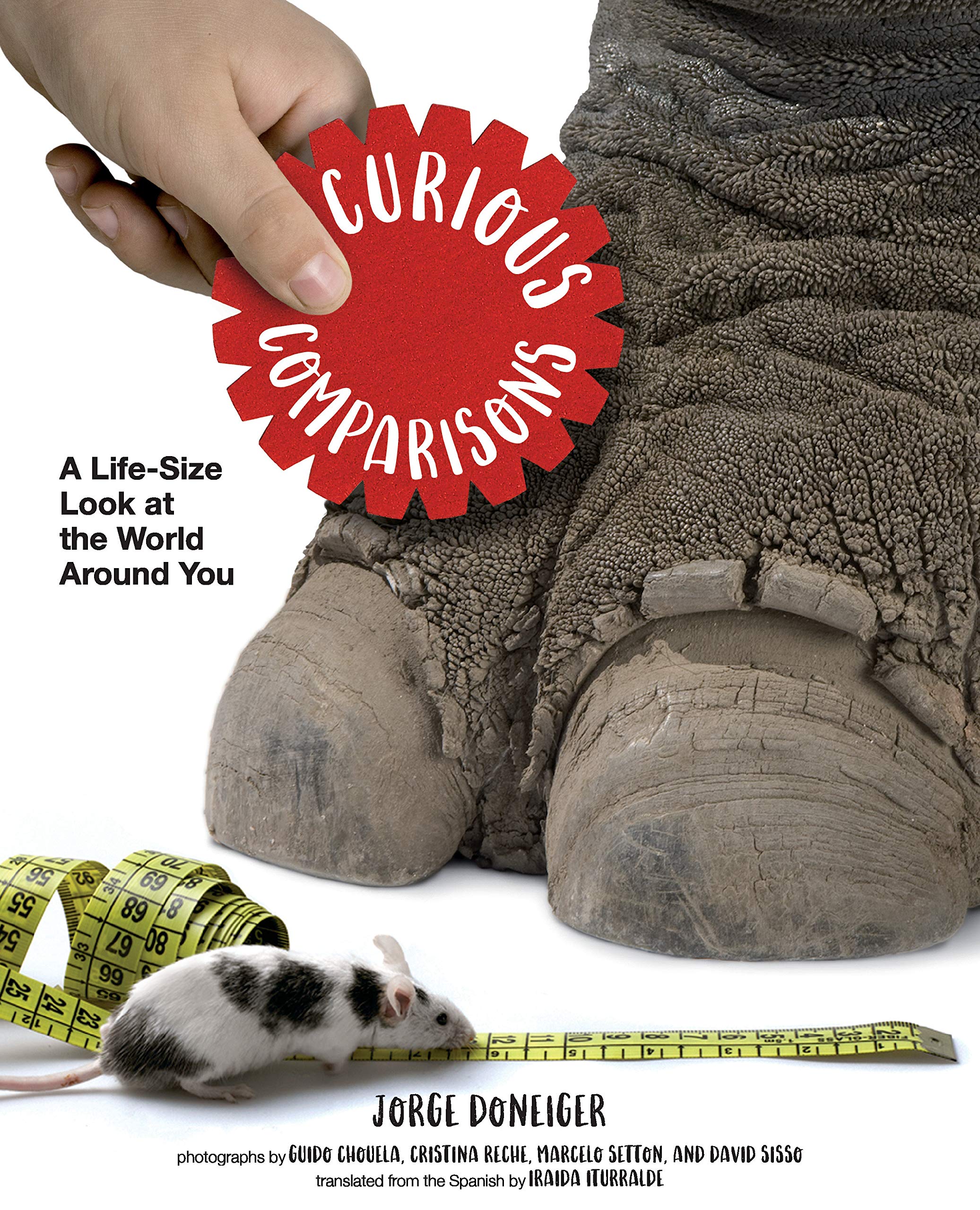
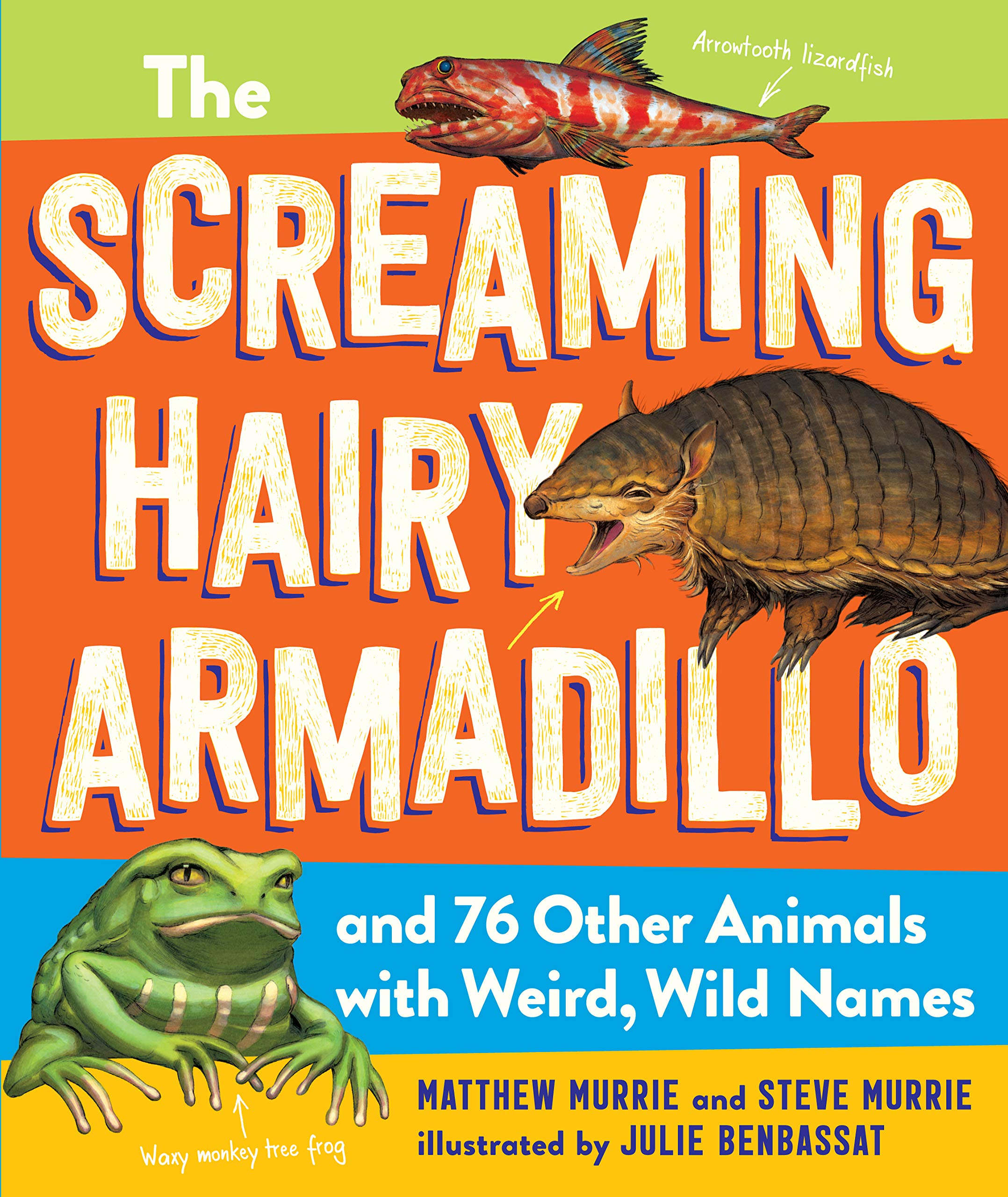
Curious Comparisons: A Life-Size Look at the World Around You by Jorge Doneiger, translated from the Spanish by Iraida Iturralde and The Screaming Hairy Armadillo and 76 Other Animals with Weird, Wild Names by Matthew Murrie and Steve Murrie, illustrated by Julie Benbassat

Published by Candlewick

Curious Comparisons: A Life-Size Look at the World Around You: Doneiger,  Jorge, Chouela, Guido, Sisso, David, Setton, Marcelo: 9781536200218:  Amazon.com: Books
Curious Comparisons: A Life-Size Look at the World Around You by Jorge  Doneiger, Guido Chouela, David Sisso, Marcelo Setton, Hardcover | Barnes &  Noble®

Published by Workman Publishing Co.

The Screaming Hairy Armadillo and 76 Other Animals with Weird, Wild Names:  Murrie, Matthew, Murrie, Steve, Benbassat, Julie: 9781523508112: Amazon.com:  Books

Summary:  For those kids who enjoy books filled with quirky facts, here’s a double dose.  Curious Comparisons is an import from Argentina showing true-to-size photos of an eclectic mix of animals and objects.  A pound of feathers and a pound of lead; the amount of water a lion can drink at once shown in empty water bottles; a pile of thread representing an unraveled shirt: each item is shown on a white page with a fact or two and often a question.  There are a few fold out pages: glasses filled with the amount of milk a cow produces and the flowers needed for a bee to make a pound of honey.  Includes 4 pages of additional facts about each page.  64 pages; grades K-5.

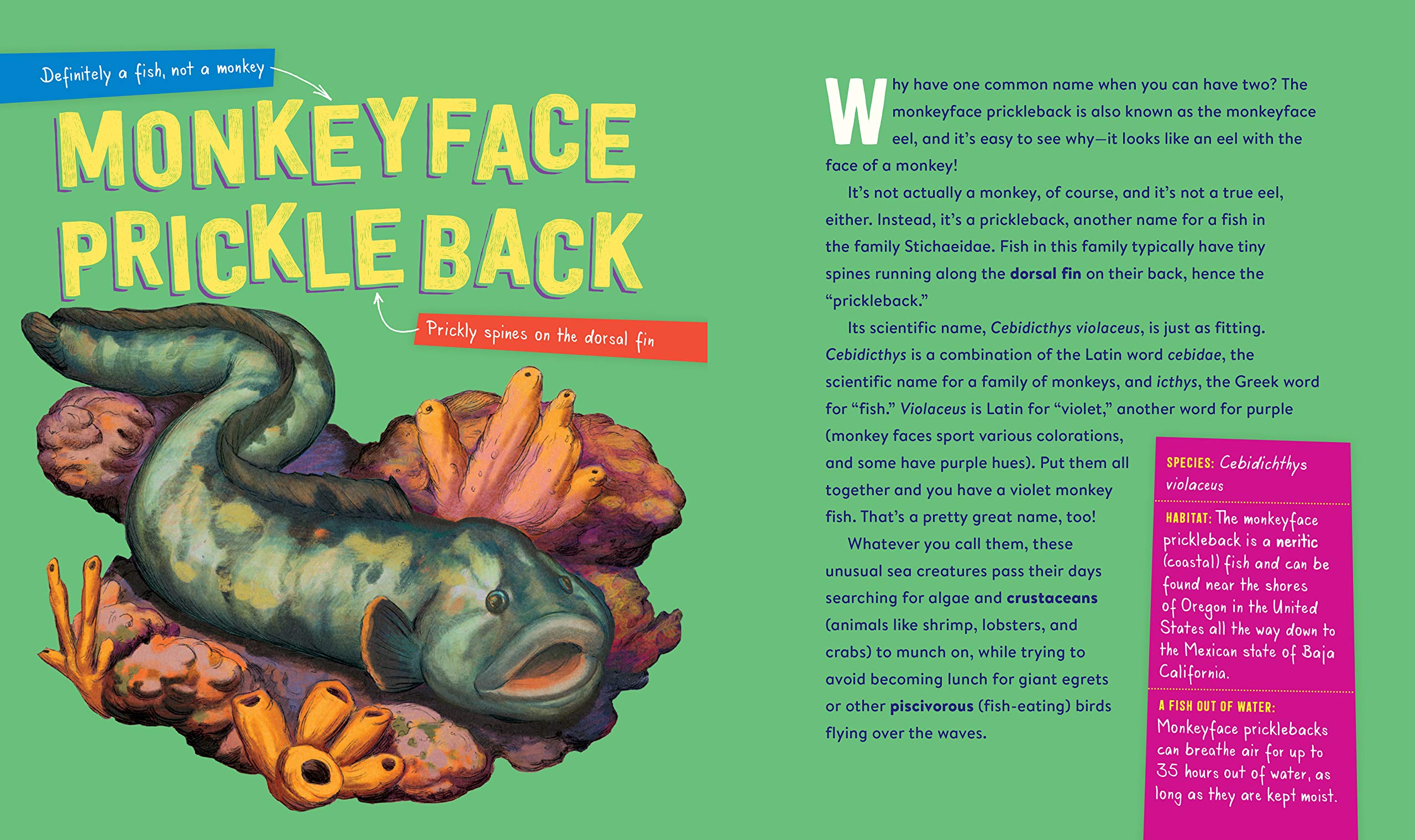
Screaming Hairy Armadillo starts off with several pages explaining how animals are named, including a description of scientific classification.  From there, the 77 animals are profiled, everything from the monkeyface prickleback to the bone-eating snot flower worm.  The animals are grouped by name: funny names, fierce names, magical names, delicious names, and just plain weird names (looking at you, headless chicken monster).  Each animal gets a page of information; a sidebar telling its species, habitat, and a fun fact; an illustration; and sometimes a photo.  Includes a couple pages of awards (for different name-related categories); how to discover and name an organism; a weird and wild name generator; a glossary; a list of websites for further research; and information on conservation organizations.  176 pages; grades 2-5.

Pros:  Books like these are almost too easy to book talk.  Just show a page or two, maybe read a fact or share a couple of weird names, and boom, kids are clamoring for them.  The photos and simple text in Curious Comparisons makes it a great choice for any elementary grade.  Screaming Hairy Armadillo will appeal to older kids, and contains a lot of great information in addition to the animal profiles.

Cons:  Curious Comparisons seemed a bit random to my well-ordered, Dewey-Decimal-trained brain.

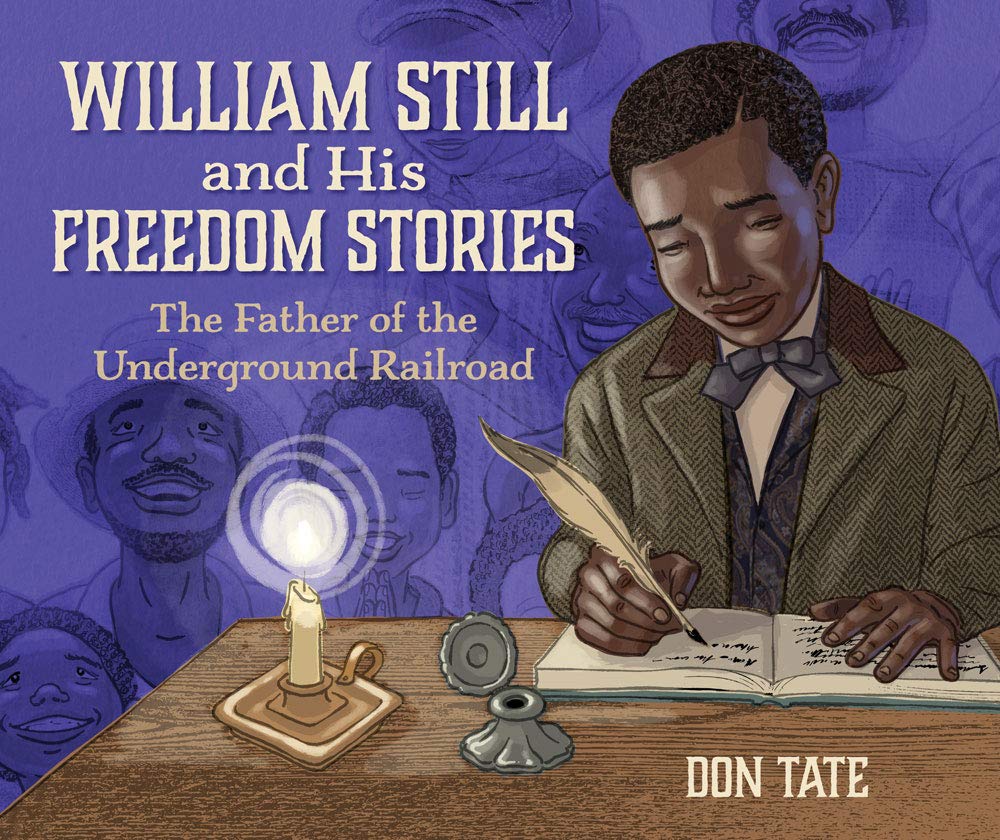
William Still and His Freedom Stories: The Father of the Underground Railroad by Don Tate

Published by Peachtree Publishing Company

William Still and His Freedom Stories: The Father of the Underground  Railroad: Tate, Don, Tate, Don: 9781561459353: Amazon.com: Books
Review: William Still and His Freedom Stories - Mr. Alex's Bookshelf

Summary:  When William Still’s mother escaped from slavery, she was forced to leave her two sons behind.  She and her husband reunited in New Jersey, and they went on to have fifteen children, including William, the youngest, born in 1821.  When William was 23, he moved to Philadelphia, where he got a job as an office clerk at the Pennsylvania Anti-Slavery Society.  He worked his way up to manager, and helped freedom-seekers by making his home a stop on the Underground Railroad.  One day a middle-aged man came to the office.  When William heard his story, he realized the man was his long-lost brother, Peter.  This inspired William to start recording the stories of every person who came through the office, thinking these records might help reunite other families.  When the Fugitive Slave Act was passed, William’s stories became evidence of crimes, and he was forced to hide them in a cemetery vault.  After the Civil War, he published many of the stories in his book, The Under Ground Rail Road.  Includes a timeline, author’s note, and bibliography.  40 pages; grades 2-5.

Pros:  According to the author’s note, when white writers told the story of the Underground Railroad, they often made themselves heroes and left out the work of many of the black people.  This book does a fabulous job of rectifying that for William Still, who was a tireless worker for many years.  Don Tate has been a busy man this year, creating both the text and beautiful illustrations for this book, as well as the pictures for Swish!, the recent book about the Harlem Globetrotters.

Cons:  I was curious as to what happened to all the papers Sill was forced to hide in the cemetery vault.  Did they survive?  Are they still around today?  There didn’t seem to be an answer in either the story or the author’s note.

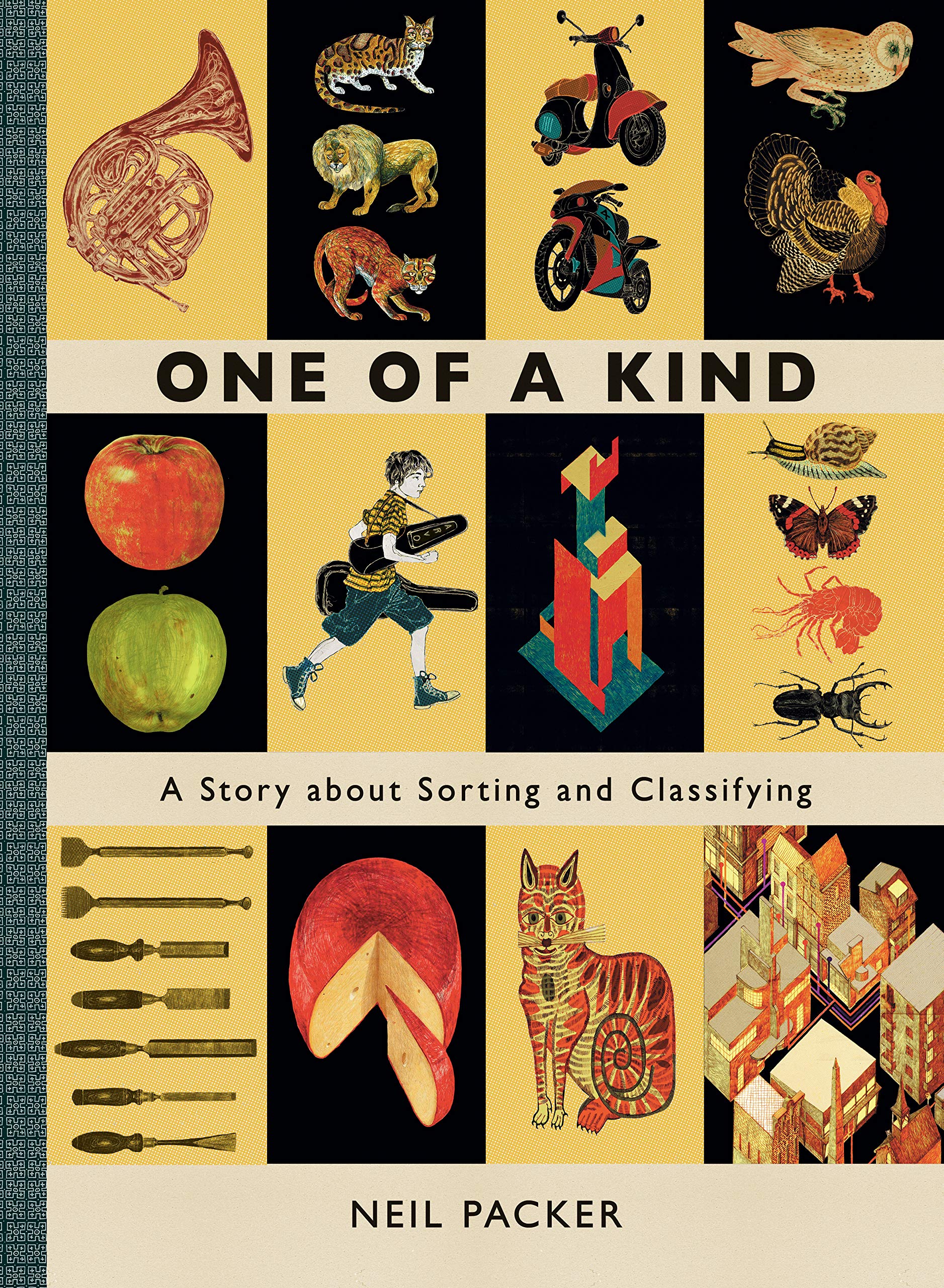
One of a Kind: A Story About Sorting and Classifying by Neil Packer

Published by Candlewick

One of a Kind: A Story About Sorting and Classifying: Packer, Neil, Packer,  Neil: 9781536211214: Amazon.com: Books
One of a Kind: A Story About Sorting and Classifying by Neil Packer,  Hardcover | Barnes & Noble®

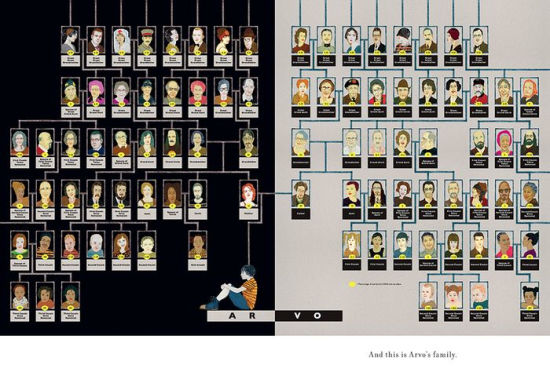
Summary:  On page 1, we meet Arvo.  On page 2, we meet Arvo’s family: a family tree going back to his great grandparents and to third cousins once removed, including the percentage of DNA each shares with Arvo.  Page 3 is Arvo’s cat Malcolm–and the family of cats, a.k.a. Felidae.  And so it goes throughout Arvo’s day.  His violin lesson is accompanied by an illustration of musical instrument classification; the car ride to the violin lesson includes vehicles and how they are grouped.  There are pages for clouds, foods, the library, and more.  When Arvo’s dad picks him up at the end of the day, though, he’s able to pick his son out of a crowd.  When Arvo asks him how, his dad tells him, “There is only one YOU!”  Includes an additional four pages giving more information on each of the classification systems.  48 pages; grades 2-5.

Pros:  Many years ago, when I worked at the Boston Museum of Science, I looked in vain for good children’s books on classification (my co-worker and I actually tried writing one).  I wish we had had this excellent oversized book to show kids how all kinds of objects in the world are sorted and classified into groups.  Readers will want to spend a lot of time with the detailed illustrations on every page.

Cons:  This is another large book that librarians may struggle to find space for.

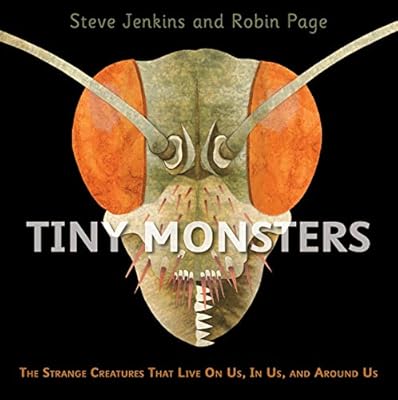
Tiny Monsters: The Strange Creatures That Live On Us, In Us, and Around Us by Steve Jenkins and Robin Page

HMH Books for Young Readers

Tiny Monsters: The Strange Creatures That Live On Us, In Us, and Around Us:  Jenkins, Steve, Page, Robin: 9780358307112: Amazon.com: Books

Summary:  Maybe you don’t want to think about the tiny eyelash mites that are living on, not surprisingly, your eyelashes, but you can bet there’s some 9-year-old kid out there who does.  And that kid will also enjoy learning about bedbugs, chiggers, dust mites, and a whole host of other small creatures who live on humans, in houses, and outside.  Each spread features Jenkins’ trademark cut paper illustrations, with the actual size shown as a black silhouette (some are just a dot), the magnification of the illustration, and a paragraph of information.  The last two pages give additional information about each critter, and there is also a short bibliography.  32 pages; grades 1-4.

Pros:  I’m always delighted to learn that Steve Jenkins has a new book; even more so when he teams up with his wife Robin Page.  Personally, I did not find the subject of this one particularly engaging, but I just know it will be a huge hit in any elementary library.

Cons:  I feel itchy.

Swish! The Slam-Dunking, Alley-Ooping, High-Flying Harlem Globetrotters by Suzanne Slade, illustrated by Don Tate

Published by Little Brown Books for Young Readers

Swish! by Suzanne Slade | Little, Brown Books for Young Readers
Book Trailer Reveal: SWISH! THE SLAM-DUNKING, ALLEY-OOPING, HIGH-FLYING  HARLEM GLOBETROTTERS by Don Tate (illustrator) and Suzanne Slade (author) |  Nerdy Book Club

Summary:  In 1922,when Chicago’s Wendell Phillips High School basketball team won the division championship, they knew they were some of the best players in the country.  Because they were black, though, they were shut out from the top professional teams.  A group of them was recruited by Abe Saperstein for his new New York Harlem Globetrotters team.  They travelled around the country, playing whatever teams towns could put together, and usually beating them.  To take away the sting of being so dominant on the court, the group started adding tricks and jokes to the games.  Crowds loved them, but they often couldn’t stay in the local hotels or eat in the restaurants.  To prove their equality with white players, the Globetrotters challenged the 1948 Minnesota Lakers team to a game, and beat them, 61-59, repeating the feat a year later to show it wasn’t a fluke.  With NBA ticket sales down and the Globetrotters playing to sold-out crowds, owners had little choice but to start integrating their teams.  The Globetrotters, who have been named America’s Ambassadors of Goodwill, continue traveling around the world, delighting fans with their own special brand of basketball.  Includes additional information, an artist’s note, a list of sources, a timeline, and photos.  40 pages; grades K-4.

Pros:  Sports fans will love this story of the Globetrotters.  The text is accessible for primary grades, and the illustrations provide plenty of action and laughs.  The backmatter adds to the value for research.

Cons:  Although the timeline is great, it would have been nice to have some dates in the story itself to place it in historical context.  I remember the Globetrotters from my childhood, but didn’t know they had been around for almost 100 years.

On the Horizon by Lois Lowry, illustrated by Kenard Pak

Published by HMH Books for Young Readers

On the Horizon: Lowry, Lois, Pak, Kenard: 9780358129400: Amazon.com: Books

Summary:  Lois Lowry lived in both Hawaii and Japan as a child, and her poems here reflect some of her experiences in those two countries during World War II.  The bulk of the poetry, though, relates personal stories, both of people aboard the Arizona and those living in Hiroshima.  The poems are written in a variety of styles, and most are accompanied by an illustration.  Includes an author’s note telling of her experiences that influenced this book.  Most remarkable is her interaction with a Japanese boy named Koichi Seii, who moved to the U.S. as an adult and changed his name to Allen Say, becoming an award-winning illustrator and Lowry’s friend.  Aso includes a bibliography.  80 pages; grades 5-8.

Pros:  By focusing on individuals (many of them children or young adults), Lowry really personalizes the tragedy of war.  The details may be too sad or disturbing for younger kids, but middle school students will find a lot to discuss in these poems.

Cons:  I wish there had been some information about the different forms of poetry used.

The Challenger Disaster: Tragedy in the Skies by Pranas T. Naujokaitis

Published by First Second

Amazon.com: History Comics: The Challenger Disaster: Tragedy in the Skies  (9781250174307): Naujokaitis, Pranas T.: Books
History Comics: The Challenger Disaster | Pranas T. Naujokaitis | Macmillan

Summary:  A group of kids going to school on board a 24th century spacecraft has an assignment to research the Challenger disaster.  Each presents one aspect of the event, including the history of the space shuttle, the crew, the launch, and the investigation of what went wrong.  The kids are all certain that Carmen, the slacker among them, hasn’t done her research, and when it comes time for her to present, it turns out they’re right.  But she’s been so moved by what she’s learned that she makes an emotional case for continuing to explore the universe, even though tragedies sometimes happen as part of those explorations.  The day ends with A plus grades for everyone, and the teacher musing to herself that she believes the future is in good hands.  Includes an author’s afterword and a list of additional Challenger facts.  128 pages; grades 4-6.

Pros:  A moving look at many different aspects of the Challenger explosion that includes holographic images of each crew member giving an introduction to his or her life and career.  This is part of a new series called History Comics that will undoubtedly have wide appeal, particularly for fans of books like Nathan Hale’s Hazardous Tales.

Cons:  The detailed descriptions of the space shuttle in the first third of the book may lose a few readers.

If you would like to buy this book on Amazon, click here.