Brave Ballerina: The Story of Janet Collins by Michelle Meadows, illustrated by Ebony Glenn

Published by Henry Holt and Co.

Image result for brave ballerina amazon

Image result for brave ballerina ebony glenn

Summary:  Janet Collins was determined to be a dancer, even though she faced discrimination from an early age.  Her mother was a seamstress who paid for her dance lessons by sewing costumes. Janet was turned away from ballet schools and told she could only join a professional company if she painted her skin white.  She refused, and found other ways to dance. Finally, in 1951, the ballet master at the Metropolitan Opera House saw Janet dance, and hired her to be the first African-American prima ballerina there. An author’s note gives more biographical information, including two photos; sources and websites are also included.  32 pages; ages 4-8.

Pros:  The story is told in simple rhyming text, each verse starting with “This is” (“This is the girl/who danced in the breeze/to the swoosh, swoosh, swoosh/of towering trees”).  Young readers will enjoy the illustrations depicting Janet in various dance costumes, and will be inspired by her perseverance that eventually led to success.

Cons:  The text is so brief that many details are omitted, and some of the people are just referred to as “the teacher” or “the man”; some of those characters are identified in the author’s note, but more information sources would be needed for any kind of research report.

If you would like to buy this book on Amazon, click here.
Elvis Is King! by Jonah Winter, illustrated by Red Nose Studio

Published by Schwartz and Wade

Image result for elvis is king winter amazon

Image result for elvis is king winter amazon

Summary:  “Elvis Is Born!” proclaims the first page, and each page thereafter has a headline that tells what happened to Elvis Presley for the first couple decades of his life.  He grew up in Mississippi in poverty–his father spent 14 months in jail for forgery–and moved to Memphis when he was 13. His mother bought him his first guitar for his 11th birthday, and music proved to be his ticket to a new world.  As a teenager, he dyed his hair black, started sporting some pretty funky clothing, and left his shyness behind every time he got on stage. After making a record for his mom at Sun Records, he was recruited to make a real record and became an overnight star.  The book ends with the release of “Heartbreak Hotel” that became a number one hit, and the simultaneous arrival of the hordes of screaming teenage girls. An author’s note gives more information and includes three photos of Elvis in 1937, 1956, and 1957. 40 pages; grades 2-5.

Pros:  Elvis may have been dead for over 40 years, but the legend lives on, and kids still enjoy reading about him.  The southern twang of the text and the outrageous three dimensional Red Nose Studio illustrations are a perfect combination to tell Presley’s story.

Cons:  A list of resources would have made a nice addition to the author’s note.

If you would like to buy this book on Amazon, click here.


Five favorite nonfiction books

It’s hard to narrow the list down to five; I love nonfiction, and there were a lot of good books to choose from in 2018.

They Lost Their Heads: What Happened to Washington’s Teeth, Einstein’s Brain, and Other Famous Body Parts by Carlyn Beccia

Image result for they lost their heads amazon

I think it was the story of Elvis’s wart that really won me over.  I’ll say this: it’s an easy book to book talk.


Saving Fiona: The Story of the World’s Most Famous Baby Hippo by Thane Maynard

Published by HMH Books for Young Readers

Image result for saving fiona amazon

The story is engaging, the photos are adorable, and readers can research hippos while learning about real scientists working in the field…what’s not to like?


Proud: Living My American Dream by Ibtihaj Muhammad

Published by Little, Brown Books for Young Readers

Image result for proud living my american amazon

I loved this memoir by Ibtihaj Muhammad, who became the first Muslim American woman to compete in the Olympics wearing hijab, and who continues to pursue her dreams on her own terms.


The Girl Who Drew Butterflies: How Maria Merian’s Art Changed Science by Joyce Sidman

Published by HMH Books for Young Readers

Image result for girl who drew butterflies amazon

This gorgeously illustrated biography shines a light on Maria Merian, a 17th-century German woman who defied the expectations of her time and became a scientist and artist.  It’s not the easiest book to sell to kids, but I loved the story and the artwork.


Every Month Is a New Year by Marilyn Singer, illustrated by Susan L. Roth

Published by Lee and Low Books

Image result for every month is a new year singer amazon

Designed like a calendar, this book can be used for poetry, geography, or teaching about different cultures, and the collage illustrations add plenty of color and texture.


Through the Window: Views of Marc Chagall’s Life and Art by Barb Rosenstock, illustrated by Mary Grandpre

Published by Knopf

Image result for through the window grandpre amazon

Image result for through the window grandpre

Summary:  From the author-illustrator team that brought you The Noisy Paint Box and Vincent Can’t Sleep comes this introduction to the life of artist Marc Chagall.  Born Moishe Shagal in Vitebsk, Russia, he changed his name as a young man living and working in Paris.  Many of his paintings showed what he saw through various windows, which is referenced in the title.  Due to the two world wars, Chagall was forced to return to Russia for awhile before getting back to Paris and eventually moving to the United States. He continued to explore new art forms as he grew older, including sculpture, set design, and stained glass.  Includes an author’s note, which includes photos of some of Chagall’s work, and a list of sources. 40 pages; grades 1-5.

Pros:  A beautiful introduction to Marc Chagall’s life, both visually and through the text, which the author’s note explains is written the style of Chagall’s poetic autobiography, My Life.

Cons:  The story might be a little confusing without some guidance from a knowledgeable adult.

If you would like to buy this book on Amazon, click here.

A Day with Judy Freeman

I spent today in Bristol, Connecticut at Judy Freeman’s What’s New in Children’s Literature workshop.  Judy was kind enough to invite me as her guest, and I enjoyed hearing what books she recommended and getting some programming ideas to promote them.  Sponsored by the Bureau of Education and Research (BER), it’s always a worthwhile workshop if you get the opportunity to go.

Judy and I have read a lot of the same books this year, but I did hear of a few that I missed and wished I had included on this blog.  Here’s a quick run-down if you want to try to get your hands on them.

The United States v. Jackie Robinson by Sudipta Bardhan-Quallen

Published by Balzer + Bray

Image result for united states v. jackie robinson amazon

Jackie Robinson’s baseball career is a familiar story, but this looks at his early life, growing up with a mother who refused to back down when their white neighbors tried to force the family to move.  The story also covers Jackie’s college and military career, showing how his early years shaped his later life playing baseball and working for civil rights.  32 pages; grades 3-6.


Mae’s First Day of School by Kate Berube

Published by Abrams

Image result for mae's first day of school amazon

Mae would rather sit up in a tree all day than face the uncertainties of the first day of school.  Soon she’s joined by another girl named Rosie, who shares Mae’s concerns about the unknown.  Finally, a third person joins them: Ms. Pearl, the new teacher who has her own insecurities.  The three finally decide to face their fears, climb down from the tree, and walk into school together.  32 pages; ages 4-8.


Stegothesaurus by Bridget Heos, illustrated by T. L. McBeth

Published by Henry Holt

Image result for stegothesaurus amazon

Two of the brothers are stegosauruses, but the third is a stegothesaurus.  Stegosauruses say hi; but it’s “Hello! Greetings! Salutations!” from the stegothesaurus.  A big mountain is “gargantuan, gigantic, Goliath”, and a hot day is “blazing, blistering, broiling”.  When the stegothesaurus meets an allothesaurus, the words really start to fly.  A fun introduction to word choice and thesauruses.  32 pages; grades K-3.


Worlds Make Way: New Poems Inspired by Art from The Metropolitan Museum by Lee Bennett Hopkins

Published by Abrams

Image result for world make way amazon

Seventeen children’s poets, plus Hopkins, created works inspired by paintings at The Metropolitan Museum in New York City.  A beautiful and accessible introduction to poetry and art.  48 pages; grades 3-7.


Dear Substitute by Liz Garton Scanlon and Audrey Vernick, illustrated by Chris Raschka

Published by Disney-Hyperion

Image result for dear substitute amazon

A girl is surprised to find a substitute in her class, and writes disgruntled letters about the changes in the routine.  As the day goes on, though, she begins to appreciate the fun-loving sub, and by dismissal time, she realizes the day has turned out just fine.  32 pages; grades K-3.


Water Land: Land and Water Forms Around the World by Christy Hale

Published by Roaring Brook Press

Image result for water land christy hale amazon

Image result for water land christy hale

Summary:  Ten different land and water forms are depicted, using die cut pages to turn one form into another.  For instance, the first two pages show a tan landscape with a hole cut out showing the blue on the next page–a lake.  Turn the page, and that hole turns the previous page into an island in the middle of the blue water. Each spread shows people engaging in various recreational activities like camping and swimming.  There’s only one word on each page, but the last two pages define all the land and water forms. They’re part of a larger fold-out page that lists different examples of the forms and shows them on a map of the world.  32 pages; ages 3-10.

Pros:  This book will appeal to a wide variety of ages; preschoolers will enjoy the die cut pages and learning new words; older students of geography will get a good deal of information on the final pages.  And everyone will have fun seeing what the people are up to and dreaming about which land or water form they would like to visit.

Cons:  Such a cool book deserves a snazzier title.

If you would like to buy this book on Amazon, click here.
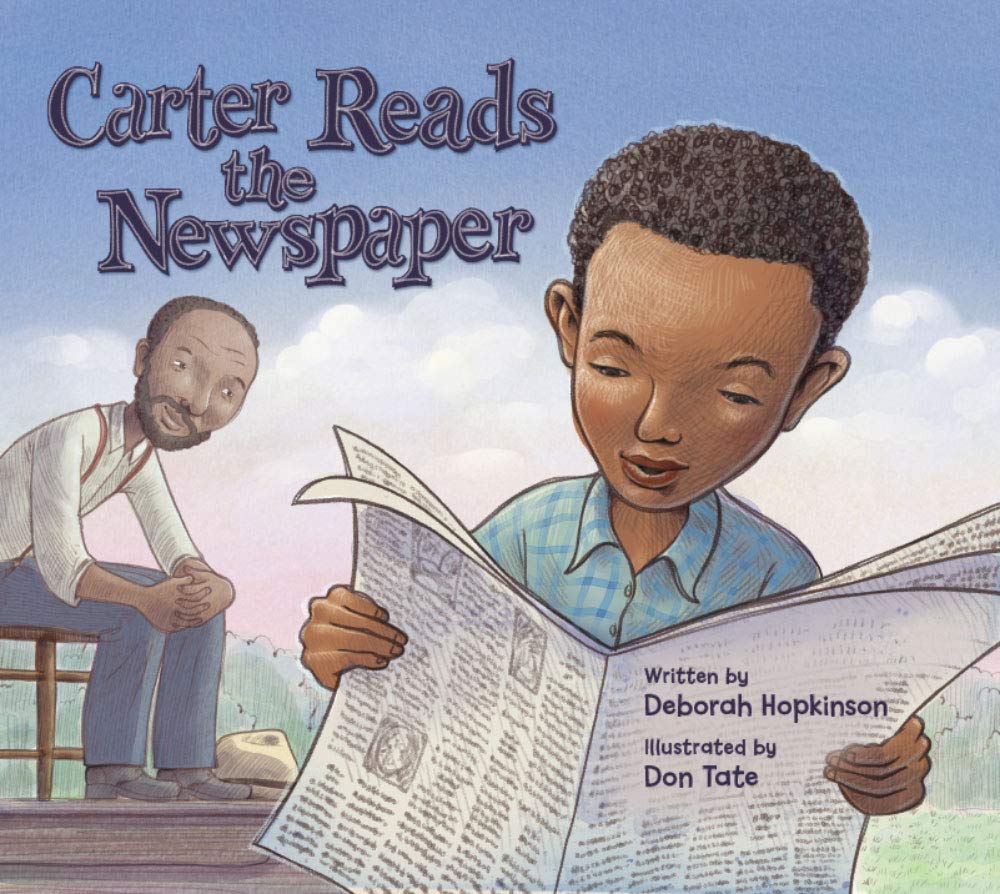
Regina Persisted: An Untold Story by Sandy Eisenberg Sasso, illustrated by Margeaux Lucas

Published by Apples and Honey Press

Image result for regina persisted amazon

Summary:  The story opens as Regina Jonas is on her way to take an exam that will allow her to be a Jewish rabbi.  As she’s walking to the school, she thinks back on what has brought her to this day–a love of the Torah, a father who believed girls should learn Hebrew, years of going to synagogue every week and staying after the service to study with the rabbi.  When she arrives at school, though, she’s stopped from taking the exam by a teacher who tells her that girls can’t be rabbis and that she must give up her dream. For five years, Regina continues to teach and inspire Jews during what is becoming an increasingly dark time in Germany.  Finally, on December 26, 1935, she is allowed to take the exam and become the first woman rabbi in the world. An afterword tells of Regina’s brief career until her death in Auschwitz in 1944; there was not another woman rabbi until 1972, but now there are close to 1,000, including the author.  32 pages; grades 2-5.

Pros:  It’s an amazing story of a woman who refused to take no for an answer in pursuing her dream.  The text and illustrations do a nice job of incorporating the stories of a couple of other strong Jewish women (Miriam and Esther).

Cons:  Because this was published by a small press specializing in Judaism, it’s probably not going to fly under the radar for many librarians and other book buyers.

If you would like to buy this book on Amazon, click here.
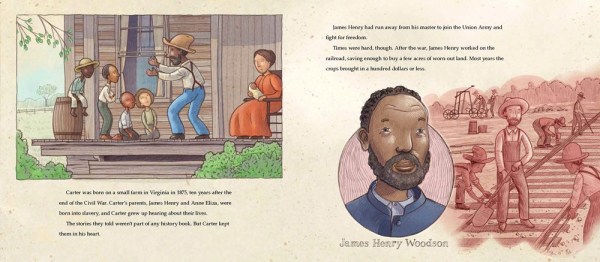
She Did It! 21 Women Who Changed the Way We Think by Emily Arnold McCully

Published by Disney-Hyperion

Image result for she did it mccully amazon

Image result for she did it mccully amazon

Summary:  As per the subtitle, you’ll find 21 women who promoted feminism and changed the role of women, mostly in the twentieth century.  Each profile is several pages long, broken into sections with headings and sidebars, and begins with an illustration of the woman with a large head, a la the Who Was biography series.  They’re arranged in chronological order by the year each woman was born, beginning with Ida Tarbell (1857) and concluding with Temple Grandin (1947).  Many of the names may be unfamiliar to elementary and middle school students. The concluding chapter, “Second Wave Feminism” tells the story of feminism in the 1960’s and 1970’s, and includes an eye-popping list of eight things a woman couldn’t do before the second wave (get a bank loan, serve on a jury in most states, etc.).  Includes a list of sources and an index. 272 pages; grades 4-7.

Pros:  An educational and entertaining look at 21 fascinating women in a wide variety of fields and from diverse backgrounds, all placed in the context of the history of feminism.  The illustrations and page layouts make this easy to browse.

Cons:  While I liked the illustrations, photos of each woman would have been a useful addition as well.

If you would like to buy this book on Amazon, click here.
Fairy Spell: How Two Girls Convinced the World That Fairies Are Real by Marc Tyler Nobleman, illustrated by Eliza Wheeler

Published by Clarion Books

Image result for fairy spell how nobleman amazonImage result for fairy spell eliza wheeler

Summary:  In 1917, cousins Frances Griffiths and Elsie Wright spent much of the summer playing near the beck, or stream, behind their home in Cottingley, England.  When Frances got in trouble for getting her shoes wet, she claimed she and Elsie had seen fairies near the water. She convinced her father to let them take his camera to photograph the little creatures, and sure enough, they were able to capture some of the fairies on film.  The photos came to the attention of Sherlock Holmes author Arthur Conan Doyle, and he was so intrigued, he got them published in a magazine. The hoax continued until 1983, when Frances and Elsie, then 75 and 81, finally admitted that the pictures were faked. They never expected their prank to get so big, and when it did, hadn’t wanted to embarrass their families and Conan Doyle.  In fact Frances admitted faking most of them, but would never renounce the final photo they took, and always claimed there had been fairies in Cottingley. Includes an author’s note and list of sources. 40 pages; grades 1-5.

Pros:  This story has been told before, but this version is particularly well-done for younger kids, with the original photos incorporated into the illustrations.  The author’s note includes a discussion of how people can be tricked into believing things that aren’t true, and how this continues today, aided by the Internet.  

Cons:  Kids may find it hard to believe that people believed these photos were real for so many years.

If you would like to buy this book on Amazon, click here.
Image result for frances elsie fairy photos


The Elephant by Jenni Desmond

Published by Enchanted Lion Books

Image result for elephant jenni desmond amazon

Image result for elephant jenni desmond

Summary:  When a child takes a book off the shelf and begins to read, he learns a lot about elephants.  Much of the book is nonfiction, giving facts and information about elephants, including the different species, their size, what they eat, their habitat, and why they are endangered.  The child appears in some of the illustrations, and there are connections to his world, like the picture that shows four cars piled on top of each other that are equal in weight to a male elephant.  Although elephants sleep a lot less than most other mammals, the same is not true for the reader, and the final page shows him asleep in his dark house, his head pillowed by the elephant book. 48 pages; grades K-4.

Pros:  An appealing nonfiction book, with the whimsical illustrations adding some humor, but also informing (the car picture, the one above that shows the length of an elephant’s trunk with two children lying on it toe-to-toe).  Jenni Desmond has written similar books on polar bears and blue whales, which I am now looking to add to my libraries.

Cons:  There is no back matter–some additional resources would have been useful.

If you would like to buy this book on Amazon, click here.