National Parks of the U.S.A. by Kate Siber, illustrated by Chris Turnham

Published by Wide Eyed Editions
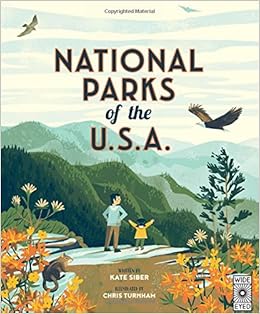
Image result for national parks of the us kate amazon

Image result for national parks of the u.s.a. turnham

Image result for national parks of the u.s.a. turnham

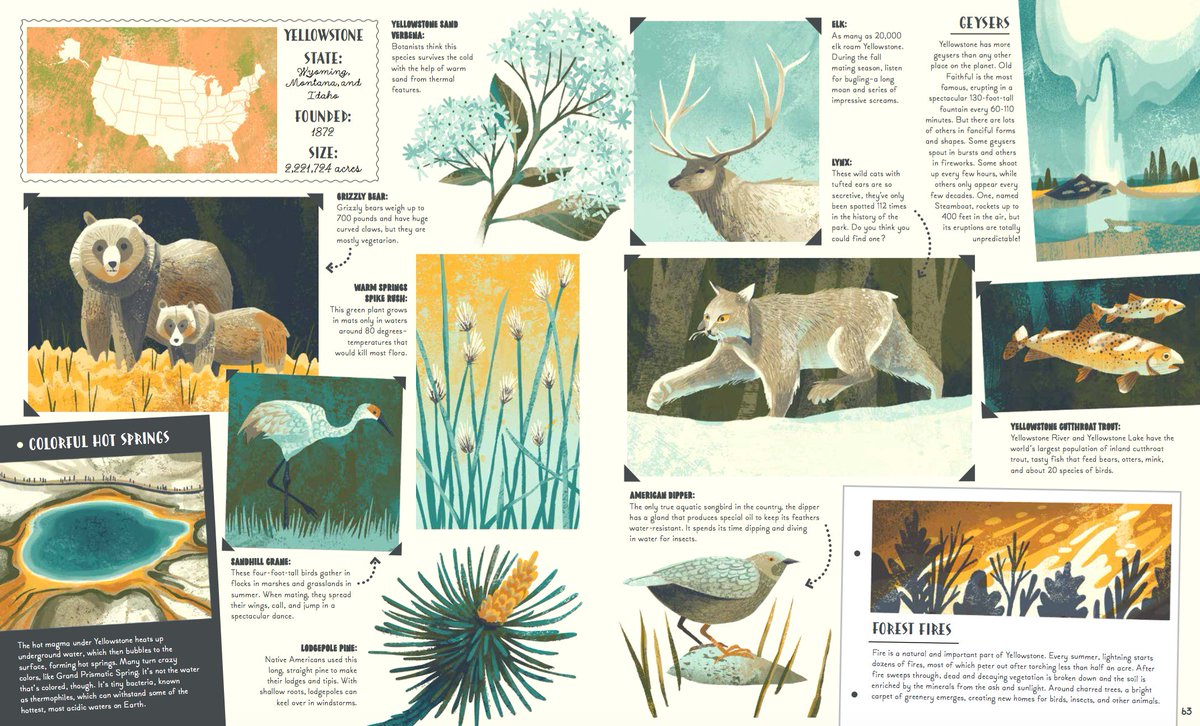
Summary:  This oversized guide to the national parks of the U.S. is divided into seven sections: Alaska, Tropics (Hawaii, the Virgin Islands, and American Samoa), West, Southwest, Rocky Mountains, Central, and East.  Each section starts with a map showing all the parks from that area, then gives more in-depth information (a two-page spread) on a few selected ones. These spreads include the location, date founded, size, and information about various plants and animals that can be found in the park.  Two pages at the end have an A-Z of wildlife: 26 plants and animals with a challenge to find which parks they are from. Also includes information on how to help protect the national parks and an extensive index. 112 pages; grades 1-7.

Pros:  It will take a pretty committed homebody to resist the urge to go exploring after perusing these pages.  The retro illustrations, oversized pages, and fascinating information make every park beckon to road trippers.

Cons:  For such a big book, some of the type is pretty tiny.
If you would like to buy this book on Amazon, click here.

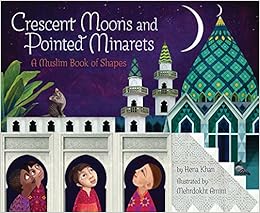
Crescent Moons and Pointed Minarets: A Muslim Book of Shapes by Hena Khan, illustrated by Mehrdokht Amini

Published by Chronicle Books

Image result for crescent moons and pointed minarets

Image result for crescent moons and pointed minarets

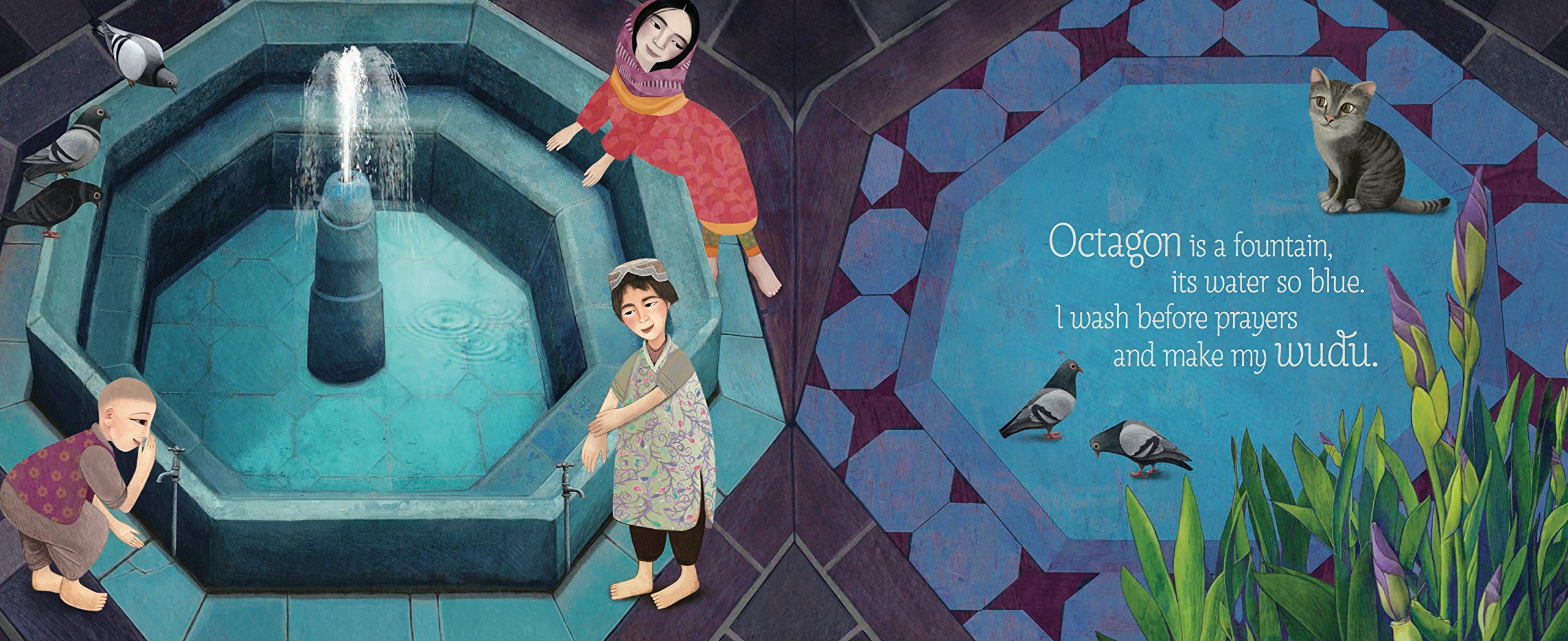
Summary:  In this follow-up to Golden Domes and Silver Lanterns: A Muslim Book of Shapes, the author-illustrator team explores various aspects of Islam by looking at different shapes.  Each page contains a rhyming couplet introducing a shape and a word from Islam (“Circle is a daff, a drum large and round./We fill the air with its festive sound”).  The illustrations portray Muslims from a variety of countries and cultures. Includes a glossary that gives more information about each term from the text and an author’s note describing the importance of shapes and geometry in Islamic art.  32 pages; ages 3-8.

Pros:  An excellent introduction to the Muslim faith, with interesting illustrations that include a wide variety of beautiful geometric patterns.

Cons:  The information is pretty brief; I was curious about many of the terms, but the glossary only provides a sentence or two about each one.

If you would like to buy this book on Amazon, click here.

The Sockeye Mother by Hetxw’ms Gyetxw (Brett David Huson), illustrated by Natasha Donovan

Published by Highwater Press

Image result for sockeye mother brett amazon

Image result for sockeye mother natasha donovan

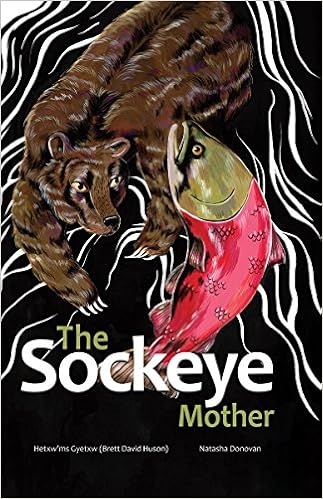
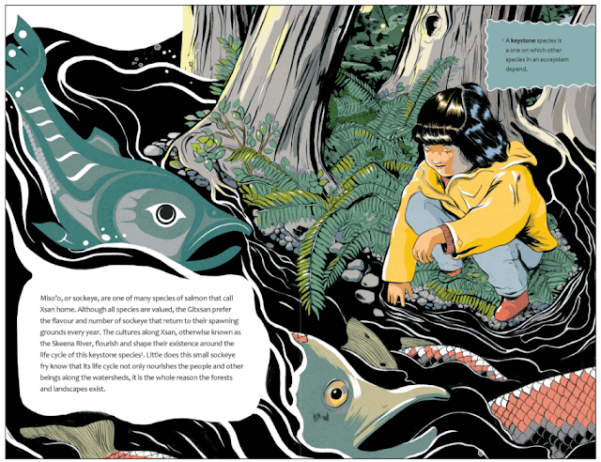
Summary:  The life of a sockeye salmon is described from the time she hatches from an egg until she returns to the same spawning ground two years later to lay her eggs before dying.  The sockeyes’ connection to the Gitxsan, indigenous people of British Columbia, is alluded to, as well as the reverence these people have for the fish that help sustain them.  The balance of nature is also described in a section called “A Replenishing Death”, when the salmon’s body becomes fertilizer for the flora in and around the water. 32 pages; grades 2-6.

Pros:  The author grew up in the Gitxsan Nation and imparts both scientific and cultural information in this brief story of a sockeye salmon.  The close-up illustrations vividly bring to life the different stages of the fish’s life, as well as the people and animals around her.

Cons:  This may not be a book many kids will pick up on their own, but with some guidance, they will find it an interesting resource.

If you would like to buy this book on Amazon, click here.

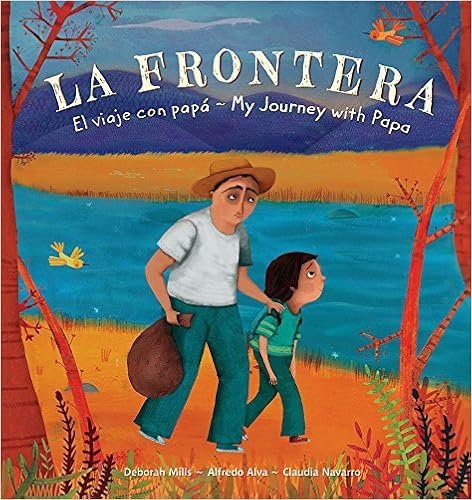
La Frontera/The Border: El Viaje Con Papa/My Journey With Papa by Deborah Mills and Alfredo Alva, illustrated by Claudia Navarro

Published by Barefoot Books

Image result for la frontera deborah mills amazon

Image result for la frontera claudia navarro

Summary:  Alfredo tells the story of his life in Mexico, how his father was no longer able to support the family, and his parents’ decided to send him and papa north to the United States.  A coyote led the two of them to the Rio Grande, gave them an inner tube to float across, then disappeared with their money.  After a grueling week of traveling on foot, they found a shack to sleep in, and a friend of Alfredo’s grandfather picked them up and drove them to Texas.  They settled in to the Embassy, a collection of broken-down vehicles parked behind a factory.  When Alfredo started school, his father gave him a $100 bill to buy a bus ticket back home if he was picked up by immigration officials and sent back to Mexico.  After a difficult transition, Alfredo enjoyed school.  President Reagan granted amnesty to immigrants, and Alfredo and his father were able to start the path to citizenship.  Best of all, four years later, the rest of the family was able to come to the United States.  Includes photos of Alfredo and his family, and extensive information on Alfredo’s story, borders and culture, and immigration.  In English and Spanish.  48 pages; grades 1-5.

Pros:  A grittily realistic story of a family seeking a way out of desperate poverty in the United States.  Although it takes place more than 30 years ago, the story is more relevant than ever to readers today.  Putting a face on “illegal immigrants” will help students have greater empathy for others in a similar situation, and those who have experienced a journey like Alfredo’s will feel a connection to him and his father.

Cons:   Too bad certain government officials in Washington, D.C. aren’t reading this.

If you would like to buy this book on Amazon, click here.


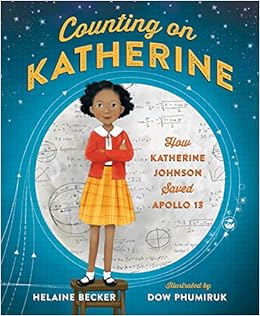
Counting on Katherine: How Katherine Johnson Saved Apollo 13 by Helaine Becker, illustrated by Dow Phumiruk

Published by Henry Holt and Co.

Image result for counting on katherine amazon

Summary:  Katherine Johnson became more widely known with the book and movie Hidden Figures.  This picture book biography covers her life from her childhood in West Virginia through her role in helping to rescue the Apollo 13 crew.  In between, she graduated college at age 18, became a teacher, then moved on to NASA, beginning her career as a “computer”. Her brilliance in math earned her promotions, allowing her to work on Project Mercury, where astronaut John Glenn requested her calculations before flying.  She then moved on to calculating the flight paths for the Apollo missions, which is how she came to be called on when Apollo 13 was in trouble. Her assignment was to calculate a flight path that would bring the astronauts home with the little fuel they had left. She succeeded; the final page shows her gazing into space, a path of calculations connecting her to the moon, with the sentence, “She was now a star herself.”  Includes additional biographical information and sources. 40 pages; grades 1-5.

Pros:  A good overview of Katherine’s life through 1970, with additional information in the back matter.  Both the text and the illustrations emphasize the importance of math in Katherine’s life and work.

Cons:  A timeline would have been useful.

If you would like to buy this book on Amazon, click here.

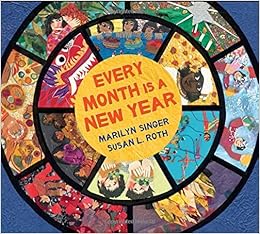
Every Month Is a New Year by Marilyn Singer, illustrated by Susan L. Roth

Published by Lee & Low Books

Image result for every month is a new year singer amazon

Image result for every month is a new year roth

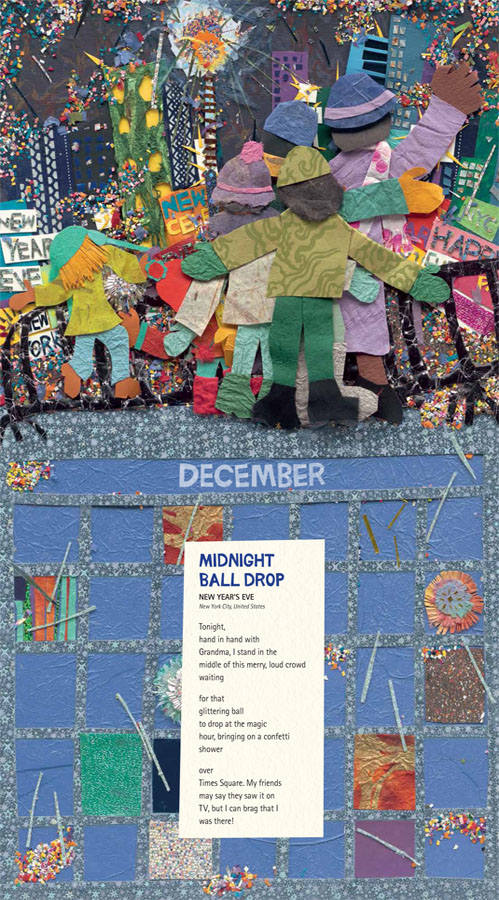
Summary:  Designed like a calendar, opening at the bottom instead of the right side, this book explores how a new year is celebrated in cultures around the world.  Eighteen poems celebrate the new year, beginning with “Midnight Ball Drop” on December 31 in New York City, and wrapping up with “Las Doce Uvas de la Suerte” in Spain the following December 31.  In between, there are visits to Scotland, Russia, China, Iran, Thailand, Jordan, Chile, New Zealand, India, and Ecuador, and celebrations that take place in every month of the year. Includes several pages with additional information about each holiday; a glossary and pronunciation guide; and author’s sources.  48 pages; grades 2-5.

Pros:  A wealth of information about a wide variety of cultures, all in a clever package–a book designed like a calendar.  The collage illustrations add texture and plenty of color to the poems.

Cons:  I would have preferred the information about each holiday to be on the page with the poem rather than all in the back.  The poems made me curious to learn more, and it was a little unwieldy to have to keep flipping back and forth.

If you would like to buy this book on Amazon, click here.

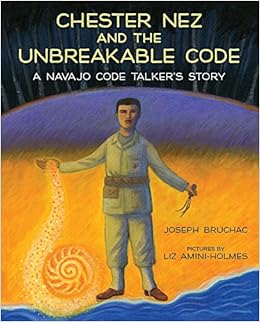
Chester Nez and the Unbreakable Code: A Navajo Code Talker’s Story by Joseph Bruchac, pictures by Liz Amini-Holmes

Published by Albert Whitman and Co.

Image result for chester nez and the unbreakable amazon

Summary:  When 8-year-old Betoli left his home and family in 1929 to go to Fort Defiance School, his hair was cut, his name was changed to Chester, and he was made to speak English.  If he spoke Navajo, his mouth was washed out with soap. He lived a double life through his school years, speaking Navajo and practicing his religion at home, and speaking English and practicing Catholicism at school.  In April 1942, Marine recruiters came to the school looking for Navajo speakers to help them create a code the Japanese couldn’t break. Chester was one of 29 men who created the code, then went to the Pacific to serve as a Navajo Code Talker.  He fought in the war until January 1945, when he came home, sick and traumatized by his military experience. Returning to his Navajo ways helped him to heal, and he went on to become an artist, living to the age of 93. Includes an author’s note, timeline, and the alphabet in the Navajo code.  32 pages; grades 2-5.

Pros:  A fascinating biography of Chester Nez, that includes a history of the Navajo Code Talkers and touches on Indian schools and the trauma they inflicted on the students.

Cons:  I would have liked to have seen a photo of Chester and/or other Code Talkers, so I give you this:

Image result for chester nez

If you would like to buy this book on Amazon, click here.

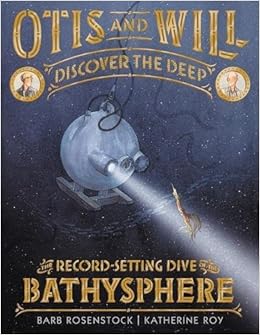
Otis and Will Discover the Deep: The Record-Setting Dive of the Bathysphere by Barb Rosenstock, illustrated by Katherine Roy

Published by Little, Brown Books for Young Readers

Image result for otis and will discover amazon

Image result for otis and will discover the deep

Summary:  Otis Barton loved the ocean from childhood, and dreamed of inventing a contraption that would allow him to explore deep water.  Will Beebe was a scientist who studied the natural world and became enamored of undersea life on a diving trip off the coast of the Galapagos Islands.  The two men decided to build the Bathysphere, a 5,000-pound, four-and-a-half foot enclosure that would descend to the depths and allow them to see what was there.  On May 27, 1930, they made their first trip, aware of the dangers of leaks, explosions, and the wrong amount of oxygen. They succeeded, though, reaching a depth of 800 feet, and being the first to see what the ocean looked like at those depths.  Includes a lengthy author’s note with photos and additional information about both men and the Bathysphere, as well as additional sources. 48 pages; grades K-5.

Pros:  The story is simple and straightforward, yet the author’s note adds enough information to make it a good read for fourth and fifth graders.  The rich illustrations bring the undersea world to life, including a foldout page of Otis and Will’s view at 800 feet.

Cons:  Including a date or two in the main story would have helped place it in historical context.  I had to turn to the author’s note to figure out when it was happening.

If you would like to buy this book on Amazon, click here.

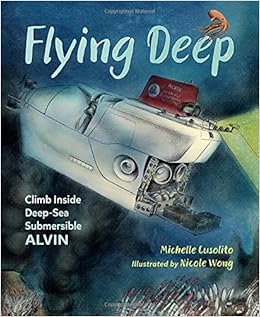
Flying Deep: Climb Inside Deep-Sea Submersible Alvin by Michelle Cusolito, illustrated by Nicole Wong

Published by Charlesbridge

Image result for flying deep climb inside amazon

Summary: This second-person account of life aboard the Alvin (“You stand and seal the sphere, silencing the world outside.”) tells what it’s like to travel two miles beneath the ocean.  The three scientists on board spend their day exploring life in the darkest depths of the sea and collecting specimens to study back in the lab.  At 8:00 a.m., they seal themselves into the small craft, then sink down, not returning until 5:00 p.m. There are dangers, such as getting trapped in a fishing net or anchor chain, and nuisances, like not having a bathroom on board.  But there’s also the reward of studying uncharted territory and making new discoveries about life deep undersea. Includes additional information about the Alvin, a description of the animals that appear in the book, a glossary, and a list of additional resources.  32 pages; grades K-4.

Pros:  A straightforward, you-are-there account of a day in the life of a scientist.  Kids are sure to be intrigued with the idea of traveling so far down in the ocean.  The illustrations do a nice job of capturing the look of the undersea world at different levels as the Alvin travels up and down.

Cons:  My claustrophobia kicked in around page 6.

If you would like to buy this book on Amazon, click here.

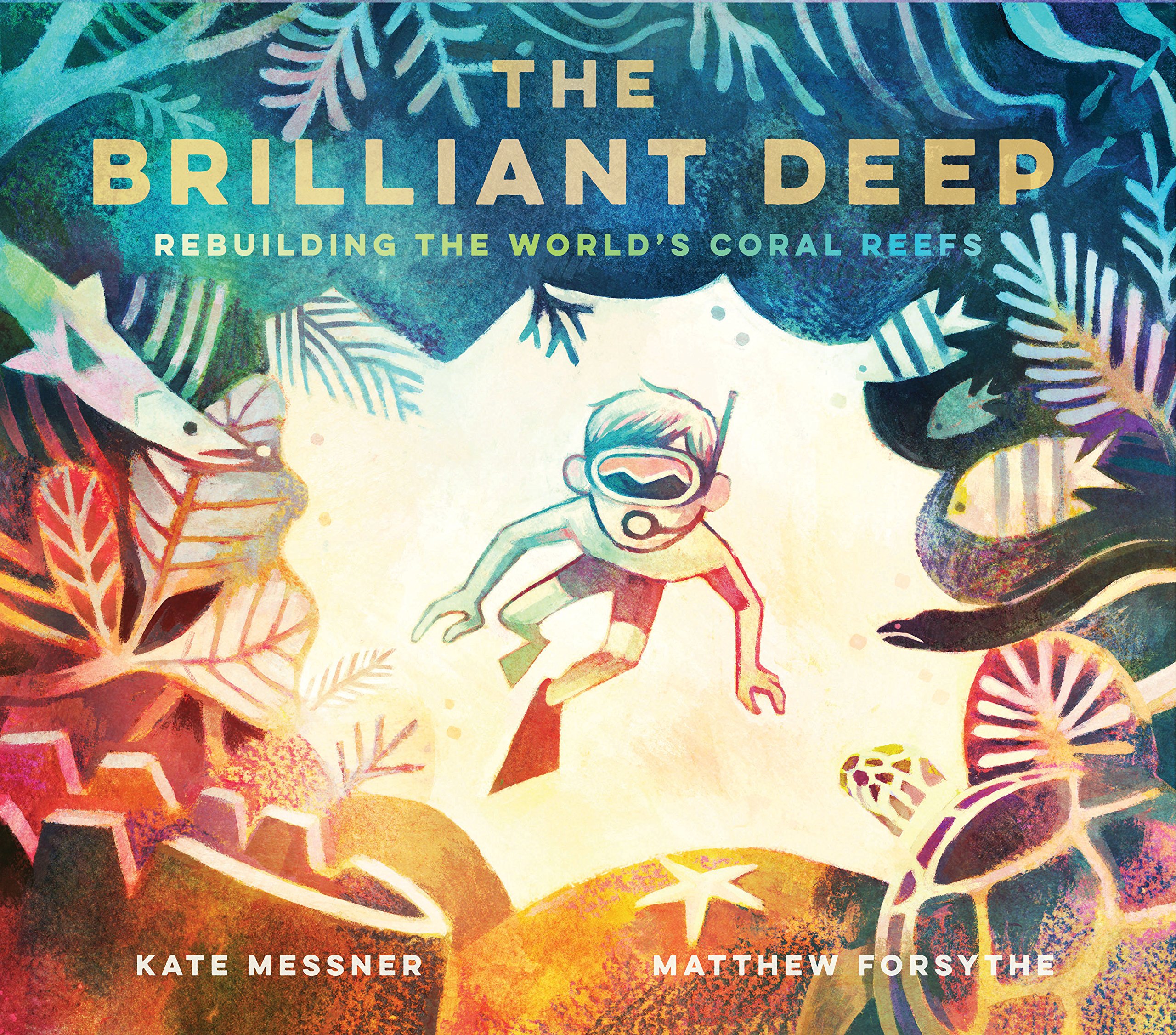
The Brilliant Deep: Rebuilding the World’s Coral Reefs by Kate Messner, illustrated by Matthew Forsythe

Published by Chronicle Books

Image result for brilliant deep kate messner

Image result for brilliant deep kate messner amazon

Summary:  Growing up near Kennedy Space Center, the son of a NASA engineer, Ken Nedimyer was surrounded by science.  Ken loved science, too, but he was more interested in the ocean, enjoying TV shows featuring Jacques Cousteau and exploring the coral reefs off the Florida Keys. As he got older, though, Ken was saddened to see the coral reefs dying.  As an adult, he owned a live rock farm, a business where he sold rocks covered with invertebrates like mollusks and sponges to keep saltwater aquariums healthy. When he found coral growing on his rocks, he experimented with gluing them onto undersea rocks where the coral reefs used to be.  The success of this experiment led to a group called the Coral Restoration Foundation that has restored some of the reefs in the Keys and is now spreading its message around the world. Includes additional resources, vocabulary, and some ways kids can help. 48 pages; grades 1-4.

Pros:  An inspiring story of one person making a big difference in the world, illustrated with beautiful pastels that capture the subtle colors of the coral reefs.

Cons:  Saving the coral reef seemed to be no more difficult than a simple craft project.

If you would like to buy this book on Amazon, click here.