Skywalkers, buffalo hunters, and ribbon dancers: three books about Indigenous Americans

To Walk the Sky: How Iroquois Steelworkers Helped Build Towering Cities by Patricia Morris Buckley, illustrated by E. B. Lewis (Heartdrum, 40 pages, grades 1-5). For more than a century, members of the Mohawk tribe from Canada’s Caughnawaga reserve have worked construction as “skywalkers,” balancing on beams high above the ground. Many of them were working on a bridge across the St. Lawrence River near Quebec City that collapsed in August, 1907, killing 75, including 33 from Caughnawaga. Beginning in the 1920’s, Mohawk skywalkers from New York and Canada traveled to New York City to build skyscrapers, including the World Trade Center. After the towers’ destruction on September 11, 2001, skywalkers helped dismantle broken beams and later were an important part of building One World Trade Center. Today, skywalkers continue their work across North America, including Native women who have entered the profession. Includes an author’s note about her family’s connection to the story, additional information about the Quebec bridge collapse and the Kahnawà:ke reserve (formerly Caughnawaga), a glossary, and a list of some of the buildings constructed by skywalkers.

Kids will be fascinated by the story of these skilled, courageous workers who have helped build some of the most famous structures in North America. The Mohawks originally worked as unskilled laborers in exchange for some of their reserve land, but soon proved their fearless skill as skywalkers and have continued the tradition for over a century. Look for YouTube clips to supplement the book with heart-pounding visuals.

The Gift of the Great Buffalo by Carole Lindstrom, illustrated by Aly McKnight (Bloomsbury Children’s Books, 40 pages, grades K-3). Rose is excited to be at the semi-annual Métis buffalo hunt. Pa is a captain for the first time, in command of ten other hunters. After several days of scouting, no buffalo have been seen, and Rose hears Pa saying they’re scarce because of the settlers and their iron horse. Rose is sure she could find the herd, but Pa says she’s too young to help. But Rose is determined, and with the help of a wolf skin, she finds the buffalo, and the men hunt what they need for their people. At the end of the day, she tells Pa she wishes he would take her with him on the next hunt. “I just might,” he replies. Includes an author’s note relating how she enjoyed the Laura Ingalls Wilder books but felt alienated by their portrayal of Native Americans as savages, and how that led her to write this story about the same time and place; also includes additional information about the buffalo hunt and a bibliography.

This is a fascinating parallel story to Laura Ingalls Wilder’s books. Rose has Laura’s same independent spirit and desire to help her family, and she even calls her parents Ma and Pa. It’s a much-needed portrayal of the indigenous people of the plains who are often marginalized in the Little House books.

Raven’s Ribbons by Tasha Spillett, illustrated by Daniel Ramirez (Little, Brown Books for Young Readers, 32 pages, ages 4-8). Raven loves participating in round dances with his family and friends, and his favorite part is watching the ribbon skirts. His grandmother is famous for making these colorful garments that are created with just the right ribbons for each dancer. When Raven asks if he can have a ribbon skirt, Grandma says, “I’ve lived for a long time, Nosesim, and have never seen a boy in a ribbon skirt.” While Raven sleeps, however, she works late into the night, and by morning there is a beautiful ribbon skirt that looks just like a rainbow. “I’ve lived for a long time, Nosesim,” she tells him, “And I’m lucky to see beautiful things that I’ve never seen before.” Includes notes from the author and the illustrator with additional information about the Round Dance and Two-Spirit people.

This simple story celebrates Indigenous dancing as well as offering a gentle, empowering message about being yourself and affirming gender differences. I loved how Grandmother was able to acknowledge both that a boy wearing a ribbon skirt was new to her and that there can be beauty in doing things in a new way.

Black History for younger kids

Greatness by Regis and Kahran Bethencourt (Little Brown Books for Young Readers, 40 pages, ages 4-8). When Nasir and Imani visit Grandma, she pulls out a special photo album handed down to her from her mother. Inside are photos of great people from Black history. The kids get out dress-up clothes and pretend to be Bessie Coleman, a Tuskegee Airmen, and business people from Black Wall Street. Then some magic happens, and they are pulled into the album, where they become the famous people in the photos, like Katherine Johnson, Barack Obama, Colin Kaepernick, and Ruby Bridges. For Grandma, though, nothing compares to the greatness she saw in the two babies pictured at the end–and after spending so much time imagining themselves among greatness, Imani and Nasir feel like nothing is impossible. Includes some photos and additional information about all the people from the photo album.

Every year, I gather books for our big Black History read-aloud, where community members come to our school and read to all the classes. It can be challenging to find books for the younger grades, and this one would make a great introduction to a wide variety of historical figures, encouraging kids to think about their own dreams. The photos of the kids dressed up are fun and inspiring, although I wish there had been photographs of all the famous people at the end.

Sharing the Dream by Shelia P. Moses, illustrated by Keith Mallett (Nancy Paulsen Books, 32 pages, ages 4-8). Agnes is excited to be on a bus with her parents, traveling from Birmingham, Alabama to Washington, D.C. in August, 1963 to attend the March on Washington. There’s a stop at Frederick Douglass’s house, where Agnes is amazed to see Black and white people drinking from the same water fountain. Then it’s on to the March, where Agnes sits on Daddy’s shoulders to hear John Lewis and Josephine Baker speak, and Mahalia Jackson sing. Finally, Dr. Martin Luther King, Jr. steps up to the podium. “Tell ’em about the dream,” Agnes hears Mahalia Jackson say, and Dr. King delivers his now-famous words about his dream. Afterwards, Agnes sees Black and white people sitting side by side, soaking their tired feet in the reflecting pool, before she and her parents get back on the bus heading home to Birmingham. Includes an author’s note and thumbnail profiles of six people at the March who are mentioned in the story.

I’m so happy to see this book describing the 1963 March on Washington from a young child’s perspective. Agnes is probably about six years old, telling about events in a way that primary students will understand. There’s plenty of information packed into her story, though, with an introduction to such celebrities of the time as Lena Horne, Sidney Poitier, and Jackie Robinson. The straightforward story and illustrations make this a perfect introduction to this important event from Black history.

O Is for Owl. And Octopus.

To See an Owl by Matthew Cordell (Random House Studio, 40 pages, ages 4-8). Janie is a birder whose ultimate quest is to see an owl. Her patient mother (“Mama doesn’t look for birds the way I do”) takes Janie on trips to meadows and forests where she can look for birds. This year, Janie has a teacher who shares her passion. Mr. Koji shows the class pictures from his birding expeditions and maps he made as a child and tells the class, “To see an owl is magic.” When Janie shares her owl drawings, journal, and maps with the class, Mr. Koji is impressed by her determination and tells her where he’s recently seen a pair of great horned owls. Back home, Janie convinces her mother to take her on one more outing, and when they get to the place Mr. Koji described…there are the owls. Magic.

Caldecott Medalist Matthew Cordell clearly shares Janie’s passion for owls (read about it on the book jacket’s back flap), and he conveys that passion, as well as the persistence needed and the amazing rewards that come from finally seeing that owl. His illustrations capture the beauty and majesty of nature, and show readers how to use art to record their outdoor adventures like Janie does. As someone who shares Mama’s indifference to birding, I admired her for being willing to keep taking her daughter out on various excursions. This book would go well with Owl Moon by Jane Yolen or Night Owl Night by Susan Edwards Richmond

Octopus Ocean: Geniuses of the Deep by Mark Leiren-Young (Orca Book Publishers, 104 pages, grades 4-7). The author introduces octopuses with the story of his first meeting with an octopus named Storm at the Salish Sea Centre in British Columbia. From there, he moves on to five chapters describing many aspects of octopuses’ lives: anatomy, reproduction, intelligence, food, defenses, and homes in the ocean. The second half of the book includes stories of amazing “octopus celebrities” who carried out elaborate escapes or predicted the outcome of soccer games with amazing accuracy. There’s a chapter about the effect of the documentary The Octopus Teacher on educating the public on this amazing animal, which has led to a decrease in human consumption of octopus meat. The final chapter gives readers suggestions for helping octopuses survive in the wild and keeping oceans cleaner and healthier. Includes a glossary, an index, and a list of resources.

I learned a ton about the octopus from reading this book, and anyone doing research will not have to go much further to get everything they need on the topic. I found the second half of the book a bit more engaging than the first half, particularly the chapter on octopus celebrities. The book is pretty text-heavy, and It would be nice to have a companion picture book, which I think would find a wider audience.

Blinded with science

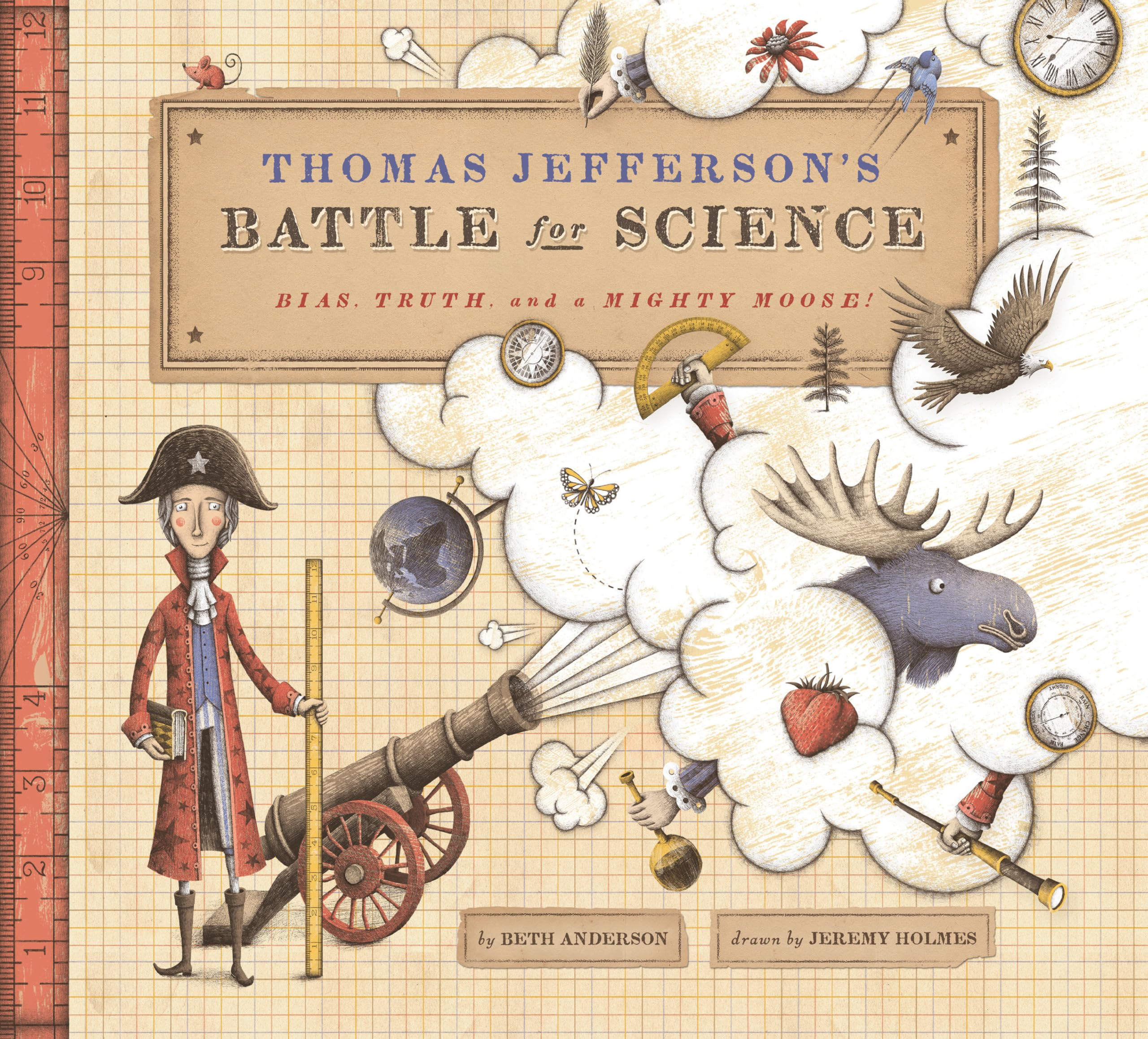
Thomas Jefferson’s Battle for Science: Bias, Truth, and a Mighty Moose! by Beth Anderson, illustrated by Jeremy Holmes (Calkins Creek, 48 pages, grades 2-5). Thomas Jefferson loved science, and one of his favorite books was Count Georges-Louis Leclerc de Buffon’s encyclopedia of the natural world. But he was incensed by Buffon’s descriptions of American wildlife, comparing it unfavorably to the animals found in Europe. Thomas decided to measure as many American animals as he could, and recruited friends from different parts of the country to assist him, eventually putting together his own book that he showed Buffon when he became minister to France. So committed to the truth about American fauna was Jefferson, that he actually had friends hunt a moose and ship it to France (you can read more about that here). When Buffon saw (and smelled) the enormous moose, he promised to revise his book, but unfortunately passed away a few months later. Jefferson’s book became well-known, and people started sending him information and artifacts to add to it, helping him to promote the idea that the New World was not inferior to the old one…just measurably different. Includes an author’s note, a list of five steps to use for a scientific inquiry process, a timeline of Jefferson’s life, and a bibliography.

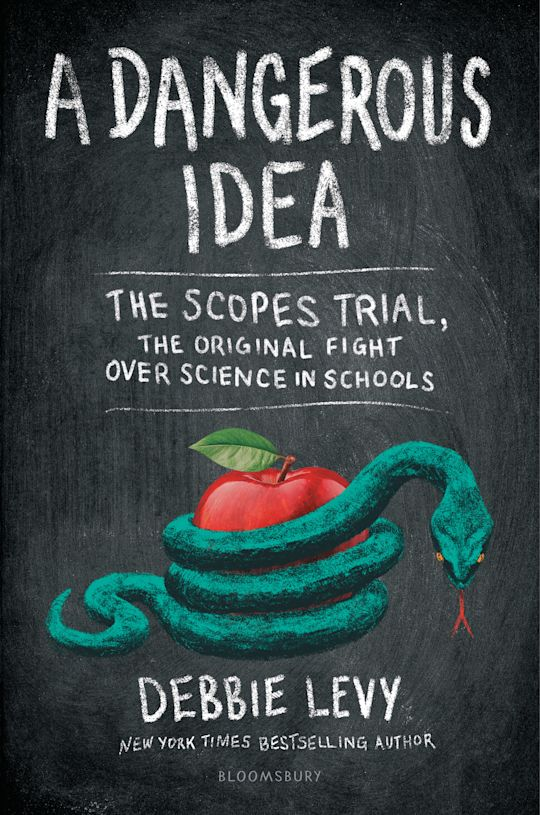
A Dangerous Idea: The Scopes Trial, the Original Fight Over Science in Schools by Debbie Levy (Bloomsbury Children’s Books, 288 pages, grades 6 and up). This account of the 1925 trial of John Scopes, a young high school teacher accused of teaching evolution, gives background information on evolution, the law that banned teaching it in Tennessee, and the two great orators, Clarence Darrow and William Jennings Bryan, who served as prosecuting and defense attorneys. The trial itself is described in detail, capturing both the serious debates about religion and the circus-like atmosphere. The story concludes with information about Susan Epperson, a biology teacher who challenged a similar law in Arkansas, leading to a 1968 Supreme Court ruling striking down the law and allowing evolution to be taught in high schools. There’s also information about the play and movie Inherit the Wind, which took some pretty big liberties with the truth about the Scopes trial. Includes an epilogue tying the case to current events, a detailed timeline from 1831-2005, and an extensive bibliography, index, and list of sources notes.

These books could not be more timely with their reminders that attacking science is a tale as old as time. Both are told with a lighthearted, humorous tone, but the back matter shows how extensively researched they are. I enjoyed the Jefferson illustrations that resemble a naturalist’s notebook, with lots of cartoon bubbles and captions. The authors’ notes will give readers plenty to think about, and I thought Debbie Levy did an especially good job of connecting the events of the Scopes trial to current news stories. Beth Anderson delves into the scientific method and explains how Jefferson made mistakes, too, lest any of us think we have any sort of monopoly on the truth.

Poetry to celebrate Black History

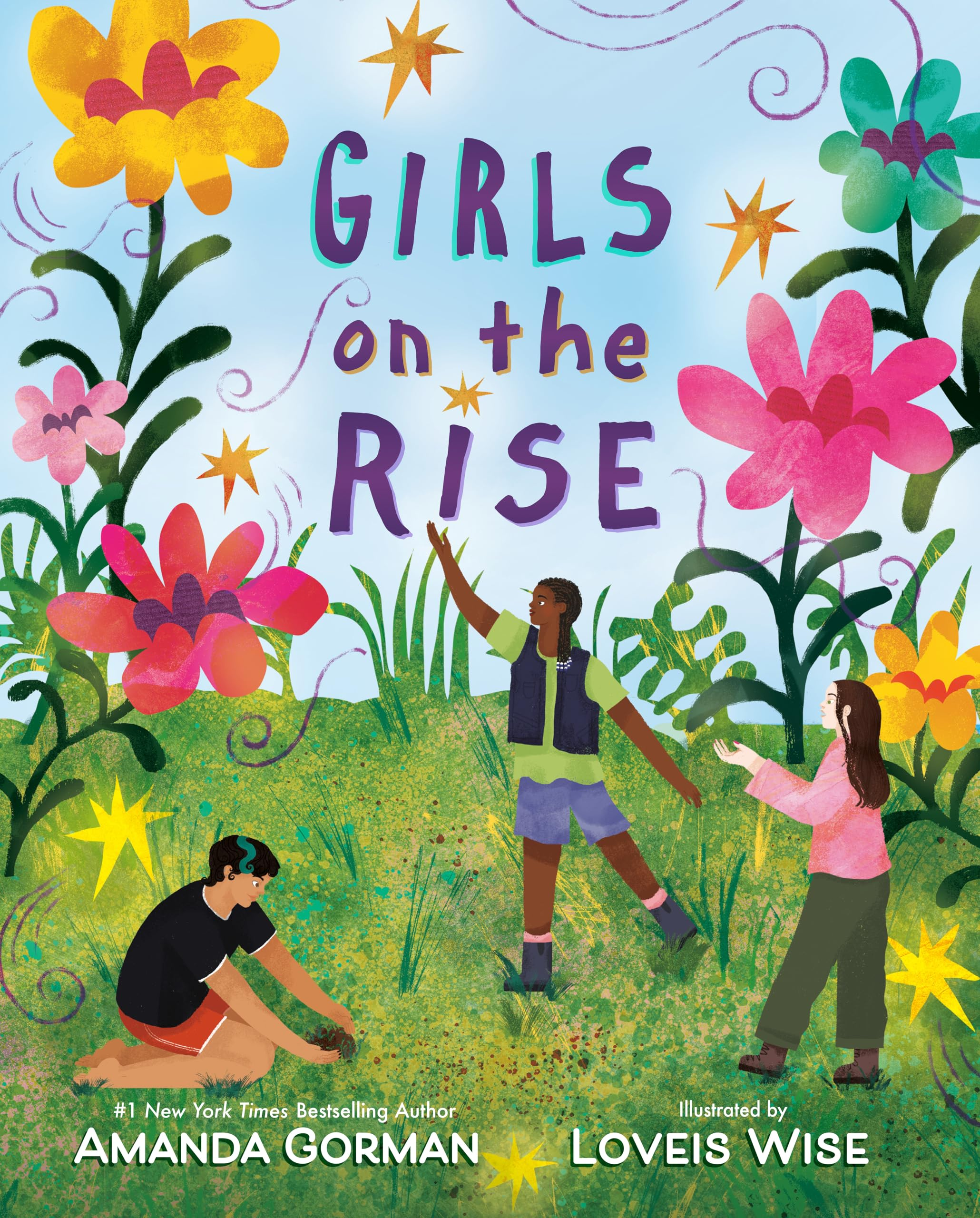
Girls on the Rise by Amanda Gorman, illustrated by Loveis Wise (Viking Books for Young Readers, 32 pages, ages 5-9). “We are girls on the rise./Today, everyone’s eyes/Are on us as we make waves/Pave the way, and save the day. Today, we finally have a say.” With simple rhymes and lush illustrations, this book celebrates girls of all types, encouraging them to support and empower each other through difficult times. Girls are celebrated for being strong and brave enough to right wrongs in the world. “Because when one girl is on the rise,/It means everyone else is, too.”

Dream a Dress, Dream a Poem: Dressmaker and Poet Myra Viola Wilds by Nancy Johnson James, illustrated by Diana Ejaita (Harry N. Abrams, 32 pages, ages 5-8). This book-length poem encourages readers to dream, citing the dreams of Myra Viola Wilds, a Black woman who grew up in Kentucky before moving to the city to get an education. She became an accomplished dressmaker until the close work damaged her eyes. Myra didn’t give up on her creative dreams, though, turning from sewing to poetry and publishing a book of her poems in 1915. The back matter includes additional biographical information and a photo, and the book begins and ends with two of Myra’s poems.

Both of these poetry books celebrate following dreams and lifting each other up. Amanda Gorman’s work speaks to these themes in general terms, while Nancy Johnson James offers a story of a woman who succeeded despite multiple hardships and was supported by the Black community that helped publish her work.

Both of these books would be excellent for celebrating Black History Month; if you’re looking for more resources, I have recently updated my Black History book list.

Get ready for Presidents’ Day

The Painter and the President: Gilbert Stuart’s Brush with George Washington by Sarah Albee, illustrated by Stacy Innerst (Calkins Creek, 40 pages, grades 2-5). George Washington was a man of action who preferred sitting astride a horse to posing for a portrait. Gilbert Stuart was a portrait painter with a knack for capturing his subjects while making the process fun for them. But Washington had him stumped. Not only did he show up with his face swollen from his ill-fitting false teeth, but he refused to engage with Stuart in any of the topics the painter tried desperately to introduce. Finally, he noticed Washington gazing happily at a horse out the window and started talking about horse racing. It worked! He invited George to bring family and friends to their next appointment, and that worked too. Today we see the happy (or not) results of Gilbert Stuart’s hard work every time we look at a dollar bill. Includes replicas of all six presidential portraits that Stuart completed, a time line, additional information about Washington’s teeth, how the painting was used to create the engraving for the dollar bill, and a bibliography.

This lighthearted introduction to Gilbert Stuart’s portraits would make a great addition to an art class. GW may not come off as a barrel of laughs, but readers will wince sympathetically when learning of his dental issues (although there’s no mention of the fact that he bought human teeth from enslaved people). Full disclosure, this book was published in 2024, but I thought it warranted a place in the Presidents’ Day post.

Hiding In Plain Sight: Kate Warne and the Race to Save Abraham Lincoln by Beth Anderson, illustrated by Sally Wern Comport (Calkins Creek, 48 pages, grades 2-5). When newly-elected U.S. President Abraham Lincoln traveled from his home in Illinois to Washington, DC in February, 1861, rumors of assassination were swirling. A plot was uncovered in Baltimore, and members of Allan Pinkerton’s detective agency took immediate steps to foil it. Central to their work was Kate Warne, the first female detective in the agency, whose undercover work as a lady from Alabama helped discover the Baltimore plot. Later, she posed as Lincoln’s sister, helping her “sick brother” board a train in Philadelphia that traveled in secret through Baltimore and on to Washington. When the supposed inaugural train arrived, word got out that Lincoln had already arrived, and Kate Warne faded into the cheering crowd, ready to take on her next assignment. Includes a six-page afterword with photos and additional information about Lincoln and Kate Warne, as well as a bibliography and illustrator’s note.

This exciting detective story would make an excellent read-aloud for both Presidents’ Day and Women’s History Month, with the mysterious Kate Warne playing a central role in preventing what could have been a national tragedy. The illustrations resemble period photographs and the whole book has kind of a scrapbook feel (the illustrator describes the scrapbooks that inspired her work in the note at the end). The additional information in the afterword provides some thought-provoking ideas and observations that could lead to some interesting discussions. Considering how little we know about Warne, there are quite a few children’s books about her: How Kate Warne Saved President Lincoln, The Eye That Never Sleeps: How Detective Pinkerton Saved President Lincoln, and the fictional The Detective’s Assistant.

George Washington’s Spectacular Spectacles: The Glasses That Saved America by Selene Castrovilla, illustrated by Jenn Harney (Calkins Creek, 32 pages, grades 2-5). By the end of the American Revolution, George Washington needed glasses, but he refused to let anyone see him wearing them. When he needed to read something, he would go into his office and slam the door. Everyone thought he was grouchy, but in March of 1783, it was his army officers who were the grouchy ones, after not getting paid for all the years of the war. They were threatening to storm Congress and demand their pay. Washington consulted a congressman about the issue, who wrote a reassuring letter that George thought would appease the officers. But when it came time to read it to them, he realized he needed his spectacles. He finally put them on, and his men, realizing what their beloved leader had sacrificed during the years of war, and agreed to wait on their pay. Includes additional information about this incident, an author’s note about her research and creative process in writing this story, and a bibliography.

Truth really is stranger than fiction, I thought as I read this quirky tale which ends unexpectedly with the army officers wiping away tears as they agree to continue to work without pay. All because George Washington put on his glasses, which, according to the back matter, is exactly how it happened. It’s an interesting story that will undoubtedly prompt some discussion, which could be seen as an example of Washington’s inspirational leadership or what happens when you’re willing to be vulnerable in front of your employees, but personally it kind of made me question the wisdom of those army officers.

Beloved authors

Go Tell It: How James Baldwin Became a Writer by Quartez Harris, illustrated by Gordon C. James (Little, Brown Books for Young Readers, 40 pages, grades 2-5). Books were a lifeline to young James Baldwin, growing up in Depression-era Harlem with a mother, stepfather, and eight siblings. Reading and writing helped him escape from his strict preacher stepfather and the racism he encountered all around him, particularly from the police. Words led Jimmy to preach his own sermons about love and acceptance, and they gained him admission to a prestigious high school, where he got to explore literature, film, and theater. The story follows Jimmy to Paris and ends with the publication of Go Tell It on the Mountain. Includes additional information about Baldwin, notes from the author and illustrator, and a list of sources.

And She Was Loved: Toni Morrison’s Life In Stories by Andrea Davis Pinkney, illustrated by Daniel Mintner (Little, Brown Books for Young Readers, 48 pages, grades 2-5). The author’s note begins, “This narrative is a love letter to an outspoken sparrow who transformed lives through her storytelling.” Her ode to Toni Morrison weaves biographical information into a celebration of the writer’s life and work. The phrase “And she was loved” appears in many illustrations, as the text describes the love given to her by her parents, her children, and her readers, in a narrative that moves from her childhood in Ohio to her college days at Howard University to her life as an editor, writer, and mother to a celebrated winner of the Pulitzer and Nobel Prizes and the Presidential Medal. In addition to the author’s note, the back matter includes an illustrator’s note, a photo of Morrison, a timeline, a list of selected works (including children’s books), and a list of sources.

Both of these biographies celebrate the lives and contributions of Black authors and offer inspiration to young writers. The illustrations in the books are striking, both by Caldecott honorees, with the potential for more awards consideration. These are books that may need a fair amount of introduction, as kids are unlikely to be familiar with either author.

Celebrating teacher-activists

Ruby Bridges: A Talk With My Teacher by Ruby Bridges, illustrated by Trudy Tran (Orchard Books, 48 pages, grades K-3). Ruby tells the story of her second-grade year, returning to the school where she and her teacher Mrs. Henry spent first grade alone in their classroom. Ruby is happy to be getting a ride with a neighbor instead of U.S. Marshals, not facing angry crowds at the front door, and seeing other kids in the school, some of whom look like her. But she’s heartbroken to learn that Mrs. Henry is no longer teaching there. The story then moves forward to 1995, when a book about Ruby has just been published. She’s excited to learn that Mrs. Henry has seen the book, which leads to a reunion. She finds out that Mrs. Henry left to have a baby, and the two of them reminisce about incidents only they remember, like when Ruby stashed her uneaten sandwiches in a supply cabinet until a mouse infestation led Mrs. Henry to discover them. The book ends with the question, “Teachers–who would we be without them?” and the author’s note celebrates teachers and encourages kids to think of special memories with their own teachers. A glossary lists 25 well-known teachers with a sentence or two about each one.

Early elementary students will relate to Ruby’s experiences and enjoy recalling their own teacher memories. Ruby’s tone is warm and relatable for kids without talking down to them. An introduction to her life would make the story more interesting, and I was surprised that the title of her 1995 book (I assume it’s The Story of Ruby Bridges) doesn’t appear anywhere in this book, including in the author information.

Make a Pretty Sound: A Story of Ella Jenkins–The First Lady of Children’s Music by Traci N. Todd, illustrated by Eleanor Davis (Chronicle Books, 60 pages, grades 1-4). Ella Jenkins grew up in a segregated Chicago neighborhood, surrounded by a loving family and all kinds of music and rhythms. As an adult she moved to San Francisco, where she became a teacher, community organizer, and civil rights activist. Ella particularly loved sharing music with children, using it to introduce them to cultures around the world. The story of her full 100-year life (she died on November 9, 2024) features cameos by a number of celebrities such as Cab Calloway, Billie Holiday, Dr. Martin Luther King, Jr., and Mister Rogers. Includes three pages of additional information, a timeline, and a bibliography.

I feel for Traci N. Todd trying to contain Ella Jenkins’s long, eventful, and fascinating life in a single picture book. She does an excellent job, using text with plenty of rhythm, reflecting the music that was always an important part of Ella’s life. The back matter paints an even more complete picture of that life, and it could be fun to supplement the book with recordings or YouTube videos of some of Ella’s performances. I wish that Bernadelle Richter, Ella’s partner and manager for more than 60 years, had made it into the story, instead of only getting a mention on the timeline.

Five favorite nonfiction books

The Soldier’s Friend: Walt Whitman’s Extraordinary Service in the American Civil War by Gary Golio, illustrated by E. B. Lewis. I surprised myself by choosing this book as one of my favorites for the year, but as I looked over the nonfiction books I read in 2024, I realized the story of Walt Whitman’s services during the dark years of the Civil War had really stuck with me. His simple acts of kindness to all, never taking sides even when the nation was deeply divided, is an inspiration.

Evidence! How Dr. John Snow Solved the Mystery of Cholera by Deborah Hopkinson, illustrated by Nik Henderson. This exciting medical mystery expertly incorporates details about cholera and nineteenth-century London as it relates, step by step, the story of Dr. John Snow’s careful research and perseverance that put a stop to a cholera outbreak in 1854. I’m hoping this will be considered for a Sibert award.

Shift Happens: The History of Labor in the United States by J. Albert Mann. I learned so much from reading this book about labor struggles from the earliest days of American history. It’s easy to get discouraged by the patterns of wealthy corporations oppressing poor working people that have occurred over and over to the present day, but there are plenty of inspiring stories as well, and it’s all told with an irreverent humor that teen readers will appreciate.

This Book Will Make You an Artist by Ruth Millington, illustrated by Ellen Surrey. As a kid, I would have loved to have taken a class based on this book (actually, I still would enjoy such a class) which combines profiles of 25 different artists with step-by-step instructions to create projects based on their art.

Kindred Spirits: Shilombish Ittibachvffa by Leslie Stall Widener, illustrated by Johnson Yazzie. The story of the connection between the Choctaw and Irish people, forged during the potato famine in the 1800’s and strengthened during the Covid pandemic, is very moving and was the perfect coda to my exploration of indigenous communities in New England this summer.

Nonfiction that will make you question humanity

Glenn Burke, Game Changer: The Man Who Invented the High Five by Phil Bildner, illustrated by Daniel J. O’Brien (Farrar, Straus, and Giroux, 32 pages, grades 2-5). As a kid, Glenn Burke was a five-tool talent: fast runner, powerful and accurate hitter, good catcher, and strong pitcher. So it was no surprise that he got called up to play for the Los Angeles Dodgers. He made a name for himself there, and was an enthusiastic teammate, greeting runners at home plate by putting up his right hand, which the player would then smack. The high-fiving team made it to the World Series in 1977, but the next year Glenn was traded to the Oakland Athletics, a team at the bottom of the baseball standing. Why? Glenn Burke was gay, and homophobic manager Tommy Lasorda didn’t want him on the team. The trade led Glenn to quit baseball altogether. He enjoyed success playing in the San Francisco Gay Softball League and winning gold in the Gay Olympics, but struggled with drug use and unemployment, shattering his leg in a car accident and dying of AIDS at the age of 42. He lived long enough to see his high five become a universal greeting, but not to see the open acceptance of gay players in the MLB. Includes an author’s note, bibliography, and timeline.

Phil Bildner writes in the author’s note how he originally envisioned Glenn Burke’s story as a picture book, but his editor wanted a middle grade novel, which became A High Five for Glenn Burke, published in 2020. While the origin story of the high five may seem like a perfect choice for younger readers, the MLB’s homophobia and Burke’s death from AIDS may make this a better choice for older kids. It’s a moving and well-told story, ending on a note that is both sad and hopeful.

It Happened in Salem by Jonah Winter, illustrated by Brad Holland (Creative Editions, 32 pages, grades 6 and up). “You know what I’m talking about. You start whispering things about a person–hurtful things you know will get that person in trouble, untrue things you may have convinced yourself are actually true.” This second-person introduction to the Salem Witch Trials situates readers right in the middle of the action. The text is spare, relating the basic events and facts, and illustrated with haunting paintings of people in stocks and hanging from nooses. An author’s note gives more information, including the fact that it took 325 years–until 2017–for Salem to put up a plaque commemorating the individuals who were executed.

I found this book disturbing from the cover to the author’s note, which seems appropriate for the subject. You can generally count on Jonah Winter to put a unique and relevant spin on history that will have readers thinking about their own lives. I saw recommendations for this book starting in fourth grade, but I personally would not get this for an elementary library. It would be an excellent supplement for middle school or high school students learning about this period of American history, no doubt initiating some interesting conversations on gossip and bullying. I wish there had been some additional resources given at the end.