Surviving Middle School: Navigating the Halls, Riding the Social Roller Coaster, and Unmasking the Real You by Luke Reynolds

Published by Aladdin/Beyond Words 

Summary:  Seventh grade English teacher Luke Reynolds draws on his experience as a former middle school student and current middle school teacher to give kids some words of wisdom on topics like peer pressure, grades, parents, and romance.  Each chapter starts with a story about one of Reynolds’ students, goes on to give advice about a particular topic, and concludes with an exercise, usually written, to help kids come up with their own answers about that issue.  A recommended resources chapter at the end includes lists of books and movies to inspire and instruct the middle school crowd.  192 pages; grades 5-8.

Pros:  I’d like to sit in on Mr. Reynolds’ class; he seems funny, caring, and insightful about the human condition.  While he speaks in a language kids will relate to, he also clearly remains the adult, empathizing with middle schoolers while helping them to understand themselves and those around them.

Cons:  I was expecting a quick read, with lots of side bars and comics; instead this is pretty text-heavy, which may not appeal to the intended audience.
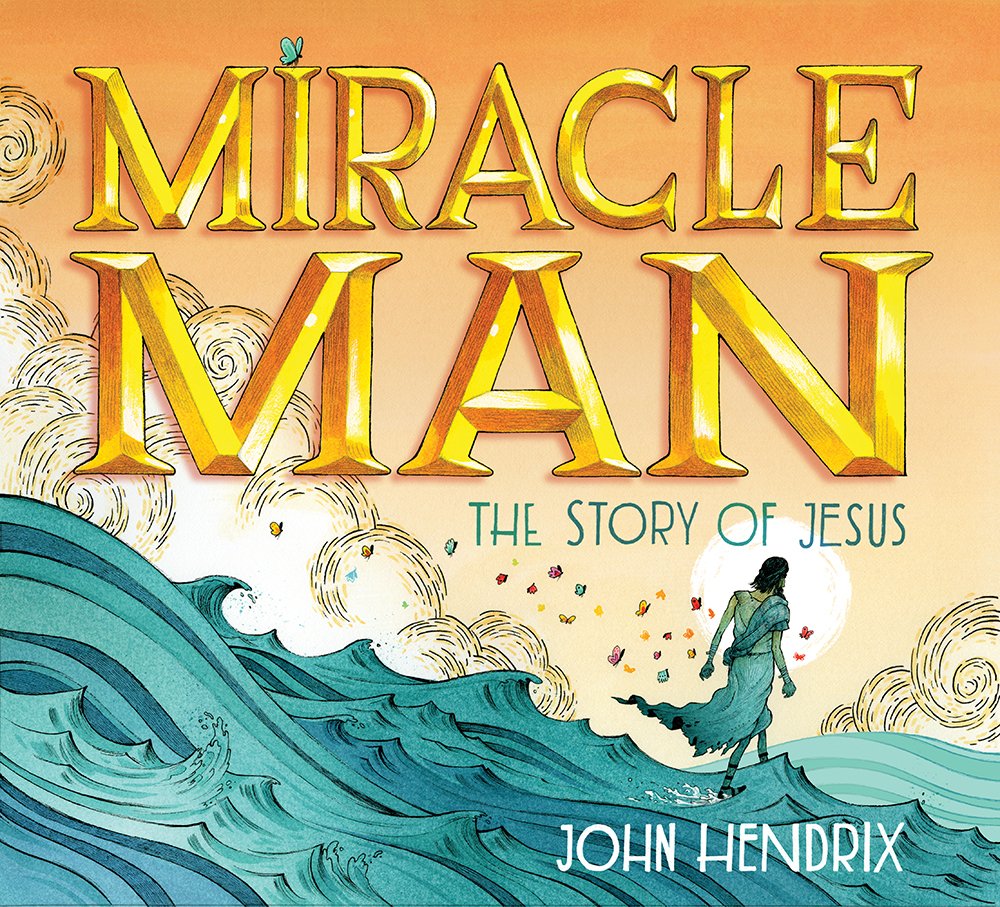
Miracle Man: The Story of Jesus by John Hendrix

Published by Abrams Books for Young Readers

Amazon.com: Miracle Man: The Story of Jesus (9781613758717): John ...


Summary:  The story of Jesus’ life is told from a Christian perspective, with an emphasis on miracles he performed.  The narrative begins with him calling his disciples from among the fishermen, then continues with various healings, Jesus calming the waves and walking on the water, and the miracle of the loaves and fishes.  His last supper is recounted, followed by his crucifixion, which is alluded to, but not shown in the pictures (something this reader, who was traumatized as a child by a book called The Easter Story for Children, appreciated).  The resurrection is covered in two pages, one showing a wrapped body lying in a tomb, the next showing Jesus in white, standing outside the tomb, and the sentence, “But God’s Son, Jesus, the Miracle Man, had in store one last glorious miracle…”  An author’s note explains how he came to create this book, and the process of choosing from among the stories of Jesus in the Bible, which necessarily left out some of the story.  40 pages; grades K-4.

Pros:  The beautifully designed illustrations, incorporating some of Jesus’ words into the pictures, are worthy of Caldecott consideration (would a group of 21st-century librarians recognize a book that is clearly written from a Christian perspective?).  The simple text is a good introduction to Jesus’ miracles and many aspects of his life.

Cons:  As noted by the author, this is a selection of stories, and some key parts of Jesus’ life (birth, John the Baptist, Sermon on the Mount, Mary Magdalene) are excluded.

Circle by Jeannie Baker

Published by Candlewick Press 

Summary:  Before the title page, a boy lies on his bed, wishing he could fly.  A couple pages later, he’s in wheelchair on the beach, watching a bird called a godwit flying with his flock.  They’re heading north, on the longest migration any animal in the world makes, traveling 7,000 miles from Australia to Alaska.  It’s a perilous journey, but the godwit finally makes it.  He builds a nest and finds a mate.  Together they have four babies, only one of which survives to make the return trip with his parents.  The flock flies for nine days and nights without stopping, arriving back at the beach where the story started, and where the boy has now abandoned a set of crutches to run along the beach.  An author’s note tells more about godwits and some of the threats to their survival.  48 pages; grades K-3.

Pros:  Beautiful collage illustrations capture the various environments inhabited by this remarkable bird.

Cons:  A hungry fox eats the other three chicks.

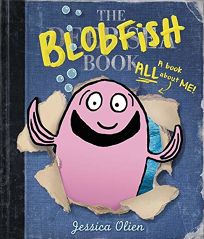
The Blobfish Book by Jessica Olien

Published by Balzer + Bray 

Summary:  Blobfish takes a book called The Deep Sea Book and turns it into The Blobfish Book.  The original is about the deepest part of the ocean, with photographs of some of the animals that live there.  Blobfish’s version has a pink cartoon of himself drawn onto the photographs, attempting to make it all about him.  Finally, the book gets to the page about blobfish, but the sentence “The blobfish was once voted the world’s ugliest animal” stops the narrator in his tracks.  Fortunately, the other sea creatures are paying attention, and they join forces to create a final page that celebrates Blobfish and cheers him up again.  Includes more facts about the deep sea and its creatures, plus a list of additional resources.   40 pages; ages 4-8.
Pros:  2016 is turning into The Year of the Blobfish…this is the second kids’ book featuring a blobfish in the last six months (see Pink is for Blobfish).  This one is a fun blend of fact and fiction, with some facts about the deepest parts of the ocean being snuck in around Blobfish’s slightly obnoxious, but always good-intentioned narration.

Cons:  The informational part is pretty slight.

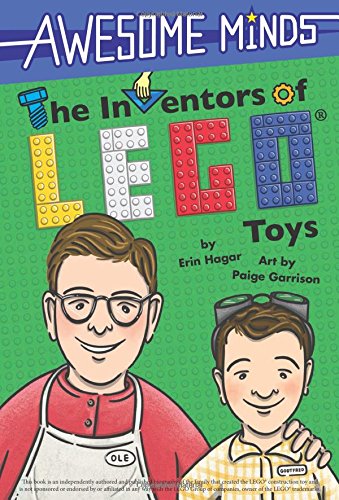
Awesome Minds: The Inventors of Lego Toys by Erin Hagar, art by Paige Garrison

Published by Duo Press 

Summary:  When Ole Kirk Christiansen made the decision to change careers from carpenter to toymaker, he couldn’t have predicted the impact he would ultimately have on the world.  His family-owned business became the LEGO company.  After World War II, Ole Kirk decided to switch from wooden toys to plastic.  His son Godtfred took over the business, and ultimately made the fateful decision to focus on one toy—the sets of LEGO bricks the company had begun manufacturing in 1949.  Of course, this expanded to the LEGO empire we know today.  The story goes up to the present, with a couple pages devoted to the development of LEGOLAND and some of the amazing ideas that have come out of the LEGO company.  Includes a glossary, index, and book list of other books about inventors.  48 pages; grades 2-5.

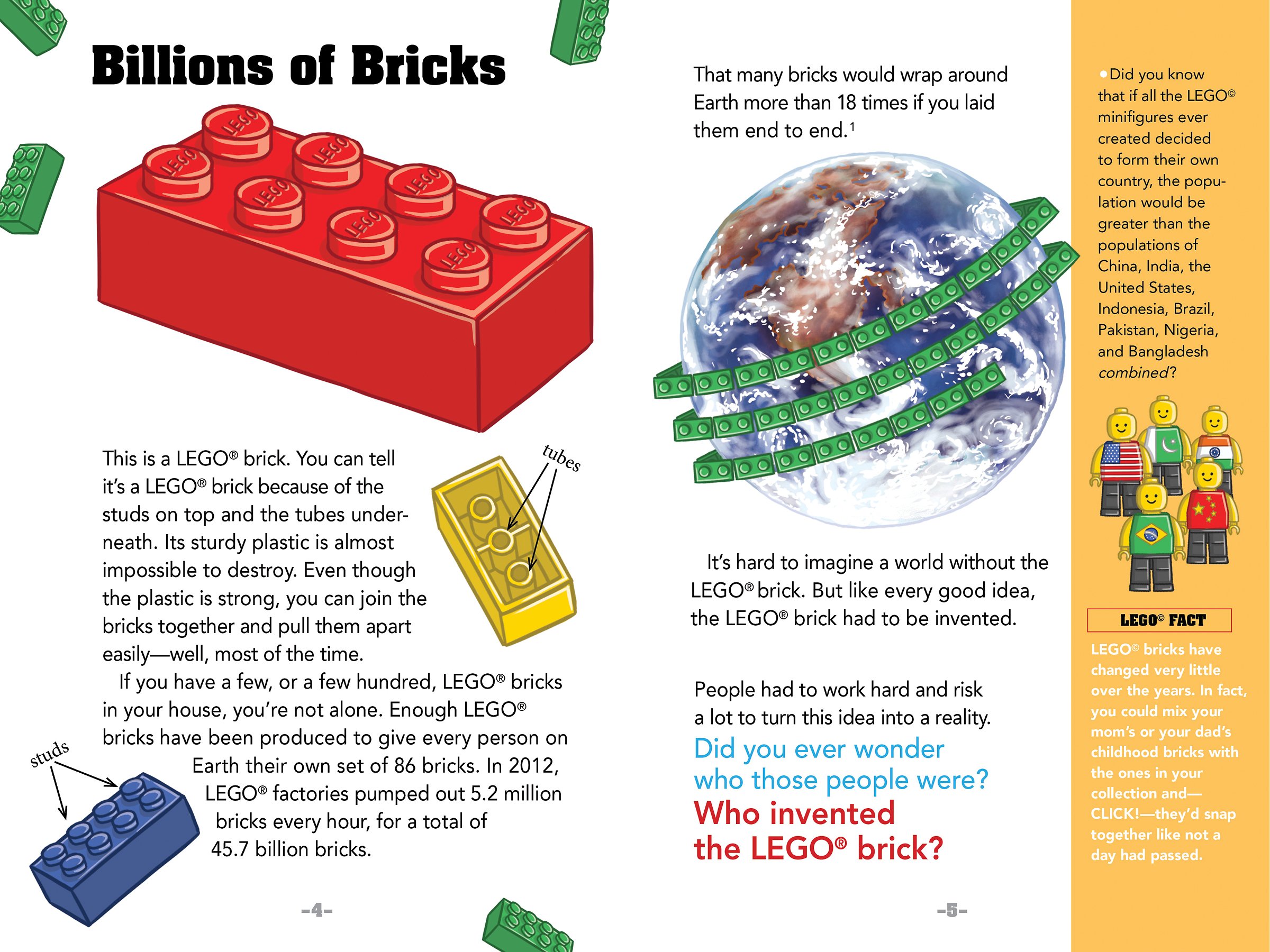
Pros:  Filled with colorful illustrations and interesting sidebars on almost every page, this engagingly written biography/history will entertain and education LEGO fans everywhere.

Cons:  Should we be afraid that if minifigs got together to form their own country, it would be greater than the population of the United States, China, India, Indonesia, Brazil, Pakistan, Nigeria, and Bangladesh combined?

Follow the Moon Home: A Tale of One Idea, Twenty Kids, and a Hundred Sea Turtles by Philippe Cousteau and Deborah Hopkinson, illustrated by Meilo So

Published by Chronicle Books

Summary:  Viv is new in town, and unsure how she feels about her new home.  On her first day of school, her new teacher encourages the class to look for a problem in their community that the kids can work to solve.  Walking on the beach, Viv learns that sea turtles nest there, and that the babies often get disoriented by beach house lights and can’t find their way to the ocean.  Her own difficulties finding her way in a new place makes Viv sympathetic for the turtles.  Soon her whole class is involved in researching the turtles’ plight and spreading the word to turn out lights and close curtains at night.  Their hard work pays off, and on a night patrol, Viv gets to see a line of loggerhead turtles heading for the sea.  Back matter includes a letter to young activists, a note to parents and teachers on how to help kids make a difference in their communities, and additional information about sea turtles.  48 pages; grades K-4.

Pros:  Environmental activist Cousteau (grandson of Jacques) and award-winning write Hopkinson join forces for an inspiring tale about young kids making a difference, backed up with information readers can use themselves.

Cons:  I was hoping this was based on a true story, but it seems to be fictional.

Slickety Quick: Poems About Sharks by Skila Brown, illustrated by Bob Kolar

Published by Candlewick


Summary: 14 different types of sharks get a poem, along with a brief factual description and two-page illustration. There are well-known sharks, such as the great white and the whale shark, and some lesser known species, like the cookie-cutter shark and wobbegong. Some of the poems are only a few lines (“Whale Shark: In water she dangles, and bubbles and jangles, and blinks her mouth right up at me. Her back spots they shimmer, her tail getting dimmer, the silkiest wave of the sea.”); others are a few stanzas. All are descriptive and playful with language. 32 pages; grades K-4.

Pros: The Venn diagram showing the intersection of poetry readers and shark fans must be pretty close to the null set. Slickety Quick does its part to remedy this situation, with fun poems and interesting shark lore to appeal to both groups.

Cons: Back matter with additional shark information would have been a nice addition.

I Am Pan by Mordicai Gerstein

Published by Roaring Brook Press 

Summary: Which Greek god has the most kid appeal? Pan, of course, the fun-loving god of noise, confusion, sheep, shepherds, goats, goatherds, bees, and beekeepers. Mordicai Gerstein combed through Greek myths to find all the ones he could in which Pan played a role. So after recounting his own birth, Pan then goes on to tell different stories about himself, including his marriage to Echo (who knew?), how he invented his famous pipes, and his pivotal role in helping the Greeks at the Battle of Marathon. The ending suggests that Pan and his deity comrades are still living among us today, a “fact” Rick Riordan fans will appreciate. A brief author’s note explains how and why Gerstein came to write this book; a list of the mythology books he used for his research is included. 80 pages; grades 1-5.

Pros: Written in comic book form with illustrations by Caldecott Medalist Gerstein, this is a perfect introduction to mythology for elementary age kids. Those already familiar with the Greek pantheon will enjoy expanding on their knowledge.

Cons: Reading a book with a goofy goat-man on the cover, emblazoned with the large words, “I Am Pan!” may open you up to scorn and derision from offspring over the age of 10.

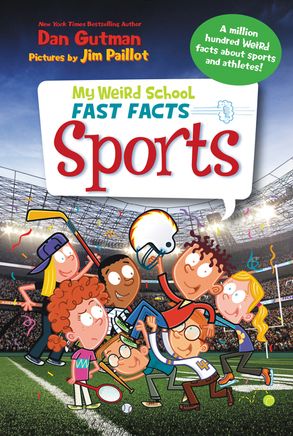
Sports (My Weird School Fast Facts) by Dan Gutman

Published by HarperCollins 

Summary: A.J. and Andrea, two of the wisecracking, squabbling kids from the My Weird School series, offer weird and interesting facts about a variety of sports. In addition to more well-known information, such as how different sports were invented, there are tidbits that will appeal specifically to elementary boys (some early hockey pucks were made of frozen cow poop) and some that are just bizarre (a hockey puck once hit a player in the chest, where he had a pack of matches, and his uniform caught on fire). Chapters include baseball, football, soccer, basketball, hockey, golf, car racing, the Olympics, and a couple chapters of miscellaneous facts. Includes lots of black-and-white illustrations by My Weird School illustrator Jim Paillot, as well as some photos. Look for a similar book with geography facts, and undoubtedly more on the way. 175 pages; grades 1-4.

Pros: Perfect for reluctant readers, this new series combines popular topics, interesting facts, and plenty of the humor that has made this series a favorite.

Cons: To my mind, the fast-fact format got a little old in the last few chapters. It wouldn’t have been a great loss to edit out the miscellaneous stuff.

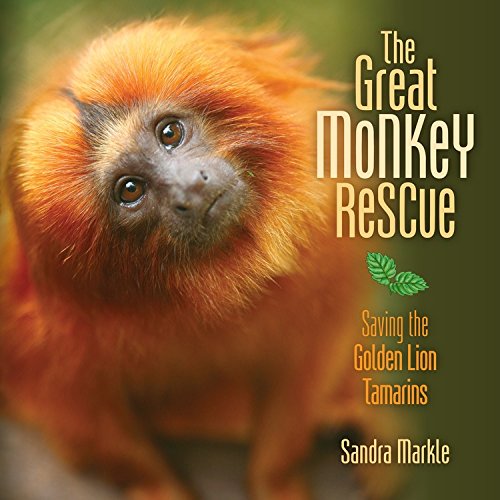
The Great Monkey Rescue: Saving the Golden Lion Tamarins by Sandra Markle

Published by Millbrook Press 

Summary: The story begins with a female golden lion tamarin trying to find a place to start a family. She’s rejected by groups of tamarins until she finally comes to the edge of the forest and realizes she has nowhere else to go. The narrative then moves to a look at the last few decades of human efforts to save this endangered Brazilian species. So much of the tamarins’ habitat has been destroyed that the animals were in danger of extinction. Tamarins in zoos weren’t breeding much, and if they did, the babies usually did not survive. Studying how the animals live in the wild led to greater success with zoo breeding programs, but challenges remained on how to introduce animals back into the rainforests. Slowly, over many years, scientists learned more about the golden lion tamarins and their environment, so that today the outlook for these animals looks positive. The female from the beginning discovers a tree bridge planted by scientists that leads her to a new home and family.   Includes a timeline, glossary, additional resources, and index. 48 pages; grades 4-7.

Pros: Packed with information, this book is written so engagingly that it’s hard to put down.  Plus, it has a happy ending.

Cons: The tamarins’ situation still seems somewhat tenuous.