A Human for Kingsley by Gabriel Evans

Published by Little Hare Books

Summary:  Kingsley’s a bit of a free spirit, but he’s decided to own a human.  It’s a big responsibility, so he takes his time choosing.  One woman is too fast, another (hairdresser) doesn’t appreciate the hair Kingsley adds to her collection, and a third has too many “small human subordinates” (kids).  Then he meets a girl whom he finds intriguing.  She’s loud and a bit bossy, but Kingsley hangs around, observing some of her odd hobbies like reading and taking a bath on purpose.  Unsure, Kingsley takes a walk to consider his options.  The girl goes out looking for him, and when she finds him, tells him that she missed him and leads him back to her house.  Kingsley realizes he’s found a human who needs him…and that means he’s also found a home.  32 pages; ages 4-8.

Pros:  Kids will fall in love with the adorable and somewhat droll Kingsley, whose quest for a home reminded me of a Gen-Z’er’s search for the perfect job.  

Cons:  Despite the picture of a dog in a bun on his food truck, I thought Kingsley should have at least considered the hot dog man.

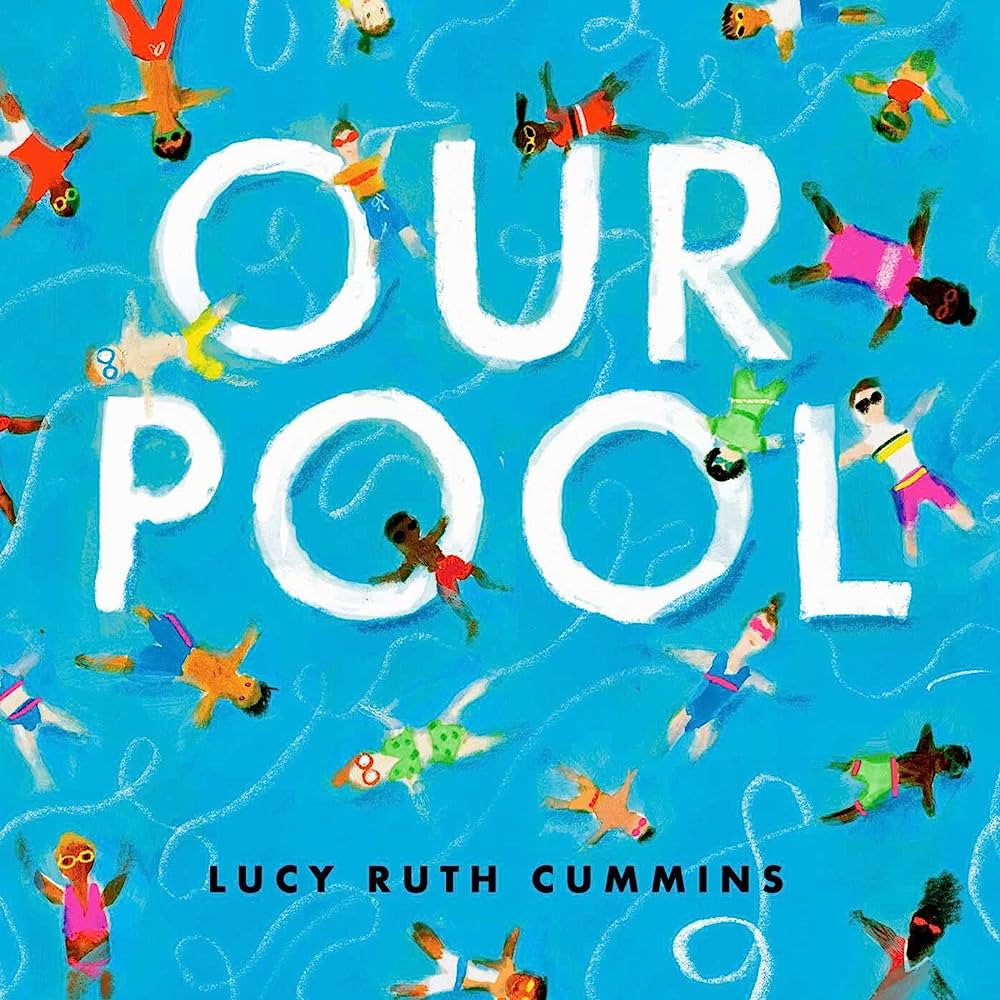
Our Pool by Lucy Ruth Cummins

Published by Atheneum Books for Young Readers

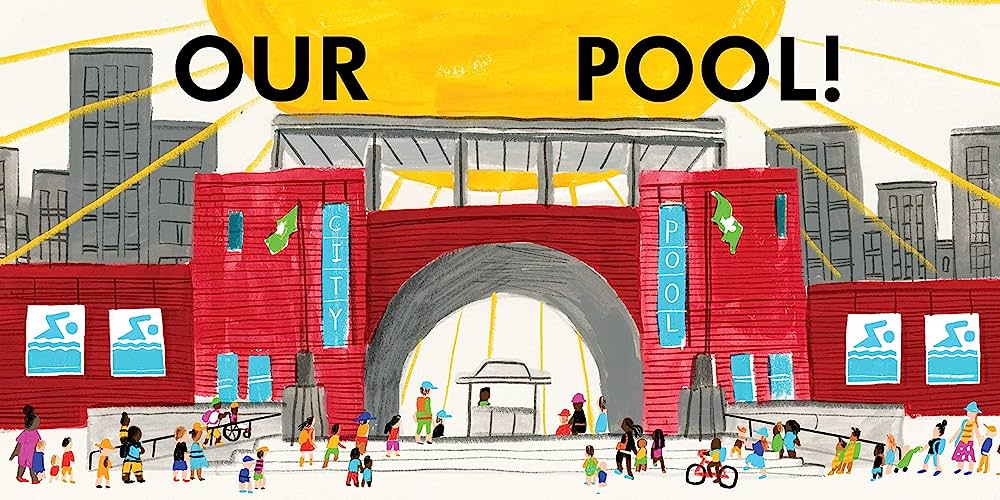
Summary:  It’s Pool Day!  A child and mother join the parade of families heading to the city pool.  After a quick stop in the locker room and a sunscreen rubdown, it’s time to head for the water, joining all kinds of other people who swim, float, or sit on the sides and chat.  There’s Marco Polo, racing, and swimming between friends’ legs, where kids feel like dolphins.  After one last cannonball, the family heads for home, happily making one more stop at the ice cream truck.  48 pages; ages 4-8.

Pros:  A fun slice of summer that perfectly captures the joy of swimming in a crowded city pool on a hot day.  Although the story is narrated in first person, it’s impossible to tell who the narrator is from the busy illustrations, and the diverse cast of characters will mean that many kids will see themselves in the story.

Cons:  I prefer my swimming a bit less crowded.

Ready for Kindergarten by Bethany V. Freitas, illustrated by Maja Anderson

Published by Clarion Books

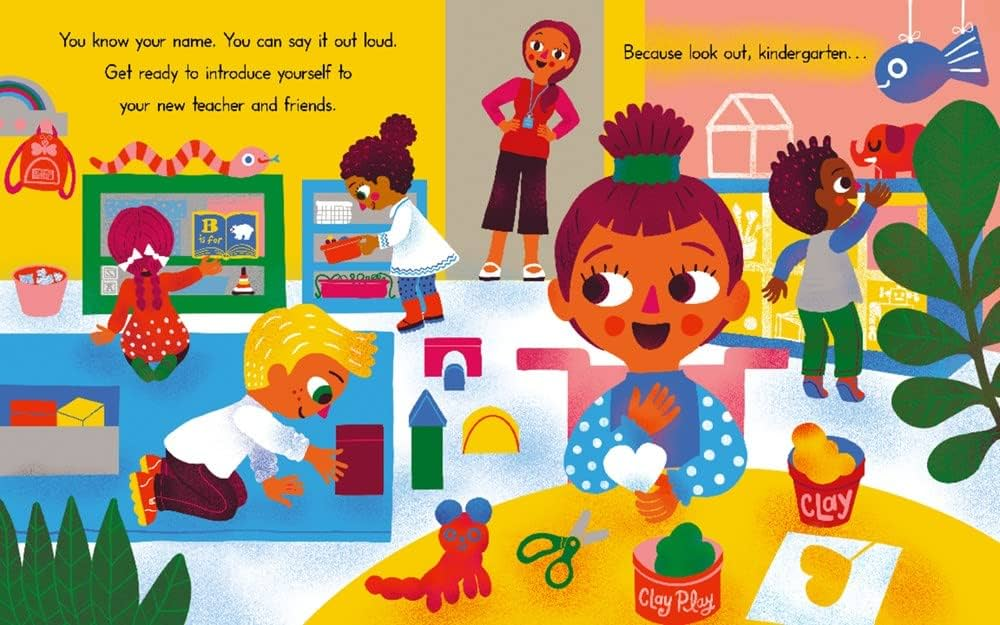
Summary:  Are you ready for kindergarten?  You’ll be practicing skills and learning new ones, like singing the alphabet, counting, creating art, and identifying shapes and colors.  If you like to play with friends and be on the go, you’re ready.  Practice saying your name so you can introduce yourself to your new teacher and classmates.  Get ready for a fun year of kindergarten!  Includes tips for caregivers about preparing kids for kindergarten.  32 pages; ages 4-6.

Pros:  This cheerful and encouraging book with its bright, busy illustrations will have kids excited for the first day of kindergarten.  The tips at the end make it a great resource for parents and other caregivers.

Cons:  Feels like preschool kids are doing a lot of what’s portrayed here as being done in kindergarten. 

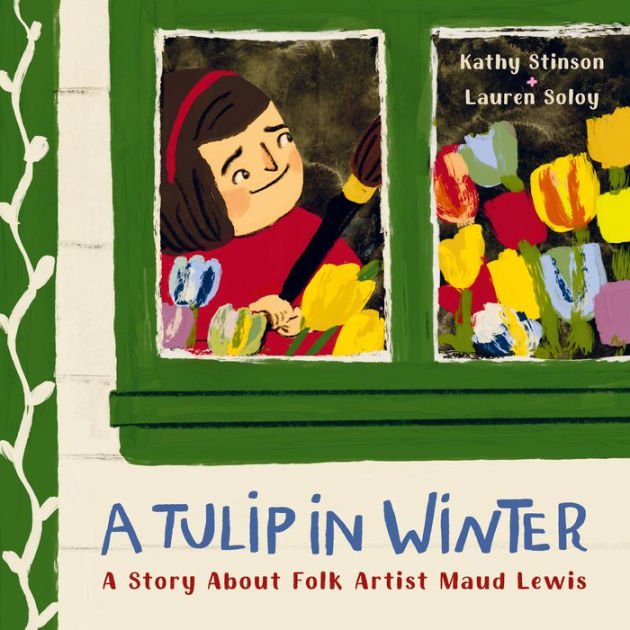
A Tulip in Winter: A Story About Folk Artist Maud Lewis by Kathy Stinson, illustrated by Lauren Soloy

Published by Greystone

Summary:  Maud Dowley was small and bent from a young age, a condition that her doctor could not explain.  Still, she had a happy childhood in Nova Scotia, exploring the world of color through her painting.  As an adult, though, life became tougher.  Her parents died, her brother moved away, and no one would hire Maud because of her physical condition.  Eventually she became the housekeeper, and later the wife, of local fish peddler Everett Lewis.  Although they were poor, they found ways to get Maud paint and she continued with her art, and the two drove around the countryside selling fish and Maud’s paintings.  Eventually, she became too disabled to paint, and Everett pushed her around in a wheelbarrow.  After her death, the little house they had lived in, and that Maud had decorated with paintings, was restored and placed in the Art Gallery of Nova Scotia. Includes additional information and notes from the author and illustrator. 44 pages; grades K-3.

Pros:  A fascinating story of a little-known artist who overcame physical disabilities and poverty to create beautiful works of art full of color and joy.  

Cons:  I wish there had been reproductions of some of Maud’s paintings included.

Food for the Future: Sustainable Farms Around the World by Mia Wenjen, illustrated by Robert Sae-Heng

Published by Barefoot Books

Summary:  From a honey farm in Yemen to a circular garden in Senegal to an underwater biosphere in Italy, this book takes readers on a tour of innovative sustainable food production sites around the world.  Each two-page spread has a rhyming couplet about the farm or other site, with illustrations showing people at work.  A map at the end shows all the sites and provides information about sustainable farming and food justice.  There’s additional information about each place, including a description and why it’s sustainable.  Includes notes from the author and illustrator about how they were inspired to create this book.  40 pages; ages 4-8.

Pros:  An inspiring look at sustainable food production that includes both indigenous practices and new technology.  The built-in definitions and pronunciation guides make this a great resource for younger kids, who will also find the bright folk art style illustrations appealing.

Cons:  Some additional resources would have been nice.

Super Small: Miniature Marvels of the Natural World by Tiffany Stone, illustrated by Ashley Spires

Published by Greystone Kids

Summary:  Each of the fifteen tiny animals profiled here has a superpower. Whether it’s the pygmy seahorse’s ability to camouflage, the axolotl’s regenerative powers, or the black-footed cat’s lethal aim, each animal has something that allows it to survive despite being so small.  Each profile includes an illustration, a poem, and a comic strip that gives the animal the chance to show off its special abilities.  The final poem asks readers to consider what their superpowers might be.  36 pages; grades K-4.

Pros:  The cute poems, comics, and illustrations offer a fascinating look at some unique animal adaptations, and the last poem is a nice way to get kids thinking about what makes them unique as well.

Cons:  I would have loved some additional information at the end, particularly about how the hydra stays young forever.

Young, Gifted, and Black, Too: Meet 52 More Black Icons from Past and Present by Jamia Wilson, illustrated by Andrea Pippins

Published by Wide Eyed Editions

Summary:  In this second volume of the series, profiles of 52 Black people from all over the world are arranged chronologically, beginning with Spanish poet Juan Latino (c. 1518-c. 1594) and concluding with Flint, Michigan activist Mari Copeny (2007-present).  Each subject gets several paragraphs of text and a folk art-style illustration that includes objects that show the subject’s area of expertise.  The introduction encourages readers to think about what contributions they want to make to the world.  Includes a glossary.  64 pages; grades 2-6.

Pros:  An excellent addition to Black history collections, with plenty of recognizable names like Thurgood Marshall and Coretta Scott King but lots of lesser-known ones that deserve to have some light shone on them.  There’s lots of international representation and the illustrations do a nice job celebrating the subjects’ achievements.

Cons:  The information is necessarily short, so additional resources will be needed for more in-depth research.

The Brilliant Ms. Bangle by Cara Devins, illustrated by K-Fai Steele

Published by Feiwel and Friends

Summary:  Everyone’s excited about the first day of school until they discover that beloved librarian Ms. Stack has moved away and been replaced by Ms. Bangle.  The kids decide, sight unseen, that they will refuse to read with Ms. Bangle until Ms. Stack comes back.  Even when they discover that Ms. Bangle is funny and has some great books, they hold fast to their resolve.  Ms. Bangle is understanding and unperturbed, assigning them some of her library jobs while she hems a pair of pants instead of reading to the kids.  After trying to write lesson plans, sort books, and take boxes down to the basement, the kids are ready to reconsider.  They enjoy a good read-aloud, then check out books and settle down to read in the library.  A few wonder if Ms. Bangle was pretending all along, but at this point, what does it matter?  32 pages; ages 4-8.

Pros:  If you’re looking for a new book for the first day of library–or for a librarian role model–you may have found one with this entertaining book that will have kids clamoring to go to the library.

Cons:  Ms. Stack–undoubtedly one of my contemporaries–looked to be about 102 years old.

Mr. S by Monica Arnaldo

Published by Katherine Tegen Books

Summary:  On the first day of school, there seems to be no teacher, although there’s a cup of coffee and an “impressive-looking” sandwich on the front desk.  The kids are gearing up for a day with no rules when a ruler falls loudly off the teacher’s desk.  It’s then that the students notice “Mr. S” written on the board.  “As one, the children murmured: Mr. Sandwich…”  From that moment on, the kids, under the watchful olive eyes of the sandwich, proceed with their school day as normal (with a few sandwich-y twists thrown in).  Sharp-eyed readers will notice a man outside the window dealing with a storm that first knocks a tree onto his car, then hits the car with a bolt of lightning that completely destroys it.  He finally enters the classroom, changes “Mr. S” to “Mr. Spencer,” and introduces himself as…the principal.  “And I see you’ve already met your teacher, Mr. S,” he says, indicating the sandwich.  The last page adds a final mystery, as the sandwich reveals that his name isn’t Mr. Sandwich, but a splotch of mustard on the endpapers keeps his true identity a secret.  40 pages; ages 4-8.

Pros:  Pretty sure this will be my back-to-school read-aloud this year.  It has the same kind of zany humor my students enjoyed in Puppy Bus (my opening selection last year), and kids will love the story the illustrations tell about the principal and his car.

Cons:  I am wracked by curiosity as to what the sandwich’s real name is.

Rise to the Sky: How the World’s Tallest Trees Grow Up by Rebecca E. Hirsch, illustrated by Mia Posada

Published by Millbrook Press

Summary:  The tallest living thing isn’t an animal: it’s a tree.  Trees can grow taller than the Statue of Liberty or Big Ben, closing in on 400 feet.  Amazingly, they all start as a small seed, but the ideal conditions of sunlight and water can result in lots of growth and a long life, sometimes thousands of years, with protection from their bark and roots.  From their great height, the trees send down their seeds to the ground, beginning the process all over again.  Includes additional information about trees, photos and facts about some of the world’s tallest trees, a couple of tree activities, and a list of resources.  32 pages; grades K-4.

Pros:  An excellent informational book with beautiful illustrations and plenty of back matter.  Perfect for any unit on trees, plants, or seeds.

Cons:  It would have been nice to have a map showing where the tallest trees live, since they seem to be concentrated in just a few places in the world.