Farmhouse by Sophie Blackall 

Published by Little, Brown Books for Young Readers

Summary:  The story of a farmhouse and the family of 14 that lived there is told in one long rhyming sentence.  Starting in the front hallway, the action seamlessly transitions to the parlor (the “serious room”), the attic bedroom where all 12 kids sleep and dream, the barn with its prize-winning cows, the fields, and then back to the kitchen and dining room.  Things wrap up back in the front hall where the youngest child, now an old woman, waits for her sister to pick her up to “drive to the sea, which they’d always wanted to see.”  The farmhouse, now abandoned, settles and is taken over by animals and weather until Sophie discovers it, finding objects that spark her imagination and lead her to the creation of this book.  Includes an author’s note about her discovery of the farmhouse and creation of the illustrations. 48 pages; ages 4-104.

Pros:  There’s been a fair amount of buzz around this book, and I am here to tell you that it’s all true.  I got kind of emotional at the end, appreciating the circle of life that took place in this old farmhouse, and the way it inspired the creation of a beautiful work of art.  The note at the end made me go back and marvel at the details and layers of each illustration. To not consider this for a Caldecott would be a crime against the literary establishment.

Cons:  If you’re trying to teach kids not to write in run-on sentences, you may need to look elsewhere for a mentor text.

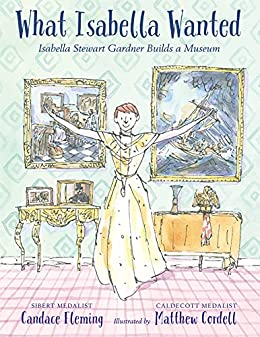
What Isabella Wanted: Isabella Stewart Gardner Builds a Museum by Candace Fleming, illustrated by Matthew Cordell

Published by Neal Porter Books

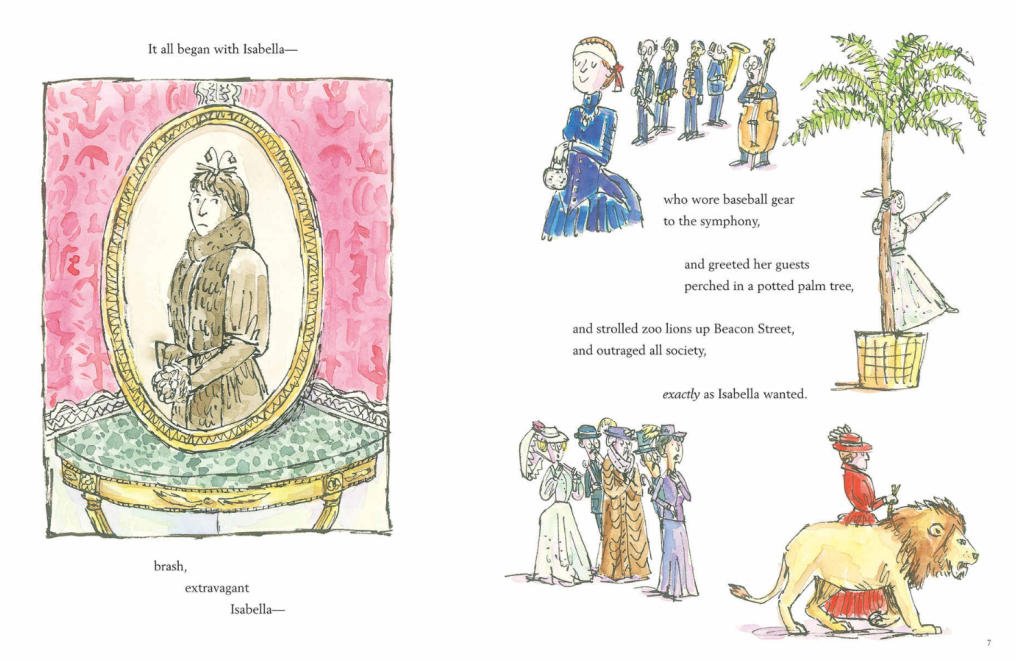
Summary:  The story begins and ends with the empty picture frames hanging in the Isabella Stewart Gardner Museum following the 1990 robbery of thirteen works of art worth $500 million.  In between, the reader learns of the eccentric Isabella who knew exactly what she wanted and wasn’t afraid to do what she needed to do to get it–even if it meant breaking some laws to obtain European and Asian artworks.  She built the museum herself, living on the top floor and displaying the art on the other three.  When it was done, she opened it to the public twenty days a year for more than twenty years.  Today, the museum is still a highlight to visit in Boston.  Includes an extensive author’s note with more information about Isabella (including her unethical collection practices) and a bibliography.  40 pages; ages 4-8.

Pros:  The lively free verse text and illustrations by Caldecott Medalist Matthew Cordell bring Isabella and her museum to life and pose intriguing questions about the art theft.

Cons:  This is another New England Book Award finalist (the winner was Keepunumuk by Danielle Greendeer in case you’re interested) and may not be of as much interest to those living outside of New England.

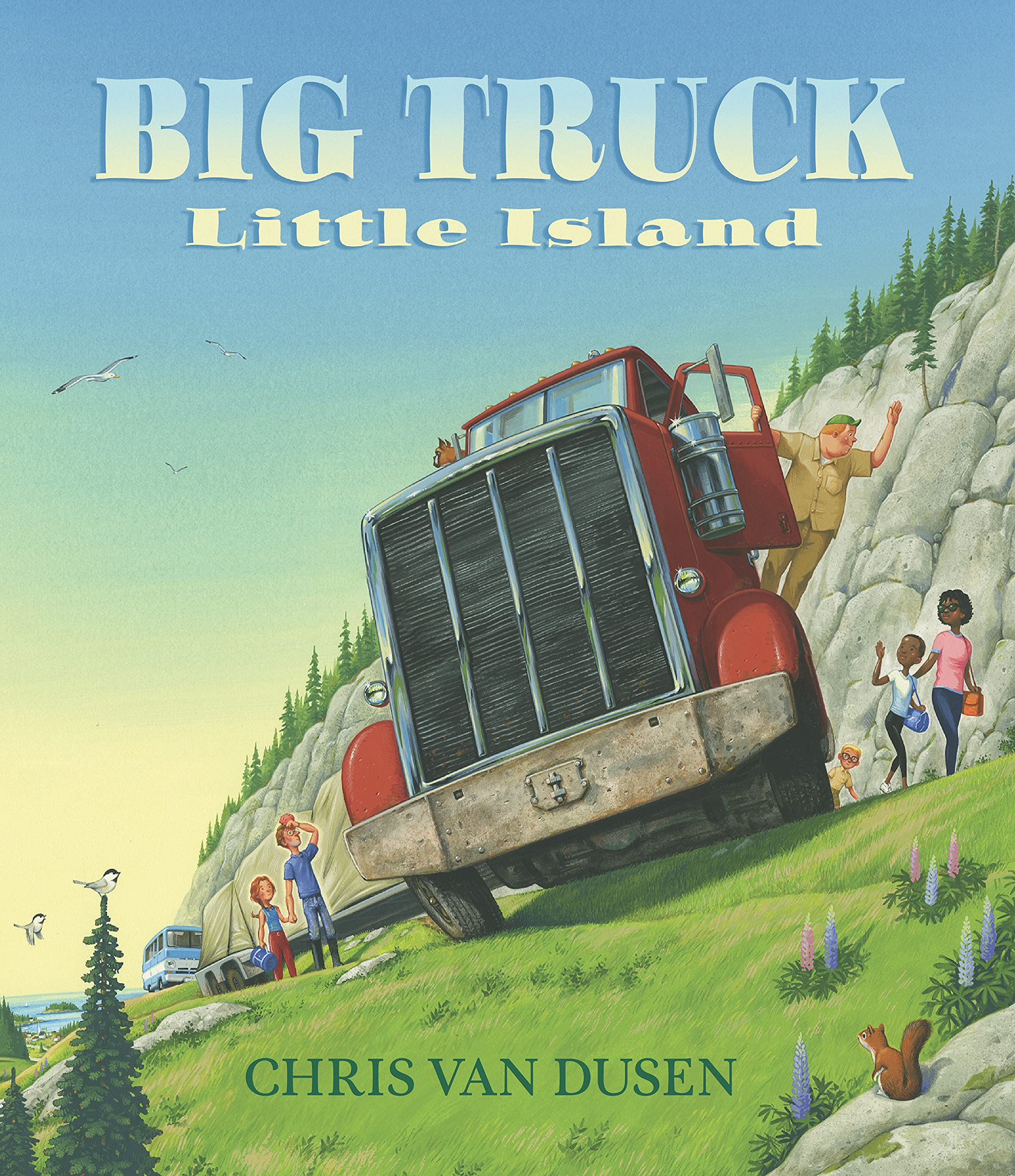
Big Truck Little Island by Chris Van Dusen

Published by Candlewick

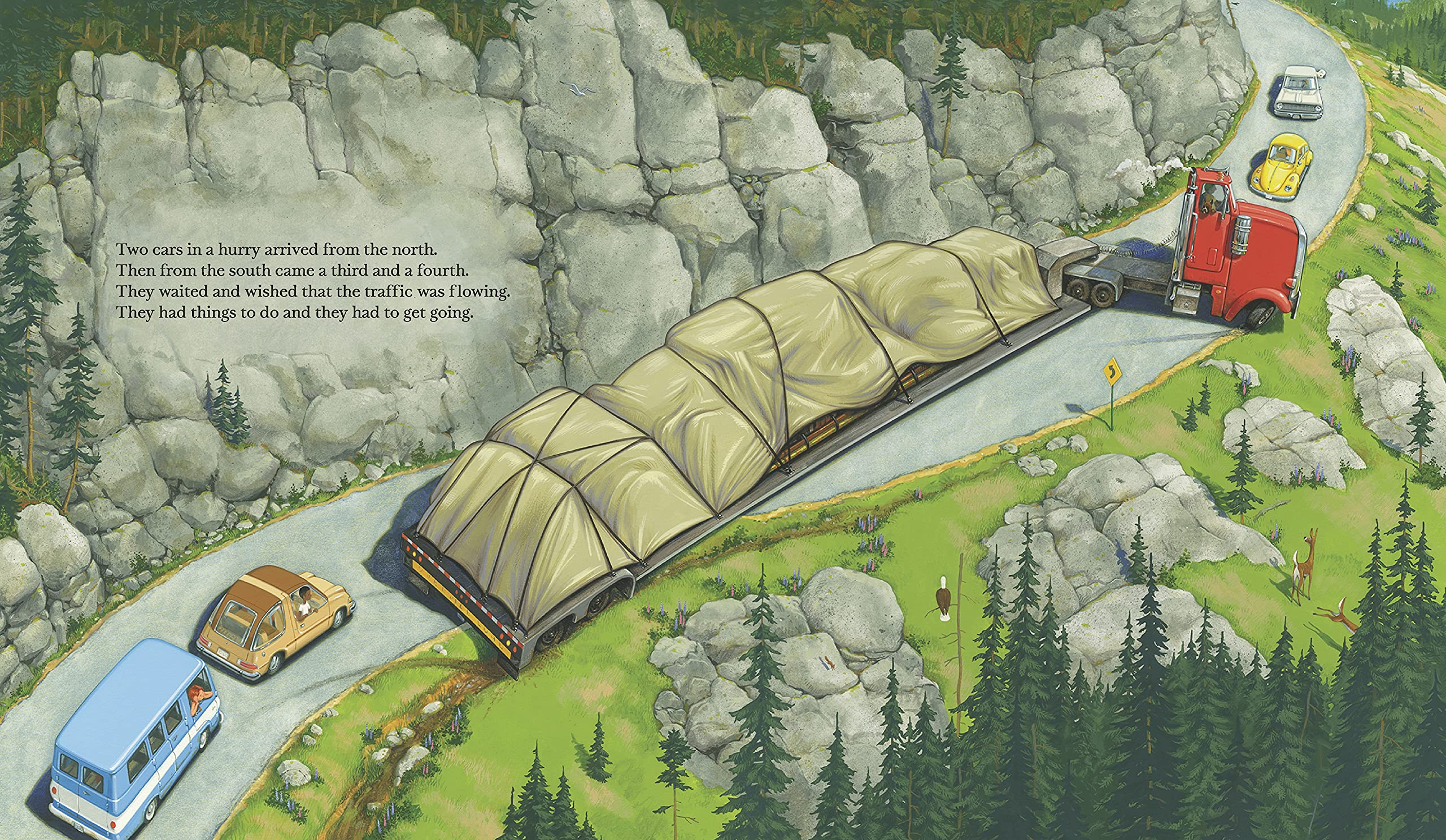
Summary:  A truck carrying a 20-ton load arrives by barge to a small island with narrow roads.  Before long, it has skidded off the road and into the mud, backing up traffic on either side.  The kids inside the cars are impatient to get where they’re going.  While their parents stew in the car, the kids get out and problem-solve.  They all know each other, so the two going in one direction agree to temporarily trade cars with the two going the other way.  They’re able to turn around and keep going to their destinations.  Meanwhile the truck gets helped back onto the road and is able to make its delivery: a huge Ferris wheel which is soon set up at the carnival.  Includes a note about the event in Vinalhaven, Maine that inspired this story.  32 pages; ages 3-8.

Pros:  The rhyming text tells a good story about cooperation and sharing, but it’s the illustrations that really steal the show.  Anyone who is at all mechanically inclined will enjoy the large, colorful pictures of the barge, the truck, and the Ferris wheel. This book was a finalist for the New England Book Award, which I only recently learned about.

Cons:  I lived in Rockport, Maine for a year and never made it to Vinalhaven.

I Am Ruby Bridges by Ruby Bridges, illustrated by Nikkolas Smith

Published by Orchard Books

Summary:  Ruby Bridges tells her story of integrating William Frantz Elementary School in 1960 at the age of six.  While she has heard of Brown v. Board of Education, she is more interested in making friends and who her teacher will be.  She is surprised to be driven to school by four white men, to have a white principal, and most of all, to discover that she is the only student in her classroom.  Seeing that empty classroom makes her finally realize what is going on: she is the first Black child to attend the school, and that will allow other Black students to go there too.  “And that’s a good thing, for Black kids.  For white kids, too…for all the kids, once they finally get here!”  Includes a glossary and notes from the author and illustrator.  48 pages; ages 4-8.

Pros:  An inspiring autobiography with bold illustrations that capture young Ruby’s humor and courage.  If you’re looking for a Black history read-aloud for primary grades, this is a perfect choice that shows kids the powerful difference one six-year-old made in a way that they will relate to.

Cons:  You will probably want to supplement this with additional material to explain to kids exactly what it was Ruby did.

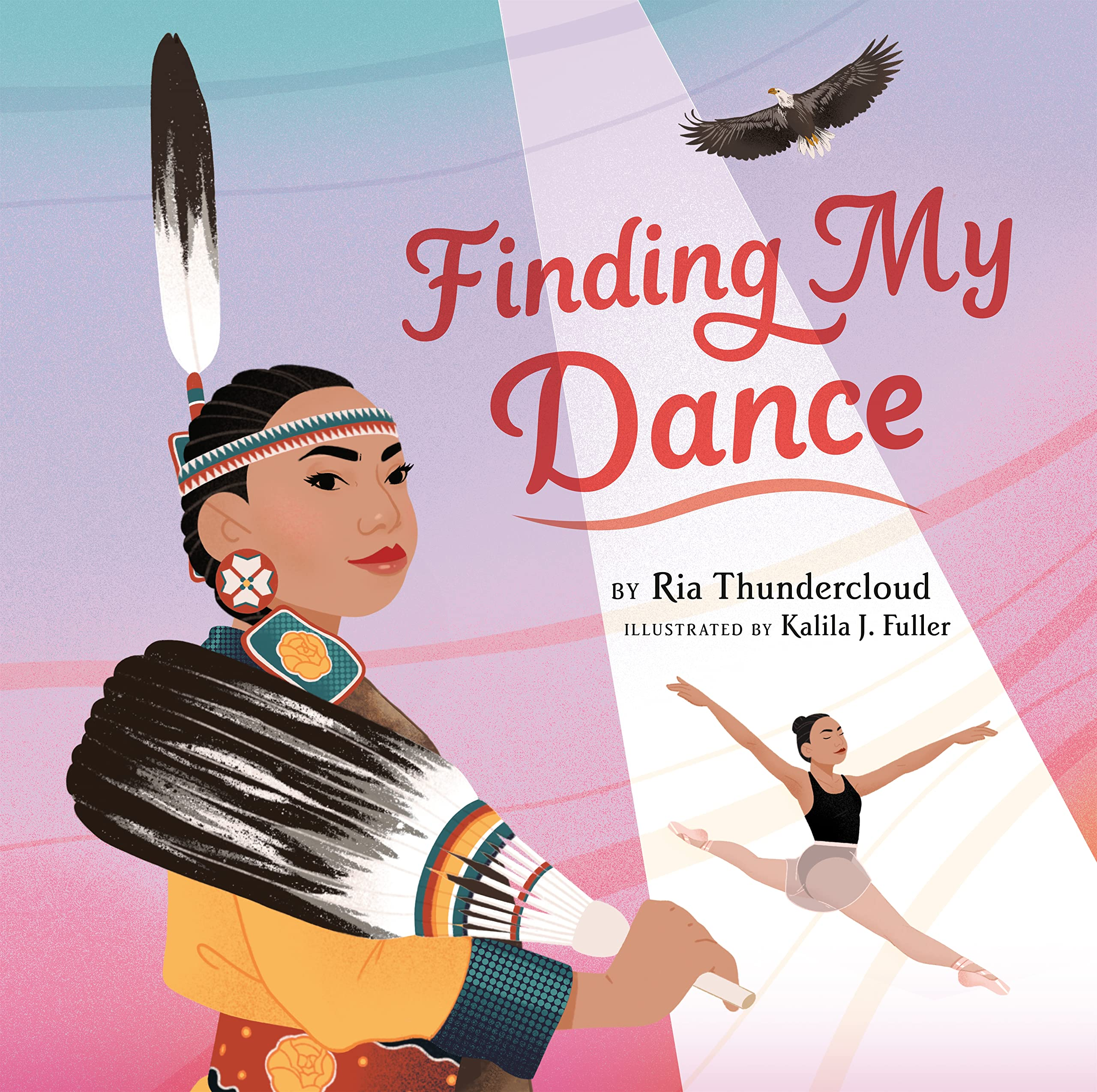
Finding My Dance by Ria Thundercloud, illustrated by Kalila J. Fuller

Published by Penguin Workshop

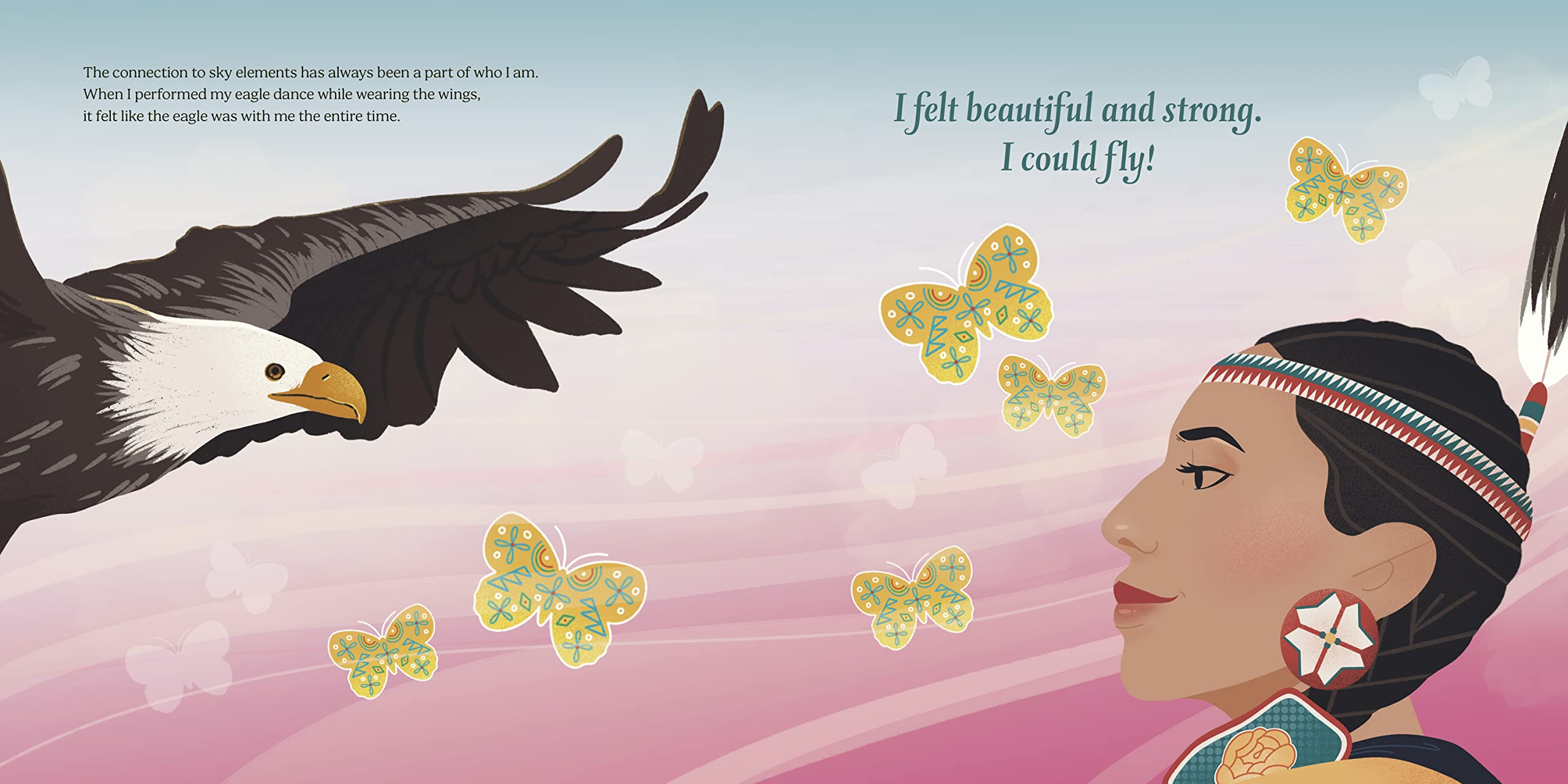
Summary:  The author introduces herself on the first page as Wakaja haja piiwiga, meaning “Beautiful Thunder Woman” from the Ho-Chunk Nation in Wisconsin and the Sandia Pueblo in New Mexico.  She loved dance from the time she received her first jingle dress and began dancing in the powwow at the age of 4.  At 13, she started learning other forms of dance–modern, tap, jazz, ballet–and became a professional dancer after graduating from high school.  Sometimes the restraints of classical dance felt wrong to her, though, and she felt like an outsider.  She has returned to her roots, dancing the eagle dance with a set of eagle wings and now has a daughter of her own.  Remembering how people used to say her name wrong, she corrects those who mispronounce her daughter’s: “Every time someone says our names, they are speaking a language that still exists, and a culture that we still honor, despite many attempts to wipe it out forever.”  40 pages; grades 1-5.

Pros:  This beautiful story will resonate with anyone who is trying to find their place in the world.  It celebrates both dance and indigenous cultures, with lovely illustrations filled with gorgeous colors that play with light, shadows, and patterns.

Cons:  No back matter.

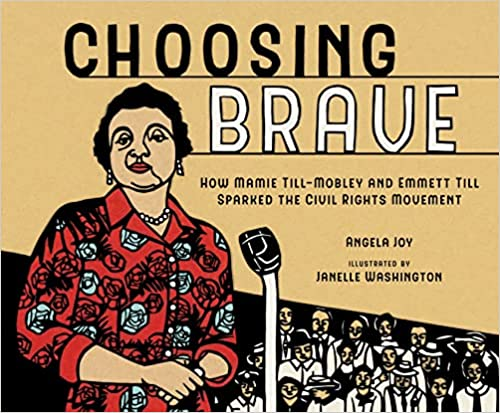
Choosing Brave: How Mamie Till-Mobley and Emmett Till Sparked the Civil Rights Movement by Angela Joy, illustrated by Janelle Washington

Published by Roaring Brook Press

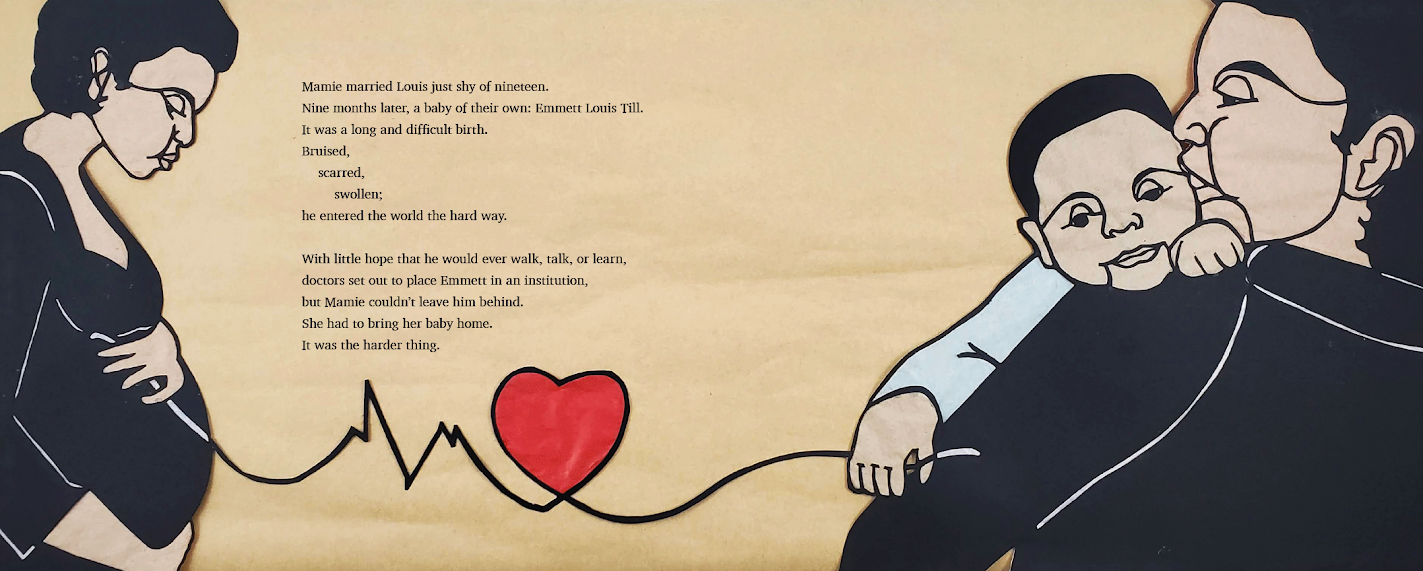
Summary:  Beginning with Mamie Till’s decision to bring her son Emmett’s body home to Illinois after his horrific murder in Mississippi, the story goes back to trace Mamie’s life to that point.  A smart, hardworking girl who graduated at the top of her high school class, Mamie married an abusive man, escaping the marriage with her son.  Emmett was visiting family in Mississippi when he was murdered by white men who believed he had violated Jim Crow laws when interacting with the wife of one of the men at a store.  The sheriff planned to quietly bury Emmett’s body, but Mamie insisted on bringing him home and having an open casket funeral.  Photos were widely published, giving impetus to the civil rights movement.  After Emmett’s death, Mamie remarried, went to college, became a teacher, and continued to work for civil rights until her death in 2003 at the age of 81.  Includes notes from the author and illustrator, a playlist, a glossary, a timeline, and a list of sources.  64 pages; grades 3-7.

Pros:  This is a powerful book, both the free verse text and the cut paper illustrations.  The tone is appropriately somber, but also inspiring, showing Mamie’s love for her son, her grief, and her incredible resilience.  A Coretta Scott King Award contender for sure. 

Cons:  The narrative may be somewhat confusing to readers who aren’t familiar with Emmett Till’s story.  They might want to start with the back matter.

Action! How Movies Began by Meghan McCarthy

Published by Simon and Schuster/Paula Wiseman Books

Summary:  This whirlwind tour of the movie industry faithfully reproduces scenes from a huge variety of films, including Saturday Night Fever, The Gold Rush, Nosferatu, Star Wars, and many, many more.  There’s a quick history of various film technologies that led to silent movies and then talkies.  The influence of one film upon others is shown through the illustrations, most fascinatingly with Metropolis.  Racism is briefly touched upon, showing how it affected Josephine Baker’s career, and comparing this with a scene from Black Panther, a blockbuster with an all-Black cast.  “Movies will continue to inspire us for generations to come,” McCarthy concludes, “and we have all the inventors, actors, writers, and directors to thank.”  Includes additional information about the MGM lion, female film editors, the beginnings of Hollywood, the disappearance of Louis Le Prince (which could be a whole book itself), makeup in the silent era; also a bibliography of books, websites, and other sources.  48 pages; grades 2-7.

Pros:  I know this probably sounds like a random mishmash of information, but somehow Meghan McCarthy makes it work as a fascinating read, and the illustrations are phenomenal.  All the characters have her trademark bug-eyed expressions, but they are amazing renditions of so many famous scenes from film history.  If I were on the Caldecott committee, I’d give this a close look.  

Cons:  If you’re a Thomas Edison fan, prepare to be disillusioned.

Sal Boat: A Boat by Sal by Thyra Heder

Published by Harry N. Abrams

Summary:  Sal loves the water and dreams of having a boat of his own.  Being a kid, though, he can’t buy a boat, so he decides to build one.  He scavenges materials from wherever he can find them: the garage, a builder’s castoffs, the marina’s dumpster.  Word soon gets around, and everyone has questions to ask and advice to offer.  But Sal is an independent kid, and he knows what he wants.  He finds a secluded spot and starts to build.  Before long, though, one thing becomes apparent: Sal’s boat looks like a house.  But Sal stubbornly clings to the notion that it’s a boat.  Disaster strikes when it’s time to launch the boat.  Try as he might, Sal can’t get it into the water.  He’s just about to destroy the whole thing when he hears, “Wait!”  His family, neighbors, and friends have shown up, ready to get to work.  At last, Sal’s boat is afloat, and he can enjoy a solitary sail…surrounded by the canoes, kayaks, and rowboats filled with all the people who helped him.  48 pages; ages 4-8.  

Pros:  This winning story with enchanting illustrations shows the power of determination and independence…and also accepting help when you need it.  The final picture is a lovely celebration of community.

Cons:  This would be a great read for Talk Like a Pirate Day, but unfortunately, you’ll have to wait another 364 days for it to come around again.

The Animal Toolkit: How Animals Use Tools by Steve Jenkins and Robin Page

Published by Clarion Books

Summary:  The introduction defines a tool as “an object that an animal manipulates and uses to affect its environment, another animal, or itself.”  Many of us probably know that certain kinds of apes and monkeys use tools, but what about the corolla spider that uses stones to build its web, or the bottlenose dolphin that catches fish in a shell?  Or, creepily, the black kite that will carry a burning stick from a wildfire to start a fire in another area to flush out prey (I wish I could unsee the cute quorra fleeing the flames).  Each page has a cut paper illustration with a brief paragraph of information; additional information on each animal is provided at the end, along with a bibliography.  32 pages; grades K-5.

Pros:  By now you know of my deep and abiding love for all things Steve Jenkins (and Robin Page for that matter), and here you have another fascinating book to wow elementary kids.

Cons:  Still experiencing grief and denial over the fact that Steve Jenkins passed away earlier this year.

The World’s Longest Licorice Rope by Matt Myers

Published by Random House Studio

Summary:  Through luck and an assortment of odd jobs, Ben collects a bagful of nickels.  Deciding what to spend them on takes some consideration, but he finally succumbs to a salesgirl with what she claims is the world’s longest licorice rope (costing just one nickel).  “How long is it?” asks Ben.  “How long is the world?” the girl replies.  Determined to find out, Ben starts chewing.  Everywhere he goes, the girl is there to sell him (for a nickel) whatever he needs to continue the journey: a boat, snowshoes, even a carrot suit to outsmart a hungry lion.  Finally, just as he is getting tired, Ben runs into Jimmy, a boy on the other end of the licorice rope who also paid a nickel.  The girl tells them that for one more nickel, they can become friends.  The two boys burst out laughing, because, they say, “Friends are free!”.  40 pages; ages 4-8.

Pros:  This quirky and unpredictable book would make a great writing prompt to share where you might go with the world’s longest licorice rope.  The end makes a great case for exploring the world with a friend or two.

Cons:  The very tiny font.