Blue: A History of the Color as Deep as the Sea and as Wide as the Sky by Nana Ekua Brew-Hammond, illustrated by Daniel Minter

Published by Knopf Books for Young Readers
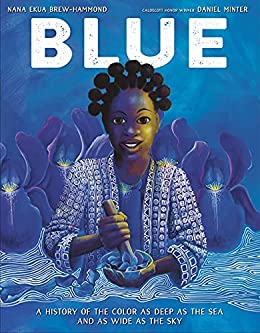
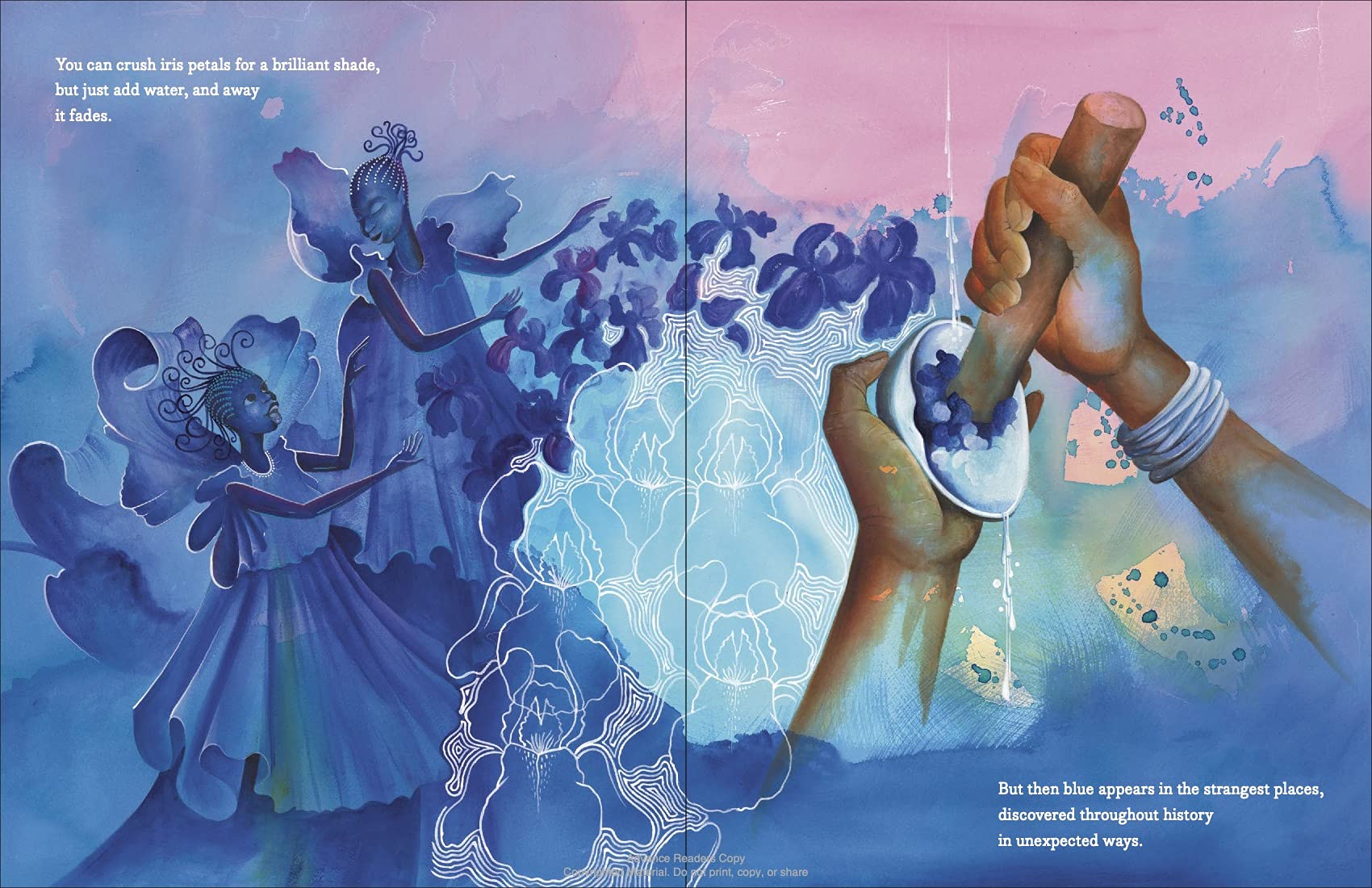
Summary:  Blue may be the color of the sky and the ocean, but for much of human history, it was a difficult color to produce.  Ancient Egyptians crushed the blue stone lapis lazuli to make paint and eye makeup that only the very wealthy could afford.  Later, people discovered shellfish that produced a blue dye, but each organism only produced a drop or two.  Finally, the indigo plant, a native of Asia, Africa, the Caribbean, and the Americas, became more widely known and cultivated.  The value of the plant’s blue dye led to abuses as people were tricked into growing it instead of food and enslaved to help mass produce it.  In 1905, Adolf von Baeyer was awarded a Nobel prize for, among other things, creating a blue chemical dye.  Now everyone can own something that’s blue, but the rarity of blue and the suffering created in its production remind us of expressions like “the blues”, “feeling blue”, and “out of the blue”.  Includes two pages of additional information and a list of selected sources.  40 pages; grades 1-5.

Pros:  Here’s a fascinating history of something I had no idea had a fascinating history: the color blue.  Kids will have a greater appreciation for blue jeans and other commonplace items after reading about the struggles and high value associated with blue.  The gorgeous illustrations feature many different colors but appropriately highlight blue.

Cons:  Some of the claims about the expressions noted above were pretty speculative, and when I looked into them, they don’t appear to have the connections to the color the author writes about.

Nigel and the Moon by Antwan Eady, illustrated by Gracey Zhang

Published by Katherine Tegen Books

Summary:  Nigel has big dreams: he wants to be a dancer, an astronaut, and a superhero.  At night, he tells his dreams to the moon, but during the day it’s harder to share them.  During career week at his school, other kids talk about their plans to become a doctor, an engineer, or a veterinarian, but when it’s Nigel’s turn, he’s afraid to reveal his dreams.  He’s also shy about revealing his parents’ occupations, feeling like they’re not as “fancy” as his classmates’.  On the last day of the week, parents come in to talk about their careers.  Nigel’s parents tell what they enjoy about their jobs as a mail carrier, truck driver, and the best job of all: raising Nigel.  Emboldened, Nigel stands in front of the room between his mom and dad and tells the class exactly what he hopes to become someday.  40 pages; ages 4-8.

Pros:  Nigel’s insecurities are realistically portrayed, as he struggles to find the courage to share his dreams.  The illustrations effectively portray the dreamy night sequences and the brighter daytime scenes.  This would be a great book for introducing community helpers as well as empowering shy kids to share more about themselves.

Cons:  It seemed kind of stereotypical to have Nigel, apparently the only Black kid in the class, also be the only one whose parents had more blue-collar jobs.

Mardi Gras Almost Didn’t Come This Year by Kathy Z. Price, illustrated by Carl Joe Williams

Published by Atheneum Books for Young Readers

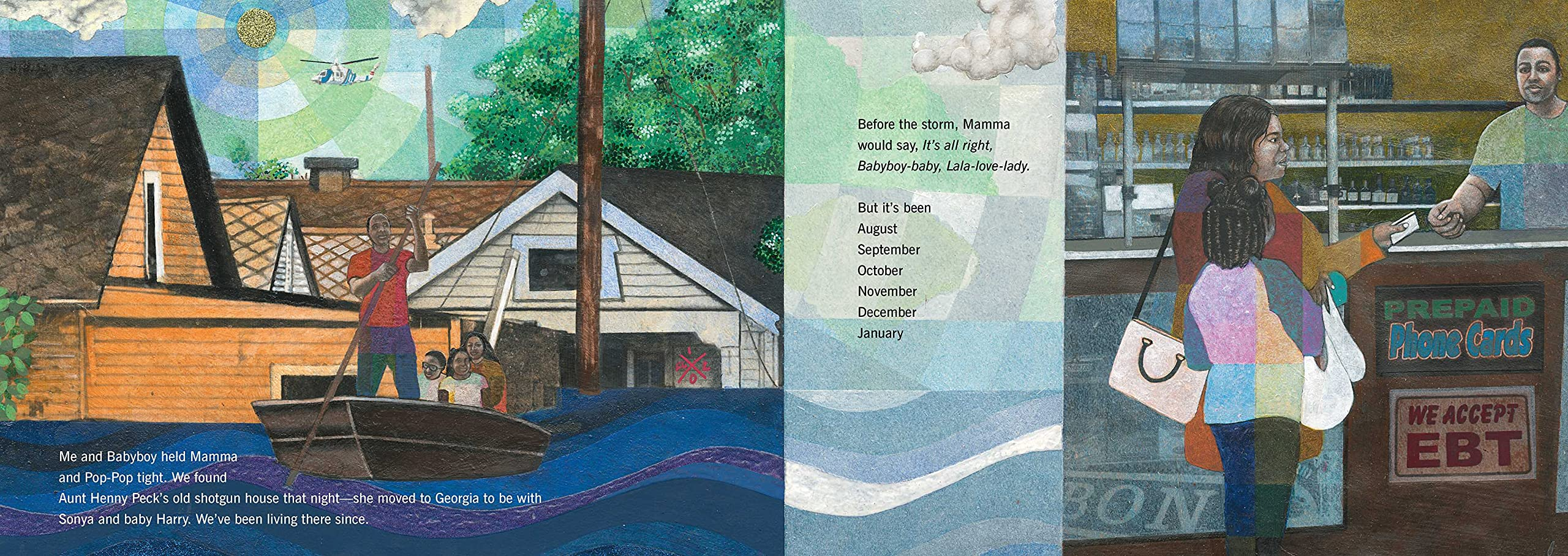
Summary:  Life has been pretty grim since Laia and her family survived Hurricane Katrina.  They’re living in temporary housing, facing a long wait for their home to be rebuilt.  Her dad hasn’t picked up his trumpet since the storm, and her mom no longer sings or dances.  Mardi Gras has always been the joyful centerpiece of the family’s year, but this year it feels wrong to celebrate.  As the festival approaches, though, Laia decides she’s going to make Mardi Gras happen for her younger brother.  She gets out his drum and is ready to play when her father walks in with some calla lilies for the family, as well as seeds to plant when their house is ready.  Then Babyboy starts tooting on his dad’s trumpet, which he’s secretly taught himself to play, and before long the family is out in the street, ready to celebrate.  The story ends on a hopeful note, with the whole family dreaming about the day their house will be rebuilt.  Includes additional information about Katrina and Mardi Gras after the hurricane and during Covid-19.  Also includes a glossary.  48 pages; grades 1-5.

Pros:  The poetic text and gorgeous mixed media illustrations really capture the spirit of New Orleans and the resilience of surviving a devastating natural disaster.  The author’s note at the end provides excellent information for understanding better the importance of Mardi Gras to the people of New Orleans.

Cons:  Readers who aren’t familiar with New Orleans, the Mardi Gras, and Katrina will need a lot of background information to fully understand the story.

A Pandemic Is Worldwide by Sarah L. Thomson, illustrated by Taia Morley

Published by HarperCollins

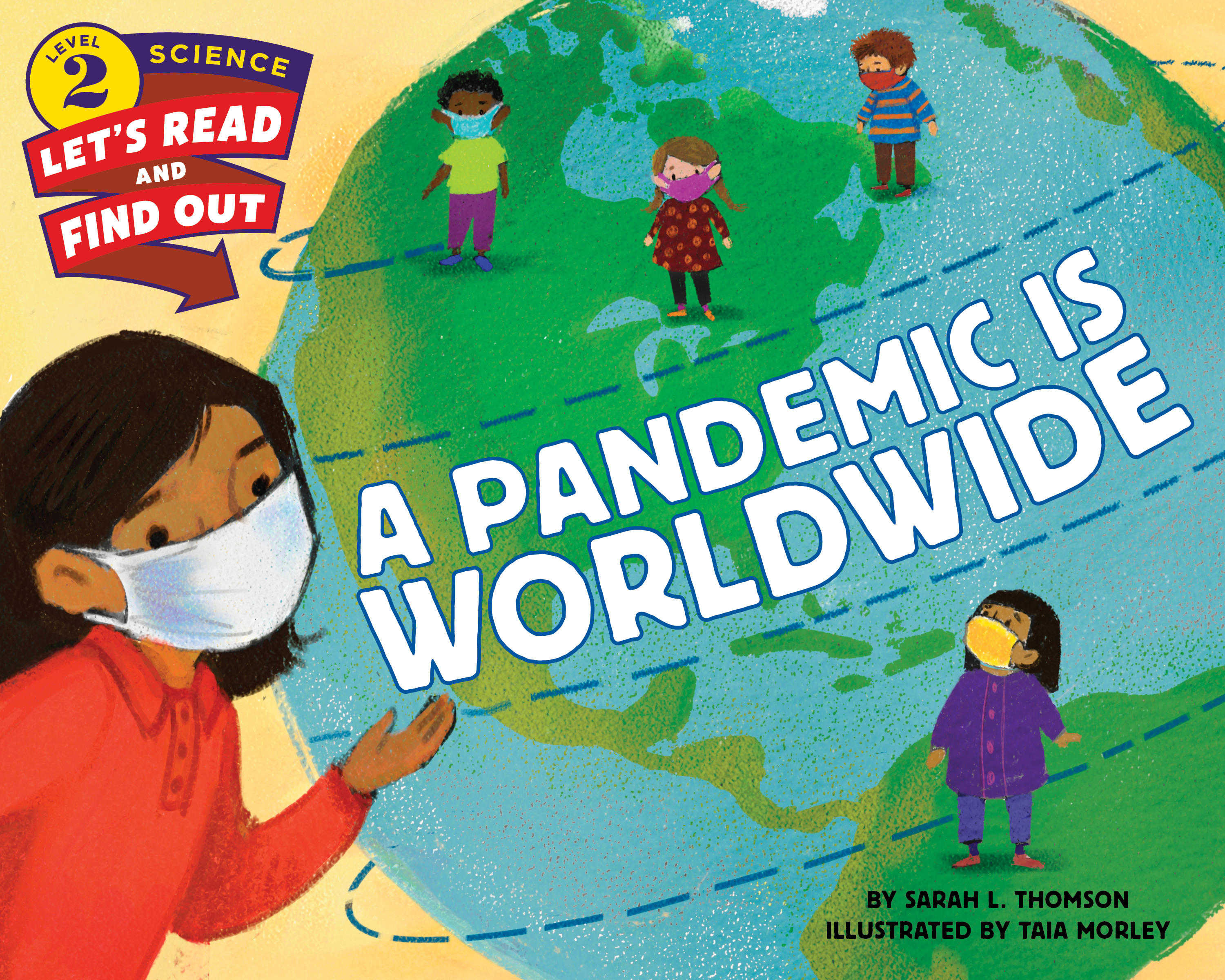
Summary:  This book presents a straightforward look at what a pandemic is, with a brief history of past pandemics and an introduction to Covid 19.  There’s a quick look back at the development of vaccines and antibiotics and precautions that were taken in our current pandemic before a vaccine was developed.  The book ends on an optimistic note: “Everyone who wore a mask or washed their hands or stayed home until it was safe helped bring about the day when the pandemic was over at last.”  Includes a glossary, hand washing instructions, and a timeline of past pandemics.  40 pages; ages 4-8.

Pros:  The Let’s-Read-and-Find-Out series continues to do what it’s done well for the last 60 years: present science in a clear and understandable way to preschool and early elementary students.  At least that’s their target audience: I feel like by now I should know the difference between an outbreak, an epidemic, and a pandemic, but I learned that from reading this book.

Cons:  I wasn’t crazy about the small font.

Olu & Greta by Diana Ejaita

Published by Rise X Penguin Workshop

Summary:  Olu and Greta are cousins who have never met, since Olu lives in Lagos, Nigeria, and Greta is from Milan, Italy.  How would they get together?  It’s too far to walk, skate, or dance, and they don’t know how to fly or operate a spaceship.  It’s possible to take a boat or plane, but that hasn’t happened yet.  So they send each other packages and talk through their computers to share their lives long-distance.  The final illustration shows them as teenagers taking a selfie.  32 pages; ages 3-8.

Pros:  This brief story with striking digital illustrations would make a great introduction to a pen pal project, or to get kids thinking or writing about what they would send to someone they had never met.

Cons:  The postal service may struggle to deliver Greta’s package, which is addressed to “Olu, Nigeria.”

That’s Betty! The Story of Betty White by Gregory Bonsignore, illustrated by Jennifer M. Potter

Published by Henry Holt and Co.

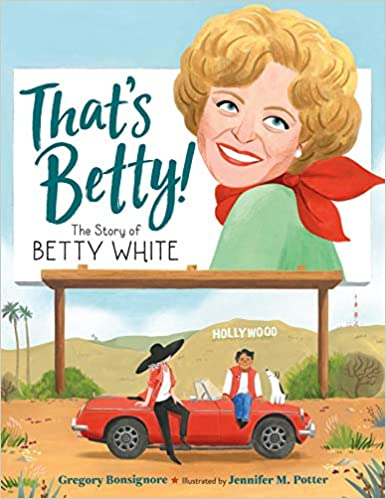
Summary:  When the narrator gets assigned to do a project on a trailblazing woman, he chooses Betty White.  Not everyone is thrilled with his decision: his teacher and one of his dads keep asking, “Wouldn’t you rather choose someone more…traditional?”  But his mind is made up, and off he goes to the library to do his research.  A woman in sunglasses and a big hat gives him some help, adding some details about Betty’s early career as an actress and producer and continuing to her fame in The Mary Tyler Moore Show and The Golden Girls.  His presentation turns out to be a smashing success, and the mysterious lady is there to cheer him on.  As the crowd in school watches her drive off in a red convertible, it suddenly dawns on them: “That’s Betty!”  Includes a timeline (which sadly ends with the 2022 entry “Betty turns 100 years old!”), photos, and a list of sources.  48 pages; grades 1-5.

Pros:  Appropriately, this picture book biography of Betty White is somewhat unconventional with a quirky cast of characters that includes Betty herself.  Clearly the book was written to coincide with the actress’s 100th birthday, and although she didn’t make it to that milestone, the book feels appropriately celebratory.

Cons:  This is a book that may be enjoyed more by adults than kids, who may not be familiar with Betty White and her acting career.

Mina by Matthew Forsythe

Published by Simon and Schuster/Paula Wiseman Books

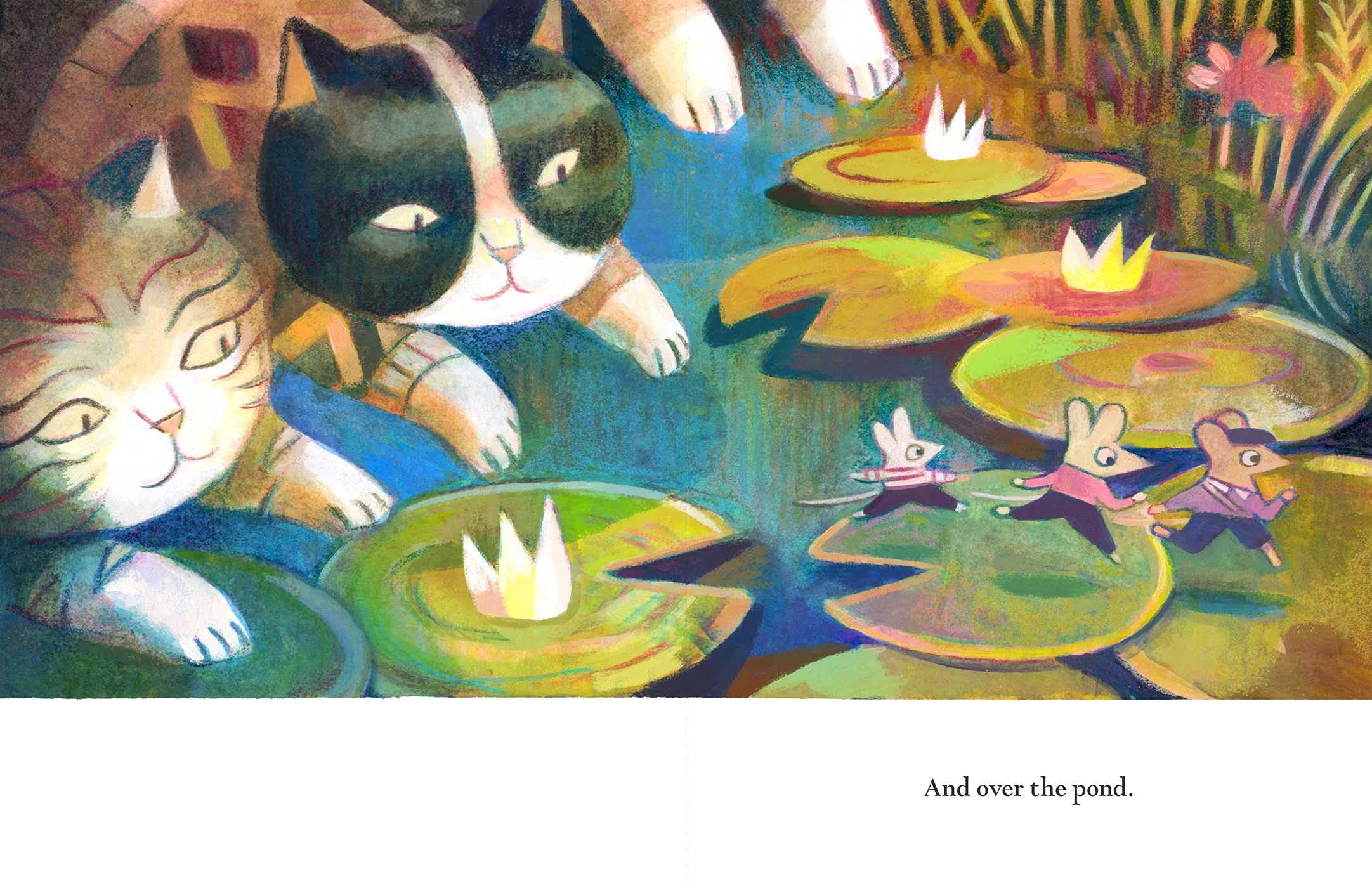
Summary:  Mina usually keeps her nose buried in a book when her father brings home one of his “surprises”.  But when one surprise turns out to be a cat (“It’s a squirrel! Squirrels are bigger than mice and have long, bushy tails!”), Mina starts to worry.  Despite her concerns, the cat becomes part of the family, even sporting a sweater that Mina knits for it.  When the cat stops eating, though, Dad’s solution is to bring home two more cats, who also refuse to eat.  The doctor is called, who diagnoses the problem correctly: “These squirrels are definitely cats,” at which point the cats chase the three mice.  All seems hopeless until a surprise twist–the direct result of Mina’s ingenuity–saves them all.  68 pages; ages 4-8.

Pros:  Any child who has secretly wondered if they are smarter than the adults around them will love this quirky story.  Pay careful attention to the clever illustrations which often reveal more than the words.

Cons:  We all know someone like Mina’s father, who seems like he would have a “dad joke” for every occasion.

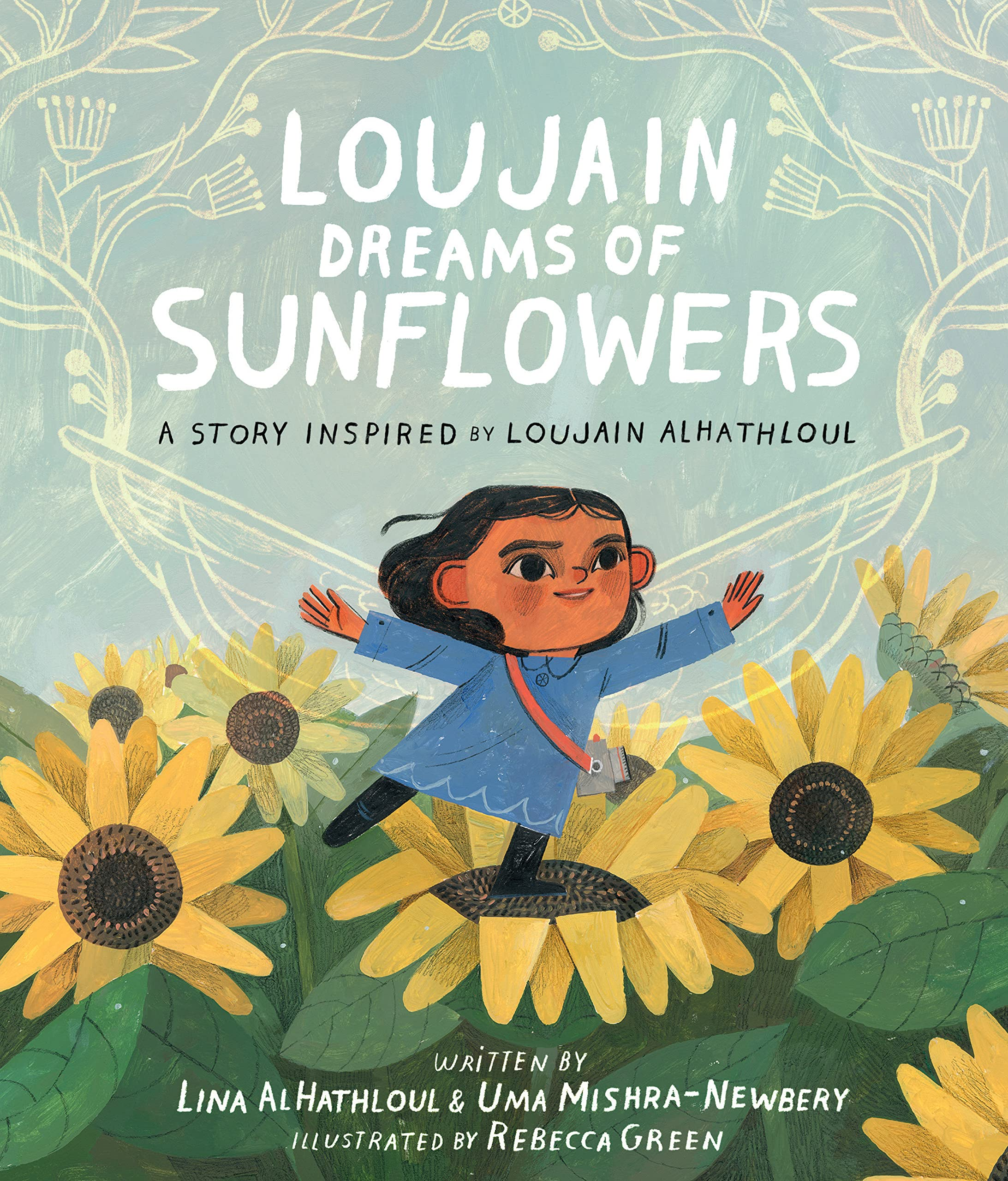
Loujain Dreams of Sunflowers by Lina AlHathloul and Uma Mishra-Newbery, illustrated by Rebecca Green

Published by mineditionUS

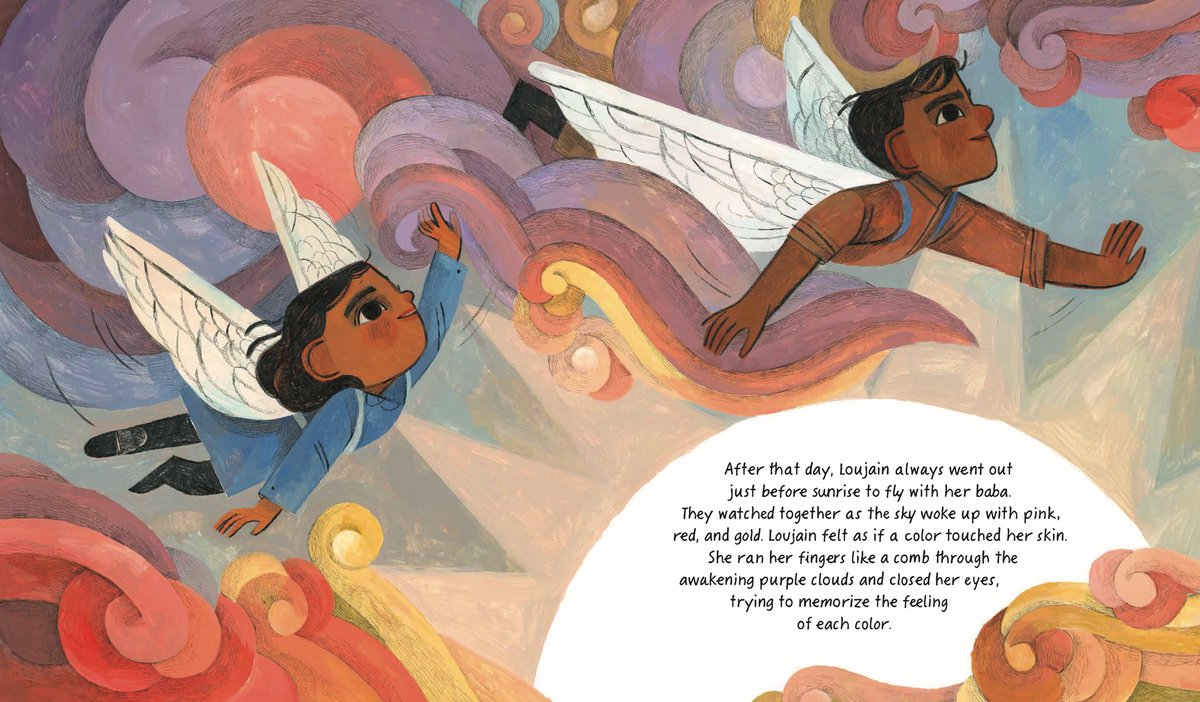
Summary:  Loujain dreams of flying to a beautiful field of sunflowers with her baba.  But in her community, only boys and men are allowed to fly.  All Loujain can do is put on a set of wings and run around the garden, pretending.  Baba tells her that she will fly “someday”.  Finally, Loujain confronts him and tells him that it’s not fair that boys can fly and she can’t.  She wants to learn to fly now.  Her wise mama tells him, “If you don’t support her, who will?  You have to believe things will change.  Otherwise they never will.”  Soon Loujain and Baba are getting up before sunrise for flying lessons.  One day he wakes her up extra early, telling her that they have a long flight to make.  It’s the field of sunflowers!  The next day, Loujain is in the news for defying the flying law.  Her parents are proud of her, and a young girl in the market sees her and immediately asks her baba to teach her to fly.  Includes a note about the real Loujain: Loujain AlHathloul, the author’s sister, who has been jailed for protesting the law prohibiting Saudi women from learning to drive.  40 pages; grades 1-5.

Pros:  This inspiring book would make an excellent discussion starter with older elementary students.  The information about Loujain AlHathloul gives a real-world example about protesting unjust laws.

Cons: The message of the book sometimes seemed to take priority over the story.

Bok’s Giant Leap: One Moon Rock’s Journey Through Time and Space by Neil Armstrong, illustrated by Grahame Baker Smith

Published by Crown Books for Young Readers

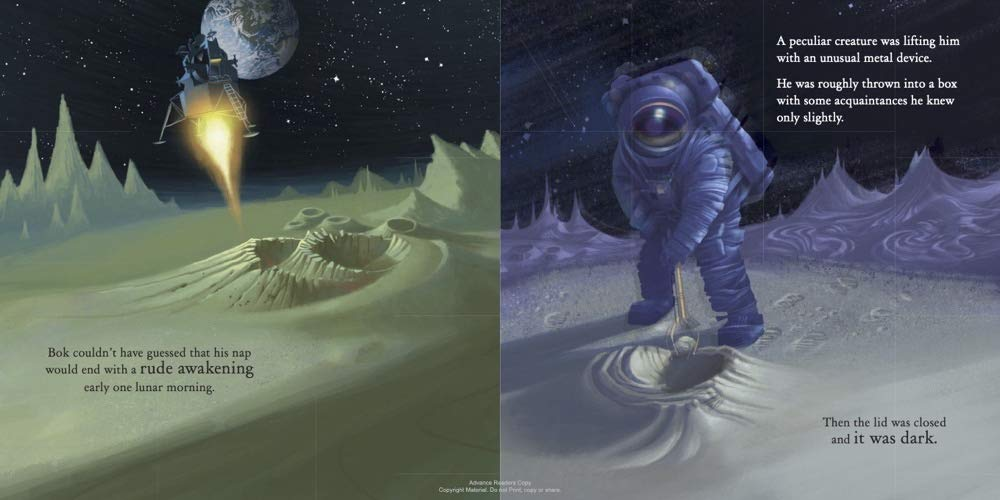
Summary:  While Neil Armstrong was dreaming of flight from his boyhood home in Ohio, a rock was hanging out on the moon, where it had lived for the last four billion years.  Young Neil learned how the moon had been formed when a small planet crashed into Earth, and how rocks were created at the end of the turbulent early time of the moon’s history.  As the years went by, different creatures came and went from the Earth, and eventually humans appeared.  The ancient rock slept through most of human history, but when Neil Armstrong finally traveled to the moon, he picked up the rock and brought it back to Earth.  Neil named the rock Bok, and it now rests in the Cincinnati Museum Center.  Includes additional information about the moon, the Earth, and Neil Armstrong’s journey to the moon.  48 pages; ages 4-8.

Pros:  Kids interested in space exploration, geology, and/or paleontology will get a taste of all of these in this whirlwind tour of the moon and Earth.  Armstrong’s personal connection with the moon and Bok makes the scientific facts even more interesting.

Cons:  Covering five billion years in a picture book means a pretty sketchy history and there are no resources given for additional research.

Good Eating: The (Short) Life of Krill by Matt Lilley, illustrated by Dan Tavis

Published by Tilbury House Publishers

Summary:  A tiny egg sinks deep into the ocean.  As the days pass it changes shape, growing spines, eyes, and a mouth.  In four weeks, the organism travels almost two miles from the depths of the sea to the surface.  Finally, it is a full-grown krill, with 26 legs and spots that can light up.  There are millions and millions of other krill, and it’s a good thing because they provide food for all kinds of animals like seabirds, penguins, and the gigantic blue whale.  Includes additional facts about krill and a list of resources: books, websites, and a National Geographic game called Krill Smackdown.  36 pages; grades 1-4.

Pros:  It seems like it would take considerable creative energy to write an engaging story about an animal whose main purpose in life is to be eaten, and to illustrate it with a cute and endearing krill, but this team has pulled it off.  The additional material at the end makes it a good research resource and emphasizes the important role krill plays in food chains around the world.

Cons:  Kids may need to be persuaded that they really want to read a book about krill.