A Is for Oboe: The Orchestra’s Alphabet by Lera Auerbach and Marilyn Nelson, illustrated by Paul Hoppe

Published by Dial Books

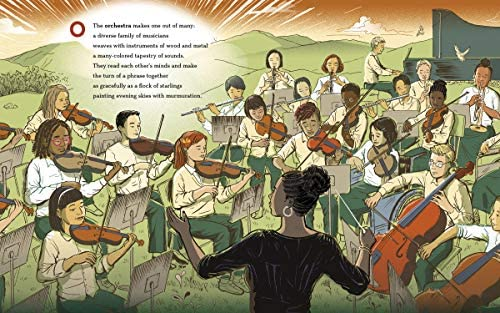
Summary:  This musical alphabet book has a poem for every letter: from the A the oboe plays to warm up the orchestra to the Zzz’s the musicians and audience members catch after the performance.  In between there are poems celebrating different instruments, the people involved in making music, and the music itself, both what’s written on paper and what is performed.  40 pages; grades 1-5.

Pros:  An A to Z poetry book of music didn’t really grab me, but once I started reading, I found every poem engaging and I zipped through the book in no time.  Many different aspects of music were covered (and of course I appreciated the fact that the letter L celebrates music librarians), and the energetic illustrations help readers understand the topics of the poems.

Cons:  Readers unfamiliar with music will need some additional context; it would have been nice to have some of that provided with either information on each page or with some back matter.
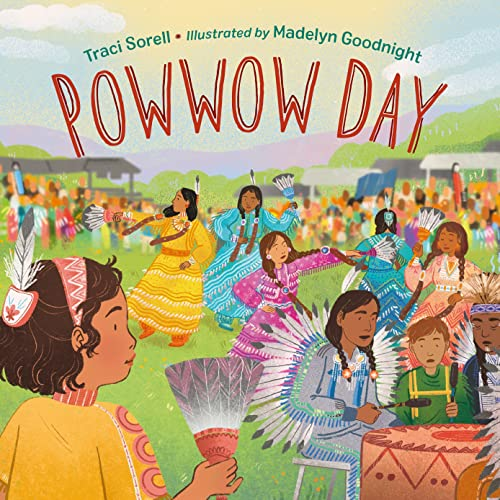

Powwow Day by Traci Sorell, illustrated by Madelyn Goodnight

Published by Charlesbridge

Summary:  Waking up on powwow day is usually exciting, but this year River has been sick and has to watch from the sidelines.  She dresses up and goes with her family, watching as her friend gets ready to dance.  She tries to dance the Grand Entry but can’t feel the drumbeat and ends up getting led back to her seat by her older sister.  Finally, it’s time for the jingle dance.  As River watches the girls dance, she starts to feel stronger and is finally able to stand, filled with a sense of certainty that she will be dancing at next year’s powwow.  Includes two pages of information about the powwow, a brief author’s note, and a list of sources.  32 pages; ages 4-8.

Pros:  Another beautiful book by Traci Sorrell who masterfully weaves details about the powwow into River’s story and includes lots more information at the end (the history of the jingle dress dance and its connection to healing was particularly interesting).  The illustrations perfectly capture the colors and movement of the dancers.

Cons:  I can always enjoy a photo or two in the back matter.

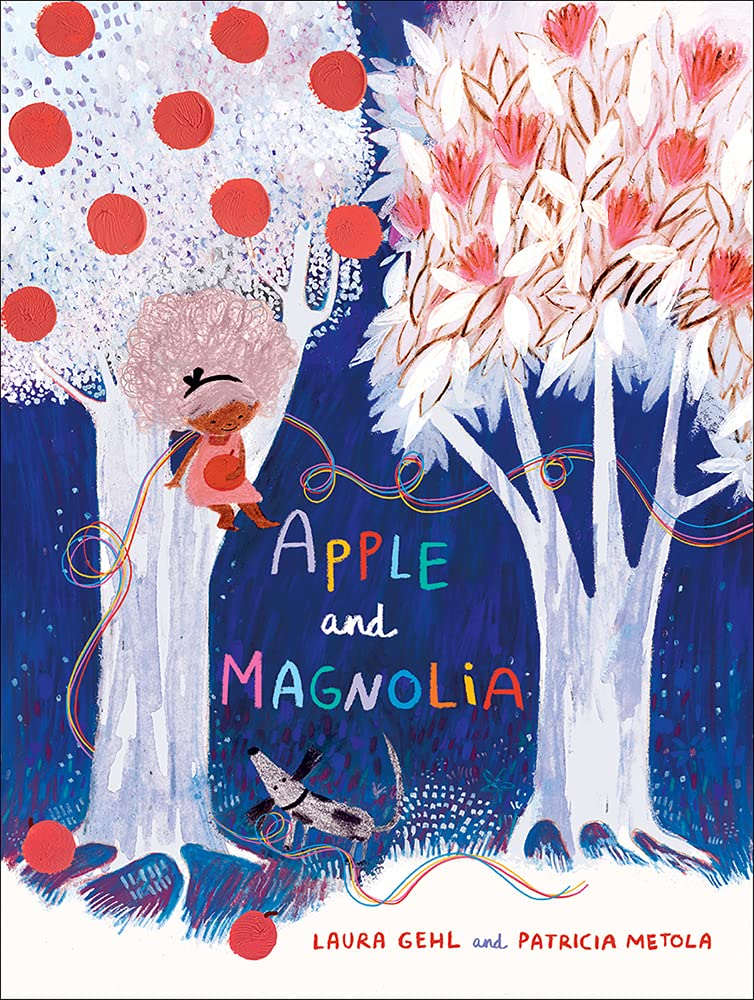
Apple and Magnolia by Laura Gehl, illustrated by Patricia Metola

Published by Flyaway Books

Summary:  Britta loves Apple and Magnolia, two trees who grow side-by-side, and is sure that they are friends.  Dad tells her kindly that he doesn’t think that’s possible, and big sister Bronwyn not-so-kindly agrees.  But Nana says that unusual friendships can be the most powerful.  When Magnolia starts to droop, Dad says she probably won’t make it through the winter, but Britta is sure that Apple can help Magnolia survive.  She encourages their friendship by knitting a long scarf to connect them and stringing lights in their branches so they can always see each other.  As winter turns to spring, Britta thinks that their branches are growing closer together, and Gran helps her create a chart to track this theory.  Magnolia is late to flower, but when the beautiful blooms finally appear, Britta is ready to celebrate.  Predictably, Dad and Bronwyn remain certain that Apple had nothing to do with Magnolia’s recovery, but Gran restates her position that unusual friendships are the most powerful of all.  40 pages; ages 4-8.

Pros:  This beautiful story includes friendship, a wise grandmother, and a nice dose of science, starting with an author’s note stating that scientists are just beginning to understand how trees communicate with each other.  Those wanting to learn more can read Lita Judge’s The Wisdom of Trees.  

Cons:  I was hoping for a little more of a change of heart from Dad.

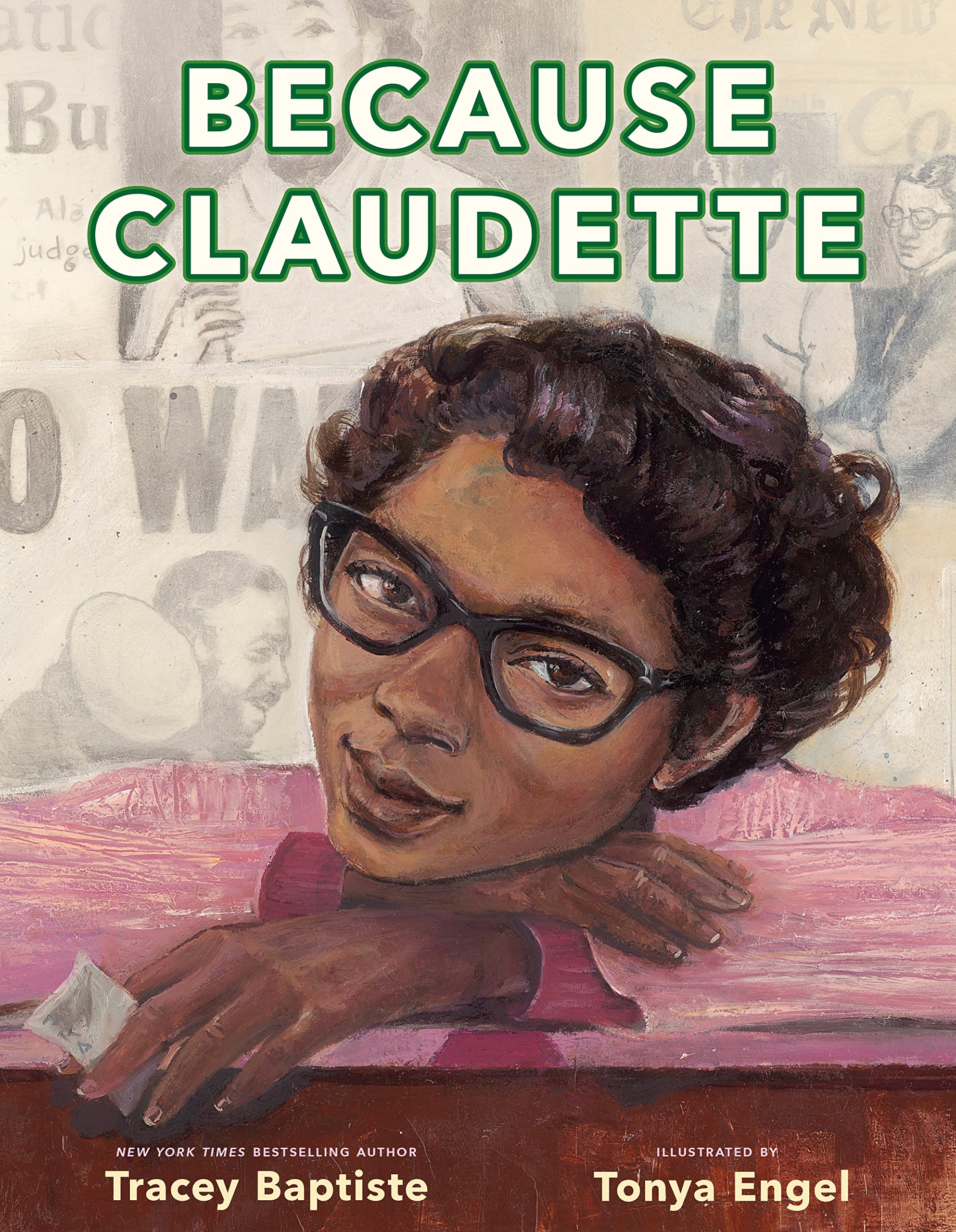
Because Claudette by Tracey Baptiste, illustrated by Tonya Engel

Published by Dial Books

Because Claudette: Baptiste, Tracey, Engel, Tonya: 9780593326404: Amazon.com:  Books

Because Claudette – Books of Wonder

Summary:  “Because fifteen-year-old Claudette Colvin didn’t give up her seat on the bus for a white person on March 2, 1955, she was arrested.”  Thus begins a chain of events that leads Claudette to become friends with Rosa Parks, get involved with the Montgomery bus boycott, and to testify in court when her lawyer challenged the segregation laws.  Claudette was inspired by Black activists from the past as well as her contemporaries like Martin Luther King, Jr., Rosa Parks, and other women who refused to give up their bus seats.  When the Supreme Court ruled that bus segregation was unconstitutional, Claudette read about it in the newspaper.  “On December 21, 1956, anyone could sit wherever they liked on the bus.  And all of it happened because of Claudette.”  Includes a brief author’s note, and a list of two books and three websites for further research.  32 pages; grades K-3.

Pros:  The simple text and beautiful illustrations (I love that cover) show how one young person can make a big difference.  This would be an inspiring book to read to younger kids for Black History Month.

Cons:  The lack of back matter was a real missed opportunity: there could have been photos, a lot more biographical information on Claudette, as well as more about the the others pictured in the text.

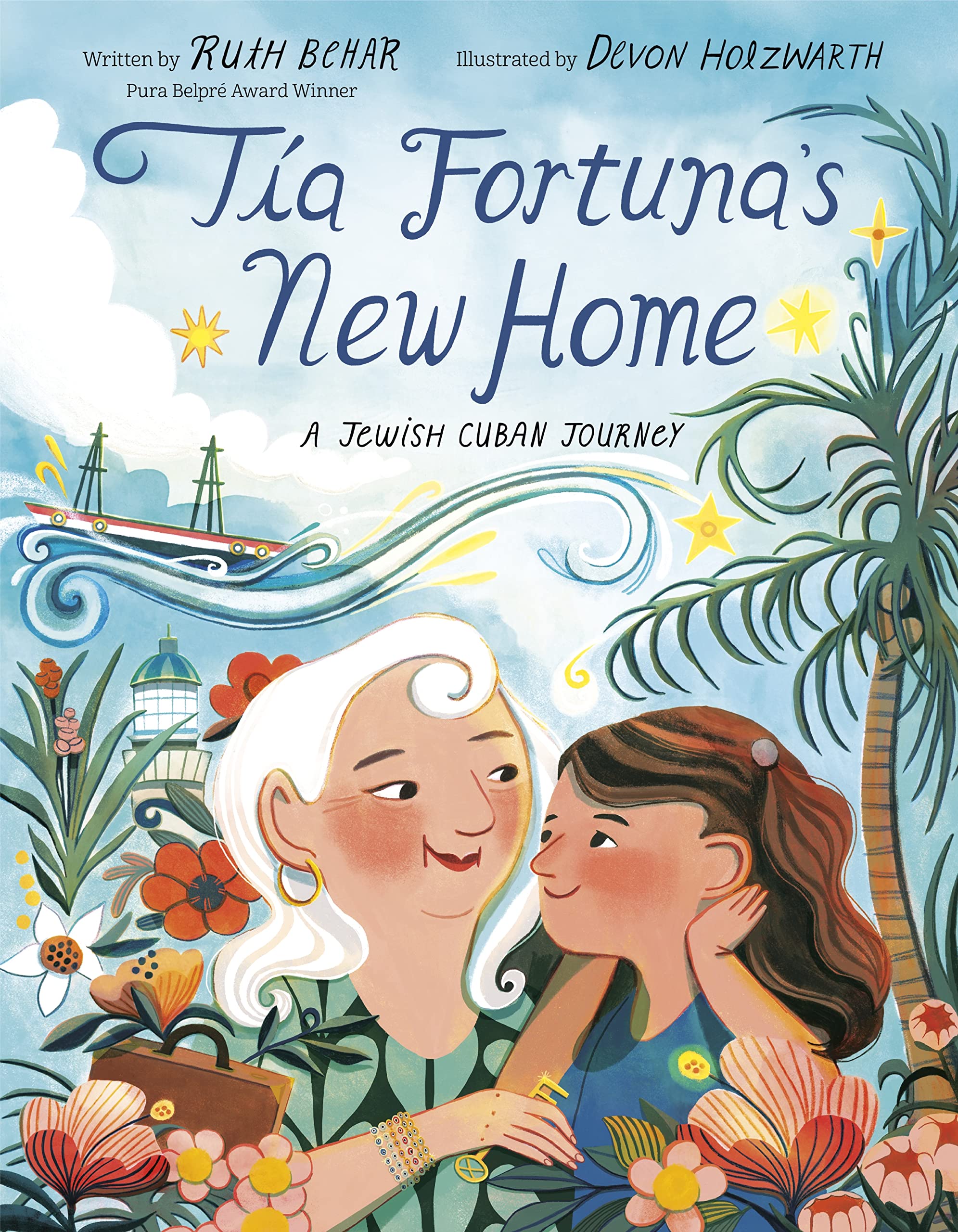
Tía Fortuna’s New Home: A Jewish Cuban Journey by Ruth Behar, illustrated by Devon Holzwarth

Published by Knopf Books for Young Readers

Tía Fortuna's New Home: A Jewish Cuban Journey: Behar, Ruth, Holzwarth,  Devon: 9780593172414: Amazon.com: Books

El nuevo hogar de Tía Fortuna: Una historia judía-cubana (Spanish Edition):  Behar, Ruth, Holzwarth, Devon: 9780593381069: Amazon.com: Books

Summary:  The narrator loves visiting her tía Fortuna’s casita at the Seaway.  But now the Seaway is being torn down, and tía Fortuna is moving.  The girl helps her aunt pack a small suitcase, bake some warm borekas, and say goodbye to the beach.  As they work, tía talks a little about their ancestors who came from Spain and traveled to Turkey, Cuba, and finally, Miami.  Then Mommy arrives to take them to La Casa de los Viejitos, where they help tía get settled in her room.  She immediately starts handing out borekas and making new friends. Tia gives the girl a key from the Seaway that she can wear around her neck to remember the home they both loved.  Includes an author’s note with additional information about Sephardic Jews and her connection to them, and a glossary of words from the story in other languages.  32 pages; ages 4-8.

Pros:  A warm story of a loving intergenerational relationship with information woven in about a culture I knew nothing about.  The illustrations do a great job of showing some of the items mentioned that kids may not be familiar with, and the colors evoke Miami and Cuba.  The author’s note is helpful in understanding the story better.

Cons: La Case de los Viejitos isn’t translated, so kids will have to use some inference skills to figure out that tia Fortuna is moving to a retirement home.

Big Ship Rescue! by Chris Gall

Published by Norton Young Readers

Big Ship Rescue! (Big Rescue): Gall, Chris: 9781324019251: Amazon.com: Books

Summary:  Mayday! Mayday! The Goliath is in trouble when its engines quit, and it starts taking on water.  After the crew is rescued by helicopters, Salvage Master Miley arrives in her tugboat, the Mighty Mackerel, to see if the Goliath can be saved.  She and her crew inspect the ship underwater, pump its fuel onto a barge, and offload the cargo.  The Mighty Mackerel and two other tugboats successfully get the Goliath back to port, where it looks like it can be repaired to travel the world again.  Salvage Master Miley heads back to her home port just in time to give her baby a bath, complete with toy boats.  Includes a diagrammatic of the Goliath on the endpapers.  48 pages; ages 4-8.

Pros:  Here’s a book for all the vehicle fans who love to learn how things work.  The explanations and illustrations are clear and understandable, even for readers like myself who don’t usually toss around phrases like “pump fuel onto a barge” and “offload cargo”. This is a companion to last year’s Big Rig Rescue.

Cons:  I was hoping for a little more back matter. 

Sweet Justice: Georgia Gilmore and the Montgomery Bus Boycott by Mara Rockliff, illustrated by R. Gregory Christie

Published by Random House Studio

Sweet Justice: Georgia Gilmore and the Montgomery Bus Boycott: Rockliff,  Mara, Christie, R. Gregory: 9781524720650: Amazon.com: Books

Sweet Justice: Georgia Gilmore and the Montgomery Bus Boycott: Rockliff,  Mara, Christie, R. Gregory: 9781524720643: Amazon.com: Books

Summary:  “Georgia Gilmore was cooking when she heard the news.”  Rosa Parks had been arrested for refusing to give up her seat on a city bus, news that came as no surprise to Georgia who had had her own run-in with a bus driver and no longer used the buses.  She was delighted when a boycott was announced and enjoyed the company of others when she walked to work.  Georgia started cooking to raise money for the drivers giving rides to those whose commute was too far to walk.  Later, she helped her friend and neighbor Dr. Martin Luther King, Jr. by testifying in court at his trial for organizing the boycott.  King reciprocated by giving Georgia money to start her own restaurant when she was fired from her job.  Soon, the restaurant overflowed with enthusiastic diners, and Georgia was cooking once again when she heard the news that the U.S. Supreme Court had ruled that segregated buses were unconstitutional.  Includes additional information about Georgia Gilmore, a list of sources, and a note about research that should be required reading for all young researchers.  40 pages; grades K-5.

Pros:  Mara Rocklin’s engaging writing style and Caldecott honoree R. Gregory Christie’s vivid illustrations bring to life this unsung heroine of the civil rights movement.  Readers will be inspired to learn how humble actions like cooking and walking to work helped bring about important changes.

Cons:  I could have enjoyed a recipe or two.

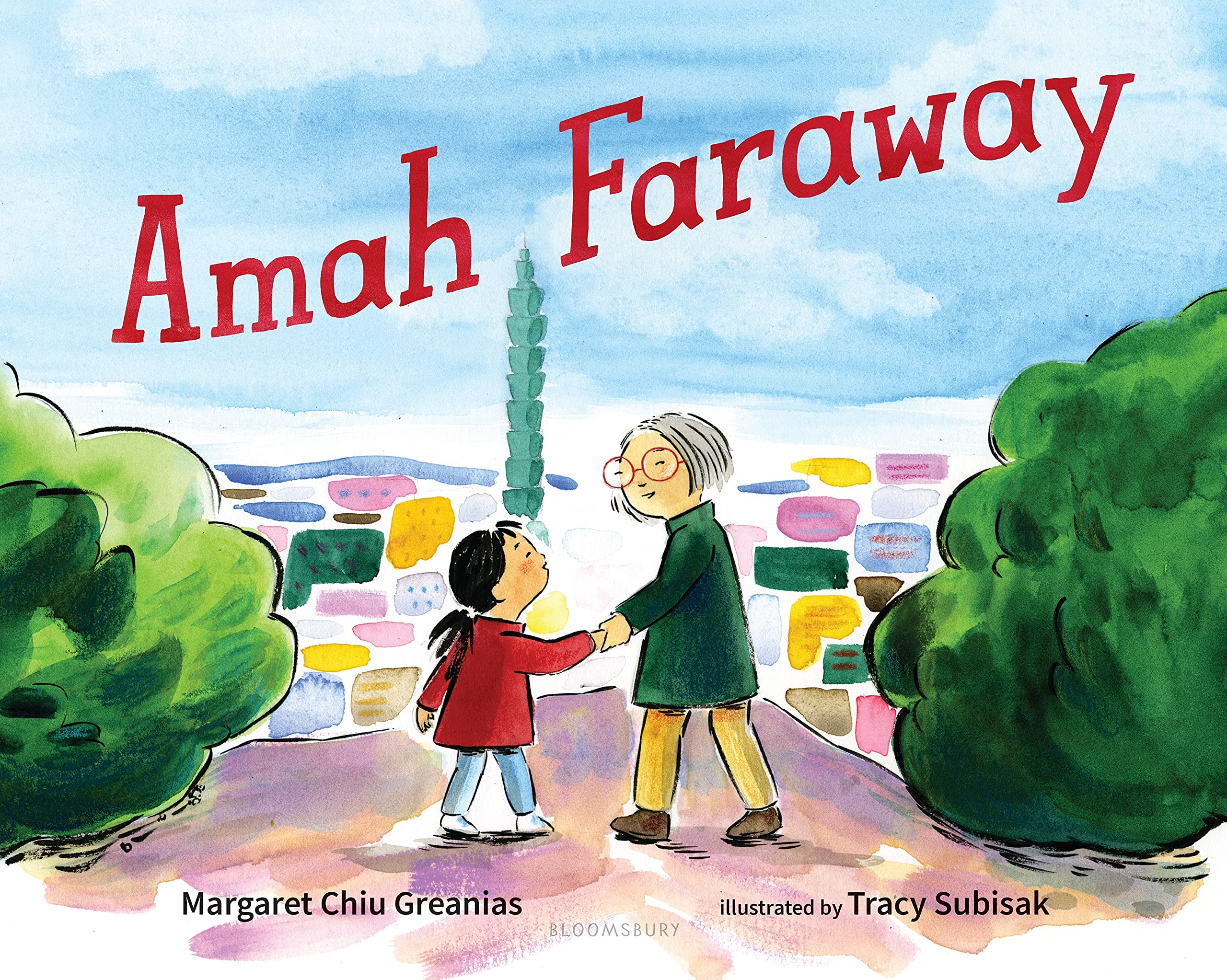
Amah Faraway by Margaret Chiu Greanis, illustrated by Tracy Subisak

Published by Bloomsbury Children’s Books

Amah Faraway: Greanias, Margaret Chiu, Subisak, Tracy: 9781547607211:  Amazon.com: Books

Amah Faraway Book Review |

Summary:  Kylie is nervous about visiting Amah in Taipei.  Even though they connect by computer every Saturday, it’s not the same as visiting in person.  At first, Amah leads the way, preparing a big dinner for extended family and sharing her beloved Taipei while Kylie hangs back.  A visit to the hot springs proves to be the turning point, and soon Kylie is comfortable enough to take the lead in exploring the city.  Everyone is sad when the visit is over, but now those online Saturday calls are more meaningful, and visits are exciting.  Includes notes from the author and illustrator and additional information about the places in Tapei that are shown in the book; endpapers include Chinese words for different objects.  40 pages; ages 4-8.

Pros:  A celebration of intergenerational relationships, especially those that have to overcome a geographical barrier.  Kids everywhere will relate to Kylie’s initial shyness that eventually blossoms into a contagious enthusiasm.  Chinese words are cleverly woven into the text via cartoon bubbles. The trip to the hot springs divides the book into two parts; the sentences in the first part are repeated in reverse order in the second part.

Cons:  I felt like the title of this book should have been “Amah Far Away”, which led me to the realization that I’m not clear on the far away/faraway distinction.

Where Is Bina Bear? by Mike Curato

Published by Henry Holt and Co.

Where Is Bina Bear?: Curato, Mike, Curato, Mike: 9781250762207: Amazon.com:  Books

Where Is Bina Bear?

Summary:  Tiny Rabbit is having a big party, but Bina Bear is nowhere to be found…or is that Bina with a lampshade on his head?  “No.  I am not Bina.  I am a lamp.”  Other strange objects that vaguely resemble a blue bear start appearing around the house: a table, a tree, a chair, and a bookcase.  Finally, Tiny finds Bina in the kitchen with a grocery bag on his head.  “Are you okay?” asks Tiny.  “I’m fine,” replies Bina, but when Tiny removes the bag, there’s a tear in Bina’s eye.  It turns out Bina doesn’t like parties.  “Then why did you come?” asks Tiny.  “Because I like you,” says Bina.  When the rest of the party guests head to the kitchen looking for Bina and Tiny, the only find two lamps and decide to head back to the party.  The last page shows the two lamps dancing with the rest of the group. 32 pages; ages 4-8.

Pros:  A fun book that will appeal to both the introverts who struggle with large social gatherings and their friends who work to understand them.

Cons:  Do not try dancing with a lampshade over your head.

Alice Waters Cooks Up a Food Revolution by Diane Stanley, illustrated by Jessie Hartland

Published by Paula Wiseman Books

Alice Waters Cooks Up a Food Revolution: Stanley, Diane, Hartland, Jessie:  9781534461406: Amazon.com: Books

Alice Waters Cooks Up a Food Revolution: Stanley, Diane, Hartland, Jessie:  9781534461406: Amazon.com: Books

Summary:  Growing up in the Garden State, Alice Waters enjoyed fresh produce from her family’s backyard.  In college, a semester abroad introduced her to the wonders of French cuisine, which she tried to duplicate for her friends when she returned home.  After graduation, she bought an old house that she fixed up and turned into Chez Panisse, a restaurant that served a single meal each night.  The restaurant was a huge success, but Alice struggled to find the fresh ingredients she remembered from her childhood and her trip to France.  She traveled through northern California, looking for small farms where food was produced in traditional ways. Using this food in her restaurant helped start the movement toward local food that is popular today.  Includes two pages of additional information, including Alice’s work with schools to produce local fresh food; a timeline, and a bibliography.  48 pages; grades K-5.

Pros:  This quirky book perfectly captures the spirit of Alice Waters’ restaurant, where the staff would dance late into the night after the diners left and a friend once cooked and ate his shoe after losing a bet.  The mouth-watering descriptions of fresh food may even entice kids to eat their vegetables.

Cons:  Like Alice, I grew up in Chatham, New Jersey and ate produce from my father’s backyard garden all summer; unlike her, I did not turn out to be a world-class restaurateur or even a particularly good cook.