Q and U Call It Quits by Stef Wade, illustrated by Jorge Martin

Published by Quill Tree Books
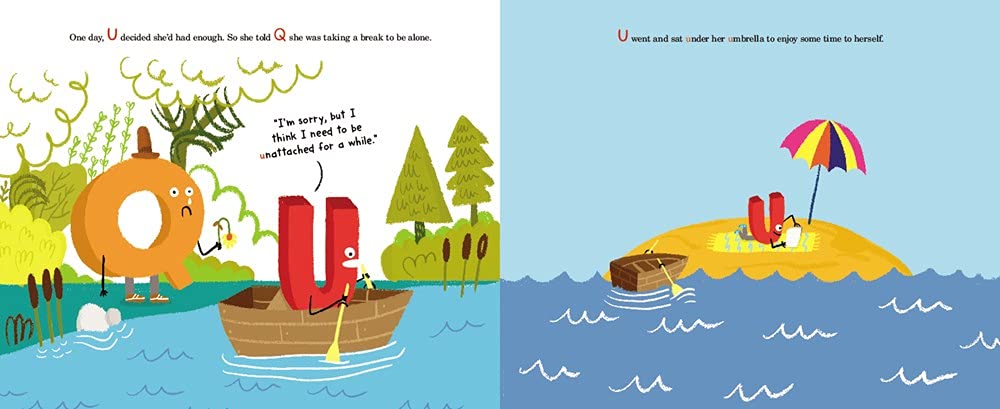
Q and U Call It Quits: Wade, Stef, Martin, Jorge: 9780062970688: Amazon.com:  Books

Summary:  Q and U are the closest of friends until Q starts to notice that U has quite a few other friends, and that Q needs U more than U needs him.  When U announces she needs a break, other letters start to realize how they need some alone time (S to L: “You’re slowing me down”; W to R: “We’re just wrong for each other”).  Going solo is fine for a while, but when things start to fall apart, U realizes her mistake and apologizes to Q.  Other letters follow suit, and the world is restored to normalcy.  Although once in a while, Q and U still spend a few quiet–or silent–moments apart.  32 pages; ages 4-8.

Pros:  Not only is this a great friendship story, but it is perfect for introducing beginning readers to letter combinations and the sounds they make.  Fun for everyone.

Cons:  Seems like Q could have gotten a little break from U by visiting Qatar or practicing some qigong.
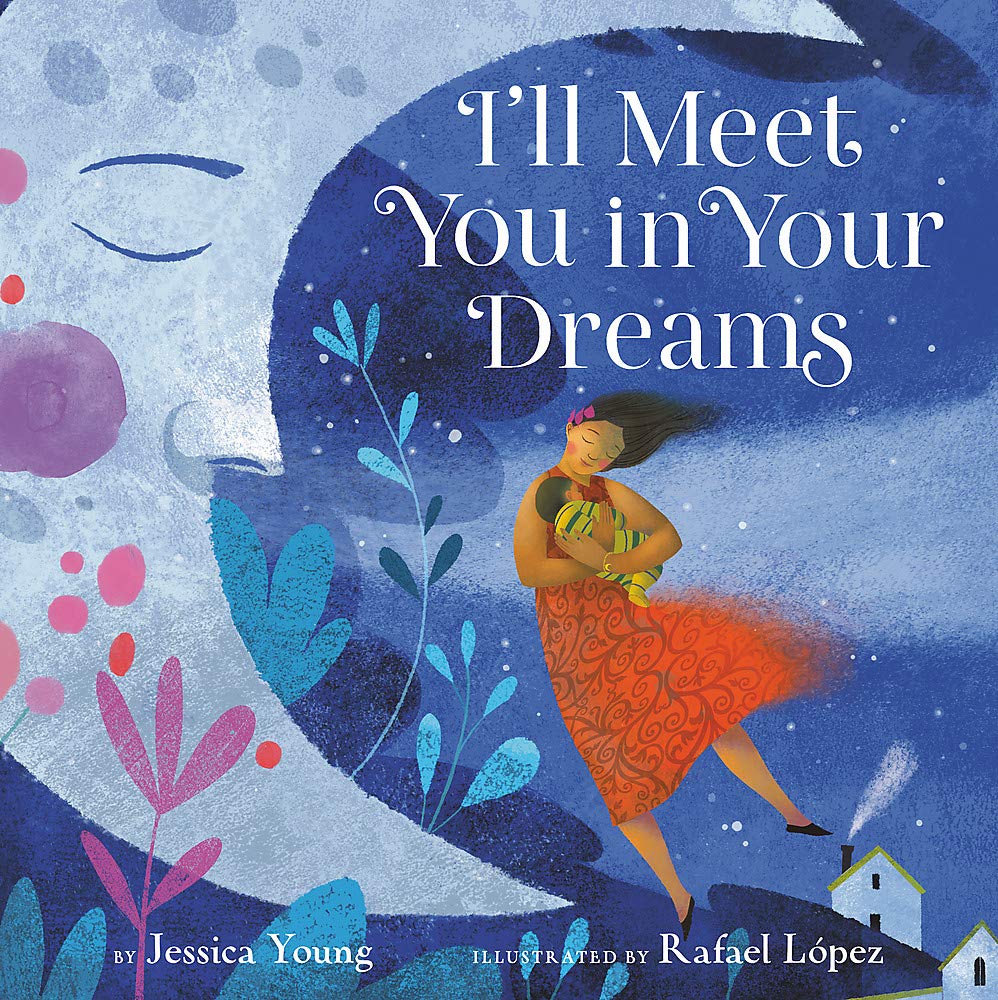
I’ll Meet You In Your Dreams by Jessica Young, illustrated by Rafael López

Published by Little, Brown Books for Young Readers

Amazon.com: I'll Meet You in Your Dreams: 9780316453288: Young, Jessica,  Lopez, Rafael: Books

Summary:  A mother tells of her undying love for her son, imagining him as a bumblebee snuggled in a flower until it starts to rain.  Then the illustrations change to show a father and young daughter imagining themselves as a mole and mouse in a cozy hole.  The pictures alternate between the two pairs as they dream about different roles…and also as they grow older.  Finally, it’s time for the kids, now adults, to go out into the world on their own, but the parents are always loving them and meeting them in their dreams.  The final pages show the young man with a son and the young woman playing guitar, with the ghostly figures of the parents in the sky overhead.  40 pages; ages 3-8.

Pros:  A beautiful book that would make a perfect bedtime story.  The illustrations by Pura Belpré Medalist López are particularly moving, enhancing the text to show how a parent’s love extends throughout the child’s life.

Cons:  I’ve really struggled trying to remember the title of this book. I keep wanting to call it I’ll See You in My Dreams, which apparently is the title of a number of other movies, songs, etc.

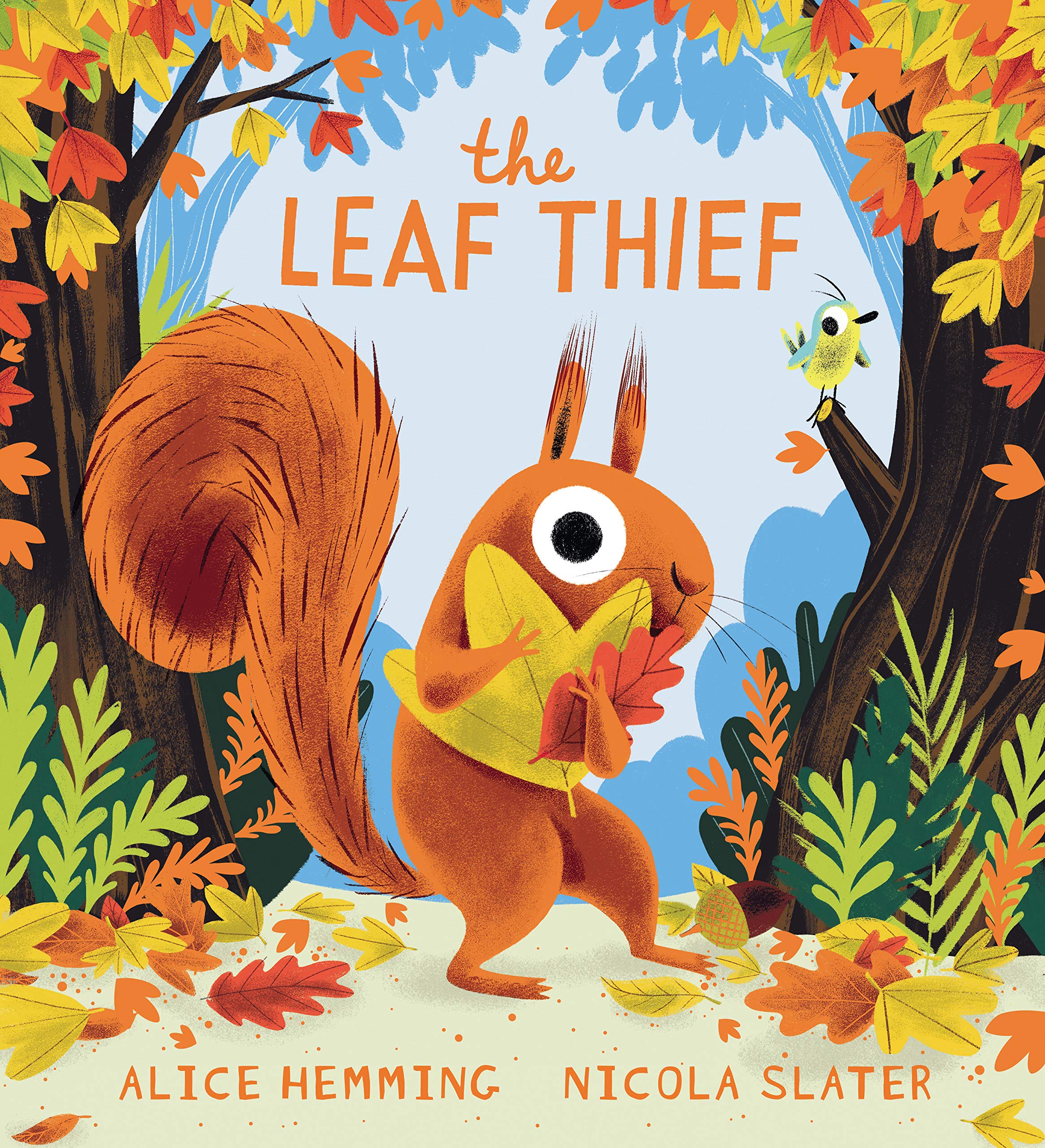
The Leaf Thief by Alice Hemming, illustrated by Nicola Slater

Published by Sourcebooks Jabberwocky

The Leaf Thief: Hemming, Alice, Slater, Nicola: 0760789305887: Amazon.com:  Books

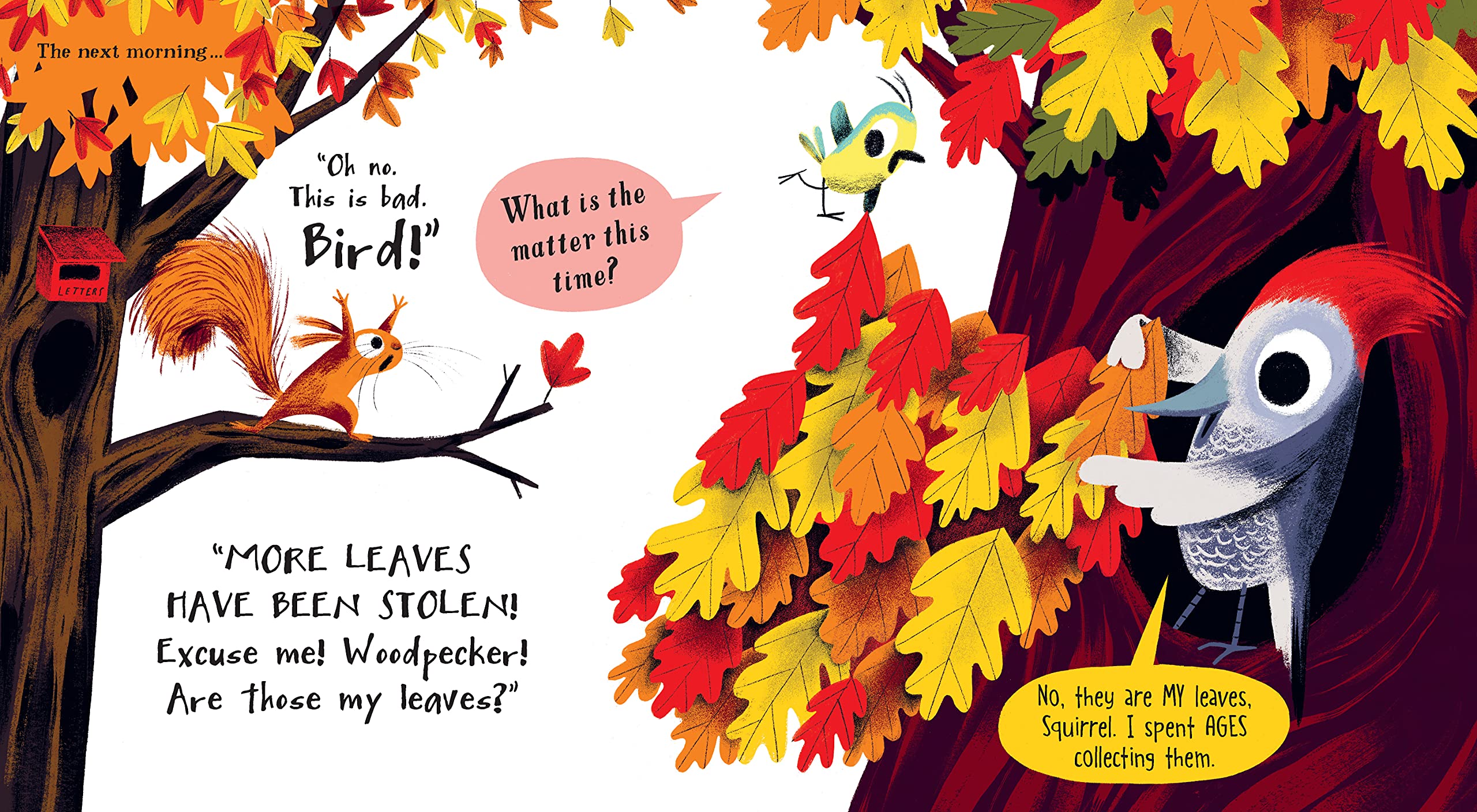
Summary:  Squirrel is in a panic when he notices that one of his leaves is missing, and immediately runs to his friend Bird’s house to report the theft.  Bird reassures him that it’s normal to lose a leaf or two at this time of year, but the next day, Squirrel freaks out again when more leaves go missing.  He accuses some of the other animals, but eventually Bird reminds him that this has happened before, and that the only one stealing leaves is the wind.  Squirrel is finally able to calm down…until he wakes up on a snowy morning, and realizes that someone has stolen the GRASS!  Includes two pages of facts about autumn and the changes deciduous trees undergo during the fall season.  32 pages; ages 3-7.

Pros:  I have nothing against Halloween and Thanksgiving books, but sometimes you just want a good fall story; this one is sure to be a hit with younger kids who will undoubtedly find Squirrel’s antics hilarious.  As a bonus, there’s some good, age-appropriate information to share about the season.

Cons:  The fall facts are printed on the back cover.  Someday, in my ideal world, publishers will listen to me and stop doing that, so we librarians won’t have to cover them up with the dust jackets. 

Laxmi’s Mooch by Shelly Anand, illustrated by Nabi H. Ali

Published by Kokila

Laxmi's Mooch by Shelly Anand: 9781984815651 | PenguinRandomHouse.com: Books
Laxmi's Mooch: Anand, Shelly, Ali, Nabi H.: 9781984815651: Amazon.com: Books

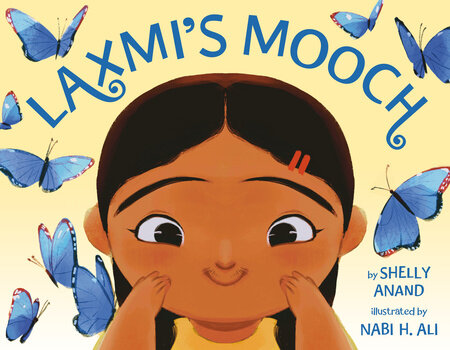
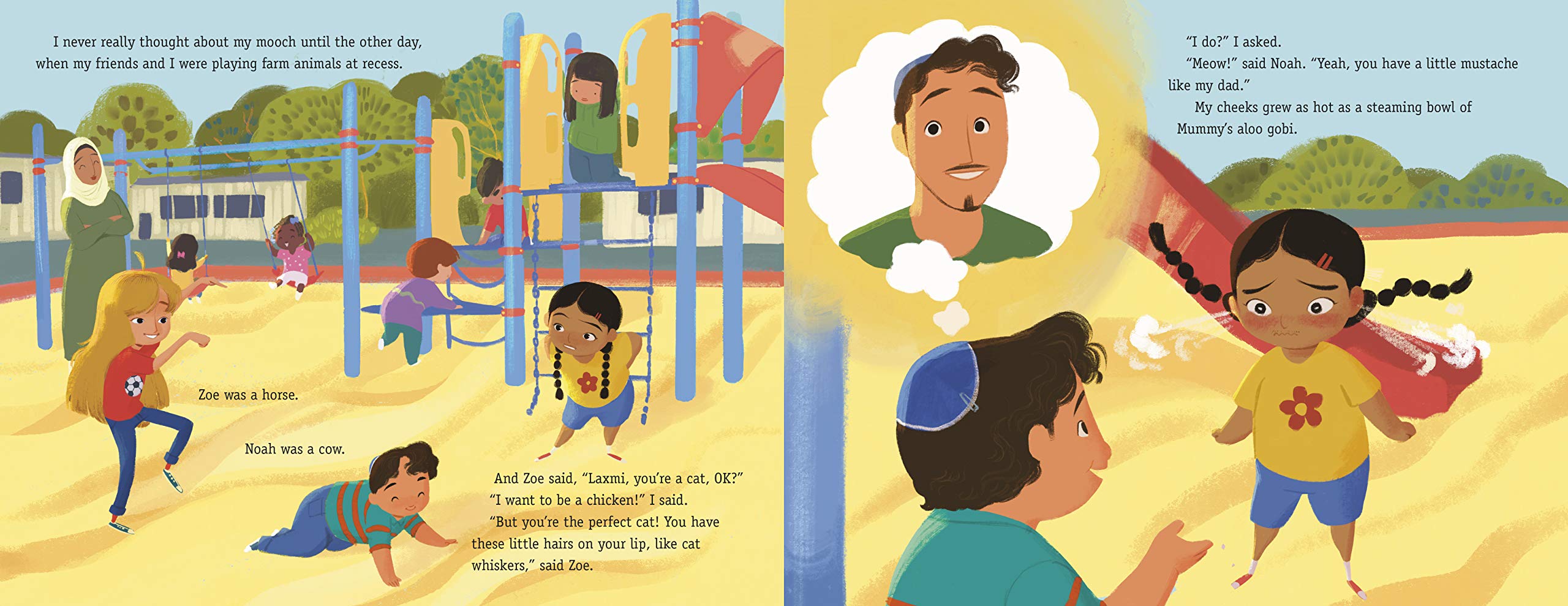
Summary:  When the kids play a farm animal game at school, Laxmi wants to be a chicken, but Zoe says she should be a cat because she has whiskers.  Laxmi’s never noticed the hairs above her lip, but after that she becomes self-conscious about them, as well as the ones on her arms, legs, and in between her eyebrows.  When she tells her parents about the incident, they immediately assure her that all the women in the family (including her mother) have a mooch, and that everyone has hair on their bodies to keep them warm.  The next day at recess, Laxmi says that she wants to be a tiger, because of her whiskers, and suggests that Zoe can use her golden whiskers to be a lion.  Zoe denies having whiskers, but a trip to the bathroom mirror proves otherwise.  Noah wants whiskers, but doesn’t have them, so Zoe draws some on his face, and then proceeds to decorate everyone in her class–even the teacher–with a mooch.  32 pages; ages 4-8.

Pros:  A great story about self-acceptance, with Laxmi’s parents rocking their role of helping their child feel good about herself.  

Cons:  Mooch or no, it seems way more fun to pretend to be a cat than a chicken.

It Began with Lemonade by Gideon Sterer, illustrated by Lian Cho

Published by Dial Books

It Began with Lemonade: Sterer, Gideon, Cho, Lian: 9780735228283: Amazon.com:  Books

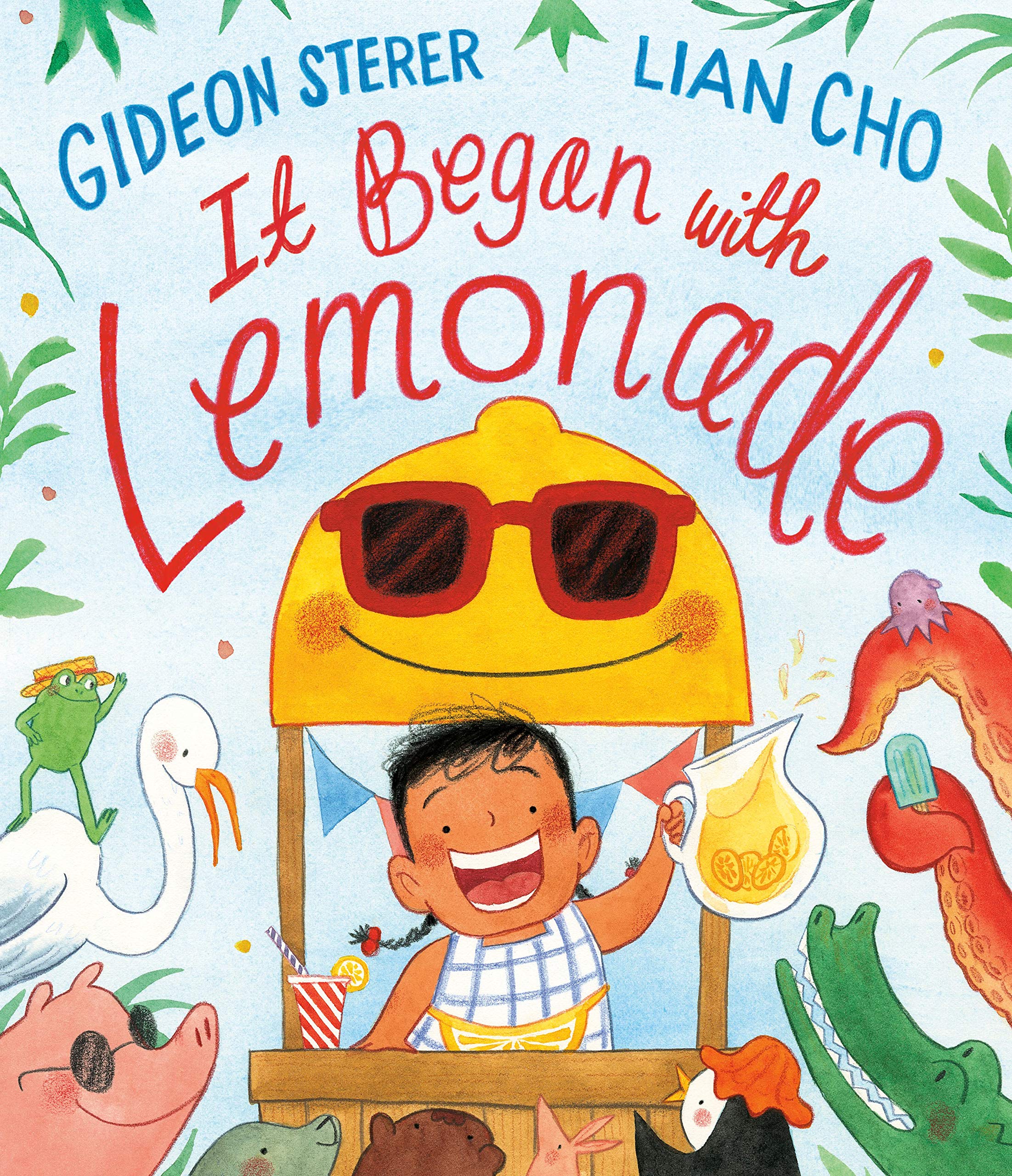
Summary:  An enthusiastic girl puts together a lemonade stand on wheels and heads out to make some sales, but soon finds that other lemonade sellers have gotten ahead of her.  She pushes her stand through the busy streets until suddenly it gets away from her, and she’s forced to chase it out of town and through the woods.  It finally lands by the river, where she sits, feeling terrible, until a man comes along in a boat.  She sells him a glass of lemonade, then starts hawking her wares.  Before long, she has an octopus, a bear, a couple of crocodiles, and a host of other animal customers lining up.  After selling out, she heads for home, where she falls asleep dreaming of another fantastic day of sales tomorrow. 40 pages; ages 3-8.

Pros:  Enjoy the last few weeks of summer with this imaginative tale that is literally about making lemonade when life gives you lemons.  

Cons:  I’m thirsty.

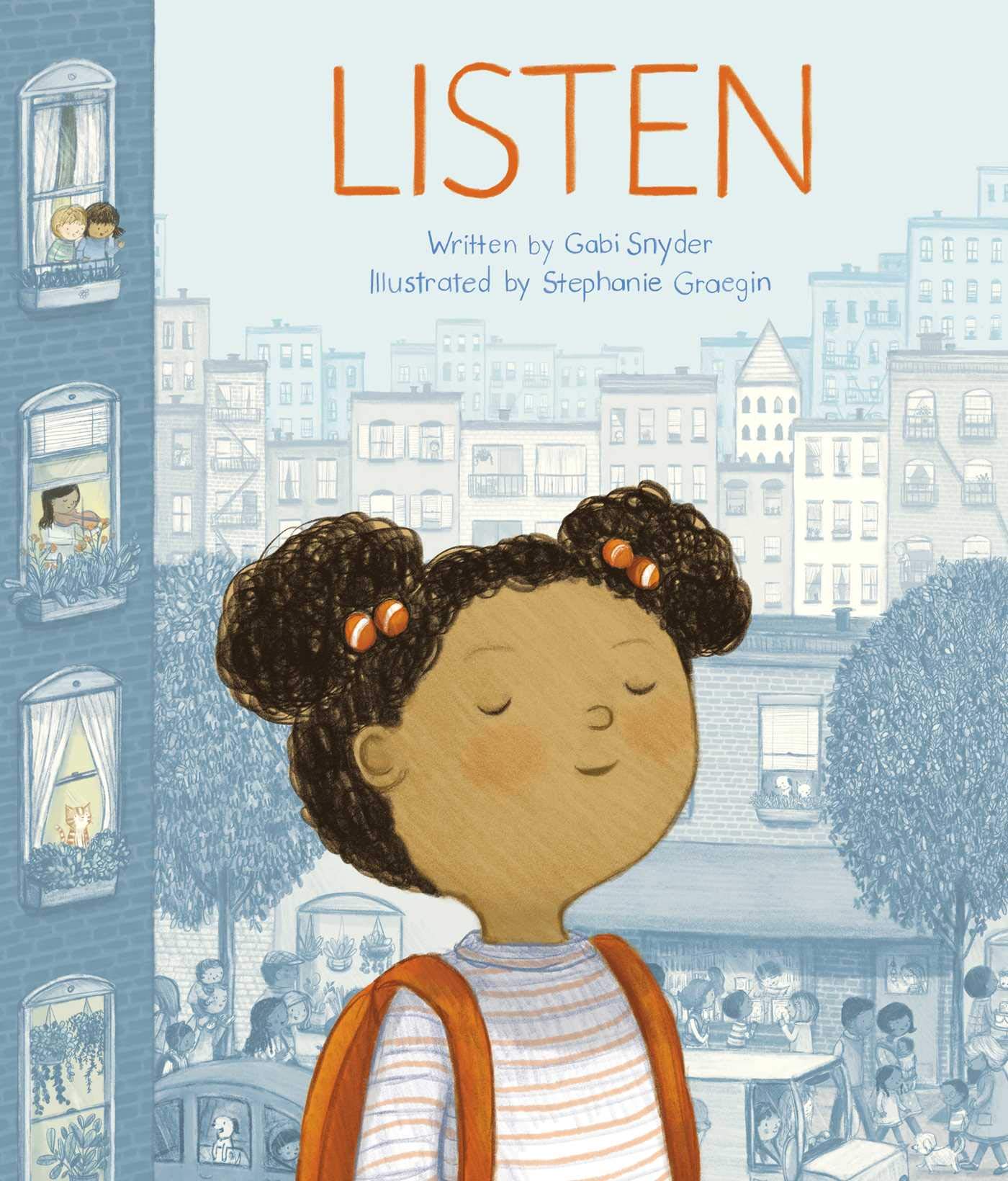
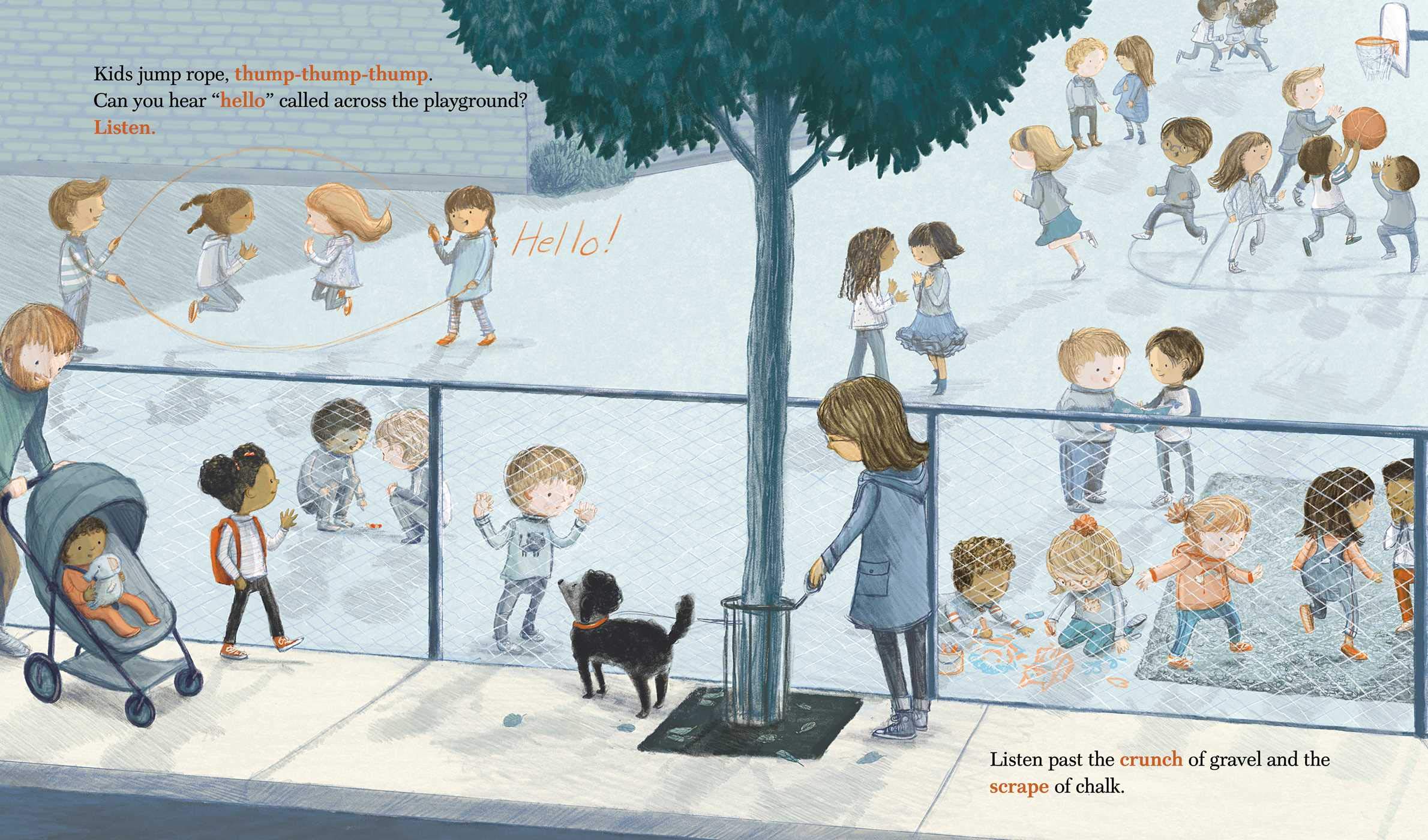
Listen by Gabi Snyder, illustrated by Stephanie Groegin

Published by Simon and Schuster

Listen: Snyder, Gabi, Graegin, Stephanie: 9781534461895: Amazon.com: Books

Listen: Snyder, Gabi, Graegin, Stephanie: 9781534461895: Amazon.com: Books

Summary:  The world is full of noise, but if you stop, close your eyes, and listen, you can hear each individual sound.  You can also listen to words: some are quick and snappy, others are long and leisurely.  Words can be filled with joy or painful to hear.  Sometimes if you listen carefully, you can hear the feelings of the person who is speaking the words.  Even when it’s night and time for bed, there are still plenty of sounds around that you can listen for before falling asleep.  Includes additional information about listening with definitions of terms like “startle response” and “bottom-up response”.  40 pages; ages 4-8.

Pros:  An excellent resource to teach a variety of listening, focusing, and mindfulness skills, all presented in a child-friendly way.  I loved the illustrations, which I realized were done by the creator of one of my favorite wordless picture books, Little Fox in the Forest

Cons:  A list of additional resources would have been nice,

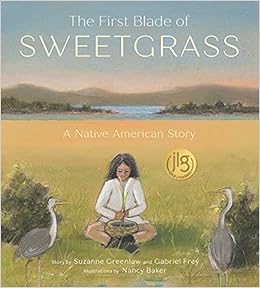
The First Blades of Sweetgrass: A Native American Story by Suzanne Greenlaw and Gabriel Frey, illustrated by Nancy Baker

Published by Tilbury House Publishers

The First Blade of Sweetgrass: Greenlaw, Suzanne, Frey, Gabriel, Baker,  Nancy: 9780884487609: Amazon.com: Books

Summary:  When Musquon goes with Grandmother to gather sweetgrass, she has to learn how to identify it among the other grasses.  Her grandmother gives her a lesson, but at first, Musquon just pulls up handfuls of grass.  Patiently, Grandmother goes through the steps again, then reminds her granddaughter that her ancestors are there to help.  Musquon closes her eyes and imagines her grandmother as a little girl with her grandmother.  When she looks at the grasses again, she can see which blades are sweetgrass.  She reaches to pick them, but then remembers her grandmother’s words: “If we never pick the first blade, we will never pick the last one.”  Musquon picks the next blade she sees, continuing until she has enough to show her grandmother.  Grandmother praises her, then says she will next teach her how to braid the sweetgrass into baskets. Includes an author’s note with additional information about sweetgrass and the Wabanaki Confederacy, and a list of the Passamaquoddy-Maliseet words used in the text, with a dictionary website for more information.  32 pages; ages 4-8.

Pros:  A beautiful story that celebrates sweetgrass, the Wabanaki, ecology, and the power of handing down stories and arts from one generation to the next.

Cons:  I would have enjoyed seeing a photo of the sweetgrass.

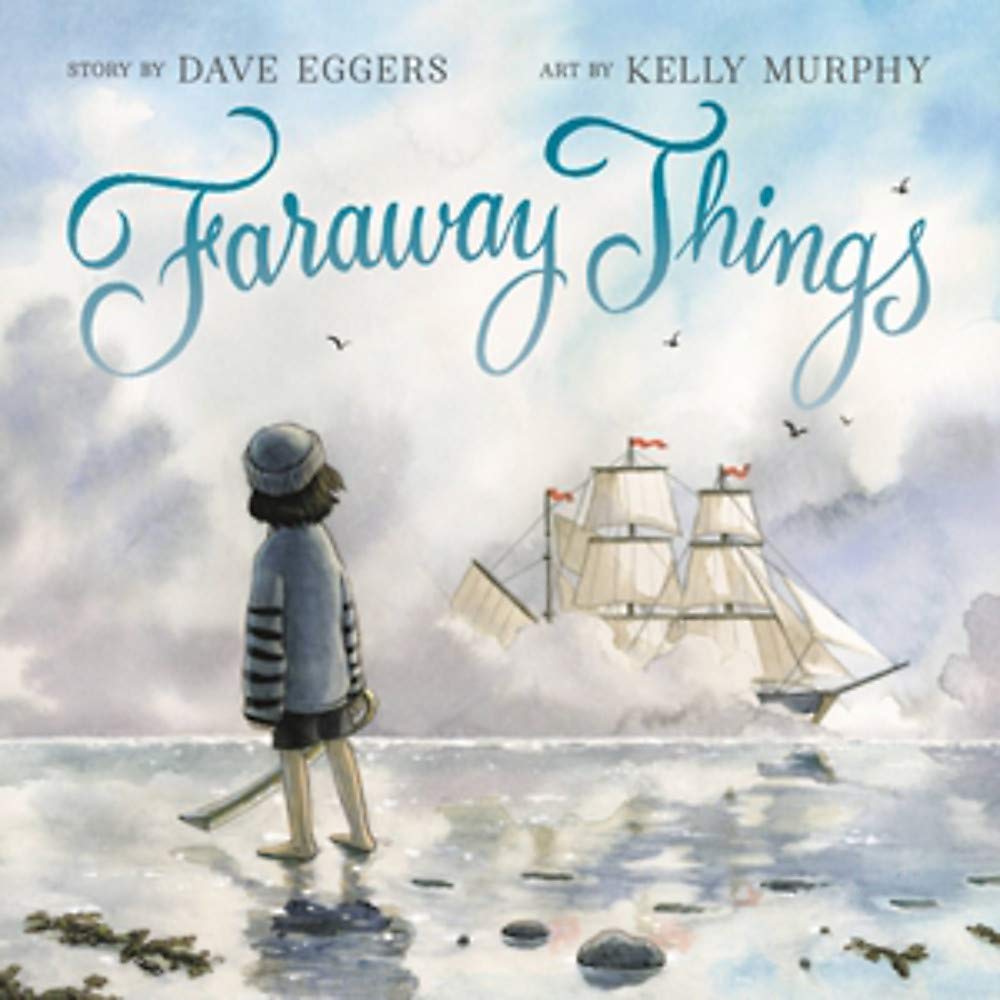
Faraway Things by Dave Eggers, illustrated by Kelly Murphy

Published by Little, Brown Books for Young Readers

Faraway Things: Eggers, Dave, Murphy, Kelly: 9780316492195: Amazon.com:  Books
Faraway Things by Dave Eggers, Kelly Murphy, Hardcover | Barnes & Noble®

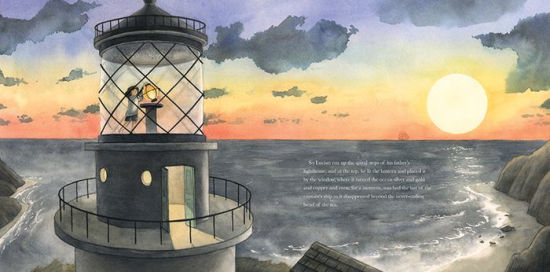
Summary:  Lucian lives with his mother in a lighthouse and loves exploring the beach, looking for what his late father used to call “faraway things”: items washed up from the sea.  One day he finds a beautiful cutlass, and hangs it on his wall, dreaming about it at night, and playing with it on the beach the next day.  In the afternoon, a ship sails into view, and when three men disembark, Lucian learns that his cutlass belongs to the captain.  The men are unhappy because their ship is stuck on a sandbar–something they couldn’t see in the dark because the lighthouse wasn’t working.  The captain makes a generous offer, though: he’ll trade Lucian anything from the ship’s treasure room for the cutlass.  Lucian rows out to the ship with the men, and chooses a new light for the lighthouse from the treasures.  The final page shows him fitting the new light into the lighthouse, its beam shining over the sea to the ship that’s sailing away. 40 pages; grades K-5.

Pros:  A beautifully told and illustrated story that has just the right touch of fantasy while also subtly dealing with grief and loss.  The length and themes of the story would make it an excellent choice for reading aloud to older elementary students.

Cons:  Parts of the story are pretty ambiguous: what happened to Lucian’s father and to the lighthouse?

Fatima’s Great Outdoors by Ambreen Tariq, illustrated by Stevie Lewis

Published by Kokila

Fatima's Great Outdoors: Tariq, Ambreen, Lewis, Stevie: 9781984816955:  Amazon.com: Books
Fatima's Great Outdoors – We Are LIT!

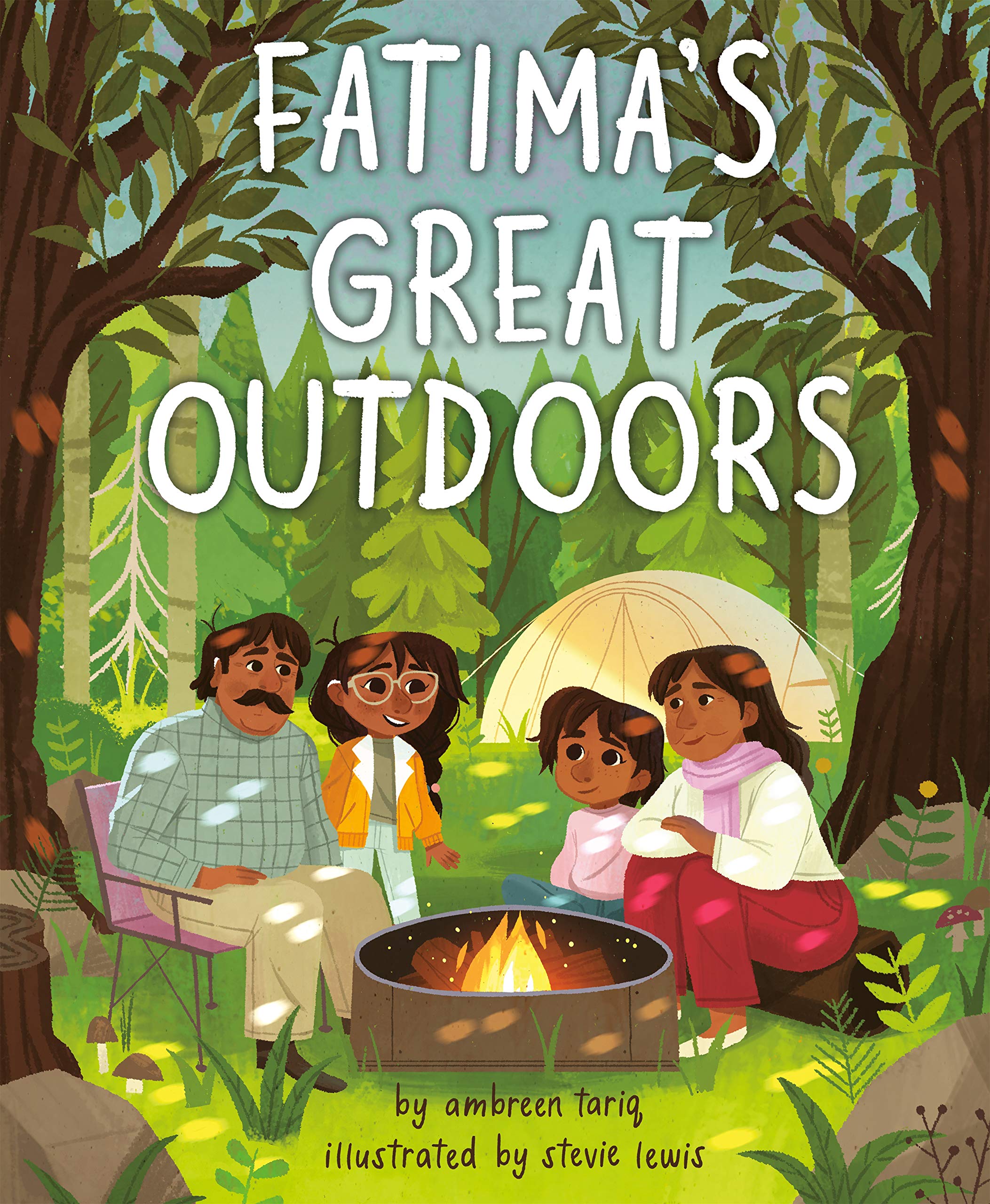
Summary:  After a tough week at school, Fatima is ready to enjoy her family’s first camping trip, “a great American pastime”, as her father calls it.  Dad struggles to set up the tent (grumbling in Urdu) until Fatima suggests they read the instruction manual together.  A spider terrifies Fatima and her older sister, but their no-nonsense mother takes care of things.  In the morning, they decide to try cooking bacon over a fire like other American families.  Once again, Dad struggles, but Mom, who grew up using a wood-burning stove, shows the family how to make a fire.  Fatima is sad to leave, but the new experiences have given her confidence, and she enjoys sharing stories of her trip with her classmates.  Includes an illustration with a reference to @brownpeoplecamping, the organization founded by the author. 40 pages; ages 4-8.

Pros:  A thorough introduction to camping through Fatima’s eyes, with the message that it’s an activity for everyone.  The family enjoys Indian food, speaks Urdu, and observes their own traditions, but also is enthusiastic to try “a great American pastime”.  Pair with The Camping Trip by Jennifer Mann.

Cons:  I felt like the story could have benefited from some editing.  The many aspects of Indian culture included in the story started to feel a little didactic.

Bird Boy by Matthew Burgess, illustrated by Shahrzad Maydani

Published by Knopf Books for Young Readers

Bird Boy (An Inclusive Children's Book): Burgess, Matthew, Maydani,  Shahrzad: 9781984893772: Amazon.com: Books

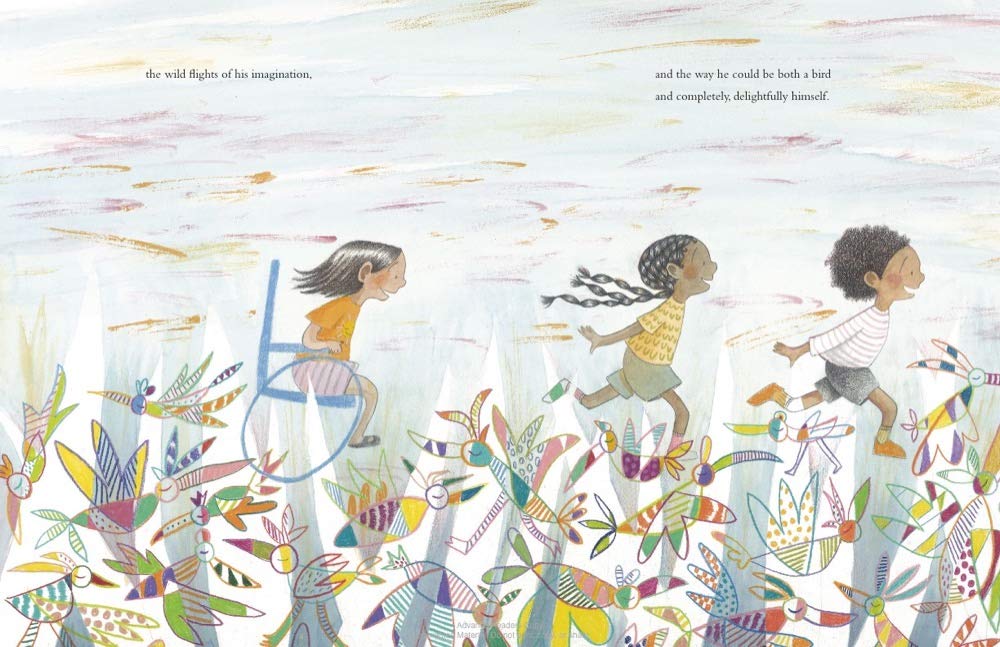
Summary:  Nico is nervous on his first day of school, and the reactions of the other kids don’t help much.  At recess, Nico’s not into sports or gossiping with friends, preferring to sit still and watch bugs crawling across the asphalt and the birds that gather around him.  When kids start calling him Bird Boy, Nico knows they’re making fun of him, but he embraces the name, imagining himself as an eagle, or a penguin, or a hummingbird.  Slowly, he makes a couple of friends, as some of the kids start to notice Nico’s kindness and vivid imagination.  At recess, playing on the swings with his new friends, Nico sometimes feels like he really can fly.  32 pages; ages 4-8.

Pros:  A beautiful book with a great “be yourself” message that will appeal to introverts and others who sometimes feel like they don’t fit into the mainstream.

Cons:  It seemed like a teacher or other adult could have provided some intervention with the name calling instead of letting Nico deal with it on his own.