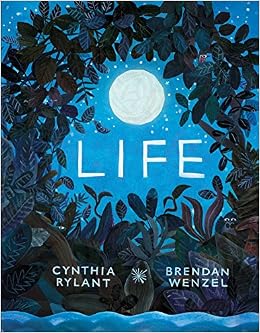
Life by Cynthia Rylant, illustrated by Brendan Wenzel

Published by Beach Lane Books

Summary:  Life begins small and grows.  Ask any animal what it loves about life, and you will get different answers: the hawk loves the sky, the camel loves the sand, the snake loves the grasssss.  Life isn’t always easy, but it is constantly changing.  So if you’re in the wilderness now, it will most likely end eventually.  “And it is worth waking up in the morning to see what might happen.”  48 pages; grades K-3.

Pros:  This lovely book features poetic text by Newbery Medalist Cynthia Rylant, complemented by the gorgeous illustrations of animals all over the world.  This would make a perfect gift for a graduate or someone else moving into a new chapter of life.

Cons:  This may not have instant appeal for young kids; it’s probably best read with adult accompaniment.

Back to School Book List

Tomorrow I take my daughter back to college, Monday and Tuesday are professional development days at my school, and Wednesday the kids return.  This gives me the bittersweet mix of sadness that summer is over and excitement that school is starting again.  If you and/or anyone in your life is going back to school, here are some new books you might want to read.

Back to School With Bigfoot by Samantha Berger and Martha Brockenbrough, illustrated by Dave Pressler.  Published by Arthur A. Levine Books.
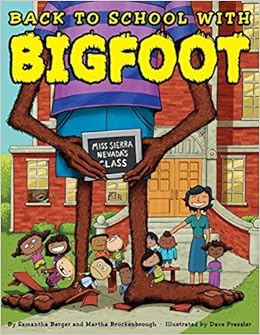
Bigfoot explains why going back to school is extra difficult for him; from back-to-school shopping and haircuts to fitting in at the cafeteria.  He’s ready to quit until he remembers all the fun that’s in store for him in the year ahead.  Perfect for dealing with first day jitters.


A New School Year: Stories in Six Voices by Sally Derby, illustrated by Mika Song.  Published by Charlesbridge.
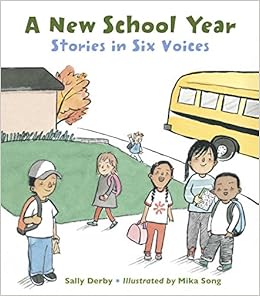
I haven’t had a chance to look at this poetry book yet, but reviews call it a great ice-breaker for teachers and a possible inspiration for kids’ writing.  Six diverse kids from grades K-5 tell their experiences throughout the first day of school in four sections that start with the anxious night before and end after the first day is over.


Twindergarten by Nikki Ehrlich, illustrated by Zoey Abbott.  Published by Harper.
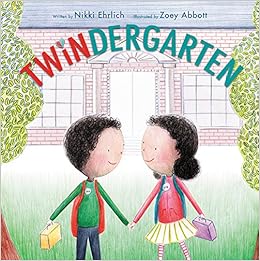
Know any twins who are in different classrooms for the first time?  This book will show them how it’s done, with the reassuring message that it’s possible to thrive on your own while maintaining that twin connection.


I’m Smart! by Kate and Jim McMullan.  Published by Balzer and Bray.
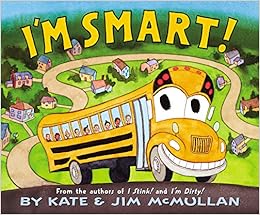
Using their winning formula from I Stink! and its sequels, the McMullans present a cheerful and confident school bus who explains the ins and outs of her job.

How to Get Your Teacher Ready by Jean Reagan, illustrated by Lee Wildish.  Published by Alfred A. Knopf.
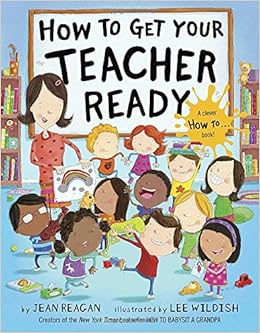
Another one I haven’t read yet, but it’s from the team that brought you How to Babysit a Grandpa and its sequels, so it’s sure to be a fun and rollicking look at the beginning of school, as well as a fine example of procedural writing.


Second Grade Holdout by Audey Vernick, illustrated by Matthew Cordell.  Published by Clarion Books.
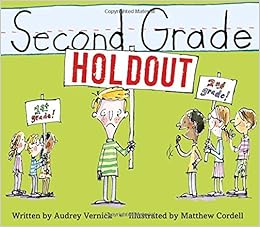
Obnoxious older siblings have the narrator believing that second grade is too much for him to handle.  Sticking with first grade seems a lot easier, but maybe not as much fun…


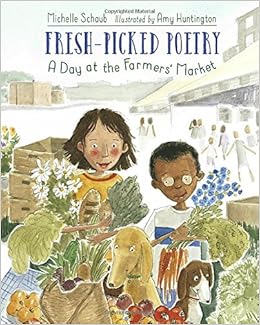
Fresh-Picked Poetry: A Day at the Farmers’ Market by Michelle Schaub, illustrated by Amy Huntington

Published by Charlesbridge

Summary:  A collection of 18 poems describes a farmers’ market from “Early Risers” through “Day’s End”.  The poems vary somewhat in format, including one poem for two voices, and appear in a variety of ways on the page, sometimes weaving through the illustrations.  Many of the poems are about the farmers’ produce, but there are also some about other features of the market, like the bakery, a musical duet, and Antonio’s Old-Time Sharpening, who will sharpen  your dull knife or scissors.  The last page gives five reasons to spend a day at a market, giving more information about the benefits of local food and a website to find a farmers’ market near you.  32 pages; grades PreK-3.

Pros:  Not only a rollicking look at the bounty available at the farmers’ market, but a great introduction to poetry as well.

Cons:  The rhythm of “Market Melody”, the poem about the musicians, felt a little clunky.

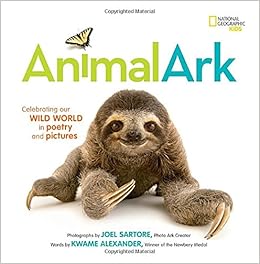
Animal Ark: Celebrating our wild world in poetry and pictures photographs by Joel Sartore, words by Kwame Alexander

Published by National Geographic

Summary:  The National Geographic Photo Ark is a project in which Joel Sartore is photographing every captive species.  Thirty two of these photos are showcased here, along with brief poems by Kwame Alexander.  The photos are close-ups on plain black or white backgrounds.  More animals appear on two sets of pull-out pages, along with their IUCN status indicating how endangered that species is.  Notes from the photographer and the writer give more information about their work, how this book came to be, and what kids can do to help the animals pictured here.  48 pages; ages 4-8.

Pros:  Kids will fall in love with the photographs in this book, and may even be inspired to try writing haikus inspired by them.

Cons:  While Kwame Alexander calls his poetry haikus, and defines haikus as having 17 syllables in the traditional 5-7-5 arrangement, these poems don’t seem to fit the definition.

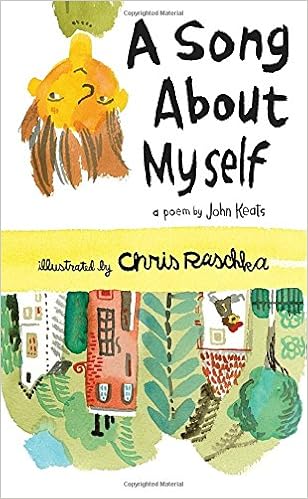
A Song About Myself: A Poem by John Keats, illustrated by Chris Raschka

Published by Candlewick

Summary:  At the age of 22, John Keats went on a walking tour of Scotland. He wrote a letter to his younger sister describing the trip and included this four-verse nonsense poem about “a naughty boy” who travels “to the North”, and all the things he finds when he gets there.  Caldecott Medalist Chris Raschka has illustrated the poem with his usual bright paintings, including a detailed, labeled map of New York City and Scotland on the endpapers.  An author’s note at the end tells more of Keats’ life and how he came to write this poem.  40 pages; grades 1-5.

Pros:  A perfect introduction to a poet who might not generally be accessible to kids.  The short lines, rhyming words, and colorful illustrations make this a good first poetry book for younger readers.

Cons:  A written explanation of the map on the endpapers would have been useful.

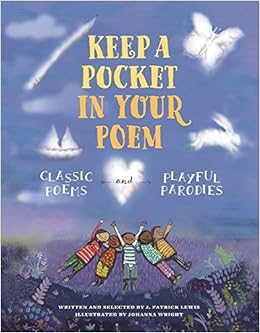
Keep a Pocket in Your Poem: Classic Poems and Playful Parodies written and selected by J. Patrick Lewis, illustrated by Johanna Wright

Published by WordSong

Summary:  Former U.S. Children’s Poet Laureate J. Patrick Lewis has put together a collection of thirteen (counting the one on the back cover) well-known poems, along with his parodies of them.  For instance, Robert Frost’s “Stopping By Woods on a Snowy Evening” is turned into “Stopping By Fridge on a Hungry Evening”, and Emily Dickinson’s “Hope Is the Thing With Feathers” becomes “Grief Is the Thing With Tissues”. The original poem is included with the new version.  Lewis explains what he has done in his introduction, and invites kids to write their own parodies, or “parroty’s”, as he calls them.  32 pages; grades K-5.

Pros:  A fun way to introduce kids to poetry, as well as providing an extension activity for those wanting to dive deeper.  The cute, colorful illustrations include a multicultural cast of children.

Cons:  To me, the word parody denotes a certain degree of mocking the original, which is clearly not Lewis’s intention here.

Out of Wonder: Poems Celebrating Poets by Kwame Alexander, illustrated by Ekua Holmes

Published by Candlewick

Summary:  If you’ve read Kwame Alexander’s Booked or The Crossover, it will come as no surprise that both of his parents loved words and books.  He writes in his preface of being raised on a steady diet of poetry, and he pays homage to his favorite poets in this book.  The 20 poems, written by Alexander and fellow poets Chris Colderley and Marjory Wentworth celebrate poets and their poetry from Emily Dickinson to Langston Hughes to Rumi.  The last six pages give quite a bit of additional information about each poet.  56 pages; grades 3-7.

Pros:  A wonderfully diverse collection of writers and poems, brought to life with color collages by Caldecott honoree Ekua Holmes.  The second paragraph of Kwame Alexander’s preface would make a perfect introduction to a study of poetry, and the entire book could be used as a curriculum guide to introduce students to 20 different poets.

Cons:  Readers unfamiliar with the poets and their works may not appreciate these poems on their own.

Loving Vs. Virginia: A Documentary Novel of the Landmark Civil Rights Case by Patricia Hruby Powell, illustrated by Shadra Strickland

Published by Chronicle Books

Summary: This verse novel, related in the alternating voices of Mildred Jeter and Richard Loving, tells the story behind the Supreme Court case of 1967, which ruled that interracial marriage is legal.  Mildred, of African and Native American descent and considered “colored”, and Richard, who was white, grew up as neighbors in a close-knit, integrated Virginia community.  They fell in love, had a child, and got married.  Shortly after the wedding, the local sheriff barged into their home one night, arrested them both, and sent them to jail.  They pleaded guilty and were given a suspended sentence.   Forced out of Virginia, they moved to Washington, D.C., where both were miserable.  Over the course of the next nine years, their case was appealed, finally going all the way to the Supreme Court.  The decision was overturned on June 12, 1967, and at last, they could move back near their families to raise their three children.  The story is interspersed with text and photos describing the history of the Civil Rights Movement during the same time period as the case.  A final note tells what happened to the Lovings (sadly, he was killed and she was blinded in one eye by a drunk driver in 1975); also includes a timeline and an extensive bibliography.  260 pages; grades 7-up (some PG language).

Pros:  A fascinating, timely book.  Kids may have seen the 2016 movie Loving about this case.  The first person narration makes it a personal story.

Cons:  Although the book has many beautiful illustrations, I would have liked to have seen some photos.

One Last Word: Wisdom from the Harlem Renaissance by Nikki Grimes

Published by Bloomsbury USA Children’s

Summary:  Poet Nikki Grimes combines her own works with those of various poets from the Harlem Renaissance.  She uses the “Golden Shovel” method, in which she takes a line from another poet’s work, and uses each word from that line as the final word in every line of her own poem.  Her works focus on kids, particularly those of color, and have inspirational messages about hard work, hope, and being yourself.  The poems are illustrated by a variety of artists, including many children’s book illustrators such as Christopher Myers, Sean Qualls, and Javaka Steptoe.  An introduction gives a brief history of the Harlem Renaissance; back matter includes biographies of the poets and artists, sources, and an index.  128 pages; grades 5-9.

Pros:  Nikki Grimes was just given the Laura Ingalls Wilder award for making a lasting contribution to children’s literature, and this book continues in that vein.  Her own poetry is beautiful and inspiring, and placing it side-by-side with the Harlem Renaissance poets adds historical depth and richness.  The beautiful artwork completes the poetry.

Cons: Additional resources to learn more about the Harlem Renaissance would have been useful.

5 Favorite Poetry Books

I’m neither an expert in nor a huge fan of poetry, but there was a pretty good selection in 2016.  Here were five that I really liked:

Freedom Over Me: Eleven Slaves, Their Lives and Dreams brought to life by Ashley Bryan.  Published by Atheneum Books for Young Readers.

Ashley Bryan really did bring these men and women to life, using historical documents as a springboard for his imagination to create lives for each of these eleven through art and poetry.

Are You an Echo? The Lost Poetry of Misuzu Kaneko by David Jacobson, Sally Ito, and Michiko Tsuboi, illustrated by Toshikado Hajiri.  Published by Chin Music Press.

A beautifully illustrated retelling of the brilliant, tragic life of Japanese poet Misuzu Kaneko, complete with translations of many of her deceptively simple poems.

Jazz Day: The Making of a Famous Photograph by Roxanne Orgill, illustrated by Francis Vallejo.  Published by Candlewick.

The history of Art Kane’s 1958 photograph of 57 jazz musicians against the backdrop of a Harlem brownstone, told with poems in the voices of the subjects and the bystanders watching them.

The Last Fifth Grade of Emerson Elementary School by Laura Shodd.  Published by Wendy Lamb Books.

Eighteen fifth graders share their hopes, dreams, and fears, as they prepare for the closing of their school in June; they use a variety of prompts and poetic forms that are explained at the end of the book.

Echo, Echo: Reverso Poems about Greek Myths by Marilyn Singer illustrated by Josee Masie.  Published by Dial Books for Young Readers.

Second verse same as the first…only backwards to completely change the meaning.  Super cool poems in two voices for Percy Jackson fans.