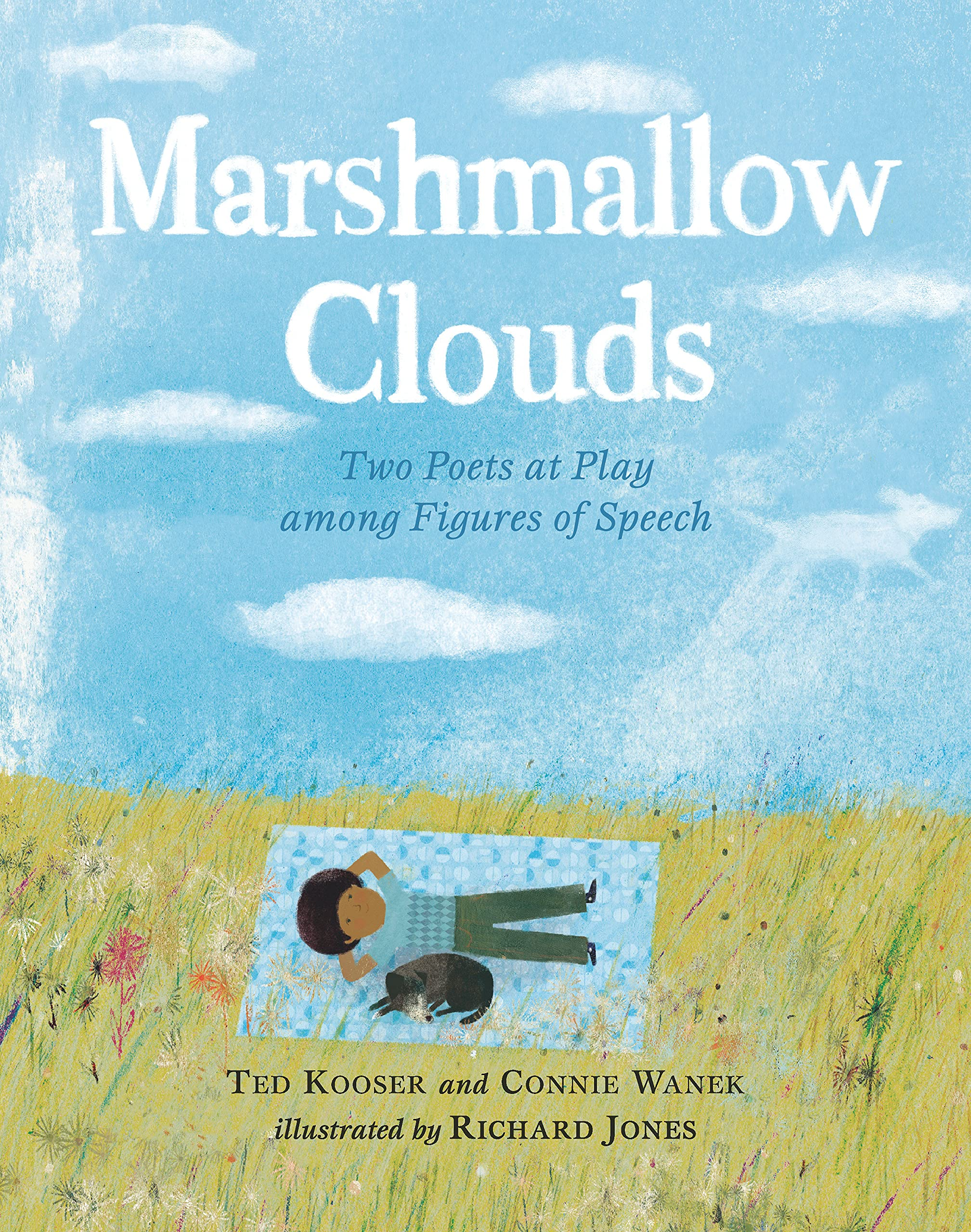
Marshmallow Clouds: Two Poets at Play Among Figures of Speech by Ted Kooser and Connie Wanek illustrated by Richard Jones

Published by Candlewick

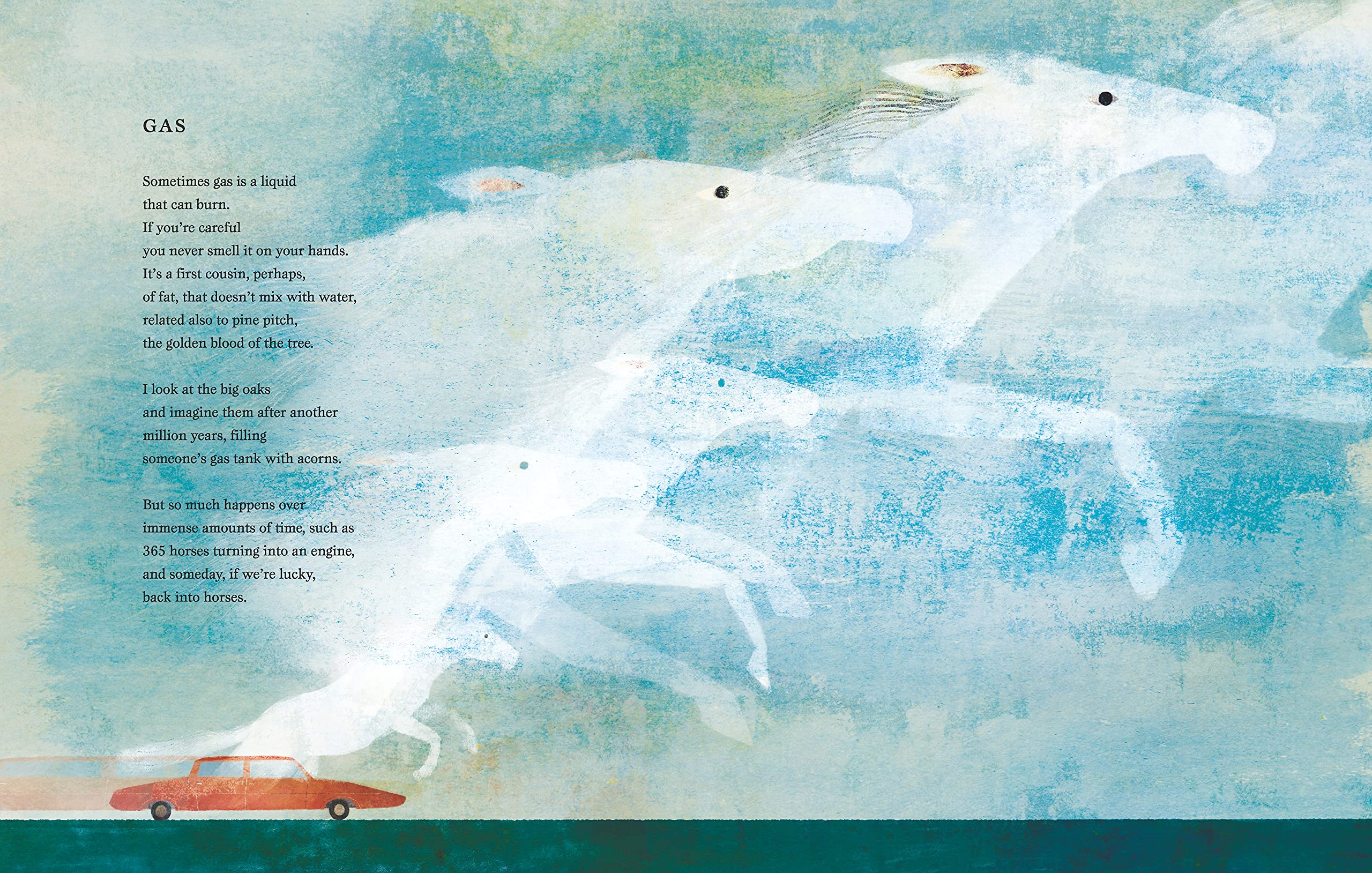
Summary:  This poetry collection kicks off with “A Disappointment” in which the speaker sees a tree clowning on one leg and spinning a pie until a friend informs them that it’s just an old squirrel’s nest.  From there, the 27 poems are divided into four sections: Air, Earth, Fire, and Water, and imagination is allowed to reign freely.  The poems are written in free verse, many just a single verse, and are illustrated with beautiful somewhat abstract paintings of nature.  Includes an afterword with messages from both poets inviting readers to let their imaginations run wild.  72 pages; grades 4-8.

Pros:  These poems written by former Poet Laureate Ted Kooser and acclaimed poet Connie Wanek are simple but beautiful in their use of imagery and metaphors that kids will relate to.  They’re short enough for elementary kids to be able to read and analyze them, yet rich enough to be used in classrooms into high school.  This book has gotten six starred reviews and was included on Betsy Bird’s spring Newbery predictions list, so look for it to get some awards consideration.

Cons:  I wish there had been some information about how the two poets worked together.

Serengeti: Plains of Grass by Leslie Bulion, illustrated by Becca Stadtlander

Published by Peachtree Publishing Company

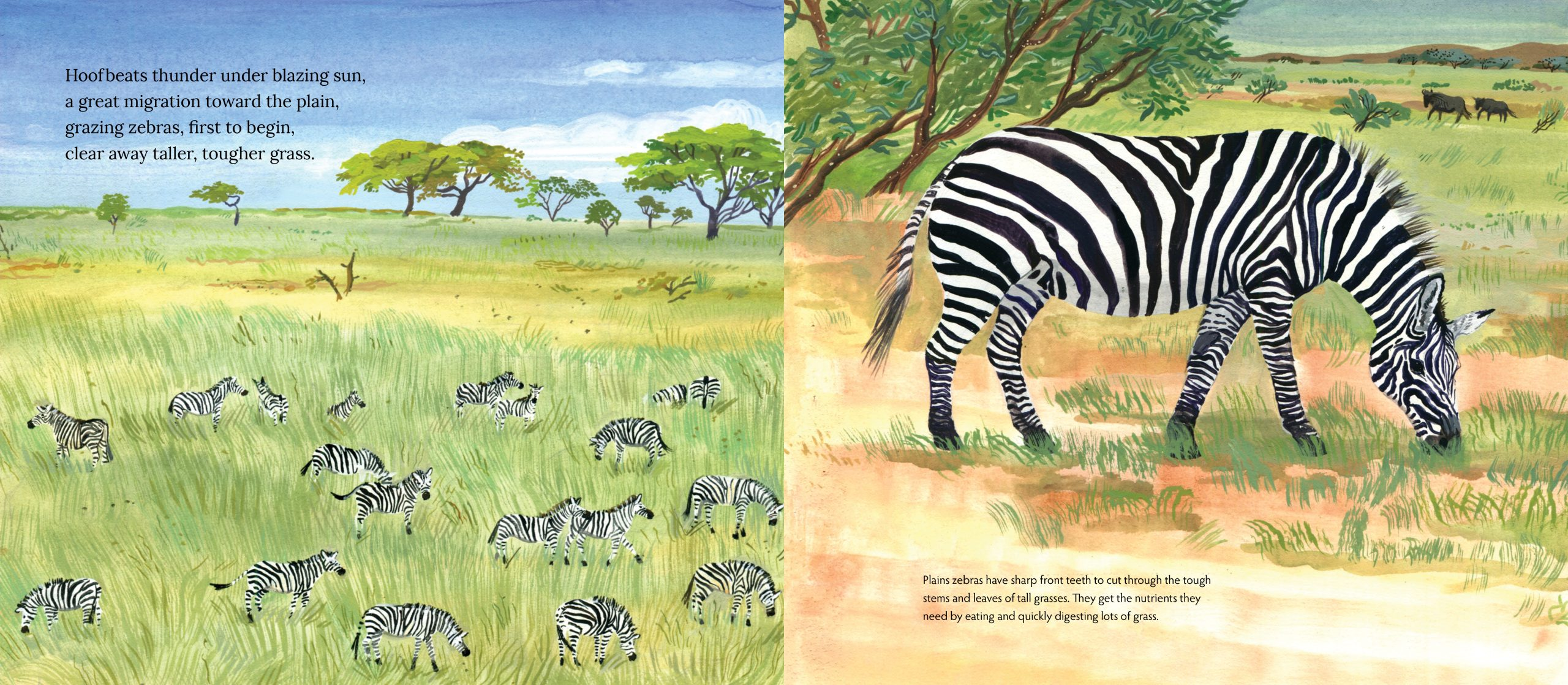
Summary:  Each two-page spread depicts a scene from the Serengeti, with a four-line poem and a paragraph of additional information.  An introductory page describes the ecosystem of the Serengeti, and a note at the end gives additional information about the poetic form, which is derived from an East African form called the utendi.  Also includes a glossary, a reading list, and information on Serengeti stewardship, including three organizations that are working to preserve the Serengeti.  48 pages; grades 2-6.

Pros:  A beautiful science and poetry book, with gorgeous paintings of the Serengeti that will catch the eye of any animal lover.  The additional information about the poems and the Serengeti makes this an excellent resource for language arts, geography, and science.

Cons:  I wish there had been some information about the humans who live in that area.

Dog Says, Cat Says by Marilyn Singer, illustrated by Sonia Sánchez

Published by Dial Books

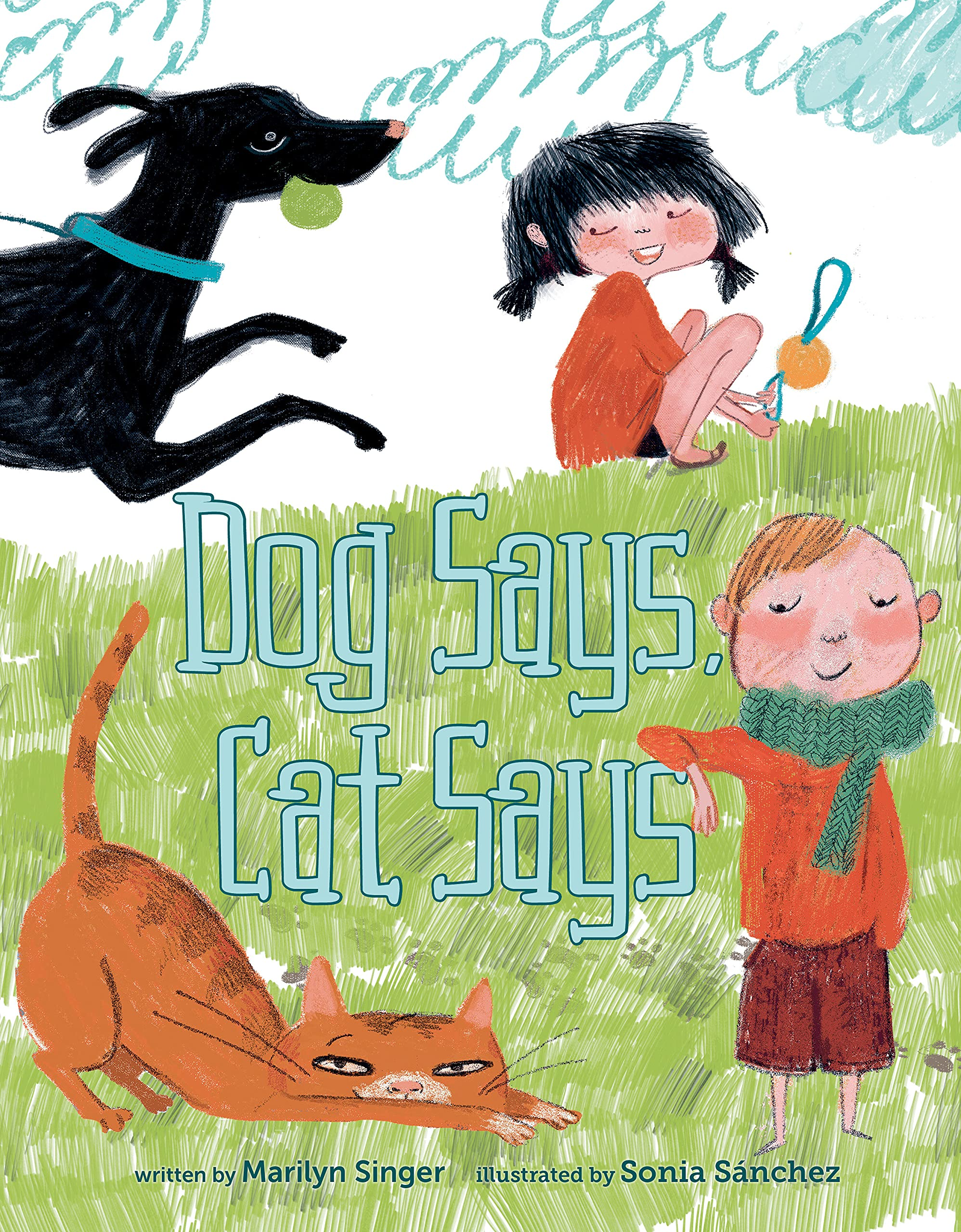
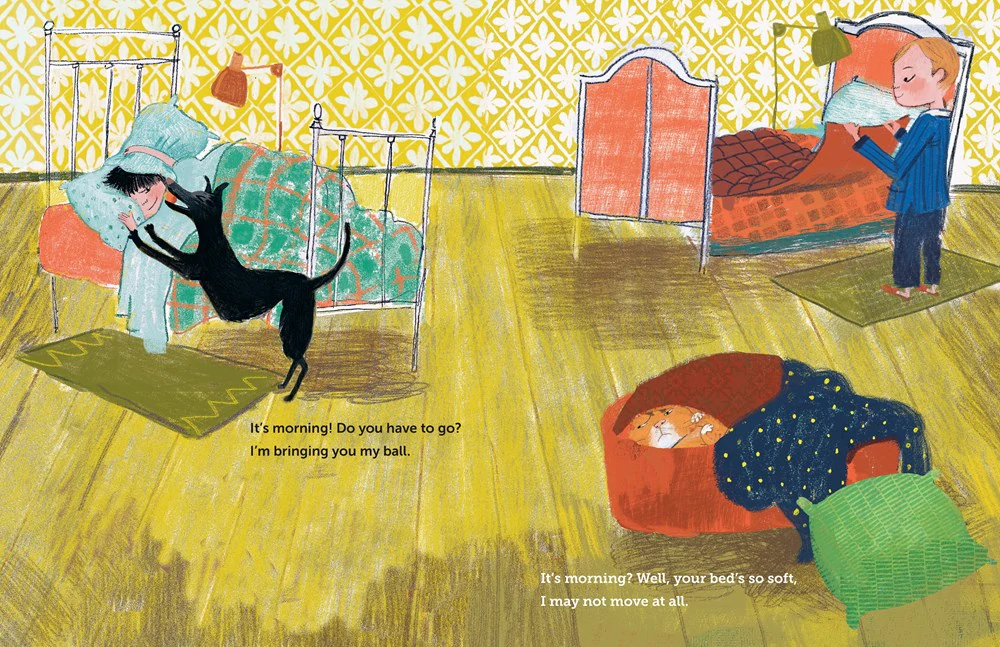
Summary:  In rhyming text, a dog and cat alternate talking to their owners throughout the day: “It’s morning! Do you have to go? I’m bringing you my ball/It’s morning? Well, your bed’s so soft, I may not move at all.”  The dog enthusiastically leaps into all things dog-gy: barking at the mailman, playing fetch, and rolling in the mud, while the cat perfects the art of standoffishness and showing superiority to the dog.  When nighttime comes, the dog is ready to settle down in his bed, while the cat prowls through the house, then finally snuggles in with the dog.  32 pages; ages 4-8.

Pros:  A fun book for pet lovers that reminded me of Elisha Cooper’s Yes and No, with the dog and cat leading very different lives but coming together as night falls.  The bouncy rhymes and illustrations capture both the high energy of the dog and cat’s more languid nature.

Cons:  Failed to change my opinion that dogs make superior pets.

A Is for Oboe: The Orchestra’s Alphabet by Lera Auerbach and Marilyn Nelson, illustrated by Paul Hoppe

Published by Dial Books

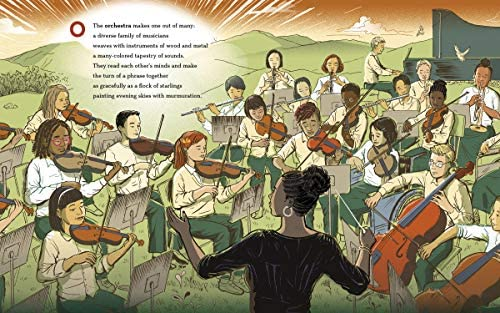
Summary:  This musical alphabet book has a poem for every letter: from the A the oboe plays to warm up the orchestra to the Zzz’s the musicians and audience members catch after the performance.  In between there are poems celebrating different instruments, the people involved in making music, and the music itself, both what’s written on paper and what is performed.  40 pages; grades 1-5.

Pros:  An A to Z poetry book of music didn’t really grab me, but once I started reading, I found every poem engaging and I zipped through the book in no time.  Many different aspects of music were covered (and of course I appreciated the fact that the letter L celebrates music librarians), and the energetic illustrations help readers understand the topics of the poems.

Cons:  Readers unfamiliar with music will need some additional context; it would have been nice to have some of that provided with either information on each page or with some back matter.

The 1619 Project: Born on the Water by Nikole Hannah-Jones and Renée Watson, illustrated by Nikkolas Smith

Published by Kokila

The 1619 Project: Born on the Water: Hannah-Jones, Nikole, Watson, Renée,  Smith, Nikkolas: 9780593307359: Amazon.com: Books
The 1619 Project (Picture Book): Born on the Water by Nikole Hannah-Jones  and Renée Watson

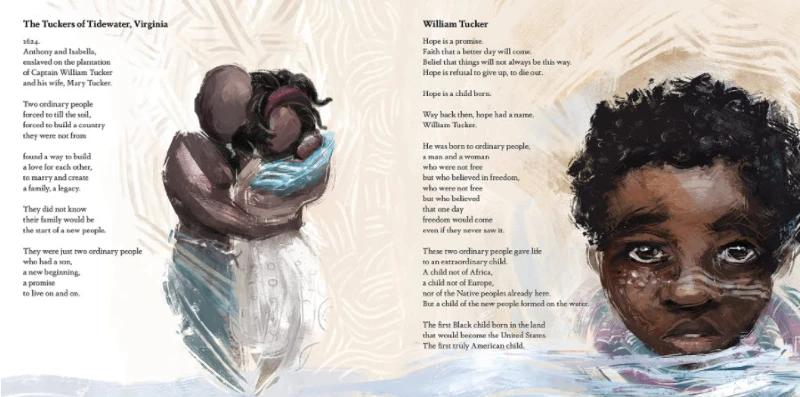
Summary:  In the first poem, titled “Questions”, a girl gets an assignment to trace her roots and realizes she can only go back three generations. At home, she asks her grandmother for help.  Her grandmother gathers the family together and tells them their story, beginning with their ancestors in West Central Africa who were kidnapped in 1619 and forced on a hellish journey aboard a slave ship.  Those who survived were forced into slavery in tobacco fields, fighting to hold onto their memories of home.  Their descendants went on to become great people in their new country.  By the end of the story, the girl is ready to return to school and finish her story; the final poem is called “Pride”.  Includes notes from the authors and the illustrator and the website for the 1619 Project.  48 pages; grades 1-5.

Pros:  The award-winning authors have crafted an empowering collection of poems that doesn’t shy away from harsh histories, but also celebrates an African history that is often overlooked.

Cons:  I wish there were more resources listed; the 1619 Project website has books connected to the project, but no others.

The People Remember by Ibi Zoboi, illustrated by Loveis Wise

Published by Balzer + Bray

The People Remember: Zoboi, Ibi, Wise, Loveis: 9780062915641: Amazon.com:  Books

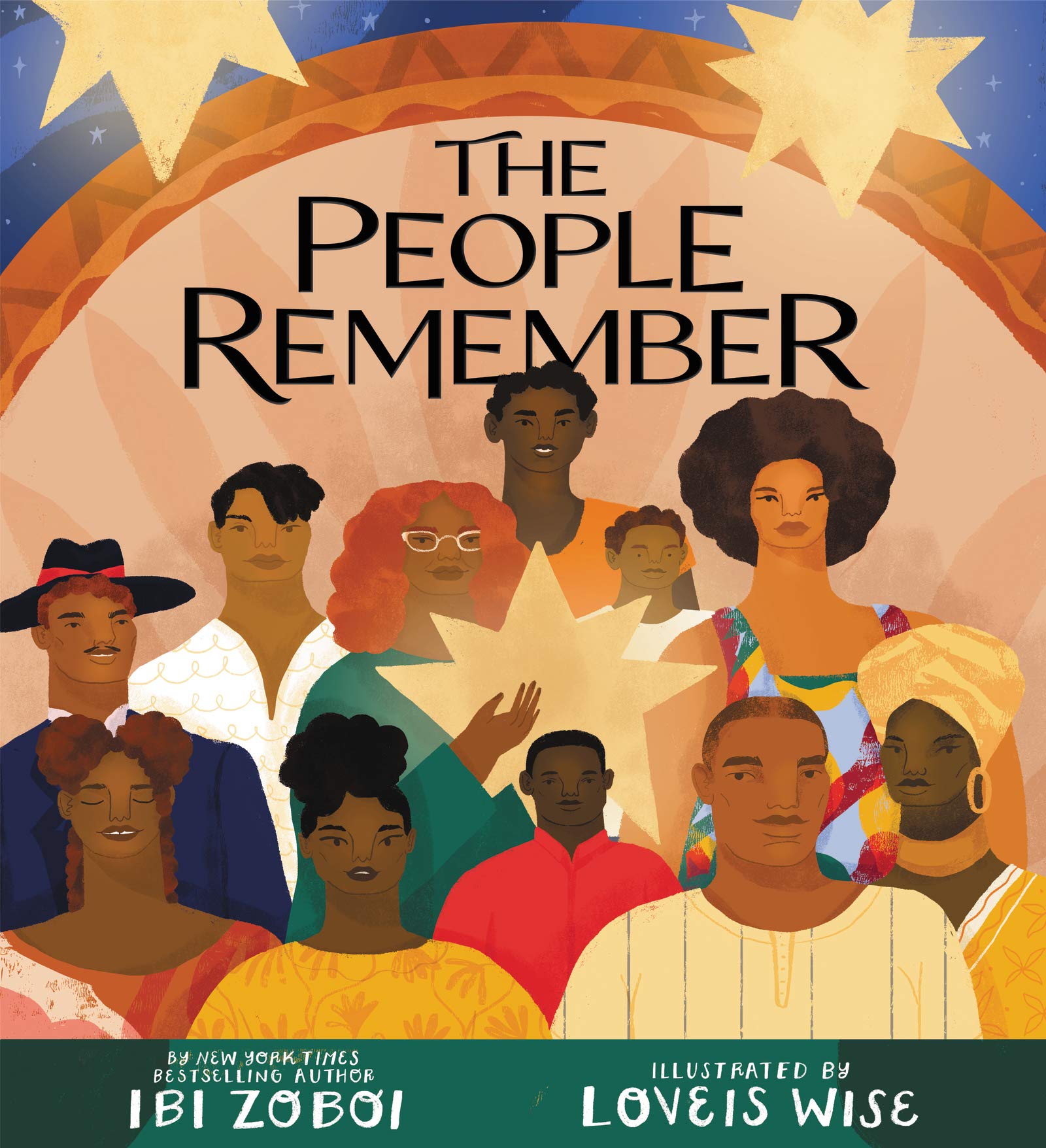
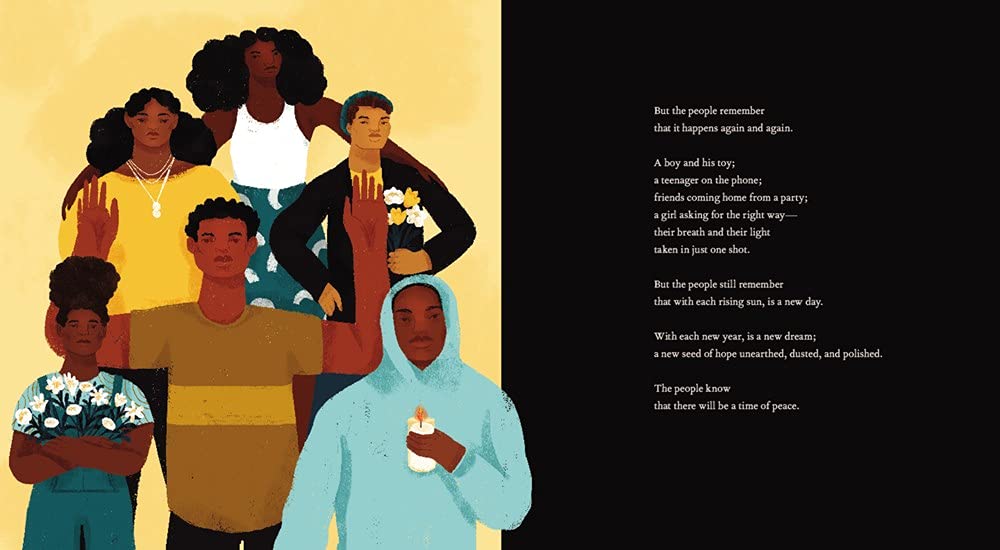
Summary:  This illustrated poem recounts the history of African Americans, beginning with their capture in Africa and continuing through enslavement, emancipation, the Great Migration, the Civil Rights Movement, the Black Power movement, the Hip-Hop era, the election of Barack Obama, and the Black Lives Matter movement.  There are mentions and depictions of many famous Black writers, entrepreneurs, musicians, and artists.  Each section embodies one of the seven principles of Kwanzaa and concludes by naming it.  Includes a two-page author’s note with additional information about Kwanzaa and her connection to it, a four-page timeline with additional information about the events in the book, and a list for further reading.  64 pages; grades 1 and up.

Pros:  This amazing book traces the history of African Americans with concise but beautiful language that will inspire readers to dig more deeply into the events and people named.  The vibrant illustrations portray what’s going on in the text realistically but with a touch of imaginative fantasy.  There aren’t nearly enough Kwanzaa books, and this one would make an excellent resource; it could be read all at once or spread out over the seven days of the holiday.

Cons:  Some reviewers recommended this for ages 4-8.  It’s a long book with lots of information, which I think would be more appreciated by older readers of any age.

Legacy: Women Poets of the Harlem Renaissance by Nikki Grimes, illustrated by 19 artists

Published by Bloomsbury Children’s Books

Amazon.com: Legacy: Women Poets of the Harlem Renaissance: 9781681199443:  Grimes, Nikki: Books
Legacy: Women Poets of the Harlem Renaissance – EyeSeeMe

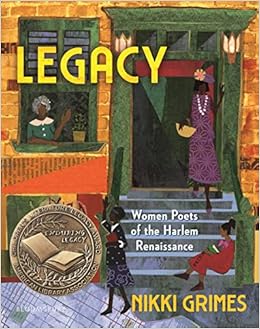
Summary:  In this follow-up to One Last Word, Nikki Grimes focuses on the women poets of the Harlem Renaissance.  The book begins with an introduction to the history of the period and to the poetry form Grimes uses called The Golden Shovel, in which she uses the poems of others to inspire her own poetry.  The poems are presented in three sections: “Heritage”, “Earth Mother”, and “Taking Notice”.  They’re bookended with poems in the voice of a middle school girl, skeptical when her teacher hands her books on the women of the Harlem Renaissance, then empowered after she reads them.  Includes biographical information about the poets and the illustrators, sources, and an index.  144 pages; grades 5-9.

Pros:  Like One Last Word, this book is an amazing resource for learning about poets of the Harlem Renaissance, in this case women who have pretty much been forgotten.  The Golden Shovel seems incredibly difficult, but Nikki Grimes proves herself a master of the form. The artwork by so many different illustrators perfectly illuminates the poems.

Cons:  How did One Last Word not win any Coretta Scott King recognition?  I’m rooting for this book to remedy that.

Red, White, and Whole by Rajani Larocca

Published by Quill Tree Books

Amazon.com: Red, White, and Whole: 9780063047426: LaRocca, Rajani: Books

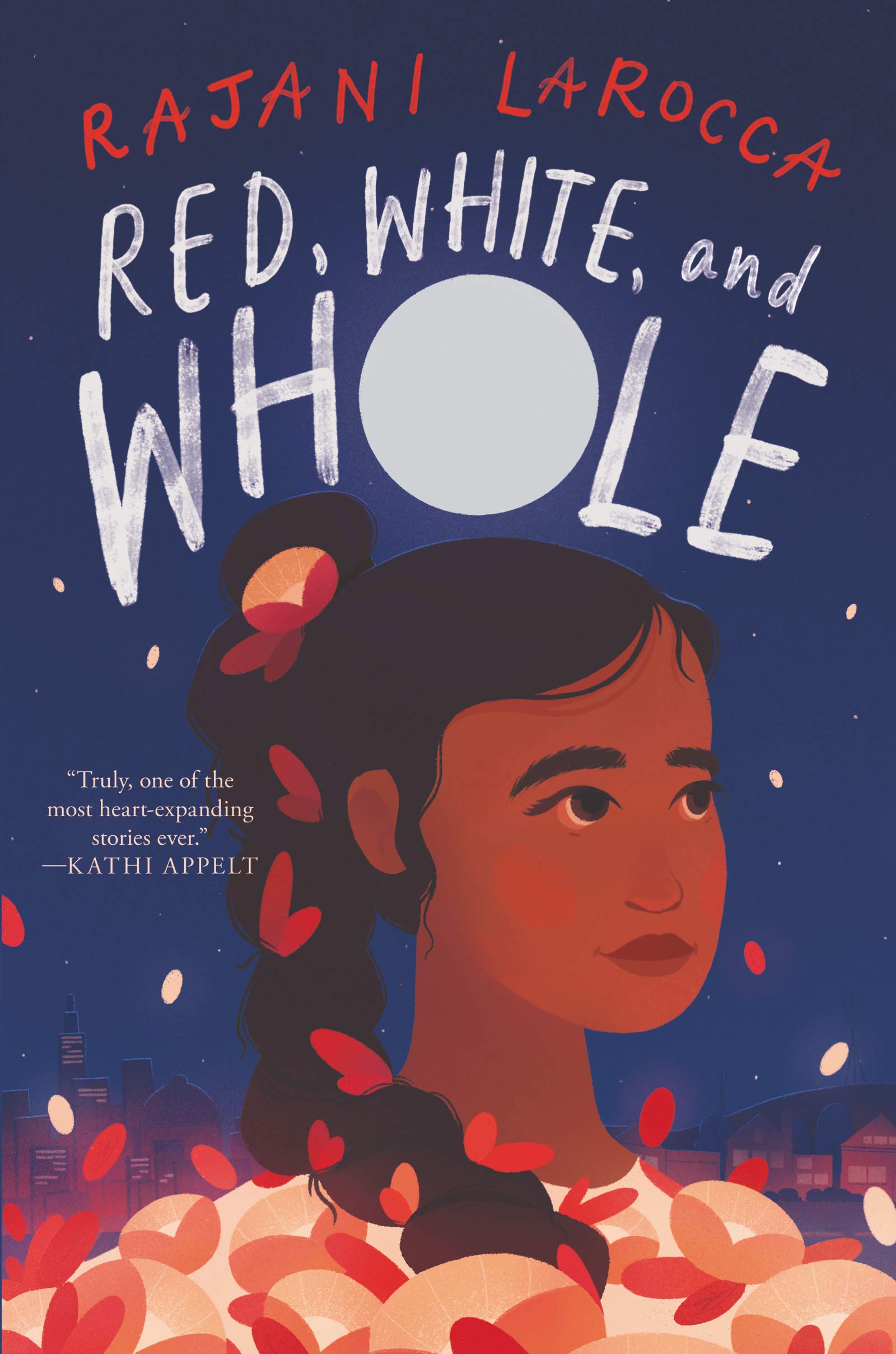
Summary:  Reha feels pulled in two directions, spending her weekdays with her mostly white friends at school and her weekends with her family’s Indian community.  Like many 13-year-olds, she feels like her parents–particularly her mother–don’t understand what she’s going through.  Then her mom is diagnosed with leukemia, and Reha suddenly feels like she would give just about anything to go back to life the way it was before.  As she and her father try to navigate hospital visits and caring for Amma while still dealing with work and school, Reha sometimes feels pushed to the breaking point.  Friends, family, the Indian community, and the boy she’s had a crush on help get her through.  When the unthinkable happens, Reha isn’t sure she will make it, but Amma has found a way to communicate and to let her daughter know that she has understood what she’s going through, and will somehow always be a part of her life.  224 pages; grades 5-8.

Pros:  Keep the Kleenexes handy as you make your way through this amazing novel in verse.  It’s so much more than just a sad story, though: it’s a story of the immigrant experience of feeling caught between two worlds as well as a realistic middle school story with lots of fun 1983 details (especially the music!).  I’m a little skeptical of Goodreads’ mock Newbery list, but this book is currently at #2.

Cons:  This book came out in February, and I pretty much decided not to read it because it sounded like too much of a downer.  I’m so glad it got enough Newbery buzz to make me change my mind, as I found it ultimately a hopeful and uplifting book.

Unsettled by Reem Faruqi

Published by HarperCollins

Amazon.com: Unsettled (9780063044708): Faruqi, Reem: Books

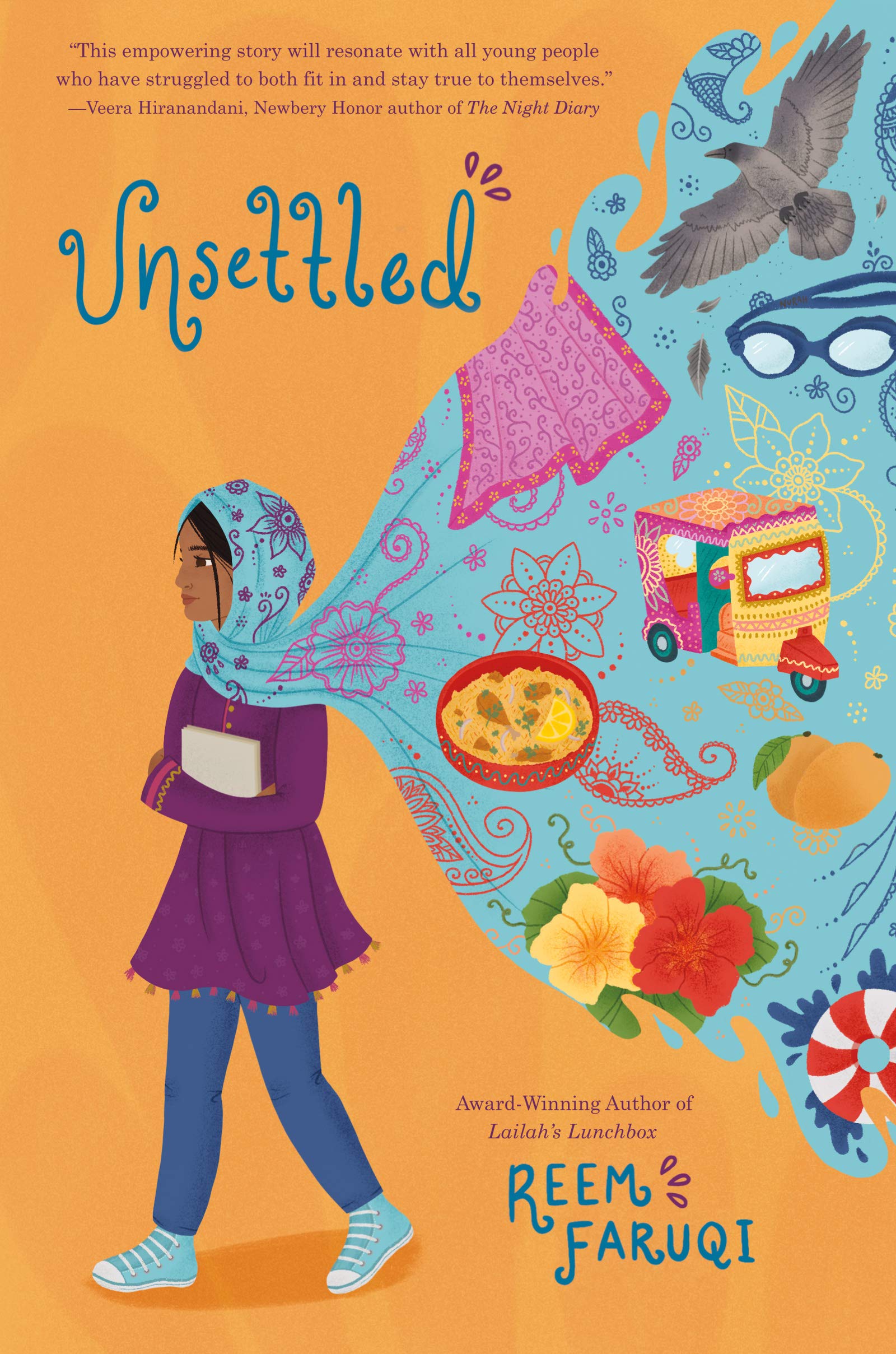
Summary:  When Nurah’s father announces he has taken a new job and is moving the family from Karachi, Pakistan to Peachtree City, Georgia, Nurah is heartbroken to leave her best friend and her grandparents.  At her new school in Georgia, all she wants to do is blend in, but eating lunch by herself under a stairwell is lonely.  Joining the swim team leads to a new friendship that changes Nurah’s feelings about school, and she’s motivated to work hard to become a champion swimmer like her older brother, Owais.  When Owais is the target of a bullying incident at the pool that turns violent, and her father is questioned by the FBI following a terrorist incident, Nurah learns some difficult truths about being Muslim in America.  But she also learns to help her brother overcome his trauma to get back in the pool and to be true to herself and her heritage. Includes an author’s note tying her personal experiences to the story; a glossary, and a recipe for aloo kabab. 352 pages grades 3-7.

Pros:  A beautiful novel in verse that delves into many different issues, not only with Nurah and her family, but with her new friend Stahr, who has an abusive father.  While not every reader has had Nurah’s experience of moving to an unfamiliar new country, many will relate to her wish to blend in while at the same time learning to appreciate her unique qualities.

Cons:  I appreciate the brevity and economy of words of a novel in verse, but it’s also a format that makes it difficult to explore in depth the many topics (immigration, bullying, racial profiling, miscarriage, domestic abuse, etc.) that were included in this story.

Dear Treefrog by Joyce Sidman, illustrated by Diana Sukyka

Published by HMH Books for Young Readers

Dear Treefrog: Sidman, Joyce, Sudyka, Diana: 9780358064763: Amazon.com:  Books
Bound To Stay Bound Books, Inc. - Bookstore

Summary:  A young girl discovers a treefrog in the garden outside her new home.  As the two travel through the seasons together, she makes discoveries about both the frog and herself.  It’s summer when she moves in. Some kids come to play, but they’re too noisy for both her and the frog.  When school starts, she meets a boy who feels like more of a kindred spirit, and she brings him to meet the frog.  The two friends enjoy winter, and in the spring, their patience is rewarded when they see the treefrog once again.  Each page offers some treefrog facts as well as a poem and illustration. Includes a page of questions and answers that gives more treefrog information. 40 pages; ages 4-8.

Pros:  This delightful picture book functions as both a friendship story and a nonfiction book about treefrogs…and is narrated with Joyce Sidman’s simple but beautiful poetry.

Cons: No additional resources for further research.