Boston Globe-Horn Book Awards

An email alerting me to the upcoming Boston Globe-Horn Book Awards ceremony coming up this Thursday, November 6, sent me on a search for some of the books that I hadn’t read yet. You can see a complete list of winners and honor books here.
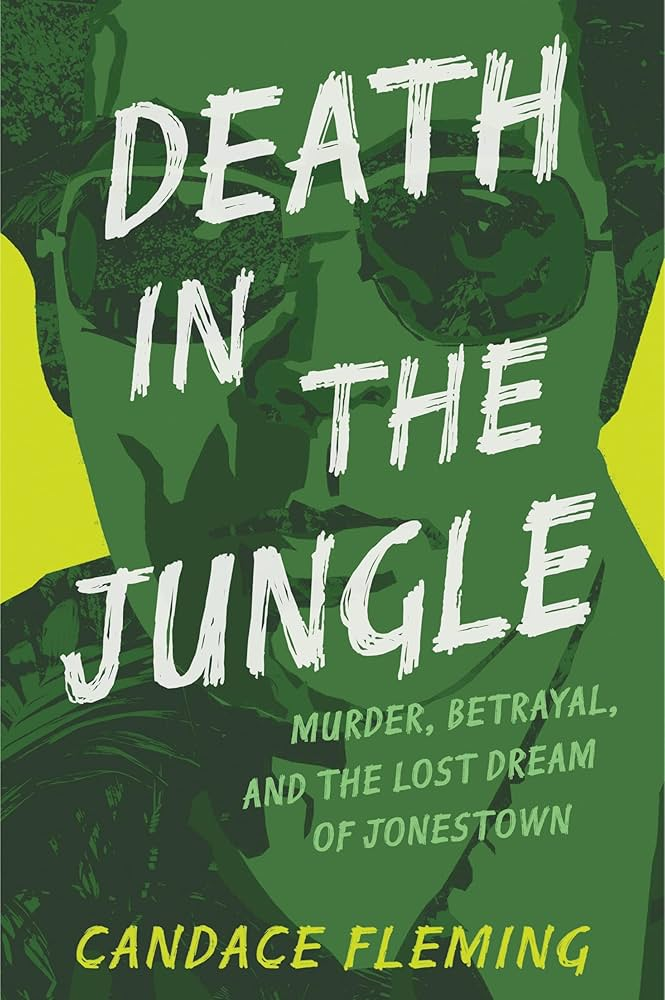
Death in the Jungle: Murder, Betrayal, and the Lost Dream of Jonestown by Candace Fleming (Anne Schwartz Books, 368 pages, grades 7 and up). Most of us know about Jonestown and the tragic end that befell more than 900 residents in the Guyana jungle. This book takes readers back to founder Jim Jones’s earliest days and shows how a bizarre mix of idealism and quest for power led him to start the People’s Temple which moved from Indiana to California, and finally to Guyana where Jones basically kept his followers imprisoned: cut off from the world and subject to his paranoid drug-fueled ravings. Individual members of the group are profiled, based on Fleming’s interviews with survivors, and their memories of enjoying being part of a warm community mixed with traumatic punishments, sleep deprivation, and overwork serve as a warning to anyone drawn to a charismatic leader like Jim Jones. Includes source notes, a bibliography, and an index.

I remember reading about this incident in the news during my own teenage years and trying to make sense of what could have possibly gone so horribly wrong. This book answers some of those question–although many are unanswerable–and is told in such a compelling style that I could not put this book down and read it in about 36 hours. It’s an especially important book for teens, as many of those interviewed were their age during the events of the story (including Jones’s son Stephan), and in many cases, a questioning attitude toward authority saved them.
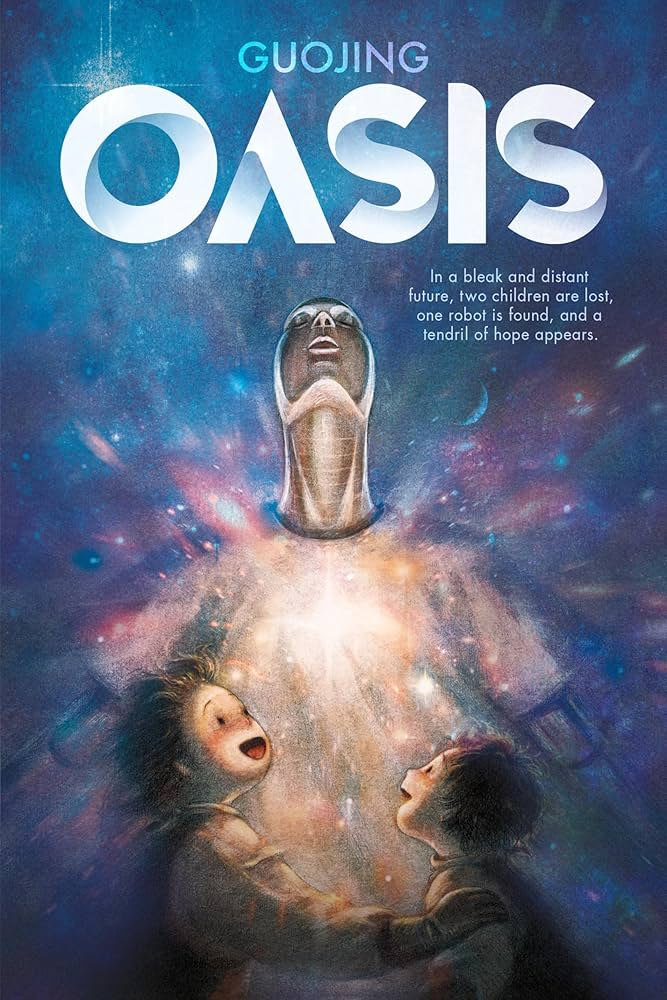
Oasis by Guojing (Godwin Books, 160 pages, grades 4-7). Two children live in the desert, fending for themselves with only occasional phone calls from their mother who works in Oasis City, trying to get permission to bring her children to live with her. When the kids find a broken robot, they’re able to repair it and activate its “mother” mode, giving them an AI mom. When their human mother comes home for a few days, she discovers the AI mother, and destroys it in a fit of fear and rage. Her daughter runs off, and the mother is able to repair the robot and bring the daughter back home. The two mothers share their hopes and dreams for the children, and the AI one shows how she has been able to reproduce conditions in Oasis City to start growing plants, giving them hope that one day they can all live in the desert together. The author information relates that Guojing was inspired by “left-behind children” in China, who stay in rural areas when their parents go to find work in the city.

I had gotten this book out of the library several months ago, after seeing its five starred reviews, but I was a little put off by the dark artwork and never got around to reading it. I’m so glad I gave it another try. It’s a quick read–it only took me about 15 minutes–but it packs a powerful punch and celebrates all sorts of family connections and love. The cover says, “In a bleak and distant future, two children are lost, one robot is found, and a tendril of hope appears,” but it didn’t seem like such a distant future to me.
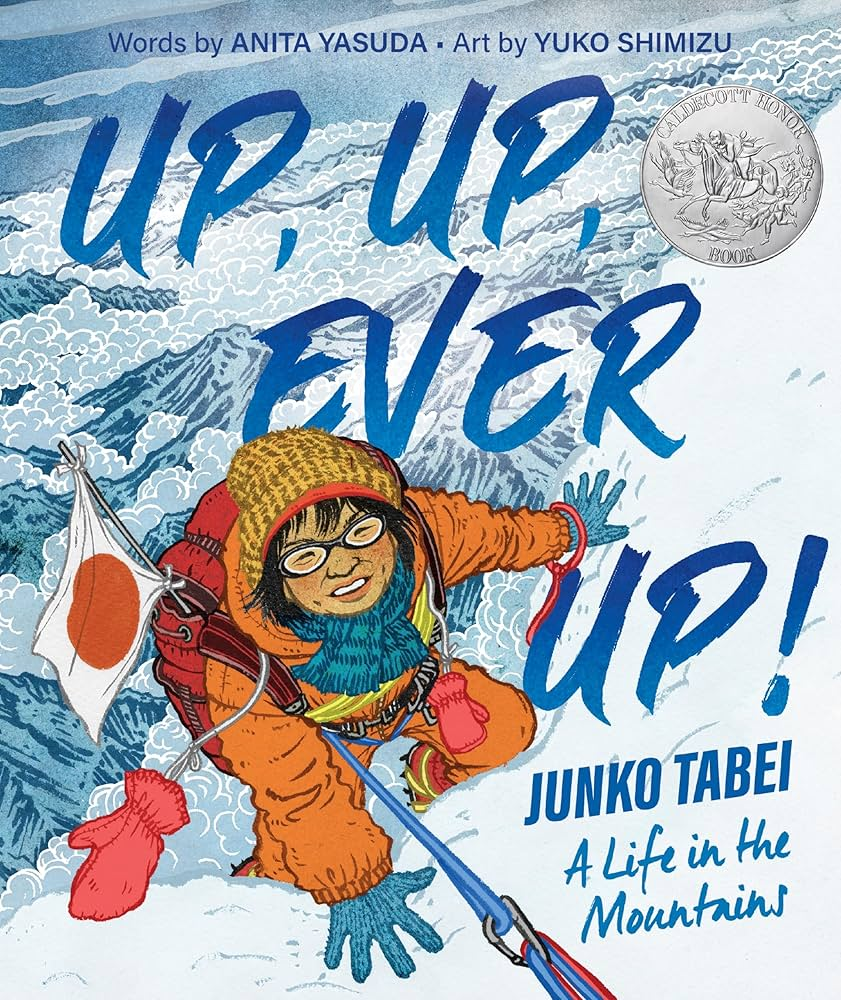
Up, Up, Ever Up! Junko Tabei: A Life in the Mountains by Anita Yasuda, illustrated by Yuko Shimizu (Clarion Books, 48 pages, grades 2-5). As a child, Junko Tabei dreamed of climbing mountains, and she pursued that dream when she moved to Tokyo as a young woman. Most mountaineering clubs didn’t take women, but Junko persevered until she found one that did. Even after marrying and having a daughter, Junko continued to climb and to encourage other women to join her. Eventually they planned an expedition to become the first all-female team to climb Mount Everest. Even an avalanche couldn’t stop her, and Junko realized her dream of being the first woman to reach Everest’s summit. In her later years, she became an activist for sustainable mountain climbing, researching the impact of trash and human waste on Everest and helping to mitigate some of those effects. Includes an author’s note, timeline, glossary, and bibliography.

I’m a little late to this 2024 book, but I’m breaking my rule of only reviewing books published in the current year. The Boston Globe-Horn Book Award follows the school year calendar, so it was eligible for this year’s award and was an honor book, in addition to winning a 2025 Caldecott Honor. Both are well-deserved for the beautiful ink and color illustrations that not only portray breathtaking mountain landscapes but celebrate Junko’s Japanese culture.

Strangers in strange lands

How to Say Goodbye in Cuban by Daniel Miyares (Anne Schwartz Books, 240 pages, grades 4-8). Daniel Miyares tells the story of his father, Carlos, a young boy living in the Cuban countryside in 1956. When his father wins the lottery, he decides to pursue his dream of opening a furniture store, moving the family to the big city. Carlos is heartbroken to leave his friends and grandparents, but things take a darker turn as the political landscape in Cuba changes dramatically. The beginning of each chapter shows Castro’s slow rise to power, as he gathers enough supporters to overthrow Batista and takes over the country. Carlos’s parents aren’t particularly political, but that doesn’t protect them from the state taking his dad’s business. Carlos secretly watches Papi and some other men work every night building a boat, and shortly after that, his dad disappears. When life gets more dangerous in the city, the family returns to their grandparents’ farm, where Papi reunites with them and tells them they’re going to America. Carlos is heartbroken all over again, but his father convinces him it’s their only chance for a better life. After a dangerous nighttime journey, they arrive in Florida, ready to begin that life. Includes a four-page author’s note with additional information about Carlos and how his son Daniel came to write this book, along with several photos.

I was surprised to learn that Daniel Miyares has never won a Caldecott, and this graphic novel could easily remedy that situation–or win him a Newbery. The story and gorgeous artwork capture both the beauty of Cuba and the tension, confusion, and danger of the early days of Fidel Castro’s regime. The last part of the book, covering the family’s escape is both suspenseful and moving, and readers familiar with today’s immigration situation will be surprised at the welcome the Cubans get from the American military.

The Experiment by Rebecca Stead (Feiwel and Friends, 288 pages, grades 4-7). Despite his normal New York City upbringing, Nathan has always know that he’s different from other kids. He brushes his teeth five times a day with special pink toothpaste, his mother carefully records every calorie he eats, and…he and his family are aliens. Known as the Kast, his parents have raised Daniel on tales of how they traveled from their home planet as children to begin an experiment living on Earth. Nathan meets each month on Zoom with other Kast children, and he’s begun secretly texting one of them, a girl named Izzy. But recently a few of the kids, including Izzy, haven’t been on the calls, and when Nathan discovers that he’s growing a tail, he suspects he’ll be the next to disappear. He’s not wrong, and he and his parents are summoned to the mother ship, which sits in a parking lot outside a Pennsylvania mall, disguised as a storage container. As Nathan learns more about the ship and his parents’ past, he begins to suspect that it’s all a deception, and that he and the others might be human after all.

This science fiction story is hard to put down once you get through the first few chapters, and the last half has plenty of twists and turns that will keep readers guessing until the very end. It reminded me a little bit of a Margaret Peterson Haddix story and would make a great introduction to the sci-fi genre.

Sci Fi graphic novels

Rodeo Hawkins and the Daughters of Mayhem by John Claude Bemis, illustrated by Nicole Miles (Holiday House, 272 pages, grades 4-7). Sidney Poblocki is trying to convince his best friend Walt to try to run away with him after another failed foster family experience when two mysterious groups appear from out of nowhere, each trying to convince him to come with them. He chooses the Paladins over Rodeo Hawkins and the Daughters of Mayhem, drinking a punch that allows him to travel through the multiverse but makes those left behind, including Walt, forget that he even existed. Before long, Sidney realizes he’s chosen the side of evil, but gets a second chance to join Rodeo and her girls, where he learns about a prophecy that someone named Sidney Poblocki will destroy the multiverse, leading the Paladins to have killed every Sidney Poblocki they’ve found before him. All of that happens before page 70, and the rest is a fast-paced story of good vs. evil, as the ragtag Daughters of Mayhem seek to stop the Paladins before they can destroy Sidney…and possibly the entire universe.

While sci-fi graphic novel is not usually my favorite genre, I have to admire the incredible world-building, adventure, and pure fun of this series starter. It seems like a graphic novel that will appeal to fans of Wings of Fire, Amulet, and Animorphs, and I was happy to see a preview for book 2 at the end. Thanks to Holiday House for providing me with an advanced copy; publication is scheduled for September 9.

Schoolbot 9000 by Sam Hepburn (Dial Books, 288 pages, grades 4-7). James is struggling with some big feelings following the death of his artist father who always supported James’s creativity. Now his mom is working all the time, and she’s gotten a HomeBot to help out. James hates the way this domestic robot surveils him at home and around his neighborhood. As if that’s not bad enough, there are new SchoolBot 9000s at school, a couple of robots guaranteed to bring up student test scores. As the machines learn about the students and teachers, they gradually start taking over more and more of the educational process, edging out the human teachers who are offered secret jobs at the company running the program. James feels like he’s the only one who can see the sinister takeover of life by robots, but is one human enough to defeat the power of artificial intelligence?

This book could hardly be more timely, not only the exploration of AI, but the increasing dependence of school administrators on technology and the emphasis above all else on raising test scores, even if that means taking away teacher autonomy and input into the educational process. Despite the weighty topics, it’s also a fun and suspenseful story, and readers will be happy to see the message on the last page: “Stay tuned for the next SchoolBot adventure!”

New year, old books

I’m trying out a few tweaks to my schedule in the new year, and this has led to more reading! So instead of my usual practice of taking a few weeks off at the beginning of January, waiting for new books to pile up, I have a few more 2024 posts to share. To start, here are three books that would be perfect for middle school or early high school readers, a demographic that often gets neglected, as they’re often feeling too old for middle grade but not quite ready for many young adult books.

Boy 2.0 by Tracy Baptiste (Little, Brown Books for Young Readers, 304 pages, grades 5-9). The story opens with Coal going to live with a new foster family after his long-term foster father had a mental breakdown. When Coal sneaks off to do a chalk drawing commemorating a woman shot by the police, he’s confronted by a man with a rifle. He runs off, trying to evade the police, and is amazed when they surround him but don’t seem to see him. Looking down at his body, he realizes he has become invisible, a condition that gradually reverses itself when the crisis is over. The rest of the story details his search for answers about this new power he had, leading him to new realizations about his birth mother as well as a deep conspiracy that includes both of his foster families. Although there’s a certain necessity to suspend disbelief, readers will love this page-turning science fiction adventure.

Bye Forever, I Guess by Jodi Meadows (Holiday House, 288 pages, grades 5-9). Awkward, shy Ingrid has a secret–she’s Anony Mouse on Scrollr, where she has a popular scroll called Bye Forever, I Guess, posting wrong-number texts that she’s received. The only people who know about her scroll are her online gaming friend Lorren, her grandmother who’s raised her since her parents died, and her best friend Rachel. When Rachel betrays her, Ingrid is afraid her secret will get out, but she’s soon distracted by a mysterious boy who sent her a wrong-number text. They start texting and gaming, and before long she finds herself with a huge crush–even though she only knows him by his gaming name, Traveler. As things unravel in Ingrid’s real life, she starts to wish she could meet Traveler in person, a wish that’s granted when they agree to meet at a bookstore where their favorite author is signing a long-awaited book. Their meeting provides a shocking surprise to Ingrid–and an extremely surprising and romantic ending to their story. While Traveler’s identity seemed glaringly obvious to me by about halfway through the book, Ingrid remains clueless. Just as I was getting completely frustrated by this, the bookstore meeting proved so sweet that I forgave Ingrid and the author everything. Fans of the genre will undoubtedly enjoy this nerdy tech-infused romance.

Keeping Pace by Laurie Morrison (Harry N. Abrams, 304 pages, grades 5-9). Grace’s focus throughout middle school has been on academic achievement, specifically to win the top student award at eighth grade graduation and to beat her rival and former best friend Jonah. When Jonah bests her by half a point, Grace is devastated and faces a depressing summer. Her more laid-back sister and cousin help her come up with a list of goals for the summer that include making a new friend, taking a baby-sitting job to help her dad’s new girlfriend, taking a class just for fun, and running a half marathon. Grace secretly plots to beat Jonah, who is also running the half marathon, but as the summer unfolds, an injury derails her plans. Meanwhile, shifting relationships cause Grace to begin to question her single-minded ambitions: a new friend that she meets who’s recently given up competitive gymnastics to pursue other interests; her dad’s career ambitions that get in the way of his relationships, and most of all, her former friendship with Jonah that’s rekindled as they train for the race. As with Bye Forever, I Guess, I got kind of frustrated by the drawn-out will-they-or-won’t-they romance between Grace and Jonah, but it would undoubtedly speak to a younger teen reader, and I really liked the message about the importance of living a balanced life.

Two last graphic novels of 2023

Grace Needs Space by Benjamin A. Wilgus and Rii Abrego

Published by Random House Graphic

A Sky of Paper Stars by Susie Yi

Published by Roaring Brook Press

Summary: These graphic novels tell the stories of two very different girls who are both grappling with family issues. Grace lives on a space station with her divorced mom; her other mom, Ba, is a cargo ship captain traveling from one space settlement to the next. Grace is excited to be going on a trip to Titan (Saturn’s moon) with Ba, but she ends up bored and disappointed when Ba is busy with work most of the time. Desperate to see Titan’s sea, Kraken Mare, she sneaks into a group field trip and almost gets herself into serious trouble. When Ba starts having engine trouble on the way back, she has trouble trusting Grace to help her, but Grace (and Mom) manage to save the day, while Ba sees that her own workaholic nature and unwillingness to ask for help have led to some issues with her family. Includes extra artwork showing the development of the characters and the cover. 208 pages; grades 4-7.

In A Sky of Paper Stars, Yuna feels like she’ll never fit in at school. Her parents cling to Korean traditions, while Yuna wants to be more American. After folding 1,000 paper stars the way her grandmother, Halmoni, taught her, she makes a wish to live in Korea, where she feels like she’ll belong. Almost immediately, her mother gets news that Halmoni has passed away, and the family returns to Korea for the funeral. Feeling like she caused her grandmother’s death, Yuna races to fold another 1,000 stars, hoping to bring Halmoni back to life. Includes an author’s note about her experiences that influenced the story and instructions for folding a paper star. 240 pages; grades 4-7.

Pros: Fans of middle school graphic novels will enjoy both of these stories, each featuring a unique setting that emphasizes the commonality of each girl’s emotions and experiences.

Cons: I’m pretty sure I couldn’t fold one paper star, let alone a thousand.

The Wild Robot Protects written and illustrated by Peter Brown

Published by Little, Brown Books for Young Readers

Summary:  Everyone’s favorite robot is back.  At the end of The Wild Robot Escapes, Roz had finally returned to the beloved island that she made her home in The Wild Robot.  Now that home is being threatened by the poison tide, a toxic substance in the ocean that is sickening and killing animals.  When it reaches her island, Roz decides she must travel north to find the legendary shark who is said to have the power to stop the poison tide.  After discovering that her new body is waterproof, Roz walks and swims through the ocean until she finds not only the shark but the source of the poison, which turns out to be a substance created during the mining process for minerals used to make robots.  A lengthy battle ensues that results in the destruction of the mining operation and almost the destruction of Roz.  She survives, though, and makes it home to meet her new grandchildren/grandgoslings.  320 pages; grades 3-7.

Pros:  I don’t usually review three books in a series, but I had to find out what was new with Roz and was not disappointed.  Peter Brown explores the themes of home and the interconnectedness of life (to quote from his author’s note) in an exciting adventure that sees the wild robot exploring the ocean depths and making new friends with the animals she meets there.

Cons:  As in the other two books, I kind of skimmed through the battle scenes, my least favorite part of the story.

A Rover’s Story by Jasmine Warga

Published by Balzer + Bray

Summary:  Resilience comes to life in a NASA lab, a rover built to explore Mars.  At first, he thinks he is a back-up for another rover named Journey, but he eventually learns that he is the one being sent into space.  He is curious about humans, or hazmats as he calls them, and particularly takes a liking to engineers Rania and Xander.  Rania has a daughter named Sophie, who starts writing letters to Resilience.  Although the rover never sees them, the letters give readers some insights into Rania’s home and family life.  The book is divided into five parts that cover more than 20 years, as Resilience gets launched and explores Mars with his drone, and friend, Fly.  An accident puts the rover out of commission for many years, but in the end, he is able to realize his dream and Rania’s of returning him to Earth.  320 pages; grades 4-7.

Pros:  Jasmine Warga does an amazing job of realistically bringing Resilience to life with a personality and curiosity that still keeps him in the realm of machine yet shows readers human emotions.  The subplot about Raina told through Sophie’s letters is also extremely well done and very moving.  A great recommendation for fans of The Wild Robot, and a Newbery contender for sure.

Cons:  While I could very much appreciate this book, I never really got engrossed in it. I guess I just generally prefer reading about people.

Your Pal Fred by Michael Rex

Published by Viking Books for Young Readers

Summary:  “Welcome to the future!”  “The future stinks” read two signs on the opening page.  The evidence is there in chapter one when brothers Pug and Plug are traveling through a post-apocalyptic world, each one only looking out for himself.  When they accidentally awaken an AI boy named Fred, they get a few lessons in friendship and sharing.  When Fred learns about the world war going on, he decides to take his lessons to the two warlords to try to negotiate a peaceful settlement.  Fred befriends everyone he meets in his travels, a gift that later is returned when he’s rescued from the warlords’ attempts to destroy him.  A surprising revelation unexpectedly brings peace, and Fred decides to wander the world, helping anyone who may need him.  Includes Fred’s six-step guide to making friends.  272 pages; grades 3-6.

Pros:  A graphic novel with equal parts fun and heart, as Fred’s unstoppable kindness saves the day in a grim future populated by all sorts of unusual creatures.  As I have mentioned, Mike Rex grew up down the street from me, and I appreciated his dedication, “To my father, who was, above all, kind.”

Cons:  Kindness does not always feel like its own reward here.

You Only Live Once, David Bravo by Mark Oshiro

Published by HarperCollins

Summary:  Middle school is off to a rough start for David. On one particularly bad day he messes up a presentation on his family heritage (he’s adopted), gets food poisoning before a big cross-country race, and causes an accident that injures his best friend, Antoine, ruining Antoine’s dreams of making the varsity cross-country team.  When he wishes for a do-over, he gets a visit from a wisecracking time-traveling dog.  Fea, as David nicknames her, is on a mission to help him straighten out his life. Reliving the most recent day doesn’t take care of it, so David has to travel deeper into his past. Fea also helps him acknowledge the romantic feelings he has for Antoine by sharing her regrets from her own life. It turns out she was once a human who loved a girl in high school but never had the courage to tell her.  The forays into the past start to reveal interesting clues about David’s birth and adoption, and everything comes together with a few surprising plot twists.  384 pages; grades 4-7.

Pros:  Although this story addresses the serious topics of being yourself and living life without regrets, it is also a ton of fun with a narrator who has a great self-deprecating sense of humor and a plot that adeptly handles the intricacies of time travel.  Betsy Bird has this on the fall edition of her Newbery predictions list.  We shall see in just a few short months.

Cons:  The plot twists at the end required some suspension of disbelief.

Star Child: A Biographical Constellation of Octavia Estelle Butler by Ibi Zoboi

Published by Dutton Books for Young Readers

Summary:  This biography of science fiction writer Octavia Butler is told through a collection of poetry, photographs, and quotations from Butler.  Starting with her early life as a solitary child growing up in 1950’s Pasadena, readers get to see how Octavia’s struggles in school, her introverted nature, and her love of books combined to lead to her a life as a writer.  She was fascinated by science fiction, although almost all of the writers and heroes of the stories were white men.  After years of rejection, she finally began selling her stories and eventually wrote books that earned her Nebula and Hugo awards as well as a MacArthur fellowship.  Includes a final chapter on Ibi Zoboi’s connection to Octavia Butler (they shared a birthday and met in person several times, including a science fiction writing workshop) and a list of Butler’s books.  128 pages; grades 7-12.

Pros:  This unique biography is a pretty quick read but gives an intimate look at Octavia Butler’s life and writing.  Readers who are not familiar with Butler’s work (like me) may be motivated to seek it out after getting this introduction.

Cons:  I saw some recommendations for this book starting in fifth grade, but I think it would be better appreciated by middle school and high school students, since Butler’s books are for young adults and adults.