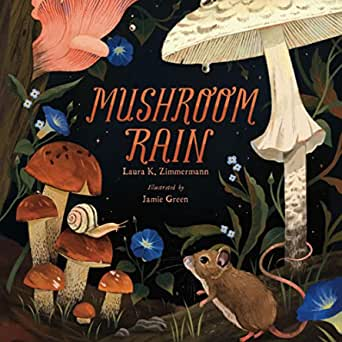
Mushroom Rain by Laura Zimmerman, illustrated by Jamie Green

Published by Sleeping Bear Press

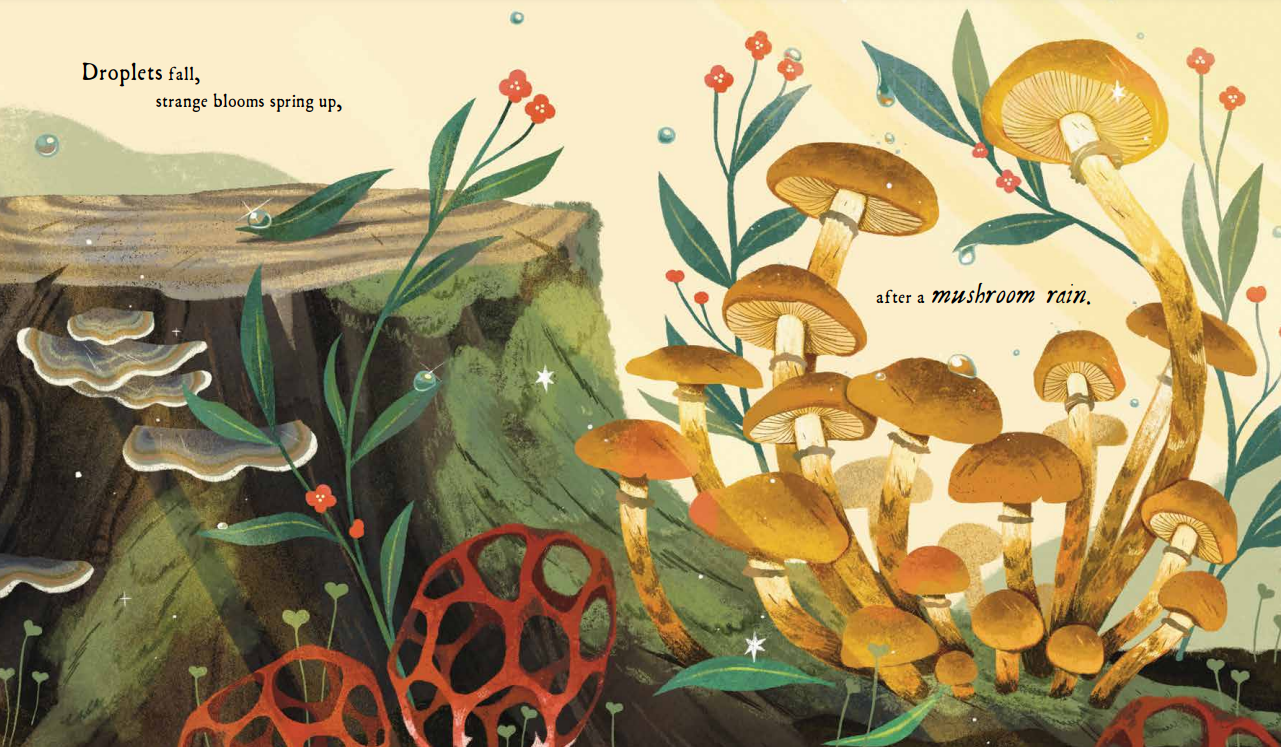
Summary:  Mushrooms can suddenly pop up anywhere, especially after a rain.  With a wide variety of colors and scents, the mushrooms are often used as food, including by humans.  The mushrooms may seem to disappear, but they continue to grow underground, the largest stretching for miles after growing for thousands of years.  Mushrooms reproduce by spores, which can even seed clouds and produce the rain that encourages the growth of new mushrooms.  Includes four pages of information about mushrooms, including a craft and additional resources.  32 pages; grades K-3.

Pros:  A fascinating look at something many of us may take for granted, with gorgeous close-up illustrations of a wide variety of mushrooms.

Cons:  Is it just me, or are mushrooms just a little bit creepy?

Waiting for Mama by Gianna Marino

Published by Viking Books for Young Readers

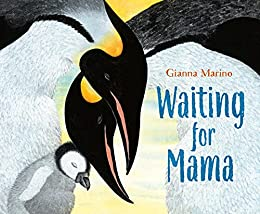
Summary:  A penguin egg narrates what it hears as its mother goes for food and its father keeps it warm and safe, tucked between his feet.  Finally, the egg hatches, and the baby is able to see its dad.  When the mother penguins all return, the baby listens for its mother’s distinctive sounds.  Finally, it recognizes her, and the family is reunited.  Includes additional information about emperor penguins.  40 pages; ages 2-6.

Pros:  Beautiful illustrations depict penguin scenes both close-up and zoomed out, backed by gorgeous Antarctic sky.  Does double duty as a perfect read for Mother’s Day or Father’s Day.

Cons:  Cons for a book about animal parents on Mother’s Day? Not on my watch.  

Surviving the Wild (series) by Remy Lai

Published by Henry Holt and Company

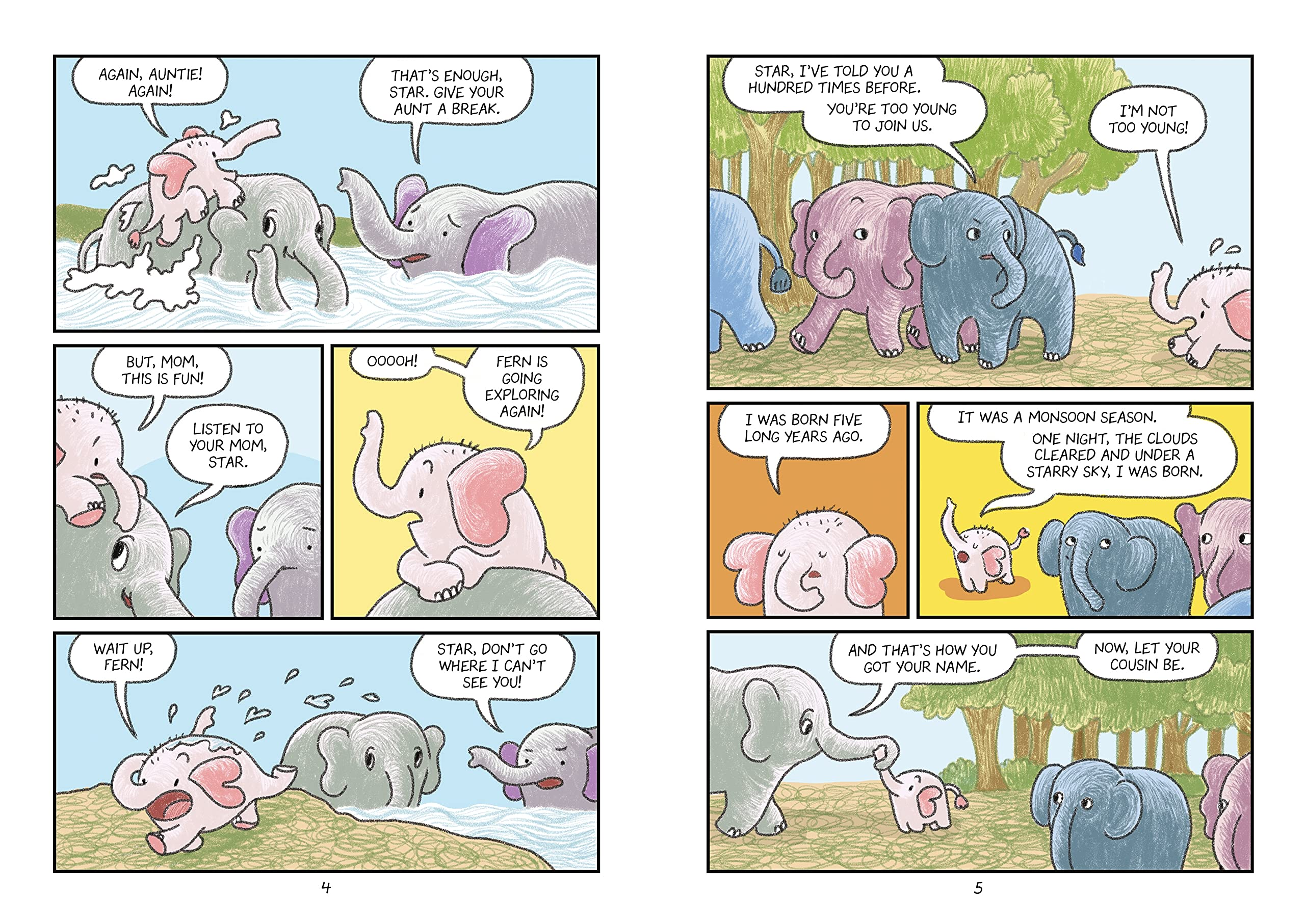
Summary:  Each book in this new graphic novel series tells a true story of survival from an animal’s perspective.  Star and her mother and aunt seek a new home due to deforestation.  They swim to an island where they’re captured by humans and sent to an elephant sanctuary.  Rainbow survives a wildfire in the Australian bush country and is taken to a koala hospital before being released back into the wild.  Both books include several pages at the end that tell more about the animals, their story, and what kids can do to help the environment.  108 pages; grades 1-4.

Pros:  A perfect trifecta of cute and funny animals, graphic novel format, and important environmental information.  Book 3, Sunny the Shark, will be available in August.

Cons:  The ways to take action feel like such tiny drops in the whole climate change bucket.

Sun in My Tummy by Laura Alary, illustrated by Andrea Blinick

Published by Pajama Press

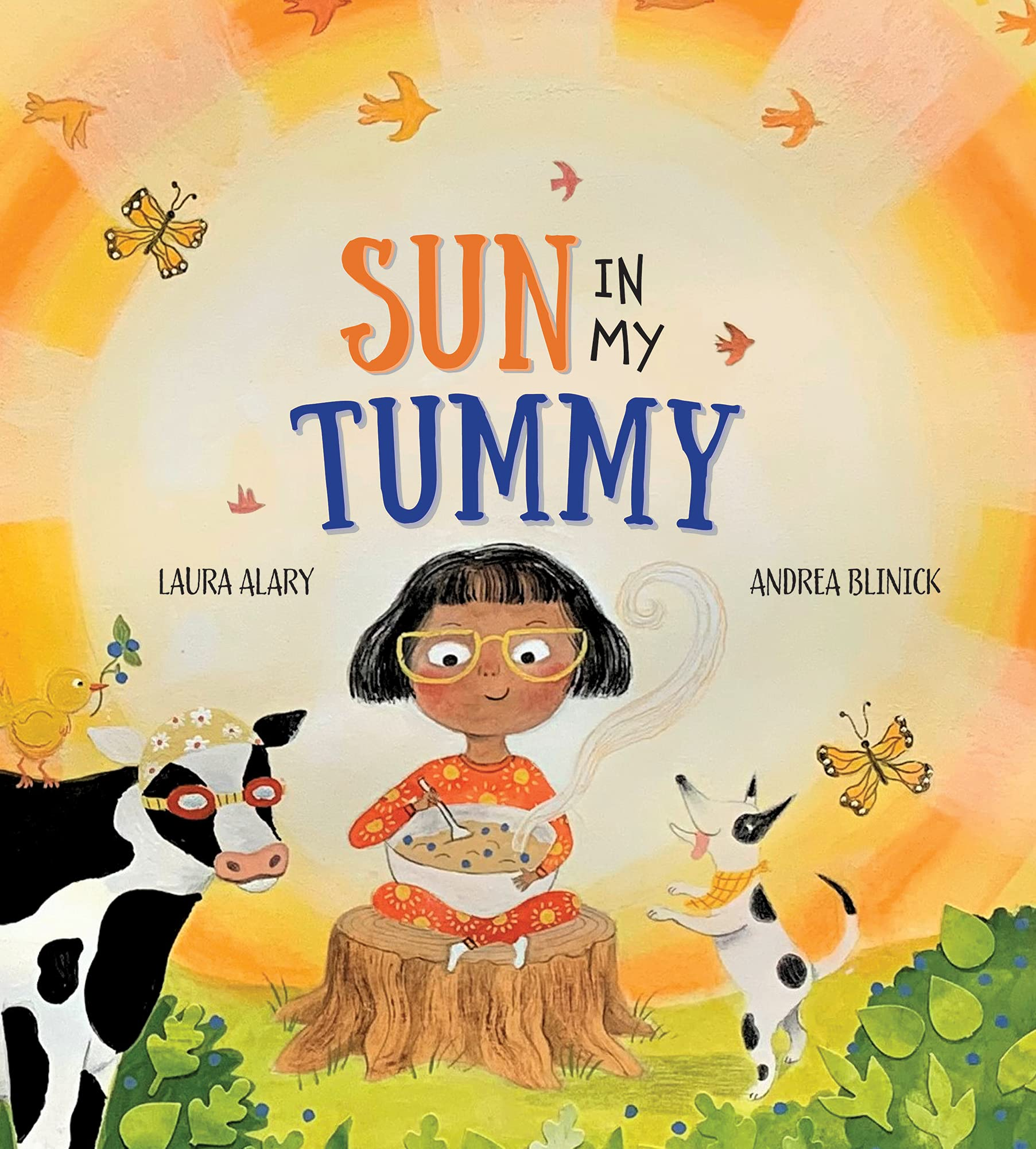
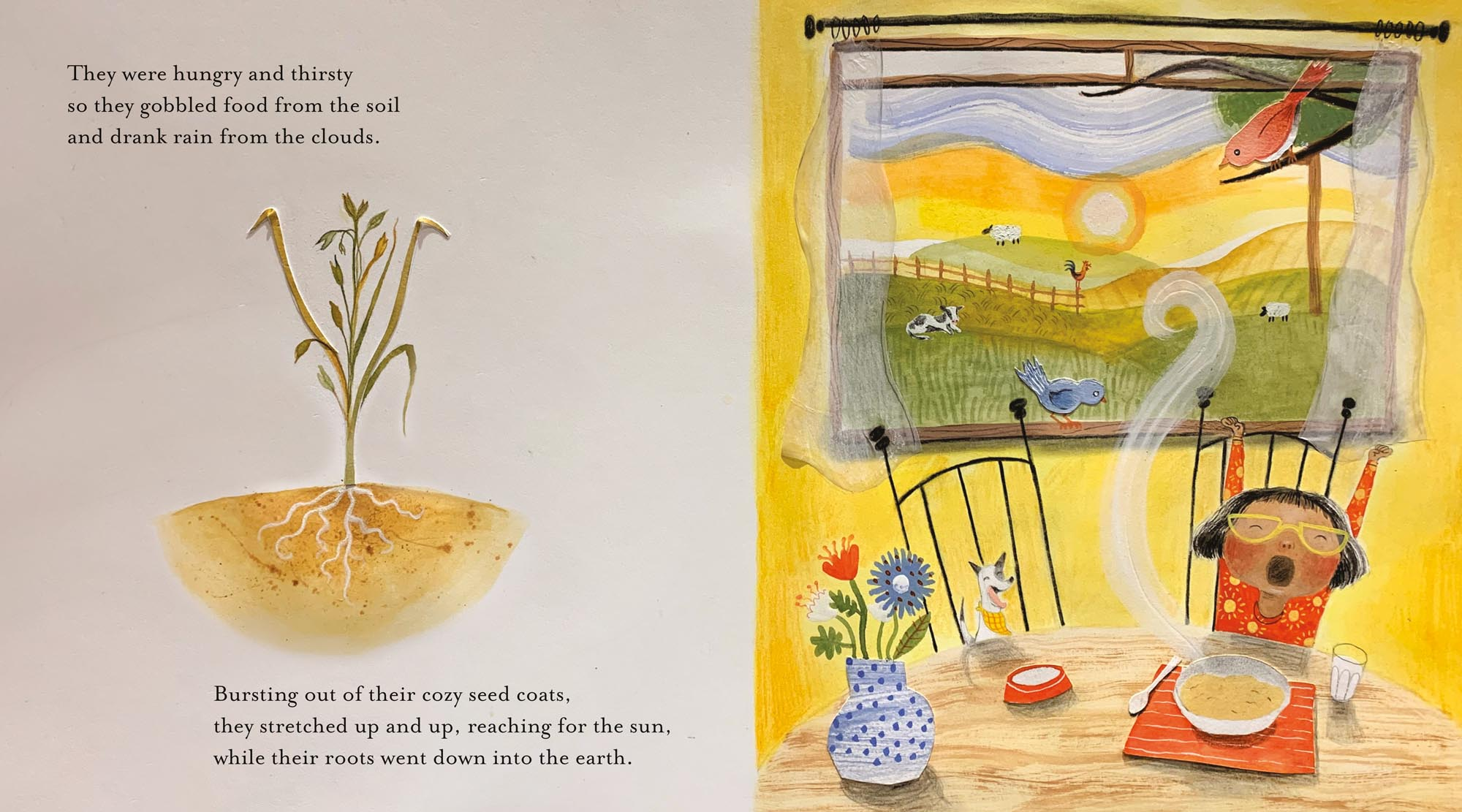
Summary:  Oatmeal, blueberries, and milk may seem like a ho-hum breakfast, but there is magic in the foods we eat.  The oats and the blueberries grew out of the soil, warmed by the sun, and watered by the rain.  They make food from sunlight, creating seeds which can be used to grow new plants.  The cow was able to make milk because she ate grass that grew with the help of sun and rain as well.  “Inside everything, if you look deep enough, you will find the sun. Warm-hearted. Generous. Giving.”  Includes additional information about photosynthesis.  32 pages; grades K-3.

Pros:  This is an excellent science book for primary grades, starting with a concept everyone will recognize and using free verse and whimsical illustrations to foster a sense of wonder about the natural world.

Cons:  I felt like this book could use a subtitle, since “Sun in My Tummy” may not immediately call to mind photosynthesis.

I Begin With Spring: The Life and Seasons of Henry David Thoreau by Julie Dunlap, illustrated by Megan Elizabeth Baratta

Published by Tilbury House Publishers

Summary:  This biography of Henry David Thoreau looks like a nature journal, with lots of watercolor sketches of the flora and fauna Henry observed through a year in Concord.  A timeline running along the bottom of all the pages takes the reader through changes he would have seen through the seasons.  Beginning with his childhood and continuing through his years as a teacher, writer, activist, and naturalist, the story of Henry’s life is closely tied to Concord and the surrounding countryside. Includes additional information about Thoreau’s Kalendar that he was working on at the time of his death which was a record of his observations of nature over many years, and which has been used recently to track climate change.  There are also instructions for making your own Kalendar and a fairly extensive list of resources.  96 pages; grades 3-6.

Pros:  This beautiful volume combines lots of illustrations with an engaging narrative that integrates the seasons of the year with the story of Thoreau’s life. The additional information makes his work relevant today and encourages kids to pursue their own explorations of the natural world.

Cons:  While Henry’s abolitionist work is celebrated here, there’s no mention of the disturbingly racist ideas of his mentor Louis Agassiz.

A Good Place by Lucy Cousins

Published by Candlewick

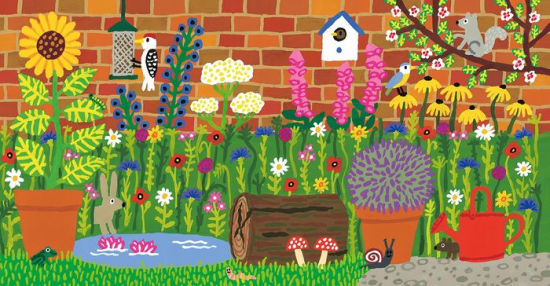
Summary:  Four insects are seeking a good home: Bee wants flowers, Ladybug is searching for leaves, Beetle needs dead wood, and Dragonfly is looking for a pond.  Each time one thinks it has found the perfect place, humans turn out to have made it less than ideal because of garbage, traffic, or pesticides.  Finally, a passing butterfly hears about their dilemma and leads them to a beautiful garden a boy has created.  The garden has flowers, leaves, a pond, and even a dead log.  All four celebrate on the last page.  32 pages; ages 3-7.

Pros:  And just like that, I have a book to read tomorrow to a class of preschoolers starting a gardening unit.  Lucy Cousins has created four endearing insect characters with a gentle environmental message that even the youngest readers will grasp.

Cons:  It would have been nice to have a little back matter about creating a garden.

Serengeti: Plains of Grass by Leslie Bulion, illustrated by Becca Stadtlander

Published by Peachtree Publishing Company

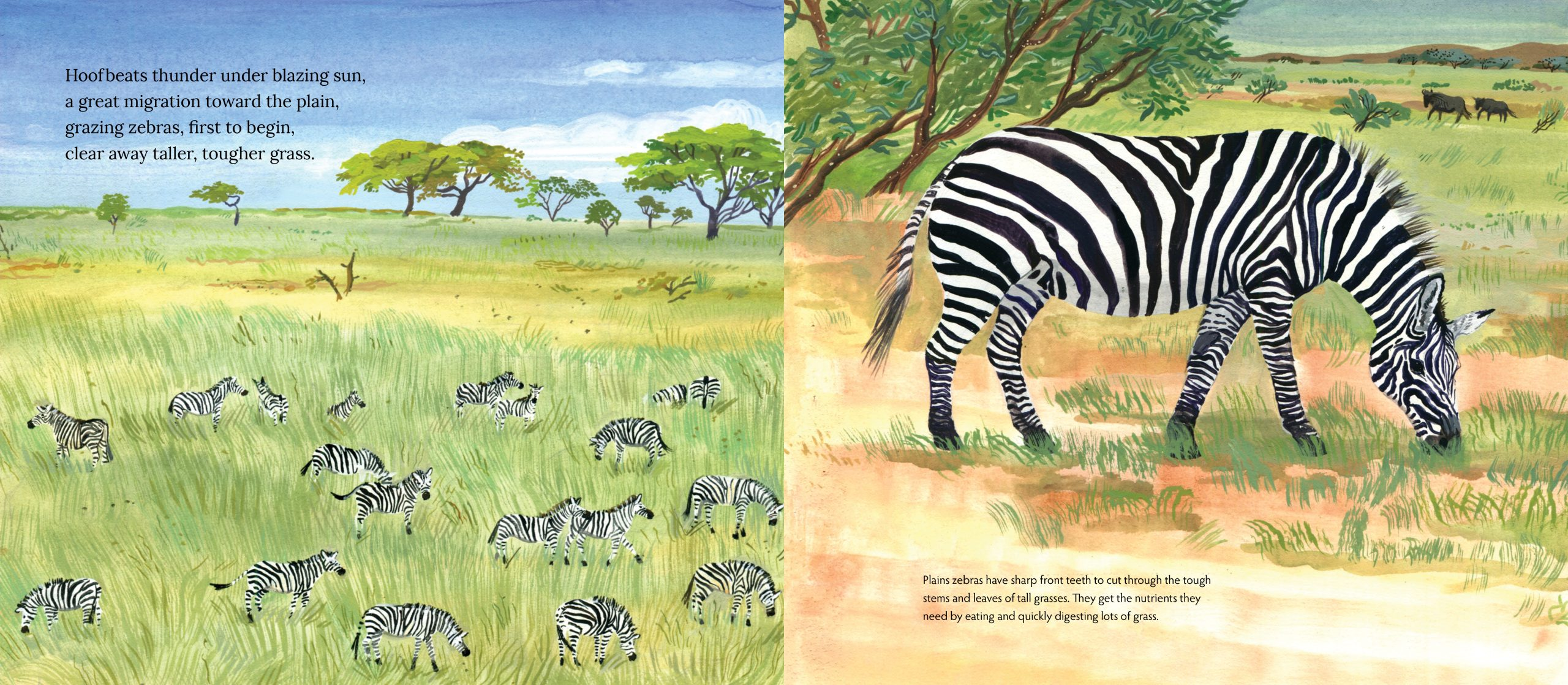
Summary:  Each two-page spread depicts a scene from the Serengeti, with a four-line poem and a paragraph of additional information.  An introductory page describes the ecosystem of the Serengeti, and a note at the end gives additional information about the poetic form, which is derived from an East African form called the utendi.  Also includes a glossary, a reading list, and information on Serengeti stewardship, including three organizations that are working to preserve the Serengeti.  48 pages; grades 2-6.

Pros:  A beautiful science and poetry book, with gorgeous paintings of the Serengeti that will catch the eye of any animal lover.  The additional information about the poems and the Serengeti makes this an excellent resource for language arts, geography, and science.

Cons:  I wish there had been some information about the humans who live in that area.

Hello, Puddle! By Anita Sanchez, illustrated by Luisa Uribe

Published by Clarion Books

Summary:  A young girl observes a puddle throughout the year.  Spring brings tadpoles, turtles, and plants growing near the edges.  Squirrels cool off in the summer heat, which also causes the puddle to shrink.  There’s still enough water for mosquitoes to lay their eggs, and when they hatch, bats swoop in to eat them.  Deer stop by for a drink as the puddle fills up with falling leaves.  Finally, it ices over, and the girl bids it farewell until spring comes again.  Includes an author’s note about the real puddle on which the story is based; additional puddle facts and directions for making your own puddle; a list of the animals in the book and how to find signs of them; a glossary; and a list of additional resources.  40 pages; ages 4-8.

Pros:  Who would have thought the humble puddle could draw such a wide variety of wildlife?  This book is perfect for giving young naturalists an introduction to animals they can observe in their own backyards, and the back matter can lead them to further explorations.

Cons:  I got a little nervous there in midsummer that the puddle was going to disappear.

Solitary Animals: Introverts of the Wild by Joshua David Stein, illustrated by Dominique Ramsey

Published by Rise x Penguin Workshop

Summary:  While many animals live in groups–a parade of elephants, a tower of giraffes, a pod of whales–there are some that live alone.  The panther at the watering hole, the octopus in the ocean, the sloth in the jungle, and the bald eagle high in the sky are all solitary animals who have evolved to survive best on their own.  A final page gives additional information about solitary animals, including a comparison with humans that concludes, “All creatures find their own balance.”  48 pages; ages 4-8.

Pros:  The amazing digital illustrations of this book highlight animals both in groups and alone.  The text emphasizes that different animals do well with different amounts of sociability, a lesson that kids may apply to themselves as well.

Cons:  Is it just me, or is the word “introverts” becoming a bit hackneyed?

Be the Change:  Rob Greenfield’s Call to Kids – Making a Difference in a Messed-Up World by Rob Greenfield and Antonia Banyard

Published by Greystone Kids

Summary:  Environmental activist Rob Greenfield has lived in an off-grid tiny house, bicycled across the country, gone without showering for 1,000 days, and worn a “trash suit” through the streets of New York City to show people how much garbage they generate in a month.  Diving into different environmental issues like energy, food waste, and transportation, he encourages kids to think about changes they can make in their lives and profiles young environmental activists.  He includes sections on disconnecting from technology and building community, and how living more simply can encourage growth in both areas.  Includes a glossary, list of resources, and index.  87 pages; grades 3-7.

Pros:  An inspiring and accessible read, with lots of photos, infographics, and short sections of text that encourage kids to see how making small (and big) lifestyle changes can have a real impact.

Cons:  The tiny font.