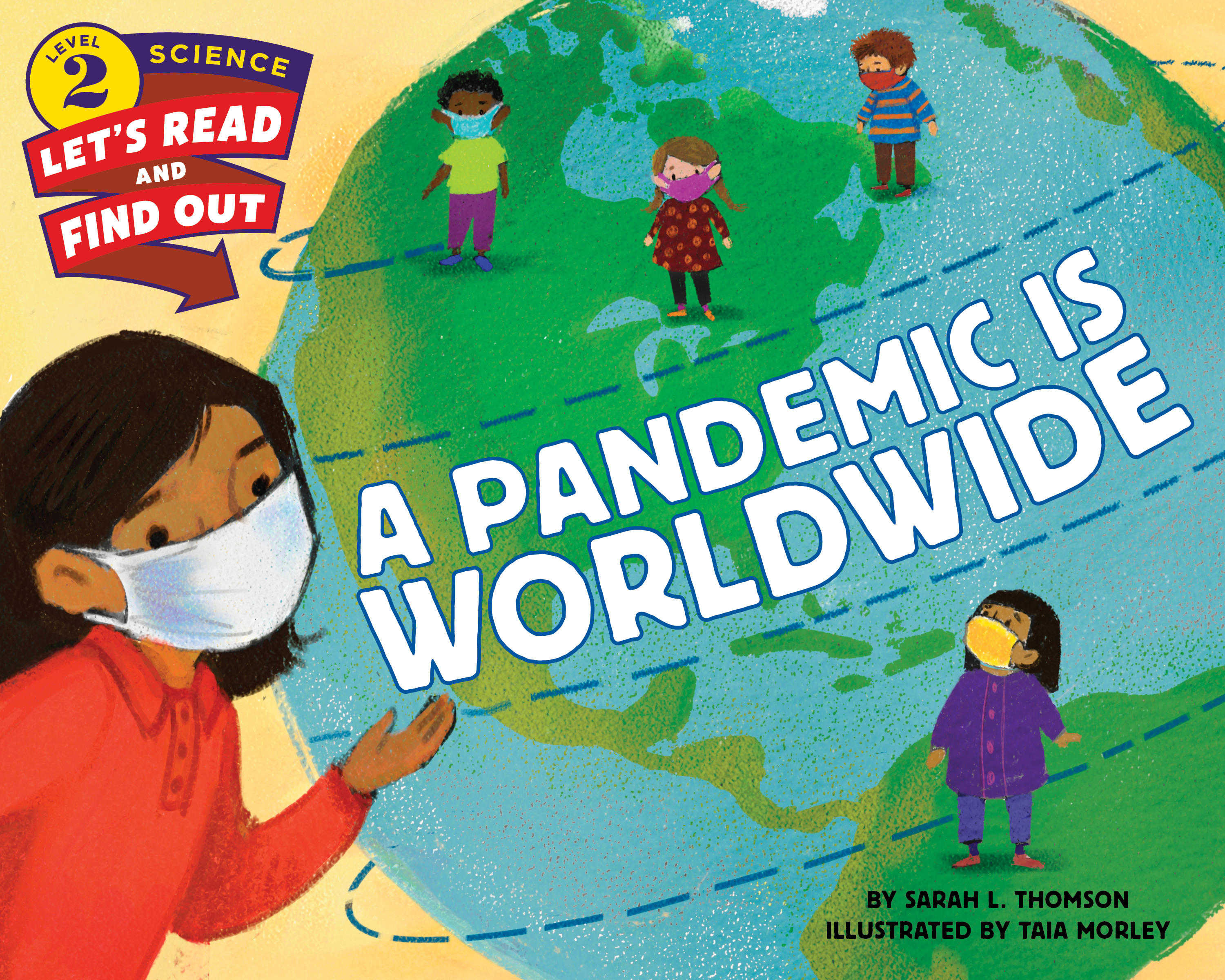
A Pandemic Is Worldwide by Sarah L. Thomson, illustrated by Taia Morley

Published by HarperCollins

Summary:  This book presents a straightforward look at what a pandemic is, with a brief history of past pandemics and an introduction to Covid 19.  There’s a quick look back at the development of vaccines and antibiotics and precautions that were taken in our current pandemic before a vaccine was developed.  The book ends on an optimistic note: “Everyone who wore a mask or washed their hands or stayed home until it was safe helped bring about the day when the pandemic was over at last.”  Includes a glossary, hand washing instructions, and a timeline of past pandemics.  40 pages; ages 4-8.

Pros:  The Let’s-Read-and-Find-Out series continues to do what it’s done well for the last 60 years: present science in a clear and understandable way to preschool and early elementary students.  At least that’s their target audience: I feel like by now I should know the difference between an outbreak, an epidemic, and a pandemic, but I learned that from reading this book.

Cons:  I wasn’t crazy about the small font.

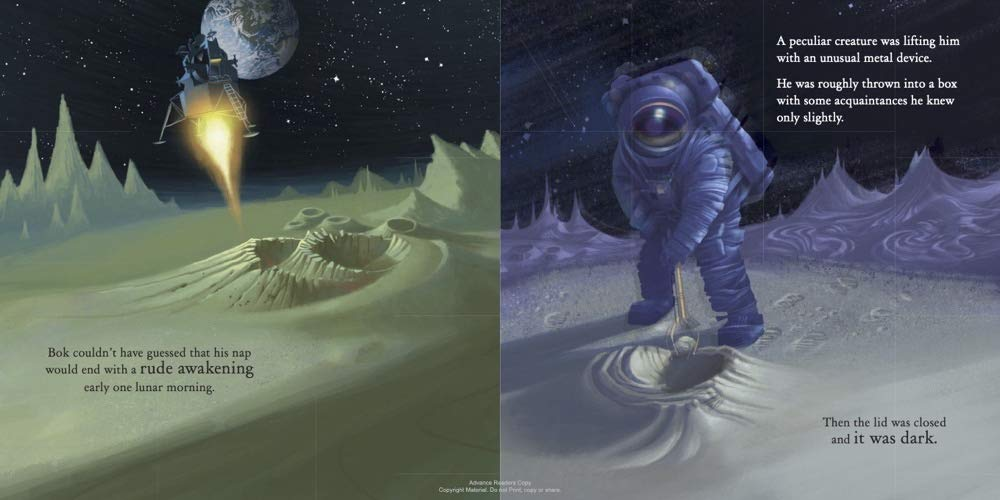
Bok’s Giant Leap: One Moon Rock’s Journey Through Time and Space by Neil Armstrong, illustrated by Grahame Baker Smith

Published by Crown Books for Young Readers

Summary:  While Neil Armstrong was dreaming of flight from his boyhood home in Ohio, a rock was hanging out on the moon, where it had lived for the last four billion years.  Young Neil learned how the moon had been formed when a small planet crashed into Earth, and how rocks were created at the end of the turbulent early time of the moon’s history.  As the years went by, different creatures came and went from the Earth, and eventually humans appeared.  The ancient rock slept through most of human history, but when Neil Armstrong finally traveled to the moon, he picked up the rock and brought it back to Earth.  Neil named the rock Bok, and it now rests in the Cincinnati Museum Center.  Includes additional information about the moon, the Earth, and Neil Armstrong’s journey to the moon.  48 pages; ages 4-8.

Pros:  Kids interested in space exploration, geology, and/or paleontology will get a taste of all of these in this whirlwind tour of the moon and Earth.  Armstrong’s personal connection with the moon and Bok makes the scientific facts even more interesting.

Cons:  Covering five billion years in a picture book means a pretty sketchy history and there are no resources given for additional research.

Good Eating: The (Short) Life of Krill by Matt Lilley, illustrated by Dan Tavis

Published by Tilbury House Publishers

Summary:  A tiny egg sinks deep into the ocean.  As the days pass it changes shape, growing spines, eyes, and a mouth.  In four weeks, the organism travels almost two miles from the depths of the sea to the surface.  Finally, it is a full-grown krill, with 26 legs and spots that can light up.  There are millions and millions of other krill, and it’s a good thing because they provide food for all kinds of animals like seabirds, penguins, and the gigantic blue whale.  Includes additional facts about krill and a list of resources: books, websites, and a National Geographic game called Krill Smackdown.  36 pages; grades 1-4.

Pros:  It seems like it would take considerable creative energy to write an engaging story about an animal whose main purpose in life is to be eaten, and to illustrate it with a cute and endearing krill, but this team has pulled it off.  The additional material at the end makes it a good research resource and emphasizes the important role krill plays in food chains around the world.

Cons:  Kids may need to be persuaded that they really want to read a book about krill.

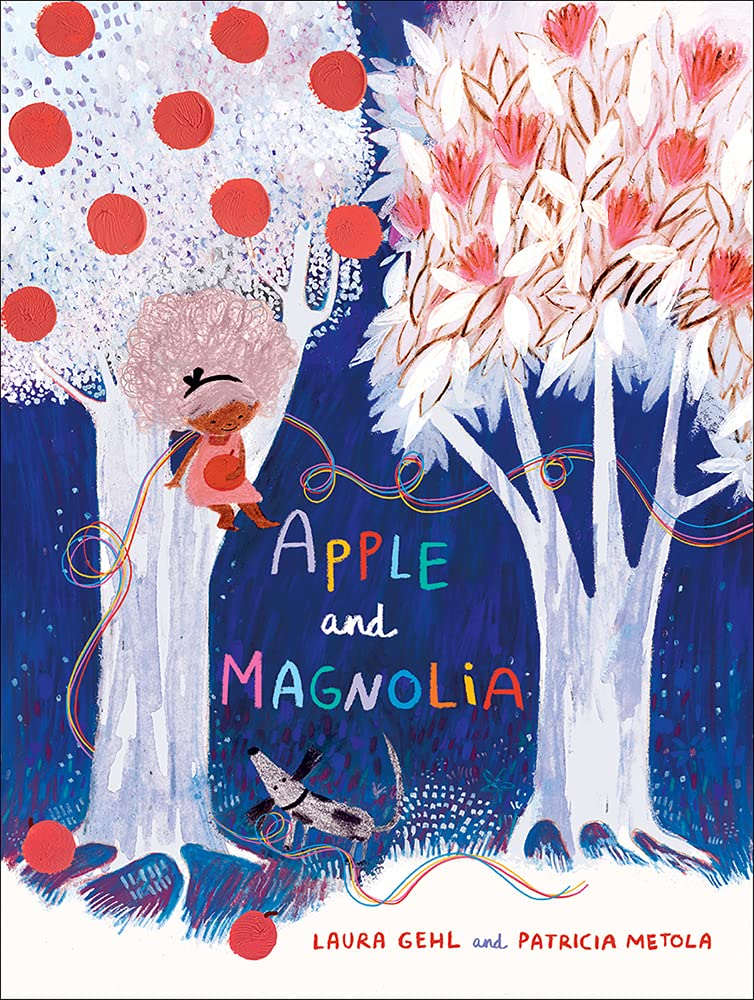
Apple and Magnolia by Laura Gehl, illustrated by Patricia Metola

Published by Flyaway Books

Summary:  Britta loves Apple and Magnolia, two trees who grow side-by-side, and is sure that they are friends.  Dad tells her kindly that he doesn’t think that’s possible, and big sister Bronwyn not-so-kindly agrees.  But Nana says that unusual friendships can be the most powerful.  When Magnolia starts to droop, Dad says she probably won’t make it through the winter, but Britta is sure that Apple can help Magnolia survive.  She encourages their friendship by knitting a long scarf to connect them and stringing lights in their branches so they can always see each other.  As winter turns to spring, Britta thinks that their branches are growing closer together, and Gran helps her create a chart to track this theory.  Magnolia is late to flower, but when the beautiful blooms finally appear, Britta is ready to celebrate.  Predictably, Dad and Bronwyn remain certain that Apple had nothing to do with Magnolia’s recovery, but Gran restates her position that unusual friendships are the most powerful of all.  40 pages; ages 4-8.

Pros:  This beautiful story includes friendship, a wise grandmother, and a nice dose of science, starting with an author’s note stating that scientists are just beginning to understand how trees communicate with each other.  Those wanting to learn more can read Lita Judge’s The Wisdom of Trees.  

Cons:  I was hoping for a little more of a change of heart from Dad.

Fox: A Circle of Life Story by Isabel Thomas, illustrated by Daniel Egnéus

Published by Bloomsbury Children’s Books

Fox: A Circle of Life Story: Thomas, Isabel: 9781526600776: Amazon.com:  Books
Fox: A Circle of Life Story by Daniel Egneus

Summary:  Look: you might see a bushy tail or a flash of orange.  Listen: a soft pad of paws.  A fox travels through the snow, hunting for food to take back to its den, where three cubs wait.  As the cubs get bigger, they go out on hunting expeditions, too.  On one trip, the fox is hit by a car and dies by the side of the road.  The cubs return home and are seen walking by the fox’s body as it slowly starts to decompose.  Birds and insects feed on the body, and insects lay their eggs there.  “Life is everywhere.  Death is not just an end but a beginning.”  Includes additional information on death, decomposition, and the cycle of life.  48 pages; grades 1-5.

Pros:  This beautiful book looks at death and decomposition from a scientific viewpoint, part of the cycle that allows new life to grow and flourish.  It doesn’t deal with grief (the young foxes seem unfazed by the death of their parent) but shows readers the natural process of death.

Cons:  Readers who may not have picked up on the foreshadowing of the “circle of life” subtitle may be shocked and dismayed by the death of the fox.  This is definitely a book to share and discuss one-on-one.

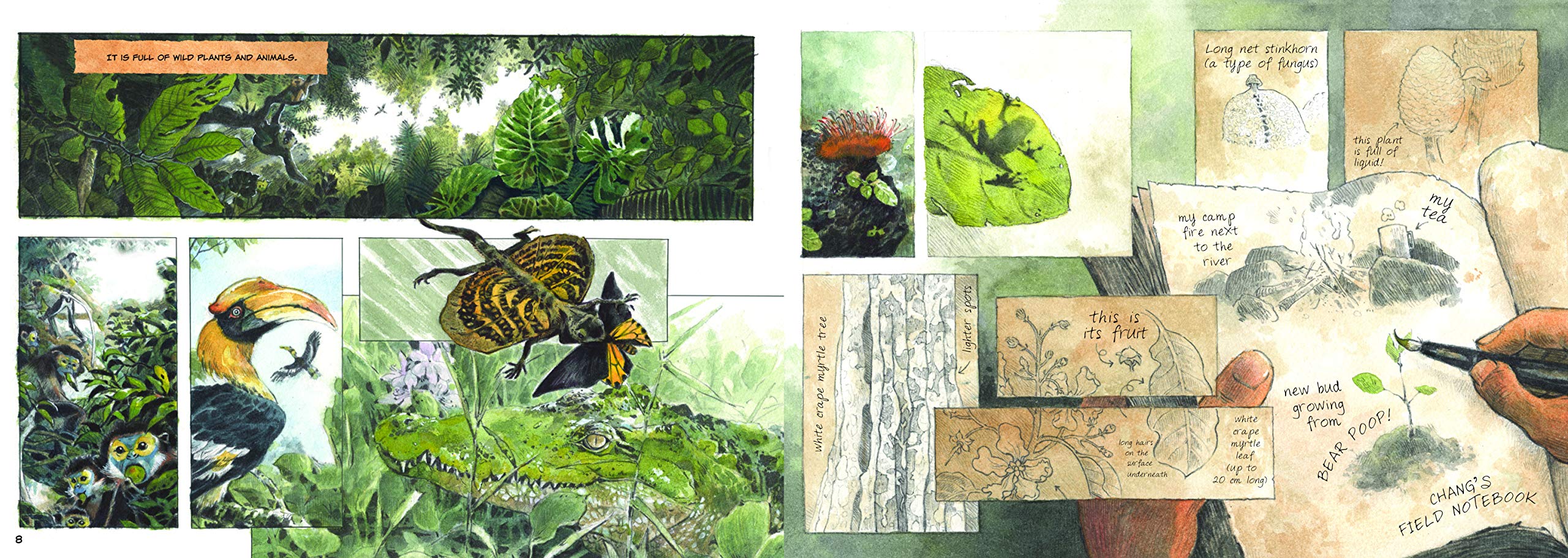
Saving Sorya: Chang and the Sun Bear by Trang Nguyen, illustrated by Jeet Zdung

Published by Dial Books

Saving Sorya: Chang and the Sun Bear: Nguyen, Trang, Zdung, Jeet, Zdung,  Jeet: 9780593353639: Amazon.com: Books

Summary:  The author based this story on her life, portraying herself as a young girl named Chang who commits to becoming a wildlife conservationist after witnessing people extracting bear bile on a bear farm.  As she grows up, she’s given little encouragement due to her gender and age, but she persists in her goal, and eventually is accepted as a volunteer for an organization called Free the Bears.  There she meets a sun bear cub named Sorya and takes on the task of reintroducing her to the wild.  This proves to be a long process, since Sorya is shy and becomes attached to Chang.  Again, Chang’s persistence pays off, and after many months, Sorya gradually goes back to the wild.  Chang misses her friend, but is happy that Sorya is where she belongs.  128 pages; grades 3-7.

Pros:  This unusual graphic story features gorgeous artwork showing the forests of Vietnam and an inspiring story about a determined young woman who is able to make a difference with her conservation work.

Cons:  The scene at the bear farm is a bit disturbing.

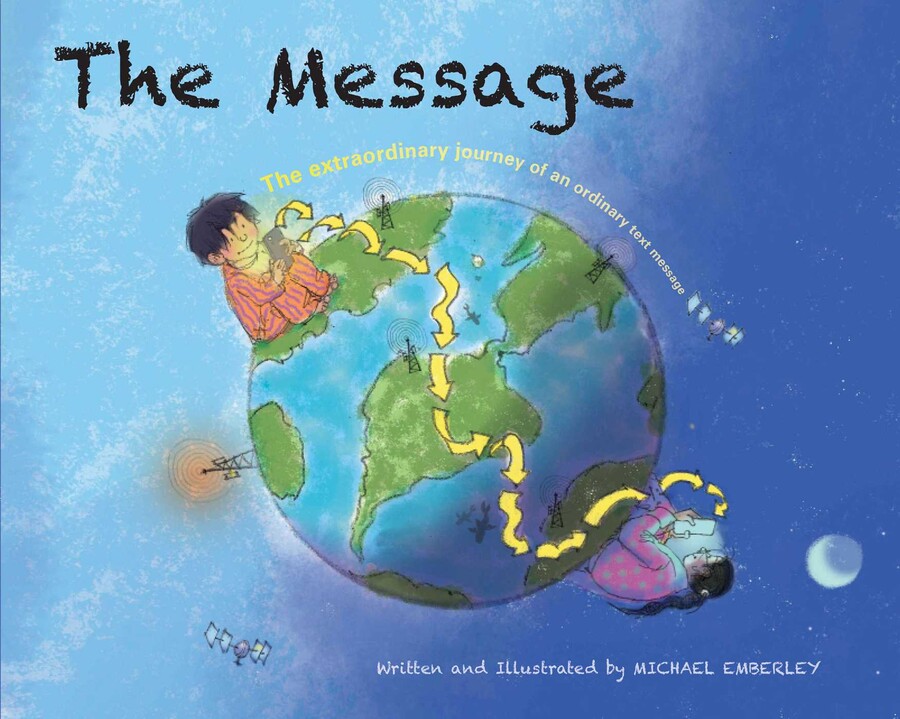
The Message: The Extraordinary Journey of an Ordinary Text Message by Michael Emberley

Published by Caitlyn Dlouhy Books

The Message | Book by Michael Emberley | Official Publisher Page | Simon &  Schuster
The Message: The Extraordinary Journey of an Ordinary Text Message: Emberley,  Michael, Emberley, Michael: 9781534452909: Amazon.com: Books

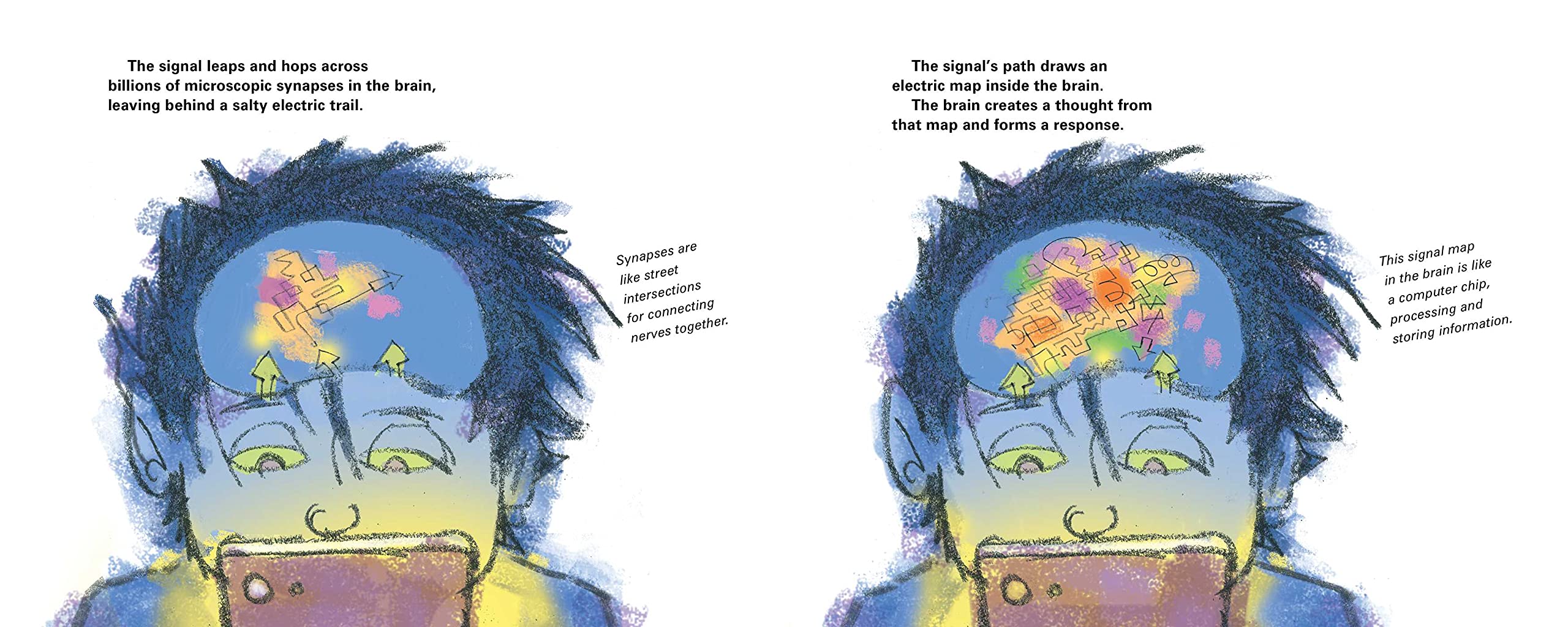
Summary:  Michael Emberley traces the journey of a text message from one phone to another, starting with the formation of the message in the brain, then traveling through the fingers to the phone’s glass.  Next, the signal travels to a cell tower, then on through underground cables that travel deep into the ocean.  Eventually (I’m skipping over a few steps here) the message arrives at the recipient’s phone and is received by her eyes and brain.  Although emotions can’t travel via text, the message can trigger an emotion, in this case love as a mother and child exchange messages when the mom is away on a trip.  Includes additional information and resources (which are printed on the back endpapers…grrr!).  48 pages; grades 1-5.

Pros:  Kudos to Michael Embereley for taking an incredibly complex process that most of us take for granted and making it interesting and understandable.  Both kids and adults will learn a lot from this introduction and the back matter adds much more.

Cons:  I definitely didn’t follow the whole process. My mind is still blown, though.

The Secret Explorers and the Missing Scientist by SJ King

Published by DK Children

Amazon.com: The Secret Explorers and the Missing Scientist: 9781465499899:  King, SJ: Books

Summary:  Kiki is tinkering with a bicycle near her home in Ghana when she gets the signal that the Secret Explorers have a mission.  When they’re all gathered, they learn that they’ve been assigned to the Arctic, and Kiki and marine specialist Connor are the two chosen to go.  When they get there, they find a ship stuck in the ice and learn that one of the scientists has gone missing.  As they carry out their rescue mission, they learn a lot about the polar environment, and have a close encounter with a polar bear.  Not only do they find the scientist, but Kiki’s engineering skills allow them to free the ship from the ice as well.  Includes additional information on the Arctic, the people who live there, and polar bears; a quiz; and a glossary.  128 pages; grades 2-4.

Pros:  Somehow I’ve missed this series until this book, #7, which got a starred review from School Library Journal.  Kids who like science and reading nonfiction will enjoy learning all the facts that are woven into the story and given in the backmatter.  There’s a diverse cast of characters that apparently answer the call from all around the globe when there’s a new mission. I was a little vague as to the group works, so definitely start with book 1.

Cons:  Even though there are plenty of illustrations, there’s no credit given on the cover or title page. Unless SJ King is also the illustrator?

Anteaters, Bats & Boas: The Amazon Rainforest from the Forest Floor to the Treetops by Roxie Munro

Published by Holiday House

Anteaters, Bats & Boas by Roxie Munro: 9780823446568 |  PenguinRandomHouse.com: Books

Summary:  Thirty animals from the rainforest are profiled, beginning with an introduction that tells readers a little bit about rainforests, specifically the Amazon, where the animals in the book live.  From there, the two-page spreads show two or three animals with a paragraph of facts about each one.  The animals are pictured in their natural habitats and shown in proportion to each other.  A final spread includes black-and-white outlines of all the animals with a color-coded list that categorizes them by class.  There’s also information on the layers of the rainforests and rainforest preservation, as well as a glossary, index, and list of additional information sources.  32 pages; grades 2-5.

Pros:  The large, full-color illustrations really make this book, which also includes interesting tidbits of information about each animal, and excellent backmatter which can lead readers to further research.

Cons:  It’s a beautiful and interesting catalog of animals, but kids will have to look elsewhere for more comprehensive information about the rainforest.

Amara and the Bats by Emma Reynolds

Published by Atheneum Books for Young Readers

Amara and the Bats: Reynolds, Emma, Reynolds, Emma: 9781534469013: Amazon.com:  Books

Summary:  Amara has loved bats since one got into her attic and a wildlife rescue team gave her a close look when it came to get it out.  When the family moves, she’s dismayed to learn that there are no bats at the local park.  After reading about other young environmental activists, Amara gets the idea to build bat houses to try to get her favorite animals to return.  She bravely makes a presentation about it at her new school, and is joined by a couple of other kids who also love animals.  It takes a lot of time and patience, but the kids raise money, build the houses, and wait.  Finally, Amara gets a call one night from the park ranger, and when she and her family get to the park, they see that the bats have returned!  Includes facts about bats, echolocation, setting up bat houses, and ways kids can help bats.  48 pages; ages 4-8.

Pros:  An empowering story of how one kid can make a difference in her community.  Amara stays true to her passion for bats while also dealing with moving and making new friends.  The material at the end could be good for starting some research.

Cons:  Sorry, Amara, I just can’t share your excitement for finding a bat in the attic.