One Dark Bird by Liz Garton Scanlon, illustrated by Frann Preston-Gannon

Published by Beach Lane Books
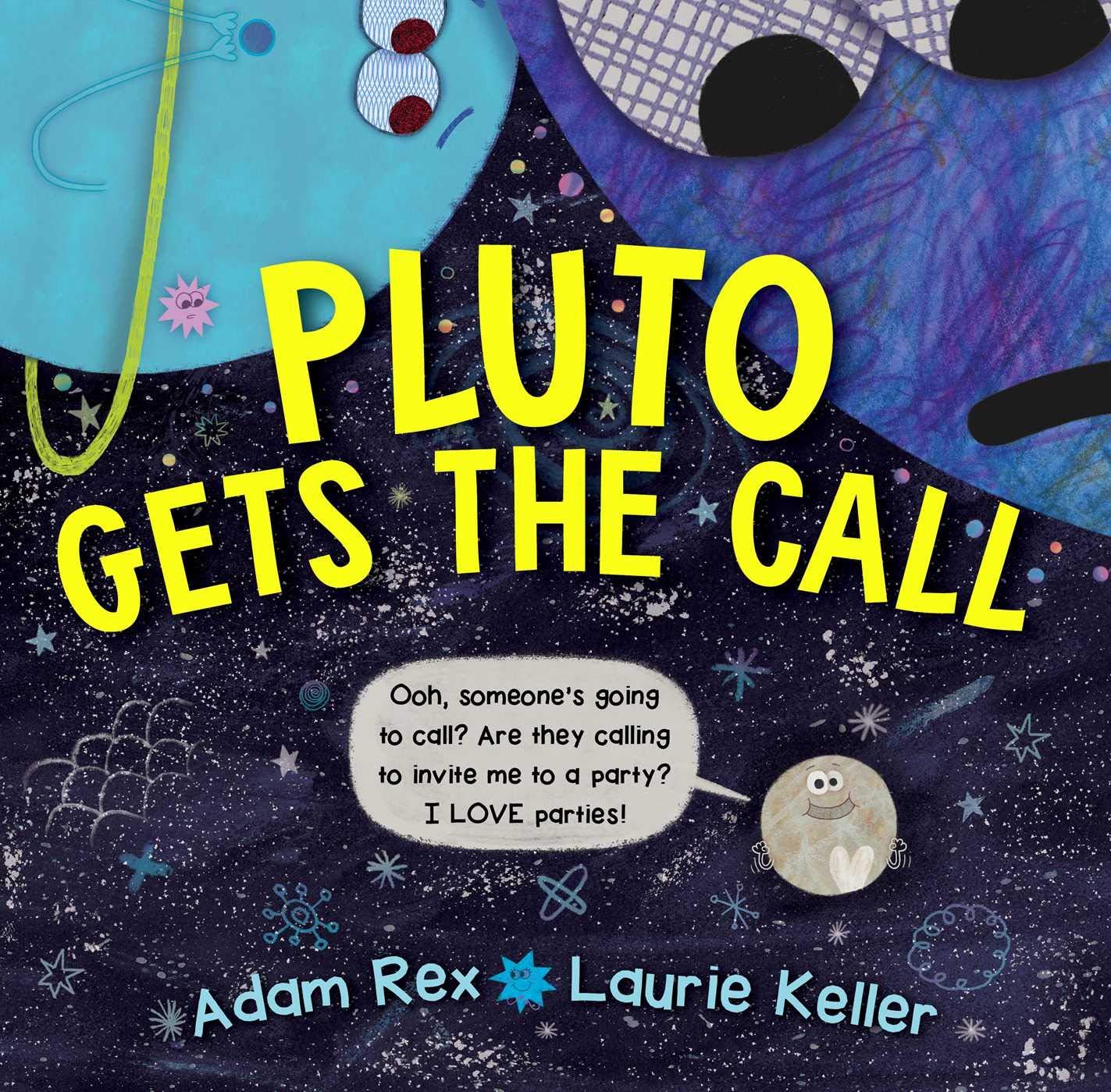
Image result for one dark bird liz garton scanlon

Image result for one dark bird liz garton scanlon

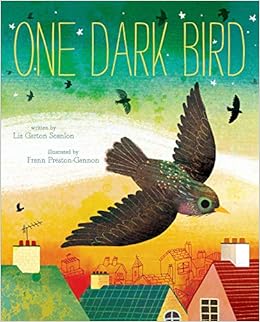
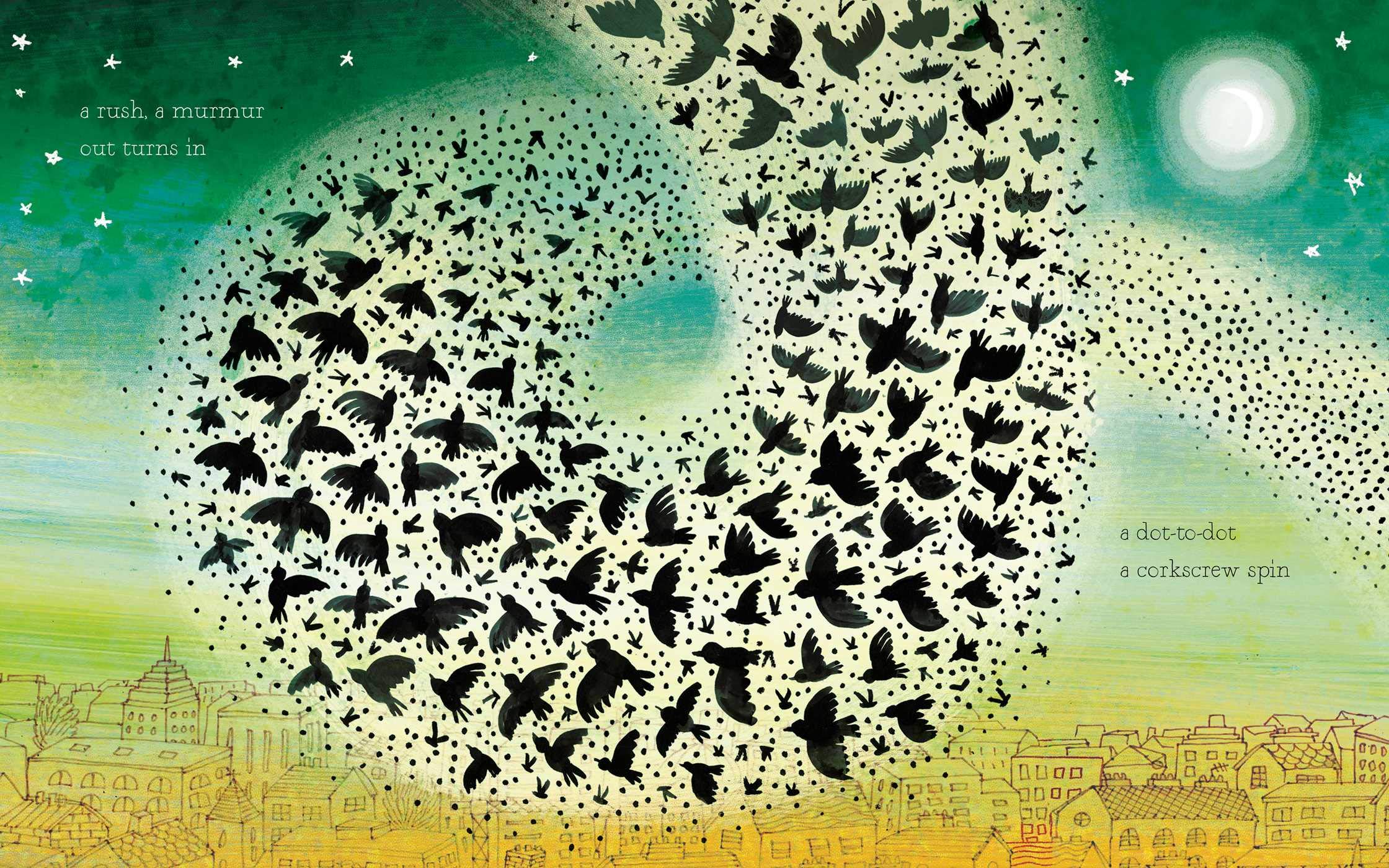
Summary:  On the title page, we learn that if starlings are threatened, they will sometimes form what’s called a murmurration: a huge flock that can fly in a coordinated mass, almost like a dance.  The book goes on to count starlings from 1 to 10; when they are startled by a bird of prey, hundreds come together to move in a flock through the sky. When danger passes, they go their separate ways, and the countdown goes from 10 to 1.  The last one falls asleep in a tree as a full moon is rising. 40 pages; ages 2 -7.

Pros:  Readers will learn a little bit about starlings and counting as they enjoy the gorgeous illustrations.  The single starlings are a medley of jewel-toned colors, and the murmurration against the evening sky is quite spectacular.

Cons:  I would have liked a little more information or additional resources about starlings.

If you would like to buy this book on Amazon, click here.

Homes in the Wild: Where Baby Animals and Their Parents Live by Lita Judge

Published by Roaring Brook Press

Image result for homes in the wild judge

Image result for homes in the wild judge

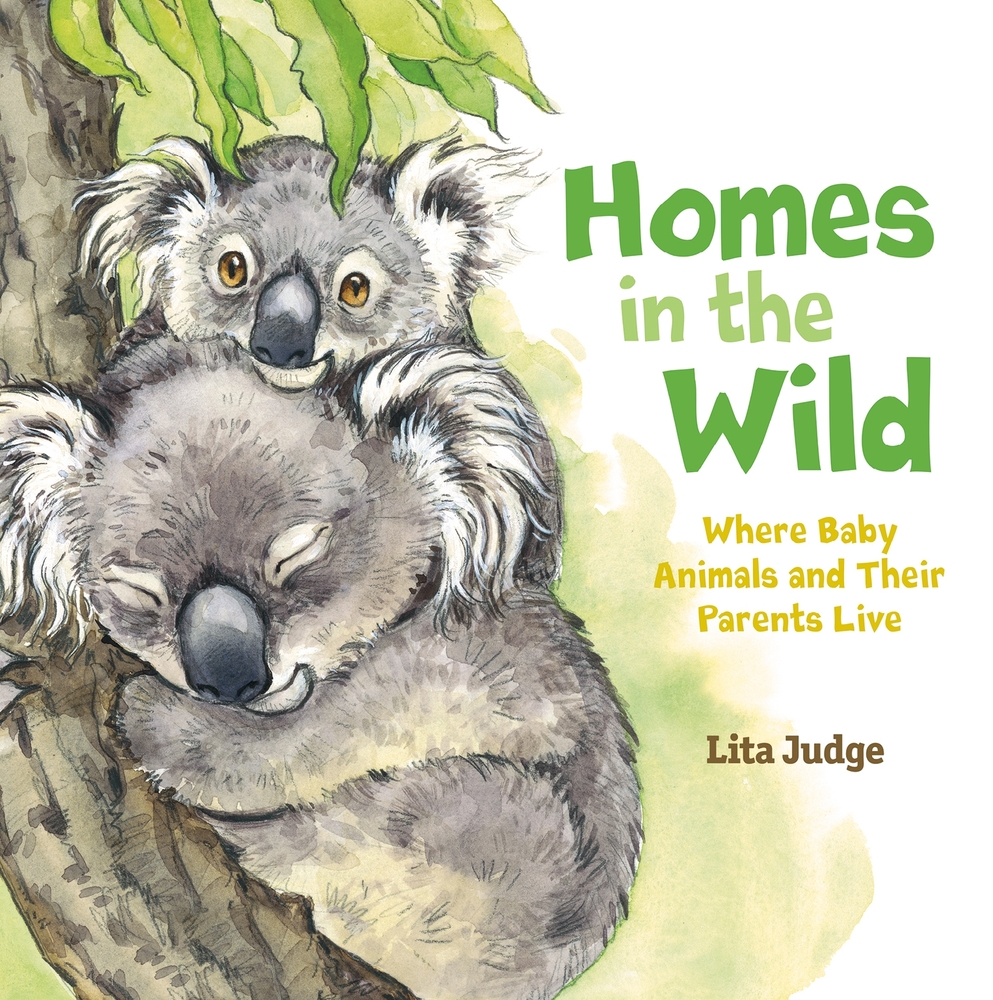
Summary:  26 animal babies and their families are profiled, grouped together by the type of home they have–underground, hidden in the trees, a nest, etc.  Large, realistic watercolors introduce each section, followed by smaller pictures with a paragraph of text about the two or three animals who inhabit that particular type of home.  The book concludes with the statement that animals are safe and sheltered in their homes, just like human children. Includes further information about each animal with a thumbnail sketch, a brief glossary, and a list of books and websites that give more information.  48 pages; grades K-3.

Pros:  Kids will love these adorable baby animal pictures, and there’s plenty of interesting information for them to browse.  The lists of additional resources will allow for further research.

Cons:  All 26 animals are mammals; it would have been interesting to throw in a few fish, reptiles, and birds for comparison.

If you would like to buy this book on Amazon, click here.

Give Me Back My Bones! by Kim Norman, illustrated by Bob Kolar

Published by Candlewick

Image result for give me back my bones norman

Related image

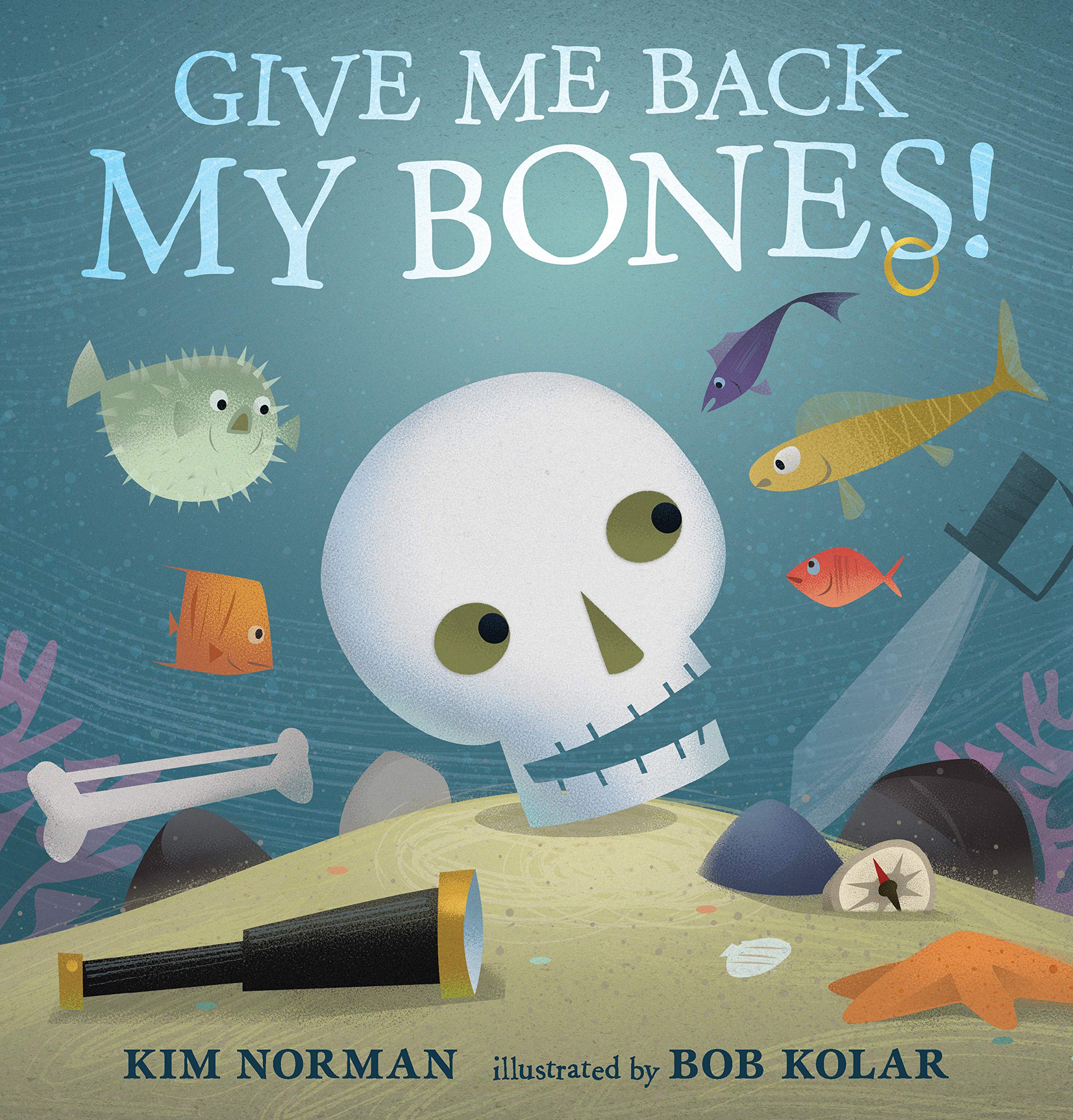
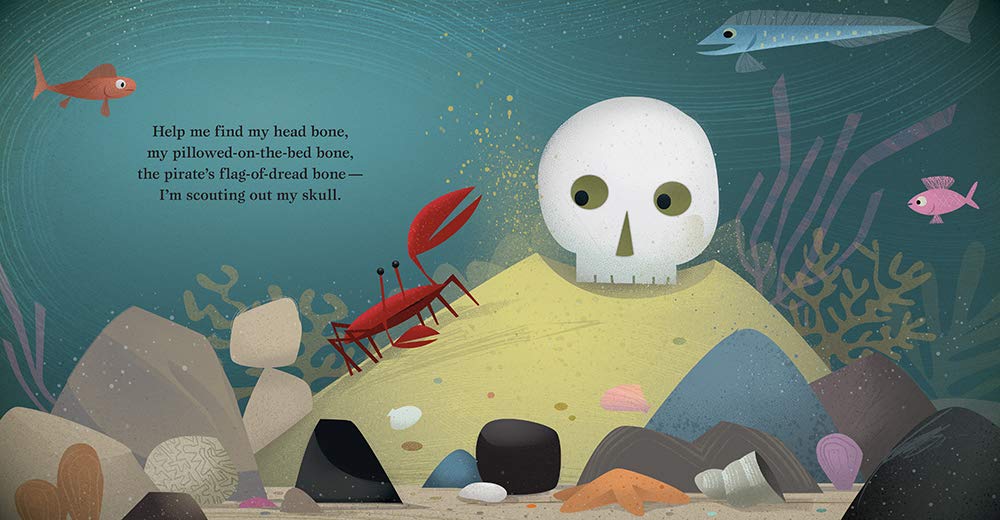
Summary:  A pile of bones on the ocean floor slowly reassembles itself into a pirate with the help of some sea creatures.  “Help me find my head bone, my pillowed-on-the-bed bone, the pirate’s flag-of-dread bone–I’m scouting out my skull.”  He continues working his way down, each rhyme ending with the name of the bone he’s seeking: from mandible and clavicle all the way to tibia, fibula, and phalanges.  At last, he’s ready to don his pirate’s hat, and climb aboard his shipwrecked ship where he’s sure he’ll find treasure–”I feel it in my bones!” The endpapers show the separate bones on the front and a labeled skeleton on the back.  40 pages; ages 4-9.

Pros:  Although this has the feel of a preschool-to-primary-grade picture book, older kids would find this a humorous introduction to different bones.  The rhymes are catchy and the skeleton is oddly endearing. It could even be a nice alternative to traditional Halloween reading. Great fun!

Cons:  Back matter about the skeleton with additional resources would have been useful.

If you would like to buy this book on Amazon, click here.

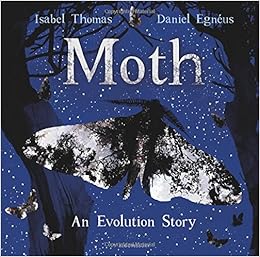
Moth: An Evolution Story by Isabel Thomas, illustrated by Daniel Egneús

Published by Bloomsbury Children’s Books

Image result for moth isabel thomas amazon

Summary:  Before the Industrial Revolution, most peppered moths had speckled wings.  The ones that were all black didn’t blend into tree bark as well and were more likely to get eaten.  But the smoke and soot from burning coal turned tree bark black, and before long, there were more black peppered moths than speckled ones.  After clean air laws were passed in the middle of the 20th century, the proportions started to shift again as tree bark returned to its original color. Includes additional information that explains defines evolution, natural selection, and adaptation.  48 pages; grades 1-5.

Pros:  How do you explain evolution and natural selection to a 7-year-old?  Isabel Thomas has done an amazing job here, ably assisted by Daniel Egneús collage-style illustrations.  The blue and silver cover is particularly eye-catching. This belongs in the science section of every elementary library.

Cons:  No photos of the real moths.

If you would like to buy this book on Amazon, click here.

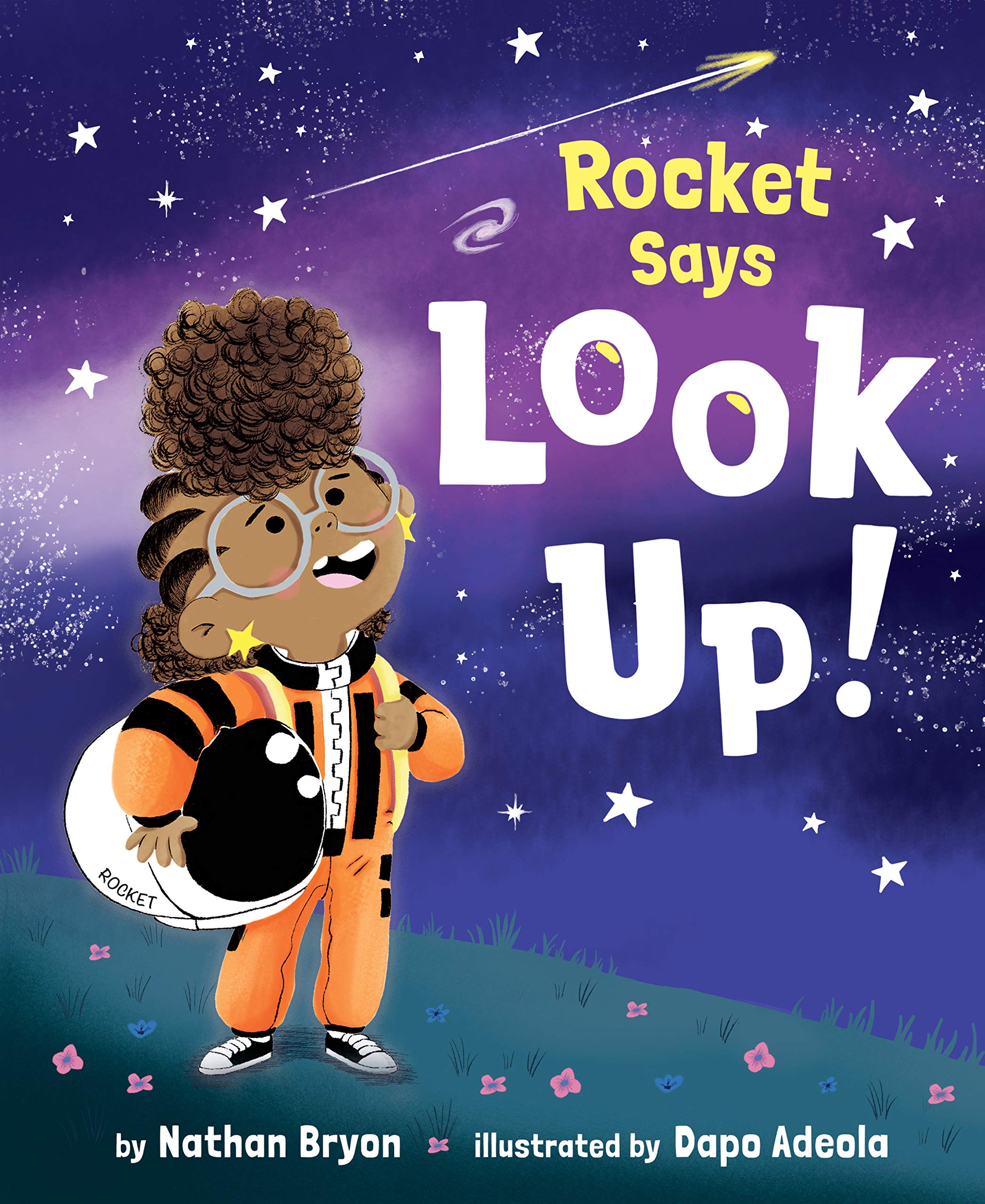
Rocket Says Look Up! by Nathan Bryon, illustrated by Dapo Adeola

Published by Random House Books for Young Readers

Image result for rocket says look up

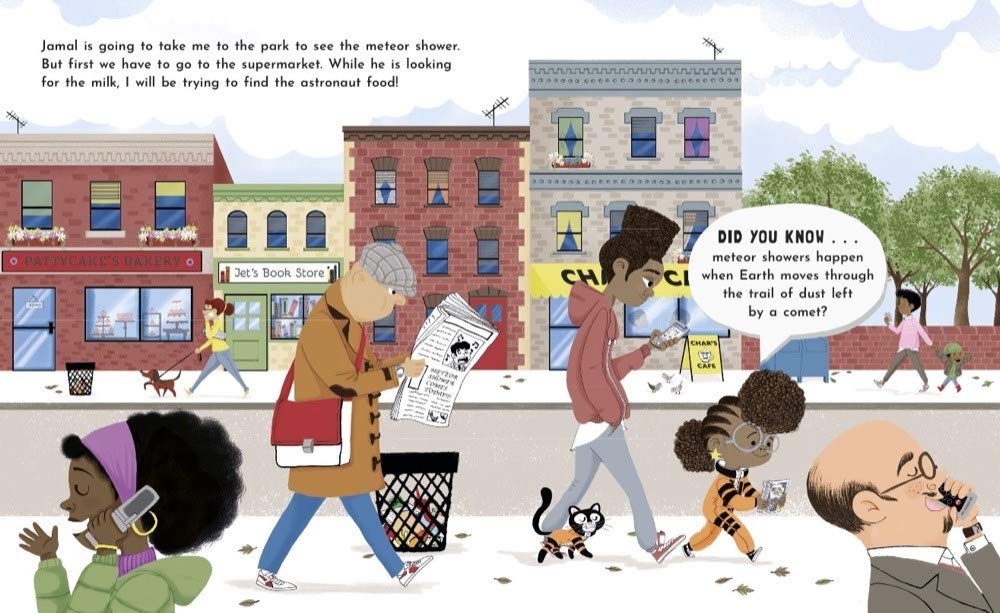
Image result for rocket says look up adeola

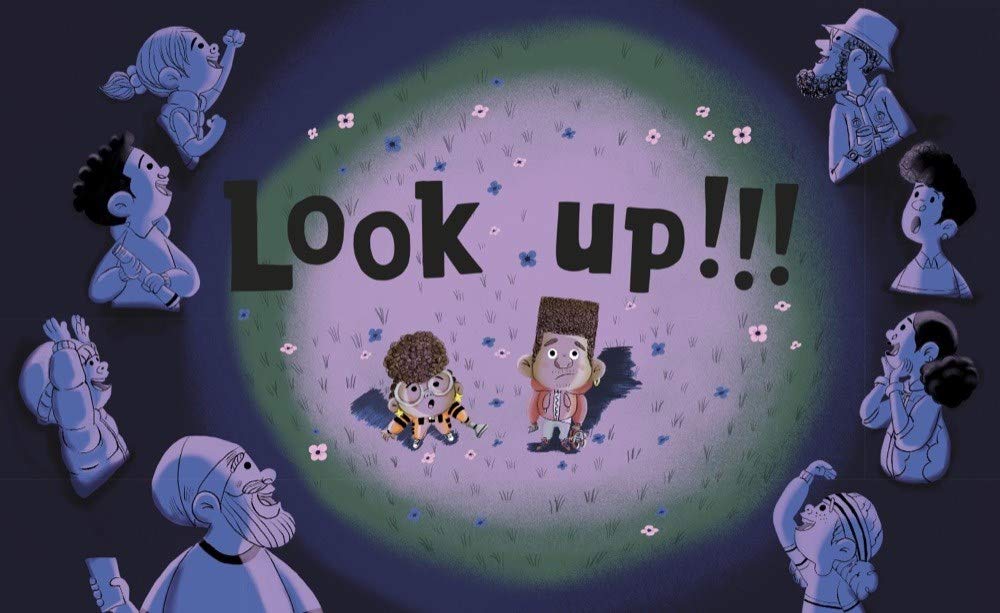
Summary:  Named for a famous spaceship that blasted off the day she was born, Rocket is always looking up and loves all things space.  Her heroine is Mae Jemison, and she is counting down the days until she can see the Phoenix Meteor Shower. Her brother Jamal, though, isn’t impressed by her enthusiasm.  He prefers to look down…at his phone. Rocket’s marketing skills about the meteor shower are so good that when the night comes, half the neighborhood shows up to accompany her and Jamal to the park.  Everyone is looking up, telescopes and binoculars are trained on the sky, but…nothing. Rocket is so crushed that Jamal actually puts away his phone and looks up, too. They’re just about to give up when a big bright light catches everyone’s attention.  The shower has begun! Jamal and Rocket pour themselves some hot chocolate, lie back, and enjoy the show. 32 pages; ages 4-8.

Pros:  Rocket is a high-energy narrator (she wears an orange space suit throughout the book) who will get kids excited about space and science in general.  This could be a good introduction to the Perseid meteor shower coming up in August. The sibling relationship is a sweet addition to the story.

Cons:  No back matter on meteor showers or Mae Jemison?  Seems like a missed opportunity.  Also, I think the Phoenix Meteor Shower is fictional…why not use a real one (like Perseid) instead?

If you would like to buy this book on Amazon, click here.

Image result for rocket says look up adeola

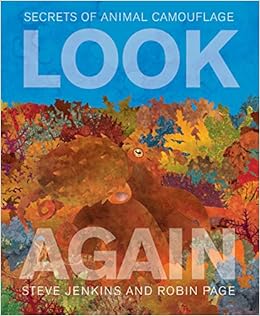
Look Again: Secrets of Animal Camouflage by Steve Jenkins and Robin Page

Published by HMH Books for Young Readers

Image result for look again jenkins amazon

Summary:  Steve Jenkins and Robin Page take a tour of different habitats–coral reefs, trees, the Arctic, etc.–and show how animals blend in to hide themselves in each one.  There are two cut-paper illustrations for each animal, one against a white background and one in which the animal is camouflaged. Each page has a couple sentences of introductory text; the rest is brief captions for the illustrations.  Additional information about each of the 36 animals is given at the end, along with thumbnail illustrations. Also includes books and websites for additional research. 40 pages; grades K-3.

Pros:  As you may already know, I’m a big fan of Steve Jenkins books (I’ve only reviewed nine), and this one includes many of his beautiful trademark collage illustrations.  As usual, the information is fun and accessible for primary grade readers.

Cons:  This lacked the wow factor of some of my favorite Jenkins books like Biggest, Strongest, Fastest and  Animals By the Numbers

If you would like to buy this book on Amazon, click here.

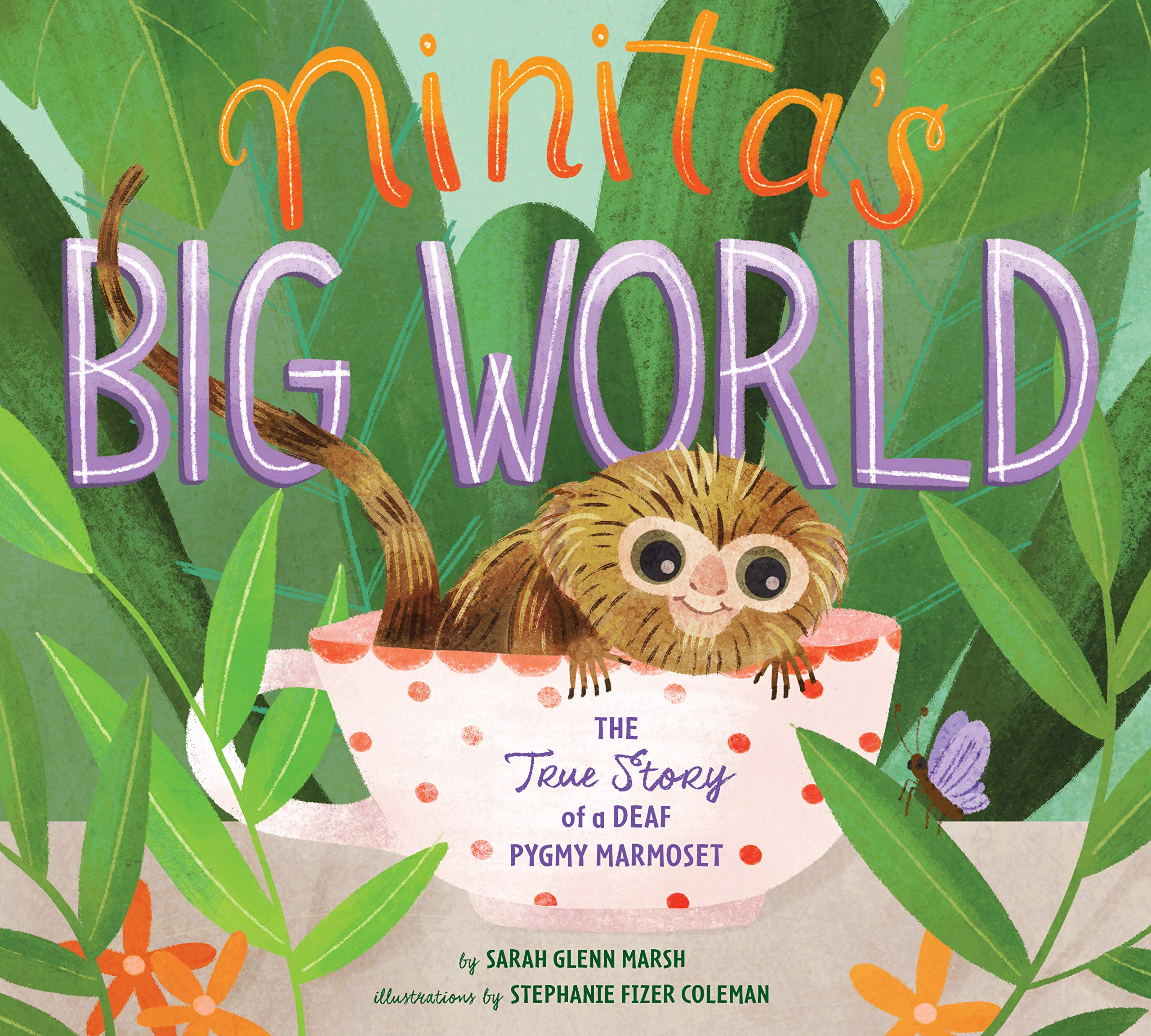
Ninita’s Big World: The True Story of a Deaf Pygmy Marmoset by Sarah Glenn Marsh, illustrations by Stephanie Fizer Coleman

Published by Clarion Books

Image result for ninita's big world amazon

Summary:  Ninita is a pygmy marmoset, the smallest kind of monkey in the world, who was born deaf and abandoned by her parents after a few weeks.  Rescued by humans, she found a new home at the Rare Species Conservatory Foundation in Florida, where she thrived. Eventually, she was introduced to a male pygmy marmoset, Mr. Big, and the two now live together at the Foundation.  Includes additional information about pygmy marmosets and the Rare Species Conservatory Foundation, along with a couple of photos of Ninita. 32 pages; ages 4-8.

Pros:  This cute animal story with its messages of love and friendship will undoubtedly appeal to a wide variety of young readers.  

Cons:  There’s quite a bit of anthropomorphism, e.g., “Ninita wished she had a marmoset friend to share her adventures.”

If you would like to buy this book on Amazon, click here.

Image result for ninita's big world

Popcorn Country: The Story of America’s Favorite Snack by Cris Peterson, Photographs by David R. Lundquist

Published by Boyds Mills Press

Image result for popcorn country cris peterson amazon

Summary:  Who can resist a bowl of buttery, salty popcorn?  It’s one of the top snacks in the U.S., this book tells us, with an annual consumption of four and a half billion gallons.  If you’ve ever wondered how the popcorn gets to your movie theater, you’ll find some answers here, beginning in the Corn Belt, where over ninety million acres of corn are grown each year.  You’ll learn about the different types of corn, how popcorn is processed, and what causes the hard kernels to explode into the light, fluffy snack. There’s a brief history of popcorn at the end, along with a list of books and websites for further research.  32 pages; ages 4-8.

Pros:  The straightforward writing with kid-friendly explanations (“plants that stretch so tall that they could tickle the chin of a young giraffe”) and lots of photos showing a diverse group of kids make this a great nonfiction choice for preschool and early elementary ages.

Cons:  I guess it’s unknowable, but I’ve always wondered how the first consumers of popcorn figured out that those hard kernels could pop.  This book doesn’t offer any speculation on that.

If you would like to buy this book on Amazon, click here.

The Girl Who Named Pluto: The Story of Venetia Burney by Alice B. McGinty, illustrated by Elizabeth Haidle

Published by Schwartz + Wade

Image result for girl who named pluto amazon

Image result for girl who named pluto elizabeth haidle

Summary:  Growing up in Oxford, Venetia Burney loved learning.  Her grandfather, the former head librarian at Oxford University, encouraged her curiosity.  When Grandfather shared a news item with 11-year-old Venetia about the discovery of a new planet beyond Neptune, she thought of how frozen, dark, and lifeless it must be.  It reminded her of the underworld in Greek mythology, and so she suggested naming it Pluto. Her grandfather sent a letter with her suggestion in it to a friend at the Royal Astronomical Society; he liked it, and eventually the name was voted on by astronomers.  Fast forward more than 70 years later: on the day before her 89th birthday, Venetia, still active and curious, gets an invitation to the Observatory Science Centre, where she finally gets a chance to see the planet she named. Includes an author’s note with additional information about Venetia and Pluto–including the change in its designation from plant to dwarf planet–and a bibliography. 40 pages; grades 1-4.

Pros:  A fun story for kids learning about space; they will be inspired to hear how a planet was named by a kid, albeit one with a wealthy, connected grandfather.

Cons:  I think we all still feel a little sad about the fate of former planet Pluto.

If you would like to buy this book on Amazon, click here.

Crossing on Time: Steam Engines, Fast Ships, and A Journey to the New World by David Macaulay

Published by Roaring Brook Press

Image result for crossing on time macaulay amazon

Image result for crossing on time macaulay

Summary:  In September of 1957, David Macaulay left with his mother, sister, and brother to travel to America, where his father had been offered a new job.  Their mode of transportation was the SS United States, the fastest, most advanced steamship ever built.  Macaulay starts the story with himself at age 10 getting ready to go to America, then goes back to the 18th century and traces the history of steam power and the steamship.  The text is illustrated with his trademark detailed, technical drawings illuminating each page, including a six-panel foldout cutaway of the United States with 100 labeled parts.  The last chapter tells about his family’s journey and their move to New Jersey.  Includes an afterword, a timeline, and a list of selected reading. 128 pages; grades 5-8.

Pros:  If you’re interested in engineering, you will never go wrong with David Macaulay.  The personal connection to his family made the story interesting to non-techies like myself.  The illustrations range from amazing to truly mind-boggling, like the one of the ship described above.

Cons:  It will take a pretty dedicated shipping enthusiast to get through all the details in the text.

If you would like to buy this book on Amazon, click here.